|
|
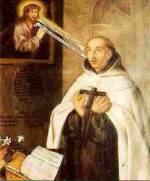
Ascent Of Mount Carmel
by
Saint John Of The Cross
Doctor Of The Church
Third Revised Edition
Translated and edited with a General Introduction, by E. ALLISON PEERS
from the critical edition of
P. SILVERIO DE SANTA TERESA, C.D.
Nihil Obstat: Ceorgivs Smith, S.T.D., Ph.D
Censor Depvtatvs
Imprimatvr: E. Morrogh Bernard
Vicarivs Generalis
Westmonasterii: Die XXIV Septembris MCMLII
To the Discalced Carmelites of Castile, with abiding memories of their hospitality and kindness in Madrid, Avila and Burgos, but above all of their devotion to Saint John of the Cross, I dedicate this translation
Contents
Ascent Of Mount Carmel
Book I
- CHAPTER I.--Sets down the first stanza. Describes two
different nights through which spiritual persons pass, according
to the two parts of man, the lower and the higher. Expounds the
stanza which follows
- CHAPTER II.--Explains the nature of this dark night through
which the soul says that it has passed on the road to union
- CHAPTER III.--Speaks of the first cause of this night, which
is that of the privation of the desire in all things, and gives
the reason for which it is called night
- CHAPTER IV.--Wherein is declared how necessary it is for the
soul truly to pass through this dark night of sense, which is
mortification of desire, in order that it may journey to union
with God
- CHAPTER V.--Wherein the aforementioned subject is treated and
continued, and it is shown by passages and figures from Holy
Scripture how necessary it is for the soul to journey to God
through this dark night of the mortification of desire in all
things
- CHAPTER VI.--Wherein are treated two serious evils caused in
the soul by the desires, the one evil being privative and the other positive
- CHAPTER VII.--Wherein is shown how the desires torment the
soul. This is proved likewise by comparisons and quotations
- CHAPTER VIII.--Wherein is shown how the desires darken and
blind the soul
- CHAPTER IX.--Wherein is described how the desires defile the
soul. This is proved by comparisons and quotations from Holy Scripture
- CHAPTER X.--Wherein is described how the desires weaken the
soul in virtue and make it lukewarm
- CHAPTER XI.--Wherein it is proved necessary that the soul that
would attain to Divine union should be free from desires, however slight they be
- CHAPTER XII.--Which treats of the answer to another question,
explaining what the desires are that suffice to cause the evils
aforementioned in the soul
- CHAPTER XIII.--Wherein is described the manner and way which
the soul must follow in order to enter this night of sense
- CHAPTER XIV.--Wherein is expounded the second line of the
stanza
- CHAPTER XV.--Wherein are expounded the remaining lines of the
aforementioned stanza
Book II
Chapter I
- CHAPTER II.--Which begins to treat of the second part of cause
of this night, which is faith. Proves by two arguments how it is
darker than the first and then the third
- CHAPTER III.--How faith is dark night to the soul. This is
proved with arguments and quotations and figures from Scripture
- CHAPTER IV.--Treats in general of how the soul likewise must
be in darkness, in so far as this rests with itself, to the end
that it may be effectively guided by faith to the highest
contemplation
- CHAPTER V.--Wherein is described what is meant by union of the
soul with God. A comparison is given
- CHAPTER VI.--Wherein is described how it is the three
theological virtues that perfect the three faculties of the soul,
and how the said virtues produce emptiness and darkness within
them
- CHAPTER VII.--Wherein is described how strait is the way that
leads to eternal life and how completely detached and
disencumbered must be those that will walk in it. We begin to
speak of the detachment of the understanding
- CHAPTER VIII.--Which describes in a general way how no
creature and no knowledge that can be comprehended by the
understanding can serve as a proximate means of Divine union with
God
- CHAPTER IX.--How faith is the proximate and proportionate
means of the understanding whereby the soul may attain to the
Divine union of love. This is proved by passages and figures from
Divine Scripture
- CHAPTER X.--Wherein distinction is made between all
apprehensions and types of knowledge which can be comprehended by
the understanding
- CHAPTER XI.--Of the hindrance and harm that may be caused by
apprehensions of the understanding which proceed from that which
is supernaturally represented to the outward bodily senses; and
how the soul is to conduct itself therein
- CHAPTER XII.--Which treats of natural imaginary apprehensions.
Describes their nature and proves that they cannot be a
proportionate means of attainment to union with God. Shows the
harm which results from inability to detach one self from them
- CHAPTER XIII.--Wherein are set down the signs which the
spiritual person will find in himself whereby he may know at what
season it behoves him to leave meditation and reasoning and pass
to the state of contemplation
- CHAPTER XIV.--Wherein is proved the fitness of these signs,
and the reason is given why that which has been said in speaking
of them is necessary to progress
- CHAPTER XV.--Wherein is explained how it is sometimes well for
progressives who are beginning to enter upon this general
knowledge of contemplation to make use of natural reasoning and
the work of the natural faculties
- CHAPTER XVI.--Which treats of the imaginary apprehensions that
are supernaturally represented in the fancy. Describes how they
cannot serve the soul as a proximate means to union with God
- CHAPTER XVII.--Wherein is described the purpose and manner of
God in His communication of spiritual blessings to the soul by
means of the senses. Herein is answered the question which has
been referred to
- CHAPTER XVIII.--Which treats of the harm that certain
spiritual masters may do to souls when they direct them not by a
good method with respect to the visions aforementioned. Describes
also how these visions may cause deception even though they be of
God.
- CHAPTER XIX.--Wherein is expounded and proved how, although
visions and locutions which come from God are true, we may be
deceived about them. This is proved by quotations from Divine
Scripture
- CHAPTER XX.--Wherein is proved by passages from Scripture how
the sayings and words of God, though always true, do not always
rest upon stable causes.
- CHAPTER XXI.--Wherein is explained how at times, although God
answers the prayers that are addressed to Him, He is not pleased
that we should use such methods. It is also shown how, although He
condescend to us and answer us, He is oftentimes wroth
- CHAPTER XXII.--Wherein is solved a difficulty -- namely, why
it is not lawful, under the law of grace, to ask anything of God
by supernatural means, as it was under the old law. This solution
is proved by a passage from Saint Paul
- CHAPTER XXIII.--Which begins to treat of the apprehensions of
the understanding that come in a purely spiritual way, and
describes their nature
- CHAPTER XXIV.--Which treats of two kinds of spiritual vision
that come supernaturally
- CHAPTER XXV.--Which treats of revelations, describing their
nature and making a distinction between them
- CHAPTER XXVI.--Which treats of the intuition of naked truths
in the understanding, explaining how they are of two kinds and how
the soul is to conduct itself with respect to them
- CHAPTER XXVII.--Which treats of the second kind of revelation,
namely, the disclosure of hidden secrets. Describes the way in
which these may assist the soul toward union with God, and the way
in which they may be a hindrance; and how the devil may deceive
the soul greatly in this matter
- CHAPTER XXVIII.--Which treats of interior locutions that may
come to the spirit supernaturally. Says of what kinds they are
- CHAPTER XXIX.--Which treats of the first kind of words that
the recollected spirit sometimes forms within itself. Describes
the cause of these and the profit and the harm which there may be
in them
- CHAPTER XXX.--Which treats of the interior words that come to
the spirit formally by supernatural means. Warns the reader of the
harm which they may do and of the caution that is necessary in
order that the soul may not be deceived by them
- CHAPTER XXXI.--Which treats of the substantial words that come
interiorly to the spirit. Describes the difference between them
and formal words, and the profit which they bring and the
resignation and respect which the soul must observe with regard to
them
- CHAPTER XXXII.--Which treats of the apprehensions received by
the understanding from interior feelings which come supernaturally
to the soul. Describes their cause, and the manner wherein the
soul must conduct itself so that they may not obstruct its road to
union with God
Book III
<|Contents| |Next|>
Copyright ©1999-2026 Wildfire Fellowship, Inc all rights reserved
|

 Keep Site Running