
| HOME | SUMMA | PRAYERS | FATHERS | CLASSICS | CONTACT |
| CATHOLIC ENCYCLOPEDIA | A | B | C | D | E | F | G | H | I | J | K | L | M | N | O | P | Q | R | S | T | U | V | W | X | Y | Z |
| CATHOLIC SAINTS INDEX | A | B | C | D | E | F | G | H | I | J | K | L | M | N | O | P | Q | R | S | T | U | V | W | X | Y | Z |
| CATHOLIC DICTIONARY | A | B | C | D | E | F | G | H | I | J | K | L | M | N | O | P | Q | R | S | T | U | V | W | X | Y | Z |
 Keep Site Running
Chapter 8: Meekness and Humility“Learn of me, because I am meek and humble of heart.”—Matt. 11:29 Humility is called by the saints the foundation and safeguard of all the virtues. If it is not the most prominent among the virtues, it occupies, according to St. Thomas, the first place as the foundation of the rest. In the erection of a building, the basement comes before the walls and pillars, even though the latter be of gold. And so in the spiritual life humility must precede everything else in order to banish pride, to which God is so opposed. He, therefore, who endeavors to acquire the other virtues without humility, says St. Gregory, is scattering dust before the wind. The virtue of humility was little known and less loved on earth; indeed, it was thoroughly despised. Pride reigned everywhere, for it was an unfortunate inheritance of the human race bequeathed to his posterity by Adam. The Son of God descended from Heaven to teach man by word and example the value of humility, and with this end in view He went so far as to “empty himself, taking the form of a servant, being made in the likeness of men, and in habit found as a man. He humbled himself . . . even to the death of the cross.” (Phil.2:7). His first appearance on earth was in the humble stable of Bethlehem; the greater portion of His mortal life was spent in humble retirement at Nazareth. He departed this life, humbled and despised, on the summit of Mt. Calvary; and He calls out to each one of us: “I have given you an example that as I have done, so you do also.” (John13:15). By this He means to say: “My dear children, I have endured all this humiliation and contempt that you might follow My example.” With regard to the humility of Jesus Christ, St. Augustine says: “If this medicine does not cure us of pride, I know not what other remedy can do so.” PRIDE AN ABOMINATION TO THE LORD“Every proud man is an abomination to the Lord,” says the Holy Ghost. (Prov.16:5). The proud man is a thief because he appropriates what belongs to God from whom, as St. Paul says, he has received everything. If a horse were decked with gorgeous trappings would it—supposing it were able to do so—pride itself on having such fine adornments, knowing that at a moment’s notice its master could take them away? The proud man is guilty of falsehood, for all the goods that he possesses both in the order of nature and grace are the gifts of God. “By the grace of God I am what I am,” says the Apostle (1 Cor.15:10), for “we are not sufficient to think any thing of ourselves, as of ourselves, but our sufficiency is from God.” (2 Cor.3:5). “Humble yourself,” says St. Augustine, “and God will descend to unite Himself with you; but if you are proud He will depart from you.” The Royal Prophet had said the same thing long before: God looks upon the humble with loving eyes, but the proud He sees from afar. When the rebel angels grew proud, God drove them from His sight and cast them into the abyss, for God’s Word must be fulfilled: “Whosoever shall exalt himself, shall be humbled.” (Matt.23:12). St. Peter Damian relates that a certain proud man once heard these words of Our Lord read in the Gospel at Holy Mass. “That is not true,” he said, “for if I humbled myself I would lose my possessions and the respect of my fellowmen.” Now what happened? He fought a duel in defense of his property, and his antagonist, striking him in the mouth with his weapon, pierced his blasphemous tongue and stretched him dead on the ground. The Lord has promised to hear all who call upon Him: “Everyone that asketh, receiveth.” (Matt.7:8). But to the proud man God will not listen. “God resisteth the proud,” says St. James, “and giveth grace to the humble.” (Jas.4:6). Yes, God hastens to open His hand and bestow upon the humble what they desire. “Lord, give me the treasure of humility,” prayed St. Augustine. Humility is called a treasure because the Lord sees to it that the humble abound in good things. When man’s heart is full of himself, there is no room for God’s gifts. Man must therefore, as it were, be emptied of himself by the knowledge of his own nothingness. “He that is mighty hath done great things to me” said the Blessed Virgin Mary, “because he hath regarded the humility of his handmaid” (Luke1:48); that is to say, He hath considered the knowledge I have of my own nothingness. A SOURCE OF BLESSINGSSt. Teresa tells us that she received the greatest graces from God when she humbled herself most profoundly in His presence. “The prayer of him that humbleth himself shall pierce the clouds; and he will not depart till the most High behold.” (Ecclus.35:21). St. Joseph Calasanctius used to say: “If you desire to be holy, be humble; if you desire to be very holy, be very humble.” This advice was given by a devout man to St. Francis Borgia before he had entered the religious life: “If you want to become a saint, think of your own misery and wretchedness.” Following this advice, the Saint spent two hours every day trying to obtain a knowledge and contempt of himself. “As pride,” says St. Gregory, “is the most evident characteristic of the reprobate, humility is the clearest sign of the elect.” When St. Anthony, the hermit, saw the world full of the snares of the devil, he cried out: “Who can ever escape so many dangers?” He heard a voice say: “Anthony, humility alone walks securely; he who goes with head bowed down, need not fear to fall into these snares.” In a word, if we do not become children—not of course in age, but in humility—we cannot, as our Saviour said, enter the Kingdom of Heaven. “Learn of me, for I am meek, and humble of heart: and you shall find rest to your souls.” (Matt. 11:29). The proud man has no peace or rest, for he is seldom, if ever, treated in a manner corresponding to the exalted opinion he has of himself. If he is honored, he is dissatisfied that others are honored more than he. There is always a little more honor that he might have had, the absence of which annoys him more than what he has affords him pleasure. What great honor, for example, did not Aman enjoy at the court of Assuerus? It was his privilege to eat at the king’s table, and yet he was unhappy because Mardochai would not salute him. “And whereas I have all these things, I think I have nothing, so long as I see Mardochai sitting before the King’s gate.” (Esther5:13). St. Jerome says that true honor avoids him who seeks it and seeks him who avoids it; it is like a shadow that follows the one who flees from it and flees from the one who follows it. The humble man, on the contrary, is always content. If honor is shown to him, he regards it as above his deserts; if he is offended, he considers himself as deserving of worse treatment than he has received, and he says with Job: “I have sinned and indeed I have offended, and I have not received what I have deserved.” (Job33:27). On one occasion when St. Francis Borgia was travelling, he was advised to send someone ahead to secure a lodging and prevent the inconveniences attending an unexpected arrival. The Saint replied: “As far as that is concerned, I always send a quartermaster ahead. My quartermaster is the thought of the Hell that I have deserved. As a result, every lodging is like a king’s palace for me compared to the place where I deserve to be.” HUMILITY OF INTELLECTThe virtue of humility is twofold, namely, humility of the intellect and humility of the will. According to St. Bernard, humility of the intellect consists in having an humble opinion of ourselves and in regarding ourselves as deserving of contempt. Humility is truth, writes St. Teresa, and therefore the Lord loves the humble so much because He loves the truth. It is certainly true that of ourselves we are nothing; we are ignorant and blind and incapable of accomplishing any good. On the one hand, we have nothing of our own but sin, which makes us still more contemptible. On the other hand, of ourselves we can do nothing but commit sin. Everything good that we may have or can do, comes from God and belongs to God. Now the humble man has this truth ever before his eyes, and consequently he ascribes nothing to himself but sin, which makes him deserving of contempt. He cannot bear to have merit ascribed to him that he does not deserve, but he rejoices in his soul when he is called upon to suffer contempt. We must therefore say with the great St. Augustine: “Grant, O Lord, that I may know who I am and who Thou art.” Thou art the source of all good and I am nothing but misery and wretchedness. “Only by the humble,” says the Wise Man, “is God truly honored.” (Ecclus.3:21). If you wish therefore to honor God, humbly acknowledge your own wretchedness and protest your willingness to receive whatever treatment God’s providence has in store for you. Never boast of your good works. Read the lives of the Saints to see what they have done, and then feel ashamed of yourself for having accomplished so little. The Venerable John of Avila relates that a celebrated man who had married a peasant girl insisted that she should not destroy her poor clothes, but keep them so that she might not grow proud when she saw herself surrounded by servants and clad in costly attire. We must act in a similar manner. When we perceive anything good in ourselves, we must look at our old clothes. In other words we must recall to mind what we once were, and draw the conclusion that everything good that we possess is an alms bestowed by God. Whenever St. Teresa performed a good work or saw one performed, she hastened to thank God for it. In the next place, we must try to realize that without God’s assistance we can do nothing, absolutely nothing. This will lead us to distrust ourselves and place implicit confidence in God. St. Peter trusted in his own strength when he said: “Even though I should die with thee, I will not deny thee.” (Matt.26:35). But we know how soon after he not only denied, but protested under oath that he did not know Our Lord. Put your confidence in God and say with St. Paul: “I can do all things in him who strengtheneth me.” (Phil.4:13). When St. Catherine of Siena was tempted she humbled herself and put all her confidence in God. One day the devil cried out in a rage: “Cursed be thou, and cursed be he who taught thee this means of overcoming me.” HUMILITY OF WILLHumility of the intellect, as we have seen, consists in acknowledging that we are nothing and deserving only of contempt. Humility of the will consists in the desire to be despised by others and in the pleasure such contempt affords us. Humility of the will Our Lord had especially in view when He said: “Learn of me, because I am meek, and humble of heart.” (Matt. 11:29).Many are humble with their lips but not in their heart. They acknowledge that they are wicked and deserving of punishment, but when they are reproved they deny that they are at fault. “To humble oneself for the sake of being praised,” says St. Bernard, “is not humility at all; in fact it is destructive of humility, for by such conduct humility itself becomes an object of pride.” “He,” says St. Joseph Calasanctius, “who loves God, does not wish to appear holy, but desires to be so.” The saints have not become saints in the midst of approval and applause; it was rather amid insults and contempt. The holy martyr Ignatius, when Bishop, enjoyed universal esteem and reverence; he was afterwards dragged to Rome, as a criminal, to be cast to the wild beasts. On the journey thither the guards loaded him with insults and outrages of all kinds. The Saint cried out with joy: “Now I begin to be a disciple of Christ.” He who knows not how to bear an insult shows plainly that he has lost sight of Jesus Crucified. The Venerable Mary of the Incarnation said to her sister religious one day at the sight of the crucifix: “Is it possible, dear Sisters, that we can refuse to suffer contempt when we see Jesus Christ so despised?” Our Saviour once appeared to St. John with a cross on His shoulder and a crown of thorns encircling His head. “John,” said He, “ask of me what you wish.” The Saint replied: “Lord, I desire to suffer and to be despised for Thee.” A very devout person had the beautiful custom of going before the Blessed Sacrament whenever she was insulted or offended. Kneeling before the tabernacle, she would say: “O my God, I am too poor to offer Thee anything precious or costly; therefore I offer Thee this little gift that I have just received.” If, therefore, Christian soul, you desire to attain great sanctity, you must be prepared to suffer humiliation and contempt. Does this seem hard for poor human nature? Then remember the promise of our Saviour Jesus Christ: “Blessed are ye when men shall revile you, and persecute you, and speak all that is evil against you, untruly, for my sake: Be glad and rejoice, for your reward is very great in heaven.” (Matt.5:11). MEEKNESSHumility and meekness were the favorite virtues of Jesus Christ, and He recommended them in a particular manner to His disciples when He said: “Learn of me, because I am meek, and humble of heart.” (Matt. 11:29). Our Divine Redeemer was called the “Lamb of God,” not only on account of the Sacrifice He was to make of Himself on the Cross in expiation for sin, but also on account of the meekness that characterized His whole life and particularly during His bitter Passion. When He was rudely buffeted by the servant of Caiphas and charged with a want of respect for the high priest, He meekly replied: “If I have spoken ill, give testimony thereof; but if well, why strikest thou me?” (John18:23). When He hung upon the Cross and His enemies loaded Him with insults and ignominy, He turned to His heavenly Father and said: “Father, forgive them, for they know not what they do.” (Luke23:34). How dear to God are those meek souls who bear with all manner of offenses and indignities without giving way to anger! Their prayer is acceptable to God, says Holy Scripture (Jdth.9:16); that is, it will always be heard. “Heaven,” says Father Alvarez, “is, in a particular manner, the home and country of those who on earth are despised and trampled under foot.” Indeed it is to these, and not to the proud who are honored and esteemed by the world, that the possession of the Kingdom of Heaven is promised. The Royal Psalmist assures us that the meek will not only possess happiness in the life to come, but even in this life: “They shall delight in abundance of peace.” (Ps.36:11). St. Teresa says that she seemed to experience a more than ordinary love for those who spoke ill of her. In the acts of Canonization we read that by injuries one could obtain her love in an especial degree. To such meekness we can never attain without deep humility, a humble opinion of ourselves, and a desire to be treated with contempt. Pride is angry and vindictive because of the high opinion we have of ourselves and the craving for honors that we think we deserve. The spirit of God is a spirit of meekness. “My spirit is sweet as honey.” (Ecclus.24:27). St. Francis de Sales, a master and model of holy meekness, says: “Humble meekness is the virtue of virtues, which our Divine Redeemer has most urgently recommended to us; therefore we must practice it everywhere and at all times.” Meekness must be exercised especially towards the poor and the sick; towards the poor because, on account of their poverty, they are often harshly treated; towards the sick because they suffer so much and are often left without assistance. Superiors should act with meekness towards their subjects, and when giving an order, they should ask rather than command. St. Vincent de Paul says that superiors have no better means of winning the affection and obedience of their subjects than by meekness. This was also the opinion of St. Jane Chantal. “I have tried all kinds of treatment,” she says; “the mild and patient is the best.” “Nothing is so edifying,” says St. Francis de Sales, “as amiable meekness.” On the lips of this servant of God there hovered a continual smile. His countenance, his conversation, his whole being breathed meekness. St. Vincent de Paul declared that he had never known a meeker man than the Bishop of Geneva. He saw in him a living copy of the goodness and kindness of Jesus Christ. Even when, not to burden his conscience, he had to refuse a request, he couched his refusal in such gentleness and love as to win the cheerful assent of the petitioner; and in spite of a refusal, the latter went away contented. He was meek towards everyone, his superiors, his equals and his inferiors; towards the members of his household and towards strangers. He never complained about his servants; seldom did he reprove them, and then always with gentleness. What a contrast between this saint and those who, according to St. Francis’ own words, “seem to be angels abroad and devils at home.” MEEK CORRECTIONIf you, Christian reader, are called upon to administer a reproof, do so as St. Francis did, with meekness. To correct emphatically is one thing; to reprove harshly is another. To reprehend in a very positive manner is sometimes necessary, when the fault committed is a serious one or when repeated warnings have been in vain. But we must guard against using an angry tone which betrays an absence of self-control; this often does more harm than good. It is this bitter zeal that St. James deprecates so much. Many imagine that the best and only way to treat subordinates is by harsh deportment, to fill them with reverential awe and dread. But St. James, the Apostle, is of quite a different opinion. He says: “If you have bitter zeal, glory not. This is not wisdom descending from above, but earthly, sensual, devilish. But the wisdom that is from above is . . . peaceable, modest, full of mercy and good fruits.” (James3:14, 15, 17). If you are obliged to speak in a stern manner to impress the culprit with the gravity of his fault, at least conclude your remarks with some kind words to take the sting out of the reproof. Like the good Samaritan, you must heal the wound with oil and wine. When oil is mixed with other liquids it always comes to the top; so you too, says St. Francis de Sales, in all that you do, let meekness and gentleness predominate. If the person you wish to reprove is very much agitated, it is better to wait until he has grown calm; otherwise you only aggravate him the more. If a house is on fire, it is not the proper thing to throw wood on it. “You know not of what spirit you are.” (Luke9:55). So spoke the Blessed Redeemer to St. John and his brother St. James when they wished Him to chastise the Samaritans. Ah, what sort of a spirit is that! Our Redeemer wished to say: It is not My spirit; My spirit is meekness and gentleness. “The Son of man came not to destroy souls, but to save” (Luke9:56), and you wish Me to bring about their destruction. OUR SAVIOUR’S MEEKNESSWith what meekness and gentleness did not Our Lord speak to the woman taken in sin! “Woman,” said He, “hath no man condemned thee? Who said: No man, Lord. And Jesus said: Neither will I condemn thee. Go, and now sin no more.” (John8:10–11). With similar meekness He spoke to and converted the Samaritan woman at Jacob’s well. At first He merely asked for a drink of water; and then He said: “O didst thou but know who it is that saith to thee: ‘Give me to drink!’” (John4:10). Finally He revealed to her that He was the promised Messias. What touching tenderness our Saviour displayed towards the treacherous Apostle Judas. He permitted him to eat from the same dish with Himself; He knelt and washed his feet; at the very moment when he was consummating his crime our Saviour warned him with these touching words: “Judas, dost thou betray the Son of man with a kiss?” (Luke22:48). How did He win back St. Peter after the Apostle had denied Him? He did not reproach him. When passing from the house of the high priest, He turned and looked tenderly upon Peter, and that tender look wrought such a conversion in the heart of the Apostle that during the remainder of his life he wept bitterly over the offense he had given his Divine Master. Meekness accomplishes far more than anger and bitterness. St. Francis de Sales says there is nothing so bitter as a green walnut; put it in preserve, and it becomes sweet and agreeable. In like manner reproofs, however unpleasant they may be in themselves, become acceptable and productive of good results when administered with meekness and love. By reason of his wonderful meekness, St. Francis de Sales could do whatever he wished; he even succeeded in leading the most obstinate sinners back to God. St. Vincent de Paul was animated with a like spirit and he wished it to be the characteristic of his disciples. “Gentleness, love and humility,” he was wont to say, “have a wonderful effect in winning the hearts of men and in causing them to do willingly what is opposed to human nature.” You must endeavor to be mild and amiable to everyone, under all circumstances and at all times. “There are many,” says St. Bernard, “who are full of sweetness as long as things go their way; but when they meet with contradiction they break forth in fire and flames, and fume like a veritable Vesuvius. They are like the coals that glow beneath the ashes.” He who desires to become a saint must live like a lily among thorns; it is always a lily no matter how much the thorns may prick it. In other words he must always be meek and amiable. The exterior of a soul that loves God will reflect the peace that reigns within alike in prosperity and adversity. If we must answer one who offends us, let us do so with meekness. “A mild answer breaketh wrath,” says Holy Scripture. (Prov.15:1). If we are too excited, it is better to remain silent. In the heat of passion it seems right to say everything that comes to the tongue; but when anger has subsided we find we have committed as many faults as we have spoken words. MEEKNESS TOWARDS ONESELFShould we have the misfortune to commit a fault, we must exercise meekness even towards ourselves. To be angry with oneself after committing a fault is not a sign of humility, but of secret pride; it shows that we do not regard ourselves as the weak and wretched creatures that we really are. St. Aloysius said: “The devil likes to fish in troubled waters, where we can distinguish nothing.” If a soul is distracted and disturbed it is very hard for it to recognize God and its duties. When, therefore, we have committed a fault, we must turn to the Lord with humility and confidence, beg Him for pardon and say with St. Catherine of Genoa: “Lord, see, here is fruit from my own garden! But pardon me, I beg Thee! I repent from my heart of having offended Thee; I will do so no more; give me the aid of Thy holy grace.” “Never,” says St. Francis de Sales, “permit anger to enter the soul under any pretext whatever; for once the violent passion has found lodgment in the heart, it is not in our power to banish it.” Seek to control the emotions of anger at once by remaining silent, or by thinking of something else. Do as the Apostles did when they were tossed about by the stormy sea; they had instant recourse to their Divine Master; He alone can still the storms of the human heart. If in consequence of weakness, anger has entered your heart, do all in your power to regain your composure and act humbly and meekly towards him who was the occasion of your angry feelings. St. Francis tells us that it cost him much labor to overcome his two predominant passions, anger and love. To conquer his angry passion he struggled for twelve long years. With regard to love, he changed its object, detaching himself entirely from creatures and giving his whole love to God. It was a practice with the Saints during prayer and meditation to bring to mind all the annoyance and obstacles they were apt to encounter in the course of the day, and to prepare themselves in advance to endure them with meekness and humility. Thus they were enabled to put into practice the counsel of their gentle Saviour: “Learn of me, because I am meek, and humble of heart: and you shall find rest to your souls.” (Matt.11:29). 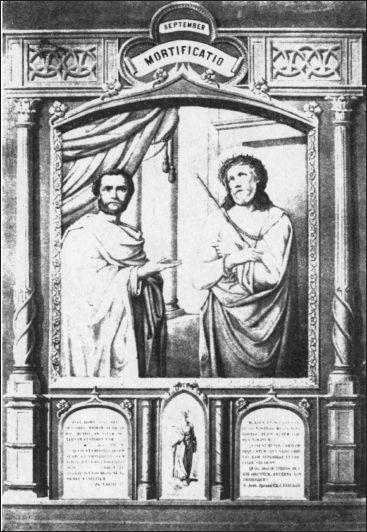
“He that hateth his life in this world, keepeth it unto life eternal.”—John 12:25. Copyright ©1999-2026 Wildfire Fellowship, Inc all rights reserved |