|
|
A
Little Book of
Eternal Wisdom
Blessed
Henry Suso
Translated
by
C. H. McKenna, O.P.
1910 by Burns Oates & Washbourne Ltd.
This
work is published for the greater Glory of Jesus Christ through His
most
Holy Mother Mary and for the sanctification of the militant
Church and her members.
Publisher
www.eCatholic2000.com
Index
Table
of Contents
Preface
The
First Part
The
Second Part
The
Third Part
Illustrations
Index
of Scripture References
Publisher
II
Endnotes
Preface
A Foreword
Jesus
and Mary! Sacred names, always united in the mind and heart of every
true Christian. Jesus, model of true manhood; Mary, model of true
womanhood. Jesus, begotten of the Father before all ages, the figure
of His substance, by whom were made all things that were made. Mary,
first woman in the mind of the Creator; original type, remaining
unfallen when every copy fell! Woman, destined from eternity to crush
the head of the unclean demon. Jesus and Mary! Models of the interior
life, to you is dedicated this new edition of a work of one of your
devoted servants, which is well calculated to lead many souls up the
path of perfection till they reign with you in the Kingdom of Heaven.
The Little Book of Eternal Wisdom is
among the best of the writings of Blessed Henry Suso, a priest of the
Order of St. Dominic, who lived a life of wonderful labours and
sufferings, and died in the Fourteenth century with a reputation for
sanctity which the Church has solemnly confirmed. Gregory XVI granted
to the whole Order of St. Dominic the privilege of celebrating his
office, and of offering the Mass yearly in his honour, appointing the
Second of March for his festival.
The Order of St. Dominic, known in
the Church both as the Order of Truth and the Order of Preachers, so
rich in pontiffs, martyrs, and confessors, is also illustrious for
its theologians, its ascetic writers, its great masters of the
spiritual life. Its mystic theologians stand in the first rank of
those who have scaled the wondrous heights of sublime perfection. Not
only have they stood on the mountain tops of the spiritual life, but
they have pointed out, with a clearness surpassed by no other
writers, the path of ascent, marking for the unwary its every danger.
The wiles of the enemy are exposed; where, when, and how he seeks to
accomplish our ruin. Our defence is first outlined, and then given in
detail. The source of strength is pointed out, and thus the perilous
journey may safely be made.
Among the ascetic writers of the
Order, mention may be made of St. Thomas Aquinas, Blessed Albert the
Great, Master Humbert, St. Antoninus, Dom Bartholomew of the Martyrs,
Ven. Louis of Granada, St. Vincent Ferrer, St. Catherine of Sienna,
and St. Catherine of Ricci, whilst the Illuminated Doctor John Tauler
and Blessed Henry Suso are among the first of the great mystic
theologians of the Church.
The Little Book of Eternal Wisdom was
translated and published for the Catholics of England years ago, but
has long been out of print. It would be difficult to speak too highly
of this little book or of its author. In soundness of teaching,
sublimity of thought, clearness of expression, and beauty of
illustration, we do not know of a spiritual writer that surpasses
Henry Suso. He clothes virtue in such lovely garments, the path to
the sublime heights of perfection is so clearly marked out, that the
willing soul is allured onward and assisted upward, till she stands
with her blessed guide in the full light of the Eternal Wisdom.
To this preface it was deemed
advisable to add the celebrated “Parable of the Pilgrim,”
taken from the writings of Walter Hilton, a Carthusian monk, and
afterwards abridged by the venerable contemplative Father Baker, of
the Order of St. Benedict.
The devout reader is earnestly
requested to read this parable again and again before commencing the
study of Suso’s golden book of Eternal Wisdom. This parable
outlines the whole plan of the spiritual life, it conveys most useful
instructions for those who seriously aim at perfection, which Hilton
designates as the Vision of Peace given to the Soul in Jerusalem.
This parable will be understood and appreciated by those only who are
hungering after Justice. They should read it frequently and fervently
pray for grace to become true pilgrims and pursue the path here
clearly marked out, that so they may arrive at the glorious end.
C.
H. McKenna, O.P.
The Parable of the Pilgrim
A
certain man had a great desire to go to Jerusalem. Not knowing the
right way, he inquired of one he hoped could direct him, and asked by
what path he could reach there in safety. The other said, “The
journey there is long and full of difficulties. There are several
roads that appear and promise to lead there, but their dangers are
too great. However, I know one way which, if you will faithfully
follow according to the marks and directions that I shall give you,
will certainly lead you there. I cannot, however, promise you
security from many frights, beatings, and other ill-usages and
temptations of all kinds, yet if you only have courage and patience
enough to suffer them without quarrelling, or resisting, or troubling
yourself about them, but pass on quietly, having this only in your
mind, and sometimes on your tongue, I have naught, I am naught, I
desire naught but to be in Jerusalem,’ my life for yours, in
due time you will get there in safety.”
The pilgrim, full of joy at the news
said, “If only I arrive at length in safety at the place I
desire so much, I care not what miseries I suffer on the way;
therefore, only let me know the course I am to take, and, God
willing, I shall not fail carefully to observe all your directions.”;
“Since you have so good a will,” said the guide, “though
I myself was never so happy as to be in Jerusalem, yet be assured
that if you follow the instructions I shall give, you will arrive
safe at the end of your journey.”
The advice is briefly this: Before
taking the first step on the highway that leads there you must be
firmly grounded in the truths of the Catholic faith. Moreover,
whatever sins you find sullying your conscience you must cleanse by
hearty penance and absolution according to the laws of the Church.
Having done so begin your journey in God’s name; but be sure to
have with you two necessary instruments, Humility and Charity. These
are contained in the words above mentioned, which must always be
present to your mind, “I am naught, I have naught, I desire
only one thing and that is our Lord Jesus, and to be with Him at
peace in Jerusalem.” The meaning and power of these words you
must have continually, at least in your thoughts either expressly or
virtually. Humility says, “I am nothing, I have nothing.”
Charity says, “I desire nothing but Jesus.” You must
never lose these two companions, neither will they consent to be
separated from each other, for they agree lovingly together, and the
deeper you establish yourself in humility the higher you will advance
in charity, for the more you see and feel yourself to be nothing the
more ardently you will see and love Jesus, that by Him who is All you
may become something.
This humility is to be exercised not
so much in considering your own vileness and sinfulness, though in
the beginning this consideration is good and beneficial, but rather
in a quiet consideration of the infinite being and goodness of Jesus.
You are to behold Him either through grace in sensible devotional
knowledge of Him, or, at least, in a full and firm faith in Him. And
such a contemplation of the infinite sanctity and goodness of Jesus
will operate in your mind a much more pure, spiritual, solid and
perfect humility, than the reflecting on your own nothingness, which
produces a humility much more gross, boisterous and imperfect. In
this mirror of sanctity you will behold yourself to be not only the
most wretched, filthy creature in the world, but also, in the very
substance of your soul, setting aside the foulness of sin, to be a
mere nothing; for really, in comparison with Jesus who is All, you
are nothing. And until you have and feel that you have the love of
Jesus, although you think you have done ever so many good deeds,
spiritually and worldly, you have nothing, for nothing but the love
of Jesus will abide in and fill your soul. Therefore cast aside and
forget all other things in order that you may have that which is the
best of all. If you do this you will become a true pilgrim, who
leaves behind him house, wife, children, friends, and goods, and
denies himself all things in order that he may go on his journey
lightly and without hindrance.
If your desire for Jesus still
continues and grows stronger, so that you go on your way
courageously, they will then tell you that you may become ill, and
perhaps with such a disease as will bring frightful dreads into your
mind; or perhaps you will become very poor and you will find no
charitable person to help you. Do not heed what they say, but if you
should happen to fall into sickness or poverty, still have faith in
Jesus, and say, “I am naught, I have naught, I care for naught
in this world, and I desire naught but the love of Jesus, that I may
see Him at peace in Jerusalem.”
If it should ever happen that through
some of these temptations and your own weakness, you waver and
perhaps fall into sin, and thus lose the way for a time, return as
soon as possible to the right path by using such remedies as the
Church ordains. Do not think of your past sins, for that will harm
you and favour your enemies; but make haste to go on your way as if
nothing happened. Think only of Jesus, and of your desire to gain His
love, and nothing will harm you.
Finally, when your enemies see that
you are so determined that neither sickness, fancies, poverty, life,
death, nor sins discourage you, but that you will continue to seek
the love of Jesus and nothing else, by continuing your prayer and
other spiritual works, they will grow enraged and will not spare you
the most cruel abuse. They will make their most dangerous assault by
bringing before you all your good deeds and virtues, showing that all
men praise, love, and honour you for your sanctity. This they will do
to make you vain and proud. But if you offer your life to Jesus you
will consider all this flattery and falsehood as deadly poison to
your soul, and will cast it from you.
In order to shun such temptations
renounce all vain thoughts and think of Jesus only, resolving to know
and love Him. After you have accustomed yourself to think of Him
alone, any thoughts not relating to Him will be unwelcome and painful
to you.
If there is any work you are obliged
to do for yourself or neighbour fail not to do it as soon and as well
as you can, lest by delay it may distract your thoughts from Jesus.
If it is unnecessary work do not think about it, but dismiss it from
your thoughts saying, “I am naught, I can do naught, I have
naught, and I desire naught but Jesus and His love.”
It will be necessary for you, as for
all other pilgrims, to take, on the way, sleep and refreshments and
sometimes innocent recreation; but if you use discretion in these
things, although they seem to delay you, they will give you strength
and courage to continue on your journey.
To conclude, remember that your
principal aim, and indeed only business, is to give your thoughts to
the desire of Jesus, and to strengthen this desire by daily prayer
and other spiritual works. And whatever you find suitable to increase
that desire, be it praying or reading, speaking or being silent,
working or resting, make use of it as long as your soul finds delight
in it, and as long as it increases the desire of having and enjoying
nothing but the love of Jesus and the blessed sight of Jesus in true
peace in Jerusalem. Be assured that this good desire, thus cherished
and continually increased, will bring you safely to the end of your
pilgrimage.
Observing these instructions, you are
in the right path to Jerusalem. To proceed on this journey, it is
necessary to do, inwardly and outwardly, such works as are suitable
to your condition, and such as will help to increase in you the
gracious desire that you have to love Jesus only. No matter what your
works are, whether thinking, reading, preaching, labouring, etc., if
you find that they draw your mind from worldly vanity and strengthen
your heart and will more to the love of Jesus, it is good and
profitable for you to pursue them. But if through custom, you find
such works in time lose their power and virtue to increase this love,
cast them aside and try some other works which you think will gain
for you more grace and sanctity; for, although the inclination and
desire of your heart for Jesus should never change, nevertheless the
spiritual works you practice, such as prayer, reading, etc., in order
to feed and strengthen this desire, may well be changed, according as
you feel your spiritual welfare will be benefited by this change.
Therefore, lest you hinder the freedom of your heart to love Jesus,
do not think that because you have accustomed yourself to a certain
form of devotion, that you cannot change it for a better.
Before you have journeyed far, you
must expect enemies of all kinds, who will surround you and busily
endeavour to hinder you from going forward. Indeed, if they can by
any means, they will, either by persuasions, flatteries, or violence,
force you to return to your former habits of sinfulness. For there is
nothing that annoys them so much as to see a resolute desire to love
Jesus and to labour to find him. Consequently, they will conspire to
drive out of your heart that good desire and love in which all
virtues are comprised. The first enemies that will assault you will
be the desires of the flesh, and vain fears of your corrupt heart.
Joined with these will be unclean spirits, which, with sights and
temptations, will seek to entice you to them, and draw you from
Jesus. But do not believe anything they say, but betake yourself to
your old and only secure remedy, answering: “I am naught, I
have naught, and I desire naught but only the love of Jesus.”
If they endeavour to put dreads and
doubts into your mind, and try to make you believe you have not done
necessary penance to atone for your sins, do not believe them.
Neither believe them if they say you have not sufficiently confessed
your sins, and that you should return home to do penance better,
before you have the boldness to go to Jesus. You are sufficiently
acquitted of your sins, and there is no need at all that you should
delay in order to ransack your conscience, for this will now but harm
you, and either put you entirely out of your way, or at least
unprofitably delay your toil.
If they tell you that you are not
worthy to have the love of Jesus, or to see Jesus, and that on that
account you ought not to be so presumptuous as to desire and seek it,
do not believe them, but go on, saying, “It is not because I am
worthy, but because I am unworthy, that I desire to have the love of
Jesus; for, once having that, I should become worthy. Therefore, I
will never cease desiring it until I have obtained it. I was created
for this love alone, and so, say and do what you will, I will desire
it continually, and never cease to pray for it, and thus endeavour to
obtain it.”
If you meet with any who seem to be
your friends, and who in kindness would hinder your progress by
entertaining you and seeking to draw you to sensual mirth by vain
discourses and carnal pleasures, whereby you will be in danger of
forgetting your pilgrimage, turn a deaf ear to them, answer them not;
think only of this, that you would fain be at Jerusalem. If they
offer you gifts and attractions, heed them not, but think ever of
Jerusalem.
If men despise you, lay false charges
against you, defraud and rob you, or even beat and use you cruelly,
for your life take no notice of them, but meekly content yourself
with the injury received, and proceed as if nothing had happened to
hinder you. This punishment, or even more, is as nothing if you can
only arrive at Jerusalem, where you shall be recompensed for all you
have endured.
If your enemies see that you grow
courageous, and that you will neither be seduced by flatteries nor
disheartened by the pains and trials of your journey, but rather are
contented with them, they will then be afraid of you. Notwithstanding
all this, they will still pursue you on your way and seek every
advantage against you, now and then endeavouring, either by
flatteries or alarms, to stop and drive you back. Fear them not, but
continue on your way thinking of nothing but Jerusalem and Jesus,
whom you will find there.
Blessed Henry Suso Biography
Blessed Henry Suso was a German
Priest and Mystic, born in Constance (1295–1366). He was
declared Blessed in 1831 by Pope Gregory XVI. The Dominicans
celebrate his feast day on January 23rd.
His father belonged to the noble
family of Berg; his mother, a holy woman from whom he took his name,
to a family of Sus (or Süs). When thirteen years of age he
entered the Dominican convent at Constance, where he made his
preparatory, philosophical, and theological studies.
From 1324 to 1327 he took a
supplementary course in theology in the Dominican studium generale at
Cologne, where he sat at the feet of Johann Eckhart, “the
Master,” and probably at the side of Tauler, both celebrated
mystics. Returning to Constance, he was appointed to the office of
lector, from which he seems to have been removed sometime between
1329 and 1334. In the latter year he began his apostolic career.
About 1343 he was elected prior of a convent, probably at
Diessenhofen. Five years later he was sent from Constance to Ulm
where he remained until his death.
Suso’s life as a mystic began
in his eighteenth year, when giving up his careless habits of the
five preceding years, he made himself “the Servant of the
Eternal Wisdom,” which he identified with the Divine essence
and, in a concrete form, with the personal Eternal Wisdom made man.
Henceforth a burning love for the Eternal Wisdom dominated his
thoughts and controlled his actions. He had frequent visions and
ecstasies, practised severe austerities (which he prudently moderated
in maturer years), and bore with rare patience corporal afflictions,
bitter persecutions and grievous calumnies.
He became foremost among the Friends
of God in the work of restoring religious observance in the
cloisters. His influence was especially strong in many convents of
women, particularly in the Dominican convent of Katherinenthal, a
famous nursery of mysticism in the thirteenth and fourteenth
centuries, and in that of Toss, where lived the mystic Elsbeth
Stagel, who turned some of his Latin into German, collected and
preserved most of his extant letters, and drew from him the history
of his life which he himself afterwards developed and published.
In the world he was esteemed as a
preacher, and was heard in the cities and towns of Swabia,
Switzerland, Alsace, and the Netherlands. His apostolate, however,
was not with the masses, but rather with individuals of all classes
who were drawn to him by his singularly attractive personality, and
to whom he became a personal director in the spiritual life.
Translator’s Note
This
edition of Blessed Henry Suso’s Little Book of Eternal Wisdom
is translated from the classical German text of Cardinal Melchior
Diepenbrock, Prince-Bishop of Breslau.
That it is a very imperfect
reproduction of the incomparable original, I am fully aware, but
there are authors whose beauties of idiom are such as to be
untranslatable, and Suso is one of them.
It is superfluous to enlarge here on
the intrinsic merits of Blessed Henry Suso’s work. For over
five hundred years it has enjoyed undiminished popularity, as at once
a religious and literary masterpiece. Such a work speaks too
eloquently for itself; it is its own best praise, its own best
commentary.
Blessed Henry Suso’s Preface to His Book
A
preacher once stood, after matins, before a crucifix, and complained
from his heart to God that he could not meditate properly on His
torments and passion, and that this was very bitter for him, inasmuch
as, up to that hour, he had in consequence suffered so much. And, as
he thus stood with his complaint, his interior senses were rapt to an
unusual exaltation, in which he was very speedily and clearly
enlightened as follows: Thou shalt make a hundred venias,[1]
and each venia
with a special meditation of My passion, and each meditation with a
request. And every one of My sufferings shall be spiritually
impressed on thee, to suffer the same again through Me as far as thou
art able.
And as he thus stood in the light,
and would needs count the venias, he only found ninety, upon
which he spoke to God thus: Sweet Lord, Thou didst speak of a hundred
venias, and I find only ninety. Then he was reminded of ten
others which he had already made in the Chapter House, before
solemnizing, according to his custom, the devout meditation of the
miserable leading forth of Christ to death, and coming before that
very crucifix; and so he found that the hundred meditations had
entirely included from beginning to end His bitter Passion and death.
And when he began to exercise himself in this matter, as he had been
directed, his former dryness was changed into an interior sweetness.
Now it was his request that if,
perchance, anyone else had the same imperfection, and felt the same
dryness and bitterness in meditating on Christ’s Passion in
which all sanctification lies, he too might be assisted, and might
exercise himself therein, and not desist until he had attained
salvation. And, therefore, he wrote his mediations down, and wrote
them in German, because he had so received them from God.
Accordingly, he gained many a bright inspiration of divine truth,
whereof these meditations were a cause, and between him and the
Eternal Wisdom there sprang up a tender intercourse, and this took
place not by a bodily intercourse nor by figurative answers; it took
place solely by meditation in the light of Holy Writ whose answers
can deceive in nothing; so that the answers are taken either from the
mouth of the Eternal Wisdom who uttered them herself in the Gospel,
or else from the highest doctors, and they comprise either the same
words or the same sense, or else such truths as are agreeable to Holy
Writ, out of whose mouth the Eternal Wisdom spoke. Nor did the
visions which hereafter follow take place in a bodily way; they are
but an interpreted similitude.
The answer touching our Blessed
Lady’s complaint he has given in the sense of St. Bernard’s
words; and the reason why he propounds his doctrine by question and
answer is that it may prove the more attractive; that it may not seem
as though he were the person to whom the doctrine belonged, or who
had spoken it as coming from himself. His object is to give a general
doctrine, in which he and all persons may find everyone what is
suitable for himself. He takes upon himself, as a teacher ought to
do, the person of all mankind: now he speaks in the person of a
sinner; now under the image of a love-sick soul; then, as the matter
suggests, in the likeness of a servant with whom the Eternal Wisdom
discourses. Moreover, everything is expounded with reference to our
interior; much is given here as doctrine that a zealous man should
choose out for himself as devout prayer. The thoughts which stand
here are simple, the words simpler still, for they proceed from a
simple soul and are meant for simple men who have still their
imperfections to cast aside.
It happened that, as the same brother
had begun to write on the three matters, namely, the Passion, and the
rest of it all, and had come to that part on repentance: Now then,
cheer up thou soul of mine! etc., he had reclined himself one
forenoon on his chair, and that in a bright sleep he saw clearly, in
a vision, how two culpable persons sat before him, and how he
chastised them very severely for sitting there so idly, and
performing nothing. Then was it given him to understand that he
should thread a needle, which was put into his hand. Now the thread
was threefold; and two parts were very fine, but the other part was a
little coarser, and when he would needs twist the three together he
could not well do it. Then he saw close to him on his right hand our
Lord, standing the same as when He was unbound from the pillar, and
He stood before him with a look so kind and fatherly that he thought
it was indeed his father. Now he perceived that His body had quite a
natural colour; it was not very white, but of the colour of wheat,
that is, white and red well mixed together (and this is the most
natural colour of all), and he perceived that His whole body was
covered with wounds, and that they were quite fresh and bloody, that
some were round, some angular, some very long, just as the whips had
torn Him; and as He thus stood sweetly before him, and kindly looked
at him, the preacher raised his hands and rubbed them to and fro on
His bloody wounds, and then took the three parts of the thread and
twisted them easily together. Then was given to him a power, and he
understood that he was to complete his task, and that God with His
rose-coloured garment (which is wrought so delightfully out of His
wounds) would clothe all those in eternal beauty who should occupy
their time and leisure with it here below.
One thing, however, a man should
know, that there is as great a difference between hearing himself the
sweet accords of a harp and hearing another speak of them, as there
is between the words received in pure grace and that flow out of a
living heart, through a living mouth, and those same words when they
come to be set down on dead parchment, especially in the German
tongue; for then are they chilled, and they wither like plucked
roses: for the sprightliness of their delivery, which, more than
anything, moves the heart of man, is then extinguished, and in the
dryness of dry hearts are they received. Never was there a string how
sweet soever, but it became dumb when stretched on a dry log. A
joyless heart can as little understand a joyful tongue as a German
can an Englishman! Therefore let every fervent soul hasten after the
first outpourings of this sweet doctrine, so that she may learn to
contemplate them in their origin, where they were in all their
loveliness and ravishing beauty; even there are the inpourings of the
present grace, to the quickening of hearts that are dead! And he who
thus looks at this book will hardly have read it through before his
heart will needs be deeply moved either to fervent love, or to new
light, or to a yearning towards God, and abhorrence of sin, or else
to some spiritual request, wherein the soul will presently be renewed
in grace.
A Little Book of Eternal Wisdom
The First Part
Chapter I
How Some Persons Are Unconsciously
Attracted by God
Her
have I loved, and have sought her out from my youth, and have desired
to take her for my spouse, and I became a lover of her beauty.
These words stand written in the Book of Wisdom [2]
and are spoken by the beautiful and all-loving Wisdom.
A Servant was filled with disgust and
dejection of heart on his first setting forth on the uneven ways.
Then did the Eternal Wisdom meet him in a spiritual and ineffable
form, and lead him through bitter and sweet until she brought him to
the right path of divine truth. And after well reflecting on his
wonderful progress, he thus spoke to God: Sweet and tender Lord! From
the days of my childhood my mind has sought for something with
burning thirst, but what it is I have not as yet fully understood.
Lord, I have pursued it ardently many a year, but I never could grasp
it, for I know not what it is, and yet it is something that attracts
my heart and soul, without which I never can attain true rest. Lord,
I sought it in the first days of my childhood, as I saw done around
me, in creatures, but the more I sought it in them the less I found
it, and the nearer I approached them the further I receded from it,
for every image that presented itself to my sight, before I wholly
tried it, or gave myself up quietly to it, warned me away thus: “I
am not what thou seekest!” And this repulsion I have
experienced more and more in all things. Lord, now my heart rages
after it, for my heart would so gladly possess it. Alas! I have so
constantly had to experience what it is not! But what it is, Lord, I
am not as yet clear. Tell me, beloved Lord, what it is indeed, and
what is its nature, that so secretly agitates me.
Answer of Eternal Wisdom: Dost
thou not know it? And yet it has lovingly embraced thee, has often
stopped thee in the way, until it has at length won thee for itself
alone.
The Servant: Lord, I never saw
it; never heard of it: I know not what it is.
Eternal Wisdom: This is not
surprising, for its strangeness and thy familiarity with creatures
were the cause. But now open thy interior eyes and see who I am. It
is I, the Eternal Wisdom, who, with the embrace of My eternal
providence, have chosen thee in eternity for Myself alone. I have
barred the way to thee as often as thou wouldst have parted company
with Me, had I permitted thee. In all things thou didst ever meet
with some obstacle and it is the sweet sign of My elect that I will
needs have them for Myself.
The Servant: Tender loving
Wisdom! And is it Thou I have so long been seeking for? Is it Thou my
spirit has so constantly struggled for? Alas, my God, why didst Thou
not show Thyself to me long ago? Why hast Thou delayed so long? How
many a weary way have I not wandered!
Eternal Wisdom: Had I done so
thou wouldst not have known My goodness so sensibly as now thou
knowest it.
The Servant: O unfathomable
goodness! How very sweetly hast Thou not manifested Thyself to me!
When I was not, Thou gavest me being. When I had separated from Thee,
Thou didst not separate from me; when I wished to escape from Thee,
Thou didst hold me sweetly captive. Yes, Thou Eternal Wisdom, if my
heart might embrace Thee and consume all my days with Thee in love
and praise, such would be its desire; for truly that man is blest
whom Thou dost anticipate so lovingly that Thou lettest him have
nowhere true rest, till he seeks his rest in Thee alone. O Wisdom
Elect! Since in Thee I have found Him whom my soul loveth, despise
not Thy poor creature. See how dumb my heart is to all the world in
joy and sorrow. Lord, is my heart always to be dumb towards Thee? O
give my wretched soul leave, my dearest Lord, to speak a word with
Thee, for my heart is too full to contain itself any longer; neither
has it anyone in all this world to whom it can unburden itself,
except to Thee, my elected Lord, Father, and Brother. Lord, Thou
alone knowest the nature of a love-overflowing heart, and knowest
that no one can love what he cannot in any way know. Therefore, since
I am now to love Thee alone, give me to know Thee entirely, so that I
may be also able to love Thee entirely.
Eternal Wisdom: The highest
emanation of all beings, taken in their natural order, is through the
noblest beings to the lowest, but their refluence to their origin is
through the lowest to the highest. Therefore, if thou art wishful to
behold Me in My uncreated Divinity thou must learn how to know and
love Me here in My suffering humanity for this is the speediest way
to eternal salvation.
The Servant: Then let me
remind Thee to-day, Lord, of Thy unfathomable love, when Thou didst
incline Thyself from Thy lofty throne, from the royal seat of the
fatherly heart, in misery and disgrace for three-and-thirty years,
and didst show the love which Thou hast for me and all mankind,
principally in the most bitter passion of Thy cruel death: Lord, be
Thou reminded of this, that Thou mayest manifest Thyself spiritually
to my soul, in that most sweet and lovely form to which Thy
immeasurable love did bring Thee.
Eternal Wisdom: The more
mangled, the more deathly I am for love, the more lovely am I to a
well-regulated mind. My unfathomable love shows itself in the great
bitterness of My passion, like the sun in its brightness, like the
fair rose in its perfume, like the strong fire in its glowing heat.
Therefore, hear with devotion how cruelly I suffered for thee.
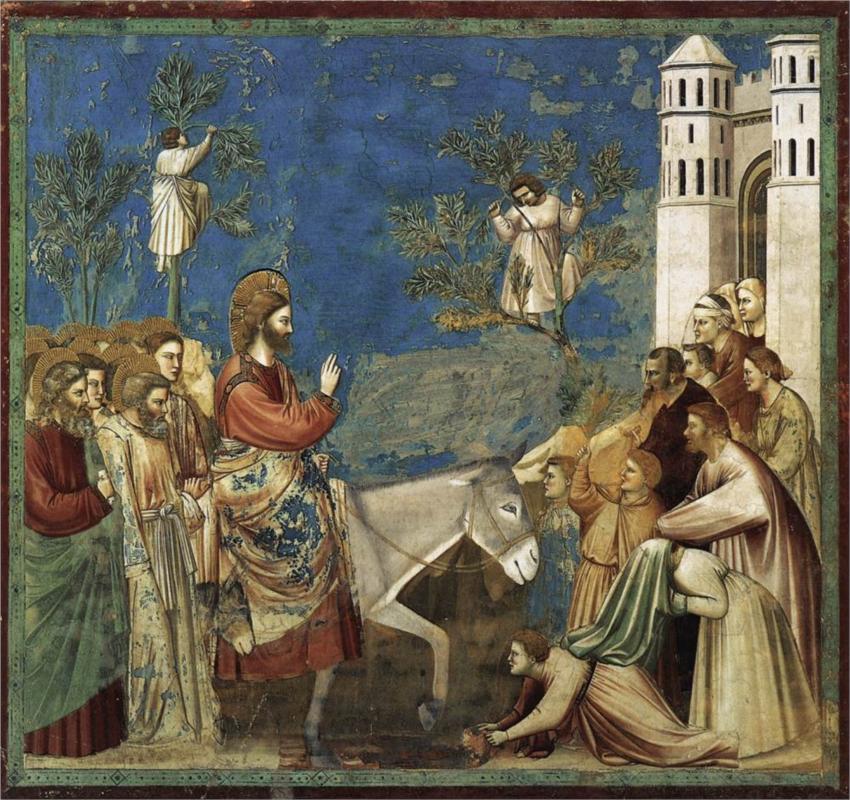
Chapter II
What Happened Before the Crucifixion
After
the Last Supper, when on the Mount of Olives, I gave Myself up to the
pangs of cruel death, and when I felt that he was present before Me,
I was bathed in a bloody sweat, because of the anguish of My tender
Heart, and the agony of My whole bodily nature. I was ignominiously
betrayed, taken prisoner like an enemy, rigorously bound, and led
miserable away. After this I was impiously maltreated with blows,
with spittle, with blindfolding, accused before Caiphas, and
pronounced worthy of death. Unspeakable sorrows of heart were then
seen in My dear Mother, from the first sight she had of My distress
till I was hung upon the cross. I was shamefully presented before
Pilate, falsely denounced, and sentenced to die. They stood over
against Me with terrible eyes like fierce giants, and I stood before
them like a meek lamb. I, the Eternal Wisdom, was mocked as a fool in
a white garment before Herod, My fair body was rent and torn without
mercy by the rude stripes of whips, My lovely countenance was
drenched in spittle and blood, and in this condition I was condemned,
and miserable and shamefully led forth with My cross to death. They
shouted after Me very furiously, so that: Crucify, crucify the
miscreant! Resounded to the skies.
The Servant: Alas! Lord, the
beginning is indeed so bitter, how will it end? If I were to see a
wild beast so abused I should hardly be able to bear it. With what
reason, then, must not Thy Passion pierce my heart and soul! But,
Lord, this is a great marvel to my heart; I would needs seek Thy
divinity, and Thou showest me Thy humanity; I would needs seek Thy
sweetness, and Thou settest before me Thy bitterness; I would needs
conquer, Thou teachest me to fight. Lord, what dost Thou mean?
Eternal Wisdom: No one can
attain divine exaltation or singular sweetness except by passing
through the image of My human abasement and bitterness. The higher
one climbs without passing through My humanity, the deeper one falls.
My humanity is the way one must go, My Passion the gate through which
one must penetrate, to arrive at that which thou seekest. Therefore,
lay aside thy faint-heartedness, and enter with Me the lists of
knightly resolve: for, indeed, softness beseems not the servant when
his master stands ready in warlike boldness. I will put thee on My
coat of mail, for My entire Passion must thou suffer over again
according to thy strength. Make up thy mind to a daring encounter,
for thy heart, before thou shalt subdue thy nature, must often die,
and thou must sweat the bloody sweat of anguish because of many a
painful suffering under which I mean to prepare thee for Myself; for
with red blossoms will I manure thy spice garden. Contrary to old
custom, must thou be made prisoner and bound; thou wilt often be
secretly calumniated and publicly defamed by My adversaries; many a
false judgment will people pass on thee; My torments must thou then
diligently carry in thy heart with a motherly heartfelt love. Thou
wilt obtain many a severe judge of thy godly life; so also will thy
godly ways be often mocked as folly by human ways; thy undisciplined
body will be scourged with a hard and severe life; thou wilt be
scoffingly crowned with persecution of thy holy life; after this, if
only thou shalt issue forth from thy own will and deny thyself, and
shalt stand as wholly disengaged from all creatures in the things
which might lead thee astray in thy eternal salvation, even as a
dying man when he departs hence, and has nothing more to do with this
world; if only thou shalt do this, then wilt thou be led forth with
Me on the miserable way of the cross.
The Servant: Woe is me, Lord,
but this is a dreary pastime! My whole nature rebels against these
words. Lord, how shall I ever endure it all? Gentle Lord, one thing I
must say: couldst Thou not have found out some other way, in Thy
eternal wisdom, to save me and show Thy love for me, some way which
would have exempted Thee from Thy great sufferings, and me from their
bitter participation? How very wonderful do Thy judgments appear!
Eternal Wisdom: The bottomless
abyss of My hidden mysteries (in which I order everything according
to My eternal providence), let no one explore, for no one can fathom
it. And yet, in this abyss, what thou askest about and many things
besides are possible, which yet never happen. However, know this
much, that, in the order in which emanated beings now are, a more
acceptable or more pleasing way could not be. The Lord of nature
knows well what He can do in nature. He knows what is best suited to
every creature, and He operates accordingly. How should man better
know the hidden things of God than in His assumed Humanity? How might
he, who has forfeited all joy through irregular lusts, be rendered
susceptible of regular and eternal joy? How would it be possible to
follow the unpractised way of a hard and despised life, unless it had
been followed by God Himself? If thou didst lie under sentence of
death, how could He, who should suffer the fatal penalty in thy
stead, better prove His fidelity and love towards thee, or better
excite thee to love Him in return? Him, therefore, whom My
unfathomable love, My unspeakable mercy, and My bright divinity, My
most affable humanity, brotherly truth, espousing friendship, cannot
move to ardent love, what else shall soften his stony heart? Ask the
fair array of all created beings if ever I could have maintained My
justice, evinced My fathomless mercy, ennobled human nature, poured
out My goodness, reconciled heaven and earth, in a way more
efficacious than by My bitter death?
The Servant: Lord, truly, I
begin to perceive that it is even so, and he whom want of
understanding has not blinded, and who well considers the subject,
must confess it to Thee, and extol the beautiful ways of Thy love
above all ways. But still to follow Thee is very painful to a
slothful body.
Eternal Wisdom: Be not
terrified at the following of My Passion. For he whose interior is so
possessed by God that suffering is easy to him has no cause to
complain. No one enjoys Me more in My singular sweetness than he who
stands with Me in harsh bitterness. No one complains so much of the
bitterness of the husks as he to whom the interior sweetness of the
kernel is unknown. For him who has a good second the fight is half
won.
The Servant: Lord, Thy
comforting words have given me such heart, that, methinks, I am able
to do and suffer all things in Thee. Therefore, I desire that Thou
wouldst unlock for me the entire treasure of Thy Passion, and tell me
still more about it.
Chapter III
How It Was with Him on the Cross
According to the Exterior Man
Eternal
Wisdom: When I was suspended on the lofty tree of the cross
because of My unfathomable love to thee and all mankind, My whole
frame was very grievously distorted, My bright eyes were extinguished
and turned in My head; My divine ears were filled with scoffing and
blasphemy; My delicate nostrils were wounded with foul smells; My
sweet mouth was tormented with bitter drink; and My tender feeling
with hard blows. The whole earth was not able to afford Me any rest,
for My feeble head was bowed down with pain and distress, My fair
throat was unnaturally distended, My pure countenance polluted with
spittle, My beautiful complexion faded. Lo! My comely figure withered
entirely away, as though I were an outcast leper, and had never been
the fair and Eternal Wisdom.
The Servant: O Thou most
gracious mirror of all graces, in which the heavenly spirits regale
and feed their eyes, would that I had before me Thy delicious
countenance in its deathly aspect until I had well steeped it in the
tears of my heart; would that I might behold again and again those
beautiful eyes, those bright cheeks, that tender mouth, all ghastly
and dead, till I had fully relieved my heart in fervent lamentation
over my Love. Alas! Sweet Lord, Thy Passion affects so deeply the
hearts of some people that they are able to lament over Thee with the
greatest fervour, and weep for Thee from their very hearts. O God,
could I, and might I, now represent all devout hearts with my
lamentation, might I shed the tears of all eyes, and utter the
doleful words of all tongues, then would I show Thee to-day how near
to my heart Thy woeful Passion lies.
Eternal Wisdom: No one can
better show how deeply his heart is affected by My Passion than he
who endures it with Me in the practice of good works. To Me, a free
heart, unconcerned about perishable love, and ever intent on
following the main thing according to the type of My contemplated
Passion, is more agreeable than if thou didst always bewail Me, and
didst shed as many tears from weeping over My torments as there ever
rained drops of water from the sky; for the following of Me was the
cause in which I suffered bitter death, although tears are also
pleasing and agreeable to Me.
The Servant: O sweet Lord,
since then an affectionate following of Thy meek life and voluntary
Passion is so agreeable to Thee, I will in future be more assiduous
in a voluntary following than in a weeping sorrow. But, as I ought to
have both, according to Thy words, teach me how I shall resemble Thee
in both.
Eternal Wisdom: Renounce thy
pleasure in dissolute sights and voluptuous words; let that savour
sweetly of love, and be grateful to thee, which before was repugnant
to thee; thou shouldst seek all thy rest in Me, shouldst willingly
suffer wrong from others, desire contempt, mortify thy passions, and
die to all thy lusts. Such is the first lesson in the school of
wisdom, which is to be read in the open, distended book of My
crucified body. And consider and see, whether, if any one in all this
world were to do his utmost, he could yet be to Me what I am to him?
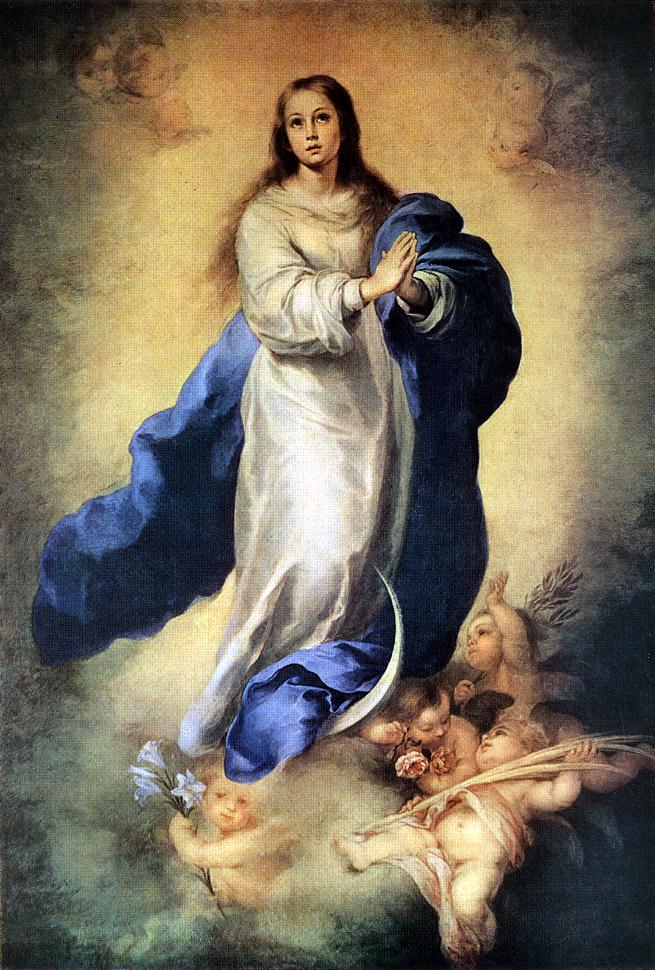
Chapter IV
How Very Faithful His Passion Was
The
Servant: Lord, if I forget Thy worth, Thy gifts, Thy benefits,
and all things, still one thing moves me and goes to my very heart;
this is, when I well reflect not only on the way of our salvation,
but also on its unfathomably faithful way. Dear Lord, many a one so
bestows a gift on another, that his love and faith are better known
by his way than by his gift. A small gift in a faithful way is often
better than a great one without this way. Now, Lord, not only is Thy
gift so great, but also the way of it, methinks, is so unfathomably
faithful. Thou didst not only suffer death for me, but Thou didst
also seek whatever is deepest in love, whatever is most intimate and
hidden, in which suffering can or may be experienced. Thou didst
really do as though Thou hadst said: Behold all hearts, if ever a
heart was so full of love; look on all my limbs; the noblest limb I
have is my heart; my very heart have I permitted to be pierced
through, to be slain and consumed, and bruised into small pieces,
that nothing in me or upon me might remain unbestowed, so that ye
might know my love. Alas! Lord, how was it in Thy mind, or what were
Thy thoughts? Might one not indeed learn something farther on this
head?
Eternal Wisdom: Never was
there a thirsty mouth that longed so ardently for the cool fountain,
nor a dying man for the pleasant days of life, as I longed to help
all sinners and to render Myself beloved of them. Sooner couldst thou
recall the days that are gone, sooner couldst thou make green all
withered flowers, and gather up every drop of rain, than possess the
power to measure the love which I bear to thee and all mankind. And,
therefore, was I so covered with marks of love that one could not
have placed the small point of a needle on any spot of My lacerated
body that had not its particular love-mark. Consider that My right
hand was nailed through; My right arm stretched out; My left very
grievously distended; My right foot perforated; My left cruelly
transfixed; that I hung fainting, and in great distress of My divine
limbs; all My delicate members were immovably fastened to the hard
bed of the cross. My hot blood, because of My anguish, burst forth in
many a wild gush, which overflowed My expiring body, so that it was a
most piteous sight to see. Behold a lamentable thing! My young, My
fair and blooming body began to fade, to wither and pine away, My
weary and tender back had a hard pillow on the rough cross, My heavy
body gave way, My whole frame was gashed with wounds, and like one
great sore, and all this My loving heart willingly endured.
Chapter V
How the Soul Attains Hearty Repentance
and Gentle Pardon Under the Cross
The
Servant: Now then, cheer up thou soul of mine! Collect thyself
entirely from all exterior things into the calm silence of thy
interior, that so thou mayest break away, and wander at large, and
run wild in the rugged wilderness of an unfathomable sorrow of heart,
up to the high rock of misery, now contemplated; and mayest cry aloud
from the depths of thy sad and languishing heart, till it resound
over hill and valley throughout the sky, and pierce even to heaven
before all the heavenly host; and speak with thy lamentable voice
thus: Alas, ye living rocks, ye savage beasts, ye sunny meads! Who
will give me the burning fire of my full heart, and the scalding
water of my sorrowful tears, to wake you up, that ye may help me to
bewail the unfathomable heartrending woe which my poor heart so
secretly suffers? Me had my heavenly Father adorned above all living
creatures, and elected to be His own tender and blessed spouse. And
lo, I have fled from Him! Woe is me! I have lost the beloved of my
choice, my only one! Woe on my wretched heart! Forever woe! What have
I done, what have I lost! I have fled from myself, all the host of
heaven, all that could give me joy and delight, have fled from me! I
sit forsaken, for my false lovers were deceivers. O misery and death!
How falsely and miserably have ye not forsaken me, how despoiled me
of all the good with which my only love had arrayed me! Alas honour!
Alas joy! Alas all consolation! How am I utterly robbed of you!
Whither shall I turn myself? The entire world has forsaken me,
because I have forsaken my only love. Wretched me! When I did so what
a lamentable hour it was! Behold in me a late daisy, behold in me a
sloe thorn, all ye red roses, ye white lilies! Take notice how very
quickly that flower withers, fades, and dies, which this world
gathers! For I must always thus living, die; thus blooming, fade;
thus youthful, grow old; thus healthy, sicken. And yet, tender Lord,
all that I suffer is of small account compared to my having made
wroth Thy fatherly countenance; for this is to me a hell and a grief
above all grief. Alas, that Thou shouldst have been so graciously
kind, that Thou shouldst have warned me so tenderly, and drawn me so
affectionately, and that I should have so utterly despised it all! O
heart of man! What canst thou not endure! As hard as steel must thou
be not to burst utterly with woe. True, I was once called His beloved
spouse: woe is me! I am not now worthy to be called His poor
handmaid. Nevermore, for bitter shame, may I raise my eyes.
Henceforth in joy and sorrow my mouth to Him must be dumb. O how
narrow for me is this wide world! O God, were I but in a wild forest,
where no one might hear or see me, but where I could cry aloud to my
heart’s desire, to the relief of my poor heart; for other
consolation I have none! O sin, to what a pass has thou brought me!
Woe to thee, thou false world! Woe to him that serves thee! How hast
thou rewarded me, seeing that I am a burthen to myself and thee, and
ever must be. Hail, all hail to you, ye rich queens! Ye rich souls,
who, by the misfortunes of others, have become wise; who have
continued in your first innocence of body and mind; how unwittingly
blessed ye are! O pure conscience! O free and single heart! How
ignorant are ye of the state of a heart oppressed and sorrowful
through sin! Ah me, poor spouse, how happy was I with my Beloved, and
how little did I know it! Who will give me the breadth of the heavens
for parchment, the depth of the sea for ink, leaves and grass for
pens, that I may write fully out my desolation of soul, and the
irreparable calamity which my woeful separation from my Beloved has
brought upon me! Alas that ever I was born! What is left but for me
to cast myself into the abyss of despair?
Eternal Wisdom: Thou must not
despair. Did I not come into the world for the sake of thee and all
sinners, that I might lead thee back to My Father in such beauty,
brightness, and purity, as otherwise thou never couldst have
acquired?
The Servant: O what is that
which sounds so sweetly in a dead and outcast soul?
Eternal Wisdom: Dost thou not
know Me? What! Art thou fallen so low, or hast thou lost thy senses,
because of thy great trouble, my tender child? And yet it is I, the
all-merciful Wisdom, I Who have opened wide the abyss of infinite
mercy, which is, however, hidden from all the saints, to receive thee
and all penitent hearts. It is I, the sweet Eternal Wisdom, who
became wretched and poor that I might guide thee back again to thy
dignity. It is I, Who suffered bitter death that I might bring thee
again to life. Lo, here I am, pale, bloody, affectionate, as when
suspended between thee and the severe judgment of My Father, on the
lofty gibbet of the cross. It is I, thy brother. Behold, it is I, thy
bridegroom! Everything that thou ever didst against Me will I wholly
forget, as though it had never happened, provided only that thou
return to Me, and never quit Me more. Wash thyself in My precious
blood, lift up thy head, open thy eyes, and be of good cheer. Receive
as a token of entire peace and complete expiation My wedding ring on
thy hand, receive thy first robe, shoes on thy feet, and the fond
name of My bride for ever! Lo, I have garnered thee up with such
bitter toil! Therefore, if the whole world were a consuming fire, and
there lay in the midst of it a handful of flax, it would not, from
its very nature, be so susceptible of the burning flame as the abyss
of My mercy is ready to pardon a repentant sinner, and blot out his
sins.
The Servant: O my Father! O my
Brother! O all that can ravish my heart! And wilt Thou still be
gracious to my offending soul? O what goodness, what unfathomable
compassion! For this will I fall prostrate at Thy feet, O heavenly
Father! And thank Thee from the bottom of my heart, and beg of Thee
to look on Thy only-begotten Son, whom, out of love Thou gavest to
bitter death, and to forget my grievous misdeeds. Remember, heavenly
Father, how Thou didst swear of old to Noah, and didst say: I will
stretch My bow in the sky; I will look upon it, and it shall be a
sign of reconciliation between Me and the earth. O look now upon it,
tender Father, how cruelly stretched out it is, so that its bones and
ribs can be numbered; look how red, how green, how yellow, love has
made it! Look, O heavenly Father, through the hands, the arms, and
the feet, so woefully distended, of Thy tender and only-begotten Son.
Look at His beautiful body, all rose colour with wounds, and forget
Thy anger against me. Remember that Thou art only called the Lord of
Mercy, the Father of Mercy, because Thou forgivest. Such is Thy name.
To whom did Thou give Thy best-beloved Son? To sinners. Lord, he is
mine! Lord, he is ours! This very day will I enclose myself with His
bare extended arms in a loving embrace in the bottom of my heart and
soul, and living or dead will never more be separated from Him.
Therefore, do Him honour to-day in me, and graciously forget that
wherein I may have angered Thee. For, methinks it were easier for me
to suffer death than ever to anger Thee, my heavenly Father, again.
Neither afflictions nor oppressions, neither hell nor purgatory, are
such causes of lamentation to my heart, as that I ever should have
angered and dishonoured Thee, my Creator, my Lord, my God, my
Saviour, the joy and delight of my heart. Oh, if for this I could
give voice to my grief of soul, through all the heavens, till my
heart should burst into a thousand pieces, how gladly would I do it!
And the more entirely Thou forgivest my evil deeds, so much the
greater is my sorrow of heart at having been so ungrateful in return
for thy great goodness. And Thou, my only consolation, Thou my tender
elected one, Eternal Wisdom! How can I ever make Thee a complete and
proper return of thanks for having at so dear a rate healed and
reconciled with Thy pangs and wounds the breach which all created
beings could not have made good? And, therefore, my eternal joy,
teach me how to bear Thy wounds and love-marks on my entire body, and
how to have them at all times in my keeping, so that all this world,
and all the heavenly host, may see that I am grateful for the
infinite good which, out of Thy unfathomable goodness alone, Thou
hast bestowed on my lost soul.
Eternal Wisdom: Thou shouldst
give thyself and all that is thine to Me cheerfully, and never take
them back. All that is not of absolute necessity to thee shouldst
thou leave untouched; then will thy hands be truly nailed to My
cross. Thou shouldst cheerfully set about good works and persevere in
them; then will thy left foot be made fast. Thy inconstant mind and
wandering thoughts shouldst thou make constant and collected in Me;
and thus thy right foot will be nailed to My cross. Thy mental and
bodily powers must not seek rest in lukewarmness; in the likeness of
My arms they should be stretched out in My service. Thy sickly body
must often, in honour of my dislocated bones, be wearied out in
spiritual exercises, and rendered incapable of fulfilling its own
desires. Many an unknown suffering must strain thee to Me on the
narrow bed of the cross, by which thou wilt become lovely like Me,
and of the colour of blood. The withering away of thy nature must
make Me blooming again; thy spontaneous hardships must be to My weary
back as a bed; thy resolute resistance to sin must relieve My spirit;
thy devout heart must soften My pains, and thy high flaming heart
must kindle My fervid heart.
The Servant: Now, then,
fulfill Thou my good wishes, according to Thy highest praise, and
according to Thy very best will; for indeed Thy yoke is sweet, and
Thy burthen light: this do all those know who have experienced it,
and who were once overladen with the heavy load of sin.
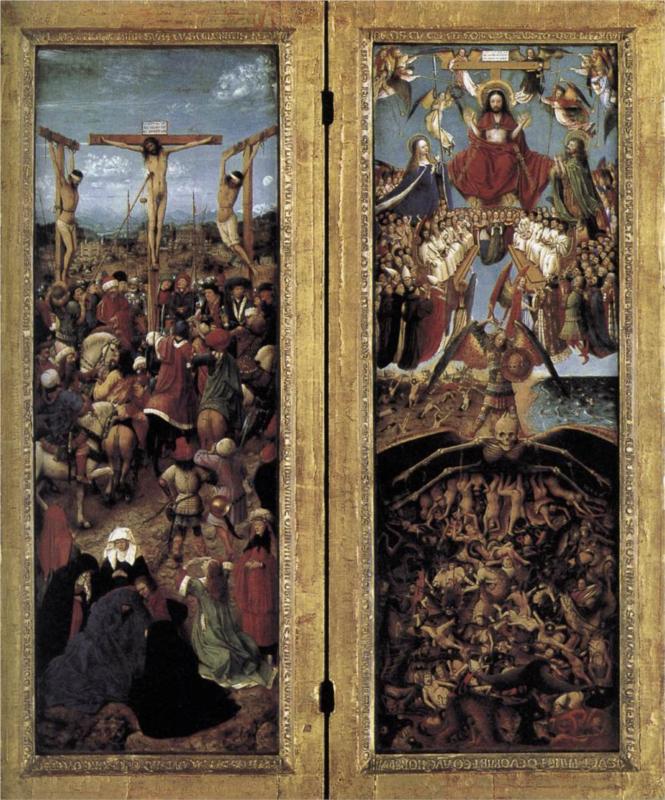
Chapter VI
How Deceitful the Love of This World
Is, and How Amiable God Is
The
Servant: Sweetest God, if I leave Thee but a little I am like a
young roe which has strayed from its dam, and is pursued by the
hunter, and runs wildly about, until it escapes back to its cover.
Lord, I flee, I run to Thee with ardent desire, like a stag to the
living waters. Lord, one little hour without Thee is a whole year; to
be estranged one day from Thee is as much as a thousand years to a
loving heart. Therefore, Thou branch of salvation, Thou bush of May,
Thou red blooming rose-tree, open and spread out the green branches
of Thy divine nature. Lord, Thy countenance is so full of
graciousness, Thy mouth so full of living words, Thy whole carriage
such a pure mirror of all discipline and meekness! O Thou aspect of
graciousness to all the saints, how very blessed is he who is found
worthy of Thy sweet espousals!
Eternal Wisdom: Many are
called to them, but few are chosen.
The Servant: Gentle Lord,
either they have broken with Thee, or Thou with them.
Eternal Wisdom: Lift up,
therefore, thy eyes, and behold this vision.
The Servant lifted up his eyes and
was terrified, and, with a deep sigh, said: Woe to me, dear Lord,
that ever I was born! Do I see aright, or is it only a dream? I saw
Thee before in such richness of beauty, and such tenderness of love;
now I see nothing but a poor, outcast, miserable pilgrim who stands
wretchedly leaning on his staff before an old decayed city. The
trenches are in ruins, the walls falling down, only that, here and
there, the high tops of the old timber work still project aloft; and
in the city is a great multitude of people; among them are many that
look like wild beasts in a human form: and the miserable pilgrim goes
wandering about to see if any one will take him by the hand. Alas! I
behold the multitude drive him with insult away, and hardly look at
him, because of the things about which they are busy. And yet some,
but only a very few, offer to give him their hands; this the other
wild beasts come and prevent. Now I hear the miserable pilgrim begin
to sigh woefully, and cry aloud: O heaven and earth have pity on me;
me who have garnered up this city with such bitter toil, and who am
so badly welcomed in it, while those who have spent no labour upon it
are yet so kindly received!
Lord, such is what has been shown me
in the vision. O Thou eternal God, what does it mean? Am I right or
wrong?
Eternal Wisdom: This vision is
a vision of pure truth. Hearken to a lamentable thing; O let it touch
thy heart with pity! I am the miserable pilgrim whom thou didst see.
At one time I was in great honour in that city, but now I am brought
down to great misery and driven out.
The Servant: Dearest Lord!
What is this city, what are the people in it?
Eternal Wisdom: This decayed
city is an image of that spiritual life in which I was once so
worthily served. And while they were living in it so holily and
securely, it begins in many places to fall very much to ruin; the
trenches begin to decay, and the walls to crack, that is to say,
devout obedience, voluntary poverty, secluded purity in holy
simplicity, begin to disappear, and, at last, to such a degree that
nothing is to be seen standing, except the high timber work of mere
exterior observance. As to the great multitude, the beasts in human
form, they are worldly hearts under spiritual disguises, who, in the
vain pursuit of transitory things, drive Me out of their souls. That
a few should, nevertheless, offer to give Me their hands, but are
hindered by the rest, signifies that some men of good intentions and
devout feelings are perverted by the speech and evil example of
others. The staff on which thou didst see Me stand leaning, is the
cross of My bitter passion, with which I admonish them at all times
to think on My sufferings, and to turn, with the love of their hearts
to Me alone. But the cry of misery thou didst hear is My death which
even here begins to cry aloud, and ever cries aloud, because of those
in whom neither My unfathomable love nor My bitter death is able to
do so much as to expel the worm of sinful thoughts from their hearts.
The Servant: O Lord, how it
cuts through my very heart and soul to think Thou art so lovable, and
yet, in spite of all Thy advances, art in many hearts so utterly
despised. Ah! Tender Lord, what will Thy advances be to those who,
though they see Thee in the miserable shape in which Thou art
rejected by the multitude, yet stretch out their hands to Thee with
sincere faith and love?
Eternal Wisdom: Those who for
My sake give up perishable affections, and receive Me with sincere
faith and love, and remain constant to the end, will I espouse with
My divine love and sweetness, and will give them My hand in death,
and exalt them on the throne of My glory before the whole court of
heaven.
The Servant: Lord, there be
many who think they will still love Thee without giving up perishable
love. Lord, they will needs be very dear to Thee, and yet will not
the less indulge in temporal love.
Eternal Wisdom: It is as
impossible as to compress the heavens together and enclose them in a
nut shell. Such persons array themselves in fair words, they build
upon the wind, and construct upon the rainbow. How may the eternal
abide with the temporal, when even one temporal thing neither can nor
will endure another? He but deceives himself who thinks he can lodge
the King of kings in a common inn, or thrust Him into the mean
dwelling of a servant. In entire seclusion from all creatures must he
keep himself who is desirous of receiving his guest as he ought.
The Servant: Alas, sweet Lord,
how completely bewitched must they all be not to see this!
Eternal Wisdom: They stand in
deep blindness. They endure many a hard struggle for pleasures which
yet neither fix their attachment nor afford them full gratification.
Before they obtain one joy they meet with ten sorrows, and the more
they pursue their lusts the more are these upbraided with being
insufficient. Lo! Godless hearts must needs be at all times in fear
and trembling. Even the fleeting pleasure they obtain proves very
harsh to them, for they procure it with much toil, they enjoy it in
great anxiety, and lose it with much bitterness. The world is full of
untruth, falsehood, and inconstancy; when profit is at an end,
friendship is at an end, and to speak shortly, neither true love, nor
entire joy, nor constant peace of mind, was ever obtained by any
heart from creatures.
The Servant: Alas! Dear Lord,
what a lamentable thing it is, that so many a noble soul, so many a
languishing heart, so many an image formed after God in such beauty
and sweetness, that in Thy espousals ought to be queens and
empresses, powerful in heaven and on earth, should so foolishly go
astray and degrade themselves! Oh, wonder of wonders! To think that
of their own accord they should be lost! Since, according to Thy
words of truth, the fell separation of the soul from the body were
better for them than that Thou, the Life Eternal, shouldest have to
separate from their souls where Thou findest no dwelling-place. Oh,
ye dull fools, behold how your great ruin prospers, how your great
loss increases, how you allow the precious, the fair, the delightsome
moments to pass away, which ye may hardly or indeed never again
possess, and how gaily you carry yourselves the while, as though it
concerned you not! Alas! Thou gentle Wisdom, did they but know it and
feel it surely they would desist.
Eternal Wisdom: Listen to a
wonderful and lamentable thing. They know it and feel it at all
hours, and yet do not desist; they know it and yet will not know it;
they beautify it, like unsound argument, with dazzling brightness,
which yet is unlike the naked truth, as so many of them at last, when
it is too late, will have to feel.
The Servant: Alas! Tender
Wisdom, how senseless they are, or what does it mean?
Eternal Wisdom: Here will they
needs escape calamity and suffering, and yet fall into the midst of
it; and as they will not endure the eternal good and My sweet yoke,
they will be overwhelmed by the inevitable doom of My severe justice
with many a heavy burthen. They fear the frost, and fall into the
snow.
The Servant: Alas! Tender and
merciful Wisdom, remember that, without being strengthened by Thee,
no one can accomplish anything. I see no other help for them than to
raise their eyes to Thee, and to fall at Thy feet with bitter,
heart-felt tears, entreating that Thou wouldst vouchsafe to enlighten
them, and free them from the bonds with which they are made fast.
Eternal Wisdom: I am at all
times ready to help them, if only they be ready. I do not turn away
from them.
The Servant: Lord, it is
painful for love to separate from love.
Eternal Wisdom: Very true, if
I could not and would not lovingly make good all love in hearts of
love.
The Servant: O Lord, it is
impossible to leave off old custom.
Eternal Wisdom: But it will be
yet more impossible to endure future torments.
The Servant: They are perhaps
so well regulated in themselves that it does them no injury.
Eternal Wisdom: I was the best
regulated of men, and yet the most self-mortified. How may that be
regulated which, from its very nature, corrupts the heart, confuses
the mind, perverts discipline, draws off the heart from all fervour,
and robs it of its peace? It breaks open the gates, behind which
godly living lies hidden, that is, the five senses. It casts forth
sobriety and introduces audaciousness, the loss of grace,
estrangement from God, interior tepidity, and exterior sloth.
The Servant: Lord, they do not
think they are hindered so much, if only what they love have the
appearance of a spiritual life.
Eternal Wisdom: A clear-seeing
eye may just as easily be blinded by white meal as by pale ashes.
Behold, was ever any person’s presence so harmless as Mine
among My disciples? No unprofitable words fell from us, among us
there was no extravagant demeanour, no beginning loftily in the
spirit, and sinking down in the depth of endless words; there was
nothing but real earnestness and entire truth without any deceit. And
yet, My bodily presence had to be withdrawn from them before they
became susceptible of My spirit. What a hindrance, then, must not a
merely human presence prove! Before they are influenced to good by
one person, they are seduced by a thousand; before they are reformed
in one point by good precept, they are often led astray by bad
example; and, to speak briefly, as the sharp frost in May nips the
blossoms and scatters them abroad, so the love of perishable things
blights godly seriousness and religious discipline. If thou hast
still a doubt respecting it, look around thee into the beautiful,
fruitful vineyards which formerly were so delightful in their first
bloom, how utterly withered and ruined they are, so that they contain
few traces more of fervent seriousness and great devotion. Now, this
produces an irreparable injury, for it has become a thing of habit, a
spiritual decorum, which, secretly, is so destructive of all
spiritual salvation. It is all the more pernicious as it appears
innocent. How many a precious spice-garden is there, which, adorned
with delightful gifts, was a heavenly paradise, where God was well
pleased to dwell, which, now, by reason of perishable love, has
become a garden of wild weeds; where lilies and roses formerly grew,
now stands thorns, nettles, and briars, and where angels were used to
dwell, swine now root up the soil. Woe betide the hour, when all lost
time, when all good works neglected, shall be reckoned up, when every
idle word spoken, thought written, whether in secret or in public,
shall be read out before God and the whole world, and its meaning,
without disguise, be understood!
The Servant: Alas! Lord these
words are so sharp that indeed it must be a stony heart that is not
moved by them. Ah, my Lord, some hearts there are, of so tender a
nature, that they are much sooner attracted by love than fear, and as
Thou, the Lord of nature, art not a destroyer but a fulfiller of
nature, O, therefore, most kind and gracious Lord, put an end to this
sad discourse, and tell me how Thou art a Mother of beautiful love,
and how sweet Thy love is.
Chapter VII
How Lovely God Is
The
Servant: Lord, let me reflect on that
divine passage, where Thou speakest of Thyself in the Book of Wisdom:
“Come over to Me, all ye that desire Me, and be filled with My
fruits. I am the Mother of fair love; My spirit is sweet above honey
and the honeycomb. Wine and music rejoice the heart, but the love of
wisdom is above them both.[3]
Ah, Lord! Thou canst show Thyself so
lovely and so tender, that all hearts must needs languish for Thee
and endure, for Thy sake, all the misery of tender desire; Thy words
of love flow so sweetly out of Thy sweet mouth, and so powerfully
affect many hearts in their days of youthful bloom, that perishable
love is wholly extinguished in them. O my dear Lord, this it is for
which my soul sighs, this it is which makes my spirit sad, this it is
about which I would gladly hear Thee speak. Now, then, my only
elected Comforter, speak one little word to my soul, to Thy poor
handmaid; for, lo! I am fallen softly asleep beneath Thy shadow, and
my heart watcheth.
Eternal Wisdom: Listen, then,
my son, and see, incline to Me thy ears, enter wholly into thy
interior, and forget thyself and all things. I am in Myself the
incomprehensible good, which always was and always is, which never
was and never will be uttered. I may indeed give Myself to men’s
hearts to be felt by them, but no tongue can truly express Me in
words. And yet, when I, the Supernatural, immutable good, present
Myself to every creature according to its capacity to be susceptible
of Me, I bind the sun’s splendour, as it were, in a cloth, and
give thee spiritual perceptions of Me and of My sweet love in bodily
words thus: I set Myself tenderly before the eyes of thy heart; now
adorn and clothe thou Me in spiritual perceptions and represent Me as
delicate and as comely as thy very heart could wish, and bestow on Me
all those things that can move the heart to especial love and entire
delight of soul. Lo! All and everything that thou and all men can
possibly imagine of form, of elegance, and grace, is in Me far more
ravishing than any one can express, and in words like these do I
choose to make Myself known. Now, listen further: I am of high birth,
of noble race; I am the Eternal Word of the Fatherly Heart, in which,
according to the love-abounding abyss of My natural Sonship in His
sole paternity, I possess a gratefulness before His tender eyes in
the sweet and bright-flaming love of the Holy Ghost. I am the throne
of delight, I am the crown of salvation, My eyes are so clear, My
mouth so tender, My cheeks so radiant and blooming, and all My figure
so fair and ravishing, yea, and so delicately formed, that if a man
were to lie in a glowing furnace till the day of judgment, only to
have one single glance at My beauty, he would not deserve it. See, I
am so deliciously adorned in garments of light, I am so exquisitely
set off with all the blooming colours of living flowers, that all
May-blossoms, all the beautiful shrubs of all dewy fields, all the
tender buds of the sunny meads, are but as rough thistles compared to
My adornment.
In the Godhead I play the game of
bliss,
Such joy the angels find in this,
That unto them a thousand years
But as one little hour appears.
All the heavenly host follow Me
entranced by new wonders, and behold Me; their eyes are fixed on
Mine; their hearts are inclined to Me, their minds bent on Me without
intermission. Happy is he who, in joyous security, shall take Me by
My beautiful hand, and join in My sweet diversions, and dance for
ever the dance of joy amid the ravishing delights of the kingdom of
heaven! One little word there spoken by My sweet mouth will far
surpass the singing of all angels, the music of all harps, the
harmony of all sweet strings. My faithfulness is so made to be loved,
so lovely am I to be embraced, and so tender for pure languishing
souls to kiss, that all hearts ought to break for My possession. I am
condescending and full of sympathy and always present to the pure
soul. I abide with her in secret, at table, in bed, in the streets,
in the fields. Turn Myself whichever way I will, in Me there is
nothing that can displease, in Me is everything that can delight the
utmost wishes of thy heart and desires of the soul. Lo! I am a good
so pure, that he who in his day only gets one drop of Me regards all
the pleasures and delights of this world as nothing but bitterness;
all its possessions and honours as worthless, and only fit to be cast
away; My beloved ones are encompassed by My love, and are absorbed
into the One Thing alone without imaged love and without spoken
words, and are taken and infused into that good out of which they
flowed. My love can also relieve regenerate hearts from the heavy
load of sin, and can give a free, pure, and gentle heart, and create
a clean conscience. Tell Me, what is there in all this world able to
outweigh this one thing? For he who gives his heart wholly to Me
lives joyfully, dies securely, and obtains the kingdom of heaven here
as well as hereafter.
Now, observe, I have assuredly given
thee many words, and yet My beauty has been as little touched by them
as the firmament by thy little finger, because no eye has ever seen
My beauty, nor ear heard it, neither has it ever entered any heart.
Still let what I have said to thee be as a device to show thee the
difference between My sweet love and false, perishable love.
The Servant: Ah! Thou tender,
delicious, wild flower, Thou delight of the heart in the embracing
arms of the pure loving soul, how familiar is all this to him who has
even once really felt Thee; but how strange is it to that man who
knows Thee not, whose heart and mind are still of the body! O, Thou
most heart-felt incomprehensible good this is a precious hour, this
is a sweet moment, in which I must open to Thee a secret wound which
my heart still bears from Thy sweet love. Lord, plurality in love is
like water in the fire. Lord, Thou knowest that real fervent love
cannot bear duality. Alas! Thou only Lord of my heart and soul, my
heart desires that Thou shouldst have a particular love for me, and
that I should be particularly pleasing to Thy divine eyes. O Lord,
Thou hast so many hearts that ardently love Thee, and are of much
account with Thee. Alas! My sweet and tender Lord, how stands it with
me in this matter?
Eternal Wisdom: My love is of
that sort which is not diminished in unity, nor confounded in
multiplicity. I am as entirely concerned and occupied with thee
alone, with the thought how I may at all times love thee alone, and
fulfil everything that appertains to thee, as though I were wholly
disengaged from all other things.
The
Servant: O rare! O wonderful! Whither
am I borne, how am I gone astray! How is my soul utterly dissolved by
the sweet friendly words of my beloved! Oh, turn away Thy bright eyes
from me, for they have overcome me.[4]
Wherever was there a heart so hard, a soul so lukewarm, so cold as,
when it heard Thy sweet living words, so exceedingly fiery as they
are, was not fain to melt and kindle in Thy sweet love! O wonder of
wonders! That he who thus sees Thee with the eyes of his soul, should
not feel his very heart dissolve in love. How right blessed is he who
bears the name of Thy Spouse, and is so! What sweet consolations and
secret tokens of Thy love must not he eternally receive from Thee! O
thou sweet virgin St. Agnes, thou fair wooer of Eternal Wisdom! How
well couldst thou console thyself with thy dear Bridegroom, when thou
didst say, “His blood has adorned my cheeks as with roses.”
O gentle Lord, that my soul were but worthy to be called Thy wooer!
And were it indeed possible that all delights, all joy and love, that
this world can afford, might be found united in one man, how gladly
would I renounce him for the sake of that name! How blessed is that
man, that ever he was born into the world, who is named Thy friend,
and is so! Oh, if a man had even a thousand lives, he ought to stake
them at once for the sake of acquiring Thy love. Oh, all ye friends
of God, all ye heavenly host, and thou dear virgin St. Agnes, help me
to pray to Him: for never did I rightly know what His love was. Alas!
Thou heart of mine, lay aside, put away all sloth, and see if, before
thy death, thou mayest advance so far as to feel His sweet love. O
thou tender beautiful Wisdom! O my elected one! What a truly right
gracious love Thou canst be above all loves else in the world! How
very different is Thy love and the love of creatures! How false is
everything that appears lovely in this world and gives itself out to
be something, as soon as one really begins to know it. Lord, wherever
I might cast my eyes I always found something to disgust me; for, if
it was a fair image, it was void of grace; if it was fair and lovely,
it had not the true way; or if it had indeed this, still, I always
found something either inwardly or outwardly, to which the entire
inclination of my heart was secretly opposed. But Thou art beauty
with infinite affability, Thou art grace in shape and form, the word
with the way, nobility with virtue, riches with power, interior
freedom and exterior brightness, and ONE thing Thou art which I have
never found in time, namely, a power and faculty of perfectly
satiating every wish and every ardent desire of a truly loving heart.
The more one knows Thee, the more one loves Thee; the more acquainted
one is with Thee, the more friendly one finds Thee. Ah me! What an
unfathomable, entirely pure, good Thou art! See how deceived all
those hearts are that fix their affections on anything else! Ah! Ye
false lovers, flee far from me, never come near me more. I have
chosen for my heart that one only love in which my heart, my soul, my
desire, and all my powers can alone be satiated with a love that
never dissolves away. Oh Lord, could I but trace Thee on my heart!
Could I but melt Thee with characters of gold into the innermost core
of my heart and soul, so that Thou mightest never be eradicated out
of me! Oh, misery and desolation! That ever I should have troubled my
heart with such things! What have I gained with all my lovers, but
time lost, forfeited words, an empty hand, few good works, and a
conscience burdened with infirmity? Slay me, rather, in Thy love, O
Lord, for from Thy feet I will never more be separated.
Eternal Wisdom: I go forth to
meet those who seek Me, and I receive with affectionate joy such as
desire My love. All that thou canst ever experience of My sweet love
in time, is but as a little drop to the ocean of My love in eternity.

Chapter VIII
An Explanation of Three Things Which
Most of All Might Be Likely to Be Repugnant to a Loving Heart in God:
One Is, How He Can Appear So Wrathful and Yet Be So Gracious
The
Servant: Three things there are at which I marvel very much; one
is, that Thou shouldst be beyond all measure so amiable Thyself, and
yet so severe a judge of evil deeds. Lord, when I reflect on Thy
severe justice, my heart with passionate voice exclaims: “Woe
to all who persist in sin!” For did they but know the strict
account of every single sin, which Thou wilt infallibly require, even
from Thy very dearest friends, they would sooner pluck out their
teeth and hair than ever provoke Thy anger! Woe is me! How very
terrible is Thy angry countenance, how very intolerable Thy ungentle
averted looks! So full of fire are Thy threatening words that they
cut through heart and soul. Shield me, O Lord, from Thy wrathful
countenance, and extend not Thy vengeance against me to the next
world. Lo! When I only doubt, lest, because of my guilty deeds Thou
mayest have turned Thy face angrily away from me, it is a thing so
insupportable, that nothing in all this world is so bitter to me. Oh,
my Lord and Father, how could my heart endure Thy angry countenance
for ever! When I but seriously reflect on Thy countenance inflamed
with anger, my soul is so horrified, all my strength is so shaken,
that I can liken it to nothing else than to the heavens beginning to
darken and grow black, to fire raging in the clouds, and to a mighty
thunder rending them, so that the earth trembles, and fiery bolts
dart down upon men. Lord, let no one confide in Thy silence, for
verily Thy silence will soon be turned to dreadful thunder. Lord, the
angry countenance of Thy Fatherly anger to that man who is fearful of
provoking and losing Thee, is a hell above all hells. I will say
nothing of that furious countenance of Thine which the wicked at the
last day will have to behold in bitterness of heart. Woe, everlasting
woe to those who shall have to expect so great a calamity!
Lord, all this is a profound mystery
to my heart, and yet Thou sayest that Thou art so gracious and so
good.
Eternal Wisdom: I am the
immutable good, and subsist the same and am the same. But that I do
not appear the same, arises from the difference of those who view Me
differently, according as they are with or without sin. I am tender
and loving in My nature, and yet a terrible judge of evil deeds. I
require from My friends childlike awe, and confiding love, in order
that awe may restrain them from sin, and love unite them to Me in
faith.
Chapter IX
The Second Thing: Why God, After
Rejoicing the Heart, Often Withdraws Himself from His Friends, by
Which His True Presence Is Made Known
The
Servant: Lord, all has been explained to my heart’s
satisfaction, except one thing. In truth, Lord, when a soul is quite
exhausted with yearning after Thee and the sweet caresses of Thy
presence, then, Lord, art Thou silent and sayest not a word. O Lord!
ought not this to grieve my heart, that Thou, my tender Lord, Thou
who art my only one love, and the sole desire of my heart, shouldst
yet behave Thyself so strangely, and in such a way hold Thy peace?
Eternal Wisdom: And yet do all
creatures cry aloud to Me that it is I.
The Servant: O dear Lord! That
is not enough for a languishing soul.
Eternal Wisdom: If every
little word I utter is a little word of love to their hearts, and
every word of the Sacred Scriptures written by Me is a sweet
love-letter, as though I Myself had written it, ought this not to be
enough for them?
The Servant: O Lord, Thou
knowest well that to a loving heart everything that is not its only
love and its only consolation, is insufficient. Lord, Thou art so
very intimate, choice, and fathomless a love; lo! If even all the
tongues of all the angels were to address me, love unfathomable would
still pursue and strive after Him alone whom it longs for. A loving
soul would still take Thee for the kingdom of heaven, for surely Thou
art her heaven. Alas! Lord, may I venture to say that Thou shouldst
be a little more favourable to such poor affectionate hearts as pine
and languish for Thee, as breathe out so many an unfathomable sigh to
Thee, as look up so yearningly to Thee, crying aloud from their very
hearts, Return to us, O Lord! And speaking and reasoning with
themselves thus: “Have we cause to think we have angered Him,
and that He will forsake us? Have we cause to think He will not give
us His loving presence back again, so that we may affectionately
embrace Him with the arms of our hearts, and press Him to our bosoms
till all our sorrow vanish? Lord, all this Thou knowest and hearest,
and yet Thou art silent!”
Eternal Wisdom: I know it and
see it with heart-felt eager joy. But now, since thy wonder is so
great, answer Me a question. What is that which, of all things, gives
the most delight to the highest of created spirits?
The Servant: Lord, I would
fain learn this from Thee, for such a question is too great for my
understanding.
Eternal Wisdom: Then I will
tell Thee. Nothing tastes better to the very highest angel than, in
all things, to do My will; so that if he knew that it would tend to
My praise to root up nettles and other weeds it would be for him, of
all things, the most desirable to perform.
The Servant: Ah, Lord, how
dost Thou strike home to me with this question! For surely Thy
meaning is, that I ought to keep myself disengaged and serene in joy,
and seek Thy praise alone, both in sorrow and delight.
Eternal Wisdom: A desertion
above all desertion is to be deserted in desertion.
The Servant: Alas! Lord, but
it is a very heavy woe.
Eternal Wisdom: Where is
virtue preserved except in adversity? Yet know that I often come and
ask for admission into my house, and am denied. Often am I received
like a poor pilgrim, and meanly entertained, and speedily driven out.
I come even to My beloved, and fondly take up My abode with her, but
this takes place so secretly that it is totally hidden from all men,
except those only who live in entire seclusion, and perceive My ways,
who are ever careful to correspond to My graces. For in virtue of My
divinity, I am a perfectly pure essential spirit, and am spiritually
received into pure spirits.
The Servant: Gentle Lord,
methinks Thou art altogether a hidden lover, therefore I desire Thou
wouldst give me some signs of Thy true presence.
Eternal Wisdom: In nothing
canst thou discern My presence so well as in this, namely, when I
hide and withdraw Myself from the soul, as not till then art thou
capable of perceiving who I am or what thou art. I am the Eternal
Good, without which no one has any good. When I, the Eternal Good,
pour Myself out so graciously and lovingly, everything into which I
enter is made good. By this goodness My presence is to be known even
as is the sun by his brightness, who, in his substance, is yet not to
be seen. If ever thou art sensible of Me, enter into thyself and
learn to separate the roses from the thorns, and to choose out the
flowers from the grass.
The Servant: Lord, truly I
seek and find in myself a great inequality. When my soul is deserted,
she is like a sick person who can relish nothing; who is disgusted
with everything; the body is languid, the spirits are dull; dryness
within, and sadness without; all that I see and hear is then
repugnant to me, and I know not how good it is, for I have lost all
discrimination. I am then inclined to sin, weak in resisting my
enemies, cold and lukewarm in all that is good; he who visits me
finds an empty house, for the master, who gives wise counsel and
makes all the family glad at heart, is not within. But, Lord, when in
the midst of my soul the bright morning star rises, all my sorrow
passes away, all my darkness is scattered, and laughing cheerfulness
appears. Lord, then leaps my heart, then are my spirits gay, then
rejoices my soul, then is it my marriage feast, while all that is in
me or about me is turned to Thy praise. What before was hard,
troublesome, and impossible, becomes easy and pleasant; fasting,
watching, praying, self-denial, and every sort of rigour, are made
sweet by Thy presence. Then do I acquire great assurance in many
things, which, in my dereliction I had lost; my soul is then
overflowed with clearness, truth, and sweetness, so that she forgets
all her toil; my heart can sweetly meditate, my tongue loftily
discourse, and whoever seeks high counsel from me touching his
heart’s desire finds it; for then I am as though I had
overstepped the bounds of time and space, and stood in the
ante-chamber of eternal salvation. Alas, Lord! who will grant that it
might only be of longer duration, for behold, in a moment it is
snatched away, and I am again stripped and forsaken. Sometimes I
pursue it as if I had never gained it, till at last, after much
sorrow and trouble of heart, it comes back. Lord! Art Thou this
thing, or am I it, or what is it?
Eternal Wisdom: Thou art and
hast of thyself nothing but imperfection; I am it, and this is the
game of love.
The Servant: But, Lord, what
is the game of love?
Eternal Wisdom: All the time
that love is with love, love does not know how dear love is; but when
love separates from love, then only does love feel how dear love was.
The Servant: Lord! This is a
dreary game. Alas, Lord! Is inconstancy never cast aside in any one
while time lasts?
Eternal Wisdom: In very few
persons, for constancy belongs to eternity.
The Servant: Lord, who are
these persons?
Eternal Wisdom: The very
purest of all, and in eternity the most like to God.
The Servant: Lord, which are
they?
Eternal Wisdom: They are those
persons who have denied themselves in the most perfect manner.
The Servant: Gentle Lord,
teach me how, in my imperfection, I ought to behave in this manner.
Eternal Wisdom: In good days
thou oughtest to look at evil days, and in evil days not to forget
good days; thus can neither elation injure thee in My company nor
despondency in dereliction. If, in thy faintheartedness, thou canst
not endure My absence with pleasure, wait for Me at least with
patience, and seek Me diligently.
The Servant: O Lord, long
waiting is painful.
Eternal Wisdom: He who will
needs have love in time, must know how to bear weal and woe. It is
not enough to devote to Me only a portion of the day. He who would
enjoy God’s intimacy, who would hear His mysterious words, and
mark their secret meaning, ought always to keep within doors. Alas!
How is it that thou always permittest thy eyes to wander so
thoughtlessly around, when thou hast standing before thee the Blessed
and Eternal Image of the Godhead which never for a moment turns away
from thee? Why dost thou let thy ears escape from thee when I address
thee so many a sweet word? How is it that thou so readily forgettest
thyself when thou art so perfectly encompassed with the eternal good?
What is it thy soul seeks in exterior things who carries within
herself so secretly the kingdom of heaven?
The Servant: What is the
kingdom of heaven, O Lord, which is in the soul?
Eternal Wisdom: It is
righteousness, and peace, and joy in the Holy Ghost.
The Servant: Lord, I
understand from this discourse, that Thou hast much hidden
intercourse with the soul, which is wholly hidden from her, and that
Thou dost secretly attract the soul, and dost leisurely initiate her
into the love and knowledge of Thy high divinity, her who at first
was only concerned with Thy fair humanity.
Chapter X
The Third Thing: Why God Permits His
Friends to Suffer So Much Temporal Suffering
The
Servant: Another thing, Lord, I have at my heart: may I venture
to tell it Thee? May I indeed venture to dispute with Thee like holy
Jeremias? Gentle Lord, be not angry, but listen patiently to me.
Lord, people say as follows: that how sweet soever Thy love may be,
Thou dost yet allow it to prove very harsh to Thy friends in the many
severe trials which Thou sendest them, such as worldly scorn and much
adversity, both inwardly and outwardly. Scarcely is any one, say
they, admitted to Thy friendship, but he has forthwith to gather up
his courage for suffering. Lord, by Thy goodness! What sweetness can
they have in all this? Or how canst Thou permit it in Thy friends? Or
art Thou pleased not to know anything about it?
Eternal Wisdom: Even as My
Father loves Me, so do I love My friends. I do to My friends now as I
have done from the beginning of the world.
The Servant: This is what they
complain of; and therefore, say they, Thou hast so few friends
because Thou allowest them to prosper in this world so very sorrily.
Lord, on this account there are also indeed many who, when they gain
Thy friendship, and ought to prove constant in suffering, fall off
from Thee; and (woe is me! That I must say it in sorrow of heart, and
with bitter tears) relapse to that state which, through Thee, they
had forsaken. O my Lord, what hast Thou to say to this?
Eternal Wisdom: This is the
complaint of persons of a sick faith and of small works, of a
lukewarm life, and undisciplined spirit. But thou, beloved soul, up
with thy mind out of the slime and deep slough of carnal delights!
Unlock thy interior sense, open thy spiritual eyes and see. Mark well
what thou art, where thou art, and whither thou dost belong; for then
shalt thou understand that I do the very best for My friends.
According to thy natural essence thou art a mirror of the Divinity,
thou art an image of the Trinity, and a copy of eternity; for as I,
in My eternal uncreated entity, am the good which is infinite, so art
thou according to thy desires, fathomless, and as little as a small
drop can yield in the vast depth of the sea, just so little can all
that this world is able to afford contribute to the fulfillment of
thy desires. Thus, then, art thou in this wretched valley of tears,
where joy and sorrow, laughing and weeping, mirth and sadness, are
mingled together; where no heart ever obtained perfect happiness; for
it is false and deceitful, more than I will tell thee. It promises
much and performs little; it is short, uncertain, and changeable;
to-day much joy, to-morrow a heart full of woe. Behold, such is the
disport of this scene of time!
Chapter XI
On the Everlasting Pains of Hell
Eternal
Wisdom: O my chosen one! Now look from the very bottom of thy
heart at this lamentable misery. Where are now all those who
heretofore sat down amidst this temporal scene with tranquility and
pleasure, with tenderness and comfort of body? What avails them all
the joys of this world which are as soon vanished on the wings of
swift time as though they had never been? How quickly over is that
carnal love for which pain must be eternally endured! O ye senseless
fools! Where is now what ye so gaily uttered: “Hail, ye
children of merriment, let us give holiday to sorrow, let us cherish
the fulness of joy!” What avail now all the pleasures ye ever
obtained? Well may ye cry aloud with sorrowful voice: Woe upon us
that ever we were born into the world! How has swift time deceived
us! How has death stolen upon us! Is there any one still upon the
earth who could be more deceived than we have been deceived? Or is
there anyone willing to take counsel from the calamity of others? If
any one were to bear all the sufferings of all mankind for a thousand
years it would only be as a moment against this! How very happy is
that man who has never sought after pleasures displeasing to God, who
for His sake has renounced all temporal delights! We foolish ones, we
deemed such men forsaken and forgotten of God: but see how He has
embraced them in eternity with such marks of honour before all the
heavenly host. What harm can all their sufferings and disgraces now
do them, which have turned out so much to their joy? Meanwhile, all
that we so entirely loved, how is it vanished! Ah, misery on misery!
And it must last for ever. Oh, for ever and ever, what are thou? Oh,
end without end! Oh, dying above all dying, to be dying every hour,
and yet never to die. Oh, father and mother, and all that we ever
held dear, God bless you for ever and ever, for we shall never see
you and love you again: we must ever be separated from you. Oh,
separation, oh, everlasting separation, how grievous thou art! Oh,
wringing of hands, oh, fretting, sobbing, and weeping, oh, shrieking
and howling for ever, and yet never to be heard! Nothing but sorrow
and distress must our wretched eyes behold, our ears be filled with
nothing; but alas! Nothing save only Woe is me! Oh, all hearts, let
our lamentable For ever and ever! Move your compassion, let our
miserable For ever! Pierce to your core. Oh, ye mountains and
valleys, why do ye wait for us, why do ye keep us so long, why do ye
bear with us, why do ye not bury us from the lamentable sight? Oh,
sufferings of that world and sufferings of this world, how very
different ye are! Oh, time present, how blinding, how deceiving thou
art, that we should not have foreseen this in the bright days of our
youth, which we wasted so luxuriously, which will never more return!
Oh, that we had but one little hour of all those vanished years! Yet
this is denied by God’s justice, and without any hope for us,
ever must be denied. Oh, suffering, and distress, and misery, in this
forgotten land, where we must be separated from all that is dear,
without solace or hope, for ever and ever! Nothing else would we
desire than that if there was a millstone as broad as the whole
earth, and in circumference so large that it everywhere touched the
heavens, and that if there came a little bird every hundred thousand
years, and took from the stone as much as the tenth part of a grain
of millet, so as in ten hundred thousand years to peck away from the
stone as much as an entire grain of millet; we unfortunates would
desire nothing more than that, when the stone came to an end, our
torments too might terminate; and yet even this cannot be. Behold,
such is the song of woe which succeeds the joys of this world.
The Servant: Oh, Thou severe
Judge, how terrified are the depths of my heart, how powerless sinks
my soul beneath the load of sorrow and compassion for those unhappy
spirits! Who is there in the world that hears this, and is so insane
as not to tremble at such fearful distress? Oh, Thou, my only love,
forsake me not! Oh, Thou, my only chosen consolation, do not thus
separate from me! Sooner than be thus separated from Thee, my only
love, for ever and ever (I will say nothing of the rest), oh, misery
of misery! I would prefer to be tormented a thousand times a day.
When I but think of such a separation, my heart for anguish is like
to break. Yes, tender Father! Do with me here what Thou wilt, Thou
hast my free consent, but, oh, deliver me from this woeful
separation, for I could by no means endure it.
Eternal Wisdom: Cast away thy
fear. That which is united in time remains undivided in eternity.
The Servant: Oh, Lord, would
that all men heard this, who still consume their days so foolishly,
so that they might become wise, and might reform their lives, before
these things should overtake them. Oh, ye senseless, obdurate men!
How long will ye protract your foolish, sinful lives? Be converted to
God, and shield yourselves against this wretched misery, and
lamentation of eternal woe.
Chapter XII
On the Immeasurable Joys of Heaven
Eternal
Wisdom: Now lift up thy eyes and see where thou dost belong. Thou
dost belong to the Fatherland of the celestial paradise. Thou art
here as a stranger guest, a miserable pilgrim; therefore, as a
pilgrim hastens back to his home where his dear friends expect him,
and wait for him with great longing, so shouldst thou desire to
hasten back to thy fatherland, where all will be glad to see thee,
where all long so ardently for thy joyous presence, that they may
greet thee tenderly, and unite thee to their blessed society for
ever. And didst thou but know how they thirst after thee, how they
desire that thou shouldst combat devoutly in suffering, and behave
chivalrously in all adversity, even such as they have overcome, and
how they now with great sweetness remember the cruel years through
which they once passed, truly, all suffering would only be the easier
to thee, for, the more bitterly thou shalt have suffered, the more
honourably wilt thou be received. Oh, then, how pleasant will honour
be, what joy will then pervade thy heart and mind when thy soul shall
be so honourably praised, commended, and extolled by Me before My
Father and all the heavenly host, because she has suffered so much,
and fought against and overcome so much in this scene of temporal
strife, in whose fulness of reward many a one who has never known
affliction will have no participation. How brightly will not then the
crown shine that here below is gained with such bitterness! How
exquisitely beautiful will not the wounds and marks glitter, which
here below are received from My love! So welcome wilt thou be made in
thy fatherland, that the greatest stranger to thee of all its
countless hosts will love thee more ardently and faithfully than any
father or mother ever loved the child of their bosom in this scene of
time.
The Servant: O Lord, through
Thy goodness, dare I hope that Thou wilt tell me yet more about my
fatherland, so that I may long for it all the more, and may suffer
every affliction the more cheerfully? Yes, my Lord, what manner of
place is my fatherland? Or what do people do there? Or are there very
many people there? Or do they really know so well what takes place
with us on earth as Thy words declare?
Eternal Wisdom: Now, then,
ascend thou on high with Me. I will carry thee thither in spirit, and
will give thee, after a rude similitude, a distant glimpse into the
future. Behold, above the ninth heaven, which is incalculably more
than a hundred thousand times larger than the entire earth, there is
another heaven which is called Coelum Empyreum, the fiery heaven, so
called, not from its being of fire, but from its immeasurably
transparent brightness, which is immovable and unchangeable in its
nature; and this is the glorious court in which the heavenly hosts
dwell, where the morning star with the rest praises Me, and all the
children of God rejoice. There stand, encompassed with inconceivable
light, the everlasting thrones, from which the evil spirits were
hurled, in which the elect are seated. See how the delightful city
shines with beaten gold, how it glitters with costly jewels, inlaid
with precious stones, transparent as crystal, reflecting red roses,
white lilies, and all living flowers. Now, look on the beautiful
heavenly fields themselves. Lo! Here all delights of summer, here
sunny meads of May, here the very valley of bliss, here the glad
moments are seen flitting from joy to joy; here harps and viols, here
singing, and leaping, and dancing, hand in hand for ever! Here the
gratification of every desire, here pleasure without pain in
everlasting security! Now, look how the countless multitude drink to
their hearts’ desire at the living fountains of gushing water;
look how they feast their eyes on the pure, clear mirror of the
revealed Divinity, in which all things are made plain and evident to
them. Steal a little nearer, and mark how the sweet queen of the
celestial kingdom, whom thou lovest with so much ardour, soars aloft
in dignity and joy over the whole celestial host, reclining tenderly
on her beloved, encircled with rose-flowers and lilies of the valley.
See how her ravishing beauty fills with delight and wonder all the
heavenly choirs. Oh, now behold what will rejoice thy heart and soul,
and see how the mother of compassion has turned her compassionate
eyes towards thee and all sinners, and how powerfully she appeals to
her beloved Son, and intercedes with Him. Now, turn round with the
eyes of thy pure understanding, and behold also how the high seraphim
and the love-abounding souls of the seraphic choirs blaze up
perpetually in Me; how the bright company of the cherubim have a
bright infusion and effusion of My eternal inconceivable light, how
the high thrones and hosts, enjoy in Me a sweet repose, and I in
them! Then see how the triplicity of the other hosts, the lordships,
powers, and dominations, regularly fulfill My beautiful and eternal
order in the universality of nature. Mark, too, how the third host of
angelic spirits executes My high messages and decrees in the
particular parts of the world; and see, how lovingly, how joyfully,
and variously the multitude is marshalled, and what a beautiful sight
it is! Turn next thy glance and see how My chosen disciples and best
beloved friends sit in repose and honour upon their awful
judgment-seats, how the martyrs glitter in their rose-coloured
garments, the confessors shine in their vernal beauty, how refulgent
the virgins appear in their angelic purity, how all the heavenly host
overflows with divine sweetness! Oh, what a company! Oh, what a
joyous band! Blessed, thrice blessed is he who was born to dwell
where they dwell! Lo, to this very fatherland I shall carry home from
misery and tribulation, arrayed in all the richness of her rich
morning gift, My beloved bride in My arms. I shall adorn her
interiorly with the beautiful garment of the eternal light of that
glory which will exalt her above all her natural powers. She will be
clothed exteriorly with the glorified body, which is seven times
brighter than the sun’s light, swift, subtle, and to suffering,
impassive; then I shall put on her the crown of delight, and on the
crown a golden garland.
The Servant: Gentle Lord, what
is the morning gift, and what the crown and golden garland?
Eternal Wisdom: The morning
gift is a clear vision of that which here below thou dost merely
believe in, an actual comprehending of that which now thou hopest
for, and a heartfelt pleasant enjoyment of that which on earth thou
lovest. As to the beautiful crown, it is essential reward, but the
blooming garland is accidental reward.
The Servant: Lord, what is
that?
Eternal
Wisdom: Accidental reward consists in
such particular delight as souls obtain by particular and meritorious
works wherewith they have conquered here below, even as the souls of
great doctors, steadfast martyrs, and pure virgins. But essential
reward consists in the contemplative union of the soul with the pure
Divinity, for rest she never can till she be borne above all her
powers and capacities, and introduced to the natural entity of the
Persons, and to the clear vision of their real essence. And in the
emanation of the splendour of Their essence she will find full and
perfect satisfaction and everlasting happiness; and the more
disengaged and abstracted the self-egression of such souls is, the
more free will be their soaring exaltation; and the more free their
exaltation, the deeper will be their penetration into the vast
wilderness and unfathomable abyss of the unknown Godhead, wherein
they are immersed, overflowed, and blended up,[5]
so that they desire to have no other will than God’s will, and
that they become the very same that God is: in other words, that they
be made blessed by grace as He is by nature. Raise then thy
countenance joyfully, forget for a while all thy tribulations,
comfort thy heart in this dark silent scene with the secret vision
which thou now enjoyest of the society of the blessed, and behold how
blooming and fair those faces appear which here on earth were so
often red with shame for My sake; lift up thy glad heart and speak as
follows: Where now is that bitter shame which so cruelly pierced your
pure hearts? Where now the bowed heads, the cast down eyes? where the
suppressed sorrow of heart, the deep sighs and bitter tears? where
the pale looks, the dire poverty, and manifold infirmities? Where is
now the miserable voice thus speaking: “Alas, my Lord and my
God, how sad at heart I am!” Where are all those now who so
greatly oppressed and despised you? No more are heard such words at
these: “Ho, for the combat! Ho, for the strife! Be ready day
and night like one who fights against the heathen!” Where is
now what you were wont, in the presence of grace, to say a thousand
times interiorly: “Art thou prepared to combat steadily when
forsaken?” No more is heard the sad and lamentable cry which
you so often uttered: “O God, why hast Thou forsaken me!”
Rather do I hear the sweet words lovingly sounding in your ears:
“Come hither to Me, My blessed ones, possess the everlasting
kingdom prepared for you from the beginning of the world.”
Where is now all the sorrow and affliction which ye ever endured on
earth? O God, how swiftly is it all vanished like a dream as though
ye had never known tribulation! Of a truth, gentle Lord, how
inscrutable are Thy judgments to the world! Happy you, ye elect, it
is all over now with dwelling in nooks and corners, with stealing
away and hiding yourselves from the senseless follies of other men.
Oh, if all hearts were but one heart, they could not sufficiently
reflect on the great honour, the immeasurable deserts, the praise
which you will ever more possess. O ye heavenly princes, O ye noble
kings and emperors, O ye eternal children of God, how full of joy are
your countenances, how full of gladness your hearts! What a loftiness
of soul ye have! How right cheerfully do your voices swell forth in
this song: Praise and thanksgiving, glory and benediction, grace and
joy and everlasting honour to Him, from world to world, from eternity
to eternity, from the very bottom of our hearts, to Him by whose
goodness we possess all these things for ever and ever! Amen! Lo,
here is our fatherland, here is heartfelt jubilation, here is
unfathomable everlasting life!
The Servant: O wonder above
all wonders! Ah, fathomless good, what art Thou? Yes, my gentle Lord,
my chosen One, how good it is to be here! O my only Love, let us
tarry here!
Eternal Wisdom: It is not yet
time to tarry here. Many a sharp conflict hast thou still to endure.
This vision has only been shown to thee that thou mayest presently
revert to it in all thy sufferings, as thus thou canst never lose
courage, and wilt forget all thy sorrow; and further, as an answer to
the complaint of foolish men who say that I allow My friends to fare
so hard. See then what a difference there is between My friendship
and the friendship of this temporal state; and to speak according to
the truth, how much better than others My friends fare at My hands. I
will say nothing of the great trouble, labour, and many a severe
tribulation in which they swim and wade, night and day; only this,
that they are so blinded they do not understand it. It is indeed My
eternal economy that a mind not regulated should be a sharp torment
and heavy burden to itself. My friends have bodily distress, but then
they have peace of heart. The friends of the world hunt after bodily
comfort and ease, but in their hearts, their souls and minds, they
gain nothing but trouble and vexation.
The Servant: Those persons,
Lord, are out of their right senses, and are raving, who would needs
compare Thy faithful friendship and the world’s friendship
together. That they should do so because Thou hast few friends who
have no suffering to complain of, is the fault of their great
blindness. O Lord, how very soft and gentle is Thy Fatherly rod!
Blessed is he on whom Thou sparest it not. Lord, I now plainly see
that tribulation does not proceed from Thy harshness, but rather from
Thy tender love. Let no one say for the future that Thou hast
forgotten Thy friends. Those hast Thou forgotten (for Thou hast
despaired of them), on whom Thou dost spare chastisement here below.
Lord, in all fairness those ought not to have joyous days, nor
pleasures, nor comfort here below, whom Thou dost intend to shield
above from eternal misery, and endow with everlasting delight. Grant,
O Lord, that these two visions may never disappear from the eyes of
my heart, so that I never may lose Thy friendship.

Chapter XIII
On the Immeasurable Dignity of
Temporal Suffering
The
Servant: Tell me now, tender Lord, what this suffering is which
Thou thinkest so very profitable and good?
Eternal Wisdom: What I mean is
every kind of suffering, whether willingly accepted or unwillingly
incurred; as when a man makes a virtue of necessity in not wishing to
be exempt from suffering without My will, and ordering it, in humble
patience, to My eternal praise; and the more willingly he does this,
the more precious and agreeable it is to Me. Touching such kinds of
suffering, hear further, and write it down in the bottom of thy
heart, and keep it as a sign to set before the spiritual eyes of thy
soul. My dwelling is in the pure soul as in a paradise of delights,
for which reason I cannot endure that she should lovingly and
longingly attach herself to anything. But, from her very nature, she
is inclined to pernicious lusts, and therefore I encompass her path
with thorns. I garnish all her outlets with adversity, whether she
like it or not, so that she may not escape from Me; her ways I strew
with tribulation, so that she may not set the foot of her heart’s
desire anywhere except in the loftiness of My divine nature. And if
all hearts were but one heart, they would not be able to bear even
that least reward which I certainly will give for the suffering
endured by anyone for love of Me. Such is My eternal order in all
nature, from which I do not swerve; what is precious and good must be
earned with bitterness; he who recoils at this, let him recoil; many
are indeed called, but few are chosen.
The Servant: It may well be,
Lord, that suffering is an infinite good, provided it be not without
measure, and not too dreadful and overwhelming. Lord, Thou alone
knowest all hidden things, and didst create all things in weight, in
number and measure; Thou knowest also that my sufferings are
measureless, that they are wholly beyond my strength. Lord, is there
anyone in all this world who has constantly more painful sufferings
than I? They are to me invincible; how am I to endure them? Lord, if
Thou wouldst send me ordinary sufferings, I could bear them, but I do
not see how I can ever endure such extraordinary sufferings as these;
sufferings which in so hidden a manner oppress my heart and soul,
which only Thou canst perfectly understand.
Eternal Wisdom: Every sick man
imagines that his own sickness is the worst, and every man in
distress, his own distress the greatest. Had I sent thee other
sufferings it would have been the same. Conform thyself freely to My
will under every pain which I ordain thee to suffer, without
excepting this or the other suffering. Dost thou not know that I only
desire what is best for thee, even with as kindly a feeling as thou
thyself? Hence it is that I am the Eternal Wisdom, and that I know
better than thou what is for thy good. Hence it is that thou mayst
have felt that the sufferings which I send are much more exquisite,
and penetrate deeper, and operate better, for him who does them
justice, than all self-chosen sufferings. Why then dost thou so
complain to Me? Address Me rather as follows: O my most faithful
Father, do to me at all times what Thou wilt!
The Servant: O Lord, it is so
easy to talk, but the reality is so difficult to endure, for it is so
very painful.
Eternal Wisdom: If suffering
gave no pain, it could not be called suffering. There is nothing more
painful than suffering, and nothing more joyful than to have
suffered. Suffering is a short pain and a long joy. Suffering gives
to the sufferer pain here and joy hereafter. Suffering kills
suffering. Suffering is ordained that the sufferer may not suffer
eternally. Hadst thou so much spiritual sweetness and divine
consolation and heavenly delight as, at all times, to overflow with
the divine dew, it would not be for thee so very meritorious of
itself, since, for all this together, I should not have to thank thee
so much; it could not exculpate thee so much as an affectionate
suffering or patience in adversity, in which thou sufferest for My
sake. Sooner will ten be perverted and ruined in the midst of a great
delight and joyous sweetness than one in the midst of constant
suffering and adversity. If thou hadst as much science as all the
astronomers, if thou couldst discourse as ably of God as all the
tongues of men and angels, and didst possess the treasures of
knowledge of all the masters, not all this could avail to advance
thee in a good life, so much as if thou didst give thyself up, and
didst abandon thyself in all thy sufferings to God; for the former is
common to the good and the bad, but the latter is proper to My elect
alone. If anyone were able rightly to weigh time and eternity, he
ought rather to desire to lie in a fiery furnace for a hundred years
than to be deprived in eternity of the smallest reward for the
smallest suffering; for this has an end, but the other is without
end.
The Servant: Ah, sweet and
dear Lord, how like a sweet harp are these words to a suffering
mortal! Lord, Lord, wouldst Thou but cheer me thus and come to visit
me in my sufferings, I should be glad to suffer; it would then be
better for me to suffer than not to suffer.
Eternal Wisdom: Now, then,
hearken to the sweet music of the distended strings of that Divine
harp; a God-suffering man; how richly it sounds, how sweetly it
vibrates. Before the world, suffering is a reproach, but before Me it
is an infinite honour. Suffering is an extinguisher of My wrath, and
an obtainer of My favour. Suffering makes a man in My sight worthy of
love, for the sufferer is like Me. Suffering is a hidden treasure
which no one can make good; and though a man might kneel before Me a
hundred years to beg a friendly suffering, he nevertheless would not
earn it. Suffering changes an earthly man into a heavenly man.
Suffering brings with it the estrangement of the world, but confers,
instead, My intimate familiarity. It lessens delight and increases
grace. He to whom I am to show Myself a friend, must be wholly
disclaimed and abandoned by the world. Suffering is the surest way,
the nearest way, and the shortest way. He who rightly knows how
profitable suffering is, ought to receive it as a gift worthy of God.
Oh, how many a man there is who once was a child of eternal death,
and plunged in the profoundest sleep, whom suffering has wakened up
and encouraged to a good life. How many a wild beast, how many an
untamed bird, there is in human form, whom constant suffering has
shut up, as it were, in a cage, who, if any one were to leave him
time and place free, would do his best to escape from his salvation.
Suffering is a safeguard against grievous falls; it makes a man know
himself, rely on himself, and have faith in his neighbour. Suffering
keeps the soul humble and teaches patience. It is the guardian of
purity, and confers the crown of eternal salvation. There is probably
no man living but who derives good from suffering, whether he be in a
state of sin, or on the eve of conversion, or in the fruition of
grace, or on the summit of perfection; for it purges the soul as fire
purges iron and purifies gold; it adorns the wrought jewel. Suffering
takes away sin, lessens the fire of purgatory, expels temptation,
consumes imperfections, and renovates the spirit. It imparts true
confidence, a clear conscience, and constant loftiness of mind. Know
that it is a healthy beverage, and a wholesome herb above all the
herbs of paradise. It chastises the body which, at any rate, must rot
away, but it nourishes the noble soul which shall endure for ever.
Behold, the noble soul blooms by suffering even as the beautiful rose
by the fresh dews of May! Suffering makes a wise mind and an
experienced man. A man who has not suffered what does he know?
Suffering is affection’s rod, a paternal blow given to My
elect. Suffering draws and forces men to God, whether they like it or
not. He who is always cheerful in suffering, has for his servants joy
and sorrow, friend and foe. How often hast thou not thrust an iron
bit between the gnashing teeth of thy enemies, and rendered them,
with thy joyous praise, and thy meekness in suffering, powerless?
Sooner would I create suffering out of nothing than leave my friends
unprovided with it; for in suffering, every virtue is preserved, man
adorned, his neighbour reformed, and God praised. Patience in
suffering is a living sacrifice, it is a sweet smell of balsam before
My divine face, it is an appealing wonder before the entire host of
heaven. Never was a skillful knight in a tournament so gazed at as a
man who suffers well is gazed at by all the heavenly court. All the
saints are on the side of the suffering man; for, indeed, they have
all partaken of it before him, and they call out to him with one
voice that it contains no poison, but is a wholesome beverage.
Patience in suffering is superior to raising the dead, or the
performing of other miracles. It is a narrow way which leads direct
to the gates of heaven. Suffering makes us companions of the martyrs,
it carries honour with it, and leads to victory against every foe.
Suffering clothes the soul in garments of rose colour, and in the
brightness of purple; in suffering she wears the garland of red
roses, and carries the sceptre of green palms. Suffering is for her
as a shining ruby in a young maiden’s necklace. Adorned with
it, she sings with a sweet voice and a free heart a new song which
not all the angelic choirs could ever sing, because they never knew
suffering. And, to be short, those who suffer are called the poor
before the world, but before Me they are called the blessed, for they
are My elect.
The Servant: Oh, how plainly
does it appear that Thou art the Eternal Wisdom, since Thou canst
bring the truth home with such cogency that no one doubts it any
longer. No wonder that he, to whom Thou dost make suffering appear so
lovely, can bear sufferings. Lord, in consequence of Thy words, all
sufferings in future must be easier and full of joy for me. Lord, my
true Father, behold, I kneel before Thee this day, and praise Thee
fervently for my present sufferings, and also for the measureless
sufferings of the past, which I deemed so very great, because they
appeared so hostile to me.
Eternal Wisdom: But what is
thy opinion now?
The Servant: Lord, my opinion
in very truth is this: that when I look at Thee, Thou delight of my
eyes, with looks of love, the great and violent sufferings with
which, in so paternal a manner, Thou hast disciplined me, and at the
sight of which Thy pious friends were filled with such terror on my
account, have been like a sweet fall of dew in May.
(Now, when the same preacher had
begun to write on suffering, there appeared to him, in the way
already mentioned above, the same two persons that were in sorrow and
trouble, sitting before him, and one of them prayed him to play on
the harp to her. This he took amiss, and answered that it would be an
unpriestly thing. Then he was told that it would not be unpriestly,
and presently there entered a youth who prepared a harp, and when he
had turned it, he spun the two threads crosswise over the strings,
and gave it into the hands of the brother, and then the brother began
to write on suffering).
Chapter XIV
On the Unspeakable Advantages to Be
Derived from Meditating on the Divine Passion
The
Servant: Truly, Lord, the unfathomable
good which is found in Thy Passion for those who avail themselves of
the time and place to meditate on it is a thing hidden from all
hearts. Oh, what a sure path is the way of Thy Passion, along the way
of truth, up to the very pinnacle of all perfection. All hail to
thee, glorious St Paul! Thou noble light among all the stars of
heaven, who was wrapt up so high and initiated so deeply into the
mysteries of the Godhead, when thou didst hear the deep words which
it is not given to man to utter, and who yet wast so sweetly touched
in thy heart by this very passion of infinite love, above everything
else, that thou didst exclaim: “I determined not to know
anything among you save Jesus Christ and Him crucified.”[6]
Blessed be thou, too, among all doctors, sweet St. Bernard, whose
soul was so illuminated with the brightness of the eternal Word that
most sweetly did thy tongue exhale from a full heart the passion of
His humility, when thy fervent soul thus spoke: The green bunch of
myrrh of my Lord’s bitter Passion have I fondly taken betwixt
my breasts, and tenderly pressed to my heart; I do not ask, like the
bride, where He rests at noon whom I embrace in the midst of my
heart: I do not ask where He feeds His flock at noon, whom my soul so
longingly beholds on the cross; that is certainly loftier, but this
is sweeter and easier to attain. From this love-o’erflowing
Passion, I take what fully makes up for the insufficiency of my own
small merits; herein lies my complete justification; to meditate on
this Passion, I call eternal wisdom, the perfection of all knowledge,
the riches of all salvation, an entire satisfaction of all desert; it
casts me down in prosperity, it raises me up in adversity, it keeps
me in an even balance between this world’s weal and woe, and
guards me against all evil in complete security. Sometimes I have
drunk out of it a draught of salutary bitterness, but at other times
I have also drunk out of it a draught of spiritual consolation and
divine sweetness.[7]
O sweet St. Bernard, therefore is it but just that thy tongue should
overflow with sweetness, since thy heart was so wholly sweetened with
sweet suffering. O Eternal Wisdom, in this, I observe that, whoever
is desirous of great reward and everlasting salvation, of high
knowledge and deep wisdom, of standing erect in joy and sorrow, of
possessing full security against all evil, whoever wishes to drink a
draught of Thy bitter Passion, and Thy singular sweetness, must carry
Thee at all times, O crucified Jesus, before the eyes of his heart.
Eternal Wisdom: Thou dost not
rightly know what good is lodged in it. Behold, assiduous meditation
on My Passion makes out of a simple man a master of high knowledge;
truly it is a living book in which everything is to be found. How
right blessed is that man who has it ever before his eyes and studies
it! What wisdom, grace, consolation, sweetness, what cleansing from
all imperfection, may not such a man obtain through the devout
contemplation of My living presence! Respecting which, listen to what
follows. It fell out many years ago, that a certain preacher in the
beginning of his conversion had a bitter affliction of inordinate
despondency, which, at times, so overpowered him that no heart which
had not experienced it could conceive it. And, as he once sat after
meat in his cell, his affliction was so great that he could neither
study nor pray, nor perform any other good deed, except sitting there
so sadly in his cell, and laying his hands in his lap, as though he
meant only to take care of the cell, for God’s sake, because he
was no longer of any use in spiritual things. And, as he thus sat
disconsolate, it suddenly seemed to him as though he heard these
words distinctly addressed to him: Why dost thou sit here? Arise and
betake thee to My sorrowful Passion, for then wilt thou overcome thy
own sorrow. And immediately he arose, for the words were the same to
him as though they came from heaven, and he began to meditate on the
sorrowful Passion of the Lord, in which all his own sorrow was lost,
so that he never felt it again in the same manner.
The Servant: O my sweet
Wisdom, Thou understandest all hearts, and knowest that, above all
things, I desire to have my heart penetrated with Thy Passion, in the
face of all men, and my eyes turned day and night into running
fountains of bitter tears. Alas! There is just now in my soul a
bitter complaint, that Thy Passion does not at all times thoroughly
penetrate my heart, and that I do not meditate on it so
affectionately as in reason I ought to do, and as is worthy of Thee,
my Lord elect; teach me, therefore, how I ought to comport myself!
Eternal Wisdom: The meditation
on My torments must not be made by going through them in a hasty
manner, when one has time and opportunity, but it must be made by
going through them with heartfelt love and a compassionate searching
into their mysteries; for, otherwise, the heart remains as unaffected
by devotion, as the mouth by unchewed sweet-tasting food. If thou
hast no liking to meditate on My Passion with weeping eyes, because
of the bitter agony I suffered, then oughtest thou to meditate on it
with a laughing heart, because of the joyous benefit thou wilt find
in it. But if thou hast no mind either to laugh or to cry, thou
oughtest to meditate on it in the dryness of thy heart, to My honour
and praise, by doing which thou wilt have done no less than if thou
hadst been dissolved in tears or steeped in sweetness; for then thou
actest from love of virtue, without regard to thyself. And that thou
mayest take it all the more to heart, listen to what follows. Such is
My severe justice that it permits no wrong deed in all nature, be it
great or small, to pass without atonement and without being made
good. Now, how should a great sinner, who has perhaps committed more
than a hundred mortal sins, and for every mortal sin subjected
himself, by the law of My Church, to do penance seven years long, or
else to complete his unperformed penance in the furnace of grim
purgatory; how should such a miserable soul fulfill her penance? When
would there be an end to her sighs and tears? Oh, how long, how much
too long, would it not appear to her! Behold, she has speedily made
all good by means of My innocent, meritorious Passion! With reason,
then, let her grasp the treasure of My acquired merits, and apply it
to herself, in virtue of which, even if she ought to burn a thousand
years in Purgatory, she will be able, in a short time, to discharge
her guilt and penance, so as to attain heaven without any purgatory
at all.
The Servant: O tender and
Eternal Wisdom, teach me this in Thy goodness; how glad should I be
to make such a grasp!
Eternal Wisdom: The way to
make such a grasp is this. Let a man often and seriously weigh with a
penitent heart the greatness and multitude of his evil deeds, by
which he has so wantonly incensed the eyes of his Heavenly Father; in
the next place, let him account as nothing the works of his own
satisfaction, since, reckoned against his sins, they are but as a
little drop in the deep ocean; and then, let him confidently weigh
the immeasurable greatness of My satisfaction; for the least drop of
My precious Blood, which everywhere flowed without measure out of My
body, would alone suffice to atone for the sins of a thousand worlds.
Every man, therefore, appropriates so much of My satisfaction to
himself, in proportion as he assimilates himself to Me by sympathetic
participation in My sufferings. Moreover let a man humbly and
modestly merge the smallness of his works in the greatness of My
satisfaction or atonement. And to tell it thee in a few words, know
then, that all the masters of numbers and measures would be unable to
calculate the immeasurable benefit which lies hidden in the zealous
meditation of My Passion.
Chapter XV
From the Fond Caresses Which the Soul
Has with God Beneath the Cross, She Returns Again to His Passion
The
Servant: Thou hast revealed to me the measureless sufferings
which Thou didst suffer in Thy exterior Man on the gibbet of the
cross, how cruelly tormented Thou wast, and encompassed about with
the bands of miserable death. Alas! Lord, how was it beneath the
cross? Or was there not one at its foot whose heart was pierced by
Thy woeful death? Or how didst Thou bear Thyself in Thy sufferings
towards Thy sorrowing Mother?
Eternal Wisdom: Oh, listen now
to a woeful thing, and let it sink into thy heart. When, as thou hast
heard, I hung suspended in mortal anguish before them, behold, they
stood over against Me, and, with their voices, called out scoffingly
to Me, wagging their heads contemptuously, and scorning Me utterly in
their hearts, as though I had been a loathsome worm. But I was firm
amidst it all, and prayed fervently for them to My heavenly Father;
behold, I, the innocent Lamb, was likened to the guilty thieves; by
one of these was I reviled, but by the other invoked. I listened to
his prayer and forgave him all his evil deeds. I opened to him the
celestial paradise. Hearken to a lamentable thing. I gazed around Me
and found Myself utterly abandoned by all mankind, and those very
friends who had followed Me, stood now afar off; yea, My beloved
disciples had all fled from Me. Thus was I left naked, and stripped
of all My clothes. I had lost all power and was without victory. They
treated Me without pity, but I bore Myself like a meek and silent
lamb. On whichever side I turned I was encompassed by bitter distress
of heart. Below Me stood My sorrowful Mother, who suffered in the
bottom of her motherly heart all that I suffered in My body. My
tender heart was, in consequence, deeply touched, because I alone
knew the depth of her great sorrow, and beheld her distressful
gestures and heard her lamentable words. I consoled her very tenderly
at My mortal departure, and commended her to the filial care of My
beloved disciple, and gave the disciple in charge to her maternal
fidelity.
The Servant: Ah, gentle Lord,
who can here refrain from sighing inwardly, and weeping bitterly?
Yes, Thou beautiful Wisdom, how could they, the fierce lions, the
raging wolves, be so ungentle to Thee, Thou sweet Lamb, as to treat
Thee thus? Tender God, oh, that Thy servant had but been there to
represent all mankind! Oh, that I had stood up there for my Lord, or
else had gone to bitter death with my only Love; or, had they not
chosen to kill me with my only Love, that I yet might have embraced,
with the arms of my heart, in sorrow and desolation, the hard stone
socket of the cross, and, when it burst asunder for very pity, that
my wretched heart, too, might have burst with the desire to follow my
Beloved.
Eternal Wisdom: It was by Me
from all eternity ordained, that when My hour was come, I alone
should drink the cup of My bitter Passion for all mankind. But thou,
and all those who desire to imitate Me, deny yourselves, and take up,
each of you, your own cross, and follow Me. For this dying to
yourselves is as agreeable to Me as though you had actually gone with
Me to bitter death itself.
The Servant: Gentle Lord,
teach me then, how I should die with Thee, and what my own cross is.
For, truly, Lord, since Thou hast died for me, I ought not to live
any more for myself.
Eternal Wisdom: When thou dost
strive to do thy best as well as thou dost understand it, and for so
doing, dost earn scornful words and contemptuous gestures from thy
fellowmen, and they so utterly despise thee in their hearts that they
regard thee as unable, nay, as afraid, to revenge thyself, and still
thou continuest not only firm and unshaken in thy conduct, but dost
lovingly pray for thy revilers to thy heavenly Father, and dost
sincerely excuse them before Him; lo! As often as thou diest thus to
thyself for love of Me, so often is My own death freshly renewed and
made to bloom again in thee. When thou dost keep thyself pure and
innocent and still thy good works are so misrepresented, that with
the joyful consent of thy own heart thou art reckoned as one of the
wicked, and that from the bottom of thy heart thou art as ready to
forgive all the injury thou hast received as though it never had
happened, and, moreover, to be useful to and assist thy persecutors
by word and deed, in imitation of My forgiveness of My crucifiers,
then truly art thou crucified with thy Beloved. When thou dost
renounce the love of all mankind, and all comfort and advantage, so
far as thy absolute necessities will allow, the forsaken state in
which thou dost then stand, forsaken by all earthly love, fills up
the place of all those who forsook Me when My hour was come. When
thou dost stand, for My sake, so disengaged from all thy friends in
those things by means of which they are an impediment between Me and
thee, even as though thy friends did not belong to thee, then art
thou to Me a dear disciple and brother, standing at the foot of My
cross, and helping Me to support My sufferings. The voluntary
detachment of thy heart from temporal things, and its devotion to Me,
clothe and adorn My nakedness. When, in every adversity which may
befall thee from thy neighbour, thou art oppressed for the love of
Me, and dost endure the furious wrath of all men from whichever side
its blast come, how fiercely soever it come, and whether thou be
right or wrong, as meekly as a silent lamb, so that, in virtue of thy
meek heart, and sweet words, and gentle looks, thou disarmest the
malice of the hearts of thy enemies; behold even this is the true
image of My death accomplished in thee. Yes, wherever I find this
likeness, what delight and satisfaction have I not then, and My
heavenly Father also, in man. Oh, carry but My bitter death in the
bottom of thy heart, and in thy prayers, and in the manifestation of
thy works, and then wilt thou fulfill the sufferings and fidelity of
My immaculate Mother and My beloved disciple.
The Servant: Ah, loving Lord,
my soul implores Thee to accomplish the perfect imaging of Thy
miserable Passion on my body and in my soul, be it for my pleasure or
my pain, to Thy highest praise and according to Thy blessed will. I
desire, also, in particular, that Thou wouldst describe something
more of the great sorrow of Thy sorrowing Mother, and wouldst relate
to me how she bore herself in the hour that she stood under the
cross.
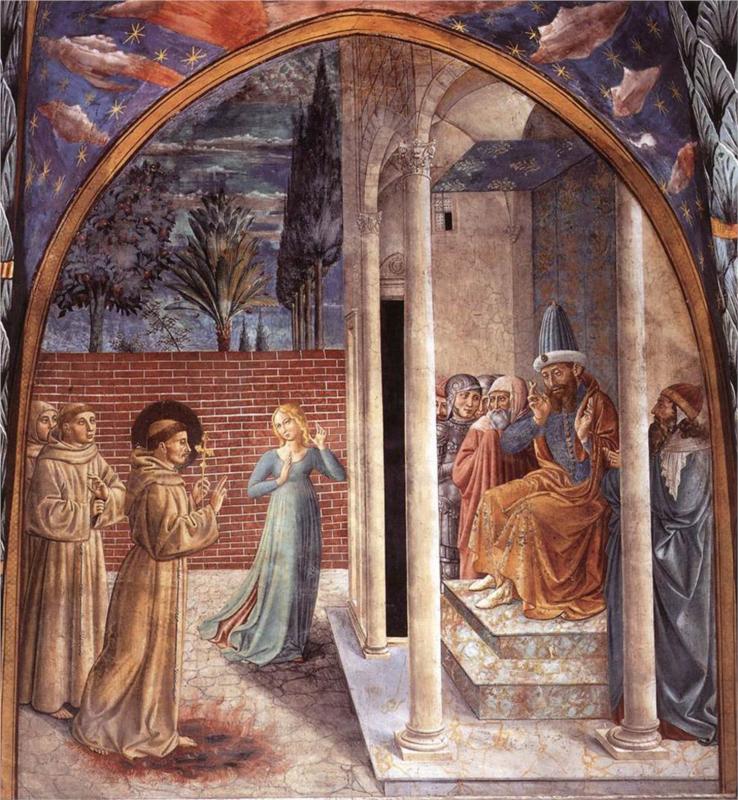
Chapter XVI
On the Worthy Praise of the Pure
Queen of Heaven
The
Servant: Oh, the great riches of the
Divine knowledge and wisdom! How very inscrutable are Thy judgments,
and how unknown Thy ways. How many a strange way hast thou of
bringing poor souls back to Thee! What were Thy thoughts, or how glad
at heart must Thou not have been in Thy eternal immutability, when
Thou didst so nobly create the pure, tender, illustrious creature
above all pure creatures! Lord, then couldst Thou indeed say: I think
the thoughts of peace.[8]
Lord, Thou hast, out of the abyss of Thy essential goodness,
reflected Thy glory interiorly to Thyself again, inasmuch as Thou
hast led back to their origin all beings gone astray in their divine
emanation. Yes, Heavenly Father, how should a sinful creature dare to
approach Thee, unless Thou hadst given him Thy own elected child,
Eternal Wisdom, for a guide? Yes, Eternal Wisdom, how should a sinful
creature dare at all times to discover his uncleanness before such
purity, unless indeed he took the mother of all compassion for his
protectress? Eternal Wisdom! If Thou art my brother, Thou art also my
Lord; if Thou art truly man, woe is me! So art Thou also truly God,
and a very severe judge of evil deeds. For this reason, when our poor
souls are in the narrow prison-house of fathomless sorrow of heart,
and we can neither stir here nor there, nothing remains for us except
to lift up our miserable eyes to thee, O chosen Queen of Heaven.
Therefore, thou mirror reflecting the brightness of the eternal sun,
thou hidden treasure of infinite compassion, this day do I and all
penitent hearts salute thee! O ye exalted spirits, ye pure souls,
stand forth, extol and praise, commend and exult in the ravishing
paradise of all delight, the sublime Queen! For I am not worthy to do
so, unless in her goodness she vouchsafe to allow me. O thou chosen
bosom friend of God, thou fair golden crown of Eternal Wisdom, permit
me, a poor sinner, even me in my weakness, to speak to thee a little
in confidence. With a trembling heart, with a countenance of shame,
with dejected eyes, my soul falls down before thee. O thou mother of
all graces, methinks neither my soul nor any other sinful soul
requires permission or a passport to repair to thee. Art thou not the
immediate mediatrix of all sinners? The more sinful a soul is, the
more reasonable it seems to her that she should have free access to
thee; the deeper she is in wickedness, the more reason she has to
press forwards to thee. Therefore, my soul, step joyfully forth! If
thy great crimes drive thee away, her unfathomable goodness invites
thee to draw near. O, therefore, thou only consolation of all sinful
hearts, thou only refuge of guilty mortals, to whom so many a wet
eye, so many a wounded, miserable heart is raised up, be a gracious
mediatrix and channel of reconciliation between me and the Eternal
Wisdom. O think, think, thou mild Queen elect, that thou derivest all
thy merits from us poor sinners. What was it made thee God’s
mother, made thee a casket in which the Eternal Wisdom reposed? O
Lady, it was the sins of us poor mortals! How couldst thou be called
a mother of graces and compassion, except through our wretchedness,
which has need of grace and compassion. Our poverty has made thee
rich, our crimes have ennobled thee above all pure creatures. O turn
hither then the eyes of thy compassion, which thy gentle heart never
turned from a sinner, from a forlorn mortal! Take me under thy
protection, for my consolation and confidence are in thee. How many a
guilty soul, after having bid farewell to God and all the heavenly
host, by denying God and despairing of Him, and being lamentably
separated from Him, has, by still clinging to thee, been sweetly
detained, till at length, through thy intercession, it has again
attained to grace. Who is the sinner, how great soever his crimes, to
whom thy overflowing goodness has denied assistance? Lo, when my soul
seriously reflects within herself, methinks it were only right, if it
were possible, that while my eyes wept for joy, my heart should leap
out of my mouth; so does thy name dissolve in my mouth like honey
from the comb. Even thou art called the mother, the Queen of
Compassion, yes, tender mother, yes, gentle mother of compassion! O
what a name! O how unfathomable is the being whose name is so rich in
grace! Did ever the melody of song resound as soothingly in an
agitated heart as thy pure name in our penitent hearts? At this
exalted name all heads in reason ought to incline, all knees to bend.
How often hast thou not put to flight the hostile powers of wicked
spirits, how often hast thou not allayed the angry justice of the
severe judge! How often hast thou not obtained from Him grace and
consolation! Yes, poor sinful mortals as we are, what have we to say
to it? How shall we ever acknowledge such great goodness? If all
angelic tongues, all pure spirits and souls, if heaven and earth and
all that is contained in them cannot properly praise her merits, her
ravishing beauty, her graciousness and immeasurable dignity, alas!
What shall we sinful hearts be able to do? Let us do our best, and
express to her our acknowledgements, our thanks; for indeed her great
kindness does not look at the smallness of the gift, it looks at the
purity of intention. Ah, sweet Queen, with what justice may not thy
sex rejoice in thy sweet name; for cursed was the first Eve that she
ever eat of the bitter fruit of the tree of knowledge; blessed be the
second Eve that she brought us again the sweet fruit of heaven! Let
no one lament over Paradise; one paradise we lost, and have won two
others. For is she not a paradise in whom grew the fruit of the
living tree? in whom all delight and joy are contained together? And
is not that also a paradise above every paradise in whom the dead
again live, if they only taste His fruit from whose hands, feet, and
side the living fountains which irrigate all the earth flow,[9]
the fountains of inexhaustible mercy, fathomless wisdom, overflowing
sweetness, ardent love, the fountains of eternal life? Truly, Lord,
whoever tastes of this fruit, whoever has drunk of this fountain,
knows that these two gardens of paradise far surpass the earthly
paradise. But thou, O Queen elect, art the gate of all grace, the
door of compassion, that never yet was shut. Heaven and earth may
pass away, ere thou wilt permit anyone who earnestly seeks thy
assistance to depart from thee without obtaining it. Behold, for this
very reason art thou the first object my soul sees when I awake, the
last when I lie down to sleep. How should anything which thy pure
hands present before God and commend unto Him, how small soever in
itself, be rejected? Take, O take, therefore, the smallness of my
works and present it, so that, in thy hands it may appear something
before the eyes of God Almighty. Even thou art the pure vessel of red
gold, melted down with graces, inlaid with precious emeralds, and
sapphires, and all virtues, whose single aspect, in the sight of the
heavenly King, surpasses that of all other creatures. O, thou lovely
divine spouse elect, if King Ahasuerus was captivated by the beauty
of Esther, if she was found pleasing in his eyes above all women, if
she found favour above them all, so that he did for her whatever she
desired, O thou, all red roses and lilies, surpassing beauty, how
justly may the King of Heaven be captivated by thy spotless purity,
thy meek humility, by the sweet smelling nosegay of all thy virtues
and graces! Or, who has ever caught the wild and noble unicorn, if
not thou?[10]
How infinitely pleasing, above all mortals, in His eyes is thy
delicate and love-inspiring beauty, before which all other beauty
fades like a glow-worm before the brightness of the sun. What
overflowing grace hast thou not found before Him for thyself and us
mortals who are without grace! How should, how can, then, the
Heavenly King deny thee anything? Truly mayest thou say, My Beloved
is mine, and I am His. Ah! Thou art God’s, and God is thine,
and ye two have an eternal and unfathomable reciprocation of love
which no duality can divide. Think of us poor needy ones, who
continue to wander so wretchedly in sorrowful affliction. Yes,
exalted Lady of heaven and earth, arise now and be to us a mediatrix,
and an obtainer of grace with thy tender Child, the Eternal Wisdom.
Ah, Eternal Wisdom, wilt Thou deny me anything? Even as I present
Thee before Thy heavenly Father, so do I present Thy pure tender
mother before Thee. Look at her mild eyes which so often looked
kindly on Thee; behold Those fair cheeks which she so often
affectionately pressed to Thy infant face. O look at her sweet mouth
which used to kiss Thee so fondly and tenderly again and again. Look
at her pure hands which so often ministered to Thee. O Thou goodness
above all goodness, how canst thou deny anything to her who suckled
Thee so affectionately and bore Thee in her arms; who laid Thee to
rest, wakened Thee and tenderly reared Thee! O Lord, let me remind
Thee of all the love Thou ever didst experience from her in Thy
childhood’s days, when Thou didst sit in her motherly lap, and
with Thy playful eyes didst laugh so pleasantly and tenderly in her
face with that fathomless love Thou hadst for her above all other
creatures! Think, too, of the heart-rending woe which her maternal
heart endured with Thee under the gibbet of Thy miserable cross,
where she saw Thee in the agony of death, and when her heart and soul
so often died away in sorrow and distress with Thee. Lord, I entreat
Thee, for her sake, to grant me every means of shaking off my sins,
of acquiring Thy grace, and never losing it again.
Chapter XVII
On the Unutterable Heart-Rending
Grief of the Pure Queen of Heaven
The
Servant: Who will give my eyes as many tears as there are
letters, so that with bright tears I may write down the miserable
tears of the unfathomable heart-rending grief of my Blessed Lady?
Pure Lady and noble Queen of Heaven and Earth, touch my stony heart
with one of thy scalding tears, one of those which thou didst shed in
bitter distress for thy tender Child under the wretched cross, so
that my heart of stone may be softened, and may hearken to thee; for
heart-rending grief is of such a nature, that no one can have a true
knowledge of it, except him whom it touches. Touch then my heart, O
Lady Elect, with thy sorrowful words, and tell me in short
significant terms, simply as an admonition, how it was with thee in
thy mind, and how thou didst support thyself at the foot of the
cross, when thou didst behold thy tender Child, the beautiful and
tender Wisdom, so lamentably expire.
Answer: Thou shouldst hearken
to it with sorrow and heartfelt woe; for although I am now exempt
from suffering, yet, at that time I was not. Before I had reached the
foot of the cross, I had endured many a great unspeakable anguish of
heart, especially at the spot where I first caught sight of the
beating, kicking, and ill-usage of my Child, on beholding which my
strength forsook me, and thus helpless was I carried after my dear
Son to the foot of the cross. But, in respect of what thou askest,
how I felt in my mind, and how I supported myself, listen to as much
as it is possible for thee to know; for the whole no heart that ever
was made can fathom. Understand, then, that all the sorrow that ever
could afflict a heart would only be as a drop in the ocean compared
to the unfathomable sorrow which my maternal heart at that time
endured; and, understand, at the same time, that the dearer, the
sweeter, the more precious the beloved one is, the more insupportable
is his loss and death. Now, where on the whole earth was there ever a
more tender one born, a lovelier one seen than my own best beloved
one, Jesus Christ, by whom and in whom I had entire possession of all
that the world could bestow? I was already dead to myself, and lived
only in Him, and when at last my own fair love was slain, then only
did I utterly die; and, as my only love was but one, and, moreover,
dear to me above all other loves, so my only sorrow was but one, and
a sorrow above all sorrows that ever were expressed. His fair and
gentle humanity was, to me, a delightful spectacle; His dignified
divinity was, to my eyes, a sweet contemplation; to think of Him was
my heart’s delight; to speak of Him was my pastime; to hear His
sweet words was music to my soul. He was my heart’s mirror, my
soul’s comfort; heaven and earth, and all that is in them, I
possessed in His sweet presence. Lo, when I saw my love suspended in
mortal agony before me, alas, the sight! Alas, what a moment was
that! How died my heart within me! How was my courage extinguished!
How did my strength fail me! How did all my senses forsake me! I
looked up, but I could not help my child. I looked down, and saw only
those who so cruelly ill-used Him. O how narrow then to me was all
this world! I had lost all heart; my voice had fled from me; I had,
moreover, lost all strength; and yet, when I came to myself, I raised
thy feeble voice, and spoke to my Child, complainingly, such words as
these: Alas, my Child! Alas, thou Child of mine! Alas, my heart’s
delightful mirror, in which I have so often taken delight to behold
myself, how do I now see Thee miserably suspended before me! Alas,
thou treasure above all this world! My mother, my father, and all
that my heart can express (such art Thou to me), take me with Thee!
Or, to whom wilt Thou leave Thy wretched mother? Oh, who will permit
me to die for Thee, to suffer for Thee this bitter death? Oh, misery
and distress of a love-torn mother, how am I robbed of all joy, of
all love, of all consolation! Oh, thou greedy death, why sparest thou
me? Take, take away the poor mother with her poor Child; to her, to
live is bitterer than to die! Him, even Him, whom my soul loveth, I
see dying! And as I thus lifted up my voice in lamentation, behold,
my Child consoled me very affectionately, and, among other things,
said: That in no other way might mankind be redeemed, and that on the
third day He intended to rise again and appear to me and His
disciples; and He said further: Woman, cease thy weeping; weep no
more, my fair mother, I will not forsake thee for ever! And while my
Child thus tenderly consoled me, and commended me to the disciple
whom He loved, and who also stood by, full of sorrow (those words of
His were conveyed to my heart in a tone so lamentable, and so broken
by sighs, that they pierced through my heart and soul like a sharp
sword), even the hard hearts of the Jews were moved to compassion for
me. I cast up my arms and my hands, and, in the anguish of my heart,
would gladly have embraced my beloved, yet this I might not do. And
then I sank down, overwhelmed by my heart-rending grief, at the foot
of the cross and became speechless; and when I returned to myself,
and could do nothing else, I kissed the blood that trickled down from
His wounds, so that my pale cheeks and mouth were all tinged with
blood.
The Servant: Ah, Thou
unfathomable goodness, what infinite torture, what infinite misery is
this! Whither shall I turn, or to whom shall I cast my eyes? If I
look up at the beautiful Wisdom, I only see woe and distress, at
which my heart is like to sink within me. They cry out and shout
against Him outwardly, the agony of death struggles with Him
inwardly, all His veins are on the rack, all His blood gushes away,
it is nothing but ejaculations of woe, and cheerless dying without
recovery. Then, if I but turn my eyes to His pure Mother, I see her
tender heart pierced, alas! With wounds as though a thousand blades
had transfixed it. I see her pure soul lacerated by woe. Never were
such gestures of misery and longing seen as hers, never motherly
lamentation heard like hers; deprived was her sick body of all
strength, her fair countenance besmeared with mortified blood. Oh,
great misery above all misery! The torture of His heart consists in
the affliction of His sorrowing Mother; the torture of His sorrowing
Mother consists in the innocent death of her beloved Son, more
painful to her than her own death. He beholds her and consoles her
tenderly; she stretches out her hands to Him, and would gladly die
instead of Him. Alas! Which of the two feels here the most bitterly?
Whose is the greater distress? To both it is so unfathomable that
there never was any equal to it. Alas! The motherly heart. Alas! The
tender womanly mind. How was thy maternal heart ever able to support
this infinite sorrow? Blessed be that heart compared to whose sorrow
everything that ever was uttered of a heart’s sorrow is only as
a dream to the reality. Blessed be Thou, O rising blush of morning,
above all creatures! And blessed be the flower-enamelled rose-scented
meadow of Thy fair countenance, adorned with the ruby red blood of
Eternal Wisdom! Alas! Thou affable countenance of beautiful wisdom,
how dost Thou fade in death! Alas! Thou beautiful body, how dost Thou
hang suspended! Woe is me, Thou pure blood, how hotly dost Thou run
down on Thy pure Mother who bore Thee! Lament, ye mothers, lament
with me over this affliction! All ye pure hearts, let this
rose-coloured, pure blood which so besprinkles your pure Mother, go
to your hearts! Behold, all hearts, ye who ever had sorrow, behold
and see, if ever there was sorrow like unto this sorrow! Truly, it is
a wonder that our hearts melt not here for pity and compassion; so
great, indeed, was this distress, that hard stones were rent asunder,
the earth trembled, the sun was extinguished, because they would fain
show compassion for their Creator!
Chapter XVIII
How It Was with Him at That Hour in
Regard of His Interior Man
The
Servant: Eternal Wisdom! The more one reflects on Thy measureless
Passion, the more unfathomable it appears. Thy extremity was so very
great under the cross, but still more so on the cross, according to
Thy exterior powers which, at that hour, felt all the pangs of bitter
death. But, gentle Lord, how was it with Thy interior Man, with Thy
noble Soul? Had it no consolation, no sweetness like other martyrs’
souls, so as to mitigate its cruel sufferings? Or, when did Thy
sufferings come to an end?
Eternal Wisdom: Now, hearken
to a misery of miseries, such as thou never yet didst hear of.
Although My soul, according to her highest powers, was at that time
wrapt in the vision and enjoyment of the pure divinity, noble as, in
truth, she is, behold, the lower powers of My exterior and interior
nature were yet wholly abandoned to themselves, even to the very last
drop of infinite bitterness of suffering, without any consolation, so
that no torment was ever equal to it. And as I was thus left entirely
helpless and forsaken, with running wounds, with weeping eyes, with
extended arms, with the veins of My body on the rack, in the agony of
death, then it was that I lifted up My voice in lamentation, and
cried out miserably to My Father: My God, My God, why hast Thou
forsaken Me? And still in all this, My will was united in eternal
conformity with His will. And when all My blood was poured out, and
all My strength exhausted, behold, I was seized by a bitter thirst,
because of My mortal agony. But I thirsted still more for the
salvation of man. Then did they reach Me vinegar and gall to quench
the burning thirst of My parched mouth. And when I had accomplished
the work of human redemption, I cried out: It is finished! I was
entirely obedient to My Father, even unto death. My spirit I
commended into His hands, saying: Into Thy hands I commend My Spirit.
And then My noble Soul separated from My body, both of which yet
remained unseparated from the divinity! After this a sharp spear was
thrust into My right side; forthwith a stream of precious blood
gushed out, and with it a fountain of living water. Behold, My child,
in an extremity so pitiable as this did I redeem thee, and all the
elect, and did save thee by the living sacrifice of My innocent blood
from everlasting death.
The Servant: Alas! Tender and
loving Lord and Brother, with what sorrowful, what bitter toil didst
Thou not reap me in! Alas! Noble Lord, how ardently didst Thou love
me, how generously didst Thou redeem me! Woe is me, Thou fair Wisdom,
how shall I ever be in a condition to acknowledge Thy love and Thy
sufferings? If I had Samson’s strength, Absalom’s beauty,
Solomon’s wisdom, and the riches and greatness of all kings, my
only wish would be to devote them to Thy praise and service. But,
Lord, I am nothing, and therefore can do nothing. O Lord, how am I to
thank Thee?
Eternal Wisdom: If thou hadst
the tongues of all the angels, the good works of all mankind, and the
powers of all created beings, thou yet couldst not thank Me, nor
requite Me, for the least pang which I suffered for the love of thee.
The Servant: Tender Lord,
inform and teach me, then, how I may become pleasing to Thee by means
of Thy grace, since no one is able to make Thee a return for the
tokens of Thy love.
Eternal Wisdom: Thou shouldst
often set My sorrowful cross before thy eyes, and let My bitter
torments penetrate to thy heart, and shape thy own sufferings after
them. If I allow thee to pine and wither in disconsolate affliction
and dryness, without any sweetness, thou shouldst not seek after
strange consolation. Let thy cry of misery rise to thy heavenly
Father with a renunciation of thyself and all thy desires, according
to His Fatherly will. The bitterer thy suffering is from without, and
the more resigned thou art from within, the more like art thou to Me,
and the more dear to My heavenly Father, for herein the most pious
are put to the strongest proof. What though thy desires may have a
thirsty craving to seek satisfaction and delight in something that
might be pleasant to them, yet shouldst thou forego it for My sake,
and thus will thy thirsty mouth be steeped with me in bitterness.
Thou shouldst thirst after the salvation of men. Thy good works thou
shouldst direct to a perfect life, and persevere to the end. Thy will
must be subject, thy obedience prompt to thy superiors; thy soul, and
all that belongs to it, thou must surrender into thy heavenly
Father’s hands, and thy spirit must ever be dying out of time
into eternity, in prefiguration of thy last journey. Behold, thus
will thy cross be shaped after My miserable cross, and worthily
accomplished in it. Thou shouldst wholly lock thyself up with My
love-wounded heart in My open side, and dwell there, and seek there
thy resting-place. Then will I wash thee with the waters of life, and
deck thee out with My precious blood, in purple. I will associate
Myself to thee, and unite thee with Myself eternally.
The Servant: Lord, never was
there any magnet so powerful in attracting hard iron to itself, as
Thy love-fraught Passion, thus presented to my soul, is powerful to
unite to itself all hearts. Alas! Thou loving Lord, draw me now by
means of love and sorrow away from this world to Thee on Thy cross,
fulfill in me the closest resemblance to Thy cross, so that my soul
may enjoy Thee in Thy highest glory.
Chapter XIX
On the Taking Down from the Cross
The
Servant: Ah, pure Mother and tender Lady! When did thy great and
bitter affliction of heart which thou hadst for thy Son, come to an
end?
Answer: Listen to my words
with sorrowful compassion. When my tender Child had expired, and when
He hung suspended before me, and all the strength of my heart was
utterly broken, though I could do nothing else, I yet cast many a
glance up at my dead Child. And when they came to take Him down, it
was as if I had been roused from the dead. With what motherly love
did I receive His lifeless arms, with what sighs of love did I not
press them to my blood-stained cheeks, and when He was lowered down
to me, how affectionately beyond measure did I not embrace Him, dead
as He was in my arms; how did I not strain to my heart my only love
elect, and kiss again and again the fresh bleeding wounds of His
face! And, yet, with what ravishing beauty His entire body was
transformed, all hearts could not sufficiently contemplate. Then did
I take my tender Child on to my lap, and look at Him. I looked at
Him, and He was dead! I looked at Him again and again, but He had
neither voice nor consciousness. Then did my heart die within me
again, and had well-nigh burst into a thousand pieces. Then did I
fetch many a deep and heart-rending sigh, my eyes shed many tears, my
whole figure was deplorable to see, scarcely had my doleful words
reached my lips, when they were choked by grief, and only half
expressed. Alas, alas, cried I, whenever was anyone so cruelly used
on earth as Thou, my innocent and beloved Child! Alas, my Child, my
only consolation, my only joy, how art Thou changed for me into a
source of much bitterness! Where is now the joy I experienced at Thy
birth? Where the delight I had in Thy childhood? Where the honour and
dignity I had in Thy presence? Whither is all gone that could ravish
my heart? Oh sorrow! Oh anguish! Oh bitterness! Oh desolation of
heart! Truly is everything transformed into an unfathomable
desolation of heart, into a mortal agony! Alas, Thou Child of mine,
how am I so shorn of all love, how has my heart become utterly
disconsolate! Such, and many such words of lamentation did I utter,
because of my deceased Child.
The Servant: Oh, pure and
beautiful Mother, permit me once more to console my heart in this
moment with thy dear Child, my Lord, the Eternal Wisdom, before the
hour of separation comes, before He is snatched away from us to the
grave. Immaculate Mother! However unfathomable thy heart’s
affliction was, however strongly it may touch all other hearts, thou
didst yet, methinks, find some pleasure in the affectionate embracing
of thy deceased Child. Oh, pure and gentle Lady, I desire that thou
wouldst offer me thy dear Child, as He appeared in death, on the lap
of my soul, so that I may experience, according to my ability, in
spirit and meditation, what thou didst in thy body. Lord, my eyes are
turned to Thee in the most rapturous joy and in deepest, heart-felt
love, such as no only love was ever regarded with by the beloved.
Lord, my soul expands to Thy embrace even as the tender rose expands
to the pure sun’s brightness. Lord, my soul stretches out her
arms to Thee with infinite desire. Oh, my loving Lord, with ardent
desire I embrace Thee to-day, and press Thee to the bottom of my
heart and soul, and put Thee in mind of the loving hour of Thy death,
that Thou mayest never allow it to be lost in me; and I request that
neither life, nor death, nor joy, nor sorrow, may ever separate Thee
from me. Lord, my eyes contemplate Thy dead countenance, my soul
kisses again and again all Thy fresh bleeding wounds, all my senses
are fed with this sweet fruit beneath the living tree of the cross;
and it is reasonable, for this person consoles himself with his
innocent life, the other with his great exercises and strict conduct;
the one with this, the other with that; but, as for me, all my
consolation, all my trust, are lodged wholly in Thy Passion, in Thy
satisfaction and merited reward, and, therefore, I shall at all times
carry Thy Passion joyfully in the bottom of my heart, and show the
image of it outwardly, in words and deeds, to the utmost of my
ability.
Oh, enchanting brightness of eternal
light, how art Thou now for me utterly extinguished! Extinguish in me
the burning lust of all vice.
Oh, pure transparent mirror of divine
majesty, how art Thou now defiled! Cleanse away the great stains of
my evil deeds!
Oh, beautiful image of paternal
goodness, how art Thou befouled and utterly defaced! Restore the
defaced and faded image of my soul!
Oh, Thou innocent Lamb, how
wretchedly art Thou used! Amend and atone for my guilty, sinful life!
Oh, Thou King of all kings, and Lord
of all lords, how does my soul see Thee lying here in so lamentable
and ghastly a plight! Grant, that since my soul now embraces Thee
with sorrow and lamentation in Thy dereliction, she may be embraced
by Thee with joy in Thy everlasting glory. Amen.
Chapter XX
On the Lamentable Separation of the
Grave
The
Servant: Now, tender Lady, put an end to thy sorrow and thy sad
recital, and tell me how thou didst separate from thy Beloved.
Answer: It was a misery to see
and hear. Alas, all was yet supportable, while I had my Child with
me; but when they tore my dead Child from my blighted heart, from my
embracing arms, from my face pressed to His, and buried Him, what a
wailing I set up in that hour would hardly be believed; and then when
it came to the separation, oh, what an agony, what woe, were seen in
me! For when they separated me from my Beloved, the separating
wrestled with my heart like bitter death. Supported by their hands
who led me away, I walked with tottering steps, for I was robbed of
all consolation, my heart longed woefully to return to my Love, my
confidence was wholly set in Him, I rendered Him alone of all mankind
entire fidelity and true attachment, even to the grave.
The Servant: Oh, affectionate
and tender Lady, for this do all hearts greet thee, all tongues
praise thee, since all the good that the Fatherly heart has
vouchsafed to give us, flowed through thy hands. Thou are the
beginning, thou art the means, thou shalt also be the end. Alas, pure
and tender Mother, let me remind thee to-day of thy miserable
separation; think of thy bitter separating from thy tender Child, and
help me that I may not be separated either from thee or from His
joyous countenance.
Yes, pure Mother, even as my soul now
stands by thee with compassionate sympathy, and embraces thee with
ardent desire, and, in contemplation with heartfelt desire, with
thanksgiving and praise, leads thee from the sepuchre through the
gate of Jerusalem back again to thy house, so do I crave that, at my
last departure, my soul may be again led by thee, O pure and tender
Mother, to its Fatherland, and there be confirmed in everlasting
bliss. Amen.
The Second Part
Chapter XXI
How We Should Learn to Die, and of
the Nature of an Unprovided Death
The
Servant: Eternal Wisdom! If any one were to give me the whole
earth for my own, it would not be so agreeable to me as the truth and
the advantage which I have found in Thy sweet doctrines. Therefore,
do I desire from the very bottom of my heart that Thou, the Eternal
Wisdom, wouldst teach me still more. Lord, what is that which
belongs, above all things, to a servant of Eternal Wisdom, who is
desirous to live for Thee alone? Lord, I should like to hear about
the union of pure reason with the Holy Trinity, when, in the true
reflection of the eternal birth of the Word, and in the regeneration
of her own Spirit, reason is ravished from herself and stands face to
face with God.
Eternal Wisdom: Let not him
ask about what is highest in doctrine, who still stands on what is
lowest in a good life. I will teach thee what will profit thee more.
The Servant: Lord, what wilt
Thou teach me?
Eternal Wisdom: I will teach
thee to die and will teach thee to live. I will teach thee to receive
Me lovingly, and will teach thee to praise Me lovingly. Behold, this
is what properly belongs to thee.
The Servant: Eternal Wisdom,
if I had the power to fulfill my wishes, I know not whether, in this
temporal state, I ought to wish anything else, as to doctrine, than
how to die to myself and all the world, how to live wholly for Thee,
to cherish Thy love with all my heart, to receive Thee lovingly, and
to praise Thee lovingly. O God, how blessed is that man who is able
to do this, and who consumes in it his whole life. But, Lord, dost
Thou mean a spiritual dying or a bodily dying?
Eternal Wisdom: I mean both
one and the other.
The Servant: What need have I,
Lord, of being taught to die bodily? Surely it teaches itself when it
comes.
Eternal Wisdom: He who puts
his teaching off till then, will find it too late.
The Servant: O Lord, it is
still somewhat bitter for me to hear about death.
Eternal Wisdom: Behold, even
this is the source of those unprovided and terrible deaths whereof
the towns and convents now are full. Behold, death has often bridled
thee secretly, and had fain ridden thee from hence, in the same way
as he does the countless multitude, one of whom I will now show thee.
Open, therefore, thy interior sense, and see and listen; see what
grim death is like in the person of thy neighbour, do but mark the
lamentable voice thou wilt hear.
The
Servant heard with his understanding the voice of an unprepared dying
man cry aloud and speak as follows: The sorrows of death have
surrounded me.[11]
Woe is me, Thou God of Heaven, that ever I was born into the world.
The beginning of my life was with crying and weeping, and now my
departure from it is also with bitter crying and weeping. Alas, the
sorrows of death have surrounded me, the pains of hell have
encompassed me! O death, O furious death, what an unwelcome guest
thou art to my young and joyous heart! How little was I prepared for
thy coming! Thou hast attacked me from behind, thou hast run me down.
Thou leadest me away in thy chains like one that leads a condemned
man bound and fettered to the place where he is to be slain. I clasp
my hands above my head, I wring them with anguish in each other, for
gladly would I escape from him. I look around me into all the ends of
the earth to see if any one will give me advice or help, and it
cannot be. Death I hear thus fatally speaking within me: Neither
learning, nor money, nor friends can avail thee; thou art mine by
right. Alas, and must it be so? O God, and must I then depart from
hence? Is a last separation really at hand? Woe is me that ever I was
born! O death, what art thou going to do with me?
The Servant: Dear man, why
dost thou take it so hard? This is the common lot of rich and poor,
young and old. Many more have died in their youth than in their old
age. Or wouldst thou, perhaps, alone escape death? This would prove a
great want of understanding in thee.
The unprepared dying man: O
Lord, what bitter consolation is this! I am not without
understanding. Those are without understanding who have not lived for
Him, and who are not frightened at death. Such persons are blind;
they die like cattle; they know not what they have before them. I do
not complain that I must die; I complain that I must die unprepared.
I do not merely lament the end of my life, I lament and weep over the
delightful days which are so utterly lost and vanished without any
profit. For truly I am like an untimely and rejected abortion, like a
blossom torn off in May. My days have sped swifter than an arrow from
the bow. I am forgotten as though I had never been, like a track
which a bird makes through the air, which closes behind it and is
unknown to all men. Therefore are my words so full of bitterness,
therefore is my speech so full of woe! Oh, who will enable me to be
as I once was, to have again those pleasant times before me, and to
know then what I know now! When those times were mine I did not
rightly estimate them; I, foolish man, let them pass swiftly away;
now are they vanished from me; I cannot recall them, I cannot
overtake them. No hour so short but I ought to have valued it more
preciously and thankfully than a poor man about to receive a kingdom
as a gift. Lo, this is why my eyes shed salt tears, because they
cannot restore what I have lost. Woe is me, O God; that I should have
feasted so many days away, and that it profits me now so little. Why
did not I learn to die all the time? O ye blooming roses, that have
still your days before you, look at me and learn wisdom; turn your
youth to God, and with Him alone occupy your time, so that what has
happened to me may not happen to you. Ah, me! How have I consumed my
youth! No one would I believe; my wayward spirit would listen to no
one. Alas, now am I fallen into the snare of bitter death! My days
have vanished, my youth has sped. Better were it for me had my
mother’s womb become my grave than that I should so have
squandered away my time.
The Servant: Be converted to
God; repent of thy sins; if thy end be well, then will all be well.
Unprepared dying man: Alas, what do I
hear? How shall I do penance? How shall I now be converted to God?
Seest thou not how terrified I am, how exceeding great is my
distress? Even as a little bird caught in the claws of a cruel
falcon, and become senseless in the agony of dying, I am unconscious
of everything except that I would gladly escape and cannot. Death and
the bitterness of separation oppress me. Alas, the repentance and
free conversion of him who is capable of right doing, what a sure
thing you are! He who puts you off will hardly fail of being himself
put off. O long protraction of my amendment, how much too protracted
hast thou not proved! My good intentions without works, my good
promises without performance, have ruined me. I have said to God,
Tomorrow and to-morrow, till I am fallen into the night of death. O
Thou Almighty God, is it not a misery above all miseries, ought it
not deeply to afflict me, that I should thus have lost the whole of
my life, my thirty, my forty years? I know not that I ever spent a
day wholly according to God’s will, or that I ever rendered to
God, as in reason I ought to have done, a truly acceptable service.
Oh, how the thought cuts me to the heart! O God, how wretchedly shall
I not stand before Thee and the whole heavenly host! Lo, now I am
departing hence; and now, even at this hour, a single Pater Noster,
uttered with devotion, would rejoice me more than if anyone were to
put into my hands a thousand pounds of gold. Ah, my God, what have I
not eternally neglected, what evil have I not inflicted on myself in
not having seen this while it was in my power! What hours upon hours
have escaped me! How have I allowed myself to be led wrong by small
things in the great affair of my salvation! It would now be more
agreeable to me, and would procure me more eternal reward if, from
divine love, I had foregone the pleasure I took at the sight of a
friend, when such pleasure was contrary to God’s will, than if
that friend were to demand a reward for me from God thirty years long
on his knees. Hear, hear, all men, a lamentable thing: I go begging
round and round, because my time is short, and beg a small alms out
of the merits of good people as an expiation for myself, and it is
refused me; for they are all afraid lest they should want oil in
their lamps. Alas, Thou God of Heaven, let this move Thy compassion,
that with my healthy body I could have earned such great reward and
wealth on so many a day when I went about idle, and that now this
small alms, begged only as an expiation, not as a reward, for which,
moreover, I should stand indebted, no one will give me. Oh, let this,
ye old and young, go to your hearts, and hoard up in the good season
while ye can, so that ye may not become beggars, and be denied in an
hour like this.
The Servant: Alas, my dear
friend, thy distress rends my very heart. By the living God, I
conjure thee, give me some advice so that I may not come into
trouble.
The unprepared dying man: The
best advice I can give thee, the greatest wisdom and prudence on
earth, is this: That thou prepare thyself by a full confession of and
an abstinence from all those things with which thou knowest thyself
to be infected, and that thou hold thyself at all times ready, as
though thou shouldst have to depart hence in a day, or at latest in a
week. Imagine now, in thy heart, that thy soul is in Purgatory, and
doomed to remain there ten years for her evil deeds, and that this
year alone is granted thee to help her in. Look at her very often,
see how woefully she calls out to thee and speaks to thee: O thou my
best beloved friend, reach me thy hand, have pity on me, and help me
to pray that I may speedily come out of this raging fire of
Purgatory, for I am so miserable, that there is nobody, except thee
alone, to help me, with charitable works. I am forgotten by all the
world, because everyone is busy about himself.
The Servant: This were a
choice doctrine for whoever might actually feel it like Thee in their
hearts. But though Thy words are so piercing, yet do people sit here
and give little heed to them; they have ears and hear not; they have
eyes and see not; no one will really die before his soul departs out
of him.
The unprepared dying man:
Wherefore, when at last they are caught on the hook of death, and cry
aloud in woeful distress and cruel pain, they are not heard. Lo, even
as among a hundred persons who wear the appearance of holiness (of
others I will say nothing), not one pays attention to my words, that
he may be converted and reform his life, so is it come to that pass
that among a hundred, not one but falls into the snare of death
unprepared; as also certainly happens to those who die suddenly, or
in an unconscious state; for the comforts of the body, perishable
love, and the greedy pursuits of sustenance, blind the multitude. But
if thou wouldst be delivered from this miserable and unprovided
death, then follow my advice. Behold, diligent meditation on death,
and faithful assistance given to thy poor soul, who appeals so
piteously to Thee, will advance thee so far that thou wilt not only
be without fear, but more, thou wilt expect death with all the ardour
of thy heart. Think of me every day, and write down my words in the
bottom of thy heart. In my bitter distress see what thy future lot
will be; look what a night this is. Oh, happy the man, that ever he
was born, who arrives well prepared at this hour, for his passage
will be a good one, however bitter his death; behold the bright
angels will guard him, the saints escort him, the celestial court
receive him; his final marching forth will be a glorious entry into
his everlasting fatherland. But me, alas! Where will my soul lodge
this very night in that strange, mysterious country? Oh, my soul, how
art thou utterly forsaken! O God, how very miserable she will be
among all miserable souls! Who is there that will help her with
entire fidelity? And now let me put an end to my sad complaints; for
my hour is come. I see now that it cannot be otherwise. My hands
begin to grow cold, my face to turn livid, my eyes to lose their
sight. Alas, the shocks of furious death wrestle with my poor heart.
I begin to fetch my breath very hard. The light of this world begins
to vanish from me. I begin to see into the next world. O God, my God,
what a sight! The horrible forms of black Moors assemble together;
the wild beasts of hell surround me. They gloat over my poor soul to
see if it will be theirs. O Thou just judge of the severe judgment
seat, how very heavy in Thy scales are those things which in ours are
so light! The cold sweat of death bursts, from very anxiety, through
my flesh. Oh, the wrathful aspect of the severe judge, how very sharp
Thy judgments are! Now let me turn in spirit to that world where I am
led by the hand into Purgatory, and where, in the land of torments, I
see anguish and distress. O God, I see the wild, hot flames dart up
on high, and meet over the heads of suffering souls. They wander up
and down amid the dark flames, and great is their affliction. What
heart would like to contemplate our pangs, the bitterness of our woe?
Many a sad cry is heard. Help! Help! Ah, where is all the help of our
false friends? Where are the fair promises of our false friends? How
have they deserted us, how have they utterly forgotten us! Oh, have
pity on us, some little pity; at least you our best beloved friends!
What services have we not rendered you, and how are we now repaid. Oh
that we should not have warded off these sufferings when we could
have done so with things so trifling! Is not the least torment here
greater, much greater, indeed, than any torment ever was on earth?
One hour in Purgatory lasts a hundred years. Lo! now we boil, now we
burn, now we shriek aloud for help; but, more than all it is our
misfortune to be deprived so long of the joy of His countenance; this
it is that cuts through the heart, the sense, the soul!; And thus I
expire.
The
Servant: O Eternal Wisdom, how hast
Thou forsaken me! O God, how has death all at once become present
before me! Alas, thou soul of mine, art thou still in my body? Lord
of Heaven, do I still live? Ah, Lord, now will I praise Thee, and vow
reformation to Thee till death. Oh, how very terrified I am! I did
not think death was so near me. Truly, Lord, this sight shall not
fail to profit me; every day I will be on the watch for death, and
will look about me that he take me not by surprise. I will learn how
to die; I will turn my thoughts to yonder world. Lord, I see that
there is no remaining here; Lord, in sooth, I will not save up my
sorrow and repentance till death. Oh, how terrified I am at this
spectacle, I marvel that my soul is still in my body! Begone, begone,
from me, soft reclining, long sleeping, good eating and drinking,
perishable honours, delicateness and luxury! If but a little
suffering here is so painful to me, how shall I ever endure
immeasurable agony? O God, if indeed I were now to die thus, how
would it be with me? What a load have I not still upon me! Lord, this
very day I will set a poor man[12]
to pray for my poor soul, and since all her friends have forsaken her
I will befriend her.
Eternal Wisdom: See; this
shouldst thou diligently look to whilst thou art in thy youth, and
whilst thou hast still time to make things better. But when, in
truth, thou hast reached this hour, and thou canst not make things
better, then shouldst thou look at nothing on earth, except My death
and My infinite mercy; so that Thy trust may repose wholly in Me.
The Servant: O Lord, I
prostrate myself at Thy feet, and I beseech Thee with bitter tears to
chastise me here as Thou wilt, only keep it not in store for me in
the next world. Woe is me, Lord, the fire of Purgatory and its
unspeakable torments, how could I ever be so foolish as to think
lightly of them, and how do I now stand in such great fear of them!
Eternal Wisdom: Be of good
heart, this thy fear is the beginning of wisdom, and a path to
salvation. Or hast thou forgotten how all the Scriptures declare what
great salvation is contained in the fear and diligent contemplation
of death? Thou shouldst always praise God, for not to one in a
thousand has it been granted to know Him, as to thee. Listen to a
lamentable thing: they hear it spoken of; they know of it beforehand,
and yet they allow it to pass by, and heed it not till they be
swallowed up by it, and then they howl and weep when it is too late.
Open thy eyes, count upon thy fingers, see how many of them have died
around thee in thy own times; talk with them a little in thy heart;
join thy old man to them as though it were dead; question them
together; see with what fathomless sighs, with what bitter tears they
will say: Oh, blessed is he that ever he was born, who follows sweet
counsel and, in the misfortunes of others, learns wisdom! Prepare
thyself well for thy departure hence; for truly thou sittest as a
bird on the bough, and art as a man who stands on the water’s
edge, and looks at the swift sailing ship in which he will presently
take his seat, and sail away for a strange land whence he will never
more return. Therefore, so regulate thy life that when the ship comes
for thee thou mayest be ready, and mayest joyfully take thy departure
hence.
Chapter XXII
How One Should Live an Interior and
Godly Life
The
Servant: Lord, many are the rules, many the ways of a godly life,
the one is so, the other so. Many and various are the ways. Lord, the
Scriptures are inexhaustible, their precepts innumerable. Teach me, O
Eternal Wisdom, in a few words, out of the abyss of all the things
they contain, to what I ought chiefly to hold fast in the way of a
truly pious life.
Eternal Wisdom: The truest,
most useful, and most practical doctrine for thee in all the
Scriptures that, in a few words, will more than amply convince thee
of all the truth requisite for the attainment of the summit of
perfection in a godly life, is this doctrine: Keep thyself secluded
from all mankind, keep thyself free from the influence of all
external things, disenthrall thyself from all that depends on chance
or accident, and direct thy mind at all times on high in secret and
divine contemplation, wherein, with a steady gaze from which thou
never swervest, thou hast Me before thy eyes. And as to other
exercises, such as poverty, fasting, watching, and every other
castigation, bend them all to this as to their end, and use just so
much and so many of them as may advance thee to it. Behold, thus wilt
thou attain to the loftiest pitch of perfection, that not one person
in a thousand comprehends, because, with their end in view, they all
continue in other exercises, and so go astray the long years.
The Servant: Lord, who can
exist in the unswerving gaze of Thy divine vision at all times?
Eternal Wisdom: No one who
lives here below in this temporal scene. This has been said to thee
only that thou mightest know at what thou shouldst aim, after what
thou shouldst strive, to what thou shouldst turn thy heart and mind.
And if ever thou losest sight of it, let it be to thee as if thy
eternal salvation were taken away from thee; and do thou speedily
turn to it again, so that thou mayest again obtain possession of it;
and then must thou look carefully to thyself, for, if it escape from
thee, thou art like a sailor from whose grasp the oars in a strong
swell have slipped, and who does not know whither he shall direct his
course. But if thou mayest not as yet have a constant abiding place
in divine contemplation, let the perpetually repeated collecting of
thy wandering thoughts, and the assiduous withdrawing of thyself to
engage in it, procure thee constancy so far as it is possible.
Listen, listen, My child, to the faithful instructions of thy
faithful Father. O give heed to them! Shut them up in the bottom of
thy heart; think Who it is that teaches thee all this, and how very
much in earnest He is. Dost thou wish to become ever more and more
faithful? Then set My precepts before thy eyes. Wherever thou
sittest, standest, or walkest, think that I am present to thee, and
that I either admonish or converse with thee. O, My child, keep
within thyself keep thyself pure, disengaged, and retired. See, in
this way wilt thou become conscious of My words; that good, too, will
be made known to thee which, as yet, is greatly hidden from thee.
The Servant: O, Eternal
Wisdom, praised be Thou for ever! Ah, my Lord and most faithful
friend, if I would not do it otherwise, Thou wouldst yet force me to
do it with Thy sweet words and Thy gentle teaching. Lord, I ought and
will do my very best towards it.
Chapter XXIII
How We Ought Lovingly to Receive
God
The
Servant: Eternal Wisdom, if my soul could only penetrate the
heavenly shrine of Thy divine mysteries, I would question Thee
further about love. And this would be my question: Lord, Thou hast so
entirely poured out the abyss of Thy divine love in Thy Passion, that
I wonder if Thou canst show any more signs of Thy love?
Eternal Wisdom: Yes. Even as
the stars of heaven are countless, so the love-tokens of My
unfathomable love are uncounted.
The Servant: Ah, sweet Love of
mine! Ah, tender Lord elect! How my soul languishes for Thy love!
Turn Thy mild countenance towards me, outcast creature that I am; see
how everything vanishes and passes away in me except only the one
treasure of Thy ardent love, and therefore tell me something further
of this rich and hidden treasure. Lord, Thou knowest well that it is
love’s right never to be satisfied with what concerns the
Beloved; that the more it has the more it desires, how unworthy
soever it may acknowledge itself to be, for such is the effect of the
omnipotent power of love. O, beautiful Wisdom, now tell me the
greatest and dearest mark of Thy love that in Thy adopted human
nature Thou didst ever manifest, without taking into account the
unfathomable love-token of Thy bitter death.
Eternal Wisdom: Answer Me now
a question. What is that of all lovely things which is most agreeable
to a loving heart?
The Servant: Lord, to my
understanding nothing is so agreeable to a loving heart as the
beloved Himself and His sweet presence.
Eternal Wisdom: Even so. See,
and on this account, that nothing which belongs to true love might be
wanting to those who love Me, did My unfathomable love, as soon as I
had resolved to depart by death out of this world to My Father,
compel Me to give Myself and My loving presence at the table of the
last supper to My dear disciples, and in all future times to My
elect, because I knew beforehand the misery which many a languishing
heart would suffer for My sake.
The Servant: Oh, dearest Lord,
and art Thou Thyself, Thy very Self, really here?
Eternal Wisdom: Thou hast Me
in the sacrament, before thee and with thee, as truly and really God
and Man, according to soul and body, with flesh and blood, as truly
as My pure Mother carried Me in her arms, and as truly as I am in
heaven in My perfect glory.
The Servant: Ah, gentle
Wisdom, there is yet something in My heart, may I be allowed to utter
it to Thee? Lord, it does not proceed from unbelief, I believe that
what Thou willest Thou canst do; but, tender Lord, it is a marvel to
me (if I may venture to say so) how the beautiful, the delightful and
glorified body of my Lord in all its greatness, in all its divinity,
can thus essentially conceal itself under the little shape of the
bread which, relatively considered, is so out of all relation. Gentle
Lord, be not angry with me on this account, for, as Thou art my
Wisdom elect, I should be glad by Thy favour to hear something on
this head out of Thy sweet mouth.
Eternal Wisdom: In what manner
My glorified body and My soul, according to the whole truth, are in
the Sacrament, this can no tongue express, nor any mind conceive, for
it is a work of My omnipotence. Therefore oughtest thou to believe it
in all simplicity, and not pry much into it. And yet I must say a
little to thee about it. I will thrust this wonder aside for thee
with another wonder. Tell Me how it can be in nature that a great
house should shape itself in a small mirror, or in every fragment of
a mirror, when the mirror is broken? Or, how can this be, that the
vast heavens should compress themselves into so small a space as thy
small eye, the two being so very unequal to each other in greatness?
The Servant: Truly, Lord, I
cannot tell, it is a strange thing, for my eye is to the heavens but
as a small point.
Eternal Wisdom: Behold, though
neither thy eye nor anything else in nature is equal to the heavens,
and yet nature can do this thing, why should not I, the Lord of
nature, be able to do many more things above nature? But now, tell me
further, is it not just as great a miracle to create heaven and
earth, and all creatures out of nothing, as to change bread invisibly
into My body?
The Servant: Lord, it is just
as possible for Thee, so far as I can understand, to change something
into something, as to create something out of nothing.
Eternal Wisdom: Dost thou
wonder then at that, and not at this? Tell Me further, thou believest
that I fed five thousand persons with five loaves, where was the
hidden matter which obeyed My words?
The Servant: Lord, I know not.
Eternal Wisdom: Or dost thou
believe thou hast a soul?
The Servant: This I do not
believe, because I know it, for otherwise I should not be alive.
Eternal Wisdom: And yet thou
canst not see thy soul with thy bodily eyes.
The Servant: Lord, I know that
there are many more beings invisible to human eyes than such as we
can see.
Eternal Wisdom: Now listen:
many a person there is of senses so gross as hardly to believe that
anything which he cannot perceive with his senses really exists,
concerning which the learned know that it is false. In like manner
does the human understanding stand related to divine knowledge. Had I
asked thee how the portals of the abyss are constructed, or how the
waters in the firmament are held together, thou wouldst perhaps have
answered thus: It is a question too deep for me, I cannot go into it:
I never descended into the abyss, nor ever mounted up to the
firmament. Well, I have only asked thee about earthly things which
thou seest and hearest, and understandest not. Why shouldst thou
wish, then, to understand what surpasses all the earth, all the
heavens, and all the senses? Or why wilt thou needs inquire into it?
Behold, all such wondering and prying thoughts proceed alone from
grossness of sense, which takes divine and supernatural things after
the likeness of things earthly and natural, and such is not the case.
If a woman were to give birth to a child in a dark tower, and it were
to be brought up there, and its mother were to tell it of the sun and
the stars, the child would marvel greatly, and would think it all
against reason and incredible, which its mother, nevertheless, knows
so well to be true.

The Servant: Indeed, Lord, I
have nothing more to say, for Thou hast so enlightened my faith that
I ought never to think of marvelling in my heart again, or why should
I seek to enquire into the highest, who cannot comprehend the lowest?
Thou art the truth which cannot lie; Thou art the highest wisdom that
can do all things; Thou art the omnipotent who can dispose of all
things. Oh, noble and loving Lord, I have often desired in my heart
that, like holy Simeon in the temple, I might have received Thee
bodily in my arms, might have pressed Thee to my heart and soul, so
that the spiritual kiss of Thy presence might have been as truly mine
as it was his. But now, Lord, I see that I receive Thee as truly as
he, and so much the more nobly as Thy tender body is now glorified,
and impassible, which then was passible. Wherefore, dearest Lord, if
my heart had the love of all hearts, my conscience the purity of all
the angels, and my soul the beauty of all souls so that by Thy grace
I should be worthy of Thee, I would fain receive Thee to-day so
affectionately, and so bury and sink Thee in the bottom of my heart
and soul, that neither joy nor sorrow, neither life nor death, could
separate Thee from me. Ah, sweet Lord, hadst Thou, my chosen love,
only sent me Thy messenger, I should not have known, for all this
world, how I ought to offer him a sufficient welcome. How then ought
I to behave myself towards Him whom my soul loveth? Truly art Thou
the only one thing in which everything is included, that, in time and
eternity, my heart can desire. Or is there anything else that my soul
can desire with Thee that Thou art not? I will say nothing of that
which is contrary to Thee, or which is without Thee, for that would
be repugnant to me. Truly art Thou the comeliest of all to the eyes,
the sweetest of all to the mouth, the tenderest of all to the touch,
the most beloved of all to the heart! Lord, my soul neither sees nor
hears, nor feels aught of all that is here below, but she finds it
severally a thousand times lovelier in Thee my chosen love. Ah,
Eternal Lord, how am I to restrain myself in Thy regard from wonder
and delight? Thy presence inflames me, but Thy greatness terrifies
me. My reason will needs do honour to its Lord, but my heart desires
to love its only good, and lovingly to embrace it. Thou art my Lord
and my God, but Thou art also my Brother, and, if I may venture to
say so, my beloved Spouse. Oh, what love, what rapture, and what
great joy, what dignity do I not possess in Thee alone! Ah, sweet
Lord, methinks that had I only been vouchsafed the grace to receive
out of Thy open wounds, from Thy heart, one single drop of blood into
my mouth, if I could have had my desire, it would have given me the
fulness of joy. Ah, heartfelt, inconceivable wonder, now I have not
only received from Thy heart or Thy hands, from Thy feet or Thy
tender wounds, I have not only received one or two drops, but I have
received all Thy hot, rose-coloured blood through my mouth into my
heart and soul. Is not this a great thing? Ought I not to appreciate
this which to the exalted angels is precious? Lord, would that all my
limbs, and all that I am, were transformed into an unfathomable love
for the sake of this sign of Thy love. Lord, what is there else in
all this world that could rejoice my heart, or that it could desire,
when Thou givest Thyself thus cordially to me to enjoy and love!
Truly is it called a SACRAMENT OF LOVE. When was there anything
lovelier seen or heard of than to embrace love itself; than to be
changed by grace into love itself? Lord, I see no difference except
that Simeon received Thee visibly, and I receive Thee invisibly. But
as little as my bodily eyes can see Thy true humanity, just as little
could his bodily eyes contemplate Thy divinity, except through faith,
as I do now. Lord, what new power is lodged in this bodily sight? He
whose spiritual eyes are opened, has not much to see with his bodily
eyes, for the eyes of the spirit see far more really and truly. Lord,
I know by faith, so far as one can know it, that I have Thee here;
what do I wish for more? Lord, it is a thousand times better for me
that I am unable to see Thee; how could I ever have the heart thus
visibly to partake of Thee! As it is, that which is lovely and
delightful remains, while that which is inhuman falls away. Lord,
when I truly reflect how inscrutably well, how lovingly and wisely
Thou hast regulated all things, my heart with a loud voice, exclaims:
Oh, the great treasure of the abyss of Divine Wisdom, what must Thou
not be in Thyself, if Thou art so much in Thy fair emanations! Now, O
glorious Lord, look at the great and sincere desire of my heart.
Lord, never was king or emperor so worthily received, never dear
strange guest so cordially embraced, never bride so beautifully and
tenderly taken home, nor so honourably maintained, as my soul desires
to receive Thee, my most honoured emperor, my soul’s most
lovely Bridegroom, this day, and to introduce Thee to the innermost
and the very best that my heart and soul are able to afford, and to
offer it Thee as worthily as ever it was offered Thee by any
creature. Wherefore, Lord, teach me how I should behave myself
towards Thee, how, with due honour and love, I should receive Thee.
Eternal Wisdom: Thou shouldst
receive Me worthily, thou shouldst partake of Me with humility, thou
shouldst keep Me earnestly, thou shouldst embrace Me with conjugal
love, and have Me in My godly dignity before thy eyes. Spiritual
hunger and actual devotion must impel thee to Me more than custom.
The soul that wishes to feel Me interiorly in the recesses of a
secluded life, and sweetly to enjoy Me, must, first of all, be
cleansed from sin, must be adorned with virtue, encircled with
self-denial, decked out with the red roses of ardent love, strewn
over with the fair violets of humble submission, and the white lilies
of perfect purity. She should pray to Me with peace of heart, for in
peace is My dwelling-place. She should clasp Me in her arms to the
exclusion of all strange affections; for these I avoid, and flee as
the free bird avoids and flees the cage. She should sing Me the song
of Sion, which is a song of fervent, loving, and measureless praise;
then will I embrace her, and she shall incline herself on My breast.
There, if she finds a calm repose, a pure vision, unusual fruition, a
foretaste of eternal bliss, let her preserve it, let her keep it for
herself, and, with a sighing heart, let her speak as follows: Truly
art thou the hidden God, the secret good which no one can know that
has not felt it.
The Servant: Alas, the great
blindness in which I have hitherto lived! I have plucked the red
roses and have not smelt them; I have wandered among the blooming
flowers and have not seen them; I have been as a dry branch amid the
fresh dews of May. Never, O never can I sufficiently repent Thy
having been for many a day so near me, and my having been so far from
Thee. O, Thou sweet guest of pure souls, what a sorry welcome have I
hitherto given Thee, what an ill return have I so frequently made
Thee! How little desirous have I not shown myself of the sweet bread
of angels! I had the precious balsam in my mouth, and felt it not.
Ah, Thou delight of all angelic eyes, never as yet did I feel true
delight in Thee! If it were announced to me that a bodily friend
would visit me in the morning should I not rejoice at it all the
night before? And yet, never did I prepare myself for the reception
of Thee, as in reason I ought, Thou worthy guest, whom heaven and
earth equally honour. Alas! How have I been wont to turn quickly away
from Thee, how to drive Thee out of Thy own! O Eternal God, Thou even
Thou Thyself, art here so truly present, and the angelic host is
here, and yet I have approached so shyly and sluggishly. Of Thee I
will say nothing; but, truly, Lord, I know of no spot within many
miles, whither, if I had known for certain of the presence of blessed
angels, those high and noble guests who at all times behold Thee, I
should not have repaired of my own accord, and even if I had not seen
them, still my heart, on their account, would have leapt in my body
for joy. O sweet Lord and God, that Thou Thyself, the Lord of all
angels, shouldst have been present here, and shouldst have had with
Thee so many angelic choirs, and that I should not have given more
heed to the place; this, this must ever be a sore affliction for me!
I ought, at all events, to have approached the place where I knew
Thee to be thus present, even though nothing else might have come of
it. O God, how often have I stood distracted and without devotion on
the very spot where Thou wast before me, and with me in the Blessed
Sacrament; my body indeed stood there, but my heart was elsewhere.
How often have I thought so little of Thee in Thy presence, that my
heart has not even offered Thee an affectionate salutation, with a
devout inclination. Gentle Lord, my eyes ought to have looked at Thee
with joyous delight, my heart ought to have loved Thee with the
fulness of desire, my mouth ought to have praised Thee with
heartfelt, fervent jubilee; all my strength ought to have melted in
Thy glad service. What did not Thy servant David do who leapt so
joyously with all his might before the ark, in which there was
nothing but corporal bread of heaven, nothing but corporal things!
Lord, now do I stand here before Thee, and before all Thy angels, and
with bitter tears fall at Thy feet. Remember, O, remember, tender
Lord, that here, before me, Thou art my flesh and my brother, and
forego Thy displeasure. O, forgive me all the dishonour that ever I
offered Thee, for I am sorry for it, and must ever be sorry for it;
for the light of Thy wisdom begins only now to enlighten me; and the
place where Thou art, not only according to Thy divinity, but
according to Thy humanity, shall be honoured by me evermore. Ah, Thou
sweetest good, Thou worthy Lord and lovely guest of my soul, another
question would I gladly ask: Tell me, gentle Lord, what is it Thou
givest Thy beloved with Thy real presence in the Sacrament, provided
she receives Thee with love and desire?
Eternal Wisdom: Is that a
fitting question for a lover? What have I better than Myself? He who
possesses the object of his love, what else has he to ask for? He who
gives himself, what has he refused? I give Myself to thee, and take
thee from thyself, and unite thee to Me. Thou loseth thyself, and art
wholly transformed into Me. What does the sun in his brightest
reflection bestow on the unclouded sky? Yes, what does the bright
star of the morning dawn bestow on the dark night? Or what do the
fair and ravishing adornments of summer bestow after the cold,
wintry, melancholy season?
The Servant: O Lord, they
bestow precious gifts.
Eternal Wisdom: They seem
precious to thee because they are visible to thee. Behold, the
smallest gift that flows from Me in the Blessed Sacrament reflects
more splendour in eternity than any sunny brightness; it sheds more
light than any morning star; it adorns thee more ravishingly in
eternal beauty than ever did any adornment of summer the earth. Or is
not My bright divinity more radiant than any sun, My noble soul more
resplendent than any star, My glorified body more ravishing than any
ravishment of summer? And yet all these things hast thou truly
received here.
The Servant: O Lord, why then
are they not more sensibly felt? Lord, I often approach in such
dryness that all light, all grace and sweetness are as strange to me,
methinks, as to a man born blind, who never saw the sun. Lord, if I
may venture to say so, I could indeed wish that, in Thy real
presence, Thou hadst given testimony of Thyself.
Eternal Wisdom: The less the
testimony, the purer thy faith and the greater thy reward. The Lord
of nature operates with such secrecy a blessed increase in many a
fair tree, that no eye nor other sense can perceive it till it is
accomplished. Now, I am not an exteriorly working good, but an
interiorly shining light; an interiorly working good which is so much
the nobler as it is the more spiritual.
The Servant: Alas! How few men
there are who perceive this, who weigh thoroughly what they receive.
They draw near like the rest generally, in an ill and inconsiderate
manner, and, therefore, as they go up empty, they come away without
grace. They do not ruminate their food so as to ponder what they have
received.
Eternal Wisdom: To the well
prepared I am the bread of eternal life, to the little prepared the
bread of dryness, but to the unprepared I am a deadly blow, an
eternal curse.
The Servant: O Lord, what a
terrible thing is this! Lord, whom dost Thou call the well prepared,
the little prepared, and the unprepared?
Eternal Wisdom: The well
prepared are the purified, the little prepared such as cleave to
temporal things, but the unprepared are the sinful who continue by
will and by deed in mortal sin.
The Servant: But, tender Lord,
if at the time a person is heartily sorry for his sins, and strives,
to the best of his ability, to rid himself wholly of them,
conformably to Christian precept, how is it then with him?
Eternal Wisdom: In such a case
a man is, for the time, no longer in sin.
The Servant: Lord, in my
opinion, it were one of the greatest things this world could
accomplish, if any person, while living in this temporal state, was
able to prepare himself worthily enough for Thy reception.
Eternal Wisdom: That person
was never yet born; nay, if a man had the native purity of all the
angels, the sanctity of all the saints, and the good works of all
mankind, he would yet be unworthy.
The Servant: Ah, beloved Lord,
with what trembling hearts ought not persons so unworthy, so deprived
of grace, as we are, to approach Thee.
Eternal Wisdom: If a man only
does his best, nothing more is required of him, for God completes
what is left incomplete. A sick man should cast aside all reserve,
and should approach the physician whose attendance is his cure.
The Servant: Lord, beloved
Lord, which is better, OFTEN, or SELDOM, to receive Thee in the
Blessed Sacrament?
Eternal Wisdom: For him whose
grace and devotion perceptibly increase by it, to receive Me often is
profitable.
The Servant: But, Lord, if a
man in his own opinion remains the same, and cannot prove that he
either increases or decreases by it in holiness, or if he is often
visited by spiritual dryness, how should he then behave himself?
Eternal Wisdom: A man,
provided only he does his part, should not withdraw himself because
of spiritual dryness. For the salvation of that soul which by God’s
will suffers from spiritual dryness is often accomplished as nobly in
the light of pure faith alone, as in great sweetness. I am a boon
which, turned to account, increases, but which, saved up, wastes
away. It is better to approach once a week with a deep sense of real
humility, than once a year with an overweening self-approbation.
The Servant: Lord, at what
time does the influence of grace from the Blessed Sacrament take
place?
Eternal Wisdom: In the very
moment of actual reception.
The Servant: Lord, but what if
a man have a fervent desire for Thy bodily presence in the Sacrament,
and he must yet be deprived of it?
Eternal Wisdom: Many a man
after being filled with Me, goes away hungry, and many a man obtains
Me, though the table be empty; the former merely receives Me bodily,
the latter enjoys Me spiritually.
The Servant: Lord, has that
man any advantage who receives Thee bodily and spiritually, over him
who only receives Thee spiritually?
Eternal Wisdom: Tell me
whether that man has more who has Me and My grace, or he who has only
My grace alone?
The Servant: Lord, how long
dost Thou remain in Thy real presence with a man who has received
Thee?
Eternal Wisdom: As long as the
image and likeness of the Sacrament remain.

Chapter XXIV
A Prayer to Be Said When Thou Goest
to Receive Our Lord’s Holy Body
O
Thou living fruit, Thou sweet blossom, Thou delicious paradise apple
of the blooming fatherly heart, Thou sweet vine of Cyprus in the
vineyard of Engaddi, who will give me to receive Thee so worthily
this day that Thou shalt desire to come to me, to dwell with me, and
never to separate from me! O unfathomable good, that fillest heaven
and earth, incline Thyself graciously this day, and despise not Thy
poor creature. Lord, if I am not worthy of Thee, yet do I stand in
need of Thee. Ah, gentle Lord, art Thou not He who with one word
created heaven and earth? Lord, with one word canst Thou restore
health to my sick soul. O Lord, do unto me according to Thy grace,
according to Thy infinite mercy, and not according to my deserts.
Yes, Thou art the innocent Paschal Lamb, which at this day is still
offered up for the sins of all mankind. Ah, Thou sweet-tasting bread
of heaven, which contains all sweet tastes according to the desire of
everyone’s heart, make the hungry mouth of my soul to rejoice
in Thee this day; give me to eat and to drink; strengthen, adorn, and
unite me interiorly to Thee. Ah, Eternal Wisdom, come down so
powerfully this day into my soul, that all my enemies may be driven
out of her, all my crimes be melted away, and all my sins be
forgiven. Enlighten my understanding with the light of true faith.
Inflame my will with Thy sweet love. Cheer up my mind with Thy glad
presence, and give virtue and perfection to all my powers. Watch over
me at my death, that I may enjoy Thy beatific vision in eternal
bliss. Amen.
Chapter XXV
How We Should at All Times Praise God
The
Servant: “Praise
the Lord, O my soul, in my life I will praise the Lord; I will sing
to my God as long as I shall be.”[13]
Who will grant, O God, to my full
heart to fulfill before my death its desire for Thy praise? Who will
grant me worthily to praise, in my day, the beloved Lord whom my soul
loveth? Ah, tender Lord, would that there issued from my heart as
many sweet tones as ever have issued from sweet harpings, as many as
there are leaves and blades of grass, would that they were all
addressed on high to Thee in Thy heavenly court, so that a song of
such a delightful and unheard-of praise might burst from my heart, as
would be pleasing to the eyes of my Lord, and full of joy to all the
heavenly host! Ah, beloved Lord, although I am not worthy to praise
Thee, still my soul desires that the heavens should praise Thee,
when, in their ravishing beauty and sublime splendour they are lit up
with the multitude of glittering stars; and the fair delightful
meadow, when, in all the bliss of summer it glistens afresh in
blithesome beauty, in manifold flowery adornment; and all the sweet
thoughts and fervent desires that ever a pure and affectionate heart
conceived for Thee when it was encompassed by the refreshing
summer-delights of Thy illuminating Spirit. Lord, when I but think of
Thy high praise, my heart is ready to melt in my breast, my thoughts
wander from me, speech fails me, and all knowledge escapes me.
Something shines in my heart beyond the power of words, when I will
needs praise Thee, O infinite Good; for, if I take the fairest
creatures, the most exalted spirits, the purest beings, Thou yet
surpassest them all unspeakably. If I enter the deep abyss of Thy
goodness, there all praise disappears in its own littleness. Lord,
when I behold living forms of beauty, creatures gentle and engaging,
they say to my heart: Oh, see how right gracious He is from whom we
emanate, from whom all that is beautiful has issued! If I traverse
heaven and earth, the universe and the abyss, wood and grove,
mountain and valley, lo! They one and all fill my ears with a rich
canticle of Thy unfathomable praise. Then, when I mark with what
infinite beauty and harmony Thou orderest all things, both evil and
good, I am dumb and speechless. But, Lord, when I remember that Thou
Thyself art this praiseworthy good which my soul has chosen out
solely for herself, as her one only and undivided love, my heart, for
praise, is like to burst within me, and to cease its throbbings. Oh,
tender Lord, have regard, therefore, for the great and ardent desire
of my heart and soul, and teach me how to praise Thee worthily, and
how to serve Thee acceptably before I depart hence, for this is what
my soul thirsts after in my body.
Eternal Wisdom: Wouldst thou
then gladly praise Me?
The Servant: Alas! Lord, why
dost Thou provoke me? Thou knowest all hearts, Thou knowest that my
heart is ready to turn round in my body from the true desire of Thy
praise, which from my childhood’s day till now I have had.
Eternal
Wisdom: Praise
becometh the upright.[14]
The Servant: Alas! My Lord all
my uprightness lies in Thy boundless compassion. Beloved Lord, the
frogs praise Thee in the pool, and if they cannot speak, yet do they
croak. Full well do I know who I am. Lord, I know that rather than
praise Thee, I ought to lament and beg pardon for my sins. And yet, O
unfathomable good, scorn not the desire I have to praise Thee,
miserable worm that I am. Lord, though the cherubim and seraphim, and
the countless number of all exalted spirits, praise Thee according to
their utmost powers, yet what can they do more as regards Thy
infinite dignity, far removed above all praise, than the very least
of Thy creatures? Lord, Thou standest in need of no creature’s
praise; but Thy infinite goodness is made all the more manifest the
more Thou givest Thyself to the praise of those who are without
desert.
Eternal Wisdom: Whoever thinks
he can praise Me to the fulness of My worth, acts like him who chases
the wind and trys to grasp a shadow. And yet it is permitted to thee
and all creatures to praise Me according to your ability; for there
never was a creature so little, nor so great, nor so good, nor so
wicked, neither will there be one, but it either praises Me or
testifies to My praise; and the more it is united with Me, the more
praiseworthy it finds Me; and the more thy praise is like the praise
of eternal glory, the more praiseworthy it is to Me; and the more
this praise of thine is abstracted in imagination from all creatures
and united in true devotion to Me, the more it is like the praise of
eternal glory. A fervent contemplating sounds better in My ears than
merely a praising with words, and a heartfelt sighing sounds better
than a lofty appeal. A total subjection of one’s self under God
and all mankind, in the wish to be as nothing in their sight, is a
sound for Me above all sweet sounds. I Myself never appeared on earth
so worthy of praise before My Father as when I hung in mortal agony
on the cross. Some persons praise Me with fair words, but their
hearts are far from Me, and of such praise I make no account. So
likewise, some persons praise Me when things go according to their
desires, but when things begin to go wrong with them, their praise
ceases, and such praise is disagreeable to Me. But that praise is
good and precious in My divine eyes when, with thy heart, thy words
and works, thou dost praise me as fervently in sorrow as in joy, in
utter adversity as in full prosperity; for then thou thinkest of Me
and not of thyself.
The Servant: Lord, I desire
not sufferings from Thee, neither will I give cause for such things;
but I will give myself up wholly and entirely, according to the
desire of my heart, to Thy eternal praise, whereas, before, I never
could truly forsake and utterly forget myself. Lord, if Thou wert to
permit me to become the most despised person the whole earth could
produce, Lord, even this I would suffer for the sake of Thy praise.
Lord, I yield myself up this day to Thy grace and mercy; nay, if I
were to be accused of the foulest murder that ever any man committed,
so that whoever saw me should spit in my face, Lord, I would
willingly bear it in praise of Thee, provided I only stood guiltless
in Thy sight. But even if I were guilty, I would still endure it in
praise of Thy blessed justice, which is a thousand times more
precious to me than my own honour. For every term of reproach cast at
me I would give Thee a particular praise, and with the good thief
would say to Thee: Lord, I receive the due reward of my deeds, but
what hast Thou done amiss? Lord, remember me, when Thou comest into
Thy Kingdom! And should it be Thy will to take me now from hence,
if it were for Thy praise, I would not look about me for a respite,
but I would desire to be taken hence; and I would desire that, if it
should have been my lot to have become as old even as Mathusala,
every year of the long period, and every week of the years, and every
day of the weeks, and every hour of the days, and every minute of the
hours, might praise Thee for me in such rapturous praise as never did
any saint in the veritable bright reflection of the saints, and this
as many times as the grains of dust are countless in the sunshine,
and that they might fulfill this my good desire, as though I myself
had all the time lived to fulfill it. Therefore, Lord, take me early
or late to Thyself, for such is my heart’s desire. Lord, I will
say still more, that, if I had now to depart hence, and it were to
Thy praise that I should burn fifty years in purgatory, I am ready to
incline myself at Thy feet, and gladly accept it all to Thy eternal
praise; blessed be the fire of purgatory in which Thy praise is
fulfilled in me! Lord, Thou, and not myself, art what I here love and
here seek. Lord, Thou comprehendest all things, Thou knowest all
hearts, Thou knowest that these are my unshaken sentiments; nay, if I
knew that I should have to lie for ever at the bottom of hell,
however it might afflict my heart to be robbed of Thy ravishing
vision, I yet would not cease from Thy praise; and could I retrieve
the lost time of all men, reform their misdeeds, and by means of
praise and honour, make full amends for all the dishonour that ever
was shown Thee, I would willingly do it; and if it were indeed
possible, then, from the lowest abyss of hell must needs burst forth
from me a beautiful song of praise which would penetrate hell, the
earth, air, and all the heavens, till it arrived before Thy divine
countenance. But, if this were not possible, I would yet wish to
praise Thee here all the more, that I might even here rejoice in Thee
all the more. Lord, do with Thy poor creature what is for Thy praise;
for let what will happen to me, so long as there is any breath in my
mouth I will utter Thy praise; and when I lose my utterance, I desire
that the raising of my finger may be a confirmation and conclusion of
all the praise I ever spoke; nay, when my body falls to dust, I
desire that, from every grain of dust, an infinite praise may pierce
through the hard stones, through all the heavens up to Thy divine
presence, till the last day, when body and soul shall again unite in
Thy praise.
Eternal Wisdom: In this desire
and good intention thou shouldst remain till death; such praise is
pleasing to Me.
The Servant: Ah, sweet Lord,
since Thou deignest and desirest to receive praise from me, poor
sinful person that I am, it is my desire that Thou wouldst show me
three things, namely, how, wherewith, and at what time I ought to
praise Thee. Tell me, dearest Lord, is the external praise which is
given by words and singing, any way profitable?
Eternal Wisdom: It is
certainly profitable, and especially as it stirs up the interior man,
which it very often stirs up, above all in the case of newly
converted persons.
The Servant: Lord, I also am
filled with the desire (seeing that one should be glad to begin in
time, what one will have to practice in eternity) to attain the
diligent praising of Thee in my interior, and that I should not be
interrupted in Thy praise at any time, even for the space of a
second. Lord, out of this very desire I have often spoken as follows:
“O, thou firmament why dost thou hasten and revolve so fast? I
beseech thee, stand still in this moment, until I shall have
thoroughly praised my Lord according to my heart’s desire.
Lord, when perchance I have been a little while neglectful of Thy
present praise, and have shortly come to myself, I have interiorly
cried out as follows: O Lord, it is a thousand years that I have
thought no more of my Beloved! O Lord, teach me, then, as much as
Thou canst, while my soul is yet in my body, how I may attain to
praise Thee continually and without relaxation.
Eternal Wisdom: He who in all
things is mindful of Me, who keeps himself from sin, and is diligent
in virtue, praises Me at all times; but still, if thou wouldst seek
after the highest sort of praise, listen to something more: The soul
is like to a light peacock’s feather; if nothing is attached to
it, it is very easily borne aloft by its own mobility towards the
sky, but if it is laden with anything it falls to the ground. In like
manner, a mind that is purified from all heaviness of sin is also
raised by virtue of its native nobility, with the help of gentle
contemplation, to heavenly things; and therefore, when it happens
that a mind is disengaged from all bodily desires, and is set
interiorly at rest, so that its every thought cleaves at all times
inseparably to the immutable Good, such a mind fulfills My praise at
all times; for in the state of purity, so far as words can express
it, man’s carnal sense is so wholly drowned and so wholly
transformed from earthiness into a spiritual and an angelic
semblance, that, whatever he receives exteriorly, whatever he does or
operates, whether he eats, drinks, sleeps, or wakes is nothing else
but the very purest praise.
The Servant: Ah, Lord, what a
truly sweet doctrine is this! Lovely Wisdom, three things there are
still that I should be glad to have explained. One is: Where shall I
find the most reasons to praise Thee?
Eternal Wisdom: In the first
origin of all good, and then in its outflowing springs.
The Servant: Lord, as to the
origin, it is too high for me, too unknown to me; there let the tall
cedars praise Thee, the heavenly spirits, the angelic minds. And yet
will I too press forward like a rude thistle with my praise, that
they may be admonished by the spectacle of my impotent longings of
their own high worthiness, that they may be incited in their pure
brightness to praise Thee, just as though the cuckoo were to give the
nightingale occasion to sing a ravishing song. But the outflowings of
Thy goodness; these will be proper for my praise. Lord, when I ponder
well what I was formerly, how often Thou hast protected me, from what
evil chains and bonds Thou hast delivered me, O Thou Everlasting
Good, it is a wonder that my heart does not wholly melt in Thy
praise! Lord, how long didst Thou not wait for me, how kindly didst
Thou not receive me, how sweetly in secret didst Thou not anticipate
me and interiorly warn me! How ungrateful soever I might sometimes
be, still Thou didst not desist until Thou hadst drawn me to Thee.
Ought I then not to praise Thee, my gentle Lord? Yes, truly do I
desire that a rich praise should ascend before Thy eyes, even such a
great and joyous praise as that rendered by the angels when they
first beheld the sight of their own constancy and the reprobation of
their fallen companions; as that uttered in the joy felt by the
miserable souls in Purgatory when they come forth from their grim
prison-house before Thee, and behold for the first time Thy
countenance beaming with delight and love; a praise even as that
unfathomable praise which will resound in the streets of the heavenly
city after the last judgment, when the elect shall be separated in
everlasting security from the wicked. Lord, one thing I should also
like to know respecting Thy praise is this: How all that is naturally
good in me may be referred to Thy everlasting praise?

Eternal Wisdom: Inasmuch as
nobody in this temporal state can be sure, from actual knowledge, of
the true difference between nature and grace, so when anything
gracious, joyous, or agreeable, arises in thy mind, whether it be
from nature of from grace, enter quickly and speedily into thy
interior, and make an oblation of it to God, so that it may be
consumed in My praise, because I am the Lord of nature and grace, and
in this way will nature now to thee become supernatural.
The Servant: Lord, but how
then shall I turn even the imaginations of evil spirits to Thy
eternal praise?
Eternal Wisdom: To the
suggestions or inspirations of an evil spirit speak thou as follows:
Lord, as often as this wicked spirit or any other sends me against my
will such disagreeable thoughts, let me of my own premeditated will
send Thee the most fervent praise in his stead, even the very praise
which the same evil spirit ought to have given Thee throughout all
eternity had he remained loyal, so that in his reprobate state I may
represent his place in praising Thee; and as often as he inspires me
with such odious thoughts, let my good praise ascend to Thee.
The Servant: O Lord, now do I
indeed see that to good men all things may be turned into good, when
even the very worst things of the evil spirit can in such a way be
made good things. But now tell me one thing more. Ah, Thou gracious
Lord, how am I to turn all that I hear, all that I see, to Thy praise
and glory?
Eternal Wisdom: As often as
thou seest a great number of people, as often as thou beholdest an
exceeding fair multitude, say from the very bottom of thy heart:
Lord, as often and as beautifully must the thousand times a thousand
angelic spirits who stand before Thee salute Thee lovingly this day
in my name, and the ten thousand times a thousand spirits who serve
Thee praise Thee to-day for me, and they must desire for me all the
holy desires of the saints, and that the ravishing beauty of all
creatures may do Thee honour to-day for me.
The Servant: O my sweet Lord,
how hast Thou not refreshed and increased my zeal in Thy praise! But
truly, Lord, this temporal praise has stirred up my heart and alas!
Set my soul a longing for the praise which is everlasting and
eternal. When, my own elected Wisdom, when will the bright day arise,
when will the glad hour arrive of a perfectly prepared death and
departure from this scene of wretchedness to my Beloved! Ah me, I
begin so to languish, so ardently to long after my heart’s only
love! When, O when shall I ever possess it? How lingering is the
time, how late it will be before I behold face to face the delight of
my soul’s eyes, before I enjoy Thee according to my heart’s
desire! O misery of banishment, what a misery thou art to him who
considers himself banished in very truth! Behold, Lord, there is
hardly anyone on earth but has some friend to visit, some place on
which to rest his foot a little while. Alas, my only one, Thou whom
my soul alone seeks and desires, Thou knowest that I have no other
refuge, than in Thee alone! Lord, whatever I hear and see, if I find
Thee not, is a torment to me; the society of all mankind without Thee
is bitterness to me. Lord, what should rejoice me, what detain me
here?
Eternal Wisdom: Here on earth
shouldst thou often wander in the delightful orchard of My blooming
praise. In this transient life there is no truer prelude to the
celestial habitations than is to be found among those who praise God
in the joy of a serene heart. There is nothing that cheers a man’s
mind so much, and lightens his sufferings; that drives away evil
spirits, and makes sadness disappear, as joyous praising of God. God
is near those who praise Him; the angels are familiar with them: they
are profitable to themselves; it betters their neighbour and gladdens
the soul; all the heavenly host is honoured by cheerful minded
praise.
The Servant: Sweet Lord, my
tender, my Eternal Wisdom! I desire that when my eyes first awaken in
the morning, my heart may awaken too, and that there may burst from
it a high-flaming fiery love-torch of Thy praise, with the most
fervent love of the most loving heart that exists in time, according
to the most ardent love of the most exalted seraphim in eternity, in
the fathomless love with which THOU, Heavenly Father, lovest Thy only
Son, and with the most sweet love of the Holy Ghost who proceeds from
Father and Son; and I desire that this praise may resound so sweetly
in the Fatherly heart as never did yet the strings of all earthly
instruments in a joyous mind; and that this love-torch may send up so
sweet a savour of praise as though it were smoking incense composed
of all precious herbs and spices of all virtues finely powdered
together in their highest perfection; and lastly, that the sight of
it may be so beautifully blooming in graces as never any May was
known to be in its most ravishing bloom; so that it may be a
delightful aspect for Thy divine eyes and all the heavenly host. All
my desire is, that this love-torch may at all times blaze out
fervently in my prayers, from my mouth in my singing, in my thoughts,
words, and works, that it may subdue all my enemies, consume all my
sins, and obtain for me a happy end, so that the end of this my
temporal praise may be but the beginning of my everlasting, my
eternal praise. Amen.
Let everybody who desires to meditate
briefly, properly, and earnestly on the Passion of our Lord Jesus
Christ, in whom all our salvation lies, and who desires to be
thankful for His manifold sufferings, learn by heart the hundred
choice meditations which hereafter follow, severally, according to
their sense, which is comprised in few words, and go over them
devoutly every day, with a hundred venias or otherwise, as it may
suit him best, and at every venia, when it relates to our Blessed
Lady, let him say a Pater Noster, or an Ave Maria, or a Salve Regina,
for in this manner were they revealed to a preacher by God, at a time
when he stood before a crucifix after Matins, and fervently
complained to God that he could not well meditate on His torments,
and that it was so bitter a thing for him to meditate on them,
inasmuch as; up to that hour, he had had herein great infirmity, from
which he was then relieved. The prayers he afterwards appended, in a
short form, so that all might be free to find matter for themselves
to pray agreeably to their own feelings, but should the prayers prove
too many for a person all at once, let him divide them into even
daily hours, or into the seven days of the week, according as they
are here noted down.
The Third Part
One Hundred Meditations and Prayers,
Comprised in Few Words
On Sunday, or at Matins
O
Eternal Wisdom, my heart reminds Thee of Thy sorrow of soul. 1. When
after the Last Supper on the Mount, Thou wast bathed in Thy bloody
sweat because of the anxiety of Thy heart; 2. And when like an enemy
Thou wast made prisoner, cruelly bound, and led miserably away; 3.
When, Lord, Thou wast sacrilegiously maltreated in the night with
hard blows, and with blindfolding of Thine eyes; 4. Early accused
before Caiphas and pronounced worthy of death; 5. Seen by Thy
affectionate mother with unspeakable sorrow of heart; 6. Thou wast
ignominiously presented before Pilate, falsely accused, and condemned
to die; 7. Thou, O Eternal Wisdom, wast mocked as a fool in a white
garment before Herod; 8. Thy fair body was torn and rent without
mercy by the cruel whips of Thy scourgers; 9. Thy delicate head was
pierced with sharp thorns and Thy sweet face, in consequence,
drenched with blood; 10. Thus condemned Thou wast led miserably and
shamefully with Thy cross to death.
Alas, my only hope, let me,
therefore, remind Thee to give me Thy fatherly aid in all my
distresses. Oh, unloose my sinful fetters, guard me against secret
vice and open guilt, shelter me from the false councils of the enemy,
and from the occasion of all crime, inspire me with a sincere
sympathy for Thy own sufferings and for those of Thy tender mother.
Lord, at my last departure, judge me mercifully, teach me to condemn
worldly honours, and to serve Thee wisely. Let all my infirmities be
healed in Thy wounds. Let my reason be fortified and adorned by the
injuries inflicted on Thy head, and may Thy whole Passion be imitated
by me according to my ability. Amen.
Sweet Lord! 1. When on the high
branches of the cross Thy eyes were extinguished and turned in their
sockets; 2. Thy divine ears filled with mockery and blasphemy; 3. Thy
delicate nostrils stopped with rank smells; 4. Thy sweet mouth with
bitter drink; 5. Thy tender feeling visited with rude blows.
Therefore do I beg that Thou wouldst guard this day my eyes from all
dissolute sights, my ears from voluptuous speech. Lord, take away
from me all relish of bodily things, make all temporal things
unpleasant to me, and rid me of all tenderness for my own body.
On Monday, or at Prime
Ah,
tender Lord! 1. When Thy divine head was bowed down by weakness and
utter debility; 2. Thy fair throat very grievously distended; 3. Thy
blessed features polluted with spittle and blood; 4. Thy clear
complexion made livid; 5. All Thy beautiful form smitten with death.
Grant me, therefore, O Lord, to love bodily pain, and to seek all my
rest in Thee, to endure injuries willingly from others, to desire
contempt, to die to my affections and all my lusts.
Sweet Lord! 1. When Thy right hand
was nailed down; 2. Thy left hand struck through; 3. Thy right arm
extended; 4. Thy left stretched out; 5. Thy right foot hammered
through; 6. Thy left made fast; 7. Thou didst hang suspended in a
swoon; 8. And in great weariness of Thy divine limbs; 9. All Thy
tender joints were immovably strained on the hard bed of the cross;
10. Thy body was drenched in many places with Thy hot blood.
Therefore, O Lord, I beseech that I may be made immovably fast to
Thee in joy and sorrow, that all the powers of my body and soul may
be distended on Thy cross, and my reason and affections nailed to it.
Grant me inability to indulge in bodily pleasure, promptness in
seeking Thy praise and honour. I crave that no limb of my body may be
without a living token of Thy death, a spontaneous proof of the image
of Thy Passion.
On Tuesday, or at Tierce
Tender
Lord! 1. Thy blooming body pined and withered away on the cross; 2.
Thy weary and tender back leant uneasily against the hard wood; 3.
Thy heavy frame painfully gave way; 4. All Thy limbs were covered
with sores; 5. Thy heart endured it lovingly. Lord, be Thy withering
a re-blooming to me for ever. Thy uneasy leaning my spiritual rest.
Thy giving way, my powerful support. All Thy wounds must heal mine,
and Thy loving heart inflame mine with fervour.
Sweet Lord! 1. First in Thy mortal
agony Thou wast mocked with scornful words; 2. And with contemptuous
gestures; 3. Thou wast utterly annihilated in their hearts; 4. Thou
didst continue under it steadfast; 5. And didst pray to Thy Father
for them lovingly; 6. Thou, the innocent Lamb, wast numbered with the
guilty; 7. Thou wast condemned and reviled by the thief on Thy left;
8. But wast invoked by him on the right; 9. Thou forgavest the latter
all his sins; 10. Thou didst unlock for him the gates of paradise.
Beloved Lord! Teach me, Thy servant,
to bear with firmness every ignominious word, every scornful gesture,
and all sorts of contempt for Thy sake, and lovingly to excuse my
enemies before Thee. Ah, Thou infinite good, behold, this day I offer
up, before the eyes of Thy heavenly Father, Thy innocent death for my
guilty life. Lord, with the thief I cry out to Thee: Remember me when
Thou comest into Thy kingdom! Condemn me not for my evil deeds,
forgive all my sins, undo for me the gates of the heavenly paradise!
On Wednesday, or at Sext
Tender
Lord! 1. At that hour Thou wast forsaken for my sake of all men; 2.
Thy friends had renounced Thee; 3. Thou stoodst naked and robbed of
all honour and raiment; 4. Thy power then seemed overcome; 5. They
treated Thee without mercy, and Thou didst bear it all in meekness
and silence; 6. Alas, for Thy gentle heart, Thou who alone didst know
at that time the depth of Thy Mother’s sorrow of heart; 7. And
didst see her deplorable state; 8. And didst hear her lamentable
words; 9. And at Thy mortal separation didst commend her to the
filial piety of Thy disciple; 10. And the disciple to her maternal
love.
Oh therefore, Thou pattern of all
virtues, take away from me all pernicious love of men, and all
inordinate affection of friends; strip me of all impatience; give me
steadfastness against all evil spirits, and meekness against all
violent men. Give me, gentle Lord, Thy bitter death in the bottom of
my heart, in my prayers, and in the practice of good works. O tender
Lord, I commend myself this day to the true fidelity and care of Thy
pure Mother and Thy beloved disciple.
(Here say a Salve Regina or an Ave
Maria).
O pure and tender Mother, I shall
remind thee to-day of the infinite sorrow of heart which thou didst
endure: 1. At the first aspect of thy dear Child when thou didst see
Him suspended in agony; 2. Thou couldst not then come to Hiss
assistance; 3. Thou didst gaze in anguish of heart at thy beloved Son
expiring before thine eyes; 4. Thou didst lament over Him with great
lamentation; 5. And He comforted thee very kindly; 6. His divine
words pierced thy heart; 7. Thy lamentable gestures softened the hard
hearts of the Jews; 8. Thy maternal arms and hands were most
reverentially lifted up; 9. But thy sick body sank exhausted on the
ground; 10. Where thy tender mouth did affectionately kiss His fallen
blood.
Oh, then Mother of all graces, watch
over me like a mother for my whole life, and graciously shield me in
the hour of my death. O gentle Lady! Behold, that is the hour for the
sake of which I desire to be thy servant all my days. That is the
dreadful hour which frightens my heart and soul, for then there will
be an end to prayer and supplication. Then shall I, poor wretch, not
know to whom to turn. Therefore, thou unfathomable abyss of divine
compassion, I fall at thy feet this day with the fervent sighs of my
heart, that I may then be found worthy of thy joyous presence. How
should he ever despond, or what can injure him whom here, O purest
Mother, thou dost protect? Ah, thou only consolation, defend me
against the terrible looks of the wicked spirits, lend me aid and
protection against the hands of the enemy! Hearken consolingly to my
wretched sighs, look kindly with the eyes of thy compassion on my
ghastly and enfeebled frame. Reach me thy beneficent hands. Receive
my poor soul. With thy radiant countenance present it before the
severe Judge, and install it in everlasting bliss!
On Thursday, or at None
O
Thou most intimate delight of the Heavenly Father! 1. How wast Thou
abandoned at that hour on the cross to every pang of bitter death
exteriorly, and robbed of all sweetness and solace interiorly! 2.
Thou didst utter a cry of misery to Thy Father; 3. Thy will Thou
didst unite wholly to His; 4. Thou didst thirst bodily by reason of
great dryness! 5. Thou didst thirst spiritually by reason of great
love; 6. Thy thirst was bitterly quenched; 7. And when all things
were fulfilled Thou didst exclaim: Consummatum est? 8. Thou wast
obedient unto Thy Father, even unto death; 9. And Thou didst commend
Thy Spirit into His Fatherly hands; 10. And then Thy noble soul
separated from Thy body.
Ah, Thou loving Lord, in this Thy
love I desire that Thou wouldst open Thy Fatherly ears at all times
to my call, and give me in all things a will united to Thine. Lord,
quench in me all thirst after bodily things; make me thirst after
spiritual goods. Sweet Lord, let Thy bitter drink change all my
afflictions into sweetness. Grant me to persevere in perfect thoughts
and in good works until death, and that I may never swerve from Thy
obedience. Eternal Wisdom, let my spirit be transferred from this day
forth into Thy hands, so that at its final departure it may be
joyfully received by Thee. Lord, grant me a life pleasing in Thy
sight; a death well prepared for; an end made sure by Thee. Lord, let
Thy bitter death make amends for, and complete my insufficient works,
so that at my last hours, guilt and punishment may be wholly effeced.
On Friday, or at Vespers
Ah,
my Lord, remember, 1. How the sharp spear was thrust into Thy divine
side; 2. How the purple blood ran out; 3. How the living water gushed
forth; 4. And with what bitter toil Thou didst garner me up; 5. And
how generously Thou didst ransom me; Loving Lord! May Thy deep wounds
shelter me from all my enemies; Thy living water cleanse me from all
my sins; Thy rose-coloured blood adorn me with all graces and
virtues. Tender Lord! May the prize Thou didst so bitterly win bind
me to Thee! The ransom Thou didst so freely pay unite me eternally
with Thee. Oh, thou chosen consolation of all sinners, oh, thou sweet
Queen, remember to-day. 1. How thou didst stand under the cross, and
how, as thy Son hung dead above thee, thou didst cast on Him many a
look of misery; 2. How affectionately His arms were received by thee;
3. With what fidelity pressed to thy blood-stained face; 4. His
bleeding wounds, His dead and ghastly features, were by thee kissed
again and again; 5. How many a death-wound thy heart then received;
6. How many a fervent unfathomable sigh burst from thee; 7. How many
scalding tears thou didst shed; 8. Thy miserable words were so full
of sorrow; 9. Thy most gracious figure was so steeped in affliction;
10. Thy woeful heart was without consolation from all mankind. Oh,
pure Lady, on this account forget not to be a constant protectress of
my whole life, and my faithful guide. Turn thy eyes, thy mild eyes,
at all times, with compassion on me. Watch over me like a mother in
every temptation. Protect me faithfully against my enemies, protect
me beneath thy tender arms. Let thy faithful kissing of His wounds be
to me as a tender reconciliation with Him; Let the wounds of thy
heart obtain for me a cordial repentance of my sins; Thy fervent
sighing procure for me a constant yearning; And let thy bitter tears
soften my hard heart; Be thy lamentable words even as a renunciation
to me of all voluptuous speeches; Thy weeping form as a casting away
of all dissolute conduct; Thy disconsolate heart as a despising of
all perishable affections.
On Saturday, or at Compline
1.
O, Thou ravishing brightness of eternal light, how art Thou at this
moment, when my soul embraces Thee under the cross as dead in Thy
sorrowful mother’s lap, with lamentations and thanksgiving, how
art Thou utterly extinguished! Extinguish in me the burning desire of
all vice. 2. O, Thou pure clear mirror of the Divine Majesty, how art
Thou defiled for very love of me! Wash out the great stains of my
evil deeds. 3. O, fair and shining Image of the Fatherly goodness,
how grievously disfigured Thou art! Restore the disfigured image of
my soul. 4. O, innocent Lamb, how piteously art Thou abased! Atone
and reform for me my guilty sinful life. 5. O, King of all kings, O,
Lord of all lords, vouchsafe me, since my soul embraces Thee with
sorrow and lamentation in Thy abasement, that it may be embraced by
Thee with joy in Thy eternal glory. O, pure Mother, worthy of all
love, remember to-day, 1. The forlorn condition in which thou
foundest thyself when they tore thy murdered Son from thy breast; 2.
Remember thy separation from Him; 3. Thy faltering steps; 4. Thy
heart sighing again for His body; 5. The constant fidelity which thou
alone didst evince for Him in all His woe till He was laid in the
grave. Obtain for me, from thy tender Son, that in thy sorrow and His
sufferings I may subdue my own. Moreover, that I may shut myself up
with Him in His sepulchre from all temporal anxieties; That I may be
inspired with disgust for all this world; That I may only cherish a
perpetual desire of Him, and may persevere in His praise and service
to the grave. Amen.
When all this was ready and written
out, there still remained a little to make up at the end of a
chapter, appertaining to our Blessed Lady, and in that very part he
had left a blank space until he should be inspired with it by God,
for he had been many months in a state of spiritual dereliction, so
that he could not finish the chapter. Then he besought our Blessed
Lady, the Mother of God, that she would do it. And, on the eve of St.
Dominic, at night, after he had sung matins, it seemed to him in his
sleep, as if he were in a chamber; and as if, while he was sitting
there, a very fair youth entered with a ravishing harp, and with him
four other youths with flutes. Then the youth with the harp sat down
by the brother, and began to touch his harp, and play upon it very
sweetly. This was pleasant for the brother to hear, and he said to
him, O, when wilt thou come to the place where I dwell, and lift up
my heart a little with thy music? Then the youth asked the brother if
he was still busy with what he had for a long time been occupied
with? To which he said, Yes. Then the youth answered and said: It is
hard to play. So he turned to the four with flutes, and bid them
blow. Then one of them answered and said that if two of them blew it
would be enough. But the other said, that two would not be enough,
and that they must all blow their flutes together, and he gave them a
certain tune, which was well known to him, but of which the brother
knew nothing, and it was done accordingly.
Meanwhile he presently neither saw
nor heard any harp or flute, but saw that the youths had in their
hands a picture, above all measure lovely, of our Blessed Lady, and
that it was worked in cloth, and the mantle of the picture was red
and purple, with damask embroidery, which it was delightful to
behold, and the ground was as white as snow. Then the brother
marvelled greatly, and took pleasure in the sight; and he perceived
that they would needs complete it, and, first of all, fill up the
empty space. Then they said, See how it grows! Presently he saw it
completed. And then one of them took a needle and thread, and made on
the fore part of the mantle very skillful cross stitches, and they
were very finely done, and wonderfully adorned our Blessed Lady. And
now his eyes were opened, and he understood that he should no longer
doubt that it was given him to complete the ground, the blank space,
and the spiritual picture, which had so long been denied to him; for
he was accustomed to have all that he had hitherto performed clearly
manifested to him by God in the way of some similitude like the
above, and so, on the morrow, he finished his work to the end.
Illustrations
Illustration
1
Illustration
2
Illustration
3
Illustration
4
Illustration
5
Illustration
6
Illustration
7
Illustration
8
Illustration
9
Illustration
10
Index of Scripture References
Genesis: 2:10
Psalms: 17:5,
32,
114
Song of Solomon:
6:5
1 Corinthians: 2
Sirach: 24:24,
24:26,
24:27
Table of Contents
A
Little Book of Eternal Wisdom Title
Publisher
Index
Preface
A
Foreword
The
Parable of the Pilgrim
Blessed
Henry Suso Biography
TRANSLATOR’S
NOTE
BLESSED
HENRY SUSO’S PREFACE TO HIS BOOK
A
Little Book of Eternal Wisdom
The First Part
Chapter
I
How Some Persons Are Unconsciously Attracted by God
Chapter
II
What Happened Before the Crucifixion
Chapter
III
How It Was with Him on the Cross According to the Exterior
Man
Chapter
IV
How Very Faithful His Passion Was
Chapter
V
How the Soul Attains Hearty Repentance and Gentle Pardon Under
the Cross
Chapter
VI
How Deceitful the Love of This World Is, and How Amiable God
Is
Chapter
VII
How Lovely God Is
Chapter
VIII
An Explanation of Three Things Which Most of All Might Be
Likely to Be Repugnant to a Loving Heart in God: One Is, How He Can
Appear So Wrathful and Yet Be So Gracious
Chapter
IX
The Second Thing: Why God, After Rejoicing the Heart, Often
Withdraws Himself from His Friends, by Which His True Presence Is
Made Known
Chapter
X
The Third Thing: Why God Permits His Friends to Suffer So Much
Temporal Suffering
Chapter
XI
On the Everlasting Pains of Hell
Chapter
XII
On the Immeasurable Joys of Heaven
Chapter
XIII
On the Immeasurable Dignity of Temporal Suffering
Chapter
XIV
On the Unspeakable Advantages to Be Derived from Meditating
on the Divine Passion
Chapter
XV
From the Fond Caresses Which the Soul Has with God Beneath the
Cross, She Returns Again to His Passion
Chapter
XVI
On the Worthy Praise of the Pure Queen of Heaven
Chapter
XVII
On the Unutterable Heart-Rending Grief of the Pure Queen of
Heaven
Chapter
XVIII
How It Was with Him at That Hour in Regard of His Interior
Man
Chapter
XIX
On the Taking Down from the Cross
Chapter
XX
On the Lamentable Separation of the Grave
The
Second Part
Chapter
XXI
How We Should Learn to Die, and of the Nature of an
Unprovided Death
Chapter
XXII
How One Should Live an Interior and Godly Life
Chapter
XXIII
How We Ought Lovingly to Receive God
CHAPTER
XXIV
A PRAYER TO BE SAID WHEN THOU GOEST TO RECEIVE OUR LORD’S
HOLY BODY
Chapter
XXV
How We Should at All Times Praise God
The
Third Part
One
Hundred Meditations and Prayers, Comprised in Few Words
On
Sunday, or at Matins
On
Monday, or at Prime
On
Tuesday, or at Tierce
On
Wednesday, or at Sext
On
Thursday, or at None
On
Friday, or at Vespers
On
Saturday, or at Compline
Illustrations
Index
of Scripture References
Publisher
II
Endnotes
Publisher II
www.eCatholic2000.com
Endnotes
[1]
A form of prostration, “at full length on the right side,”
practiced by the Dominicans.
[2]
VIII.2
[3]
Ecclesiasticus
XXIV. 24, 26, 27; XL. 20
[4]
Cant.
VI. 5
[5]
Without
prejudice, however, to their own individuality, as Suso elsewhere
clearly teaches.
[6]
1 Cor.
II.2
[7]
Sancti
Bernardi Sermones in Cantica Canticorum. Sermo XLIII
[8]
Jeremias
XXIX. 11
[9]
Gen. II. 10
[10]
According
to a legend of the Middle Ages, the unicorn loves chastity so much
that it can only be caught by a virgin, who in consequence lies in
wait at a place where the unicorn is accustomed to seek its food, and
which is no sooner conscious of the virgin’s presence than it
approaches her softly, and lays its head in her lap and falls asleep.
Then she makes a sign, and the concealed hunters rush upon their
prey.
[11]
Psalm
XVII. 5
[12]
According to a practice of the middle ages.
[13]
Psalm
CXIV. I.
[14]
Psalm
XXXII. I.
Copyright ©1999-2026 Wildfire Fellowship, Inc all rights reserved
|

 Keep Site Running