|
|
The
Mystical
City of God
Popular
Abridgement
The
Divine History and Life
Of the Virgin Mother of God
Venerable
Mary of Agreda
Translated
from the Spanish by
Reverend George J. Blatter
1914, So. Chicago, Ill., The Theopolitan; Hammond, Ind.,
W.B. Conkey Co., US..
IMPRIMATUR:
+H.J.
Alerding
Bishop of Fort Wayne
Mystical
City of God, the miracle of His omnipotence and the abyss of His
grace the divine history and life of the
Virgin Mother of God our
Queen and our Lady, most holy Mary expiatrix of the fault of eve and
mediatrix of grace.
Manifested to Sister Mary of Jesus, Prioress of
the convent of the Immaculate Conception in Agreda, Spain. For new
enlightenment of the world, for rejoicing of the Catholic Church, and
encouragement of men. Completed in 1665.
Translation
from the Original Authorized Spanish Edition by Fiscar Marison
(George J. Blatter). Begun on the Feast of the Assumption 1902,
completed 1912.
Including
illustrations of the life of Jesus.
This
work is published for the greater Glory of Jesus Christ through His
most
Holy Mother Mary and for the sanctification of the militant
Church and her members.
Publisher
www.eCatholic2000.com
Index
Table
of Contents
The
Mystical City of God, the Divine History and Life of the Virgin
Mother of God Title
Publisher
Introduction
The
Mystical City of God
Book 1
The
Mystical City of God
Book 2
The
Mystical City of God
Book 3
The
Mystical City of God
Book 4
The
Mystical City of God
Book 5
The
Mystical City of God
Book 6
The
Mystical City of God
Book 7
The
Mystical City of God
Book 8
Introduction
Special Notice to the Reader
Revelations
NOTHING that essentially differs from
the teachings of the Catholic Church can rightfully be taught or
believed by any man or under any pretext. Moreover, even the
essential doctrines can be taught and expounded only in the sense and
spirit approved, or at least not disapproved, by the Church. This at
once will establish the position which private revelations, whether
coming from Heaven or originating from hallucination, merely human or
devilish, hold in the Church of God.
There can be no doubt that God can
and does manifest to chosen souls hidden things in addition to what
He teaches through the public ministry of His Church. It is also an
accepted truth that He sometimes reveals them to his friends for the
express purpose of communicating this extra knowledge to other well
disposed persons through the natural and human means at the disposal
of those receiving his revelations. These manifestations He
invariably surrounds with enough evidence to satisfy all requirements
of a cautious and well founded human belief. It follows naturally
that whenever He thus surrounds private revelations with evidences of
their heavenly origin, He will be pleased with a rational and loving
belief and dissatisfied with a captious and obstinate unbelief of the
facts or truths thus privately revealed. Where, however, these
external evidences are wanting, or wherever holy Church intimates the
least direct or indirect disapproval, there any faith in private
revelation would be not only foolish, but positively wrong.
Full Approval
The Church has as yet given no public
and full approval to private revelations of any kind; nor will she
ever do so, since that would be really an addition to the deposit of
faith left by Christ. But tacitly and indirectly she has approved
many private revelations, and among them the writings of Mary of
Agreda. She could well do so, since there are no writings of that
kind which exhibit more reliable human proofs of divine origin than
the “Ciudad de Dios” of the Venerable Servant of God,
Mary of Jesus of Agreda.
The existence of the Bible justifies
the query, whether there are not other books that have been written
under supernatural guidance, though we know of course that none of
them can ever have the same importance and authenticity as the Bible.
For the Bible was provided as the record of the general revelations
of God to mankind at all its stages to the end of times.
A Vast Field Between
Evidently there remains an immense
domain of truths outside the range of natural human knowledge and not
specially revealed in the Bible. You will at once say: that whole
field is covered by the one true religion. Of course it is. The
teaching and ministry of men especially appointed for that purpose,
the practice and example of those eminent in the Christian virtues,
the writings of those versed in higher truths, are the ordinary means
of spreading truth and leading men to their great destiny. But
besides all this, history proves that God, for special purposes,
often grants to his friends higher insight into supernatural truths
and facts, which, if at his command they are recorded in writing, are
intended by Him as an additional source of higher knowledge and well
deserve to be considered as private revelations.
Earmarks of Deceit
Past ages simply teem with writings
that claim to be derived from or based on divine revelation or
inspiration. Many of them are clearly nothing but frauds, showing the
signs of conscious or unconscious hallucination. Many again seem
beyond mere natural human powers of insight, but at the same time in
their authorship and tendencies show nothing divine or beneficent,
thus proving that besides human error and malice the sinister and
treacherous knowledge of malign spirits often finds its way into such
writings. Ancient sorcery and magic and modern spiritism have their
root in this sort of preter natural communication.
To Be Closely Scrutinized
Hence it would be foolish not to
demand the closest inquiry into anything put forward as private
revelation. Fortunately it is easy to apply sure and unfailing tests.
All that is necessary, is to ascertain the character and motives of
the writer and the result or drift of his writings. Mahomet proves
himself an epileptic adventurer and his Koran a travesty of Judaism
and Christianity, settling like a blight upon civilization. Joseph
Smith and his companions turn out to be rebellious incendiaries and
murderers and their book of Mormon a ridiculous fake, establishing a
fanatic and bigamous theocracy.
The fakir Dowie pretending prophecy,
ends as a lunatic in a bankrupt Zion, yet leaving millions to his
relatives. The humbugging Eddy, after crazy-quilting scraps from the
Bible with shreds of Buddhism, Brahmanism and Theosophy, shuffles off
her wrinkled coil amid a numerous following of dupes who rather
expected her faked science to keep her perpetually alive or raise her
up from the dead.
Is there any difficulty in
discovering the fraud in revelations of such a kind? Yet they claim
divine inspiration and very often contain passages which show sources
of information and deceit not altogether human. The sinister
manifestation of spiritism and the astounding information often
furnished by mediums, are not all sleight of hand or illusion of the
senses; some of these things can be explained only by assuming
interference of a sinister spirit world.
Really Another Argument for
Private Revelations
Would it not be absurd to concede the
communication with evil spirits or departed souls, damned or
otherwise, (and all reasonable people concede it), and deny the
possibility of communing with the good spirits or souls and with God?
Who would want to limit the power of God in this way? It will not do
to claim that all the communication of God and the good spirits takes
the ordinary course provided in the public ministry of the true
religion. For it does not. Saint Paul saw things that he dared not
reveal, though he was not slow in writing down his other revelations.
The doctrine of the Immaculate Conception and the Infallibility was
privately revealed many times before they were officially defined and
accepted as self-understood truths by all reasonable men. Before
these doctrines were defined, who had the greater prudence and
insight? Those people who refused to believe these truths because
they were privately revealed, or those who examined those revelations
and finding them humanly credible, and not contrary to the true
religion, simply accepted them as revealed by God? I should think the
latter showed themselves ahead of their times and far more
enlightened in their belief than the former, who persisted in a
finical unbelief concerning all private revelations.
No Difficulty to Distinguish the
True from the False
If we find that the author of alleged
private revelations has been a faithful adherent of the one true
religion established by God, that he has led a good and blameless
life, that his writings do not run counter to the Bible nor to the
public teachings of the true Church, that he was not actuated by
motives of selfish gain, pecuniary or otherwise, that the writings
themselves tend toward the practice of perfection both as far as the
writer as well as the reader is concerned, that they have not been
openly disapproved by the Church; then certainly, if the information
recorded is such that it would presuppose supernatural inspiration or
direct communication with the higher world, we are not justified in
immediately rejecting the writings as fraudulent. Closer examination
may easily lead to reasonable certainty that they are privately
revealed. But we all know that this acceptance can never mean
anything more than a mere human belief, not the belief of faith, such
as for instance is demanded by holy Scripture. In fact, as soon as
any such writing lays claim to implicit faith, it certainly is no
revelation and ought to be rejected at once as spurious.
Mary of Agreda
She was the daughter of Francis
Coronel and Catherine of Arana, born April 2, 1602, in the small town
of Agreda near Tarazona in Spain. In 1617 she entered the convent of
the discalced Franciscan Nuns in the Convent of the Immaculate
Conception in Agreda and took her vows one year later. In 1625 she
was chosen abbess, much against her wishes, and, except during a
short intermission, was re-elected every three years until she died,
in 1665. The fame of her prudence and foresight, not only in the
government of her convent but in other matters, soon spread outside
the convent walls and persons of the highest rank in state and Church
were eager to obtain her counsel in important affairs. King Philip IV
visited her several times in her convent and corresponded with her
about national affairs for many years. But she was no less famous for
her exalted virtues. In many respects her life was a faithful copy of
that of St. Francis. The miracle of bilocation related of her is in
fact more remarkable and lasted a longer time than that recorded
anywhere in the lives of the saints. Her good sense, her
truthfulness, her sincerity, her humility, her unselfish love of God
and man eminently adapted her for the communication of messages from
God to men.
What Induced Her to Write
In all writing that lays claim to
private revelation, the motives of the writer must be closely
scrutinized. If it appears to be a self-imposed task, for selfish
ends, pecuniary or otherwise, tending to particularity in religious
teachings or practice not approved by the established faith or
written without knowledge or consultation of the rightful superiors,
it ought to be rejected as spurious. God will reveal nothing for such
purpose or under such circumstances, and He will permit human error
and deceit and the sinister influence of hell to run their natural
course. Nothing of all this appears in the writings of Mary of
Agreda. Though she was urged interiorly and exteriorly to record the
facts of history revealed to her concerning the Mother of God, she
resisted for twelve years and was finally induced to write only
through the positive commands of her superiors. Reluctantly she began
her history in the year 1637 and finished it in the year 1645,
continually asking to be relieved from the task because she thought
herself unworthy. As soon as the insistence of her superiors relaxed
and an error of judgment on the part of an outside confessor gave her
a plausible excuse, she burned all her writings, thus destroying the
labor of many years. When this came to the knowledge of the higher
authorities and when they insisted on her rewriting the history which
continued to be supernaturally made known to her, she again succeeded
in delaying the task for ten years. Only the strictest command under
obedience and the threat of censures finally induced her to write the
manuscript which she began in 1655 and finished in 1665, and which is
still preserved in the convent of Agreda.
Why Revealed to a Woman
It is to be remembered that God’s
almighty power is restricted to no particular instrument; He creates
out of nothing. In the case of Balaam, he used not only that wicked
man but even his beast for special revelation. It does seem that He
prefers women for private revelation. He chose men to reveal the
great public truths of the Bible and to attend to the public
teaching, but to women in the new law He seems to have consigned the
task of private revelations. At least most of the known private
revelations have been furnished us by women and not men. We must
infer from this that they are better adapted for this work. In fact,
no special learning or great natural insight is required of a
messenger; such qualities might tend to corrupt or narrow down the
inspired message to mere human proportions, whereas private
revelation is given precisely for the purpose of communicating higher
truths than can be known or under stood naturally. Humility, great
piety and love, deep faith are the requisites of God’s special
messengers. Women as a rule are more inclined to these virtues than
men, and therefore are not so apt to trim the message of God down to
their own natural powers of understanding. In choosing women for his
special revelations He gives us to understand from the outset, that
what He wishes to reveal is above the natural faculties of perception
and insight of either man or woman.
HOW WAS “CIUDAD” (CITY
OF GOD) RECEIVED?
As soon as the “City of God”
appeared in print it was welcomed and extolled as a most wonderful
work. The different translations found no less enthusiastic welcome
in nearly all the European countries. It secured the immediate
approbation and encomium of the ordinaries, the universities, the
learned and eminent men of Christendom. There is probably no other
book which was so closely scrutinized by those in authority, both
civil and religious and afterwards so signally approved as the “City
of God.” By order of Innocent XL, Alexander VIIL, Clement IX.,
Benedict XIIL, and Benedict XIV. it was repeatedly subjected to the
closest scrutiny and declared authentic, worthy of devout perusal and
free from error. The title “Venerabilis” was conferred
upon the author. A large sized volume would be required to record the
praises and commendations written in favor of the great “City
of God.”
Opposition
As the “City of God” so
strenuously maintains the prerogatives of the Mother of God and the
authority of the Popes, it was not to be expected that it should
escape the malicious slander and intrigues of those tainted with
Jansenism and Gallicanism. Many members of the Sorbonne in Paris were
secret or open adherers of these sects at the time when the “Ciudad”
was first published in French about the year 1678. The first
translation in French was very inexact and contained many
interpolations and false versions of the original. Dr. Louis Elias du
Pin and Dr. Hideux of the Sorbonne made this translation the
foundation of virulent attacks. Du Pin was called by Pope Clement XI.
“Nequioris doctrinse homi-nem,” “A man of
pernicious doctrines.” Hideux turned out to be a rabid and
fanatical Jansenist, cut off from the Church as a heretic. As they
and other members of the Sorbonne succeeded in enlisting the sympathy
of influential Gallican courtiers and church dignitaries, both in
Paris and at Rome, they secured a clandestine prohibition of the
“City of God,” which appeared in the acts of the
Congregation of the Office. When it was discovered, no one could be
found who would dare stand 1–2 sponsor for it, and immediately
Pope Innocent XL, on November 9, 1681, annulled the act, positively
decreeing that the “City of God” be freely spread among
the clergy and laity. The very fact that this prohibition did not
issue from the Index Commission but from a department not concerned
with the examination of books, proves that it owes its insertion to
Gallican intrigue, secretly extending even to high circles in Rome,
and to the fair- minded, this sectarian attempt will be a convincing
argument for the excellence and orthodoxy of the doctrines contained
in the revelations of Mary of Agreda.
Many Editions
The popularity and excellence of the
great history of the Mother of God is also evidenced by its
widespread diffusion. It has appeared in over sixty editions in
Spanish, Italian, French, Portuguese, German, Latin, Arabic, Greek,
and Polish. Does it not seem providential that the first English
translation of this great work should have been reserved for our own
times? No other language on the face of the earth is the medium of so
many theories, sects and isms as the English language and the “City
of God” is a most timely and efficient antidote for the
epidemic of false doctrines, which is sweeping over all the earth,
and affects especially the English-speaking portion of the human
race.
Expectations of the Translator
The translator and promoter of the
“City of God” is confident that it will not be one of the
books idly filling the shelves of libraries, but one which at the
first cursory inspection will arouse the desire of further inquiry
and lead to repeated and attentive perusal.
The translation herewith offered is
as exact and as perfect a rendition of the original Spanish into
English, as ten years of assiduous labor and a considerable
experience in literary production give a right to expect. The
subject-matter surely ought to secure for it a proper place in the
more elevated ranks of English Literature.
May this first English translation,
under the guidance of our holy faith, bring forth abundant fruits of
the Spirit among English-speaking people in all parts of the world.
Approbations
THE first Pope officially to take
notice of “Ciudad de Dios” was Pope Innocent XI, who, on
July 3, 1686, in response to a series of virulent attacks and
machinations of some members of the Sorbonne, known to be Jansenists,
issued a breve permitting the publication and reading of the “Ciudad
de Dios.” Similar decrees were afterward issued by Popes
Alexander VIII, Clement IX and Benedict XIII. These decrees were
followed by two decrees of the Congregation of Rites, approved by
Benedict XIV and Clement XIV, in which the authenticity of “Ciudad
de Dios” as extant and written by the Venerable Servant of God,
Mary of Jesus, is officially established. The great pope Benedict
XIII, when he was archbishop of Benevent, used these revelations as
material for a series of sermons on the Blessed Virgin. On Sept. 26,
1713, the bishop of Ceneda, Italy, objecting to the publication of
the “City of God,” was peremptorily ordered by the Holy
Office to withdraw his objections as interfering with the decree of
pope Innocent XI for the universal Church.
The process of canonization of Mary
of Agreda was promoted by the Spanish bishops and other eminent men
of the Church soon after her death in 1666. It has resulted so far in
securing her the title of Venerabuis, thus clearing the way to her
beatification, for which, let us hope, God will soon raise a promoter
among the many pious and eminent men who hold in esteem her writings
and have learned of her holy life and of the miracles wrought at her
tomb.
Feast
of the Annunciation
Fiscar
Marison
(Rev.
George J. Blatter)
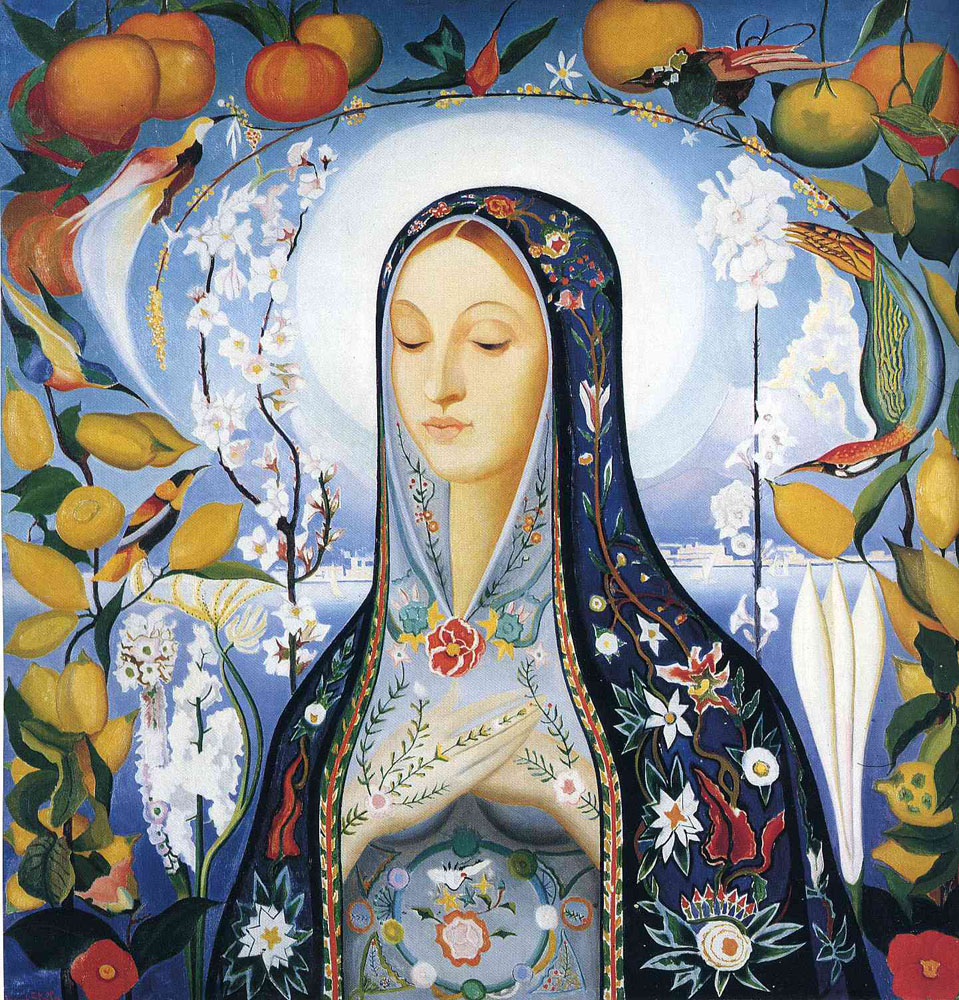
The Mystical City of God
Book 1
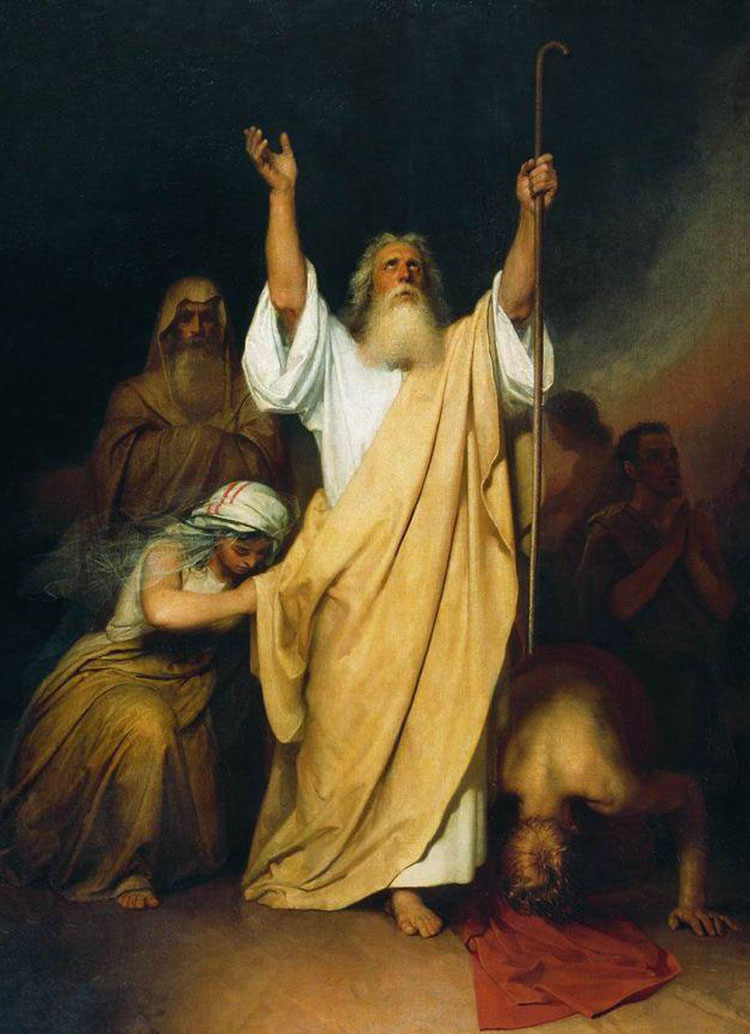
Book 1, Chapter 1
Why
God Revealed the Life of Mary in These Our Times
Treats of the Divine
Fore–Ordainment of Christ and His Mother as the Highest Ideals
of all Creation; of the Creation of the Angels and Men as their
Servants; of the Lineage of the Just Men, Finally Resulting in the
Immaculate Conception and Birth of the Queen of Heaven; and of Her
life Up to Her Presentation in the Temple.
The whole of this holy life of Mary
is divided, for greater perspicuity, into three parts. The first
treats of all that pertains to the fifteen years of her life, from
the moment of her most pure Conception until the moment when in her
virginal womb the eternal Word assumed flesh, including all that the
Most High performed for Mary during these years. The second part
embraces the mystery of the Incarnation, the whole life of Christ our
Lord, his Passion and Death and his Ascension into heaven, thus
describing the life of our Queen in union with that of her Divine Son
and all that She did while living with Him. The third part contains
the life of the Mother of grace during the time She lived alone,
deprived of the companionship of Christ our Redeemer, until the happy
hour of her transition, assumption and crowning as the Empress of
heaven, where She is to live eternally as the Daughter of the Father,
the Mother of the Son and the Spouse of the Holy Ghost. These three
parts I subdivided into eight books, in order that they may be more
convenient for use and always remain the subject of my thoughts, the
spur of my will and my meditation day and night.
In order to say
something of the time in which I wrote this heavenly history, it must
be noticed that my father, brother Francis Coronel, and my mother,
sister Catharine de Arana, my parents, founded in their own house
this convent of the discalced nuns of the Immaculate Conception by
the command and will of God, which was declared to my mother, sister
Catharine, in a special vision and revelation. This foundation took
place on the octave of the Epiphany, January 13th,
1619. On the same day we took the habit, my mother and her two
daughters; and my father took refuge in the order of our seraphic
Father Saint Francis, in which two of his sons had already been
living as religious. There he took the habit, made his profession,
lived an exemplary life, and died a most holy death. My mother and
myself received the veil on the day of the Purification of the Queen
of heaven, on the second of February, 1620. On account of the youth
of the other daughter her profession was delayed. The almighty in His
sheer goodness favored our family so much, that all of us were
consecrated to Him in the religious state. In the eight year of the
foundation of this convent, in the twenty–fifth of my age, in
the year of our Lord 1627, holy obedience imposed upon me the office
of abbess, to which this day I unworthily hold. During the first ten
years of the time in which I held this office, I received many
commands from the Most High and from the Queen of heaven to write her
holy life, and I continued with fear and doubt to resist these
heavenly commands during all that time until the year 1637, when I
began to write it the first time. On finishing it, being full of
fears and tribulations, and being so counseled by a confessor (who
directed me during the absence of my regular confessor), I burned all
the writing containing not only this history, but many other grave
and mysterious matters; for he told me, that women should not write
in the Church. I obeyed his commands promptly; but I had to endure
most severe reproaches on this account from my superiors and from the
confessor, who knew my whole life. In order to force me to rewrite
this history, they threatened me with censures. The Most High and the
Queen of heaven also repeated their commands that I obey. By divine
favor I began re–writing this history on the eighth of
December, 1655, on the day of the Immaculate Conception.
I confess to Thee (Matth. 11,25) and
magnify Thee, King Most High, that in thy exalted Majesty Thou hast
hidden these high mysteries from the wise and from the teachers, and
in thy condescension hast revealed them to me, the most insignificant
and useless slave of thy Church, in order that Thou mayest be the
more admired as the omnipotent Author of this history in proportion
as its instrument is despicable and weak.
I saw a great and mysterious sign in heaven; I saw
a Woman, a most beautiful Lady and Queen, crowned with the stars,
clothed with the sun, and the moon was at her feet (Apoc. 12,1). The
holy angels spoke to me: “This is that blessed Woman, whom
Saint John saw in the Apocalypse, and in whom are enclosed, deposited
and sealed up the wonderful mysteries of the Redemption. So much has
the most high and powerful God favored this Creature, that we, his
angelic spirits, are full of astonishment. Contemplate and admire her
prerogatives, record them in writing, because that is the purpose for
which, according to the measure suitable to thy circumstances, they
will be made manifest to thee.” I was made to see such wonders,
that the greatness of them took away my speech, and my admiration of
them suspended my other faculties; nor do I think that all the
created beings in this mortal life will ever comprehend them, as will
appear in the sequel of my discourse. At another time I saw a most
beautiful ladder with many rungs; around it were many angels, and a
great number of them were ascending and descending upon it. His
Majesty said to me: “This is the mysterious ladder of Jacob,
the house of God and the portal of heaven Gen. 28, 17); if thou wilt
earnestly strive to live irreprehensible in my eyes, thou wilt ascend
upon it to Me.”
This promise incited my desires, set my will
aflame and enraptured my spirit; with many tears I grieved, that I
should be burden to myself in my sinfulness (Job 7, 20). I sighed for
the end of my captivity and longed to arrive where there would be no
obstacle to my love. In this anxiety I passed some days, trying to
reform my life; I again made a general confession and corrected some
of my imperfections. The vision of the ladder continued without
intermission, but it was not explained to me. I made many promises to
the Lord and proposed to free myself from all terrestrial things and
to reserve the powers of my entirety for his love, without allowing
it to incline toward any creature, be it ever so small or
unsuspicious; I repudiated all visible and sensible things. Having
passed some days in these affections and sentiments, I was informed
by the Most High, that the ladder signified the life of the Most Holy
Virgin, its virtues and sacraments. His Majesty said to me: “I
desire, my spouse, that thou ascend this stair of Jacob and enter
through this door of heaven to acquire the knowledge of my attributes
and occupy thyself in the contemplation of my Divinity. Arise then
and walk, ascend by it to Me. These angels, which surround it and
accompany it, are those that I appointed as the guardians of Mary, as
the defenders and sentinels of the citadel of Sion. Consider Her
attentively, and, meditating on her virtues, seek to imitate them.”
It seemed to me then, that I ascended the ladder and that I
recognized the ladder and I recognized the great wonders and the
ineffable prodigies of the Lord in a mere Creature and the greatest
sanctity and perfection of virtue ever worked by the arm of the
Almighty. At the top of the ladder I saw the Lord of hosts and the
Queen of all creation. They commanded me to glorify, exalt and praise
Him on account of these great mysteries and to write down so much of
them, as I might bring myself to understand. The exalted and high
Lord gave me a law, written not only on tablets, as He gave to Moses
(Exod. 31, 18), but one wrought by his omnipotent finger in order
that it might be studied and observed (Ps. 1,2).
He moved my will so that in her
presence I promised to overcome my repugnance and with her assistance
to set about writing her history, paying attention to three things:
First, to remember that the creature must ever to seek to acknowledge
that profound reverence due to God and to abase itself in proportion
to the condescension to his Majesty toward men and that the effect of
greater favors and benefits must be a greater fear, reverence,
attention and humility; secondly, to be ever mindful of the
obligation of all men, who are so forgetful of their own salvation,
to consider and to learn what they owe to the Queen and Mother of
piety on account of the part assumed by Her in the Redemption, to
think of the love and the reverence which she showed to God and the
honor in which we are to hold this great Lady; thirdly to be willing
to have my spiritual director, and if necessary the whole world, find
out my littleness and vileness, and the small returns which I make
for what I receive.
To these my protestations the Most Holy Virgin
answered: “My daughter, the world stands much in need of this
doctrine, for it does not know, nor does it practice, the reverence
due to the Lord omnipotent. On account of this ignorance his justice
is provoked to afflict and humiliate men. They are sunken in their
carelessness and filled with darkness, not knowing how to seek relief
or attain to the light. This, however, is justly their lot, since
they fail in the reverence and fear, which they ought to have.”
Besides this the Most High and the Queen gave many
other instructions, in order to make clear to me their will in regard
to this work. It seemed to me temerity and want of charity toward
myself, to reject the instruction which she had promised me for
narrating the course of her most holy life. It seemed equally
improper to put off the writing of it, since the Most High had
intimated this as the fitting and opportune time, saying to me in
this regard: “My daughter, when I sent my Onlybegotten, the
world, with the exception of the few souls that served Me, was in
worse condition than it had ever been since its beginning; for human
nature is so imperfect that if it does not subject itself to the
interior guidance of my light and to the fulfillment of the precepts
of my ministers by sacrificing its own judgment and following Me, who
am the way, the truth and the life (John 14,6), and by carefully
observing my commandments in order not to lose my friendship, it will
presently fall into the abyss of darkness and innumerable miseries,
until it arrives at obstinacy in sin. From the creation and sin of
the first man until I gave the law to Moses, men governed themselves
according to their own inclinations and fell into many errors and
sins (Rom. 5, 13). After having received the law, they again
committed sin by not obeying it (John 7, 19) and thus they lived on,
separating themselves more and more from truth and light and arriving
at the state of complete forgetfulness. In fatherly love I sent them
eternal salvation and a remedy for the incurable infirmities of human
nature, thus justifying my cause. And just as I then chose the
opportune time for the greater manifestation of my mercy, so now I
select this time for showing toward them another very great favor.
For now the hour has come and the opportune time to let men know the
just cause of my anger, and they are now justly charged and convinced
of their guilt. Now I will make manifest my indignation and exercise
my justice and equity; I will show how well justified is my cause. In
order that this may come to pass more speedily, and because it is now
time that my mercy show itself more openly and because my love must
not be idle, I will offer to them an opportune remedy, if they will
but make use of it for returning again to my favor. Now, at this
hour, when the world has arrived at so unfortunate a pass and when,
though the Word has become incarnate, mortals are more careless of
their weal and seek it less; when the day of their transitory life
passes swiftly at the setting of the sun of time; when the night of
eternity is approaching closer and closer for the wicked and the day
without a night is being born for the just; when the majority of
mortals are sinking deeper and deeper into the darkness of their
ignorance and guilt, oppressing the just and mocking the children of
God; when my holy and divine law is despised in the management of the
iniquitous affairs of state, which are as hostile as they are
contrary to my Providence; when the wicked least deserve my mercy; in
these predestined times, I wish to open a portal for the just ones
through which they can find access to my mercy; I wish to give them a
light by which they can dispel the gloom that envelops the eyes of
their minds. I wish to furnish them a suitable remedy for restoring
them to my grace. Happy they who find it, and blessed they who will
appreciate its value, rich they who shall come upon this treasure,
and blessed and very wise those who shall search into and shall
understand its marvels and hidden mysteries. I desire to make known
to mortals how much intercession of Her is worth, who brought
restoration of life by giving mortal existence to the immortal God.
As recompense I desire that they look upon the wonders wrought by my
mighty arm in that pure Creature, as upon a mirror by which they can
estimate their own ingratitude. I wish to make known to them much of
that, which according to my high judgment is still hidden concerning
the Mother of the Word.”
“I have not
revealed these mysteries in the primitive Church, because they are so
great, that the faithful would have been lost in the contemplation
and admiration of them at a time when it was more necessary to
establish firmly the law of grace and of the Gospel. Although all
mysteries of religion are in perfect harmony with each other, yet
human ignorance might have suffered recoil and doubt at their
magnitude, when faith in the Incarnation and Redemption and the
precepts of the new law of the Gospel were yet in their beginnings.
On this same account the person of the incarnate Word said to his
disciples at the last supper: “Many things have I say to you;
but you are not yet disposed to receive them” (John 16, 12).
These words he addressed to all the world, for it was not yet capable
of giving full obedience to the law of grace and full assent to the
faith in the Son, much less was it prepared to be introduced into the
mysteries of his Mother. But now mankind has greater need for this
manifestation, and this necessity urges Me to disregard their evil
disposition. And if men would now seek to please me by reverencing,
believing, and studying the wonders, which are intimately connected
to the Mother of Piety, and if they would all begin to solicit her
intercession from their whole heart, the world would find some
relief. I will not longer withhold from men this mystical City of
refuge; describe and delineate it to them, as far as thy shortcomings
allow. I do not intend that thy descriptions and declarations of the
life of the Blessed Virgin shall be mere opinions or contemplations,
but reliable truth. They that have ears to hear, let them hear. Let
those who thirst come to the living waters and leave the dried–out
cisterns; let those that are seeking for the light, follow it to the
end. Thus speaks the Lord, God Almighty!”
Book 1, Chapter 2
God’s
Inscrutable Essence; the Decree of Creation
O King, most high and wise Lord; How
incomprehensible are thy judgments, and inscrutable thy ways (Rom.
11, 24)! Invincible God, enduring forever and whose beginning is
unknown (Eccli. 18, 1)! Who can understand thy greatness and who can
be worthy of thy most magnificent works, or who can tell Thee why
Thou hast created them (Rom. 9, 20)? For Thou art exalted above all
of them and our vision cannot reach Thee and our understanding cannot
comprehend Thee. Mayest Thou be blest, magnificent King, because Thou
hast deigned to show me, thy slave and a vile worm of the earth,
great sacraments and most sublime mysteries.
I saw the Most High, at the same time
understanding how his Majesty is in Himself; I received a clear
intelligence and a true perception of what is meant by a God,
infinite in his substance and attributes, eternal, exalted above all,
being three in Person, and one true God. Three in Person, because of
the three activities of knowing, comprehending and loving each other;
one, so as to secure the boon of eternal unity. It is the trinity of
the Father, the Son and the Holy Ghost. The Father is not made, nor
created, nor begotten, nor can He be generated or have a beginning. I
perceived, that the Son derives His origin from the Father alone by
eternal generation; and that they are equal in their duration from
eternity; and that He is begotten by the fecundity of the
intelligence of the Father. The Holy Ghost proceeds from the Father
and the Son through love. In their indivisible Trinity there is
nothing which can be called first or last, greater or smaller; all
three Persons are equally eternal and eternally equal; there is unity
of essence in a trinity of persons. Nor are the persons mingled in
order to form one God, nor the divine substance separated or divided
in order to form three Persons, being distinct as the Father, as the
Son and as the Holy Ghost. They are nevertheless one and the same
Divinity, equal in Each is the glory and majesty, the power, the
eternity, the immensity, the wisdom and sanctity, and all the
attributes. And though there are three Persons, in whom these
infinite perfections subsist, He is the one and true God, the Holy,
the Just, the Powerful, the Eternal and the Measureless.
I also obtained an understanding of
the manner in which this Trinity comprehends Itself by simple vision,
so that no new or distinct cognition is necessary: the father knows
that, which is known to the Son, and the Son and the Holy Ghost know
that which is in the intelligence of the Father. I understood how
they love One another with one and the same immense and eternal love;
how there is a single, indivisible and equal oneness of intelligence,
love and action, how there is one simple, incorporeal and indivisible
nature, a divine essence of the true God, in which are joined and
united all the perfections in their highest and in an infinite
degree.
I learnt also to understand the
quality of these perfections of the highest Lord: that He is
beautiful without a blemish, great without quantity, good without
need of qualification, eternal without the duration of time, strong
without any weakness, living without touch of decay, true without
deceit, present in all places, filling them without occupying them,
existing in all things without occupying any space. There is no
contradiction in his kindness, nor any defect in his wisdom. In his
wisdom He is inscrutable, in his decrees He is terrible, in his
judgments just, in his thoughts most hidden, in his words most true,
in his works holy, in his riches affluent. To Him no space is too
wide, no narrowness causes restraint, his will does not vary, the
sorrowful does not cause Him pain, the past has not passed for Him,
nor does the future happen in regard to Him. O eternal Immensity,
what illimitable expansion have I seen in Thee? What vastness do I
see in thy infinite Being? Vision does not terminate, nor ever
exhaust itself in thy abyss of being. This is the unchangeable
Essence, the Being above all other beings, the most perfect sanctity,
the most constant truth; this is the infinite, the length, the
breadth, the height and the depth, the glory and its cause, rest
without fatigue, goodness immeasurable.
I understood, that the Most High was
in the quiescent state of his own being, when the three Persons
(according to our way of understanding things), decreed to
communicate his perfections as a free gift. For greater clearness, I
must remark, that God comprehends in Himself all things by one
indivisible, most simple and instantaneous act. He does not go on
from the understanding of one thing to the understanding of another
like we do, distinguishing and perceiving first one thing by an act
of the understanding, and after that proceeding to the knowledge of
others by their connection with those already known. God knows them
conjointly all at once, without before or after, since all are
together and at once contained in the divine and uncreated knowledge
and science, just as they are comprehended and enclosed in his
infinite Being, as in their first beginning.
Although, this divine knowledge is
one, most simple and indivisible, nevertheless since the things which
I see are many, and since there is a certain order, by which some are
first and some come after, it is necessary to divide the knowledge of
God’s intelligence and the knowledge of his will into many
instants, or into many different acts, according as they correspond
to the diverse orders of created things. For as some of the creatures
hold their existence because of others, there is a dependence of one
upon the other. Accordingly we say that God intended and decreed this
before that, the one on account of the other; and that if He had not
desired or included in the science of vision the one, He would not
have desired the other. But by this way of speaking, we must not try
to convey the meaning that God placed many acts of intelligence, or
of the will; rather we must intend merely to indicate, that the
creatures are dependent on each other and that they succeed one
another. In order to be able to comprehend the manner of creation
more easily, we apply the order of things as we see them objectively,
to the acts of the divine intelligence and will in creating them.
I understood, that
this order comprises the following instants. The first instant is:
God recognizing his infinite attributes and perfections together with
the propensity and the ineffable inclination to communicate Himself
outwardly. This knowledge of God as being communicative ad
extra comes first. The majesty of God,
beholding the nature of his infinite perfections, their virtue and
efficacy operating with magnificence, saw, that it was just and most
proper, and, as it were, a duty and a necessity, to communicate
Himself and to follow that inclination of imparting and exercising
his liberality and mercy, by distributing outside of Himself with
magnificence the plenitude of the infinite treasures, contained in
the Divinity. For, being infinite in all things, it is much more
natural that He communicate gifts and graces than that fire should
ascend, or the stone should gravitate towards its center, or that the
sun should diffuse its light. This unfathomable depth of perfections,
this affluence of treasures, this impetuous infinity of riches, is
set in motion by its own inclinations to communicate itself. At the
same time God is in Himself conscious that to distribute gifts and
graces, is not to diminish his riches, but to increase them in the
only possible way, by giving an outlet to the inexhaustible fountain
of his riches.
In this enlightenment and knowledge
which I possess, two things hold my lukewarm heart in wonder and
inflame it unto annihilation. The first is the inclination and urgent
desire, which I see in God, and the strong will, to communicate his
Divinity and the treasures of his grace. The second is the
unspeakable and incomprehensible immensity of the good gifts, which I
see He wishes to distribute according to this degree, assigning them
for this purpose and yet remaining infinite, as if He had not yet
given nothing. In this desire and inclination, which fills his
Majesty I see Him prepared to sanctify, justify, overwhelm with gifts
and perfections all creatures together and each one in particular for
itself. He would be ready to give to each of the creatures more than
what is held by all the angels and seraphim together; even if all the
drops in the ocean and the grains of sand on their shores, all the
stars, the planets and the elements, and all creatures were capable
of reason and of his gifts, they would receive them without measure,
provided they would dispose themselves and place no obstacle toward
receiving them. O fearful malice of sin, which alone is capable of
holding up the impetuous stream of such great and eternal gifts!
The second instant
was to confirm and determine the object and intention of this
communication of the Divinity ad extra,
namely, that it should redound to his greater
glory and to the exaltation of his Majesty and the manifestation of
his greatness. This his own exaltation God saw as the end, for which
he would communicate Himself, make Himself known by his liberality in
the distribution of his attributes, and set in motion his Omnipotence
in order that He might be known, praised and glorified.
The third instant consisted in
selecting and determining the order and arrangement, or the mode of
this communication, so as to realize in an adequate manner the most
exalted ends. The order namely, which it is proper should be
maintained in regard to the communications of the Godhead and its
divine attributes; so that this activity of the Lord may have its
proper reasons and objects, and so that it might proceed with the
most beautiful and admirable sequence, harmony and subordination. In
this instant was decreed first of all, that the Divine Word should
assume flesh and should become visible. The perfection and the
composition of the most holy humanity of Christ our Lord was decreed
and modeled in divine intelligence. Secondarily, also were formed the
ideals of the rest of men in imitation of the First. The divine mind
prearranged the harmony and adornment of the human nature composed of
an organic body and a vivifying soul, endowed with faculties to know
and enjoy its Creator, to discern between good and evil, and with a
free will to love that same Lord.
The fourth instant was to determine the gifts and
graces, which were to be conferred upon the humanity of Christ, our
Lord, in union with the Divinity. Here the Most High opened the
liberal hands of his Omnipotence and his other attributes, in order
to enrich the most sacred humanity and the soul of Christ with the
highest possible plenitude of his gifts and graces. Then was
fulfilled what afterward David said: “The stream of the river
maketh the city of God joyful” (Ps. 45, 5). When the stream of
his gifts flowed toward the humanity of the Word, communicating to it
all the infused science, the grace and goodness of which his blessed
soul was capable of grace and glory, in order that from this
impetuous stream they might partake in the manner in which it
afterwards really happened.
To this instant also, and, as it
were, in natural sequence, pertain the decree and predestination of
the Mother of the Divine Word incarnate; for here, I understand, was
ordained that pure Creature before aught else whatever. Thus, before
all other creatures, was She conceived in the divine mind, in such
manner and such state as befitted and became the dignity, excellence
and gifts of the humanity of her most holy Son. To her flowed over,
at once and immediately, the river of the Divinity and its attributes
with all its impetuousity, in as far as a mere creature is capable
and as is due to the dignity of the Mother of God.
In the knowledge of these exalted mysteries and
decrees, I confess myself ravished in admiration and transported
beyond my proper self. Perceiving this most holy and pure Creature
formed and conceived in the divine mind from the beginning and before
all the ages, I joyously and exultingly magnify the Omnipotent for
the admirable and mysterious decree, by which He formed for us such a
pure and grand, such a mysterious and godlike Creature, worthy rather
to be admired and praised by all beings, than to be described by any
one. In my admiration I can say with St. Dionysius the Areopagite:
“If faith would not instruct me, and if the understanding of
what I see would not teach me, that it is God, who has conceived her
in his mind, and who alone could and can in his Omnipotence form such
an image of his Divinity, if this all were not present to my mind, I
might begin to doubt, whether the Virgin Mother contain not in
Herself Divinity.”
O what tears flowed from my eyes, and
what sorrowful astonishment possessed my soul, to see that divine
prodigy not acknowledged and that wonder of the Most High not
manifest to all the mortals. Much is known of it, but much more is
unknown, as this sealed book has not been opened. I am ravished in
the perception of this tabernacle of God, and I perceive that the
Author of it is more admirable in her creation, than in that of all
the rest of the world, although the diversity of the creatures
manifests the wonderful power of their Creator. In this Queen alone
are comprehended and contained more treasures than in all the rest of
things joined together, and the variety and preciousness of her
riches honor the Lord above all the multitudes of the other
creatures.
Here (according to our way of
understanding) the promise and, as it were, the contract was made
with the Word as to the degree of sanctity, and perfection and the
gifts and graces, which were to be possessed by Mary his Mother. Also
as to the protection, support and defense, which was to be provided
for this true City of God, in which his Majesty contemplated the
graces and merits, which She earned for Herself, as well as the
fruits to be gathered for his people by the loving returns, which She
was to make to his Majesty. In the same instant, and as it were in
the third and last place, God determined to create a locality and an
abode, where the incarnate Word and his Mother should converse and
dwell. For them primarily did He create the heaven and earth with its
stars and elements and all that is contained in them. Secondarily the
intention and decree included the creation of the members, of which
Jesus was to be the Head, and of whom He would be the King; in order
that with kingly providence, all the necessary and befitting
arrangements might be made beforehand.
I pass over to the fifth instant, although in
reality I have found that, which I sought. In this fifth decree the
creation of the angelic nature which is more excellent and more like
unto the spiritual being of the Divinity, was determined upon, and at
the same time the division or arrangement of the angelic hosts into
nine choirs and three hierarchies, was provided and decreed. As they
are created first of all for the glory of God, to assist before his
divine Majesty and to know and love Him, so secondarily they are
ordained to assist, glorify and honor, reverence and serve the
deified humanity of the eternal Word, recognizing Him as Head, and
honoring Him also in his Mother, the most holy Mary, Queen of these
same angels. Commission was given to these angels, “to bear
them up in their hands” in all their ways (Ps. 90, 12). In this
instant Christ our Lord earned for them by his infinite merits,
present and foreseen, all the grace, which they were to receive. He
was constituted as their Head, Exemplar and supreme King, of whom
they should be subjects. Even of the number of angels had been
infinite, the merits of Christ our highest Good, would be abundantly
sufficient to supply them all with grace.
To this instant belongs also the
predestination of the good, and the reprobation of the bad angels.
God saw in it, by means of his infinite science, all the works of the
former and of the latter and the propriety of predestinating, by his
free will and by his merciful liberality, those that would obey and
give honor, and of reprobating by his justice those who would rise up
against his Majesty in pride and disobedience on account of their
disordered selflove. In the same instant also was decreed the
creation of the empyrean heaven, for the manifestation of his glory
and the reward of the good; also the earth and the heavenly bodies
for the other creatures; moreover also in the center or depth of the
earth, hell, for the punishment of the bad angels.
In the sixth instant was decreed the
creation of a people and the congregation of men for Christ, who was
already formed in the divine mind and will, and according to his
image and likeness man was to be made, in order, that the incarnate
Word might find brethren, similar but inferior to Himself and a
people of his own nature, of whom He might be the Head. In this
instant was determined the order of creation of the whole human race,
which was to begin from one man and woman and propagate itself, until
the Virgin and her Son should be born in the predestined order. On
account of the merits of Christ our Savior, the graces and gifts were
prearranged, and also original justice, if they would only preserve
it. The fall of Adam was foreseen and in him that of all others,
except of the Queen, who did not enter into this decree. As a remedy,
it was ordained that the most holy humanity should be capable of
suffering. The predestined were chosen by free grace, and the
foreknown were reprobated with exact justice. All that was convenient
and necessary for the conservation of the human race and for
obtaining the end of the Redemption and the Predestination, was
preordained, without interfering with the free will of men; for such
ordainment was more conformable to God’s nature and to divine
equity. There was no injustice done to them, for if with their free
will they could sin, so also could they abstain from sin by means of
grace and the light of reason. God violated the right of no one,
since He forsook no one nor denied to any one that which is
necessary. Since his law is written in the hearts of men, nobody is
excused for not knowing and loving Him as the highest Good of all
creation.
In the perception of these mysteries
I saw with great clearness and force the high motives which caused
God to manifest and magnify Himself and which should induce men to
praise and adore the greatness of the Creator and Redeemer of all. I
also saw how tardy they are in the acknowledgment of these
obligations and in making return for these benefits; and I was made
aware of the complaints and the indignation of the Most High on
account of this forgetfulness. His majesty commanded and exhorted me
not to be guilty of such ingratitude, but to offer Him a sacrifice of
praise, and a new song, and that I magnify Him in the name of all
creatures.
O most high and incomprehensible
Lord! Would that I had the love and perfections of all the angels and
the just in order to confess and praise worthily thy greatness! I
acknowledge, great and mighty Lord, that such a vile creature as I
cannot merit the memorable benefit of receiving this clear and
exalted knowledge and light concerning thy exalted Majesty. At the
sight of thy greatness I perceive my littleness, which before that
happy hour was unknown to me; and I was ignorant of the greatness and
excellence of the virtue of humility, which is learnt in this
science. I do not wish to say that I now possess that virtue, but
neither can I deny that I have been shown the certain path which
leads to it. Thy light, O most high Lord, illumines me and thy lamp
shows me the paths (Ps. 118, 105), so that I see what I have been and
what I am, and fear what I may become to be. Thou hast lighted up,
most high King, my understanding and inflamed my will with its most
exalted object.
Book 1, Chapter 3
Creation
of the Angels and the Fall of Lucifer
The Cause of all causes is God, who
created all things that have being. His powerful arm gave existence
to all his wonderful works ad extra when and how He chose. The
beginning and succession of the work of Creation is described by
Moses in the opening chapter of Genesis. Since the Lord has given me
an understanding thereof, I will mention what I think useful for
elucidating the mysterious origin of the Incarnation of the Word and
of our Redemption.
The words of the first chapter of
Genesis are as follows:
1.”In the beginning God created heaven and
earth.”
2.”And the earth was void and empty, and
darkness was upon the face of the deep; and the spirit of God moved
over the waters.”
3.”And God said: Be light made. And light
was made.”
4.”And God saw the light that it was good;
and be divided the light from the darkness.”
5. “And he called the light day, and the
darkness night; and there was evening and morning one day,”
etc.
Of the first day Moses says that “In the
beginning God created heaven and earth.” He created heaven for
angels and men; and the earth as a place of pilgrimage for mortals.
These places are so adapted to their end and so perfect, that as
David says of them, the heavens publish the glory of the Lord, the
firmament and the earth announce the glory of the work of his hands
(Ps. 18, 2).
The angels were created in the
empyrean heavens and in the state of grace by which they might be
first to merit the reward of glory. For although they were in the
midst of glory, the Divinity itself was not to be made manifest to
them face to face and unveiled, until they should have merited such a
favor by obeying the divine will. The holy angels, as well as the bad
ones, remained only a very short time in the state of probation; for
their creation and probation with its result were three distinct
instants or moments, separated by short intermissions. In the first
instant they were all created and endowed with graces and gifts,
coming into existence as most beautiful and perfect creatures. Then
followed a short pause, during which the will of the Creator was
propounded and intimated, and the law and command was given to them,
to acknowledge Him as their Maker and supreme Lord, and to fulfill
the end for which they have been created. During this pause, instant
or interval, Saint Michael and his angels fought that great battle
with the dragon and his followers, which is described by the apostle
Saint John in the twelfth chapter of the Apocalypse. The good angels,
persevering in grace, merited eternal happiness and the disobedient
ones, rebelling against God, merited the punishment, which they now
suffer.
At first they received a more
explicit intelligence of the being of God, one in substance, trine in
person, and that they were commanded to adore and reverence Him as
their Creator and highest Lord, infinite in his essence and
attributes. All subjected themselves to this command and obeyed it,
but with a certain difference; the good angels obeyed through love
and on account of the justice of it, offering their love and good
will, freely and admitting and believing what was above their
intelligence, and obeying with joy. Lucifer, on the other hand,
submitted himself, because the opposite seemed to him impossible. He
did not do it with perfect charity, for he, as it were, was divided
in his will between himself and the infallible truth of the Lord. In
consequence it happened that the precept appeared to him in a measure
difficult and violent, and his fulfilling of it was wanting in love
and in the desire to do justice. Thus he exposed himself beforehand
to the danger of not persevering. Although grace did not leave him on
account of this remissness and slowness in the accomplishment of
these first acts, nevertheless his bad disposition began with them;
for there remained with him a certain weakness and laxity of virtue
and spirit, and the perfection of his nature did not shine forth as
it should. It appears to me that the effect of this remissness in
Lucifer, is similar to that which is caused in the soul by a
deliberate venial sin. I do not say that he sinned mortally, nor even
venially at that time, since he fulfilled the precept of God; but
this fulfillment was remiss and imperfect, springing more from a
sense of overwhelming compulsion, than from a loving willingness to
obey. Thus he put himself in danger of falling.
In the second place, the angels were
informed that God was to create a human nature and reasoning
creatures lower than themselves, in order that they too should love,
fear and reverence God, as their Author and eternal Good. They were
informed that these were to stand in high favor, and that the second
Person of the blessed Trinity was to become incarnate and assume
their nature, raising it to the hypostatic union and to divine
Personality; that therefore they were to acknowledge Him as their
Head, not only as God, but as God and man, adoring Him and
reverencing Him as God–man. Moreover, these same angels were to
be his inferiors in dignity and grace and were to be his servants.
God gave them an intelligence of the propriety and equity, of the
justice and reasonableness of such a position. For the acceptation of
the merits foreseen of this Mangod was exhibited to them as the
source of the grace which they now possessed and of the glory which
they were to obtain. They understood also that they themselves had
been, and all the rest of the creatures should be created for his
glory, and that He was to be their Head. All those that were capable
of knowing and enjoying God, were to be the people of the Son of God,
to know and reverence Him as their Chief. These commands were at once
given to the angels.
To this command all the obedient and
holy angels submitted themselves and they gave their full assent and
acknowledgment with an humble and loving subjection of the will. But
Lucifer, full of envy and pride, resisted and induced his followers
to resist likewise, as they in reality did, preferring to follow him
and disobey the divine command. This wicked prince persuaded them,
that he would be their chief and that he would set up a government
independent and separate from Christ. So great was the blindness
which envy and pride could cause in an angel, and so pernicious was
the infection that the contagion of sin spread among innumerable
other angels.
Then happened that great battle in
heaven, which St. John describes (Apoc. 12). For the obedient and
holy angels, filled with an ardent desire of hastening the glory of
the Most High and the honor of the incarnate Word, to resist and
contradict the dragon, and the permission was granted. But also
another mystery was concealed in all this: When it was revealed to
the angels that they would have to obey the incarnate Word, another,
a third precept was given them, namely, that they were to admit as a
superior conjointly with Him, a Woman, in whose womb the Only
begotten of the Father was to assume flesh and that this Woman was to
be the Queen and Mistress of all the creatures. The good angels by
obeying this command of the Lord, with still increasing and more
alert humility, freely subjected themselves, praising the power and
the mysteries of the Most High. Lucifer, however, and his
confederates, rose to a higher pitch of pride and boastful insolence.
In disorderly fury he aspired to be himself the head of all the human
race and of the angelic orders, and if there was to be a hypostatic
union, he demanded that it be consummated in him.
The decree constituting him inferior to the Mother
of the Incarnate Word, our Mistress, he opposed with horrible
blasphemies. Turning against the Author of these great wonders in
unbridled indignation and calling upon the other angels, he exhorted
them, saying: “Unjust are these commands and injury is done to
my greatness; this human nature which Thou, Lord, lookest upon with
so much love and which thou favorest so highly, I will persecute and
destroy. To this end I will direct all my power and all my
aspirations. And this Woman, Mother of the Word, I will hurl from the
position in which Thou hast proposed to place Her, and at my hands,
the plan, which Thou settest up, shall come to naught.”
This proud boast so aroused the indignation of the
Lord that in order to humble it, He spoke to Lucifer: “This
Woman whom thou refusest to honor, shall crush thy head and by Her
shalt thou be vanquished and annihilated (Gen. 3, 15). And if,
through thy pride, death enters into the world (Wis. 2, 24), life and
salvation of mortals shall enter through the humility of this Woman.
Those that are of the nature and likeness of that Man and Woman,
shall enjoy the gifts and the crowns, which thou and thy followers
have lost.” To all this the dragon, filled with indignation
against whatever he understood of the divine will and decrees,
answered only with pride and by threatening destruction to the whole
human race. The good angels saw the just indignation of the Most High
against Lucifer and his apostates and they combated them with the
arms of the understanding, reason and truth.
The Almighty at this conjuncture
worked another wonderful mystery. Having given to all the angels a
sufficiently clear intelligence of the hypostatic Union, He showed
them the image of the most holy Virgin by means of an imaginary
vision (I speak here according to our way of understanding such
things). They were shown the perfection of the human nature in the
revelation of an image representing a most perfect Woman, in whom the
almighty arm of the Most High would work more wonderfully than in all
the rest of the creatures. For therein He was to deposit the graces
and gifts of his right hand in a higher and more eminent manner. This
sign or vision of the Queen of heaven and of the Mother of the
incarnate Word was made known and manifest to all the angels, good
and bad. The good ones at the sign of it broke forth in admiration
and in canticles of praise and from that time on began to defend the
honor of the God incarnate and of his holy Mother, being armed with
ardent zeal and with the invincible shield of that vision. The dragon
and his allies on the contrary conceived implacable hatred and fury
against Christ and his most holy Mother. Then happened all that which
is described in the twelfth chapter of the Apocalypse, which I will
explain, as far as it has been given me.
The literal version of that chapter
of the Apocalypse is as follows:
1. “And a great sign appeared in heaven: A
woman clothed with the sun and the moon under her feet, and on her
head a crown of twelve stars:
2. And being with child, she cried
travailing in birth, and was in pain to be delivered.
3. And there was seen another sign in
heaven; and behold a great red dragon having seven heads and ten
horns; and on his head seven diadems.
4. And his tail drew the third part
of the stars of heaven and cast them to the earth and the dragon
stood before the woman, who was ready to be delivered; that, when she
should be delivered, he might devour her son.
5. And she brought forth a man–child,
who was to rule all nations with an iron rod; and her son was taken
up to God, and to his throne.
6. And the woman fled into the
wilderness where she had a place prepared by God, that there they
should feed her a thousand two hundred and sixty days.
7. And there was a great battle in
heaven; Michael and his angels fought with the dragon and the dragon
fought and his angels.
8. And they prevailed not, neither
was their place found any more in heaven.
9. And the dragon was cast out, that
old serpent, who is called the devil and satan, who seduceth the
whole world; and he was cast unto the earth, and his angels were
thrown down with him.
10. And I heard a loud voice saying:
Now is come salvation and strength, and the kingdom of our God and
the power of his Christ; because the accuser of our brethren is cast
forth, who accused them before our God day and night.
11. And they overcame him by the
blood of the Lamb and by the word of the testimony, and they loved
not their lives unto death.
12. Therefore, rejoice, O heavens and
you that dwell therein. Woe to the earth and the sea, because the
devil is come down unto you, having a great wrath and knowing that he
hath but a short time.
13. And when the dragon saw that he
was cast unto the earth he persecuted the woman, who brought forth
the man–child:
14. And there were given to the woman
two wings of a great eagle, that she might fly into the desert unto
her place, where she is nourished for a time and times and half a
time, from the face of the serpent.
15. And the serpent cast out of his
mouth after the woman, water as if it were a river, that he might
cause her to be carried away by the river.
16. And the earth helped the woman
and the earth opened her mouth and swallowed the river, which the
dragon cast out of his mouth.
17. And the dragon was angry against
the woman and went to make war with the rest of her seed, who keep
the commandments of God, and have the testimony of Jesus Christ.
18. And he stood upon the sands of the sea.”
Book 1, Chapter 4
Creation
and Fall of Man
On the sixth day he formed and
created Adam, as it were of the age of thirty–three years. This
was the age in which Christ was to suffer death, and Adam with regard
to his body was so like unto Christ, that scarcely any difference
existed. Also according to the soul Adam was similar to Christ. From
Adam God formed Eve so similar to the Blessed Virgin, that she was
like unto Her in personal appearance and in figure. God looked upon
these two images of the great Originals with the highest pleasure and
benevolence, and on account of the Originals He heaped many blessings
upon them, as if He wanted to entertain Himself with them and their
descendants until the time should arrive for forming Christ and Mary.
But the happy state in which God had
created the parents of the human race lasted only a very short while.
The envy of the serpent was immediately aroused against them, for
satan was patiently awaiting their creation, and no sooner were they
created, than his hatred became active against them. However, he was
not permitted to witness the formation of Adam and Eve, as he had
witnessed the creation of all other things: for the Lord did not
choose to manifest to him the creation of man, nor the formation of
Eve from a rib; all these things were concealed from him for a space
of time until both of them were joined. But when the demon saw the
admirable composition of the human nature, perfect beyond that of any
creature, the beauty of the souls and also of the bodies of Adam and
Eve; when he saw the paternal love with which the Lord regarded them,
and how He made them the lords of all creation, and that He gave them
hope of eternal life: the wrath of the dragon was lashed to fury, and
no tongue can describe the rage with which that beast was filled, nor
how great was his envy and his desire to take the life of these two
beings. Like an enraged lion he certainly would have done so, if he
had not known, that a superior force would prevent him. Nevertheless
he studied and plotted out some means, which would suffice to deprive
them of the grace of the Most High and make them God’s enemies.
Here Lucifer was deceived; for the
Lord had from the beginning mysteriously manifested to him, that the
Word was to assume human nature in the womb of the most holy Mary,
but not how and when; and thus He had also concealed the creation of
Adam and the formation of Eve, in order that Lucifer might from the
beginning labor under his ignorance concerning the mystery and the
time of the Incarnation. As his wrath and his watchfulness had thus
been so signally forestalled in regard to Christ and Mary, he
suspected that Adam had come forth from Eve, and that She was the
Mother and Adam the incarnate Word. His suspicions grew, when he felt
the divine power, which prevented him from harming the life of these
creatures. On the other hand, he soon became aware of the precepts of
God, for these did not remain concealed from him, since he heard
their conversation in regard to them. Being freed more and more from
his doubt as he listened to the words of the first parents and sized
up their natural gifts, he began to follow them like a roaring lion
(I Pet. 5, 8), seeking an entrance through those inclinations, which
he found in each of them. Nevertheless, until he was undeceived in
the course of the Redemption, he continued to hesitate between his
wrath against Christ and Mary and the dread of being overcome by
Them. Most of all he dreaded the confusion of being conquered by the
Queen of heaven, who was to be a mere creature and not God.
Taking courage therefore in the
precept, which was given to Adam and Eve, and having prepared the
snare, Lucifer entered with all his energy upon the work of
entrapping them and of opposing and hindering the execution of the
divine Will. He first approached the woman, and not the man, because
he knew her to be by nature more frail and weak, and because in
tempting her he would be more certain that it was not Christ whom he
was encountering. Against her also he was more enraged ever since he
had seen the sign in the heaven and since the threat, which God had
made in it against him. On these accounts his wrath was greater
against Eve than against Adam. Before he showed himself to her,
however, he aroused her in many disturbing thoughts or imaginations,
in order to approach her in a state of excitement and pre–occupation.
But because I have written this in another place, I will not enlarge
here upon the violence and inhumanity of this temptation; it is
enough for my purpose to mention what Scripture says: that he took
the form of a serpent (Gen. 2, 1), and thus speaking to Eve drew her
into a conversation, which she should not have permitted. Listening
to him and answering, she began to believe him; then she violated the
command of God, and finally persuaded her husband likewise to
transgress the precept. Thus ruin overtook them and all the rest: for
themselves and for us they lost the happy position, in which God had
placed them.
When Lucifer saw the two fallen and
their interior beauty and grace and original justice changed into the
ugliness of sin, he celebrated his triumph with incredible joy and
vaunting in the company of his demons. But he soon fell from his
proud boasting, when he saw, contrary to his expectations, how kindly
the merciful love of God dealt with the delinquents, and how He
offered them a chance of doing penance by giving them hope of pardon
and return of grace. Moreover he saw how they were disposing
themselves toward this forgiveness by sorrow and contrition, and how
the beauty of grace was restored to them. When the demons perceived
the effect of contrition, all hell was again in confusion. His
consternation grew, when he heard the sentence, which God pronounced
against the guilty ones, in which he himself was implicated. More
especially and above all was he tormented by the repetition of that
threat: The Woman shall crush thy head (Gen. 3, 15), which he had
already heard in heaven.
The offspring of Eve multiplied after
the fall and so arose the distinction and the multiplication of the
good and the bad, the elect and the reprobate, the ones following
Christ the Redeemer, and the others following satan. The elect cling
to their Leader by faith, humility, charity, patience and all the
virtues and in order to obtain victory, they are assisted, helped and
beautified by the divine grace and the gifts, which the Redeemer and
Lord of all merited for them. But the reprobate, without receiving
any such benefits from their false leader, or earning any other
reward than the eternal pain and the confusion of hell, follow him in
pride, presumption, obscenity and wickedness, being led into these
disorders by the father of lies and the originator of sin.
Notwithstanding all this the Most
High, in his ineffable kindness, gave our first parents his
benediction, in order that the human race might grow and multiply
(Gen. 4, 3). The most high Providence permitted, that Eve, in the
unjust Cain, should bring forth a type of the evil fruits of sin, and
in the innocent Abel, both in figure and in imitation, the type of
Christ our Lord. For in the just one the law and doctrine of Christ
began to exert its effects. All the rest of the just were to follow
it, suffering for justice sake (Matth. 10, 22), hated and persecuted
by the sinners and the reprobate and by their own brothers.
Accordingly, patience, humility and meekness began to appear in Abel,
and in Cain, envy and all wickedness, for the benefit of the just and
for his own perdition. The wicked triumph and the good suffer,
exhibiting the spectacle, which the world in its progress shows to
this day, namely, the Jerusalem of the godfearing and the Babylon of
the godforsaken, each with its own leader and head.
The Most High also wished that the
first Adam should be the type of the second in the manner of their
creation; for, just as before the creation of the first, He created
and ordered for him the republic of all the beings, of which he was
to be the lord and head; so before the appearance of his
Onlybegotten, He allowed many ages to pass by, in order that his Son
might, in the multiplied manners of the human race, find prepared for
Himself a people, of which He was to be the Head, the Teacher, and
the King. He was not to be even for a moment without a people and
without followers: such is the wonderful harmony and order, in which
the divine wisdom disposed all things, making that later in the
execution, which was first in the intention.
As the world progressed in course, in
order that the Word might descend from the bosom of the Father and
clothe Itself in our mortality, God selected and prepared a chosen
and most noble people, the most admirable of past and future times.
Within it also He constituted a most illustrious and holy race, from
which He was to descend according to the flesh. I will not linger in
detailing the genealogy of Christ our Lord, for the account of the
holy Evangelists has made that unnecessary. I will only say, in
praise of the Most High, that He has shown to me many times the
incomparable love, which He bore toward his people, the favors shown
to it, and the mysteries and holy Sacraments, which He entrusted to
it, as was afterwards made manifest through his holy Church. For at
no time has slept nor slumbered He, who has constituted Himself the
watcher of Israel (Ps. 120, 4).
He reared most holy Prophets and
Patriarchs, who in figures and prophecies announced to us from far
off, that, which we have now in possession. He wishes us to venerate
them, knowing how they esteemed the law of grace and how earnestly
they yearned and prayed for it. To this people God manifested his
immutable Essence by many revelations, and they again transmitted
these revelations to us by the holy Scriptures, containing immense
mysteries, which we grasp and learn to know by faith. All of them,
however, are brought to perfection and are made certain by the
incarnate Word, who transmitted to us the secure rule of faith and
the nourishment of the sacred Scriptures in his Church. Although the
Prophets and the just ones of that people were not so far favored as
to see Christ in his body, they nevertheless experienced the
liberality of the Lord, who manifested Himself to them by prophecies
and who moved their hearts to pray for his coming and for the
Redemption of the whole human race. The consonance and harmony of all
these prophecies, mysteries and aspirations of the ancient fathers,
were a sweet music to the Most High, which resounded in the secret
recesses of the Divinity and which regarded and shortened the time
(to speak in a human manner) until He should descend to converse with
man.
Book 1, Chapter 5
Propagation of Mankind.
Expectation of a Redeemer. Saint Joachim and Anne
The posterity and race of Adam spread
out in great numbers, for the just and the unjust were multiplied;
likewise did increase the clamors of the just for the Redeemer, and
the transgressions of the wicked in demerit of that benefit. The
people of the Most High and the plans for the triumph of the Lord in
assuming human nature, were already in the last stages of preparation
for the advent of the Messias. The kingdom of sin in the generation
of the wicked had now spread its dominion to the utmost limits and
the opportune time for the remedy had arrived.
When the ancient serpent had infected
the whole earth with its poisonous breath and apparently enjoyed
peaceful control over mortals who had become blind to the light of
reason (Rom. 1, 20) and to the precepts contained in the ancient
written law, when, instead of seeking the true Divinity, men set up
for themselves many false laws and each one created a god for himself
according to his liking, without considering, that the confusion of
so many gods was repugnant to all goodness, order, and peace, when by
these errors malice, ignorance and forgetfulness of the true God had
become naturalized; when ignorant of its mortal disease and lethargy,
the world had grown mute in its prayer for deliverance; when pride
reigned supreme and fools had become innumerable (Eccles. 9, 15);
when Lucifer in his arrogance was about to swallow the pure waters of
the Jordan (Job 40, 18): when through these injuries God was more and
more deeply offended and less and less beholden to man; when his
justice had such an excellent cause for annihilating all creation and
reducing it to its original nothingness:
At this juncture (according to our
way of understanding), the Most High directed his attention to the
attribute of his mercy, counterbalanced the weight of his
incomprehensible justice with the law of clemency, and chose to yield
more to his own goodness, to the clamors and faithful services of the
just and the prophets of his people, than to his indignation at the
wickedness and sins of all the rest of mankind. In this dark night of
the ancient law, He resolved to give most certain pledges of the day
of grace, sending into the world two most bright luminaries to
announce the approaching dawn of the sun of Justice, Christ our
Salvation. These were saint Joachim and Anne, prepared and created by
especial decree according to his own heart. St. Joachim had his home,
his family and relations in Nazareth, a town of Galilee. He, always a
just and holy man and illumined by especial grace and light from on
high, had a knowledge of many mysteries of the holy Scriptures and of
the olden Prophets. In continual and fervent prayer he asked of God
the fulfillment of his promises, and his faith and charity penetrated
the heavens. He was a man most humble and pure, leading a most holy
and sincere life, yet he was most grave and earnest, and incomparably
modest and honest.
The most fortunate Anne had a house in Bethlehem
and was a most chaste, humble and beautiful maiden. From her
childhood she led a most virtuous, holy and retired life, enjoying
great and continual enlightenment in exalted contemplation. Withal
she was most diligent and industrious, thus attaining perfection in
both the active and contemplative life. She had an infused knowledge
of the divine Scriptures and a profound understanding of its hidden
mysteries and sacraments. In the infused virtues of faith, hope and
love she was unexcelled. Equipped with all these gifts, she continued
to pray for the coming of the Messias. Her prayers were so acceptable
to the Lord, that to her He could but answer with the words of the
Spouse: “Thou hast wounded my heart with one of the hairs of
thy neck” (Cant. 4, 9). Therefore, without doubt, saint Anne
holds a high position among the saints of the old Testament, who by
their merits hastened the coming of the Redeemer.
This woman also prayed most fervently, that the
Almighty deign to procure for her in matrimony a husband, who should
help her to observe the ancient law and testament, and to be perfect
in the fulfillment of all its precepts. At the moment in which saint
Anne thus prayed to the Lord, his Providence ordained, that saint
Joachim made the same petition: both prayers were made at the same
time before the tribunal of the holy Trinity, where they were heard
and fulfilled, it being then and there divinely disposed, that
Joachim and Anne unite in marriage and become the parents of Her, who
was to be the Mother of the incarnate God. In furtherance of this
divine decree the archangel Gabriel was sent to announce it to them
both. To saint Anne he appeared in visible form, while she was
engaged in fervent prayer for the coming of the Savior and the
Redeemer of men. When she saw the holy prince, most beautiful and
refulgent, she was disturbed and frightened and yet at the same time
interiorly rejoiced and enlightened. The holy maiden prostrated
herself in profound humility to reverence the messenger of heaven;
but he prevented and encouraged her, as being destined to be the ark
of the true manna, Mary most holy, Mother of the Word. For this holy
angel had been informed of this sacramental mystery on being sent
with this message. The other angels did not yet know of it, as this
revelation or illumination had been directly given from God only to
Gabriel. Nevertheless the angel did not then manifest this great
sacrament to St. Anne; but he asked her to attend and said to her:
“The Most High give thee his blessing, servant of God, and be
thy salvation. His Majesty has heard thy petitions and He wishes thee
to persevere therein and that thou continue to clamor for the coming
of the Redeemer. It is his will, that thou accept Joachim as the
spouse, for he is a man of upright heart and acceptable to the Lord:
in his company thou wilt be able to persevere in the observance of
his law and in his service. Continue thy prayers and thy
supplications and be not solicitous for anything else, for the Lord
will see them fulfilled. Walk in the straight paths of justice and
let thy soul’s converse be in heaven. Continuing to pray for
the Messias, be thou joyful in the Lord, who is thy salvation.”
With these words the angel disappeared, leaving her enlightened in
many mysteries of holy Scriptures, and comforted and renewed in
spirit.
To saint Joachim the archangel did not appear in a
corporeal manner, but he spoke to the man of God in sleep as follows:
“Joachim, be thou blessed by the right hand of the Most High!
Persevere in thy desires and live according to rectitude and
perfection. It is the will of the Almighty, that thou receive saint
Anne as thy spouse, for her the Lord has visited with his blessing.
Take care of her and esteem her as a pledge of the Most High and give
thanks to his Majesty, because he has given her in thy charge.”
In consequence of this divine message saint Joachim immediately asked
for the hand of the most chaste Anne and, in joint obedience to the
divine ordainment, they espoused each other. But neither of the
manifested to each other the secret of what had happened until
several years afterwards, as I will relate in its place. The two holy
spouses lived in Nazareth, continuing to walk in the justification of
the Lord. In rectitude and sincerity they practiced all virtue in
their works, making themselves very acceptable and pleasing to the
Most High and avoiding all blemish in all their doings. The rents and
incomes of their estate they divided each year into three parts. The
first one they offered to the temple of Jerusalem for the worship of
the Lord; the second they distributed to the poor, and the third they
retained for decent sustenance of themselves and family. God
augmented their temporal goods on account of their generosity and
charity.
They themselves lived with each other
in undisturbed peace and union of heart, without quarrel or shadow of
a grudge. The most humble Anne subjected herself and conformed
herself in all things to the will of Joachim: and that man of God,
with equal emulation of humility, sought to know the desires of holy
Anne, confiding in her with his whole heart (Prov. 31, 11), and he
was not deceived. Thus they lived together in such perfect charity,
that during their whole life they never experienced a time, during
which one ceased to seek the same thing as the other (Matth. 27, 20).
But rather as being united in the Lord, they enjoyed his presence in
holy fear. Saint Joachim, solicitous to obey the command of the
angel, honored his spouse and lavished his attention upon her.
This fortunate couple passed twenty
years of their married life without issue. In those times and among
the people of the Jews this was held to be the greatest misfortune
and disgrace. On this account they had to bear much reproach and
insult from their neighbors and acquaintances, for all those that
were childless, were considered as excluded from the benefits of the
Messias. But the Most High wished to afflict them and dispose them
for the grace which awaited them, in order that in patience and
submission they might tearfully sow the glorious Fruit, which they
were afterwards to bring forth. They continued in most fervent
prayers from the bottom of their hearts, mindful of the command from
on high. They made an express vow to the Lord, that if He should give
them issue, they would consecrate It to his service in the temple of
Jerusalem.
Having, at the command of the Lord, persevered a
whole year in fervent petitions, it happened by divine inspiration
and ordainment, that Joachim was in the temple of Jerusalem offering
prayers and sacrifices for the coming of the Messias, and for the
fruit, which he desired. Arriving with others of his town to offer
the common gifts and contributions in the presence of the high
priest, Isachar, an inferior priest, harshly reprehended the old and
venerable Joachim, for presuming to come with the other people to
make offerings in spite of his being childless. Among other things he
said to him: “Why dost thou, Joachim, come with thy offerings
and sacrifices, which are not pleasing in the eyes of God, since thou
art a useless man? Leave this company and depart; do not annoy God
with thy offerings and sacrifices, which are not acceptable to Him.”
The holy man, full of shame and confusion, in humble love thus
addressed the Lord: “Most high Lord and God, at thy command and
desire I came to the temple; he that takes thy place, despises me; my
sins merit this disgrace; but since I accept it according to thy
will, do not cast away the creature of thy hands” (Ps. 275,
10). Joachim hastened away from the temple full of sorrow, though
peaceful and contented, to a farm or storehouse, which he possessed,
and there in solitude he called upon the Lord for some days, praying
as follows:
“Most high
and eternal God, on whom depends the whole existence and the
reparation of the human race, prostrate in thy living presence, I
supplicate thy infinite goodness to look upon the affliction of my
soul and to hear my prayers and those of thy servant Anne. To thine
eyes are manifest all our desires (Ps. 37, 10) and if I am not worthy
to be heard, do not despise my humble spouse. Lord God of Abraham,
Isaac and Jacob, our first forefathers, do not hide thy kindness from
us, nor permit, since Thou art a Father, that I be numbered among the
reprobate and the outcasts in my offerings, because Thou givest me no
issue. Remember, O Lord, the sacrifices (Deut. 11, 27) and oblations
of thy servants and prophets, my ancestors, and look upon their
works, which were pleasing to thy divine eyes. Since Thou commandest
me, my Lord to pray to Thee in confidence, grant me, according to the
greatness of thy mercy and power, that which at thy wish I pray for.
In beseeching Thee I fulfill thy will and render the obedience, in
which Thou hast promised to grant my petition. If my sins hinder the
exercise of thy mercies, take away what displeases and hinders Thee.
Thou art mighty, Lord God of Israel, and all that Thou wishest, Thou
canst accomplish without hindrance. Let my prayers reach thy ears,
and if I am poor and insignificant, Thou art infinite and always
ready to exercise mercy with the downcast. Whither shall I flee from
Thee, who art the King of kings and the Lord of lords? Thou hast
filled thy sons and servants with benedictions in their generations
and Thou hast instructed to expect and desire from thy bounty what
Thou hast wrought in my brethren. If it is Thy pleasure to yield to
my petition, and grant me issue I will offer it and consecrate it to
thy holy temple in perpetual service. I have riveted my eyes and my
will on thy holy Will and have always desired to keep them free from
the vanishing things of this world. Fulfill in regard to me, what is
according to thy pleasure, and rejoice our spirit with the
accomplishment of our hopes. Look down from thy throne upon this vile
dust, and raise it up, in order that it may magnify Thee and adore
Thee, and let in all things be fulfilled thy will, and not mine.”
While Joachim was making these petitions in his
retirement, the holy angel manifested to holy Anne, that her prayer
for an issue, accompanied by such holy desires and intentions, was
pleasing to the Almighty. Having thus recognized the will of God and
of her husband Joachim, she prayed with humble subjection and
confidence, that it be fulfilled. “Most high God, my Lord,
Creator and Preserver of the universe, whom my soul reserves as the
true God, infinite, holy and eternal! Prostrate in thy real presence
I will speak, though but I am but dust and ashes (Esther 13, 9)
proclaiming my need and my affliction. Lord God uncreated, make us
worthy of thy benediction, and give us holy fruit of the womb, in
order that we may offer it to thy service in the temple (Gen. 18,
27). Remember, O Lord, that Anne, thy servant, the mother of Samuel,
was sterile and that by thy generous mercy she received the
fulfillment of her desires. I feel within me a courage which incites
and animates me to ask Thee to show me the same mercy. Hear then, O
sweetest Lord and Master, my humble petition: remember the
sacrifices, offerings and services of my ancestors and the favors,
which thy almighty arm wrought in them. I wish to offer to Thee, O
Lord, an oblation pleasing and acceptable in thy eyes: but the
greatest in my power, is my soul, my faculties and inclinations given
to Thee, and my whole being. If Thou look upon me from thy throne
giving me issue, I will from this moment sanctify and offer it for
thy service in the temple. Lord God of Israel, if it should be thy
pleasure and good will to look upon this lowly and impoverished
creature, and to console thy servant Joachim, grant me my prayer and
may in all things be fulfilled thy holy and eternal will.”
These were the prayers, which saint
Joachim and Anne offered. On account of my great shortcoming and
insufficiency I cannot fully describe what I was made to understand
concerning the holiness of these prayers and of these saintly
parents. It is impossible to tell all; nor is it necessary, since
what I have said is sufficient for my purpose. In order to obtain a
befitting idea of these saints, it is necessary to estimate and judge
them in connection with the most high end and ministry, for which
they were chosen by God; for they were the immediate grandparents of
Christ our Lord, and parents of his most holy Mother.
The petitions of the most holy Joachim and Anne
reached the throne of the holy Trinity, where they were accepted and
the will of God was made known to the holy angels. The three divine
Persons, according to our way of expressing such things, spoke to
them as follows: “We have in our condescension resolved, that
the person of the Word shall assume human flesh and that through Him
all the race of mortals shall find a remedy. We have already
manifested and promised this to our servants, the Prophets, in order
that they might announce it to the whole world. The sins of the
living, and their malice are so great, that We are much constrained
by the rigor of justice. But our goodness and mercy is greater than
all their evil–doing, nor can it extinguish our love toward
men. We will look with mercy upon the works of our hands, which We
have created according to our image and likeness, so as to enable
them to become inheritors and participators of our eternal glory (I
Pet. 3, 22). We will consider the services and pleasure derived from
our servants and friends and regard the multitude of those, who shall
distinguish themselves in our praise and friendship. And above all
have We before our eyes Her, who is to be the chosen One, who is to
be acceptable above all creatures and singled out for our delight and
pleasure; because She is to conceive the person of the Word in her
womb and clothe Him with human flesh. Since there must be a beginning
of this work, by which we shall manifest to the world the treasures
of the Divinity, this shall be the acceptable and opportune time for
its execution. Joachim and Anne have found grace in our eyes; We look
upon them with pleasure and shall enrich them with choicest gifts and
graces. They have been faithful and constant in their trials and in
simplicity and uprightness their souls have become acceptable and
pleasing before Us. Let Gabriel as our ambassador bring tidings of
joy for them and for the whole human race; let him announce to them,
that in our condescension We have looked upon them and chosen them.”
Thus the celestial spirits were instructed in
regard to the will and the decree of the Almighty. The holy archangel
Gabriel humbled himself before the throne of the most blessed
Trinity, adoring and revering the divine Majesty in the manner which
befits these most pure and spiritual substances. From the throne an
intellectual voice proceeded saying: “Gabriel, enlighten,
vivify and console Joachim and Anne, our servants, and tell them,
that their prayers have come to our presence and their petitions are
heard in clemency. Promise them, that by the favor of our right hand
they will receive the Fruit of benediction, and that Anne shall
conceive a Daughter, to whom We give the name of MARY.”
Together with this mandate of the Most High many
mysteries and sacraments pertaining to this message were revealed to
saint Gabriel. With it he descended from the vault of the empyrean
heaven and appeared to holy Joachim, while he was in prayer, saying
to him: “Just and upright man, the Almighty from his sovereign
throne has taken notice of thy desires and has heard thy sighs and
prayers, and has made thee fortunate on earth. Thy spouse Anne shall
conceive and bear a Daughter, who shall be blessed among women (Luc.
42, 48). The nations shall know Her as the Blessed. He who is the
eternal God, increate, and the Creator of all, most upright in his
judgments, powerful and strong, sends me to thee, because thy works
and alms have been acceptable. Love has softened the heart of the
Almighty, and has hastened his mercies, and in his liberality He
wishes to enrich thy house and thy family with a Daughter, whom Anne
shall conceive; the Lord himself has chosen for Her the name of MARY.
From her childhood let Her be consecrated to the temple, and in it to
God, as thou hast promised. She shall be elected, exalted, powerful
and full of the Holy Ghost; on account of the sterility of Anne her
conception shall be miraculous; She shall be a Daughter wonderful in
all her doings and in all her life. Praise the Lord, Joachim, for
this benefit and magnify Him, for in no other nation has He wrought
the like. Thou shalt go to give thanks in the temple of Jerusalem and
in testimony of the truth of this joyful message, thou shalt meet, in
the Golden Gate, thy sister Anne, who is coming to the temple for the
same purpose. Remember that marvelous is this message, for the
Conception of this Child shall rejoice heaven and earth.”
In the meanwhile the thrice blessed Anne was
exalted in prayer and divine contemplation and totally wrapped up in
the mystery of the Incarnation, which, after having been previously
filled with a most high understanding and a specially infused light,
she solicited from the eternal Word. With the profoundest humility
and lively faith she was praying for the hastening of the coming of
the Redeemer of the human race in the following words: “Most
high King and Lord of all creation, I, a most vile and despicable
creature, and yet the work of thy hands, desire at the price of the
life which Thou hast given me, to urge Thee to hasten in thy mercy
the time of our salvation. O may thy infinite kindness incline toward
our need! O that our eyes might look upon the Restorer and the
Redeemer of men! Remember, O Lord, the mercies of old shown to thy
people, wherein Thou hast promised thy Onlybegotten, and may this
promise of infinite kindness unbend Thee! May it come now, that day
so much longed for! Is it possible, that the Most High should descend
from his holy heaven? Is it possible, that He is to have a
terrestrial Mother? What woman shall She be, that is so fortunate and
blessed? O who shall be so favored as to look upon Her? Who shall be
worthy to be the servant of her servants? Blessed the race, that
shall be able to see Her and prostrate themselves at her feet to
reverence Her! How sweet shall be the sight of Her and her company!
Blessed the eyes, that shall see Her and the ears, that shall listen
to her words, and the family, from whom the Most High shall select
his Mother! Execute, O Lord, this decree: fulfill thy divine
benevolence!”
“The
humility, faith and the alms of Joachim and of thyself have come
before the throne of the Most High and now He sends me, his angel, in
order to give thee news full of joy for thy heart: His Majesty
wishes, that thou be most fortunate and blessed. He chooses thee to
be the mother of Her who is to conceive and bring forth the
Onlybegotten of the Father. Thou shalt bring forth a Daughter, who by
divine disposition shall be called MARY. She shall be blessed among
women and full of the Holy Ghost. She shall be the cloud that shall
drop the dew of heaven for the refreshment of mortals (III Kings 18,
44): and in Her shall be fulfilled the prophecies of thy ancestors.
She shall be the portal of life and salvation for the sons of Adam.
Know also that I have announced to Joachim, that he shall have a
Daughter who shall be blessed and fortunate: but the full knowledge
of the mystery is not given him by the Lord, for he does not know,
that She is to be the Mother of the Messias. Therefore thou must
guard this secret; and go now to the temple to give thanks to the
Most High for having been so highly favored by his powerful right
hand. In the Golden Gate thou shalt meet Joachim, where thou wilt
confer with him about this tiding. Thou art the one, who art
especially blessed of the Lord and whom He wishes to visit and enrich
with more singular blessings. In solitude He will speak to thy heart
and there give a beginning to the law of grace, since in thy womb He
will give being to Her, who is to vest the Immortal with mortal flesh
and human form. In this humanity, united with the Word, will be
written, as with his own blood, the true law of Mercy.”
In order that the humble heart of the
holy Anne might not faint away with admiration and joy at these
tidings of the holy angel, she was strengthened by the holy Spirit
and thus she heard it and received it with magnanimity and
incomparable joy. Immediately arising she hastened to the temple of
Jerusalem, and there found saint Joachim, as the angel had foretold
to them both. Together they gave thanks to the Almighty for this
wonderful blessing and offered special gifts and sacrifices. They
were enlightened anew by the grace of the Holy Spirit, and, full of
divine consolation, they returned to their home. Joyfully they
conversed about the favors, which they had received from the
Almighty, especially concerning each one’s message of the
archangel Gabriel, whereby, on behalf of the Lord, they had been
promised a Daughter who should be most blessed and fortunate. On this
occasion they also told each other, how the same angel, before their
espousal, had commanded each to accept the other, in order that
together they might serve God according to his divine will. This
secret they had kept from each other for twenty years, without
communicating it, until the same angel had promised them the issue of
such a Daughter. Anew the made the vow to offer Her to the temple and
that each year on this day they would come to the temple to offer
special gifts, spend the day in praise and thanksgiving, and give
many alms. This vow they fulfilled to the end of their lives,
spending this day in great praise and exaltation of the Most High.
The prudent matron Anne never
disclosed the secret, that her Daughter was to be the Mother of the
Messias, either to Joachim or to any other creature. Nor did that
holy parent in the course of his life know any more than that She was
to be a grand and mysterious woman. However, in the last moments of
his life the Almighty made the secret known to him, as I will relate
in its place.
Book 1, Chapter 6
The
Immaculate Conception
In the tribunal of the divine will,
as the inevitable source and universal cause of the whole creation,
all things with their conditions and circumstances, are decreed and
determined, so that nothing is forgotten and no created power can in
the least impede the fulfillment of the decree. All the spheres and
the inhabitants contained in them are dependent on this ineffable
government that rules them and cooperates with the natural causes
unfailingly and unerringly in all that must be done. God works in all
and sustains all by his sole will; in Him lies the preservation of
all things or their annihilation, for without Him they would return
to the non–existence, from which they were drawn. But since He
has created the universe for his glory and for the glory of the
incarnate Word, therefore He has from the beginning opened the paths
and prearranged the ways by which the same Word should lower Himself
to assume human flesh and to live among men, and by which they might
ascend toward God, know Him, fear Him, seek Him, serve Him, love Him,
praise Him and enjoy Him eternally. As the opportune and preordained
time had arrived, the three divine Persons conferred with each other
saying: “Now is the time to begin the work of our pleasure and
to call into existence that pure Creature and that soul, which is to
find grace in our eyes above all the rest. Let Us furnish Her with
richest gifts and let Us deposit in Her the great treasures of our
grace. Since all others, whom We called into existence, have turned
out ungrateful and rebellious to our wishes, frustrating our
intention and impeding by their own fault our purpose, namely, that
they conserve themselves in the happy state of their first parents,
and since it is not proper, that our will should be entirely
frustrated, let Us therefore create this being in entire sanctity and
perfection, so that the disorder of the first sin shall have no part
in Her. Let Us create a soul according to our pleasure, a fruit of
our attributes, a marvel of our infinite power, without touch or
blemish of the sin of Adam. Let Us perfect a work which is the object
of our Omnipotence and a pattern of the perfection intended for our
children, and the finishing crown of creation. All have sinned in the
free will and resolve of the first man (Rom. 5, 12); let Her be the
sole creature in whom We restore and execute that which they in their
aberration have lost. Let Her be a most special image and likeness of
our Divinity and let Her be in our presence for all eternity the
culmination of our goodwill and pleasure. In Her We deposit all the
prerogatives and graces which in our first and conditional resolve We
had destined for the angels and men, if they had remained in their
first estate. What they have lost We renew in that Creature and We
will add to these gifts many others. Thus our first decree shall not
be frustrated, but it shall be fulfilled in a higher manner through
this our first and chosen One (Cant. 6, 8). And since We assigned and
prepared the most perfect and estimable of our gifts for the
creatures who have lost them, We will divert the stream of our bounty
to our Well–beloved. We will set Her apart from the ordinary
law, by which the rest of the mortals are brought into existence, for
in Her the seed of the serpent shall have no part. I will descend
from heaven into her womb and in it vest Myself from her substance
with human nature.”
“It is
befitting and due to the infinite goodness of our Divinity, that It
be founded and enclosed in the most pure matter, untouched and
unstained by fault. Nor is it proper that our equity and providence
overlook what is most apt, perfect and holy, and choose that which is
inferior, since nothing can resist our will (Esther 13, 9). The Word,
which is to become man, being the Redeemer and Teacher of men, must
lay the foundation of the most perfect law of grace, and must teach
through it, that the father and mother are to be obeyed and honored
as the secondary causes of the natural existence of man. The law is
first to be fulfilled by the divine Word by honoring Her as his
chosen Mother, by exalting Her with a powerful arm, and lavishing
upon Her the most admirable, most holy and most excellent of all
graces and gifts. Among these shall be that most singular honor and
blessing of not subjecting Her to our enemy, nor to his malice; and
therefore She shall be free from the death of sin.”
“On earth
the Word shall have a Mother without a father, as in heaven He has a
Father without a mother. And in order that there may be the proper
correspondence, proportion and consonance in calling God his Father
and this Woman his Mother, We desire that the highest correspondence
and approach possible between a creature and its God be established.
Therefore at no time shall the dragon boast of being superior to the
Woman, whom God will obey as his true Mother. This dignity of being
free from sin is due and corresponds to that of being Mother of the
Word, and it is in itself even more estimable and useful. It is a
greater good to be holy than to be only mother; but all sanctity and
perfection is nevertheless due to the motherhood of God. The human
flesh, from which He is to assume form, must be free from sin. Since
He is to redeem in it the sinners, He must not be under the necessity
of redeeming his own flesh, like that of sinners. Being united to the
Divinity his humanity is to be the price of Redemption, wherefore it
before all be preserved from sin, and We have already foreseen and
accepted the merits of the Word in this very flesh and human nature.
We wish that for all eternities the Word should be glorified through
this tabernacle and habitation of the human nature.”
“She is to
be the daughter of the first man; but in the order of grace She is to
be singularly free and exempt from fault; and in the order of nature
She is to be most perfect, and to be formed according to a special
providence. And since the incarnate Word is to be the Teacher of
humility and holiness and for this end is to endure labors,
confounding the vanity and deceitful fallacies of mortals by choosing
for Himself sufferings as the treasure most estimable in our eyes. We
wish that She, who is to be his Mother, experience the same labors
and difficulties, that She be singularly distinguished in patience,
admirable in sufferings, and that She, in union with the
Onlybegotten, offer the acceptable sacrifices of sorrow to Us for her
greater glory.”
“Now the
time has arrived,” added his Majesty, “which was resolved
upon by our Providence for bringing to light the Creature most
pleasing and acceptable to our eyes. That Creature, in whom the human
nature is freed from its first sin, who is to crush the head of the
dragon, who was typified by that singular sign, the Woman that
appeared in the heavens in our presence, and who is to clothe the
eternal Word with human flesh. The hour is at hand, so blessed for
mortals, in which the treasures of our Divinity are to be opened and
the gates of heaven to be unlocked. Let the rigor of our justice be
softened by the chastisements, which we have until now executed upon
the mortals; let the attribute of our mercy become manifest; let the
creatures be enriched, and let the divine Word merit for them the
treasures of grace and of eternal glory.”
“Now let the
human race receive the Repairer, the Teacher, the Brother and Friend,
to be life for mortals, a medicine for the sick, a consoler for the
sorrowful, a balsam for the wounded, a guide and companion for those
in difficulties. Let now the prophecies of our servants and the
promises made to them that We would send a Savior to redeem them, be
fulfilled. And in order that all may be executed according to our
good pleasure, and that We may give a beginning to the mystery hidden
since the constitution of the world, We select for the formation of
our beloved Mary the womb of our servant Anne; in her be She
conceived and in her let that most blessed Soul be created. Although
her generation and formation shall proceed according to the usual
order of natural propagation, it shall be different in the order of
grace, according to the ordainment of our Almighty power.”
“You do
already know how the ancient serpent, since he saw the sign of this
marvelous Woman, attempts to circumvent all women, and how, from the
first one created, he persecutes all those, whom he sees excelling in
the perfection of their works and life, expecting to find among them
the One, who is to crush his head (Gen. 3, 15). When he shall
encounter this most pure and spotless Creature, he shall find Her so
holy that he will exert all his powers to persecute Her in pursuance
of the concept which he forms of Her. But the arrogance of this
dragon shall be greater than his powers (Is. 12, 7); and it is our
will that you have particular charge of this our holy City and
tabernacle of the incarnate Word, protecting, guarding, assisting and
defending Her against our enemies, and that you enlighten, strengthen
and console Her with all due solicitude and reverence as long as She
shall be a wayfarer among the mortals.”
At this proposal of the Most High all
the holy angels, prostrate before the royal throne of the most holy
Trinity, avowed their promptitude and eagerness to obey the divine
mandate. Each one desired in holy emulation to be appointed, and
offered himself for such a happy service; all of them gave to the
Almighty praise and thanksgiving in new songs, because the hour had
arrived for the fulfillment of that for which they had, with the most
ardent desires, prayed through many ages. I perceived on this
occasion that from the time of that great battle of saint Michael
with the dragon and his allies, in which they were hurled into
everlasting darkness while the hosts of Michael remained victorious
and confirmed in grace and glory, these holy spirits commenced
immediately to pray for the fulfillment of the mysteries of the
Incarnation of the Word, of which they became cognizant at that time.
And they persevered in these oft repeated prayers up to the hour in
which God manifested to them the fulfillment of their desires and
petitions.
On this account the celestial spirits at this new
revelation conceived an additional joy and obtained new accidental
glory, and they spoke to the Lord: “Most High and
incomprehensible God and Lord, Thou art worthy of all reverence,
praise and eternal glory; and we are thy creatures and made according
to thy divine will. Send us, most powerful Lord, to execute thy most
wonderful works and mysteries, in order that in all things thy most
just pleasure may be fulfilled.” In such terms of affection the
heavenly princes acknowledged themselves as subjects; and if it had
been possible, they desired to increase in purity and perfection in
order to be more worthy guardians and servants of Mary.
Then the Most High chose and
appointed those who were to be occupied in this exalted service (the
guardianship of Mary) from each of the nine choirs of angels. He
selected one hundred, being nine hundred in all. Moreover he assigned
twelve others who should in a special manner assist Mary in corporeal
and visible forms; and they were to bear the emblems or escutcheons
of the Redemption. These are the twelve which are mentioned in the
twenty–first chapter of the Apocalypse as guarding the portals
of the city; of them I will speak in the explanation of that chapter
later on. Besides these the Lord assigned eighteen other angels,
selected from the highest ranks, who were to ascend and descend by
that mystical stairs of Jacob with the message of the Queen to his
Majesty and those of the Lord to Her.
In addition to all these holy angels
the Almighty assigned and appointed seventy seraphim, choosing them
from the highest ranks and from those nearest to the Divinity, in
order that they might communicate and converse with this Princess of
heaven in the same way as they themselves interact with each other,
and as the higher communicate with the lower ones.
In order that this invincible
warrior–troop might be well appointed, saint Michael, the
prince of the heavenly militia was placed at their head, and although
not always in the company of the Queen, he was nevertheless often
near Her and often showed himself to Her. The Almighty destined him
as a special ambassador of Christ our Lord and to act in some of the
mysteries as the defender of his most holy Mother. In a like manner
the holy prince Gabriel was appointed to act as legate and minister
of the eternal Father in the affairs of the Princess of heaven. Thus
did the most holy Trinity provide for the custody and the defense of
the Mother of God.
The divine wisdom had now prepared
all things for drawing forth the spotless image of the Mother of
grace from the corruption of nature. The number and congregation of
ancient Patriarchs and Prophets had been completed and gathered, and
the mountains had been raised, on which this mystical City of God was
to be built (Ps. 86, 2). By the power of his right hand He had
already selected incomparable treasures of the Divinity to enrich and
endow Her. A thousand angels were equipped for her guard and custody,
that they might serve as most faithful vassals of their Queen and
Lady. He had provided a noble and kingly ancestry from whom She
should descend and had selected for Her most holy and perfect
parents, than whom none holier or more perfect could be found in the
world. For there is no doubt that if better and more apt parents
existed, the Almighty would have selected them for Her, who was to be
chosen by God as his Mother.
In the formation of the body of the
most holy Mary the wisdom and power of the Almighty proceeded so
cautiously that the quantities of the four natural elements of the
human body, the sanguine, melancholic, phlegmatic and choleric, were
compounded in exact proportion and measure; in order that by this
most perfect proportion in its mixture and composition it might
assist the operations of that holy Soul with which it was to be
endowed and animated. This wonderfully composed temperament was
afterwards the source and the cause, which in its own way made
possible the serenity and peace that reigned in the powers and
faculties of the Queen of heaven during all her life. Never did any
of these elements oppose or contradict nor seek to predominate over
the others, but each one of them supplemented and served the others,
continuing in this well ordered fabric without corruption or decay.
Never did the body of the most Holy Mary suffer from the taint of
corruption, nor was there anything wanting or anything excessive
found in it; but all the conditions and proportions of the different
elements were continuously adjusted, without any want or excess in
what was necessary for her perfect existence and without excess or
default in dryness or moisture. Neither was there more warmth than
was necessary for maintenance of life or digestion; nor more cold
than was necessary for the right temperature and for the maintenance
of the bodily humors.
On the Saturday next following, the
Almighty created the soul of his Mother and infused it into the body;
and thus entered into the world that pure Creature, more holy,
perfect and agreeable to His eyes than all those He had created, or
will create to the end of the world, or through the eternities. God
maintained a mysterious correspondence in the execution of this work
with that of creating all the rest of the world in seven days, as is
related in the book of Genesis. Then no doubt He rested in truth,
according to the figurative language of Scripture, since He has now
created the most perfect Creature of all, giving through it a
beginning to the work of the divine Word and to the Redemption of the
human race. Thus was this day a paschal feast for God and also for
all creatures.
By the force of this divine
pronouncement and through the love with which it issued from the
mouth of the Almighty, was created and infused into the body of most
holy Mary her most blessed Soul. At the same time She was filled with
grace and gifts above those of the highest seraphim of heaven, and
there was not a single instant in which She was found wanting or
deprived of the light, the friendship and love of the Creator, or in
which She was touched by the stain or darkness of original sin. On
the contrary She was possessed of the most perfect justice, superior
to that of Adam and Eve in their first formation. To Her was also
concealed the most perfect use of the light of reason, corresponding
to the gifts of grace, which She had received. Not for one instant
was She to remain idle, but to engage in works most admirable and
pleasing to her Maker.
Although She was adorned as the
Bride, descending from heaven, endowed with all perfections and with
the whole range of infused virtues, it was not necessary that She
should exercise all of them at once, it being sufficient that She
exercise those, which were befitting her state in the womb of her
mother. Among the first thus exercised were the three theological
virtues, faith, hope and charity, which relate immediately to God.
These she at once practiced in the most exalted manner recognizing by
a most sublime faith the Divinity with all its perfections and its
infinite attributes, and the Trinity with its distinction of Persons.
This knowledge by faith was not impeded by the higher knowledge which
God gave her, as I will soon demonstrate. She exercised also the
virtue of hope, seeing in God the object of her happiness and her
ultimate end. Toward this her sanctified Soul at once hastened and
aspired with the most intense desires of uniting Herself with God and
without having for one moment turned to any other object or tarried
one moment in her upward flight. At the same instant also She put
into action the virtue of charity, seeing in God the infinite and
highest Good, and conceiving such an intense appreciation of the
Divinity, that not all the seraphim could ever reach such an eminent
degree of fervor and virtue.
The other virtues which adorn and
perfect the rational part of the creature, She possessed in a
proportion corresponding to the theological virtues. The moral and
natural virtues were hers in a miraculous and supernatural measure,
and in a still more exalted manner was She possessed of the gifts and
fruits of the Holy Ghost in the order of grace. She had an infused
knowledge and habit of all these virtues and of all the natural arts,
so that She knew and was conversant with the whole natural and
supernatural order of things, in accordance with the grandeur of God.
Hence from her first instant in the womb of her mother, She was
wiser, more prudent, more enlightened, and more capable of
comprehending God and all his works, than all the creatures have been
or ever will be in eternity, excepting of course her most holy Son.
In correspondence with this wonderful
knowledge of her most holy soul at the instant of its union with the
body, Mary exerted Herself by eliciting heroic acts of virtue, of
incomparable admiration, praise, glorification, adoration, humility,
love of God and sorrow for the sins committed against Him whom She
recognized as the Author and end of these admirable works. She
hastened to offer Herself as an acceptable sacrifice to the Most
High, beginning from that instant with fervent desire to bless Him,
love Him and honor Him, because She perceived that the bad angels and
men failed to know and love Him. She requested the holy angels whose
Queen She already was, to help Her to glorify the Creator and Lord of
all, and to pray also for Her.
The Lord in this instant showed Her
also her guardian angels, whom she recognized and accepted with
joyful submission, inviting them to sing canticles of praise to the
Most High alternatively with Her. She announced to them beforehand
that this was to be the service which they were to render Her during
the whole time of Her mortal life, in which they were to act as her
assistants and guards. She was informed moreover of her whole
genealogy of all the rest of the holy people chosen by God, the
Patriarchs and Prophets, and how admirable his Majesty was in the
gifts, graces and favors wrought in them. It is worthy of admiration,
that, although the exterior faculties of her body at the creation of
her most holy Soul were hardly large enough to be distinguished,
nevertheless, in order that none of the miraculous excellence with
which God could endow his Mother might be wanting, He ordained by the
power of right hand, that in perceiving the fall of man She shed
tears of sorrow in the womb of her mother at the gravity of the
offense against the highest Good.
In this wonderful sorrow at the
instant of her coming into existence, She began to seek a remedy for
mankind and commenced the work of mediation, intercession and
reparation. She offered to God the clamors of her ancestors and of
the just of the earth, that his mercy might not delay the salvation
of mortals, whom she even looked upon as her brethren. Before She
ever conversed with them with the most ardent charity and with the
very beginning of her existence She assumed the office of
Benefactress of men and exercised the divine and fraternal love
enkindled in her heart. These petitions the Most High accepted with
greater pleasure than the prayers of all the saints and angels and
this pleasure of God was also made known to Her, who was created to
be the Mother of God. She perceived the love of God and his desire to
descend from heaven in order to redeem men, though She knew not how
it should be consummated. It was befitting that God should feel
Himself impelled to hasten his coming on account of the prayers and
petitions of this Creature; since it was principally for the love of
Her that He came, and since in Her body He was to assume human flesh,
accomplish the most admirable of all his works, and fulfill the end
of all other creatures.
In writing of these sacraments of the
King, howsoever honorable it is to reveal his works, I confess my
inaptitude and incapacity, being only a woman, and I am afflicted,
because I am speaking in such common and vague terms, which fall
entirely short of that, which I perceive in the light given to my
soul for the understanding of these mysteries. In order to do justice
to such sublimity, there were need of other words, more particular
and especially adapted terms and expressions, which are beyond my
ignorance. And even if they were at my service, they would be weighed
down and made insipid by human weakness. Let therefore this human
imbecility acknowledge itself unequal and incapable of fixing its
eyes on this heavenly sun, with which the rays of the Divinity break
upon the world, although yet beclouded in the maternal womb of holy
Anne. If we seek permission to approach this wonderful sight, let us
come near free and unshackled. Let us not allow ourselves to be
detained, neither by our natural cowardice nor by a base fear and
hesitation, even though it be under the cloak of humility. Let us all
approach with the greatest devotion and piety, free from the spirit
of contention (Rom. 13, 12); then we will be permitted to examine
with our own eyes the fire of the Divinity burning in the bush
without consuming it (Exodus 2, 2).
Words of the Queen
The Virgin Mary
speaks to Sister Mary of Agreda, Spain
It is an act of justice due to the
eternal God that the creature coming to the use of reason, direct its
very first movement toward God. By knowing, it should begin to love
Him, reverence Him and adore Him as its Creator and only true Lord.
The parents are naturally bound to instruct their children from their
infancy in this knowledge of God and to direct them with solicitous
care, so that they may at once see their ultimate end and seek it in
their first acts of the intellect and will. They should with great
watchfulness withdraw them from the childishness and puerile
trickishness to which depraved nature will incline them if left
without direction. If the fathers and mothers would be solicitous to
prevent these vanities and perverted habits of their children and
would instruct them from their infancy in the knowledge of their God
and Creator, then they would afterwards easily accustom them to know
and adore Him. My holy mother, who knew not of my wisdom and real
condition, was most solicitously beforehand in this matter, for when
She bore me in her womb, she adored in my name the Creator and
offered worship and thanks for his having created me, beseeching Him
to defend me and bring me forth to the light of day from the
condition in which I then was. So also parents should pray with
fervor to God, that the souls of their children, through his
Providence, may obtain Baptism and be freed from the servitude of
original sin.
And if the rational creature has not
known and adored the Creator from the first dawn of reason, it should
do this as soon as it obtains knowledge of the essential God by the
light of faith. From that very moment the soul must exert itself
never to lose Him from her sight, always fearing Him, loving Him, and
reverencing Him.
Book 1, Chapter 7
The
Blessed Birth of Mary Immaculate
The most holy Mary, being conceived
without sin as described above, was entirely absorbed in spirit and
entranced by her first vision of the Divinity. At the first instant,
and in the narrow dwelling of the maternal womb, began the love of
God in her most blessed soul, never to be interrupted, but to
continue through all the eternities of that high glory, which She now
enjoys at the right hand of her divine Son.
The most happy mother, holy Anne
passed the days of her pregnancy altogether spiritualized by the
divine operations and by the sweet workings of the Holy Ghost in all
her faculties. Divine Providence, however, in order to direct her
course to greater merit and reward, ordained, that the ballast of
trouble be not wanting, for without it the cargo of grace and love is
scarcely ever secure. In order to understand better, what happened to
this holy woman, it must be remembered, that satan, after he was
hurled with the other bad angels from heaven into the infernal
torments, never ceased, during the reign of the old Law, to search
through the earth hovering with lurking vigilance above the women of
distinguished holiness, in order to find Her, whose sign he had seen
(Gen. 3, 15) and whose heel was to bruise and crush his head.
Lucifer’s wrath against men was so fierce, that he would not
trust this investigation to his inferiors alone; but leaving them to
operate against the virtuous women in general, he himself attended to
this matter and assiduously hovered around those, who signalized
themselves more particularly in the exercise of virtue and in the
grace of the Most High.
Filled with malice and astuteness, he
observed closely the exceeding great holiness of the excellent matron
Anne and all the events of her life; and although he could not
estimate the richness of the Treasure, which was enclosed in her
blessed womb (since the Lord has concealed this as well as many
mysteries from him), yet he felt a powerful influence proceeding from
saint Anne. The fact that he could not penetrate into the source of
this activity, threw him at times into greater fury and rage. At
other times he quieted himself with the thought, that this pregnancy
arose from the same causes as others in the course of nature and that
there was no special cause for alarm; for the Lord left him to his
own hallucinations and to the vagaries of his own fury. Nevertheless
the whole event was a source of great misgiving to this perverse
spirit, when he saw how quietly her pregnancy took its course and
especially, when he saw, that many angels stood in attendance. Above
all he was enraged at his weakness in resisting the force, which
proceeded from the blessed Anne and he suspected that it was not she
alone, who was the cause of it.
Filled with this mistrust, the dragon
determined, if possible, to take the life of the most felicitous
Anne; or, if that was impossible, to see that she should obtain
little satisfaction from her pregnancy. For the pride of Lucifer was
so boundless as to persuade him of his ability to overcome or take
away the life of Her, who was to be the Mother of the incarnate Word,
or even the life of the Messias and Redeemer of the world, if only he
could obtain knowledge of their whereabouts. His arrogance was
founded upon the superiority of his angelic nature to the condition
and power of mere human nature; as if both were not subject to grace
and entirely dependent upon the will of their Creator. Audaciously
therefore he set himself to tempt holy Anne, with many suggestions,
misgivings, doubts and diffidences about the truth of her pregnancy,
alleging her protracted years. All this the demon attempted in order
to test the virtue of the saint, and to see, whether these
temptations would not afford some opening for the perversion of her
will.
But the invincible matron resisted
these onslaughts with humble fortitude, patience, continued prayer
and vivid faith in the Lord. She brought to naught the perplexing
lies of the dragon and on account of them gained only additional
grace and protection from on high. For besides the protection
abundantly merited by her past life She was defended and freed from
the demons by the great princes, who were guarding her most holy
Daughter. Nevertheless in his insatiable malice the enemy did not
desist on that account; and since his arrogance and pride far exceeds
his powers, he sought human aid; for with such help he always
promises himself greater ease of victory. Having at first tried to
overthrow the dwelling of saint Joachim and Anne, in order that she
might be frightened and excited by the shock of its fall, but not
being able to succeed on account of the resistance of the holy
angels, he incited against saint Anne one of the foolish women of her
acquaintance to quarrel with her. This the woman did with great fury,
insolently attacking saint Anne with reproach and scorn; she did not
hesitate to make mockery of her pregnancy, saying, that she was the
sport of the demon in being thus found pregnant at the end of so many
years and at so great an age.
The blessed Anne did not permit
herself to be disturbed by this attack, but in all meekness and
humility bore the injuries and treated her assailants with kindness.
From that time on she looked with greater love upon these women and
lavished upon them so much the greater benefits. But their wrath was
not immediately pacified, for the demon had taken possession of them,
filling them with hate against the saint; and, as any concession to
this cruel tyrant always increases his power over his victims, he
incited these miserable dupes to plot even against the person and
life of saint Anne. But they could not put their plots into
execution, because divine power interfered to foil their natural
womanly weakness. They were not only powerless against the saint, but
they were overcome by her admonitions and brought to the knowledge
and amendment of their evil course by her prayers.
The dragon was repulsed, but not
vanquished; for he immediately availed himself of a servant, who
lived in the house with Joachim and Anne, and exasperated her against
the holy matron. Through her he created even a greater annoyance than
through the other women, for she was a domestic enemy and more
stubborn and dangerous than the others. I will not stay to describe,
what the enemy attempted through this servant, since it was similar
to that of the other woman, only more annoying and malicious. But
with the help of God saint Anne won a more glorious victory than
before; for the watcher of Israel slumbered not, but guarded his holy
City (Ps. 120, 4) and furnished it so well with sentinels, chosen
from the strongest of his hosts, that they put to ignominious flight
Lucifer and his followers. No more were they allowed to molest the
fortunate mother, who was already expecting the birth of the most
blessed Princess of heaven, and who, enriched by heroic acts of
virtue and many merits in these conflicts, had now arrived at the
fulfillment of all her highest wishes.
The day destined for the parturition
of saint Anne and for the birth of Her, who was consecrated and
sanctified to be the Mother of God, had arrived: a day most fortunate
for the world. This birth happened on the eighth day of September,
fully nine months having elapsed since the Conception of the soul of
our most holy Queen and Lady. Saint Anne was prepared by an interior
voice of the Lord, informing Her, that the hour of her parturition
had come. Full of the joy of the Holy Spirit at this information, she
prostrated herself before the Lord and besought the assistance of his
grace and his protection for a happy deliverance. The most blessed
child Mary was at the same time by divine providence and power
ravished into a most high ecstasy. Hence Mary was born into the world
without perceiving it by her senses, for their operations and
faculties were held in suspense.
She was born pure and stainless,
beautiful and full of grace, thereby demonstrating, that She was free
from the law and the tribute of sin. Although She was born
substantially like other daughters of Adam, yet her birth was
accompanied by such circumstances and conditions of grace, that it
was the most wonderful and miraculous birth in all creation and will
eternally redound to the praise of her Maker. At twelve o’clock
in the night this divine Luminary issued forth, dividing the night of
the ancient Law and its pristine darknesses from the new day of
grace, which now was about to break into dawn. She was clothed,
handled and dressed like other infants, though her soul dwelt in the
Divinity; and She was treated as an infant, though She excelled all
mortals and even all the angels in wisdom. Her mother did not allow
Her to be touched by other hands than her own, but she herself
wrapped Her in swaddling clothes: and in this Saint Anne was not
hindered by her present state of childbirth; for she was free from
the toils and labors, which other mothers usually endure in such
circumstances.
So then saint Anne received in her arms Her, who
was her Daughter, but at the same time the most exquisite Treasure of
all the universe, inferior only to God and superior to all other
creatures. With fervent tears of joy she offered this Treasure to his
Majesty, saying interiorly “Lord of infinite wisdom and power,
Creator of all that exists, this Fruit of my womb, which I have
received of thy bounty, I offer to Thee with eternal thanks, for
without any merit of mine Thou hast vouchsafed it to me. Dispose Thou
of the mother and Child according to thy most holy will and look
propitiously down upon our lowliness from thy exalted throne. Be Thou
eternally blessed, because Thou hast enriched the world with a
Creature so pleasing to thy bounty and because in Her Thou hast
prepared a dwelling–place and a tabernacle for the eternal Word
(Sap. 9, 8). I tender my congratulations to my holy forefathers and
to the holy Prophets, and in them to the whole human race, for this
sure pledge of Redemption, which Thou hast given them. But how shall
I be able to worthily to treat Her, whom Thou hast given me as a
Daughter? I that am not worthy to be her servant? How shall I handle
the true ark of the Testament? Give me, O my Lord and King, the
necessary enlightenment to know thy will and to execute it according
to thy pleasure in the service of my Daughter.”
The Lord answered the holy matron
interiorly, that she was to treat her heavenly Child outwardly as
mothers treat their daughters, without any demonstration of
reverence; but to retain this reverence inwardly, fulfilling the laws
of a true mother toward Her, and rearing Her up with all motherly
love and solicitude. All this the happy mother complied with; making
use of this permission and her mother’s rights without losing
her reverence, she regaled herself with her most holy Daughter,
embracing and caressing Her in the same way as other mothers do with
their daughters. But it was always done with a proper reverence and
consciousness of the hidden and divine sacrament known only to the
mother and Daughter. The guardian angels of the sweet Child with
others in great multitudes showed their veneration and worship to
Mary as She rested in the arms of her mother; they joined in heavenly
music, some of which was audible to blessed Anne. The thousand angels
appointed as guardians of the great Queen offered themselves to her
service. This was also the first time, in which the heavenly Mistress
saw them in a corporeal form with their devises and habiliments, as I
shall describe in another chapter and the Child asked them to join
with Her in the praise of the Most High and to exalt Him in her name.
At the moment of the birth of our
Princess Mary the Most High sent the archangel Gabriel as an envoy to
bring this joyful news to the holy Fathers in limbo. Immediately the
heavenly ambassador descended, illumining that deep cavern and
rejoicing the just who were detained therein. He told them that
already the dawn of eternal felicity had commenced and that the
reparation of man, which was so earnestly desired and expected by the
holy Patriarchs and foretold by the Prophets, had been begun, since
She, who was to be the Mother of the Messias, had now been born; soon
they would now see the salvation and glory of the Most High. The holy
prince gave them an understanding of the excellence of the most holy
Mary and of what the Omnipotent had begun to work in Her, in order
that they might better comprehend the happy beginning of the mystery,
which was to end their prolonged imprisonment. Then all the holy
Patriarchs and Prophets and the rest of the just in limbo rejoiced in
spirit and in new canticles praised the Lord for this benefit.
All these happenings at the birth of
our Queen succeeded each other in a short space of time. The first
exercise of her senses in the light of the material sun, was to
recognize her parents and other creatures. The arms of the Most High
began to work new wonders in Her far above all conceptions of men,
and the first and most stupendous one was to send innumerable angels
to bring the Mother of the eternal Word body and soul into the
empyrean heaven for the fulfilling of his further intentions
regarding Her. The holy princes obeyed the divine mandate and
receiving the child Mary from the arms of her holy Mother Anne, they
arranged a new and solemn procession bearing heavenward with
incomparable songs of joy the true Ark of the covenant, in order that
for a short time it might rest, not in the house of Obededon, but in
the temple of the King of kings and of the Lord of lords, where later
on it was to be placed for all eternity. This was the second step,
which most holy Mary made in her life, namely, from this earth to the
highest heaven.
Who can worthily extol this wonderful
prodigy of the right hand of the Almighty? Who can describe the joy
and the admiration of the celestial spirits, when they beheld this
new and wonderful work of the Most High, and when they gathered to
celebrate it in their songs? In these songs they acknowledged and
reverenced as their Queen and Mistress, Her, who was to be the Mother
of their Lord, and the source of the grace and glory, which they
possessed; for it was through his foreseen merits, that they had been
made the recipients of the divine bounty. But above all, what human
tongue, or what mortal could ever describe or comprehend the
heart–secrets of that tender Child during these events? I leave
the imagination of all this to Catholic piety, and still more to
those who in the Lord are favored with an understanding of it, but
most of all to those who, by divine bounty shall have arrived at the
beatific vision face to face.
Borne by the hands of the angels the
child Mary entered the empyrean heaven where She prostrated Herself
full of love before the royal throne in the presence of the Most
High. Then (according to our way of understanding), was verified what
long before had happened in figure, when Bethsabee entered into the
presence of her son Solomon, who, while presiding over his people of
Israel, arose from his throne, received her with honor and reverence,
and seated her at his side as queen. Similarly, but in a more
glorious and admirable manner, the person of the divine Word now
received the child Mary, whom He had chosen as Mother, as Queen of
the universe. Although her real dignity and the purpose of these
ineffable mysteries were unknown to Mary, yet her infant faculties
were strengthened by divine power for the reception of these favors.
New graces and gifts were bestowed upon Her, by which her faculties
were correspondingly elevated. Her powers of mind, besides being
illumined and prepared by new grace and light, were raised and
proportioned to the divine manifestation, and the Divinity displayed
Itself in the new light vouchsafed, revealing Itself to Her
intuitively and clearly in a most exalted manner. This was the first
time in which the most holy soul of Mary saw the blessed Trinity in
unveiled beatific vision.
The sole witnesses of the glory of
Mary in this beatific vision, of the sacraments then again revealed
to Her, of the divine effect that overflowed into her most pure soul,
was God the Author of this unheard of wonder, and the astounded
angels, who in some measure perceived these mysteries in God Himself.
The Queen seated at the side of the Lord, who was to be her Son, and
seeing Him face to face, was more successful in her prayer than
Bethsabee (III Kings 2, 21). For She prayed that He bestow the
untouched Sunamite Abisag, his inaccessible Divinity, upon his
sister, human nature by the hypostatic union be fulfilled in the
person of the Word. Many times He had pledged Himself to it among men
through the ancient Patriarchs and Prophets and now Mary besought Him
to accelerate the reparation of the human race, expected for so many
ages amid the multiplied iniquity and the ruin of souls. The Most
High heard this most pleasing petition of his Mother, and acting more
graciously than Solomon of old toward his mother, He assured Her that
soon his promises should be fulfilled, and that He should descend to
the world in order to assume and redeem human nature.
In this divine consistory and tribunal of the most
holy Trinity it was determined to give a name to the Child Queen. As
there is no proper and legitimate name, except it be found in the
immutable being of God himself (for from it are participated and
determined according to their right weight and measure all things in
infinite wisdom) his Majesty wished himself to give and impose that
name in heaven. He thereby made known to the angelic spirits, that
the three divine Persons, had decreed and formed the sweet names of
Jesus and Mary for the Son and Mother from the beginning before the
ages, and that they had been delighted with them and had engraved
them on their eternal memories to be as it were the Objects for whose
service They should create all things. Being informed of these and
many other mysteries, the holy angels heard a voice from the throne
speaking in the person of the Father: “Our chosen One shall be
called MARY, and this name is to be powerful and magnificent. Those
that shall invoke it with devout affection shall receive most
abundant graces; those that shall honor it and pronounce it with
reverence shall be consoled and vivified, and will find in it the
remedy of their evils, the treasures for their enrichment, the light
which shall guide them to heaven. It shall be terrible against the
power of hell, it shall crush the head of the serpent and it shall
win glorious victories over the princes of hell.” The Lord
commanded the angelic spirits to announce this glorious name to saint
Anne, so that what was decreed in heaven might be executed on earth.
The heavenly Child, lovingly prostrate before the throne, rendered
most acceptable and human thanks to the eternal Being; and She
received the name with most admirable and sweet jubilation. If the
prerogatives and graces, which She then was favored with, were to be
described, it would necessitate an extra book of many volumes. The
holy angels honored and acknowledged most holy Mary as the future
Mother of the Word and as their Queen and Mistress enthroned at the
right hand of her Son; they showed their veneration of her holy name,
prostrating themselves as it proceeded from the throne in the voice
of the eternal Father, especially those, who had it written on the
devises over their breast. All of them gave forth canticles of praise
for these great and hidden mysteries. In the meanwhile the infant
Queen remained ignorant of the real cause of all that She thus
experienced, for her dignity of Mother of the incarnate Word was not
revealed to Her till the time of the Incarnation. With the same
reverential jubilee did the angels return in order to replace Her
into the arms of holy Anne, to whom this event remained a secret, as
was also the absence of her Daughter; for a guardian angel, assuming
an aerial body, supplied her place for this very purpose. More than
that, during a great part of the time in which the heavenly Child
remained in the empyrean heaven, her mother was wrapped in ecstasy of
highest contemplation, and in it, although she did not know what was
happening to the Child, exalted mysteries concerning the dignity of
the Mother of God, to which She was to be chosen, were revealed to
her. The prudent matron kept them enshrined within her breast,
conferring them in her thoughts with the duties she owed to her
Child.
On the eighth day after the birth of
the great Queen multitudes of most beautiful angels in splendid array
descended from on high bearing an escutcheon on which the name of
MARY was engraved and shone forth in great brilliancy. Appearing to
the blessed mother Anne, they told her, that the name of her daughter
was to be MARY, which name they had brought from heaven, and which
divine Providence had selected and now ordained to be given to their
child by Joachim and herself. The saint called for her husband and
they conferred with each other about this disposition of God in
regard to the name of their Daughter. The more than happy father
accepted the name with joy and devout affection. They decided to call
their relatives and a priest and then, with much solemnity and
festivity, they imposed the name of MARY on their Child. The angels
also celebrated this event with most sweet and ravishing music,
which, however, was heard only by the mother and her most holy
Daughter.
Words of the Queen
The Virgin Mary
speaks to Sister Mary of Agreda, Spain
My admonition to thee, whom in spite
of thy weakness and poverty I have chosen with such generous kindness
as my disciple and companion, is this: that thou strive with all thy
powers to imitate me in an exercise, in which I persevered during my
whole life from the very first moment of my birth, omitting it on not
a single day, however full of cares and labors it might have been.
This exercise was the following: every day at the beginning of dawn,
I prostrated myself in the presence of the Most High, and gave Him
thanks and praise for his immutable Being, his infinite perfections,
and for having created me out of nothing; acknowledging myself as his
creature and the work of his hands, I blessed Him and adored Him,
giving Him honor, magnificence and Divinity, as the supreme Lord and
Creator of myself and of all that exists. I raised up my spirit to
place it into his hands, offering myself with profound humility and
resignation to Him and asking Him to dispose of me according to his
will during that day and during all the days of my life, and to teach
me to fulfill whatever would be to his greater pleasure. This I
repeated many times during the external works of the day, and in the
internal ones I first consulted his Majesty, asking his advice,
permission and benediction for all my actions.
Be very devout toward my most sweet
name. I wish that thou be convinced of the great prerogatives and
privileges, which the Almighty concedes to it, so that I myself, when
I saw them in the Divinity, felt most deeply obliged and solicitous
to make a proper return; and whenever the name MARY occurred to my
mind (which happened often) and whenever I heard myself called by
that name, I was aroused to thankfulness and urged to new fervor in
the service of the Lord, who gave it to me. Thou hast the same name
and I wish, that in proportion it should cause the same effects in
thee and that thou imitate me faithfully by following the lesson
given thee in this chapter, without failing in the least point from
this day onward. And if in thy weakness thou shouldst fail, rouse
thyself immediately, and in the presence of thy Lord and mine,
acknowledge thy fault, confessing it in sorrow. Repeating these holy
exercises over and again with solicitous care, thou shalt find
forgiveness for imperfections and grow accustomed to strive after
what is highest in all virtues and most pleasing and agreeable to thy
own tastes and mine, thou shalt not be denied the grace of employing
thyself entirely in listening, attending to and obeying in all things
thy Spouse and Lord, who seeks in thee only what is most pure, most
holy and perfect, and a will prompt and eager to put the same into
practice.
Book 1, Chapter 8
Her
Childhood Years
The sovereign Child was treated like
other children of her age. Her nourishment was of the usual kind,
though less in quantity; and so was her sleep, although her parents
were solicitous that She take more sleep. She was not troublesome,
nor did She ever cry for mere annoyance, as is done by other
children, but She was most amiable and caused no trouble to anybody.
That She did not act in this regard as other children caused no
wonder; for She often wept and sighed (as far as her age and her
dignity of Queen and Mistress would permit) for the sins of the world
and for its Redemption through the coming of the Savior. Ordinarily
She maintained, even in her infancy, a pleasant countenance, yet
mixed with gravity and a peculiar Majesty, never showing any
childishness. She sometimes permitted Herself to be caressed, though,
by a secret influence and a certain outward austerity, She knew how
to repress the imperfections connected with such endearments. Her
prudent mother Anne treated her Child with incomparable solicitude
and caressing tenderness; also her father Joachim loved Her as a
father and as a saint, although he was ignorant of the mystery at
that time. The Child on its part showed a special love toward him, as
one whom She knew for her father and one much beloved of God.
Although She permitted more tender caresses from her father than from
others, yet God inspired the father as well as all others, with such
an extraordinary reverence and modesty towards Her whom He had chosen
for his Mother, that even his pure and fatherly affection was
outwardly manifested only with the greatest moderation and reserve.
In all things the infant Queen was
most gracious, perfect and admirable. Though She passed her infancy
subject to the common laws of nature, yet did this not hinder the
influx of grace. During her sleep her interior acts of love, and all
other exercises of her faculties which were not dependent on the
exterior senses, were never interrupted. This special privilege is
possible also in other creatures, if the divine power confers it on
them; but it is certain that in regard to Her whom He had chosen as
his Mother and the Queen of all creation, He extended this special
favor beyond all previous or subsequent measure in other creatures
and beyond the conception of any created mind.
The enforced silence of other
children in their first years, and the slow evolution of their
intellect and of their power of speech arising from natural weakness,
was heroic virtue in the infant Queen. For if speech is the product
of the intellect and as it were the result of its activity, and if
She was in perfect possession of all her faculties since her
Conception, then the fact of her not speaking as soon as She was
born, did not arise from the want of ability, but because She did not
wish to make use of her power. Other children are not furnished with
the natural forces, which are required to open their mouth and move
their tender tongue as required for speech, but in the child Mary
there was no defect; for as far as her natural powers were concerned
She was stronger than other children, and as She exercised
sovereignty and dominion over all creation, She certainly could
exercise it in regard to her own powers and faculties, if She had
chosen to do so. Her not speaking therefore was virtue and great
perfection, which opportunely concealed her science and grace, and
evaded the astonishment naturally caused by one speaking in infancy.
Besides, if it is wonderful that one should speak, who according to
the natural course ought to be incapable of speech, I do not know,
whether it is not more wonderful, that one, who is able to speak from
her birth should be silent for one year and a half.
It was ordained therefore by the Most
High, that the sovereign Child should voluntarily keep this silence
during the time in which ordinarily other children are unable to
speak. The only exception made was in regard to the conversation held
with the angels of her guard, or when She addressed Herself in vocal
prayer to the Lord. For in regard to interaction with God, the Author
of speech, and with the holy angels, his messengers, when they
treated in a visible manner with Her, this reason for maintaining
silence did not hold good: on the contrary it was befitting, that,
since there was no impediment, She should pray with her lips and her
tongue; for it would not be proper to keep them unemployed for so
long a time. But her mother never heard Her, nor did she know of her
being able to speak during that period; and from this it can be
better seen, what perfection it required in Her to pass that year and
a half of her infancy in total silence. But during that time,
whenever her mother freed her arms and hands, the child Mary
immediately grasped the hands of her parents and kissed them with
great submission and reverent humility, and in this practice She
continued as long as her parents lived. She also sought to make them
understand during that period of her age, that She desired their
blessing, speaking more by the affection of her heart than by word of
mouth. So great was her reverence for them, that never did She fail
in the least point concerning the honor and obedience to them. Nor
did She cause them any trouble or annoyance, since She knew
beforehand all their thoughts and was anxious to fulfill them before
they were made manifest.
When She reached the age of two years
She began to exercise her special pity and charity toward the poor.
She solicited alms for them of saint Anne, and both the kind–hearted
mother readily granted her petitions, both for the sake of the poor
and to satisfy the tender charity of her most holy Daughter, at the
same time encouraging Her who was the Mistress of mercy and charity,
to love and esteem the poor. Besides giving what She obtained
expressly for distribution among the poor, She reserved part of her
meals for the same purpose, in order that from her infancy it might
be said of Her more truly than of Job: from my infancy compassion
grew with me (Job 31, 18). She gave to the poor not as if conferring
a benefit upon them, but as paying a debt due in justice, saying in
her heart: this my brother and master deserves what he needs and what
I possess without desert. In giving alms She kissed the hands of the
poor, and whenever She was alone, She kissed their feet, or, if this
was impossible, She would kiss the ground over which they passed.
Never did She give an alms to the poor without conferring still
greater favors on their souls by interceding for them and thus
dismissing them relieved in body and soul.
Not less admirable were the humility
and obedience to the most holy Child in permitting Herself to be
taught to read and to do other things as other children in that time
of life. She was instructed in reading and other arts by her parents
and She submitted, though She had infused knowledge of all things
created. The angels were filled with admiration at the unparalleled
wisdom of this Child, who willingly listened to the teaching of all.
Her holy mother Anne, as far as her intuition and love permitted,
observed with rapture the heavenly Princess and blessed the Most High
in Her. But with her love, as the time for presenting Her in the
temple approached, grew also the dread of the approaching end of the
three years set by the Almighty and the consciousness, that the terms
of her vow must punctually be fulfilled. Therefore the child Mary
began to prepare and dispose her mother, manifesting to her, six
months before, her ardent desire of living in the temple. She
recounted the benefits, which they had received at the hands of the
Lord, how much they were obliged to seek his greater pleasure, and
how, when She should be dedicated to God in the temple, She would be
more her Daughter than in their own house.
The holy Anne heard the discreet arguments of her
child Mary; but though She was resigned to the divine will and wished
to fulfill her promise of offering up her beloved Daughter, yet the
natural force of her love toward such an unequalled and beloved
Treasure, joined with the full understanding of its inestimable
value, caused a mortal strife in her most faithful heart at the mere
thought of her departure, which was closely at hand. There is no
doubt, that she would have lost her life in this fierce and vivid
sorrow, if the hand of the Almighty had not comforted her: for the
grace and dignity of her heavenly Daughter was fully known to her and
had entirely ravished her heart, making the presence of Mary more
dear to her than life. Full of this grief she said to the Child: “My
beloved Daughter, for many years I have longed for Thee and only for
a few years do I merit to have thy company; but thus let the will of
God be fulfilled; I do not wish to be unfaithful to my promise of
sending Thee to the temple, but there is yet time left for fulfilling
it: have patience until the day arrives for the accomplishment of thy
wishes.”
A few days before most holy Mary reached the age
of three years, She was favored with an abstract vision of the
Divinity, in which it was made known to Her that the time of her
departure for the temple ordained by God, had arrived, and that there
She was to live dedicated and consecrated to his service. Her most
pure soul was filled with new joy and gratitude at this prospect and
speaking with the Lord, She gave Him thanks saying: “Most high
God of Abraham, Isaac and Jacob, my eternal and highest Good, since I
cannot praise Thee worthily, let it be done in the name of this
humble slave by the angelic spirits; since Thou, immense Lord, who
hast need of none, dost look upon this lowly wormlet of the earth in
thy unbounded mercy. Whence this great benefit to me, that Thou
shouldst receive me into thy house and service, since I do not even
merit the most abject spot of the earth for my place of habitation?
But as Thou art urged thereto by thy own greatness, I beseech Thee to
inspire the hearts of my parents to fulfill thy holy will.”
At the same time saint Anne had a
vision, in which the Lord enjoined her to fulfill her promise by
presenting her Daughter in the temple on the very day, on which the
third year of her age should be complete. There is no doubt that this
command caused more grief in saint Anne, than that given to Abraham
to sacrifice his son Isaac. But the Lord consoled and comforted Her,
promising his grace and assistance in her loneliness during the
absence of her beloved Daughter.
Saint Joachim also had a vision of
the Lord at this time, receiving the same command as Anne. Having
conferred with each other and taking account of the will of the Lord,
they resolved to fulfill it with humble submission and appointed the
day on which the Child was to be brought to the temple. Great was
also the grief of this holy old man, though not quite as that of
saint Anne, for the high mystery of her being the future Mother of
God was yet concealed from him.
Words of the Queen
The Virgin Mary
speaks to Sister Mary of Agreda, Spain
My dearest daughter, keep in mind,
that all the living are born destined for death, but ignorant of the
time allowed them; this they know for certain however, that the term
of life is short, that eternity is without end, and that in this life
only they can harvest what will yield life or death eternal. In this
dangerous pilgrimage of life God has ordained, that no one shall know
for certain, whether he is worthy (Eccles. 9, 1) of his love or hate;
for if he uses his reason rightly, this uncertainty will urge him to
seek with all his powers the friendship of that same Lord. God
justifies his cause as soon as the soul acquires the use of reason;
for from that time onward He enlightens and urges and guides man
toward virtue and draws him away from sin, teaching him to
distinguish between water and fire, to approve of the good and reject
evil, to choose virtue and repel vice. Moreover, God calls and rouses
the soul by his holy inspirations and continual promptings, provides
the help of the sacraments, doctrines and commandments, urges man
onward through his angels, preachers, confessors, ministers and
teachers, by special tribulations and favors, by the example of
strangers, by trials, death and other happenings and dispositions of
his Providence; He disposes the things of life so as to draw toward
Him all men, for He wishes all to be saved. Thus he places at the
disposal of the creature a vast field of benevolent help and
assistance, which it can and should use for its own advancement.
Opposing all this are the tendencies of the inferior and sensitive
nature, infected with the fomes peccati, the foment of sin,
tending toward sensible objects and by the lower appetites and
repugnances, disturbing the reason and enthralling the will in the
false liberty of ungoverned desires. The demon also, by his
fascinations and his deceitful and iniquitous suggestions obscures
the interior light, and hides the deathly poison beneath the pleasant
exterior. But the Most High does not immediately forsake his
creatures; He renews his mercy and his assistance, recalling them
again and again, and if they respond to his first call, He adds
others according to his equity, increasing and multiplying them in
proportion as the soul corresponds. As a reward of the victory, which
the soul wins over itself, the force of his passions and
concupiscences is diminished, the spirit is made free to soar higher
and rise above its own inclinations and above the demons.
But if man neglects to rise above his
low desires and his forgetfulness, he yields to the enemy of God and
man. The more he alienates himself from the goodness of God, so much
the more unworthy does he become of the secret callings of the Most
High, and so much less does he appreciate his assistance, though it
be great. For the demon and the passions have obtained a greater
dominion and power over his intellect and have made him more unfit
and more incapable of the grace of the Almighty. Thereon, my dear
daughter, rests the whole salvation or condemnation of souls, that
is, in commencing to admit or resist the advances of the Lord. I
desire thee not to forget this doctrine, so that thou mayest respond
to the many calls which thou receivest of the Most High. See thou be
strong in resisting his enemies and punctually solicitous in
fulfilling the pleasure of thy Lord, for thereby thou wilt gratify
Him and attend to the commands made known to thee by divine light. I
loved my parents dearly, and the tender words of my mother wounded my
heart; but as I knew it to be the will of the Lord to leave them, I
forgot her house and my people in order to follow my Spouse. The
proper education and instruction of children will do much toward
making them more free and habituated to the practice of virtue, since
thus they will be accustomed to follow the sure and safe guiding star
of reason from its first dawn.
The Mystical City of God
Book 2
Book 2, Chapter 1
Her
Presentation in the Temple
Treats of the Presentation of the
Princess of Heaven in the Temple, the Favors She Received at the Hand
of God, the Sublime Perfection with which She Observed the Rules of
the Temple, the Heavenly Excellence of Her Heroic Virtues and
Visions, Her Most Holy Espousal and other Events up to the
Incarnation of the Son of God.
The three years’ time decreed
by the Lord having been completed, Joachim and Anne set out from
Nazareth, accompanied by a few kindred and bringing with them the
true living Ark of the covenant, the most holy Mary, borne on the
arms of her mother in order to be deposited in the holy temple of
Jerusalem. The beautiful Child, by her fervent and loving
aspirations, hastened after the ointments of her Beloved, seeking in
the temple Him, whom She bore in her heart. This humble procession
was scarcely noticed by earthly creatures, but it was invisibly
accompanied by the angelic spirits, who, in order to celebrate this
event, had hastened from heaven in greater numbers than ordinary as
her bodyguard, and were singing in heavenly strains the glory and
praise of the Most High. The Princess of heaven heard and saw them as
She hastened her beautiful steps along in the sight of the highest
and the true Solomon. Thus they pursued their journey from Nazareth
to the holy city of Jerusalem, and also the parents of the holy child
Mary felt in their hearts great joy and consolation of spirit.
They arrived at the holy temple, and the blessed
Anne on entering took her Daughter and Mistress by the hand,
accompanied and assisted by saint Joachim. All three offered a devout
and fervent prayer to the Lord; the parents offering to God their
Daughter, and the most holy Child, in profound humility, adoration
and worship, offering up Herself. She alone perceived that the Most
High received and accepted Her, and, amid divine splendor which
filled the temple, She heard a voice saying to Her: “Come, my
Beloved, my Spouse, come to my temple, where I wish to hear thy voice
of praise and worship.” Having offered their prayers, they rose
and betook themselves to the priest. The parents consigned their
Child into his hands and he gave them his blessing. Together they
conducted Her to the portion of the temple buildings, where many
young girls lived to be brought up in retirement and in virtuous
habits, until old enough to assume the state of matrimony. It was a
place of retirement especially selected for the first–born
daughters of the royal tribe of Juda and the sacerdotal tribe of
Levi.
Fifteen stairs led up to the entrance
of these apartments. Other priests came down these stairs in order to
welcome the blessed child Mary. The one that had received them, being
according to the law one of a minor order, placed Her on the first
step. Mary, with his permission, turned and kneeling down before
Joachim and Anne, asked their blessing and kissed their hands,
recommending herself to their prayers before God. The holy parents in
tenderest tears gave Her their blessing; whereupon She ascended the
fifteen stairs without any assistance. She hastened upward with
incomparable fervor and joy, neither turning back, nor shedding
tears, nor showing any childish regret at parting from her parents.
To see Her, in so tender an age, so full of strange majesty and
firmness of mind, excited the admiration of all those present. The
priests received Her among the rest of the maidens, and saint Simeon
consigned Her to the teachers, one of whom was the prophetess Anne.
This holy matron had been prepared by the Lord by especial grace and
enlightenment, so that She joyfully took charge of this Child of
Joachim and Anne. She considered the charge a special favor of divine
Providence and merited by her holiness and virtue to have Her as a
disciple, who was to be the Mother of God and Mistress of all the
creatures.
Sorrowfully her parents Joachim and
Anne retraced their journey to Nazareth, now poor as deprived of the
rich Treasure of their house. But the Most High consoled and
comforted them in their affliction. The holy priest Simeon, although
he did not at this time know of the mystery enshrined in the child
Mary, obtained great light as to her sanctity and her special
selection by the Lord; also the other priests looked upon Her with
great reverence and esteem. In ascending the fifteen stairs the Child
brought to fulfillment, that, which Jacob saw happening in sleep; for
here too were angels ascending and descending: the ones accompanying,
the others meeting their Queen as She hastened up; whereas at the top
God was waiting in order to welcome Her as his Daughter and Spouse.
She also felt by the effects of the overflowing love, that this truly
was the house of God and the portal of heaven.
The child Mary, when brought to her teacher, knelt
in profound humility before her and asked her blessing. She begged to
be admitted among those under her direction, obedience and counsel,
and asked her kind forbearance in the labor and trouble, which She
would occasion. The prophetess Anne, her teacher, received Her with
pleasure, and said to Her: “My Daughter, Thou shalt find in me
a helpful mother and I will take care of Thee and of thy education
with all possible solicitude.” Then the holy Child proceeded to
address Herself with the same humility to all the maidens which were
then present; each one She greeted and embraced, offering Herself as
their servant and requesting them, as older and more advanced than
She in the duties of their position, to instruct and command Her. She
also gave them thanks, that without her merit they admitted Her to
their company.
When the heavenly child Mary had dismissed her
parents and entered upon her life in the temple, her teacher assigned
to Her a place among the rest of the maidens, each of whom occupied a
large alcove or little room. The Princess of heaven prostrated
Herself on the pavement, and, remembering that it was holy ground and
part of the temple, She kissed it. In humble adoration She gave
thanks to the Lord for this new benefit, and She thanked even the
earth for supporting Her and allowing Her to stand in this holy
place; for She held Herself unworthy of treading and remaining upon
it. Then She turned toward her holy angels and said to them:
“Celestial princes, messengers of the Almighty, most faithful
friends and companions, I beseech you with all the powers of my soul
to remain with me in this holy temple of my Lord and as my vigilant
sentinels, reminding me of all that I should do; instructing me and
directing me as the teachers and guides of my actions, so that I may
fulfill in all things the perfect will of the Most High, give
pleasure to the holy priests and obey my teacher and my companions.”
And addressing in particular those whom I mentioned above as the
twelve angels of the Apocalypse, She said: “And I beseech you,
my ambassadors, if the Almighty permit you, go and console my holy
parents in their affliction and solitude.”
While the twelve angels executed her
command, Mary remained with the others in heavenly conversation. She
began to feel a supernal influence of great power and sweetness,
spiritualizing Her and elevating Her in burning ecstasy, and
immediately the Most High commanded the seraphim to assist in
illumining and preparing her most holy soul. Instantly She was filled
with a divine light and force, which perfected and proportioned her
faculties in accordance with the mysteries now to be manifested to
Her. Thus prepared and accompanied by her holy angels and many
others, in the midst of a refulgent host, the celestial Child was
raised body and soul to the empyrean heaven, where She was received
by the holy Trinity with befitting benevolence and pleasure. She
prostrated Herself in the presence of the most mighty and high Lord,
as She was wont to do in all her visions, and adored Him in profound
reverence and humility. Then She was further transformed by new
workings of divine light, so that She saw, intuitively and face to
face, the Divinity itself. This was the second time that It
manifested Itself to Her in this intuitive manner during the first
three years of her life.
By no human tongue or any sensible faculty could
the effects of this vision and participation of the divine Essence
ever be described. The Person of the Father spoke to the future
Mother of his Son, and said: “My Dove, my beloved One, I desire
thee to see the treasures of my immutable being and of my infinite
perfections, and also to perceive the hidden gifts destined for the
souls, whom I have chosen as heirs of my glory and who are rescued by
the life–blood of the Lamb. Behold, my Daughter, how liberal I
am toward my creatures, that know and love Me; how true in my words,
how faithful in my promises, how powerful and admirable in my works.
Take notice, my Spouse, how ineffably true it is, that he who follows
Me does not walk in darkness. I desire that thou, as my chosen One,
be an eye–witness of the treasures which I hold in reserve for
raising up the humble, enriching the poor, exalting the downtrodden,
and for rewarding all that the mortals shall do and suffer for my
name.”
Other great mysteries were shown to the holy child
in this vision of the Divinity, for as the object presented to the
soul in such repeated intuitive visions is infinite, that which
remains to be seen will always remain infinite and will excite
greater and greater wonder and love in the one thus favored. The most
holy Mary answered the Lord and said: “Most high, supreme and
eternal God, incomprehensible Thou art in thy magnificence,
overflowing in thy riches, unspeakable in thy mysteries, most
faithful in thy promises, true in thy words, most perfect in thy
works, for Thou art the Lord, infinite and eternal in thy essence and
perfections. But, most high Lord, what shall my littleness begin to
do at the sight of thy magnificence? I acknowledge myself unworthy to
look upon thy greatness, yet I am in great need of being regarded by
it. In thy presence, Lord, all creation is as nothing. What shall I
thy servant do, who am but dust? Fulfill in me all thy desire and thy
pleasure; and if trouble and persecutions suffered by mortals in
patience, if humility and meekness are so precious in thy eyes, do
not consent, O my Beloved, that I be deprived of such a rich treasure
and pledge of thy love. But as the rewards of these tribulations,
give them to thy servants and friends, who deserve them better than
I, for I have not yet labored in thy service and pleasure.”
The Most High was much pleased with the petition
of the heavenly Child and He gave Her to understand that He would
admit Her to suffering and labor for his love in the course of her
life, without at the time revealing to Her the order and the manner
in which He was to dispense them. The Princess of heaven gave thanks
for this blessing and favor of being chosen to labor and suffer for
the glory of God’s name. Burning with desire of securing such
favor, She asked of his Majesty to be allowed to make four vows in
his presence: of chastity, of poverty, of obedience, and of perpetual
enclosure in the temple whither He had called Her. To this petition
the Lord answered and said to Her: “My Spouse, my thoughts rise
above all that is created, and thou, my chosen one, dost not yet know
what is to happen to thee in the course of thy life, and thou dost
not yet understand why it is impossible to fulfill thy fervent
desires altogether in the manner in which thou now dost imagine. The
vow of chastity I permit and I desire that thou make it; I wish that
from this moment thou renounce earthly riches. It is also my will
that as far as possible thou observe whatever pertains to the other
vows, just as if thou hadst made them all. Thy desire shall be
fulfilled through many other virgins in the coming law of grace; for,
in order to imitate thee and to serve Me, they will make these same
vows and live together in community and thou shalt be the Mother of
many daughters.”
The most holy Child then, in the
presence of the Lord, made the vow of chastity and as for the rest
without binding Herself, She renounced all affection for terrestrial
and created things. She moreover resolved to obey all creatures for
the sake of God. In the fulfillment of these promises She was more
punctual, fervent and faithful than any who have ever made these vows
or ever will make them. Forthwith the clear and intuitive vision of
the Divinity ceased, but She was not immediately restored to the
earth. For, remaining in the empyrean heaven, She enjoyed another, an
imaginary vision of the Lord in a lower state of ecstasy, so that in
connection with it, She saw other mysteries.
In this secondary and imaginary vision some of the
seraphim closest to the Lord approached Her and by his command
adorned and clothed Her in the following manner. First all her senses
were illumined with an effulgent light, which filled them with grace
and beauty. Then they robed Her in a mantle or tunic of most
exquisite splendor, and girded Her with a cincture of vary–colored
and transparent stones, of flashing brilliancy, which adorned Her
beyond human comprehension. They signified the immaculate purity and
the various heroic virtues of her soul. They placed on Her also a
necklace or collar of inestimable and entrancing beauty, which
contained three large stones, symbolic of the three great virtues of
faith, hope and charity; this they hung around her neck letting it
fall to her breast as if indicating the seat of these precious
virtues. They also adorned her hands with seven rings of rare beauty
whereby the Holy Ghost wished to proclaim that He had enriched Her
with his holy gifts in a most eminent degree. In addition to all this
the most holy Trinity crowned her head with an imperial diadem, made
of inestimable material and set with most precious stones,
constituting Her thereby as his Spouse and as the Empress of heaven.
In testimony whereof the white and refulgent vestments were
emblazoned with letters or figures of the finest and the most shining
gold, proclaiming: Mary, Daughter of the eternal Father, Spouse of
the Holy Ghost and Mother of the true Light. This last name or title
the heavenly Mistress did not understand; but the angels understood
it, who, lost in wonder and praise of the Author, were assisting at
this new and strange ceremony. Finally the attention of all the
angelic spirits was drawn toward the Most High and a voice proceeded
from the throne of the blessed Trinity, which, addressing the most
holy Mary, spoke to Her: “Thou shalt be our Spouse, our beloved
and chosen One among all creatures for all eternity; the angels shall
serve thee and all the nations and generations shall call thee
blessed” (Luc. 1, 48).
The sovereign Child being thus attired in the
court dress of the Divinity, then celebrated a more glorious and
marvelous espousal than ever could enter the mind of the highest
cherubim and seraphim. For the Most High accepted Her as his sole and
only Spouse and conferred upon Her the highest dignity which can
befall a creature; He deposited within Her his own Divinity in the
person of the Word and with it all the treasures of grace befitting
such eminence. Meanwhile the most Humble among the humble was lost in
the abyss of love and wonder which these benefits and favors caused
in Her , and in the presence of the Lord She spoke: “Most high
King and incomprehensible God, who art Thou and who am I , that thy
condescension should look upon me who am dust, unworthy of such
mercy? In Thee, my Lord, as in a clear mirror seeing thy immutable
being, I behold and understand without error my lowliness and
vileness, I admire thy immensity and deprecate my nothingness. At the
sight of Thee I am annihilated and lost in astonishment, that the
infinite Majesty should stoop to so lowly a worm, who can merit only
oblivion and contempt of all the creatures. O Lord, my only Good, how
art Thou magnified and exalted in this deed! What marvel dost Thou
cause through me in thy angelic spirits, who understand thy infinite
bounty, magnificence and mercy in raising up from the dust her who in
it is poor, and placing her among the princes (Ps. 112, 7)! I accept
Thee, O my King and my Lord, as my Spouse and I offer myself as thy
slave. Let not my understanding attend to any other object, nor my
memory hold any other image, nor my will seek other object or
pleasure than Thee, my highest Good, my true and only Love. Let not
my eyes look upon human creature, nor my faculties and senses attend
upon anything beside Thee and whatever thy Majesty shall direct. Thou
alone for thy spouse, my Beloved, and she for Thee only, who art the
immutable and eternal Good.”
The Most High received with ineffable
pleasure this consent of the sovereign Princess to enter into the new
espousal with her most holy soul. As upon his True Spouse and as
Mistress of all creation, He now lavished upon Her all the treasures
of his grace and power, instructing Her to ask for whatever She
desired and assuring Her that nothing would ever be denied Her. The
most humble Dove at once proceeded to beseech the Lord with the most
burning charity, to send His Onlybegotten to the world as a remedy
for mortals; that all men be called to the true knowledge of his
Divinity; that her natural parents, Joachim and Anne, receive an
increase of the loving gifts of his right hand; that the poor and
afflicted be consoled and comforted in their troubles; and that in
Herself be fulfilled the pleasure of the divine will. These were some
of the more express petitions addressed by the new Spouse on this
occasion to the blessed Trinity. And all the angelic host sang new
songs of admiration in praise of the Most High, while those appointed
by his Majesty, midst heavenly music, bore back the holy Child from
the empyrean heaven to the place in the temple, from which they had
brought Her.
In order to commence at once to put
in practice what She had promised in the presence of the Lord, She
betook Herself to her instructress and offered all that her mother,
saint Anne, had left for her comfort and sustenance, with the
exception of a few books and clothes. She requested Her to give it to
the poor or use it for any other purpose according to her pleasure,
and that She command and direct Her what She was to do. The discreet
matron, (who was, as I have already said, the prophetess Anne) by
divine impulse accepted and approved of the offering of the beautiful
Child and dismissed Her entirely poor and stripped of everything
except the garments which She wore. She resolved to take care of Her
in a special manner as one destitute and poor; for the other maidens
each possessed their spending money and a certain sum assigned and
destined for their wearing apparel and for other necessities
according to their inclinations.
The holy matron, having first
consulted the high priest, also gave to the sweetest Child a rule of
life. By thus despoiling and resigning Herself the Queen and Mistress
of creation obtained a complete freedom and detachment from all
creatures and from her own Self, neither possessing nor desiring
anything except only the most ardent love of God and her own
abasement and humiliation.
Words of the Queen
The Virgin Mary
speaks to Sister Mary of Agreda, Spain
My daughter, among the great and ineffable favors
of the Omnipotent in the course of my life, was the one which thou
has just learned and described; for by this clear vision of the
Divinity and of the incomprehensible essence I acquired knowledge of
the most hidden sacraments and mysteries, and in this adornment and
espousal I received incomparable blessings and felt the sweetest
workings of the Divinity in my spirit. My desire to take the four
vows of poverty, obedience, chastity and enclosure pleased the Lord
very much, and I merited thereby that the Godfearing in the Church
and in the law of grace are drawn to live under these vows, as is the
custom in the present time. This was the beginning of that which you
religious practice now, fulfilling the words of David in the
forty–fourth psalm: “After Her shall virgins be brought
to the King;” for the Lord ordained that my aspirations be the
foundation of religious life and of the evangelical law. I fulfilled
entirely and perfectly all that I proposed to the Lord, as far as was
possible in my state of life; never did I look upon the face of a
man, not even on that of my husband Joseph, nor on that of the
angels, when they appeared to me in human form, though I saw and knew
them all in God. Never did I incline toward any creature, rational or
irrational, nor toward any human operation or tendency. But in all
things I was governed by the Most High, either directly by Himself or
indirectly through the obedience, to which I freely subjected myself.
Be careful therefore, my daughter,
and fear so dreadful a danger; by divine assistance of grace raise
thyself above thyself, never permitting thy will to consent to any
disorderly affection or movement. I wish thee to consume thyself in
dying to thy passions and in becoming entirely spiritualized, so that
having extinguished within thee all that is of earth, thou mayest
come to lead an angelic life and conversation. In order to deserve
the name of spouse of Christ, thou must pass beyond the limits and
the sphere of a human being and ascend to another state and divine
existence. Although thou art earth, thou must be a blessed earth,
without the thorns of passion, one whose fruit is all for the Lord,
its Master. If thou hast for thy Spouse that supreme and mighty Lord,
who is the King of kings and the Lord of lords, consider it beneath
thy dignity to turn thy eyes, and much more thy heart, toward such
vile slaves, as are the human creatures, for even the angels love and
respect thee for thy dignity as spouse of the Most High. If even
among men it is held to be a daring and boundless insolence in a
plebeian to cast longing eyes upon the spouse of a prince, what a
crime would it be to cast them on the spouse of the heavenly and
omnipotent King? And it would not be a smaller crime if she herself
would receive and consent to such familiarity. Consider and assure
thyself that the punishment reserved for this sin is inconceivably
terrible and I do not show it to thee visibly, lest thou perish in
thy weakness. I wish that for thee my instructions suffice to urge
thee to the fulfillment of all I admonish and to imitate me as my
disciple, as far as thy powers go. Be also solicitous in recalling
this instruction to the mind of thy nuns and in seeing that they live
up to it.
My daughter, the greatest happiness,
which can befall any soul in this mortal life, is that the Almighty
call her to his house consecrated to his service. For by this benefit
He rescues the soul from a dangerous slavery and relieves her of the
vile servitude of the world, where, deprived of true liberty, she
eats her bread in the sweat of her brow. Who is so dull and insipid
as not to know the dangers of the worldly life, which is hampered by
all the abominable and most wicked laws and customs introduced by the
astuteness of the devil and the perversity of men? The better part is
religious life and retirement; in it is found security, outside is a
torment and a stormy sea, full of sorrow and unhappiness. Through the
hardness of their heart and the total forgetfulness of themselves men
do not know this truth and are not attracted by its blessings. But
thou, O soul, be not deaf to the voice of the Most High, attend and
correspond to it in thy actions: I wish to remind thee, that one of
the greatest snares of the demon is to counteract the call of the
Lord, whenever he seeks to attract and incline the soul to a life of
perfection in his service.
Even by itself, the public and sacred
act of receiving the habit and entering religion, although it is not
always performed with proper fervor and purity of intention, is
enough to rouse the wrath and fury of the infernal dragon and his
demons; for they know that this act tends not only to the glory of
the Lord and the joy of the holy angels, but that religious life will
bring the soul to holiness and perfection. It very often happens,
that they who have received the habit with earthly and human motives,
are afterwards visited by divine grace, which perfects them and sets
all things aright. If this is possible even when the beginning was
without a good intention, how much more powerful and efficacious will
be the light and influence of grace and the discipline of religious
life, when the soul enters under the influence of divine love and
with a sincere and earnest desire of finding God, and of serving and
loving Him?
Book 2, Chapter 2
Instruction
Given by the Queen Concerning Religious Vows
Her First Years
in the Temple
My dear daughter, I will not deny
thee the instruction thou askest of me with the desire of putting it
into practice; but do thou receive it with an appreciative and devout
mind, ready to follow it in deed. The wise man says “My son, if
thou be surety for thy friend, thou hast engaged fast thy hand to a
stranger, thou art ensnared with the words of thy mouth, and caught
with thy own words” (Prov. 6, 12). Accordingly he who has made
vows to God has bound his own will ; so that he has no freedom of
acting except according to the will and direction of Him to whom he
has bound himself; for he is chained down by the words of his own
month uttered in the profession of his vows Before taking his vows,
the choice of his ways was in his own hands; but having once bound
and obliged himself, let him know that he has entirely lost his
liberty and had delivered himself up to God in his superiors. The
whole ruin or salvation of souls depends upon the use of their free
will; but since most men use it ill and damn themselves, the Most
High has established religious life under the sacred vows. Thus the
creature, by once using its liberty to make a perfect and prudent
choice, can deliver up to his Majesty that very liberty, which so
many pervert, if it remains free and unhampered in its choice.
By these vows the liberty to do evil
is happily lost, and the liberty for doing good is assured. It is
like a bridle, which leads away from danger and directs into the
smooth and sure road. The soul is freed from the slavery and
subjection of the passions, and acquires a new power over them,
resuming her place as mistress and queen in the government of her
kingdom and remaining subject only to the law of grace and the
inspirations of the Holy Ghost. If she thus applies her whole will
solely to the fulfillment of all that she has promised to God, the
holy Spirit will govern and direct all her operations. The creature
thereby passes from the condition and state of a slave to that of a
child of the Most High, from an earthly to an angelic life, while the
corruption and evil effects of sin cannot exert their full power. It
is impossible that thou ever be able in this earthly life to
calculate or comprehend, what and how many are the blessings and
treasures those souls gather for themselves, who with all their
powers and affection strive to fulfill perfectly the vows or their
profession. For I assure thee, my dearest, that those who are perfect
and punctual in their religious obligations can equal and even
surpass the martyrs in merit.
The order which religious souls
should maintain in their desires should be: that they strive to be
punctual in fulfilling the obligations of their vows and all the
virtues, which are connected with them. Afterwards and secondarily
they may engage in voluntary practices, such as are called
supererogatory. This order some of the souls, who are misled by the
devil to entertain an indiscreet zeal for perfection are wont to
invert; thus, while they fail seriously in the obligations of their
state. they are eager to add other voluntary exercises and practices,
which are usually of small use or benefit, or arise from a spirit of
presumption and singularity. They secretly desire to be looked upon
as distinguished in zeal and perfection, while in truth they are very
far even from the beginning of perfection. I do not wish to see in
thee a fault so reprehensible: but first fulfill all the duties of
thy vows and of community life, and then thou mayest add what thou
canst, according to thy ability and the inspiration of divine grace.
This together will beautify thy soul and will make it perfect and
agreeable in the eyes of God.
The vow of obedience is the principal one in
religion; for it implies a total renunciation and denial of one’s
will. By it the religious renounces all jurisdiction or right to say
for himself: I will or I will not, I shall or I shall not act: all
this he throws aside and renounces by obedience, delivering himself
into the hands of his superior. In order to fulfill this obligation
it is necessary for thee not to be wise in thy own conceit, not to
imagine thyself still mistress of thy likings, thy desires, or thy
opinion; for true obedience must be of the quality of faith, so that
the commands of the superior are esteemed, reverenced and put into
execution, without any pretense of examination or criticism.
Accordingly, in order to obey, thou must consider thyself without
opinion, without life of thy own, without right of speech; but thou
must allow thyself to be moved and governed like a corpse, alive only
in order to execute devotedly all that the superior desires. Never
discuss within thyself whether thou shouldst fulfill his commands or
not, but only consider how thou canst best execute that which is
commanded.
Remember that the most perfect manner
of obeying is to avoid offending the superior by showing that you
disagree with him. He should find a willing obedience, convincing him
that his commands are obeyed promptly, without objection or murmur,
either in words or by any other signs. The superiors take the place
of God, and he who obeys his superiors, obeys the Lord himself, who
is in them and governs them and enlightens them, so their commands
will be for the salvation of souls. The contempt shown to superiors
passes on to God himself who through them manifests and makes known
his will (Luke 10, 16). Thou must persuade thyself, that the Lord
moves them to speak, and that it is the word of the Omnipotent
himself. My daughter, strive to be obedient in order that thou mayest
speak of victories (Prov. 21 28); do not fear to obey, for that is
the secure path; so secure, that God will not bring to account the
errors the obedient on the day of judgment, but He will rather blot
out other sins in consideration of the sacrifice made in obedience.
My most holy Son offered his precious sufferings and death in special
love for the obedient, and procured for them special rights in regard
to mercy and grace, and special privileges toward the success and
perfection of all that is due under obedience. Even now, in order to
appease Him, He reminds the eternal Father his obedience unto death
and unto the cross (Phil. 2, 8), and so the Father is placated toward
men.
The vow of poverty is a generous
renunciation and detachment from the heavy burden of temporal things.
It is an alleviation of the spirit, it is a relief afforded human
infirmity, the liberty of a noble heart to strive after eternal and
spiritual blessings. It is a satiety and abundance, in which the
thirst after earthly treasures is allayed, and a sovereignty and
ownership, in which a most noble enjoyment of all riches is
established. All this, my daughter, and many other blessings are
contained in voluntary poverty, and all this the sons of the world
are ignorant and deprived of, precisely because they are lovers of
earthy riches and enemies of this holy and opulent poverty. They do
not consider, although they feel and suffer, the heavy weight of
riches, which pins them to the earth and drives them into its very
bowels to seek gold and silver in great anxiety, sleeplessness,
labors and sweat as if they were not men, but wild beasts that know
not what they are suffering and doing. And if they are thus weighed
down before acquiring riches, how much more when they have come into
their possession? Let the countless hosts that have fallen into hell
with their burden, proclaim it; let their incalculable anxieties of
preserving their riches, and much more, let the intolerable laws,
which riches and those that possess them have foisted upon the world,
testify what is required to retain them!
If, on the one hand, possessions throttle the
spirit and tyrannically oppress it in its weakness, if they suppress
the soul’s most noble privilege of following eternal goods and
God himself: it is certain on the other hand, that voluntary poverty
restores to man the nobility of his condition and, liberating him
from vile servitude and reinstating him his noble freedom and mastery
of all things. The soul is never more a mistress than when she
despises them, and only then has she the more firm possession and
makes the more excellent use of riches, when she gives them away or
leaves them of her own free will; only then her appetite for them is
best satiated, when she does not care to possess them. Then above all
is the heart set free and made capable of the treasures of the
Divinity, for which it is furnished by the Creator with almost
infinite capacity.
The temporal goods are created by the
Most High for the sole purpose of sustaining life; having attained
this end, the need of them ceases. And as this need is limited, soon
and easily satisfied, there is no reason that the care for the
immortal soul should be only fitful and temporary, while the hunger
after riches should be so perpetual and unintermitting, as it has
come to be among men. It is the height of perverseness for man to mix
up the end and the means in an affair so important and urgent, that
he devote all his time, all his care, all the exertion of his powers
and all the alertness of his mind to the life of his body, of which
he knows not the duration nor the end, and that on the other hand, in
many years of his existence he spare for his poor soul only one hour,
and that very often the last and the worst one of his whole life.
The vow of chastity includes purity
of body and soul; this is easily lost, and it is difficult,
sometimes. according to the manner of losing it, even impossible to
repair. This great treasure is deposited in a castle, which has many
portals and openings, and if these are not all well guarded and
defended, the treasure is without security. My daughter, in order to
preserve perfectly this vow, it is necessary to make an inviolable
pact with thy senses, not to use them, except for what is according
to the dictates of reason and for the glory of the Creator. After
once the senses are mortified, it will be easy to overcome thy
enemies, for only through them can they conquer thee; for no thoughts
can recur, or be awakened to activity, unless fomented and excited by
the images and impressions admitted through the exterior senses.
Although no virtue should be wanting
in her, who professes herself, and is entitled to call herself, a
spouse of Christ; yet it is the virtue of chastity which makes her
most worthy and like to her Spouse. For it is chastity, which makes
her spiritual and withdraws her from earthly corruption, elevating
her to angelic life and to a certain resemblance of God himself. This
virtue beautifies and adorns all the rest, raises the body to a
higher existence, enlightens the mind and preserves in the soul a
nobility above all that is corruptible. Because this virtue was in an
especial fruit of the Redemption, merited by my Son on the Cross,
where He paid for the sins of the world, therefore holy Scripture
expressly mentions that virgins accompany and follow the Lamb (Apoc.
14, 4).
The vow of enclosure is the wall of
chastity and of all virtues, the preserve where they are nourished
and expanded: it is a privilege granted by heaven to the spouses of
Christ in religion, dispensing them from the burdensome and dangerous
tribute, which the freedom of the world pays to the ruler of its
vanities. By this vow the religious live as in a secure port, while
other souls navigate and are tossed about in the storms of a
dangerous sea. With so many advantages enclosure cannot be considered
as a confinement in a narrow space, for in it are offered to the
religious the spacious fields of virtue, of the knowledge of God, of
his infinite perfections, of his mysteries, and of his benefits
conferred on man. On such spacious grounds can a nun, recreate and
enjoy herself; and only when she fails in this enjoyment, does she
begin to feel narrow confinement in this, the greatest freedom. For
thee, my daughter, let there be no other playground, nor do I wish to
see thee confine thyself to so narrow limits as even the whole
visible world. Rise up to the height of the knowledge and love of
God, where there are no limits or confines to hold thee, and where
thou canst live in unbounded liberty. From that eminence thou wilt
see how small, vile and despicable is all that is created, and how
much too narrow it is to hold thy soul.
I will relate that, which the Most
High explained to me on one occasion in his own words:
“The works
of Her, who was to be the Mother of the Godman, were altogether and
in every way most perfect, and even to understand them exceeds the
capacity of all human creatures and of the angels. Her interior acts
of the virtues were so precious and of such great merit and favor,
that they surpass all that the seraphim can do; and thou, my soul,
wilt much better understand, than be able to explain them with words
of thy tongue. But it is my will, that during thy pilgrimage in thy
mortal body thou place most holy Mary as the beginning of thy joy,
and that thou follow Her through the desert of renunciation and
abnegation of all that is human and visible. Follow Her by a perfect
imitation according to the measure of thy strength and of the light
which thou receivest. Let Her be thy guiding star and thy Directress:
She will manifest to thee my will and will let thee find my holy law
which is written in Her by the power of my right hand: meditate upon
it day and night. She by her intercession will strike the rock of
Christ’s humanity (Num. 220, 11), in order that in this desert
may abound the waters of divine grace and light, so that thy thirst
may be quenched, thy understanding enlightened, and thy will
inflamed. She will be a pillar of light to illuminate thy path (Exod.
12, 21) and a cloud to afford thee shade and refreshment against the
ardors of thy passions and the fierceness of thy enemies.
“Thou wilt
have in Her an angel, who will guard and guide thee, and (Exod. 13,
21) lead thee away from the dangers of Babylon and of Sodom, so that
my punishment shall not reach thee. Thou wilt have in Her a Mother to
love thee, a Friend to counsel thee, a Mistress to direct thee, a
Protectress to shield thee and a Queen whom thou canst serve and obey
as a handmaid. In the virtues, which this Mother of the Onlybegotten
exercised in the temple, thou wilt find a summary of all the highest
perfections according to which thou shouldst arrange thy life; an
exact and reliable copy of all her sanctity; the beauty of virginity,
the loveliness of humility, the utmost promptness in devotion and
obedience, the stead fastness of faith, the certitude of hope, the
fire of love and the most complete outline map of all the wonders of
my right hand. According to this rule thou must regulate thy life, by
this mirror thou must arrange and adorn it, adding to the beauty and
grace of a bride that wishes to enter into the chamber of her Spouse
and Lord.”
“If the
nobility and condition of the teacher are a spur to the disciple and
make his doctrine more amiable acceptable, who can attract thee more
powerfully than thy Instructress, who is the Mother of thy Spouse,
chosen as the most pure and holy among women, and without blemish of
sin, being at the same time a Virgin and the Mother of the
Onlybegotten of the eternal Father, the splendor of his Divinity in
his own essence? Hear then this sovereign Mistress; follow Her in
close imitation, and meditate without ceasing upon her admirable
excellence and virtues. Remember, that the life and conversation She
led in the temple is the original, which all the souls, that
consecrate themselves after Her as spouses of Christ, must copy
within themselves.” The above is the explanation and
instruction, which the Most High gave me in outline concerning the
life and conduct of the most holy Mary in the temple.
But let us proceed now to a more
particular description of her actions. After the vision of the
Divinity, described in the second chapter, after She had offered
Herself entirely to the Lord and delivered up to her instructress all
that She possessed, being thus deprived of all, entirely bound over
to obedience, and hiding, beneath the veil of these virtues,
treasures of grace and wisdom greater than that of the seraphim, She
requested the priest and her teacher to prescribe for Her an order of
life and to direct Her in the occupations, which She was to assume.
The priest and her instructress, having together considered her
petition with the aid of a special enlightenment from on high and
desiring to regulate from now on the exercises of this heavenly Child
of only three years, called Her to their presence. The Princess of
heaven remained kneeling before them during this interview and,
although they bade Her rise, She begged most humbly be allowed to
remain in this reverent position in the presence of the minister and
priest of the Most High and her teacher, on account of their office
and dignity.
The priest spoke
to Her and said: “My Daughter, as a very young Child the Lord
has drawn Thee to his house and holy temple; be thankful for this
favor and seek to profit by it by striving hard to serve Him in truth
and with an upright heart. Acquire all the virtues, in order that
thou mayest return from this holy place prepared and fortified
against the troubles and the dangers of this world. Obey thy Mistress
Anne and commence early to bear the sweet yoke of virtue, in order
that thou mayest find it more easy to bear during the rest of thy
life” (Thren. 3, 27). The
sovereign Child answered: “I thou, my master, who art the
minister and priest of God; and holdest his place, and thou my
Mistress together with him, command and instruct me in whatever I am
to do that I may not commit any fault: this I beg of you, wishing to
obey you in all things.”
The priest and her teacher Anne felt
within themselves a great enlightenment and a divine impulse to
attend especially to this heavenly Child and to care for Her more
than the other maidens. Conferring with themselves about this great
esteem, with which they had been inspired, though ignorant of the
mystery by which it came to them, they resolved to devote particular
attention to her guidance and assistance. But as their care could
extend only to the exterior and visible actions, they were far from
suspecting the interior acts and inspirations of her heart, for over
these the Most High watched with singular protection and favor. Thus
the pure heart of the Princess of heaven remained free to advance and
grow in interior vision, without losing one instant, in which She did
not reach what is highest and most excellent in virtue.
The priest also gave Her a rule for her
occupations and said: “My Daughter thou wilt assist at the
exercises of divine praise and song in honor of the Lord with all
reverence and devotion, and always pray to the Most High for the
necessities of his holy temple and of his people, and for the coming
of the Messias. At eight 0’ clock thou wilt retire for sleep
and at the beginning of dawn thou wilt arise in order to praise the
Lord until the third hour (this hour corresponds to our nine o’clock
in the morning). From the third hour until evening thou wilt occupy
thyself in some manual works, in order that thou mayest be instructed
in all things. At meals, of which thou wilt partake after thy
exercise, observe befitting moderation. Then thou wilt go to hear the
instructions of thy teacher; the rest of the day thou wilt engage
thyself in the reading of holy Scriptures, and in all things be
humble, affable, and obedient to the commands of thy instructress,”
The most holy Child remained on her
knees, while She listened to the words of the priest and then asked
his blessing; having kissed his hand and the hand of her mistress,
She proposed in her heart to observe the order of life assigned Her
during her stay in the temple and as long as they should not command
her otherwise. And She, who was the Mistress of sanctity, fulfilled
their orders as if She were the least of all the scholars. Her
desires and her most ardent love impelled Her to many other external
exercises, which they had not included in their orders; but with
regard to these She subjected Herself to the minister of the Lord,
preferring the sacrifice of perfect and holy obedience to the high
dictates of her own fervor. She knew, as Mistress of all perfection,
that the divine will is more surely fulfilled by the humble
acquiescence of obedience, than in following the highest aspirations
to other virtues. By this rare example let souls, and especially
those in the religious state, learn not to follow their own
effervescences and whims contrary to obedience and the will of their
superiors; for in the latter God make known to us his desire and
pleasure, whereas in the former we seek only our own fancies; in the
superiors God himself operates, in ourselves (if we work contrary to
their orders), temptations, blind passion and deceit is active.
In the performance of works not
commanded Her our Queen and Lady distinguished Herself from other
maidens by asking her teacher to be allowed to serve them all and be
engaged in the humble occupation of scrubbing and cleaning the rooms
and of washing the dishes. Although this seemed extraordinary,
especially in one of the firstborn children, who were treated with
greater consideration and respect, yet the incomparable humility of
the heavenly Princess could not be restrained or confined by any
consideration of what was due to her position, but reached out for
the most humble occupations. With such an eager humility She knew how
to gain time and opportunity for doing such work, that She was
beforehand in assuming the tasks of others. By means of her infused
science She understood all the mysteries and ceremonies of the
temple; but She was anxious to learn them also by study and practice,
as if She were ignorant of them, nor did She ever fail in any
ceremony or duty, no matter how small. She was most eager for
humiliation and most submissive in her selfcontempt; every morning
and evening She asked the blessing of her teacher and kissed her
hand, and the same She did whenever She was ordered or was permitted
to perform works of humility. Sometimes, when it was allowed Her, She
kissed her feet with profound humility.
The sovereign Princess was so docile,
so sweet and friendly in her actions, so ready to serve and so eager
and diligent in humbling Herself, so anxious to show kindness and
esteem toward all the maidens in the temple, obeying them as if each
had been Her Mistress, that She ravished all the hearts. By Her
ineffable and heavenly prudence She proceeded in all her actions in
such a manner, that She never lost an occasion for engaging in lowly
work, in humble service of her companions, and in the fulfillment of
the divine pleasure.
But what shall I, most vile creature,
and what shall all faithful children of the Catholic Church think,
when describing and considering such a vivid example of humility? It
seems to us great virtue, when the inferior obeys the superior, the
lowly yields to the exalted; and we esteem it a great humility, that
the equal submit to his equal. But when the inferior commands and the
superior obeys, when the Queen humbles Herself before her slave, when
the most holy and the most perfect of all creatures submits to a mere
wormlet, the Queen of heaven and earth to the least of women, and
when this is done with all her heart and in all sincerity: who is not
astonished and confounded in his vapid pride? Who will not see, as in
a clear mirror, his unhappy presumption? Who can convince himself,
that he knows what true humility is, much less exercise it, when he
sees it exhibited, in its reality and in its own element, the most
holy Mary? Let us souls, who live under the vow of obedience,
approach this light in order to perceive and correct the disorders,
which show themselves, whenever obedience to our god–given
superiors requires renouncement of our whims and therefore becomes
hard and troublesome. Here let our hardness be crushed, let the
proudest humiliate herself and be confounded in her shameful pride;
let her banish all presumption and let her not account herself
obedient and humble, because on certain occasions she has yielded to
the superiors, for she is yet far from thinking herself inferior and
beneath her companion, as Mary did, who is superior to all.
The beauty, grace, elegance and
courteousness or our Queen were incomparable; for all the natural
graces and gifts, which were hers in a most perfect degree. were
re–enforced by the splendor of supernatural or divine grace,
and effected a marvelous union of grace and beauty in all her being
and activity, enthralling all in love and admiration of Her. Divine
Providence moderated the outward demonstrations of this affection,
which those who conversed with Her, would have shown, if they had
been left to the natural force of their spontaneous love of the
Queen. In eating and in sleep, as in all other virtues, She was most
perfect: She observed the measure dictated by temperance; never did
She exceed, nor could She, rather She deducted from the necessary.
Although her curtailed sleep did not interrupt her high
contemplation, as I have said before, yet She would have gladly
omitted it altogether; in virtue of obedience however, She retired to
rest at the time appointed, and on her humble and poor couch, strewn
with the flowers of virtue (Cant. 1. 13) and surrounded by the
seraphim and the angelic host who guarded and assisted Her, She
enjoyed more exalted contemplation (outside of beatific vision), and
more ecstasies of love, than all of them together.
She divided her time and applied it
with rare prudence so as to give to each of her actions and
occupations its proper share. She read much in the sacred writings of
the ancients and, by means of her infused science, She was so well
versed in them and in all their profound mysteries, that none of them
was unfamiliar to Her; for the Most High made known to Her all their
mysteries and sacraments; She treated and conversed about them in her
conferences with the holy angels of her guard, familiarizing Herself
with them and asking about them with incomparable intelligence and
great acuteness. If this sovereign Mistress had written what She
understood, we would have many other additions to the sacred
Scriptures; and we would be able to draw out of them a perfect
understanding of those writings and the deep meanings and mysteries
of all those preserved in the Church.
Words of the Queen
The Virgin Mary
speaks to Sister Mary of Agreda, Spain
My daughter, human nature is
imperfect and remiss in practicing virtue, and easily weakens in its
exercise; for it continually seeks rest and evades labor with all its
might. When the soul listens to and extemporizes with the animal and
carnal part of its nature this latter will engross and overcome the
forces of reason and of the spirit, and will reduce them to a
dangerous and shameful slavery. This disorder is abominable and much
to be feared by all; but God abhors it without comparison more in his
ministers and in religious: they, as a matter of course, are supposed
to be perfect, and therefore are injured so much the more seriously,
if they do not come out victorious in the conflict of the passions.
By remissness in battle and by their frequent defeats they live
themselves into a paralyzing and self–satisfied conviction of
false security, content with the performance of certain easy outward
practices of virtue, at the same time imagining (without the least
real advancement) that they are moving mountains. The demon then
introduces other distractions and temptations, and on account of
their small appreciation of the rules and practices of religion, they
begin to weaken in all of them, esteem them as light and unimportant
matter, and, living on in their false security, come to lose the very
perception of true virtue.
I desire that thou, my daughter,
guard against this error. Remember, that a voluntary remissness in
regard to one imperfection prepares and opens the way for others:
these facilitate the commission of venial sins, these again of mortal
sins. Thus the descent is from one abyss to another, until the bottom
is found in the disregard of all evil. In order to prevent such a
misfortune it is necessary to intercept from afar the current of sin,
for the practice or ceremony, which seems but small, is an outwork
which keeps the enemy at a distance, while the precepts and laws
concerning more important matters are the fortress walls of
conscience. If the demon can break through and gain the outer
defenses, he is in better position to gain the inner ones. If then an
opening is made in the bulwarks by the commission of sin, although it
may not be a very grievous one, he already has a better opportunity
to make an assault on the interior reign of a soul. As the soul finds
herself weakened by vicious acts and habits and without strength of
grace, she does not resist the attack with fortitude, and the devil,
acquiring more and more power over her, begins to subject and oppress
her without opposition.
Book 2, Chapter 3
Of
the Virtue of Faith and How Most Holy Mary Practiced It
On account of this beauty and harmony
regarding the habits of virtue, the soul of the most holy Mary was so
enlightened, ennobled and entirely bent on the highest Good and last
End of all creation; so alert, prompt, efficient and joyful in the
practice of virtue, that, if it were possible for our weak insight to
penetrate into the interior of her sacred soul, we would there find a
more wonderful beauty than that of all creatures combined and
inferior only to that of God himself. All the perfection of creatures
were in purest Mary as if in their own sphere and center, and all
virtues reached in Her the highest perfection, so that in no manner
could it ever be said of Her this or that is wanting in order to make
Her altogether beautiful and perfect. Besides the infused virtues,
She possessed all the acquired ones, which She augmented by practice
and exercise. In other souls, one single act cannot be called virtue,
because many repeated acts are necessary to constitute virtue; but in
the most holy Mary each act was so efficacious, intense and
consummate, that each one was superior to the virtues of all the
other creatures. Accordingly, as her acts of virtue were so frequent
and did not fall short in the least point of the highest degree of
perfection, how incomparably excellent were not the habits of virtue,
which the heavenly Mistress attained by her personal exertion? The
end for which something is done is that which makes an act virtuous
as being well done. In Mary, our Mistress, this end was God himself,
highest possible end of all activity; for She did nothing through
which She was not certain to advance the greater glory and pleasure
of the Lord and She looked upon this as the motive and ultimate end
of all her actions.
The infused virtues are divided into
two classes. To the first belong only those, that have God himself
for their immediate object; therefore they are called theological
virtues, being faith, hope, and charity. To the second class belong
all those other virtues, which have as their proximate object some
means or some honorable good, which advances the soul toward its last
end, namely God. These are called the moral virtues, because they are
intimately connected with established customs, and, although they are
many in number, they can be reduced to four, which are called the
cardinal virtues: prudence justice, fortitude and temperance. Of all
these virtues and their different species I will say farther on as
much as I can in order that I may make clear, how all of them and
each one in particular adorned the faculties of the most holy Mary.
At present I only mention in general, that none of them was wanting
in Her and that she possessed all in the most perfect manner;
moreover they were supplemented by the gifts of the Holy Ghost, the
fruits of the Spirit, and the Beatitudes. God did not fail to infuse
into Her from the first moment of her Conception, all of the graces
and gifts conducive to the highest beauty of the human soul and
faculties; and this was true of the will as well as of the
understanding, so that She had as well the knowledge as the habit of
the sciences. In order to say it all in one word all the good, which
the Most High could give Her as the Mother of his Son and as a mere
creature, He conferred upon Her in the most exalted degree. In
addition to all this her virtues continually augmented: the infused
virtues, because She added to them by her own merits, and the
acquired virtues, because She nurtured and multiplied them by the
intensity of her meritorious acts.
In few words the holy Elizabeth described the
greatness of the faith of most holy Mary, when, as reported to us by
the evangelist Luke, She exclaimed: “Blessed art thou for
having believed, because the words and promises of the Lord shall be
fulfilled in Thee” (Luke 1, 45). The faith of this great Lady
must be estimated from the greatness of her good fortune and
beatitude, and from her ineffable dignity.
The faith of the most holy Mary was
an image of the whole creation and an open prodigy of the divine
power, for in Her the virtue of faith existed in the highest and the
most perfect degree possible; in a certain manner and to a great
extent, it made up for the want of faith in men. The Most High has
given this excellent virtue to mortals so that, in spite of the
carnal and mortal nature, they might have the knowledge of the
Divinity and of his mysteries and admirable works: a knowledge so
certain and infallibly secure, that it is like seeing Him face to
face, and like the vision of the blessed angels in heaven. The same
object and the same truth, which they see openly, we perceive
obscured under the veil of faith.
One glance at the
world will make us understand, how many nations, reigns and
provinces, since the beginning of the world, have lost their claims
to this great blessing of the faith, so little understood by the
thankless mortals: how many have unhappily flung it aside, after the
Lord had conferred it on them in his generous mercy, and how many of
the faithful, having without their merit received the gift of faith,
neglect and despise it, letting it lie idle
and unproductive for the last end to which it is to direct and guide
them. It was befitting therefore, that the divine equity should have
some recompense for such lamentable loss, and that such an
incomparable benefit should find an adequate and proportionate
return, as far as is possible from creatures; it was befitting that
there should be found at least one Creature, in whom the virtue of
faith should come to its fullest perfection, as an example and rule
for the rest.
All this was found in the great faith
of the most holy Mary and on account of Her and for Her alone, if
there had been no other creature in the world, it would have been
most proper, that God should contrive and create the excellent virtue
of faith; for according to our way of understanding, Mary by Herself
was a sufficient pledge to the divine Providence, that He would find
a proper return on the part of man, and that the object of this faith
would not be frustrated by the want of correspondence among mortals.
The faith of this sovereign Queen was to make recompense for their
default and She was to copy the divine prototype of this virtue in
its highest perfection. All the other faithful can measure and gauge
themselves by the faith of this Mistress; for they will be more or
less faithful, the more or less they approach the perfection of her
incomparable faith. Therefore She was set as Teacher and example of
all the believing, including the Patriarchs, Prophets, Apostles and
Martyrs and all that have believed or will believe in the Christian
doctrines to the end of the world.
The intelligent love, with which She explicitly
believed all the divine truths, cannot be expressed in words, without
misrepresenting its intensity. The most holy Mary knew all that She
believed and believed all that She knew; for the infused theological
knowledge of the credibility of faith’s mysteries, and the
understanding of this credibility, existed in the wisest Virgin
Mother in the highest degree possible in a mere creature. Her
knowledge was kept in a constant actuality, and by means of her
memory, like that of an angel, She never forgot, that which once She
had learnt. This gift and faculty of the understanding She kept in
constant operation in order to exercise her deep faith; only at
times, as already said, God suspended faith by other acts of the
mind. Except that She was not yet a comprehensor, nothing was wanting
in regard to her intelligence of the matters of faith and in regard
to the clear knowledge of the Divinity. In this regard She held a
position far above that of all the wayfarers and She by Herself
constituted a class of such high degrees, as cannot be attained by
any other wayfarer to heaven.
And if the most holy Mary, while She
exercised the acts of faith and hope was in what might be called her
most ordinary and therefore the lowest degree of activity, and if in
that state She excelled all the angels and saints in merits by her
faith and love, what must we say of the excellence of her acts, her
merits and her affections, during the time in which She was exalted
by the divine power to the blessed state of highest intuitive vision
and clear knowledge of the Divinity? If this is beyond the
comprehension of the angelic mind, how can an earthly creature ever
hope to find words to describe it? I therefore can only express the
mere wish, that all mortals might come to a knowledge of the precious
value of faith, by leaving it from this heavenly Original, in whom
faith attained its ultimate perfection and where it completely
fulfilled the end for which it was created. Let the infidels, the
heretics, the pagans and idolaters approach this Mistress of faith,
most holy Mary, in order to be enlightened in their falsehoods and
darksome errors and in Order to find the sure way toward the last end
of their being. Let also Catholics approach and learn to understand
the copious rewards of this virtue; let them ask the Lord with the
Apostles to, increase their faith (Luke 7, 5). Not that they ever can
reach the faith of most holy Mary, but let them ask for the desire to
imitate Her and follow Her, for by her faith She teaches us, and by
her merits She helps us to obtain this virtue.
Saint Paul calls the patriarch Abraham the father
of all the faithful (Rom. 6, 11), because he first received the
promise, hoping against hope (Rom. 4, 18); He wishes to extol the
excellence of the Patriarch’s faith because he believed the
promise of the Lord, that Sarah, his wife, would bear him a son
though she was sterile, and, according to the laws of nature,
incapable of conception; moreover, in offering his son as a sacrifice
at God’s command, he relinquished at the same time the prospect
of the countless offspring, which the Lord had promised to him. This
all, and many other sayings and promises of the Lord were made
impossible of fulfillment according to the laws of nature, yet
Abraham believed, that the divine power could execute them in a
supernatural manner. Therefore he merited to be called the Father of
all the believers and to receive the seal of his faith which
justified him, namely circumcision.
But our
supereminent Lady, Mary, possesses much greater rights and titles to
be called the Mother of faith and of all the faithful. In her hand is
hoisted the standard and ensign of faith for all the believers in the
law of grace. First indeed, according to the order of time, was the
Patriarch and consequently he was ordained to be the father and head
of the Hebrew people: great was his belief in the promises concerning
Christ our Lord and in the works of the Most High. Nevertheless
incomparably more admirable was the faith of Mary in all these
regards and She excels him in dignity. Greater difficulty and
incongruity was there that a virgin should Conceive and bring forth,
than that an aged and sterile woman should bear fruit; and the
patriarch Abraham was not so certain of the sacrifice of Isaac, as
Mary was of the inevitable sacrifice of her most holy Son. She is the
One, who perfectly believed and hoped in all the mysteries, and She
shows to the whole Church, how it must believe in the Most High and
in the works of his Redemption. Having thus understood the faith of
Mary our Queen, we must admit Her to be the Mother of the faithful
and the prototype of the Catholic faith and of holy hope. And in
order to conclude this chapter, I will add, that Christ, our Redeemer
and Teacher, as He was a comprehensor and as his most holy soul
enjoyed the highest glory and the beatific vision, had no necessity
or occasion for faith, nor could He in his own actions give us an
example of this virtue. But what the Lord could not do in his own
Person, He did in the person of his most holy Mother, constituting
Her as the Foundress, the Mother and the example of faith in his
evangelical Church. And thus on the day of
universal accounting this sovereign Mistress and Queen shall in an
especial manner assist her most holy Son in the judgment of those,
who, in spite of such an example, have not believed during their stay
on earth.
Words of the Queen
The Virgin Mary
speaks to Sister Mary of Agreda, Spain
My daughter, the inestimable treasure
of the virtue of divine faith is hidden to those mortals who have
only carnal and earthly eyes; for they do not know how to appreciate
and esteem a gift and blessing of such incomparable value. Consider,
my dearest, what the world was without faith and what it would be
today if my Son and Lord would not preserve faith. How many men whom
the world has celebrated as great, powerful and wise have
precipitated themselves, on account of the want of light of faith,
from the darkness of their unbelief into most abominable sins, and
thence into the eternal darkness of hell! How many kingdoms and
provinces, being blind themselves, follow these still more blind
leaders until they together fall into the abyss of eternal pains! And
they are followed by the bad Christians, who having received the
grace and blessing of faith, live as if they had it not in their
hearts.
Do not forget, my dear friend, to be
thankful for this precious jewel which the Lord has given thee as a
dower and a wedding gift of thy espousal with Him, in order to draw
thee to the bridal chamber of his holy Church and afterwards in
loving companionship with Him in the eternal beatitude. Continually
exercise this virtue of faith, for it places thee near to thy last
end, after which thou strivest, and brings thee near to the object of
thy desires and thy love. Faith teaches the sure way of eternal
salvation, faith is the light that shines in the darkness of this
mortal life and pilgrimage; it leads men securely to the possession
of the fatherland to which they are wayfaring, if they do not allow
it to die out by infidelity and sinfulness. Faith enlivens the other
virtues and serves as a nourishment of the just man and a support in
his labors. Faith confounds and fills with fear the infidels and the
lax Christians in their negligence; for it convinces them in this
world of their sin and threatens punishment in the life to come.
Faith is powerful to do all things, for nothing is impossible to the
believer; faith makes all things attainable and possible. Faith
illumines and ennobles the understanding of man, since it directs him
in the darkness of his natural ignorance, not to stray from the way,
and it elevates him above himself so that he sees and understands
with infallible certainty what is far above his powers and assures
him of it no less than if he saw it clearly before him. He is thus
freed from the gross and vile narrow–mindedness of those who
will believe only what they can experience by their own limited
natural powers, not considering that the soul, as long as it lives in
the prison of this corruptible body, is very much circumscribed and
limited in its sphere of action by the knowledge drawn from the
coarse activity of the senses. Appreciate, therefore, my daughter,
this priceless treasure of the Catholic faith given thee by God,
watch over it and practice it in great esteem and reverence.
Book 2, Chapter 4
Of
the Virtue of Hope, and How the Virgin Our Lady Exercised It
The virtue of hope naturally follows
upon that of faith, since it is ordained as its complement. For if
the Most High instills in us the divine light of faith, and if He
wishes us, without regard to differences of position and of age, to
come into the infallible knowledge of the Godhead and of his
mysteries and promises, it is for no other reason than that each one
of us, knowing Him as our last end and object, and learning of the
means of arriving at it, may engender within himself the vehement
desire to reach that goal. This desire, which naturally carries with
it the inclination to attain this highest Good, is called hope and is
infused into our will or natural appetite in Baptism. For it belongs
to the proper activity of the will to strive after eternal felicity
as its greatest good and blessing, to make use of divine grace for
obtaining it and for overcoming the difficulties which will occur in
its pursuit.
How excellent the virtue of hope is, may be
learned from the fact that its ultimate object is God himself, our
highest Good. Although it perceives and seeks Him as something that
is absent, yet at the same time it seeks Him also as something that
is attainable through the merits of Christ and through the proper
activity of the one that hopes for it. The acts and operations of
this virtue are regulated by the light of divine faith and by the
prudent reliance on the infallible promise of the Lord. Thus hope, by
means of the reasoning powers, maintains the middle road between
despair and presumption, not permitting man to presume on his own
powers for the attainment of eternal glory or to set aside
meritorious activity on his own part, nor allowing fear or
despondency to hinder Him from exerting himself toward it on account
of the Lord’s promises and assurances of final success. In this
security, guaranteed by divine faith in all that pertains to these
things and applied in prudent and sound reasoning, man hopes without
fear of being deceived and yet also without presumption.
From this it can be seen that despair may arise
both from a want of believing what faith promises and also from a
failure to apply to one’s own self the security of the divine
promises, in which one believes, but which one falsely supposes
unattainable in one’s own regard. Between these two dangerous
extremes hope directs us in the safe way, maintaining us in the
confident belief on the one hand that God will not deny to our–selves
what He has promised to all, and on the other, that the promise was
not made unconditionally and absolutely, but requires our exertion
and effort to merit its fulfillment as far as it is possible with the
help of divine grace. For if God has made man capable of the vision
of eternal glory, it was not just that any one should attain to such
felicity by sinful abuse of the very faculties with which he is to
enjoy it; but that he use them in such a way as to befit the end for
which he received them. This proper use of the faculties consists in
the exercise of the virtues, which prepare man for the enjoyment of
his highest good, and in seeking it already in this life by the
knowledge and love of God.
Now, in most holy Mary this virtue of
hope reached the highest degree possible both in regard to itself and
in regard to all its effects, circumstances and qualities; for the
desire and the striving after the last end, which is the vision and
the fruition of God, was in Her more active than in all other
creatures; moreover this most faithful and prudent Lady did nothing
to impede these aspirations, but followed them up with all the
perfection possible in a creature. Not only did She possess the
infused virtue of faith in the promises of our Lord and its
concomitant intensity of hope; but over and above all this She
enjoyed beatific vision, in which She learnt to know by experience
the infinite truth and fidelity of the Most High. And although She
did not have occasion to make use of hope, while enjoying the vision
and possession of the Divinity; nevertheless, after again resuming
Her ordinary state, She was impelled by the memory of what She had
enjoyed, to hope and strive after it with so much the greater force
and avidity. Thus the longings of the Queen of all virtues
constituted a certain kind of new and particular kind of hope.
There was another reason why the hope
of the most holy Mary excelled the hope of all the other faithful
joined together: namely the greatness of the prospective reward and
glory due to this sovereign Queen, for reward is after all the real
object of hope and in Her it was to be far above all the glory of the
angels and saints; that is, proportionate to the knowledge of this
glory assured to Her in God was also her expectation and desire to
acquire it. Moreover in order that She might attain the highest
summit of this virtue, and that She might worthily hope for all that
the powerful arm of God would work in Her, She was befittingly
furnished with the light of a supreme faith and all the helps and
gifts pertaining thereto, and with an especial assistance of the Holy
Ghost. What we have said of the virtue of hope in the blessed Virgin
in regard to its principal object must also be affirmed in regard to
its secondary objects, for the gifts and mysterious blessings enjoyed
by this Queen of Heaven were so great that they could not be
amplified even by the arm of the Almighty God in a mere creature. Now
as the great Lady was to receive these favors through the medium of
faith and hope, these virtues were proportionately great, and
therefore the greatest that could possibly fall to the lot of a
handiwork of God.
Moreover if, as has already been said
of the virtue of faith, the Queen of heaven was endowed with an
explicit knowledge and faith of all the revealed truths and of all
the mysteries and operations of the Most High, and if the acts of
hope corresponded to these acts of faith, who, except the Lord
himself could ever comprehend how many and how excellent were the
acts of hope, which the Mistress of virtues elicited, since She was
aware of her own eternal glory and felicity and of that, which was to
be wrought in the rest of the evangelical Church by the merits of her
most holy Son? For the sole sake of Mary, as we have before said of
her faith, God would have created this virtue, and for her sake He
would have conferred it, as He really did, on the whole human race.
On this account the holy Spirit calls Her the
Mother of beautiful love and holy hope (Eccli. 25, 24); for just as
She became the Mother of Christ because She furnished Him with the
flesh of his body, so the holy Spirit made Her the Mother of hope,
because by her especial concurrence and cooperation She conceived and
brought forth this virtue for the faithful of the Church. Her
prerogative of being the Mother of holy hope was connected with and
consequent upon Her being the Mother of Jesus Christ our Lord, for
She knew that in her Son She would lay the foundation of all the
security of our hope. On account of these conceptions and births of
the most holy Queen, She obtained a certain dominion and sovereignty
over those graces and the promises of the Most High, which depended
upon the death of Christ, her Son, for their fulfillment. When She of
her own free will gave conception and birth to the incarnate Word She
turned them all over to us and thereby gave birth to our hope. Thus
was accomplished in its legitimate sense that which the Holy Ghost
said to Her: “Thy plants are a paradise” (Cant. 4, 13);
for all that came forth from Mary, the Mother of grace, was to
constitute our happiness, our paradise, and our certain hope of being
able to attain them.
The Church has a
celestial and true father in Jesus Christ, for He engendered and
founded it by his merits and labors, and enriched it with his graces,
his example and his doctrines, as was to be expected from the Father
and Author of such an admirable work Therefore it was befitting that
the Church should have also a loving and kind Mother, who with sweet
regalement and caresses, and with maternal solicitude and assistance,
should nurse the little children at her breast (I. Cor. 3, 12),
nourish them with tender and delicious food as long as they cannot in
their infancy bear the food of the robust and strong. This sweet
Mother was most holy Mary, who since the beginning of the Church,
when the law of grace was born in her yet tender children, began to
give forth the sweet milk of her enlightened teaching as a merciful
Mother; and who will continue to the end of
the world thus to assist and intercede for the new children, which
Christ our Lord engenders every day by his merits and at the
petitions of this Mother of mercy. She it is for whom they are born,
who raises and nourishes them. She is our sweet Mother, our life and
our hope, the original of the blessings, which are ours, She is the
example which we are to imitate, She is our assurance in the pursuit
of the eternal happiness, merited by her most holy Son, She furnishes
the assistance necessary for its final attainment.
Words of the Queen
The Virgin Mary
speaks to Sister Mary of Agreda, Spain
Thou, my dearest,
having received such great enlightenment concerning the excellence of
this virtue and the works which I practiced by its help, shouldst
work without ceasing to imitate me according to the assistance of
divine grace. Renew continually and confer within thyself the
promises of the Most High and, with unshaken confidence in their
divine truthfulness, raise thy heart to ardent desires and longings
for their attainment. In this firm hope thou canst assure thyself of
arriving through the merits of my most holy Son, at the blessed
cohabitation in the celestial fatherland and at the companionship of
all those who there see in immortal glory the face of the Most High.
With its help thou canst raise thy heart above earthly things and fix
thy mind upon the immutable Good, to which thou
aspirest; all visible things will appear to thee burdensome and
disagreeable, and thou wilt esteem them as vile and contemptible;
nothing wilt thou strive after except that most lovable and
delightful object of thy desires. In my soul there was an ardor of
hope, such as is possible only to those who have apprehended its
object in faith and tasted it by experience; no tongue and no words
can describe or express its intensity.
Besides, in order
to spur thee on still more, consider and deplore with heartfelt
sorrow the unhappiness of so many souls who are images of God and
capable of his glory, and who through their own fault are deprived of
the true hope of enjoying it. If the children of the holy Church
would pause in their vain occupations and would take time to consider
and weigh the blessings of unerring faith and hope, which separates
them from darkness and which, without their merit, distinguishes them
from the followers of blind unbelief, they would without doubt be
ashamed of their torpid forgetfulness and repudiate their vile
ingratitude. But let them be undeceived, for most terrible
punishments await them; they are most detestable in the sight of God
and the saints, because they despise the blood shed by Christ for the
very purpose of gaining them these blessings. As if all were only a
fiction they treat with contempt the blessings of truth, hastening
about during their whole life without spending even one day, and many
of them not even an hour, in the consideration of their duties and of
their danger. Weep, O soul, over this
lamentable evil, and according to thy power work and pray for its
extirpation through my most holy Son. Believe me that whatever
exertion and attempt thou makest toward this purpose shall be
rewarded by his Majesty.
Book 2, Chapter 5
Of
the Virtue of Charity in the Most Holy Mary, Our Lady
The most excellent virtue of charity
is the mistress, the queen, the mother, the life and beauty of all
the other virtues; charity governs, moves and directs them to their
ultimate and true end, charity leads them on to their ultimate
perfection, preserves them and makes them grow, enlightens them and
beautifies them, gives them life and efficacy. If the other virtues
confer each their measure of perfection on creatures, charity gives
them perfection itself and brings them to their full complement.
Without charity all is of small value, obscure, languid, lifeless and
unprofitable, not being endowed either with the essence or the
appurtenances of true vitality. Charity is kind, patient, meek,
without emulation, without envy, without offensiveness, desires not
to acquire, but readily distributes all, is the cause of all good and
consents not to evil; as far as it is concerned (I Cor. 13, 4) it is
the fullest participation in the true and ultimate Good. 0 Virtue of
virtues and greatest treasure of heaven! Thou alone hast the key of
paradise! Thou art the dawn of eternal light, the sun of eternity’s
day, the fire which purifies, the wine which inebriates with new
delights, the nectar which rejoices, the sweetness which satiates
without surceasing, the chamber of rest for the soul, a bond so
intimate that it makes us one with God (John 17, 21), with the same
bond that unites the eternal Father to the Son, and Both to the holy
Spirit.
On account of the
nobility of this most excellent of all virtues, our God and Lord,
according to the Gospel of St. John, wished to honor Himself or
wished to honor it, by calling Himself Charity (I John 4, 15). There
are many reasons why the Catholic Church attributes the divine
perfections of omnipotence to the Father; of wisdom to the Son, and
of love to the Holy Ghost. For the Father is the beginning, the Son
is engendered of the Father through the divine intelligence, and the
Holy Ghost proceeds from Both through the will. But the name of
Charity and the perfection which it implies is attributed to the Lord
himself without distinction of Persons, since the Evangelist says
indiscriminately: “God is charity.” This virtue in the
Lord has the distinction of being the terminus or end of all his
operations ad intra and
ad extra. For
on the one hand all the divine processions (which are the operations
of the Godhead with Himself or ad
intra), terminate in the reciprocal
union and love of the three divine Persons, and thus they constitute
an indissoluble bond of unity over and above the indivisibility of
the divine Essence, proper to it as being one and the same God. On
the other hand the works ad extra,
namely the creatures, are an off–spring
of divine charity and are ordained towards it, so that, issuing from
that immense sea of divine bounty, they also return by charity and
love to the source from whence they sprang. It is peculiar to the
virtue of charity in opposition to all the other virtues and gifts,
that it is a perfect participation of a divine virtue; it is born of
one source, is directed back to the same, and is more adapted to that
eternal source than all other virtues. If we call God our hope, our
patience, or our wisdom, it is because we receive them from his hand,
and not because these perfections are in God as they exist in
ourselves. But we call God our charity, not only because we receive
it from the Lord, and because He communicates it to us, but because
He himself is essential charity, and the overflow of this divine
perfection, which we represent to ourselves as a form and attribute
of his Divinity, redounds in our souls, transforming it more
perfectly and abundantly than any other virtue.
This is in part the nature of Charity
in its divine original, God. Outside of God himself, however, we will
find it in the fullest perfection possible to a mere creature in none
other than most holy Mary, and in Her we find the model after which
we are more immediately to copy our own charity. It is evident that
the light proceeding from the uncreated Sun of charity, where it is
contained without limit or circumscription, communicates itself to
all creatures even the most remote according to an order and
measurement adjusted in proportion to the proximity or distance of
each from the divine source. And this order manifests the fullness
and perfection of the divine Providence; for without it, this
Providence would show a certain defect, confusedness and discord in
the creatures as far as the participation of his goodness and love is
concerned. The first place after God himself, in the distribution of
divine Charity, was due to that Soul and that Person, who was at the
same time uncreated God and created man; for the highest grace and
participation of love naturally was to be found where existed the
closest and most intimate union with God, as it existed and as it
will exist forever in Christ our Lord.
The second place is due to his most holy Mother
Mary, in whom charity and divine love found its resting place in an
especial manner. For, according to our way of apprehending, the
uncreated Charity could not be quieted until It should find a
creature to which It could communicate Itself in such great
plenitude, that the love and affection of the whole human race should
in its entirety be reproduced in that Creature alone. It was intended
that this chosen Creature should in Herself be endowed with the gifts
of charity, without the shortcomings and defects common to the rest
of mortals infected with sin, so that She by Herself would be able to
supply the balance of creation and make for it the greatest possible
return of love. Mary alone was chosen among all creatures to imitate
the Sun of justice in charity (I Cant. 4, 9), and faithfully to copy
this virtue from its Original. She by Herself knew how to love more
ardently and perfectly than all the rest of creatures combined, to
love God entirely for his own sake, purely, intensely and without
defect, and also loving creatures for God’s sake and in a
manner similar to Him. She alone adequately followed the impulse of
charity and her generous inclination of loving the highest Good as
highest Good, without any side intentions; and of loving the
creatures on account of their participation in God, without the
thought of a return or reward of her love. And in perfect imitation
of the uncreated Charity, Mary by her charity was able and knew how
to love in such a way as to make better that which is loved; for by
her love She made better heaven and earth and all things that exist
outside of God.
If the charity of this great Lady
were put in the balance with that of all the men and angels, hers
would outweigh theirs by far; for She by Herself exceeded them all in
her knowledge of the essence and qualities of the divine Charity and
consequently only Mary knew how to imitate It with adequate
perfection and above all the powers of intellectual creatures. In
this excess of love and charity She repaid and satisfied the debt of
infinite love due to the Lord from creatures, as far as He could
demand a return of them, for their return was not to he infinite in
value, that being impossible. Just as the love and the charity of the
most holy soul of Jesus Christ was in its greatness proportionate to
the hypostatic union, so the love of Mary was great in proportion to
the excellence conferred upon Her by the eternal Father, when He
appointed Her as the one, who as Mother was to conceive and bear his
Son for the salvation of the world.
Thence we understand that all the
gifts and the blessings of creatures depend in some manner on the
love and charity of the blessed Virgin toward God. In Her alone it
was possible that divine Charity could exist in this world in its
highest and ultimate perfection. She paid the whole debt of charity
at a time when all men were unable to pay or even to understand the
greatness of their debt. She, by her most perfect charity, obliged
the eternal Father to sacrifice his most holy Son for Herself and in
Redemption of the whole world; for if Mary had loved less and if her
charity had been defective, the proper preparation for his
Incarnation would have been wanting. But as soon as any creature was
found, which resembled God so closely as She, it was, so to say, but
a natural consequence that He should descend to Her as He did.
All this is the meaning of the words
of the Holy Ghost when He calls Mary the mother of beautiful love
(Eccli. 24, 24), as has already been explained correspondingly in
regard to hope. These words to Mary signify: Mary is the Mother of
Him, who is our sweetest love, Jesus, our Lord and Redeemer, who
became the most beautiful among men by a divine, infinite and
uncreated beauty, and by a human nature which was to be without guilt
or blemish and to which no beauty of grace that could be communicated
by the Divinity, was wanting (I Pet. 2, 22). She is also the Mother
of beautiful love, for She alone engendered in her soul the perfect
love and charity and the most beautiful affection. All the rest of
the creatures combined could not attain the beauty and faultlessness
of her Charity for theirs was not worthy to be called absolutely
beautiful. She is the Mother of our love; for She drew it toward the
earth for us; She cultivated it for us; She taught us to know and
practice it; there is no other creature in heaven or on earth that
could be such a teacher of this beautiful love for men or angels.
Therefore all the saints are but rays of this Sun. and streamlets
flowing from this ocean; so much the better will they know how to
love, the more they participate in this love and charity of most holy
Mary, and in as far as they succeed in imitating and copying it more
exactly.
The sources of this charity and love
of our princess Mary were her profound knowledge and wisdom, derived
as well from her infused faith and hope, as also from the gifts of
science, intellect and wisdom given to Her by the Holy Ghost; but the
greatest of all the sources of her love were the intuitive and
abstractive visions of the Divinity. Through all these mediums She
reached the highest knowledge of the uncreated Charity drank of it at
its very fountain, and as She thus learned, how God was to be loved
for his own sake and the creature for the sake of God, also how to
practice and execute this love with the most intense and fervent
desire. Moreover, as the power of God found no impediment or
hindrance, no inadvertence, ignorance or imperfection, nor any
tardiness of the will in this Queen, it could operate in Her
according to his pleasure. This was not possible in other creatures,
since in none of them it found the same disposition as in most holy
Mary.
In Her was the fulfillment of that great natural
and divine precept: “Thou shalt love thy God with thy whole
heart, and with thy whole soul, and with thy whole strength.”
Mary alone satisfied this obligation and debt for all men, which in
this life and before seeing God they neither knew nor could ever
fulfill entirely. This Lady fulfilled it more perfectly during her
pilgrimage than the saints even in the state of beatitude. Moreover
She also satisfied the intentions of God in regard to this precept,
namely that it remain not unfruitful and as it were frustrated on the
part of wayfaring men; for most holy Mary by Herself sanctified and
fulfilled it entirely for all of them, supplying by her charity all
that was wanting in the fulfillment of this precept among men. And
probably if God had not foreknown that Mary our Queen would be among
the number of the mortals, He would not have given this command in
this form. But on Her account He was pleased to give it; to Her we
owe not only this command of perfect charity, but also the adequate
fulfillment of it among men.
0 most sweet and most beautiful
Mother of beautiful love and charity! Let all the nations know Thee,
let all generations bless Thee, and let all the creatures magnify and
praise Thee! Thou alone art the perfect One, the beloved One, the
chosen Mother of uncreated Charity. It formed Thee and selected Thee
to shine like the sun in thy most beautiful and most perfect love
(Cant. 6, 9)! Let all us miserable children of Eve approach this sun
in order to be enlightened and inflamed. Let us approach this Mother
in order to be born again in love. Let us approach this Teacher in
order to be taught the love, affection and charity which is without
defect. Love is a disposition which is pleased and satisfied with the
thing loved. Affection is a selection and separation of the beloved
from other of the same kind, and charity implied in addition to
these, a high appreciation and esteem for the goodness of the
beloved. All this we will learn from the Mother of true love, who is
called by that name precisely because her love possesses all these
qualities. In Her we learn to love God for his own sake, resting
satisfied in Him with all our heart; to give Him a separate place in
all our love from all that is not God, for loving Him, together with
other things, only diminishes our love of God. We learn to appreciate
Him and esteem Him above gold and above all precious things, for in
comparison with Him all precious things are of no value, all beauty
is ugliness, and all that is great and estimable in carnal eyes,
becomes contemptible and valueless. Of the effects of this love of
the most holy Mary, this whole history treats and of them heaven and
earth are full. Therefore I will not stay to describe more
particularly what no human tongue, nor words of men or angels can
convey.
Words of the Queen
The Virgin Mary
speaks to Sister Mary of Agreda, Spain
My daughter, if I desire in maternal
affection, that thou follow me and imitate me in all the other
virtues, then more especially do I make known and declare to thee my
desire to see thee follow me in the virtue of charity, for this is
the end and the crowning glory of all other virtues. I desire that
thou exert thy utmost powers to copy in thy soul, with the greatest
perfection, all that thou hast learnt of my charity. Light up the
lamp of thy faith and reason in order to find this drachm of infinite
value, and after thou hast (Luke 15, 8) found it, forget and despise
all that is earthly and corruptible. In thy own mind consider again
and again, ponder and take heed of the infinite reasons and causes
that make God lovable above all other things. In order that thou
mayest be sure that thou lovest Him perfectly and truly, search
within thyself for the following signs and effects of that love;
whether thy thought and meditation dwell continually on God, whether
his commands and counsel find in thee no repugnance or remissness,
whether thou fearest to offend Him, whether thou seekest immediately
to appease Him after having offended Him, whether thou grievest to
see Him offended and rejoicest to see Him served by all creatures,
whether thou desirest and art delighted to speak continually of his
love; see whether thou delightest in the memory of his presence,
whether thou grievest at thy forgetfulness of Him and at his absence
from thee, whether thou lovest what He loves, and abhorrest what He
abhors, whether thou seekest to draw all men towards his friendship
and grace, whether thou prayest with confidence; see whether thou
receivest with gratitude his benefits, whether thou dost not waste
them but rather turnst them to good account for his honor and glory,
whether thou strivest to extinguish in thyself all the movements of
the passions, which retard thee or hinder thee in thy loving
aspirations and in thy works of virtue.
The right order of
this virtue is to love God above all the creatures, then to love
oneself, and him who is nearest to oneself, namely, our neighbor. God
must be loved with the whole understanding, without deceit, with the
whole will, without reserve or division, with the whole mind, without
forgetfulness, without diminution, without negligence or remissness.
The motive of charity in loving God is none else than God Himself;
for He must be loved for his own sake, being the highest Good and
most perfect goodness and holiness. Loving God for such
motives causes the creature to love itself and the neighbor and
itself; for both belong to one and the same God, from whom they
derive their origin, their life and activity. He that loves God truly
for Himself will also love all that is of God and all that in some
way participates in his goodness. Therefore charity looks upon the
neighbor as a work and a participation of God and makes no
distinction between friend or enemy. Charity looks only upon that
which is of God and which pertains to Him in others, no matter
whether the neighbor is friendly or hostile, a benefactor or a
persecutor. It attends only to the difference in the participation of
the divine and infinite goodness and according to this standard it
loves all in God and for God.
Book 2, Chapter 6
The
Trials of the Queen in the Temple and the Death of Her Parents
We left our sovereign Princess, most
holy Mary, passing the years of her childhood in the temple, while we
made a diversion to speak of the virtues, gifts and divine
revelations, which She, a child in years but an adult in supreme
wisdom, received from the hand of the Most High and which She put to
practical use in her life. The most holy Child grew in age and grace
before God and men but always in such a proportion, that zeal
exceeded the powers of nature, and that grace was measured not by her
age, but by the beneficent designs and high purposes of the Divinity,
whose impetuous currents sought their gathering–place and
resting–place in this City of God. The Most High continued his
gifts and favors, renewing every hour the marvels of his powerful
arm, as if all its activity were reserved solely for most holy Mary.
And so well did her Majesty correspond in her tender age to this
divine influx, that She filled the heart of the Lord with a perfect
and adequate complacency, and all the angels of heaven with
admiration. The celestial spirits were witnesses of something like a
wonderful strife and competition between the Most High and the child
Princess: the divine power, in order to enrich Her, daily drawing
from his treasures new and old blessings reserved solely for the
purest Mary, and She, as blessed earth, not only causing the seed of
the divine word to sprout and God’s gifts and favors to yield
fruit a hundredfold, as was the case with the saints; but exciting
the admiration of all the heavens that She, a tender child, should
exceed in love, thanksgiving, in praise and all virtues, the highest
and most ardent seraphim, without losing time, place, occasion, or
any service, in which She did not practice the highest possible
perfection.
Even in the years of her tender
infancy it was noticeable that She understood the Scriptures and She
spent much time in reading them. As She was full of wisdom She
conferred in her heart what She knew from the divine revelations made
to her own self, with what is revealed to all men in the holy
Scriptures; and therefore in her reading and private meditation She
sent up continual and fervent prayers and petitions for the
Redemption of the human race and for the incarnation of the Word. She
read more ordinarily from the prophets Isaias and Jeremias and from
the Psalms, because the mysteries of the Messias and the law of grace
are more plainly expressed and repeated in these writings. In
addition to what She herself understood and comprehended, She
extended her knowledge by asking deep and wonderful questions, and
proposing difficulties to the angels, and many times She spoke of the
mystery of the humanity of the Word with incomparable tenderness,
lovingly wondering, that He was to become an infant, that He was to
be born of a Virgin Mother, come to manhood, as other men, suffer,
and die for all the children of Adam.
In these conferences and questionings
the holy angels and seraphim gave their answers, illuminating Her,
confirming and inflaming Her virginal heart with new ardors of divine
love. But they always concealed from Her her own most high dignity,
although She many times offered Herself in profoundest humility as a
slave to the Lord and to the happy Mother, whom He was to select for
his birth into the world.
The Most High
resolved, that the plenitude of the graces and virtues of the
princess Mary should, as it were, anticipate the time set for
reaching the apex of her merits, and that they should extend to the
most difficult and magnanimous undertakings, as much as possible,
even in her most tender years. In one of the visions in which the
Majesty of God manifested Itself to Her, He said: “My Spouse
and my Dove, I love thee with an infinite love and I desire of thee
what is most pleasing in my eyes and the
fulfillment of all my desires. Thou art not unaware, my Daughter, of
the hidden treasure, which is contained in hardships and
tribulations, so much dreaded by the blind ignorance of mortals, nor
is it unknown to thee that my Onlybegotten, when He shall clothe
Himself in human nature, shall teach the way of the cross as well in
words as in deeds; that He shall leave it as a heritage to my chosen
ones; and that He shall choose it for Himself and establish upon it
the law of grace, making humility and patience in suffering the
foundation of the firmness and excellence of that law. For this is
best suited to the present condition of human nature, and much more
so, after it has been depraved and evilly inclined by so many sins.
It is also conformable to my equity and providence, that the mortals
should attain and merit for themselves the crown of glory through
hardships and the cross, since my onlybegotten Son is to merit it by
the same means in human flesh. Therefore, my Spouse, thou wilt
understand, that, having chosen thee by my right hand for my delight,
and having enriched thee with my gifts, it would not be just, that my
grace should be idle in thy heart, nor that thy love should want its
fruit, nor that thou shouldst be excluded from the inheritance of my
elect. Hence I wish that thou dispose thyself for tribulations and
sorrows for love of Me.”
To this proposal of the Most High the invincible
Princess Mary answered with a more courageous heart than all the
saints and martyrs have ever shown in the world; and She said: “Lord
God and my highest King, all my faculties and their operations, and
my being itself, which I have received of thy infinite bounty, I hold
in readiness as a sacrifice to thy divine pleasure, wishing that it
be fulfilled entirely according to the desires of thy infinite wisdom
and goodness. And if Thou give me any freedom of choice in regard to
anything, I wish only to choose suffering unto death in love for
Thee; and I beseech Thee, my only Good, that Thou make of thy slave a
sacrifice and holocaust of suffering acceptable in thy eves. I
acknowledge, Lord, powerful and most liberal God, my debt, and that
no creature owes to Thee so great a return, nor are all of them
together so much indebted to Thee as I alone, who am so entirely
unequal to the task of discharging this indebtedness to thy
magnificence. But if Thou wilt admit suffering as a sort of return,
let all the sorrows and tribulations of death come over me. I will
only ask for thy divine protection, and, prostrate before the throne
of thy infinite Majesty, I supplicate Thee not to forsake me.
Remember, 0 my Lord, the faithful promises, which Thou hast made to
our Ancestors and Prophets, that Thou wilt favor the just, stand by
those who are in tribulation, console the afflicted, be a protection
and a defense to them in their tribulations. True are thy words,
infallible and certain are thy promises; the heavens and the earth
shall sooner fall to pieces than that thy words should ever fail. The
malice of the creature cannot extinguish thy charity toward those
that hope in thy mercy; fulfill in me thy holy and perfect will.”
The Most High accepted this morning offering from
his tender Spouse and holy child Mary, and with a most benign
countenance He said to Her: “Beautiful art thou in thy
thoughts, Daughter of the Prince, my Dove, my beloved and chosen One.
I accept thy desires as highly pleasing to me and I wish that as a
beginning of their fulfillment thou take notice, that according to my
divine ordainment, thy father Joachim must pass from this mortal to
the eternal and immortal life. His death will happen shortly and He
will pass in peace and shall be placed among the saints in limbo, to
await the Redemption of the human race.” This announcement did
not disturb the royal heart of the Princess of heaven, the blessed
Mary; but as the love of children for their parents is a just debt of
nature, and as in this most holy Child this love had attained its
highest perfection, the natural sorrow for the loss of her father
Joachim could not be wanting, for She loved him with a holy love. The
tender and sweet Child therefore felt, that this sorrowful compassion
was perfectly compatible with the serenity of her magnanimous heart,
and, working in all things with grandeur, giving nature and grace
each their due, She offered an ardent prayer for her father saint
Joachim. She besought the Lord to give him grace to depend upon Him
as his powerful and true God in his transit through a blessed death;
and asked Him to defend Joachim against the demon especially in that
hour, preserve him for and constitute him among the number of the
elect, since during his life He had confessed and magnified his
admirable and holy name. And in order to oblige his Majesty the more,
the most faithful Daughter offered to suffer all that the Lord might
ordain.
The Lord accepted this petition and
consoled the heavenly Child by assuring Her, that He would assist her
father as a most merciful and kind Rewarder of those that love and
serve Him, and that He would place him among the Patriarchs Abraham,
Isaac and Jacob. At the same time He prepared Her anew for the
acceptance and endurance of troubles. Eight days before the death of
the Patriarch Joachim the most holy Mary received another notice from
the Lord, advising Her of the day and hour in which He was to die.
His death took place only six months after Her entrance into the
temple. Having received this notice from the Lord, She requested the
twelve angels, mentioned by saint John in the Apocalypse, to assist
her father Joachim and to comfort and console Him his sickness, which
they did. For the last hours of his life She sent all the angels of
her guard asking the Lord, to make them visible to him for his
greater consolation. God conceded this favor and confirmed all the
wishes of his chosen and only One; and the great patriarch, most
happy Joachim, saw the thousand angels which guarded Mary. In
response to her prayer and wishes the Almighty allowed his graces to
overflow, commanding the angels to address Joachim as follows:
“Man of God,
may the Most High and powerful Lord be thy eternal salvation and may
He send thee from his holy place the necessary and opportune help for
thy soul. Mary thy Daughter has sent us in order to assist thee in
this hour, in which thou must pay the debt of
mortality to thy Creator. She is a most
faithful and powerful Intercessor before the Almighty. in whose name
and peace thou wilt now pass consoled and joyous from this world,
because He has made thee the father of such a blessed Daughter.
Although his incomprehensible Majesty, on account of his hidden
decrees, has not as yet revealed the sacraments and dignity, in which
He shall invest thy Daughter, He wishes thee to know it now in order
that thou mayest magnify and praise Him, and in order that the pain
and sorrow of natural death may be
relieved by the joy of thy spirit at this news. Mary, thy Daughter,
is chosen and ordained by the Almighty as the One, in whom the divine
Word shall vest Himself with human flesh and form. She is to be the
happy Mother of the Messias and the Blessed among women, the most
exalted among all creatures, and only inferior to God himself. Thy
most fortunate Daughter is to restore what the human race lost by the
first sin, and She is the high mountain on which is to be established
and constructed the new law of grace. Since thou leavest to the world
a Daughter, through whom God will restore it and prepare a full
remedy, do thou part from it in the joy of thy soul, and may the Lord
bless thee from Sion (Psalm 127, 5) and constitute thee in the
inheritance of the saints and bring thee to the vision and enjoyment
of the blessed Jerusalem.”
During these words of the holy angels
to Joachim, his spouse, holy Anne, stood at the head of his bed and
by divine disposition She heard and understood what they said. In the
same moment the holy patriarch lost the use of speech and, treading
into the path common to all flesh, he commenced his agony in a
marvelous struggle between his joy at this message and the pain of
death. In this conflict of the interior powers of his soul he made
many fervent acts of divine love, of faith, of admiration, of praise,
of thanksgiving, of humility and heroic acts of many other virtues.
Thus absorbed in the knowledge of so divine a mystery, he arrived at
the term of his natural life and died the precious death of the
saints (Psalm 115, 15). His holy soul was carried by the angels to
the limbo of the Patriarchs and just souls and, for a new consolation
and light in the protracted night in which they lived, the Most High
sent the soul of Joachim as the last messenger and legate of the Lord
to announce to the whole congregation of the just that the dawn of
the eternal day was at hand; that the morning light was breaking upon
the world in most holy Mary, Daughter of Joachim and Anne; that from
Her was to be brought forth the Sun of the Divinity, Christ, the
Redeemer of all the human race. This great news the holy fathers and
the just in limbo heard and received with jubilee and in their
exultation they sang many hymns of thanksgiving to the Most High.
The first affliction, which our
Princess suffered, was that the Lord suspended the continual visions,
which He had so far vouchsafed Her. So much the greater was the
sorrow occasioned Her thereby, in proportion as it was a new and
unaccustomed experience and in proportion as the treasure thus
withdrawn was high and precious. Also the holy angels concealed
themselves from Her, and at the withdrawal from her sight of so many,
so excellent and heavenly beings, which took place all at once
(although they did not cease to surround Her invisibly for her
protection), that most pure Soul seemed to Herself entirely forsaken
and left alone in the dark night occasioned by the absence of her
Beloved.
It was a great surprise to our little
Queen; for the Lord, though He had in general prepared Her for the
coming of tribulations, had not specified their nature. And as the
innocent heart of the most simple Dove harbored no thoughts, and
entertained no practical conclusions except such as were conformable
to her humility and incomparable love, She explained all according to
this same light. In her humility She began to think, that She had not
merited the further presence and possession of the lost Good on
account of her ingratitude; and in her inflamed love She sighed and
yearned after It with such great and loving affection and sorrow,
that there are no words to express them. She turned with her whole
soul to the Lord in this new state and said to Him:
“Highest God
and Lord of all creation, infinite in bounty and rich in mercies, I
confess, my Lord, that such a vile creature cannot merit thy favors
and my soul in utmost sorrow reproaches itself with its own
ingratitude and with the loss of thy friendship. If my ingratitude
has eclipsed the Sun, which vivified, animated and illumined me, and
if I have been remiss in giving thanks for the great benefits, I
acknowledge, my Lord and Shepherd, the sin of my great negligence.
If, like an ignorant and simple little sheep, I did not know how to
be thankful and do what is most acceptable in thy eyes, see me
prostrate on the earth, adhering to the dust, in order to be raised
from my poverty and destitution by Thee, my God, who dwellest on
high. Thy powerful hands have formed me (Job 10, 8), and Thou canst
not be ignorant of our composition (Psalm 102, 14) and in what kind
of a vase Thou has placed thy treasures. My soul wastes away in
bitterness (Psalm 30, 11); and in thy absence, since Thou art its
sweetest life none but Thou can restore its drooping life. To whom
shall I go in thy absence? Whither shall I turn my eyes without
having light to direct them? Who shall console me when all is
affliction? Who shall preserve me from death, when there is no life
left?”
She also turned toward the angels and continued
without ceasing in her loving complaints, saying to them: “Celestial
Princes, ambassadors of the great and highest King and most faithful
friends of my soul: why have you also left me? Why do also you
deprive me of your sweet countenances and deny me your interactions?
But I do not wonder, my lords, at your displeasure, if through my
unthankfulness I have merited to fall into the disgrace of your and
my Creator. Lights of the heavens, enlighten me in my ignorance in
this matter, and if I have been at fault, correct me and obtain again
for me the pardon of my Lord. Most noble courtiers of the celestial
Jerusalem have pity on my sorrow and dereliction: tell me where is my
Beloved; tell me where He has hidden Himself (Cant. 3, 3). Tell me
where I can find Him without wandering about, (Cant. 1, 6) and
without going through the gatherings of all the creatures. But woe to
me, for you do not answer, though you are so courteous and well know
the hiding–place of my Spouse, since He never withdraws his
face and his beauty from your sight!”
Thereupon She turned toward all the rest of
creation and in continual anxieties of her love She spoke to them and
said: “Without doubt you also, being thankful, and being armed
against all the ungrateful, are exasperated against her, who was
ungrateful. But even if by the goodness of the Lord you permit me to
remain in your midst, although I am so vile, you cannot thereby
satisfy my longings. Very beautiful and extensive are ye. 0 heavens;
beautiful and refulgent are the planets and all the stars; great and
mighty are the elements, the earth is adorned and clothed in the
perfumed plants and herbs, innumerable are the fishes of the waters,
admirable are the elevations of the sea, (Psalm 92, 4), swift are the
birds in their feathery weight, hidden are the minerals, courageous
are the animals in their strength, and all of these together serve as
a gradual ascent and in a sweet harmony teach the way to my Beloved:
yet they are but circuitous paths for one that loves Him, and if I
course swiftly over them I find myself at the end absent from my
blessedness. For with the measured approach of these creatures to his
unmeasurable bounty, my flight is not content, my sorrow is not
allayed, my pains are unrelieved, my anguish increases, my desires
are augmented, my heart is more inflamed and faints away in the
unsatiating love of mere earthly things.”
The dragon, though seeing her courage
and constancy, and though feeling the force of the divine assistance,
knew nothing of the hidden wisdom and prudence of our sovereign
Queen. Nevertheless he persisted in his pride and besieged the City
of God in diverse ways and several kinds of warfare. The astute enemy
during this warfare often changed his engines of war, but his
machinery was like the sting of a weak hornet against a diamond, or
adamantine wall. Our Princess was that strong woman (Prov. 31, 11) on
whom the heart of her husband confidently relied, without the least
anxiety lest his desires should be frustrated in Her. Her adornments
were fortitude (Prov. 31, 25) which filled Her with beauty, and her
vestments were purity and charity, which served Her as a helmet. The
unclean and proud serpent could not look upon this Creature without
being blinded anew in the fury of his confusion; therefore he
resolved to take away her life, and the horde of malignant spirits
began to exert their utmost powers toward this end. In this attempt
they spent some time, but with just as little success.
The knowledge of this hidden mystery
caused in me great wonder especially when I considered the extremes,
to which the fury of Lucifer was allowed to proceed against the most
holy Mary in her tender years and when I beheld the hidden and
vigilant defense and protection of the Most High. I saw how attentive
the Lord was toward his chosen and only One among creatures; and I
saw at the same time all hell lashed into fury against Her and
exerting against Her in fullest indignation such a wrath as had never
till then been exerted against any other creature; and I saw the
facility with which God neutralizes the infernal power and
astuteness. 0 more than unhappy Lucifer! How much greater is thy
pride and arrogance than thy strength! (Isaias 16, 6)
After the most holy Virgin had
successfully fought these secret temptations and battles, the serpent
instituted a new conflict by means of creatures. For this purpose he
secretly kindled the sparks of envy and emulation against the most
holy Mary in the hearts of her maiden companions of the temple. This
contagion was much the harder to counteract, as it arose from the
punctuality with which our heavenly Princess distinguished Herself in
the practice of all virtues, growing in wisdom and grace before God
and man. For where the prodding of ambition is, the very light of
virtue darkens and blinds the judgment, and at last enkindles the
flames of envy. The dragon through his secret suggestions persuaded
these simple maidens, that the light of this sun. most holy Mary,
would obscure them and cause them to be little noticed; that on her
account their own negligences were more clearly apparent to the
priests and their teacher; and that Mary alone was preferred in the
estimation and judgment of all.
The companions of our Queen allowed
the devil to sow this bad seed in their bosoms; for they were
heedless and little experienced in spiritual ways. They allowed it to
increase until it grew into a sort of interior abhorrence of the most
pure Mary, and this into anger. Filed with this anger, they began to
look upon and treat Her with hatred, not being able to endure the
modesty of that most innocent Dove. For the dragon had incited them
and had already imbued the incautious girls with some of his own
wrath. The temptation continuing, its effects became manifest and the
temple maidens began to plot among themselves, ignorant of the spirit
that moved them. They agreed among themselves to molest and persecute
the unknown Princess of the world, until She should be forced to
leave the temple. Accordingly they called Her aside and spoke to Her
very sharp words, treating Her at the same time very haughtily. They
called Her a hypocrite and reproached Her with scheming to obtain the
favor of the priests and of their teacher, while seeking to discredit
all the other girls by her complaints and her exaggerations of their
faults, whereas She was the most useless of them all and therefore
deserved their hatred as an enemy.
These contumelies and many other accusations the
most prudent Virgin bore without disturbance and with equable
humility. She answered: “My friends and my mistresses, you are
right no doubt in saying, that I am the least and the most imperfect
among you; but then you, my sisters, being better informed, must
pardon me my faults and must teach me in my ignorance. Direct me
therefore, that I may succeed in doing better and act according to
your pleasure. I beseech you, my friends, not to deny me your good
will, which, though I am so imperfect, I sincerely wish to merit; for
I love you and reverence you as a servant, and I will obey you in all
things, in which you desire to make a trial of my good will. Command
me then, and tell me what you wish of me.”
These humble and sweet reasonings of
the most humble Mary did not soften the hardened hearts of her
associates and companions, for they were infected by the poisonous
fury of the dragon against Her. Precisely on account of her sweet
humility he became so much the more infuriated, and thus turned this
sweet antidote against the poisonous bite into a means of inflaming
them with open wrath against Her who was the great sign in heaven
(Apoc. 13, 15). For many days this persecution continued, during
which the heavenly Lady sought in vain to appease the hate of her
companions by her humility, patience, modesty and tolerance. On the
contrary the demon was emboldened to inspire them many thoughts full
of temerity, urging them to lay violent hands on the most humble lamb
and maltreat Her, even so far as to take away her life. But the Lord
not permit the execution of such sacrilegious suggestions and the
farthest which they were allowed to proceed, was to insult Her by
words or to inflict some blows. This quarreling remained concealed
from the teacher of the maidens and from the priests, and during this
time most holy Mary gained incomparable merits in the sight of the
Almighty, because She took occasion to exercise all the virtues, as
well in regard to God as also in regard the creatures, which were
persecuting and hating Her. She performed heroic acts of charity and
humility, yielding good for evil, blessings for curses, prayers for
blasphemies (I Cor. 4, 13), fulfilling in all things the most perfect
and the highest requirements of the divine law. Before the Lord She
exercised the most exalted virtues, by praying for his creatures who
were persecuting Her; and She excited the admiration of the angels.
By humiliating Herself as if She were the vilest of mortals
deservedly treated in that way. In all these things She surpassed the
conceptions of men and the highest merits of the seraphim.
It happened one day, that, impelled by the
diabolical suggestions, these girls brought Mary to a retired room,
where they could act with more safety. Here they began to heap
unmeasured injuries and insults upon Her, to excite Her to weakness
or anger and to entrap modesty into some hasty action. But as the
Queen of virtues could not even for a moment be subject to vice, She
showed Herself immovable, and She answered them with great kindness
and sweetness. Being enraged beyond bounds on account of not
succeeding in their purpose, her companions raised their voices in
discordant strife, so that they were heard in the temple and by such
unwonted noise caused great astonishment and confusion. The priests
and the teacher hastened to the place whence the noise proceeded, and
the Lord permitted a new humiliation of his Spouse, for they asked
with severity, what was the cause of this strife. While the most meek
Dove remained silent, the other maidens angrily answered and said:
“Mary of Nazareth brings us all into strife and quarreling by
her horrid conduct: for in your absence, She irritates and provokes
us in such a manner, that if She does not leave the temple, it will
he impossible to keep any peace with Her. When we allow Her her own
way, She becomes overbearing; if we reprehend Her, She makes fun of
all of us by prostrating Herself at our feet with feigned humility,
and afterwards She quarrels anew and throws all into uproar.”
The priests and the instructress
brought the Mistress of the world into another room, and there they
severely reprehended Her, giving full credit at that time to all the
accusations of her companions, and, having exhorted Her to reform and
behave as one living in the house of God, they threatened to expel
Her from the temple, if She would not mend Her conduct. This threat
was the most severe punishment, which they could have given Her, even
if She had been guilty: so much the more severe was it, when She was
altogether innocent of any of the faults imputed to Her.
Our Queen added other words full of
sweetest innocence and modesty; and therewith the instructress and
the priests dismissed Her, enjoining anew upon Her that doctrine, of
which She herself was the most wise Teacher. Immediately She betook
Herself to her companions, and prostrating Herself at their feet, She
asked them pardon, as if the faults, with which they had charged Her,
could ever have been shared by the Mother of all innocence. They
received Her this time with more good will, because they thought that
her tears were the effect of the punishment and the warning of the
priests and the instructress, whom they had induced to act thus in
pursuance of their badly governed passions. The dragon, who was
secretly contriving this entanglement, urged the incautious hearts of
all these girls to still greater haughtiness and presumption, and as
they had now made headway in the estimation of the priests
themselves, they proceeded to greater audacity in discrediting and
lowering the good name of the most pure Virgin. Accordingly by
instigation of the devil, they fabricated new accusations and lies;
but the Most High never permitted them to say anything very grave and
dishonorable of Her, whom He had chosen as the most holy Mother of
his Onlybegotten. He merely allowed the indignation and deceit of the
maidens go so far as to exaggerate very much some small faults, which
were even in themselves altogether fictitious, but which they accused
Her of. Moreover they were permitted to practice many feminine
intrigues, to which their own restlessness drove them. In these
different ways and in the reprehensions of her instructress and of
the priests our most humble Lady Mary found many occasions of
exercising virtues, of increasing the gifts of the Most High, and of
exalting Her merit.
The Lord did not sleep, nor did He slumber (Psalm
120, 4) during the clamors of his beloved spouse Mary, although He
pretended not to hear them, delighting in the prolonged exercise of
her sufferings, which occasioned so many glorious triumphs and the
admirations and praises of the supernal spirits. The smouldering fire
of the persecution already mentioned continued unabated, in order
that the Phenix, Mary, might many times renew Herself from the ashes
of her humility, and in order that her most pure heart be regenerated
over and over again to new estates and conditions of divine grace.
But when the opportune time arrived for putting an end to the blind
envy and jealousy of those ensnared maidens, and in order that their
petulance might not altogether discredit Her who was to be the
excellence of nature and grace itself, the Lord spoke to the priest
in his sleep and said to Him “My servant Mary is pleasing in my
eyes, and She is my perfect and my chosen One: She is entirely
innocent of anything of which She is accused.” The same
revelation was given to Anne, the instructress of the maidens. That
morning the priest and the instructress conferred with each other
about the message, which both had received. Being now certain, they
repented of the deceit, into which they had been led, and called the
Princess Mary, asking her pardon for having given credit to the false
report of the girls and offering Her all the reparation necessary to
defend Her from the persecution and the sufferings consequent upon
it.
She that was the Mother and origin of humility,
after listening to their words, answered the priest and the
instructress “My superiors, I am the one that deserves your
reprehensions and I beseech you do not hold me unworthy of undergoing
them, since I ask for them as most necessary to me. The interactions
with my sisters, the other maidens, is most highly prized by me, and
I do not wish to be deprived of it through my fault, since I owe them
so much for having borne with me and as a return for that benefit, I
desire to serve them more faithfully; nevertheless if you command me
anything else, I stand prepared to obey your will.” This answer
of the most holy Mary still more comforted and consoled the priest
and the instructress; and they approved of her humble petition, but
from that time on they attended to Her and observed Her with new
reverence and affection. The most humble Maiden begged to kiss the
hand of the priest and of the matron, asking for their blessing
according to her custom; with this they dismissed Her. Just as the
parched desire of the thirsty for drink is increased at the sight of
clear water withdrawn beyond their reach, so was the heart of Mary
our Mistress filled with yearning regret for the exercise of
suffering. Thirsting and burning for the divine love She feared lest
through the watchful care of the priest and of the instructress, She
should from thenceforward be deprived of the treasure of affliction,
The enlightenment of the priests and
the instructress concerning Mary abated the persecutions of the
maidens. The Lord also restrained them and prevented the demon from
inciting them thereafter. But the time during which He absented
Himself and during which He hid Himself from this heavenly spouse,
lasted (wonderful to relate!) ten years; although the Most High
interrupted this absence a few times by allowing the veil to fall
from his face for the relief of his Beloved; but it was not often
that He dispensed this favor during that time, and He did it with
less lavishness and tenderness than in the first years of her
childhood. This absence of the Lord was ordained for our Queen in
order She might, by actual exercise of all perfection, be made worthy
for the dignity to which She was destined by the Most High. For if
She had continually enjoyed the vision of his Majesty in the manner
described by us in the fourteenth chapter of this book, She could not
have suffered according to the common order of a mere creature.
But during this retirement and absence of the
Lord, although most holy Mary missed the intuitive and abstractive
visions of the divine Essence and of the angels as mentioned above,
her most holy soul and her faculties enjoyed more gifts of grace and
more supernatural enlightenment, than all the saints ever attained or
received. For in regard to this the hand of God never withdrew from
Her. But in comparison with the frequent visitations of the Lord in
her first years, I call the state of her privation of his presence
for such a long time, an absence and withdrawal of the Lord. It
commenced eight days before the death of her father, saint Joachim,
and afterwards the persecution of hell began, followed by the
persecutions on the part of creatures. They lasted until our Princess
reached the age of twelve years. Having passed this age, the holy
angels on a certain day, without manifesting themselves, spoke to Her
as follows: “Mary, the end of the life of thy holy mother Anne
as ordained by the Most High, is now about to arrive, and his Majesty
has resolved to free her from the prison of her mortal body and bring
her labors to a happy fulfillment.”
At this unexpected and sorrowful message the heart
of the affectionate Daughter was filled with compassion. Prostrating
Herself in the presence of the Most High, She poured forth a fervent
prayer for the happy death of her mother saint Anne in the following
words: “King of the ages, invisible and eternal Lord, immortal
and almighty Creator of the universe, although I am but dust and
ashes and although I must confess, that I am in debt to thy
greatness, I will not on that account be prevented from speaking to
my Lord (Gen. 18,17), and I pour out before thee my heart, hoping, 0
my God, that Thou wilt not despise her, who has always confessed thy
holy name. Dismiss, 0 Lord, in peace thy servant, who has with
invincible faith and confidence desired to fulfill thy divine
pleasure. Let her issue victoriously and triumphantly from the
hostile combat and enter the portal of thy holy chosen ones; let thy
powerful arm strengthen her; at the close of her mortal career, let
that same right hand, which has helped her to walk in the path of
perfection, assist her, and let her enter, 0 my Father, into the
peace of thy friendship and grace, since she has always sought after
it with an upright heart.”
The Lord did not respond expressly in words to
this petition of his Beloved; but his answer was a marvelous favor,
shown to Her and to her mother, saint Anne. During that night his
Majesty commanded the guardian angels of the most holy Mary to carry
Her bodily to the sickbed of her mother and one of them to remain in
her stead, assuming for this purpose an aerial body a substitute for
hers. The holy angels obeyed the mandate of God and they carried
their and our Queen to the house and to the room of her holy mother
Anne. Being thus brought to the presence of her mother, the heavenly
Lady kissed her hand and said to her: My mother and mistress, may the
Most High be thy light and thy strength, and may He be blessed, since
He has in his condescension not permitted me in my necessity to
remain without the benefit of thy last blessing: may I then receive
it, my mother, from thy hand.” Holy Anne gave her last blessing
to Mary and with overflowing heart also thanked the Lord for the
great favor thus conferred upon Herself. For She knew the sacrament
of her Daughter and Queen, and she did not forget to express her
gratitude for the love, which Mary had shown her on this occasion.
In the midst of such exalted and
heavenly colloquies the blessed mother saint Anne felt the throes of
death approaching and, reclining upon the throne of grace, that is,
in the arms of her most holy Daughter Mary, she rendered her most
pure soul to her Creator. Having closed the eyes of her mother, as
saint Anne had requested, and leaving the sacred body in position for
burial, the Queen Mary was again taken up by the holy angels and
restored to her place in the temple. The Most High did not impede the
force of her filial love, which naturally would cause a great and
tender sorrow at the death of her mother and a sense of loneliness at
being deprived of her assistance. But these sorrows were most holy
and perfect in our Queen, governed by the graces of her most prudent
innocence and purity. In the midst of them She gave praise to the
Most High for the infinite mercies, which He had shown to her mother
both in life and in death, while her sweet and loving complaints on
account of the absence of the Lord continued unabated.
Already our
heavenly Princess felt that the day of the clear vision of the
Divinity was approaching and that like the harbingers of early dawn,
the rays of the divine light were breaking upon her soul. Her heart
began to be inflamed by the nearness of the invisible fire, which
illumines but does not consume; and made attentive by this new
clearness, She questioned her angels and said to them: “My
friends and lords, my most faithful and vigilant sentinels, tell me:
what hour is it of my night? And when will the bright light of the
day arise, which my eyes shall see the Sun of justice which Illumines
them and gives life to my affections and my soul?” The holy
Princes answered her and said: “Spouse of the Most High, thy
wished–for light and truth is near; it will not tarry long, for
already it approaches.” At these words the veil which hid the
view of these spiritual substances was
slightly lifted; and the holy angels became visible, showing
themselves as during her first years in their own essence, without
hindrance or dependence of the bodily
senses.
They transmitted
to Her that light, of which I have spoken, in order to purify her
faculties; not because there were any defects to be remedied, for She
could not be guilty of any defects. On the contrary all her actions
and operations during the absence of the Lord had
been meritorious and holy. Nevertheless it was necessary that She be
endowed with new gifts, in order to tranquilize her spirit and her
faculties, which had been moved by affectionate labors and anxieties
during the absence of the Lord, and also in order to withdraw Her
from her present state and raise Her to a position, where She could
enjoy new and different favors, for in order that her faculties might
again be proportioned to the high Object and to the manner of
enjoying It, they must necessarily be renewed and redisposed. All
this the holy seraphim proceeded to do with Her in the manner already
described in book second, chapter fourteenth. When the Lord conferred
upon Her the final adornment and the quality necessary for the
immediate vision about to take place.
As far as I can explain, this successive elevation
of the faculties of the heavenly Queen engendered those particular
affections and sentiments of love and virtues which the Lord desired,
and in the midst of these elevations his Majesty withdrew the veil.
Then after his long concealment He manifested Himself to his only
Spouse, his beloved and most holy Mary, by an abstractive vision of
the Divinity. Although this vision was given through abstractive
images and not intuitive, yet it was most clear and exalted in its
kind. By it the Lord dried the continual tears of our Queen, rewarded
her affection and her loving anxiety, satisfied all her desires and
overwhelmed Her with delight as She reclined in the arms of her
Beloved (Cant. 8, 5). Then was renewed the youth of that aspiring
Eagle, winging its flight into the impenetrable regions of the
Divinity (Psalm 102, 5), and by the after–effects of this
vision She ascended whither no other creature can ascend, or no other
intellect can reach outside of God’s.
Our Princess issued from this vision
altogether renovated and made godlike; full of the new science of the
Divinity and of the hidden sacraments of the King, confessing Him,
adoring Him, and praising Him with incessant canticles and by the
flights of her pacified and tranquilized spirit. In like proportion
also was the increase of her humility and of all the other virtues.
Her most ardent prayer was to penetrate more and more deeply into
that which is most perfect and most pleasing to the will of the Most
High, and to fulfill and execute it in her actions. Thus passed a
number of days, until that happened, which is to be related in the
next chapter.
Book 2, Chapter 7
Her
Wonderful Espousal with Saint Joseph
At the age of thirteen and a half
years, having grown considerably for her age, our most charming
Princess, most pure Mary, had another abstractive vision of the
Divinity of the same order and kind as those already described. In
this vision, we might say, happened something similar to that which
the holy Scriptures relate of Abraham, when God commanded him to
sacrifice his beloved son Isaac, the only pledge of all his hopes.
God tempted Abraham, says Moses (Gen. 12, 12), trying and probing the
promptness of his obedience in order to reward it. We can say the
same thing of our great Lady, that God tried Her in this vision, by
commanding Her to enter the state of matrimony. Thence we can also
understand the truth of the words: How inscrutable are the judgments
of the Lord and how exalted are his ways and thoughts above our own
(Rom. 11, 33)! As distant as heaven is from earth, were the thoughts
of most holy Mary from the plans which the Most High now made known
to Her, by commanding Her to accept a husband for her protection and
company; for as far as depended upon her will She had desired and
resolved during all her life not to have a husband and She had often
repeated and renewed the vow of chastity, which She had taken at such
a premature age.
Nevertheless at this unexpected command the most
prudent Virgin suspended her judgment, and preserved the calmness of
her hope and belief more perfectly than Abraham. Hoping against hope
(Rom. 4, 18), She made answer to the Lord saying: “Eternal God
and incomprehensible Majesty, Creator of heaven and earth, and of all
things contained therein, Thou, 0 Lord, who weighest the winds (Job
28, 25), and by thy commands settest bounds to the sea and subjectest
all creation to thy will, canst dispose of me, thy worthless wormlet,
according to thy pleasure, without making me fail in that which I
have promised to Thee; and if it be not displeasing to Thee, my good
Lord, I confirm and ratify anew my desire to remain chaste during all
my life and to have Thee for my Lord and Spouse; and since my only
duty as a creature is to obey Thee, see Thou to it, my Spouse, that
according to thy Providence I may escape from this predicament in
which thy holy love places me.” There was, however, some
uneasiness in the most chaste maiden Mary, as far as her inferior
nature was concerned, just as happened afterwards at the message of
the archangel Gabriel (Luke 1, 8); yet, though She felt some sadness,
it did not hinder Her from practicing the most heroic obedience which
until then had fallen to her lot, and She resigned Herself entirely
into the hand of the Lord. His Majesty answered her: “Mary, let
not thy heart be disturbed, for thy resignation is acceptable to Me
and my powerful arm is not subject to laws; by my disposition that
will happen, which is most proper for Thee.”
Consoled only by this vague promise
of the Lord, most holy Mary recovered from her vision and returned to
her ordinary state. Left between doubt and hope by the divine command
and promise, She was full of solicitude, for the Lord intended that
She should multiply Her tearful sentiments of love and confidence, of
faith, humility, of obedience, of purest chastity and of other
virtues, impossible to enumerate. In the meanwhile, while our great
Lady applied Herself to vigilant prayer, and to her resigned and
prudent sighs and solicitude, God spoke in sleep to the high priest,
saint Simeon, and commanded him to arrange for the marriage of Mary,
the daughter of Joachim and Anne of Nazareth; since He regarded Her
with special care and love. The holy priest answered, asking what was
his will in regard to the person, whom the maiden Mary was to marry
and to whom She was to give Herself as Spouse. The Lord instructed
Him to call together the other priests and learned persons and to
tell them that this Maiden was left alone and an orphan and that She
did not desire to be married; but that, as it was a custom for the
firstborn maidens not to leave the temple without being provided for,
it was proper She should be married to whomever it seemed good to
them.
The most prudent Virgin, with a countenance
betokening virginal modesty, answered the priest with great composure
and humility: “Sir, as far as my inclinations are concerned, I
desire to preserve perpetual chastity during all my life; for I
wished to dedicate myself to God in the service of this holy temple
in return for the great blessings which I have received in it; I
never had the intention or the desire to enter the state of
matrimony, since I consider myself incapable of fulfilling the duties
connected with it. This was my inclination, but thou, my master, who
art to me in place of God, wilt teach me what is according to his
holy Will,” “My Daughter,” answered the priest,
“thy holy desires are acceptable to the Lord; but remember,
that no maiden of Israel abstains from marriage as long as we expect
the coming of the Messias conformably to the divine prophecies.
Therefore all who obtain issue of children among our people, esteem
themselves happy and blessed. In the matrimonial state Thou canst
serve God truly and in great perfection; and in order that Thou
mayest obtain a companion according to the heart of God and who will
be conformable to thy wishes, we will pray to the Lord, as I have
told Thee, asking Him to single out a husband for Thee, who shall be
pleasing to Him and of the line of David; do Thou also pray
continually for the same favor, in order that the Most High may favor
Thee and may direct us all.”
This happened nine days before the one appointed
for the execution and realization of their resolve. During this time
the most holy Virgin multiplied her prayers, beseeching the Lord with
incessant tears and sighs, to fulfill his divine pleasure in that
which She had so much at heart. On one of those nine days the Lord
appeared to Her and said to Her: “My Spouse and my Dove, let
thy afflicted heart expand and let it not be disturbed or sad; I will
attend to thy yearnings and to thy requests, I will direct all
things, and will govern the priests by my enlightenment; I will give
Thee a spouse selected by Myself, and one who will put no hindrance
to thy holy desires, but who, by my grace will prosper Thee in them.
I will find for Thee a perfect man conformable to my heart and I will
choose him from the number of my servants; my power is infinite, and
my protection and aid shall never fail Thee.”
The most holy Mary
answering said: “Highest Good and Love of my soul, Thou well
knowest the secret of my bosom and my desires, which Thou hast
excited in me from the first moment of the existence received from
Thee; preserve me, then, my Spouse, pure and chaste, as I have
desired for Thee and through Thee. Do not despise my sighs and
deprive me not of thy countenance. Remember, my Lord and God, that I
am but a useless wormlet, weak and despicable on account of my
insignificance and if I should fall away from virtue in the state of
matrimony, I shall disappoint Thee and my desires; provide Thou for
my security and be not deterred by my demerits. Although I am but
useless dust (Gen. 18, 27), I will call on
thy greatness, 0 Lord, trusting in thy infinite mercies.”
On the day on which, as we have said
in the preceding chapter, our Princess Mary completed the fourteenth
year of her life, the men, who at that time in the city of Jerusalem
were descendants of the tribe of Juda and of the race of David,
gathered together in the temple. The sovereign Lady was also of that
lineage. Among the number was Joseph, a native of Nazareth. and then
living in Jerusalem; for he was one of the descendants of the royal
race of David. He was then thirty–three years of age, of
handsome person and pleasing countenance, but also of incomparable
modesty and gravity; above all he was most chaste in thought and
conduct, and most saintly in all his inclinations. From his twelfth
year he had made and kept the vow of chastity. He was related to the
Virgin Mary in the third degree, and was known for the utmost purity
of his life, holy and irreprehensible in the eyes of God and of men.
All these unmarried men gathered in the temple and
prayed to the Lord conjointly with the priests. in order to be
governed by the holy Spirit in what they were about to do. The Most
High spoke to the heart of the highpriest, inspiring him to place
into the hands of each one of the young men a dry stick, with the
command that each ask his Majesty with a lively faith, to single out
the one whom He had chosen as the spouse of Mary. And as the sweet
odor of her virtue and nobility, the fame of her beauty, her
possessions and her modesty, and her position as being the firstborn
in her family was known to all of them, each one coveted the
happiness of meriting Her as a spouse. Among them all only the humble
and most upright Joseph thought himself unworthy of such a great
blessing; and remembering the vow of chastity which he had made and
resolving anew its perpetual observance, he resigned himself to God’s
will, leaving it all to his disposal and being filled at the same
time with a veneration and esteem greater than that of any of the
others for the most noble maiden Mary.
While they were thus engaged in prayer the staff
which Joseph held was seen to blossom and at the same time a dove of
purest white and resplendent with admirable light, was seen to
descend and rest upon the head of the saint, while in the interior of
his heart God spoke: “Joseph, my servant, Mary shall be thy
Spouse; accept Her with attentive reverence, for She is acceptable in
my eyes, just and most pure in soul and body, and thou shalt do all
that She shall say to Thee.” At this manifestation and token
from heaven the priests declared saint Joseph as the spouse selected
by God himself for the maiden Mary. Calling Her forth for her
espousal, the Chosen one issued forth like the sun, more resplendent
than the moon, and She entered into the presence of all with a
countenance more beautiful than that of an angel, incomparable in the
charm of her beauty, nobility and grace; and the priests espoused Her
to the most chaste and holy of men, saint Joseph.
The heavenly Princess, more pure than
the stars of the firmament, with tearful and sorrowful countenance
and as the Queen of majesty, most humble yet uniting all perfections
within Herself, took leave of the priests, asking their blessing, and
of her instructress and her companions, begging their pardon. She
gave thanks to all of them for the favors received at their hands
during her stay in the temple. The humility of her behavior enhanced
the prudence and aptness of her words for the performance of these
last duties in the temple; for on all occasions She spoke in few and
weighty words. She took leave of the temple not without great grief
on account of the sacrifice of her inclinations and desires. In the
company of attendants who were some of the more distinguished laymen
in the service of the temple, She betook Herself with her spouse
Joseph to Nazareth, the native city of this most fortunate married
couple. Joseph, although he had been born in that place, had, by the
providential disposition of circumstances, decided to live for some
time in Jerusalem. Thus it happened that he so improved his fortune
as to become the spouse of Her, whom God had chosen to be his own
Mother.
Having arrived at their home in Nazareth, where
the Princess of heaven had inherited the possessions and estates of
her blessed parents, they were welcomed and visited by their friends
and relatives with the joyful congratulations customary on such
occasions. After they had in a most holy manner complied with the
natural duties of friendship and politeness, and satisfied the
worldly obligations connected with the conversation and interaction
with their fellowmen, the two most holy spouses, Joseph and Mary,
were left at leisure and to their own counsel in their house. Custom
had introduced the practice among the Hebrews, that for the first few
days of their married state the husband and wife should enter upon a
sort of study or trial of each others’ habits and temperament,
in order that afterwards they might be able to make reciprocal
allowance in their conduct one toward the other.
During this time
saint Joseph said to his spouse Mary: “My spouse and Lady, I
give thanks to the Lord most high God for the favor of having
designed me as your husband without my merits, though I judged myself
unworthy even of thy company; but his Majesty, who can raise up the
lowly whenever He wishes, showed this mercy to me, and I desire and
hope, relying on thy discretion and virtue, that Thou help me to make
a proper return in serving Him with an upright heart. Hold me,
therefore, as thy servant, and by the true love which I have for
thee, I beg of thee to supply my deficiencies in the fulfillment of
the domestic duties and of other things,
which as a worthy husband, I should know how to perform; tell me,
Lady, what is thy pleasure, in order that I may fulfill it.”
The heavenly Spouse heard these words with an
humble heart, and yet also with a serene earnestness, and She
answered the saint: “My master, I am fortunate, that the Most
High, in order to place me in this state of life, has chosen thee for
my husband and that He has given me such evident manifestation of his
will, that I serve thee; but if thou givest me leave I will speak of
my thoughts and intentions, which I wish to manifest to thee for this
purpose.” The Most High forestalled the sincere and upright
heart of saint Joseph with his grace and inflamed it anew with divine
love through the word of most holy Mary, and he answered Her, saying:
“Speak, Lady, thy servant hears.” On this occasion the
Mistress of the world was surrounded by the thousand angels of her
guard, in visible form. She had asked them to be present in that
manner, because the Lord, in order that the most pure Virgin might
act with greater grace and merit, had permitted her to feel the
respect and reverence, with which She was bound to speak to her
husband and left her to the natural shyness and dread, which She
always felt in speaking to men alone; for She had never done this,
except perhaps by accident with the highpriest.
The holy angels obeyed their Queen and, visible
only to Her, stood in attendance. In this glorious company She spoke
to her spouse saint Joseph, and said to him: “My lord and
spouse, it is just that we give praise and glory with all reverence
to our God and Creator, who is infinite in goodness and
incomprehensible in his judgments. To us, who are so needy, He has
manifested his greatness and mercy in choosing us for his service. I
acknowledge myself among all creatures as more beholden and indebted
to Him than all others, and more than all of them together; for,
meriting less. I have received from his liberal hand more than they.
At a tender age, being compelled thereto by the force of this truth,
which, with the knowledge of the deceitfulness of visible things, his
divine light made known to me, I consecrated myself to God by a
perpetual vow of chastity in body and soul; his I am and Him I
acknowledge as my Spouse and Lord, with fixed resolve to preserve for
Him my chastity. I beseech thee, my master, to help me in fulfilling
this vow, while in all other things I will be thy servant, willing to
work for the comfort of thy life as long as mine shall last. Yield,
my spouse, to this resolve and make a like resolve, in order that,
offering ourselves as an acceptable sacrifice to our eternal God, He
may receive us in the odor of sweetness and bestow on us the eternal
goods for which we hope.”
The most chaste spouse Joseph, full of interior
joy at the words of his heavenly Spouse, answered Her: “My
Mistress, in making known to me thy chaste and welcome sentiments,
thou hast penetrated and dilated my heart. I have not opened my
thoughts to Thee before knowing thy own. I also acknowledge myself
under greater obligation to the Lord of creation than other men; for
very early He has called me by his true enlightenment to love Him
with an upright heart; and I desire Thee to know, Lady, that at the
age of twelve years I also made a promise to serve the Most High in
perpetual chastity. On this account I now gladly ratify this vow in
order not to impede thy own; in the presence of his Majesty I promise
to aid Thee, as far as in me lies, in serving Him and loving Him
according to thy full desires. I will be, with the divine grace, thy
most faithful servant and companion, and I pray Thee accept my chaste
love and hold me as thy brother, without ever entertaining any other
kind of love, outside the one which Thou owest to God and after God
to me. In this conversation the Most High confirmed anew the virtue
of chastity in the heart of saint Joseph, and the pure and holy love
due to his most holy spouse Mary. This love the saint already had in
an eminent degree, and the Lady herself augmented it sweetly,
dilating his heart by her most prudent discourse.
By divine operation the two most holy
and chaste Spouses felt an incomparable joy and consolation. The
heavenly Princess, as one who is the Mistress of all virtues and who
in all things pursued the highest perfection of all virtues, lovingly
corresponded to the desires of saint Joseph. The Most High also gave
to saint Joseph new purity and complete command over his natural
inclinations, so that without hindrance or any trace of sensual
desires, but with admirable and new grace, he might serve his spouse
Mary, and in Her, execute his will and pleasure. They immediately set
about dividing the property inherited from saint Joachim and Anne,
the parents of the most holy Virgin; one part they offered to the
temple, where She had stayed, another they destined for the poor, and
the third was left in the hands of the holy spouse saint Joseph to be
disposed of according to his judgment. Our Queen reserved for Herself
only the privilege of serving Him and of attending to the household
duties. For from intercourse with outsiders and from the management
of property, buying or selling, the most prudent Virgin always kept
aloof, as I will mention farther on.
In his former life saint Joseph had
learnt the trade of carpentering as being a respectable and proper
way of earning the sustenance in life. He was poor in earthly
possessions, as I have said above. He therefore asked his most holy
Spouse, whether it was agreeable to Her, that he should exercise his
trade in order to be able to serve Her and to gain something for
distribution among the poor; since it was necessary to do some work
and not to remain idle. The most prudent Virgin approved of this
resolve, saying that the Lord did not wish them to be rich, but poor
and lovers of the poor, desirous of helping them in as far as their
means would allow. Then arose between the two Spouses a holy contest,
who should obey the other as superior. But She, who among the humble
was the most humble, won in this contest of humility; for as the man
is the head of the family, She would not permit this natural order to
be inverted. She desired in all things to obey her spouse saint
Joseph, asking him solely for permission to help the poor, which the
saint gladly gave.
As saint Joseph during these days by
divine enlightenment learnt to know more and more the qualities of
his spouse Mary, her rare prudence, humility, purity and all her
other virtues exceeding by far his thoughts and estimates, he was
seized with ever new admiration and, in great joy of spirit,
continued to praise and thank the Lord again and again for having
given him a Companion and Spouse so far above his merits. And in
order that this work of the Most High might be entirely perfect (for
it was the beginning of the greatest, which He was to execute by his
Omnipotence) He ordained that the Princess of heaven, by her mere
presence and interactions, should infuse into the heart of her spouse
a holy fear and reverence greater than words could ever suffice to
describe. This effect was wrought upon saint Joseph by an effulgence
or reflection of the divine light, which shone from the face of our
Queen and which was mingled with an ineffable and always visible
majesty. So much the more was this due to Her than to Moses
descending from the mountain, (Exod. 24, 30) as her interactions and
conversation with God had been more extended and intimate.
Words of the Queen
The Virgin Mary
speaks to Sister Mary of Agreda, Spain
My daughter, in the example of the matrimonial
life wherein the Most High placed me, thou findest a reproof for
those souls, who allege their life in the world as an excuse for not
following perfection. To God nothing is impossible, and nothing is
likewise impossible to those, who with a lively faith, hope in Him,
and resign themselves entirely to his divine Providence. I lived in
the house of my spouse with the same perfection as in the temple; for
in changing my state of life I altered neither my sentiments nor the
desire and anxiety to love and serve God; on the contrary I added to
my solicitude lest the obligations of a spouse should hinder me in
God’s service. On this account God favored me and disposed and
accommodated powerfully all things in conformity to my desires. The
Lord will do the same for all men, if on their part they correspond.
They however blame the state of matrimony, deceiving themselves; for
the hindrance to a holy and perfect life, is not the state, but the
vain and superfluous cares and anxieties, in which they involve
themselves forgetting the sweetness of the Lord and seeking and
preferring their own.
The Mystical City of God
Book 3
Book 3, Chapter 1
The
Novena Before the Incarnation
Contains
the most Exquisite Preparations of the Almighty for the Incarnation
of the Word in Mary most Holy; the Circumstances Accompanying this
Mystery; the Exalted State, in which the Blessed Mother was placed;
her Visit to Saint Elisabeth and the Sanctification of the Baptist:
Her Return to Nazareth and a Memorable Battle of the Virgin with
Lucifer.
In order that her most faultless life
might be to all an example of the highest holiness, the Most High had
placed upon our Queen and Mistress the duties of a spouse of saint
Joseph which was a position requiring more interaction with her
neighbors. The heavenly Mistress, finding Herself in this new estate,
was filled with such exalted thoughts and sentiments in the
fulfillment of her duties, and ordered all the activities of her life
with such wisdom, that She was an object of admirable emulation to
the angelic spirits and an unparalleled example for men. Few knew Her
and still fewer had interaction with Her: but these happy ones were
so filled with that celestial influence of Mary, that with a
wonderful joy and with unwonted flights of spirit they sought to
express and manifest the light, which illumined their hearts and
which they knew came from Her. The most prudent Queen was not unaware
of these operations of the Most High but neither was it yet time, nor
would her most profound humility as yet consent to their becoming
known to the world. She continually besought the Lord to hide them
from men, to make all the favors of his right hand redound solely to
his praise, and to permit Her to be ignored and despised by all the
mortals, in as far as his infinite goodness would not be offended
thereby.
In such fruitful occupations and in
augmenting the gifts and graces from which all this good proceeded,
our Queen, the Spouse of Joseph, busied Herself during the six months
and seventeen days, which intervened between her espousal and the
Incarnation of the Word. I cannot pretend to refer even briefly to
her great heroic acts of all the virtues, interior and exterior, to
all her deeds of charity, humility, religion, and all her works of
mercy, the alms and benefactions; for this exceeds the power of the
pen. The best I can do is to sum up and say: that the Most High found
in most holy Mary the fulfillment of all his pleasure and of his
wishes, as far as is possible in the correspondence of a creature
with its Creator. By her sanctity and merits God felt Himself as it
were obliged, and, (according to our way of speaking), compelled, to
hasten his steps and extend the arms of his Omnipotence to bring
about the greatest of wonders conceivable in the world before or
after: namely the Incarnation of the Onlybegotten of the Father in
the virginal womb of this Lady.
In order to proceed with a dignity
befitting Himself, God prepared most holy Mary in a singular manner
during the nine days immediately preceding this mystery, and allowed
the river of his Divinity to rush impetuously forth (Psalm 45, 5) to
inundate this City of God with its floods. He communicated such great
graces and gifts and favors, that I am struck dumb by the perception
of what has been made known to me concerning this miracle, and my
lowliness is filled with dread at even the mention of what I
understood. For the tongue, the pen, and all the faculties of a
creature fall far below any possibility of revealing such
incomprehensible sacraments. Therefore I wish it to be understood,
that all I say here is only an insignificant shadow of the smallest
part of these wonders and ineffable prodigies, which are not at all
to be encompassed by our limited words, but only by the power divine,
which I do not possess.
On the first day of this most blessed
novena the heavenly Princess Mary, after a slight rest, according to
the example of her father David and according to the diurnal order
and arrangement laid out for Her by the Lord, left her couch at
midnight (Psalm 118, 62), and, prostrate in the presence of the Most
High, commenced her accustomed prayer and holy exercises.
In this vision our
Princess Mary learned most high secrets of the Divinity and of its
perfections, and especially of God’s communications ad
extra in the work of creation. She saw
that it originated in the goodness and liberality of God, that
creatures were not necessary for supplementing his Divine existence,
nor for his infinite glory, since without them He was glorious
through the interminable eternities before the creation of the world.
Many sacraments and secrets were manifested to our Queen, which
neither can nor should be made known to all; for She alone was the
only One (Cant. 6, 8: 7, 6), the chosen One, selected by the highest
King and Lord of creation for these delights. But as her Highness in
this vision perceived this impulse and inclination of the Divinity to
communicate Itself ad extra with
a force greater than that which makes all the elements tend toward
their center, and as She was drawn within the sphere of this divine
love, She besought the eternal Father with heart aflame, that He send
his Onlybegotten into the world and give salvation to men, since in
this manner He should satisfy, and, (speaking humanly), execute the
promptings of his Divinity and its perfections.
These petitions of
his Spouse were very sweet to the Lord; they were the scarlet lace,
with which She bound and secured his love. And in order to put his
desires into execution He sought first to prepare the tabernacle or
temple, whither He was to descend from the bosom of the eternal
Father. He resolved to furnish his beloved and chosen Mother with a
clear knowledge of all his works ad
extra, just as
his Omnipotence had made them. On the first day therefore, and in
this same vision, He manifested to Her all that He had made on the
first day of the creation of the world, as it is recorded in Genesis,
and She perceived all with greater clearness and comprehension, than
if She had been an eye–witness; for She knew them first as they
are in God, and then as they are in themselves.
She perceived and understood, how the
Lord in the beginning (Gen. 1; 1, 5), created heaven and earth; in
how far and in what way it was void, and how the darkness was over
the face of the abyss; how the spirit of the Lord hovered over the
waters and how, at the divine command, light was made, and what was
its nature; how, after the darkness was divided, it was called night
and the light day, and how thus the first day was made. She knew the
size of the earth, its longitude, latitude and depth, its caverns,
hell, limbo and purgatory with their inhabitants; the countries,
climes, the meridians and divisions of the world, and all its
inhabitants and occupants. With the same clearness She knew the
inferior orbs and the empyrean heaven; how the angels were made on
the first day; She was informed of their nature, conditions,
diversity, hierarchies, offices, grades and virtues. The rebellion of
the bad angels was revealed to Her, their fall and the occasion and
the cause of that fall, though the Lord always concealed from Her
that which concerned Herself. She understood the punishment and the
effects of sin in the demons, beholding them as they are in
themselves; and at the conclusion of the first day, the Lord showed
to Her, how She too was formed of this lowly earthly material and
endowed with the same nature as all those, who return to the dust: He
did not however say, that She would again return to it; yet He gave
Her such a profound knowledge of the earthly existence, that the
great Queen humiliated Herself to the abyss of nothingness; being
without fault. She debased Herself more than all the children of Adam
with all their miseries.
This whole vision and all its effects
the Most High arranged in such a way as to open up in the heart of
Mary the deep trenches that were required for the foundations of the
edifice, which He wished to erect in Her: namely so high a one, that
it would reach up to the substantial and hypostatic union of the
human and divine nature. And as the dignity of Mother of God was
without limits and to a certain extent infinite, it was becoming that
She should be grounded in a proportionate humility, such as would be
without limits though still within the bounds of reason itself.
Attaining the summit of virtue, this blessed One among women
humiliated Herself to such an extent, that the most holy Trinity was,
as it were, fully paid and satisfied, and (according to our mode of
understanding) constrained to raise Her to the highest position and
dignity possible among creatures and nearest to the Divinity itself.
In this highest benevolence his Majesty spoke and said to Her:
“My Spouse
and Dove, great is my desire redeeming man from sin and my immense
kindness is as it were strained in waiting for the time, in which I
shall descend in order to repair the world; ask Me continually during
these days and with great affection for the fulfillment of this
desire. Prostrate in my royal presence let not thy petitions and
clamors cease, asking Me that the Onlybegotten of the Father descend
in reality to unite Himself with the human nature. “Whereupon
the heavenly Princess responded and said: “Lord and God
eternal, whose is all the power and wisdom, whose wish none can
resist (Esther 13, 9), who shall hinder thy Omnipotence? Who shall
detain the impetuous current of thy Divinity, so that thy pleasure in
conferring this benefit upon the whole human race remain unfulfilled?
If perhaps, 0 my Beloved, I am a hindrance to such an immeasurable
benefit, let me perish before I impede thy pleasure; this blessing
cannot depend upon the merits of any creature; therefore, my Lord and
Master, do not wait, as we might later on merit it so much the less.
The sins of men increase and the offenses against Thee are
multiplied; how shall we merit the very blessing, of which we become
daily more unworthy? In Thee thyself, my Lord, exists the last cause
and motive of our salvation; thy infinite bounty, thy numberless
mercies incite Thee, the groans of thy Prophets and of the Fathers of
thy people solicit Thee, the saints sigh after Thee, the sinners look
for Thee and all of them together call out to Thee; and if I,
insignificant wormlet, on account of my ingratitude, am not unworthy
of thy merciful condescension, I venture to beseech Thee, from the
bottom of my heart, to speed thy coming and to hasten thy Redemption
for thy greater glory.”
When the Princess of heaven had
finished this prayer, She returned to her ordinary and more natural
state; but anxious to fulfill the mandate of the Lord, She continued
during that whole day her petitions for the Incarnation of the Word
and with the deepest humility She repeated the exercises of
prostrating Herself to the ground and praying in the form of a cross.
For the Holy Ghost, who governed Her, had taught Her this posture, by
which She so highly pleased the most blessed Trinity. God saw, in the
body of the future Mother of the Word, as it were the crucified
person of Christ and therefore He received this morning sacrifice of
the most pure Virgin as an advance offering of that of his most holy
Son.
On the second day, at the same hour
of midnight, the Virgin Mary was visited in the same way as described
in the last chapter. The divine power raised Her up by the same
elevations and illuminings to prepare Her for the visions of the
Divinity. He manifested Himself again in an abstractive manner as on
the first day, and She was shown the works performed on the second
day of the creation. She learnt how and when God divided the waters
(Gen. 1, 6), some above and others below, establishing the firmament,
and above it the crystal, known also as the watery heaven. Her
insight penetrated into the greatness, order, conditions, movements
and all the other qualities and conditions of the heavens.
And in the most prudent Virgin this
knowledge did not lay idle, nor remain sterile; for immediately the
most clear light of the Divinity overflowed in Her, and inflamed and
emblazoned Her with admiration, praise and love of the goodness and
power of God. Being transformed as it were with a godlike excellence,
She produced heroic acts of all the virtues, entirely pleasing to his
divine Majesty. And as in the preceding first day God had made Her a
participant of his wisdom, so on this second day, He made Her in
corresponding measure a participant in the divine Omnipotence, and
gave Her power over the influences of the heavens, of the planets and
elements, commanding them all to obey Her. Thus was this great Queen
raised to Sovereignty over the sea, the earth, the elements and the
celestial orbs, with all the creatures, which are contained therein.
More and more the Queen of heaven
reflected his infinite attributes and virtues; more and more
brilliantly shone forth her beauty under the touch of the pencil of
the divine Wisdom and under the colors and lights added to it from on
high. On the third day She was informed of the works of creation as
they happened on the third day. She learned when and how the waters,
which were beneath the firmament, flowed together in one place, (Gen.
1, 9), disclosing the dry land, which the Lord called earth, while He
called the waters the sea. She learned in what way the earth brought
forth the fresh herbs, and all plants and fructiferous trees with
their seeds, each one according to its kind. She was taught and She
comprehended the greatness of the sea, its depth and its divisions,
its correspondence with the streams and the fountains, that take
their rise from it and flow back into it; the different plants and
herbs, the flowers, trees, roots, fruits and seeds; She perceived how
all and each one of them serve for the use of man. All this our Queen
understood and penetrated with the keenest insight more clearly,
distinctly and comprehensibly than Adam or Solomon. In comparison
with Her all those skilled in medicine in the world would appear but
ignorant even after the most thorough studies and largest experience.
The most holy Mary knew all that was hidden from sight, as Wisdom
says (Wis. 7, 21); and just as She learned it without any fiction,
She also communicates it without envy. Whatever Solomon says there in
the book of Wisdom was realized in Her with incomparable and eminent
perfection.
There is another special favor, which
the most holy Mary received for the benefit of the mortals on the
third day and in that vision of the Divinity; for during this vision
God manifested to Her in a special way the desire of his divine love
to come to the aid of men and to raise them up from all their
miseries. In accordance with the knowledge of his infinite mercy and
the object for which it was conceded, the Most High gave to Mary a
certain kind of participation of his own attributes, in order that
afterwards, as the Mother and Advocate of sinners, She might
intercede for them. This participation of the most holy Mary in the
love of God and in his inclination to help her, was so heavenly and
powerful that if from that time on the strength of the Lord had not
come to her aid, She would not have been able to bear the impetuosity
of her desire to assist and save mankind. Filled with this love and
charity, She would, if necessary or feasible, have delivered Herself
an infinite number of times to the flames, to the sword and to the
most exquisite torments of death for their salvation. All the
torments, sorrows, tribulations, pains, infirmities She would have
accepted and suffered; and She would have considered them a great
delight for the salvation of sinners. Whatever all men have suffered
from the beginning of the world till this hour, and whatever they
will suffer till the end, would have been a small matter for the love
of this most merciful Mother. Let therefore mortals and sinners
understand what they owe to most holy Mary.
From that day on, the heavenly Lady
continued to be the Mother of kindness and great mercy, and for two
reasons: first, because from that moment She sought with an especial
and anxious desire to communicate without envy the treasures of
grace, which She had comprehended and received; and therefore such an
admirable sweetness grew up in her heart, that She was ready to
communicate it to all men and to shelter them in her heart in order
to make them participants of the divine love, which there was
enkindled. Secondly, because this love of most holy Mary for the
salvation of men was one of the principal dispositions required for
conceiving the eternal Word in her virginal womb. It was eminently
befitting that She should be all mercy, kindness, piety and clemency,
who was Herself to conceive and give birth to the Word made man,
since He in his mercy, clemency and love desired to humiliate Himself
to the lowliness of our nature, and wished to be born of Her in order
to suffer for men. It is said: like begets like: just as the water
partakes of the qualities of the minerals through which it flows; and
although the birth of Christ originated in the Divinity, yet it also
partook of the conditions of the Mother as far as was possible. She
therefore would not have been suitable for concurrence with the Holy
Ghost in this conception, in which only the activity of the man was
wanting, if She had not been endowed with perfections corresponding
to those of the humanity of Christ.
The Most High manifested to Her in
this vision, by most special enlightenments, the new Law of grace
which the Redeemer of the world was to establish, the Sacraments
contained in it, the end for which He would leave them in his new
Church of the Gospel, the gifts and blessings prepared for men, and
his desire, that all should be saved and that all should reap the
fruit of the Redemption. And so great was the wisdom, which the most
holy Mary drew from these visions, wherein She was taught by the
highest Teacher and the Corrector of the wise (Wis. 7, 15), that, if
by any means man or angel could describe it, more books would have to
be written of this science of our Lady than all those which have been
composed in this world concerning all the arts and sciences, and all
the inventions of men. And no wonder her science was greater than
that of all other men: for into the heart and mind of our Princess
was emptied and exhausted the ocean of the Divinity, which the sins
and the evil disposition of the creatures had confined, repressed and
circumscribed. It was concealed within its own source until the
proper time, which was no other than the hour in which She was chosen
as Mother of the Onlybegotten of the Father.
Joined with the sweetness of this
divine science, our Queen felt a loving, yet piercing sorrow, which
this very science continued to renew. She perceived in the Most High
the ineffable treasures of grace and blessings, which He had prepared
for mortals and She saw the weight of the Divinity as it were
inclined toward the desire of seeing all men enjoy them eternally. At
the same time She saw and considered the wicked disposition of the
world, and how blindly mortals impeded the flow of these treasures
and deprived themselves of participation of the Divinity. From this
resulted a new kind of martyrdom full of grief for the perdition of
men and of the desire of remedying such lamentable loss. This caused
Her to offer up the most exalted prayers, petitions, sacrifices,
humiliations and heroic acts of love of God and of men, in order that
no one, if possible, should henceforth damn himself, and that all
should recognize their Creator, and Redeemer, confess Him, adore and
love Him. All this took place in this very vision; but as these
petitions were of the same kind as those already described, I do not
expatiate on them here.
In conjunction therewith the Lord
showed Her also the works of creation performed on the fourth day
(Gen. 1, 14–17). The heavenly Princess Mary learned how and
when the luminaries of heaven were formed in the firmament for
dividing day and night and for indicating the seasons, the days and
the years; how for this purpose was created the great light of
heaven, the sun, presiding as the Lord of the day, and joined with
it, the moon, the lesser light, which reigns over the darkness of the
night. In like manner were formed the stars of the eighth heaven, in
order that they might gladden the night with their brilliance and
preside with their various influences over both the day and the
night. She understood what was the material substance of these
luminous orbs, their form, their size, their properties, their
various movements and the uniformity as well as the inequality of the
planets. She knew the number of the stars, and all their influences
exerted upon the earth, both in regard to the living and the lifeless
creatures; the effects and changes, which they cause in them by these
influences.
The fifth day of the novena, which
the most blessed Trinity celebrated in the temple of most holy Mary,
in order that the eternal Word might assume human shape in Her, had
arrived. Just as in the preceding days She was elevated to an
abstractive vision of the Divinity, and, as the veil fell more and
more from the secrets of the infinite wisdom, She discovered new
mysteries also during this day. For the preparations and
enlightenments emitted ever stronger rays of light and divine graces,
which flashed into her most holy soul and emptied the treasures of
infinity into her faculties, assimilating and transforming the
heavenly Lady more and more to a likeness of her God in order to make
Her worthy of being his Mother.
The Princess Mary, through these
words of the Most High, was instructed in the great mysteries
regarding the number of the predestined and the reprobate and also
regarding the hindrances and impediments by which sinful men delayed
the coming of the eternal Word as man into the world. Having present
before Herself the vision both of the infinite bounty and equity of
the Creator and of the measureless iniquity and malice of men, the
most prudent Mistress, inflamed by the fire of divine love, spoke to
his Majesty and said:
“My Lord and
infinite God of wisdom and incomprehensible sanctity, what mystery is
this, which Thou hast manifested to me? Without measure are the
misdeeds of men, so that only thy wisdom can comprehend them. But can
all these and many more, perhaps, extinguish thy bounty and love, or
vie with them? No, my Lord and Master, it must not be so; the malice
of men must not detain thy mercy. I am the most useless of all the
human race; yet on its behalf I remind Thee of thy fidelity.
Infallibly true it is, that heaven and earth will come to naught,
before thy word can fail (Is. 51, 6), and it is also true, that Thou
hast many times given thy word through the holy Prophets; and Thou
hast promised them by word of mouth, a Redeemer and our sa1vation.
How then, my God, can these promises fail of fulfillment without
conflicting with thy infinite wisdom; or how can man be deceived
without conflicting with thy goodness? In order to induce Thee to
fulfill thy promise and to secure them eternal felicity through thy
incarnate Word, I have nothing to offer on the part of mortals nor
can any creature oblige Thee; and if this blessing could be merited,
then thy infinite and bounteous clemency would not thereby be
glorified. Only through thy own Self can this obligation be imposed
upon Thee, for only in God can a sufficient reason be found for his
becoming man: in Thee alone was the reason and the motive for our
creation, and therefore in Thee alone also the reason for our
reparation after our fall. Do not seek, my God and most high King,
for merits, nor for a greater motive, than thy own mercy and the
exaltation of thy holy name.
“It is true,
my Spouse,” answered the Most High, “that on account of
my goodness I bound Myself to the promise of vesting Myself in human
nature and of dwelling among them, and that no one could merit in my
sight such a promise; but the ungrateful behavior of men, so
abominable in my sight and in my justice, does not merit the
execution of this promise.
It is impossible to describe the
hidden secrets, which most holy Mary then saw in the Lord; for She
perceived in Him all the creatures of the past, present and the
future, and the position of each one in creation, the good and bad
actions and the final ending of each one. If She had not been
strengthened, She could not have preserved her life under the effects
and feelings caused by the knowledge and insight into these hidden
sacraments and mysteries. But as his Majesty, in these new miracles
and blessings had such high ends in view, He was not sparing but most
liberal with the beloved One, whom He had chosen as his Mother. And
as our Queen derived this science from the bosom of God itself, She
participated also in the fire of his eternal Charity, which inflamed
Her with the love of God and the neighbor. Therefore, continuing her
intercession, She said:
“Lord and
eternal God, invisible and immortal, I confess thy justice, I magnify
thy works, I adore thy infinite Essence and hold in reverence thy
judgments. My heart melts within me with tenderest affection, when I
perceive thy unlimited bounty toward men and their dark ingratitude
and grossness toward Thee. For all of them, 0 my God, Thou seekest
eternal life; but there are few who are thankful for this inestimable
benefit, and many who will perish by their malice. If on this
account, 0 my eternal Good, Thou relinquishest thy undertaking, we
mortals are lost; but while Thou, in thy divine foreknowledge,
perceivest the sins and the malice of men who offend Thee so much,
Thou also foreseest thy Onlybegotten made man and his works of
infinite price and value in thy sight; and these will counterbalance
and exceed the malice of sin beyond all comparison.
At this prayer of most pure Mary, the eternal
Father (in our way of speaking) represented to Himself his
Onlybegotten as borne in the virginal womb of this great Queen; and
He was moved by her humble and loving petitions. His apparent
hesitation was merely a device of his tender love in order to enjoy
so much the longer the voice of his Beloved, causing her sweet lips
to distil most sweet honey (Cant. 4, 11) and her emissions to be like
those of paradise (Cant. 4, 13). And to draw out still more this
loving contention, the Lord answered Her: “My sweetest Spouse
and chosen Dove, great is that which thou askest of Me and little is
that which obliges Me on the part of men; how then shall such a
singular blessing be conferred on those unworthy ones? Leave Me, my
friend, to treat them according to their evil deserts.” Our
powerful and kind Advocate responded: “No, my Master, I will
not desist from my importunity; if much I ask, I ask it of Thee, who
are rich in mercies, powerful in action, true in thy words. My father
David said of Thee and of the eternal Word: “The Lord hath
sworn, and He will not repent: thou art a priest forever according to
the order of Melchisedech” (Ps. 109, 4). Let then that Priest
come, who is at the same time to be the sacrifice for our rescue; let
Him come, since Thou canst not repent of thy promise; for Thou dost
not promise in ignorance. Let me be clothed.
In this contest (just as it once happened to
Jacob) our Lady and Queen was asked, what was her name; and She said:
“I am a daughter of Adam, formed by thy hands from the
insignificant dust.” And the Most High answered: “Henceforth
Thou shalt be called: Chosen for the Mother of the Onlybegotten.”
But the latter part of this name was heard only by the courtiers of
heaven, while to Her it was as yet hidden until the proper time. She
therefore heard only the word “Chosen.” Having thus
protracted this amorous contention according to the disposition of
his divine wisdom and as far as served to inflame the heart of this
elected One, the whole blessed Trinity gave to Mary, our most pure
Queen, the explicit promise, that They would now send into the world
the eternal Word made man. Filled with incomparable joy and
exultation by this fiat, She asked and received the benediction of
the Most High. Thus this strong Woman issued forth from the contest
with God more victorious than Jacob; for She came out rich, strong
and laden with spoils, and the One that was wounded and weakened (to
speak in our way) was God himself; for He was drawn by the love of
this Lady to clothe Himself in that sacred bridal chamber of her womb
with the weakness of our passible nature. He disguised and enveloped
the strength of his Divinity, so as to conquer in allowing Himself to
be conquered, and in order to give us life by his death. Let the
mortals see and acknowledge, how most holy Mary, next to her most
blessed Son, is the cause of their salvation.
During this vision were also revealed
to this great Queen the works of the fifth day of the creation in the
manner in which they happened; She saw how, by the force of the
divine command, were engendered and produced in the waters beneath
the firmament, the imperfect reptiles, which creep upon the earth,
the winged animals that course through the air, and the finny tribes
that glide through the watery regions. Of all these creatures She
knew the beginnings, the substance, the form and figure according to
their kinds; She knew all the species of the animals that inhabit the
fields and woods, their conditions, peculiarities, their uses and
connections; She knew the birds of heaven (for so we call the
atmosphere), with the varied forms of each kind, their ornaments,
feathers, their lightness; the innumerable fishes of the seas and the
rivers, the differences between the whales, their forms, composition
and qualities, their caverns and the foods furnished them by the sea,
the ends which they serve, the use to which they can be put in the
world. And his Majesty especially commanded all these hosts of
creatures to recognize and obey most holy Mary, giving Her the power
to command all of them, as it happened on many occasions to be
mentioned later on. Therewith She issued from the trance of this day
and She occupied Herself during the rest of it in the exercise and
petitions, which the Most High had pointed out to Her.
Having seen God in this vision She
was immediately shown the works on the sixth day of the creation of
the world. She witnessed, as if She Herself had been present, how at
the command of the Lord the earth brought forth the living beings
according to their kinds, as Moses says (Gen. 1, 24). Holy Scripture
here refers to the terrestrial animals, which being more perfect than
the fishes and birds in life and activity, are called by a name
signifying the more important part of their nature. She saw and
understood all the kinds and species of animals, which were created
on this sixth day, and by what name they were called: some, beasts of
burden, because they serve and assist man, others, wild beasts, as
being more fierce and untamed; others, reptiles, because they do not
raise themselves or very little from the earth. She knew and
comprehended the qualities of all of them: their fury, their
strength, the useful purposes which they serve, and all their
distinctions and singularities. Over all these She was invested with
dominion and they were commanded to obey Her. She could without
opposition on their part have trodden upon asps and basilisks, for
all would have meekly borne her heel. Many times did some of these
animals show their subjection to her commands, as when, at the birth
of her most Holy Son, the ox and the ass prostrated themselves and by
their breaths warmed the infant God at the command of his blessed
Mother.
After seeing the creation of all the irrational
creatures, She became aware, how the most blessed Trinity, in order
to complete and perfect the world, said: “Let us make man to
our image and likeness” (Gen. 1, 26), and how by virtue of this
divine decree the first man was formed of the earth as the first
parent of all the rest. She had a profound insight into the
harmonious composition of the human body and soul and of their
faculties, of the creation and infusion of the soul into the body and
of its intimate union with the body. Of the structure of the human
body and all its parts, She obtained a deep knowledge: She was
informed of the number of the bones, veins, arteries, nerves and
ligatures; of the concourse of humors to compose the befitting
temperaments, the faculties of nutrition, growth and locomotion; She
learned in what manner the disturbances or changes in this harmony
caused the sicknesses, and how these can he cured. All this the most
prudent Virgin understood and comprehended without the least error,
better than all the wise men of the world and better than even the
angels.
The Lord manifested to Her also the
happy state of original justice, in which He placed the first parents
Adam and Eve; She understood their condition, beauty and perfection
of innocence and grace; and for how short a time they persevered in
it. She perceived how they were tempted and overcome by the
astuteness of the serpent (Gen. 2, 51), and what were the
consequences of their sin; and how great were the fury and hate of
the demon against the human race. At the vision of all these things
our Queen made great and heroic acts of virtue, highly pleasing to
God. She understood, that She was a daughter of these first parents
and that She descended from a nature so thankless to its Creator. In
the remembrance of this She humiliated Herself in his divine
presence, thereby wounding the heart of God and obliging Him to raise
Her above all that is created. She took it upon Herself to weep for
the first sin and for all the rest, that followed from it, as if She
Herself had been guilty of them all. Hence, even at that time, that
first sin might have been called a fortunate fault, which caused
tears so precious in the eyes of the Lord, and which earned us such
sureties and pledges of our Redemption.
The seventh day of this mysterious preparation for
the approaching sacrament arrived, and in the same hour as already
mentioned, the heavenly Lady was called and elevated in spirit, but
with this difference, that She was bodily raised by her holy angels
to the empyrean heaven, while in her stead one of them remained to
represent Her in corporeal appearance. Placed into this highest
heaven, She saw the Divinity by abstract vision as in other days; but
always with new and more penetrating light, piercing to new and more
profound mysteries, which God according to his free will can conceal
or reveal. Presently She heard a voice proceeding from the royal
throne, which said: “Our Spouse and chosen Dove, our gracious
Friend, who hast been found pleasing in our eyes and hast been chosen
among thousands: We wish to accept thee anew as our Bride, and
therefore We wish to adorn and beautify thee in a manner worthy of
our design.”
On hearing these words the most Humble among the
humble abased and annihilated Herself in the presence of the Most
High more than can be comprehended by human power. Entirely
submissive to the divine pleasure and with entrancing modesty, She
responded: “At thy feet, 0 Lord, lies the dust and abject worm,
ready is thy poor slave for the fulfillment of all thy pleasure in
her. Make use, 0 eternal Good, of this thy insignificant instrument
according to thy desire, and dispose of it with thy right hand.”
Presently the Most High commanded two seraphim, of those nearest to
his throne and highest in dignity to attend on this heavenly Virgin.
Accompanied by others, they presented themselves in visible form
before the throne, and there surrounded the most holy Mary, who was
more inflamed with divine love than they.
The heavenly Princess, most holy
Mary, had now attained such fullness of grace and beauty and the
heart of God was so wounded by her tender affections and desires
(Cant. 4, 9), that He was so to say irresistibly drawn to begin his
flight from the bosom of the eternal Father to the bridal–chamber
of her virginal womb and end the long delay of more than five
thousand years. Nevertheless, since this new wonder was to be
executed in the plenitude of his wisdom and equity, the Lord arranged
this event in such a way, that the Princess of the heavens Herself,
being the worthy Mother of the incarnate Word, should at the same
time be also the most powerful Mediatrix of his coming and the
Redeemer of his people much more than Esther was of Israel (Esther
ch. 7 and 8). In the heart of most holy Mary burned the flame, which
God himself had enkindled, and without intermission She prayed for
the salvation of the human race. However, as yet the most humble Lady
restrained Herself in modesty, knowing that on account of the sin of
Adam, the sentence of death and of eternal privation from the vision
of God had been promulgated (Gen. 3, 9).
The Most High received his holy and chosen Bride,
most holy Mary, into his presence. Although this happened not in an
intuitive, but in an abstractive vision of the Divinity, it was
accompanied with incomparable favors of light and purification
proceeding from the Lord himself, such as were specially reserved for
this day. For they were so divine, that, in our way of speaking, God
himself who wrought them, was astonished and was charmed with the
work of his hand. As if entranced with love, He spoke to Her and
said: “Revertere, revertere, Sulamitis, ut intueamur te”
(Return, return, 0 Sulamitess, that We may behold thee). “My
Spouse, my most perfect and beloved Dove, pleasing in my sight, turn
and advance toward Us, that We may behold thee and be charmed by thy
beauty. I do not regret to have created man and I delight in his
formation, since thou hast been born of him. Let my celestial spirits
see how justly I have desired and do desire to choose thee as my
Spouse and the Queen of all the creatures. Let them see what good
reason I have to rejoice in this my bridal chamber, from whence my
Onlybegotten, next to that of my own bosom, shall derive the greatest
glory. Let all understand, that if I justly repudiated Eve, the first
queen of the earth, on account of her disobedience, I now place thee
and establish thee in the highest dignity, showing my magnificence
and power in dealing with thy purest humility and self–abasement.”
In order to put the last touch to
this prodigious work of preparing the most holy Mary, the Lord
extended his powerful arm and expressly renewed the spirit and the
faculties of the great Lady, giving Her new inclinations, habits and
qualities, the greatness and excellence of which are inexpressible in
terrestrial terms. It was the finishing act and the final retouching
of the living image of God, in order to form, in it and of it, the
very shape, into which the eternal Word, the essential image of the
eternal Father (II Cor. 4, 4) and the figure of his substance (Heb.
1, 3), was to be cast. Thus the whole temple of most holy Mary, more
so than that of Solomon, was covered with the purest gold of the
Divinity inside and out, (III Kings, 6, 30), so that nowhere could be
seen in Her any grossness of an earthly daughter of Adam. Her entire
being was made to shine forth the Divinity; for since the divine Word
was to issue from the bosom of the eternal Father to descend to that
of Mary, He provided for the greatest possible similarity between the
Mother and the Father.
No words at my disposal could ever
suffice to describe as I would wish, the effects of these favors in
the heart of our great Queen and Mistress. Human thought cannot
conceive them, how then can human words express them? But what has
caused the greatest wonder in me, when I considered these things in
the light given to me, is the humility of this heavenly Woman and the
mutual contest between her humility and the divine power. Rare and
astonishing prodigy of humility, to see this Maiden, most holy Mary,
though raised to the supremest dignity and holiness next to God, yet
humiliating Herself and debasing Herself below the meanest of the
creatures; so that, by the force of this humility, no thought of her
being destined for the Mothership of the Messias could find entrance
into her mind! And not only this: She did not even have a suspicion
of anything great or admirable in Herself (Ps. 130, 1). Her eyes and
heart were not elated; on the contrary the higher She ascended by the
operation of the right hand of her God, so much the more lowly were
her thoughts concerning Herself. It was therefore just, that the
Almighty should look upon her humility (Luke 1, 48), and that
therefore all generations should call her fortunate and blessed.
Words of the Queen
The Virgin Mary
speaks to Sister Mary of Agreda, Spain
My daughter, whoever has only a
selfish and servile love is not a worthy spouse of the Most High, she
must not love or fear like a slave, nor is she supposed to serve for
her daily wages. Yet although her heart must be a filial and generous
love on account of the excellence and immense goodness of her Spouse,
she must nevertheless also feel herself much bounden to Him, when she
considers how rich and liberal He is; how, on account of his love for
souls, He has created a variety of visible goods in order that they
might serve those who serve Him; and especially, when she considers
how many hidden treasures He has in readiness in the abundance of his
sweetness (Ps. 30, 20) for those that fear Him as his true children.
I wish that thou feel deeply obliged to thy Lord and Father, thy
Spouse and Friend, at the thought of the riches given to those souls,
who become his dearest children. For, as a powerful Father, He holds
in readiness these great and manifold gifts for his children, and if
necessary, all of his gifts for each one of them in particular. In
the midst of such motives and incentives of love the disaffection of
men is inexcusable, and at the sight of so many blessings, given
without measure, their ingratitude is unpardonable.
Remember, also, my dearest, that thou
wast no foreigner, or stranger in this house of the Lord, his holy
Church (Ephes. 2, 19); but thou wast made a domestic and a spouse of
Christ among the saints, favored by his gifts and by the dowry of a
bride. Since all the treasures and riches of the bridegroom belong to
the legitimate spouse, consider of how great possessions He makes
thee participant and mistress. Enjoy them all, then, as his domestic,
and be zealous for his honor as a much–favored daughter and
spouse; thank Him for all these works and benefits, as if they had
all been prepared for thee alone by the Lord. Love and reverence Him
for thyself and for all thy neighbors, to whom God has been so
liberal. In all this imitate, with thy weak faculties, that which
thou hast understood of what I have done. I assure thee also,
daughter, that it will he very pleasing to me, if thou magnify and
praise the Omnipotent with fervent affection, for the favors and
riches which, beyond all human conception, the divine right hand
showered upon me.
Book 3, Chapter 2
The
Incarnation of the Son of God
Thereupon his Majesty announced to
all the other angels that the time of the Redemption had come and
that He had commanded it to be brought to the world without delay;
for already, in their own presence, the most holy Mary had been
prepared and adorned to be his Mother, and had been exalted to the
supreme dignity. The heavenly spirits heard the voice of their
Creator, and with incomparable joy and thanksgiving for the
fulfillment of his eternal and perfect will, they intoned new
canticles of praise, repeating therein that hymn of Sion: “Holy,
holy, holy art thou, God and Lord Sabaoth (Is. 6, 3). Just and
powerful art Thou, Lord our God, who livest in the highest (Ps. 112,
5) and lookest upon the lowly of the earth. Admirable are all thy
works, most high and exalted in thy designs.”
The supernal prince Gabriel, obeying
with singular delight the divine command and accompanied by many
thousands of most beautiful angels in visible forms, descended from
the highest heaven. The appearance of the great prince and legate was
that of a most handsome youth of rarest beauty; his face emitted
resplendent rays of light, his bearing was grave and majestic, his
advance measured, his motions composed, his words weighty and
powerful, his whole presence displayed a pleasing, kindly gravity and
more of godlike qualities than all the other angels until then seen
in visible form by the heavenly Mistress. He wore a diadem of
exquisite splendor and his vestments glowed in various colors full of
refulgent beauty. Enchased on his breast, he bore a most beautiful
cross, disclosing the mystery of the Incarnation, which He had come
to announce. All these circumstances were calculated to rivet the
affectionate attention of the most prudent Queen.
The whole of this celestial army with
their princely leader holy Gabriel directed their flight to Nazareth,
a town of the province of Galilee, to the dwelling place of most holy
Mary. This was an humble cottage and her chamber was a narrow room,
bare of all those furnishings which are wont to be used by the world
in order to hide its own meanness and want of all higher goods. The
heavenly Mistress was at this time fourteen years, six months and
seventeen days of age; for her birthday anniversary fell on the
eighth of September and six months seventeen days had passed since
that date, when this greatest of all mysteries ever performed by God
in this world, was enacted in Her.
The bodily shape of the heavenly
Queen was well proportioned and taller than is usual with other
maidens of her age; yet extremely elegant and perfect in all its
parts. Her face was rather more oblong than round, gracious and
beautiful, without leanness or grossness; its complexion clear, yet
of a slightly brownish hue; her forehead spacious yet symmetrical;
her eyebrows perfectly arched; her eyes large and serious, of
incredible and ineffable beauty and dovelike sweetness, dark in color
with a mixture tending toward green; her nose straight and well
shaped; her mouth small, with red–colored lips, neither too
thin nor too thick. All the gifts of nature in Her were so
symmetrical and beautiful, that no other human being ever had the
like. To look upon Her caused feelings at the same time of joy and
seriousness, love and reverential fear. She attracted the heart and
yet restrained it in sweet reverence; her beauty impelled the tongue
to sound her praise, and yet her grandeur and her overwhelming
perfections and graces hushed it to silence. In all that approached
Her, She caused divine effects not easily explained; She filled the
heart with heavenly influences and divine operations, tending toward
the Divinity.
Her garments were
humble and poor, yet clean, of a dark
silvery hue, somewhat like the color of ashes, and they were arranged
and worn without pretense, but with the greatest modesty and
propriety. At the time when, without her noticing it, the embassy of
heaven drew nigh unto Her, She was engaged in the highest
contemplation concerning the mysteries which the Lord had renewed in
Her by so many favors during the nine receding days. And since, as we
have said above, the Lord himself had assured Her that his
Onlybegotten would soon descend to assume human form, this great
Queen was full of fervent and joyful affection in the expectation of
its execution and inflamed with humble love, She spoke in her heart:
“Is it possible that the blessed time has arrived, in which the
Word of the eternal Father is to be born and to converse with men?
(Brauch 10, 38). That the world should possess Him? That men are to
see Him in the flesh? (Is. 40.5). That his inaccessible light is to
shine forth to illumine those who sit in darkness? (Is. 9, 2). O, who
shall be worthy to see and know Him! O, who shall be allowed to kiss
the earth touched by his feet!”
“Rejoice, ye
heavens, and console thyself, O earth (Ps.
95, 11); let all things bless and extol Him, since already his
eternal happiness is nigh! O children of Adam, afflicted with sin,
and ye creatures of my
Beloved, now shall you raise your heads and throw off the yoke of
your ancient servitude! (Is. 14, 25). O, ye ancient Forefathers and
Prophets, and all ye just, that are detained in limbo and are waiting
in the bosom of Abraham, now shall you be consoled and your much
desired and long promised Redeemer shall tarry no longer! (Agg. 2,
8). Let us all magnify Him and sing to
Him hymns of praise! O who shall be the slave of Her, whom Isaias
points out as his Mother (Is. 7, 4); O Emmanuel, true God and Man! O
key of David, who art to unlock heaven! (Is. 22, 22). O eternal
Wisdom! O Lawgiver of the new Church! Come, come to us, O Lord, and
end the captivity of thy people; let all flesh see thy salvation!”
(Is. 40, 5).
In order that the
mystery of the Most High might be fulfilled, the holy archangel
Gabriel, in the shape described in the preceding chapter and
accompanied by innumerable angels in visible human forms and
resplendent with incomparable beauty, entered into the chamber, where
most holy Mary was praying. It was on a Thursday at six o’clock
in the evening and at the approach of night. The great modesty and
restraint of the Princess of heaven did not permit Her to look at him
more than was necessary to recognize him as an angel of the Lord.
Recognizing him as such, She, in her usual humility, wished to do him
reverence; the holy prince would not allow it; on the contrary he
himself bowed profoundly as before his Queen and Mistress, in whom he
adored the heavenly mysteries of his Creator. At the same time he
understood that from that day on the ancient times and the custom of
old whereby men should worship angels, as Abraham had done (Gen. 38,
2), were
changed. For as human nature was raised to the dignity of God himself
in the person of the Word, men now held the position of adopted
children, of companions and brethren of the angels, as the angel said
to Evangelist Saint John, when he refused to be worshipped (Apoc. 19,
10).
The holy archangel saluted our and his Queen and
said: “Ave gratia plena, Dominus tecum, benedicta tu in
mulieribus” (Luke 1, 28). Hearing this new salutation of the
angel, this most humble of all creatures was disturbed, but not
confused in mind (Luke 1, 29). This disturbance arose from two
causes: first, from her humility, for She thought herself the lowest
of the creatures and thus in her humility, was taken unawares at
hearing Herself saluted and called the “Blessed among women;”
secondly, when She heard this salute and began to consider within
Herself how She should receive it, She was interiorly made to
understand by the Lord, that He chose Her for his Mother, and this
caused a still greater perturbance, having such an humble opinion of
Herself. On account of this perturbance the angel proceeded to
explain to Her the decree of the Lord, saying: “Do not fear,
Mary, for thou hast found grace before the Lord (Luke 1, 30); behold
thou shalt conceive a Son in thy womb, and thou shalt give birth to
Him, and thou shalt name Him Jesus; He shall be great, and He shall
be called Son of the Most High,” and the rest as recorded of
the holy archangel.
Our most prudent
and humble Queen alone, among all the creatures, was sufficiently
intelligent and magnanimous to estimate at its true value such a new
and unheard of sacrament; and in proportion as She realized its
greatness, so She was also moved with admiration. But She raised her
humble heart to the Lord, who could not
refuse Her any petition, and in the secret of her spirit She asked
new light and assistance by which to govern Herself in such an
arduous transaction; for, as we have said in the preceding chapter,
the Most High, in order to permit Her to act in this mystery solely
in faith, hope and charity, left Her in the common state and
suspended all other kinds of favors and interior elevations, which
She so frequently or continually enjoyed. In this disposition She
replied and said to holy Gabriel, what is written in saint Luke: “how
shall this happen, that I conceive and bear; since I know not, nor
can know, man?” At the same time She interiorly represented to
the Lord the vow of chastity, which She had made and the espousal,
which his Majesty had celebrated with Her.
The holy prince Gabriel replied (Luke 1, 24):
“Lady, it is easy for the divine power to make Thee a Mother
without the cooperation of man; the Holy Spirit shall remain with
Thee by a new presence and the virtue of the Most High shall
overshadow Thee, so that the Holy of holies can be born of Thee, who
shall himself be called the Son of God. And behold, thy cousin
Elisabeth has likewise conceived a son in her sterile years and this
is the sixth month of her conception; for nothing is impossible with
God. He that can make her conceive, who was sterile, can bring it
about, that Thou, Lady, be his Mother, still preserving thy virginity
and enhancing thy purity.
With these and many other words the
ambassador of heaven instructed the most holy Mary, in order that, by
the remembrance of the ancient promises and prophecies of holy Writ,
by the reliance and trust in them and in the infinite power of the
Most High, She might overcome her hesitancy at the heavenly message.
But as the Lady herself exceeded the angels in wisdom, prudence and
in all sanctity, She withheld her answer, in order to be able to give
it in accordance with the divine will and that it might be worthy of
the greatest of all the mysteries and sacraments of the divine power.
She reflected that upon her answer depended the pledge of the most
blessed Trinity, the fulfillment of his promises and prophecies, the
most pleasing and acceptable of all sacrifices, the opening of the
gates of paradise, the victory and triumph over hell, the Redemption
of all the human race, the satisfaction of the divine justice, the
foundation of the new law of grace, the glorification of men, the
rejoicing of the angels, and whatever was connected with the
Incarnation of the Onlybegotten of the Father and his assuming the
form of servant in her virginal womb (Philip 2, 7)
A great wonder,
indeed, and worthy of our admiration, that all these mysteries and
whatever others they included, should be intrusted by the Almighty to
an humble Maiden and made dependent upon
her fiat. But befittingly and securely He left them to the wise and
strong decision of this courageous Woman (Prov. 31, 11), since She
would consider them with such magnanimity and nobility, that perforce
his confidence in Her was not misplaced. The operations, which
proceed within the divine Essence, depend not on the cooperation of
creatures, for they have no part in them and God could not expect
such cooperations for executing the works ad
intra; but in the works ad
extra and such as were
contingent, among which that of becoming man was
the most exalted, He could not proceed without the cooperation of
most holy Mary and without her free consent. For He wished to reach
this acme of all the works outside Himself in Her and through Her and
He wished that we should owe this benefit to this Mother of wisdom
and our Reparatrix.
Therefore this
great Lady considered and inspected profoundly this spacious field of
the dignity of Mother of God (Prov. 21, 16) in order to purchase it
by her fiat; She
clothed Herself in fortitude more than human, and She tasted and saw
how profitable was this enterprise and commerce with the Divinity.
She comprehended the ways of his hidden benevolence and adorned
Herself with fortitude and beauty. And having conferred with Herself
and with the heavenly messenger Gabriel about the grandeur of these
high and divine sacraments, and finding herself in excellent
condition to receive the message sent to Her, her purest soul was
absorbed and elevated in admiration, reverence and highest intensity
of divine love. By the intensity of these movements and supernal
affections, her most pure heart, as it were by natural consequence,
was contracted and compressed with such force, that it distilled
three drops of her most pure blood, and these, finding their way to
the natural place for the act of conception, were formed by the power
of the divine and holy Spirit, into the body of Christ our Lord. Thus
the matter, from which the most holy humanity of the Word for our
Redemption is composed, was furnished and administered by the most
pure heart of Mary and through the sheer force of her true love. At
the same moment, with a humility never sufficiently to be extolled,
inclining slightly her head and joining her hands, She pronounced
these words, which were the beginning of our salvation: “Fiat
mihi secundum verbum tuum’’ (Luke 1, 31).
At the pronouncing of this “fiat,” so
sweet to the hearing of God and so fortunate for us, in one instant,
four things happened. First, the most holy body of Christ our Lord
was formed from the three drops of blood furnished by the heart of
most holy Mary. Secondly, the most holy soul of the same Lord was
created, just as the other souls. Thirdly, the soul and the body
united in order to compose his perfect humanity. Fourthly, the
Divinity united Itself in the Person of the Word with the humanity,
which together became one composite being in hypostatical union; and
thus was formed Christ true God and Man, our Lord and Redeemer. This
happened in springtime on the twenty–fifth of March, at break
or dawning of the day, in the same hour, in which our first father
Adam was made and in the year of the creation of the world 5199,
which agrees also with the count of the Roman Church in her
Martyrology under the guidance of the Holy Ghost. This reckoning is
the true and certain one, as was told me, when I inquired at command
of my superiors. Conformable to this the world was created in the
month of March, which corresponds to the beginning of creation. And
as the works of the Most High are perfect and complete (Deut. 32, 4),
the plants and trees come forth from the hands of his Majesty bearing
fruit, and they would have borne them continually without
intermission, if sin had not changed the whole nature. The divine
Child began to grow in the natural manner in the recess of the womb,
being nourished by the substance and the blood of its most holy
Mother, just as other men; yet it was more free and exempt from the
imperfections, to which other children of Adam are subject in that
place and period. For from some of these, namely those that, are
accidental and unnecessary to the substance of the act of generation,
being merely effects of sin, the Empress of heaven was free. She was
also free from the superfluities caused by sin, which in other women
are common and happen naturally in the formation, sustenance and
growth of their children. For the necessary matter, which is proper
to the infected nature of the descendants of Eve and which was
wanting in Her, was supplied and administered in Her by the exercise
of heroic acts of virtue and especially by charity. By the fervor of
her soul and her loving affections the blood and humors of her body
were changed and thereby divine Providence provided for the
sustenance of the divine Child. Thus in a natural manner the humanity
of our Redeemer was nourished, while his Divinity was recreated and
pleased with her heroic virtues. Most holy Mary furnished to the Holy
Ghost, for the formation of this body, pure and limpid blood, free
from sin and all its tendencies. And whatever impure and imperfect
matter is supplied by other mothers for the growth of their children
was administered by the Queen of heaven most pure and delicate in
substance. For it was built up and supplied by the power of her
loving affections and her other virtues. In a like manner was
purified whatever served as food for the heavenly Queen. For, as She
knew that her nourishment was at the same time to sustain and nourish
the Son of God, She partook of it with such heroic acts of virtue,
that the angelic spirits wondered how such common human actions could
be connected with such supernal heights of merit and perfection in
the sight of God.
Thus adorned and deified by the
Divinity and its gifts, the most holy soul of Christ our Lord
proceeded in its operations in the following order: immediately it
began to see and know the Divinity intuitively as It is in Itself and
as It is united to his most holy humanity, loving It with the highest
beatific love and perceiving the inferiority of the human nature in
comparison with the essence of God. The soul of Christ humiliated
itself profoundly, and in this humility it gave thanks to the
immutable being of God for having created it and for the benefit of
the hypostatic union, by which, though remaining human, it was raised
to the essence of God. It also recognized that his most holy humanity
was made capable of suffering, and was adapted for attaining the end
of the Redemption. In this knowledge it offered itself as the
Redeemer in sacrifice for the human race (Ps. 39, 8), accepting the
state of suffering and giving thanks in his own name and in the name
of mankind to the eternal Father. He recognized the composition of
his most holy humanity, the substance of which it was made, and how
most holy Mary by the force of her charity and of her heroic virtues,
furnished its substance. He took possession of this holy tabernacle
and dwelling; rejoicing in its most exquisite beauty, and, well
pleased, reserved as his own property the soul of this most perfect
and most pure Creature for all eternity. He praised the eternal
Father for having created Her and endowed Her with such vast graces
and gifts: for having exempted Her and freed Her from the common law
of sin, as his Daughter, while all the other descendants of Adam have
incurred its guilt (Rom. 5, 18). He prayed for the most pure Lady and
for saint Joseph, asking eternal salvation for them. All these acts,
and many others, were most exalted and proceeded from Him as true God
and Man. Not taking into account those that pertain to the beatific
vision and love, these acts and each one by itself, were of such
merit that they alone would have sufficed to redeem infinite worlds,
if such could exist.
Even the act of obedience alone, by
which the most holy humanity of the Word subjected itself to
suffering and prevented the glory of his soul from being communicated
to his body, was abundantly sufficient for our salvation. But
although this sufficed for our salvation, nothing would satisfy his
immense love for men except the full limit of effective love (John
13, 1); for this was the purpose of his life, that He should consume
it in demonstrations and tokens of such intense love, that neither
the understanding of men nor of angels was able to comprehend it. And
if in the first instant of his entrance into the world He enriched it
so immeasurably, what treasures, what riches of merits must He have
stored up for it, when He left it by his Passion and Death on the
cross after thirty–three years of labor and activity all
divine! O immense love! O charity without limit! O mercy without
measure! O most generous kindness! and, on the other hand, O
ingratitude and base forgetfulness of mortals in the face of such
unheard of and such vast benefaction! What would have become of us
without Him? How much less could we do for this our Redeemer and
Lord, even if He had conferred on us but small favors, while now we
are scarcely moved and obliged by his doing for us all that He could?
If we do not wish to treat as a Redeemer Him, who has given us
eternal life and liberty, let us at least hear Him as our Teacher,
let us follow Him as our Leader, as our guiding light, which shows us
the way to our true happiness.
These operations of Christ our Lord
in the first instant of his conception were followed, in another
essential instant, by the beatific vision of the Divinity, which we
have mentioned in the preceding chapter (No. 139); for in one instant
of time many instants of essence can take place. In this vision the
heavenly Lady perceived with clearness and distinction the mystery of
the hypostatic union of the divine and the human natures in the
person of the eternal Word, and the most holy Trinity confirmed Her
in the title and the rights of Mother of God. This in all rigor of
truth She was, since She was the natural Mother of a Son, who was
eternal God with the same certainty and truth as He was man. Although
this great Lady did not directly cooperate in the union of the
Divinity with the humanity, She did not on this account lose her
right to be called the Mother of the true God; for She concurred by
administering the material and by exerting her faculties, as far as
it pertained to a true Mother; and to a greater extent than to
ordinary mothers, since in Her the conception and the generation took
place without the aid of a man. Just as in other generations the
agents, which bring them about in the natural course, are called
father and mother, each furnishing that which is necessary, without
however concurring directly in the creation of the soul, nor in its
infusion into the body of the child; so also, and with greater
reason, most holy Mary must be called, and did call Herself, Mother
of God for She alone concurred in the generation of Christ, true God
and Man, as a Mother, to the exclusion of any other natural cause;
and only through this concurrence of Mary in the generation, Christ,
the Man–God, was born.
But She was especially persistent and fervent in
her prayer to obtain guidance of the Almighty nor the worthy
fulfillment of her office as Mother of the Onlybegotten of the
Father. For this, before all other graces, Her humble heart urged Her
to desire, and this was especially the subject of her solicitude,
that She might be guided in all her actions as becomes the Mother of
God. The Almighty answered Her: “My Dove, do not fear, for I
will assist thee and guide thee, directing thee in all things
necessary for the service of my onlybegotten Son.” With this
promise She came to Herself and issued from her ecstasy, in which all
that I have said had happened, and which was the most wonderful She
ever had. Restored to her faculties, her first action was to
prostrate Herself on the earth and adore her holiest Son, God and
Man, conceived in her virginal womb; for this She had not yet done
with her external and bodily senses and faculties. Nothing that She
could do in the service of her Creator, did this most prudent Mother
leave undone. From that time on She was conscious of feeling new and
divine effects in her holiest soul and in her exterior and interior
faculties. And although the whole tenor of her life had been most
noble both as regards her body as her soul; yet on this day of the
incarnation of the Word it rose to still greater nobility of spirit
and was made more godlike by still higher reaches of grace and
indescribable gifts.
Words of the Queen
The Virgin Mary
speaks to Sister Mary of Agreda, Spain
My dearest daughter, many times I have confided
and manifested to thee the love burning within my bosom: for I wish
that it should be ardently re–enkindled within thy own, and
that thou profit from the instruction, which I give thee. Happy is
the soul, to which the Most High manifests his holy and perfect will;
but more happy and blessed is he, who puts into execution, what he
has learned. In many ways God shows to mortals the highways and
pathways of eternal life: by the Gospels and the holy Scriptures, by
the Sacraments and the laws of the holy Church, by the writings and
examples of the saints, and especially, by the obedience due to the
guidings of its ministers, of whom his Majesty said : “Whoever
hears you, hears Me;” for obeying them is the same as obeying
the Lord himself. Whenever by any of these means thou hast come to
the knowledge of the will of God, I desire thee to assume the wings
of humility and obedience, and, as if in ethereal flight or like the
quickest sunbeam, hasten to execute it and thereby fulfill the divine
pleasure.
Besides these means of instruction,
the Most High has still others in order to direct the soul; namely,
He intimates his perfect will to them in a supernatural manner, and
reveals to them many sacraments. This kind of instruction is of many
and different degrees; not all of them are common or ordinary to all
souls; for the Lord dispenses his light in measure and weight (Wis.
11, 21). Sometimes He speaks to the heart and the interior feelings
in commands; at others, in correction, advising or instructing:
sometimes He moves the heart to ask Him; at other times He proposes
clearly what He desires, in order that the soul may be moved to
fulfill it; again He manifests, as in a clear mirror, great
mysteries, in order that they may be seen and recognized by the
intellect and loved by the will. But this great and infinite Good is
always sweet in commanding, powerful in giving the necessary help for
obedience, just in his commands, quick in disposing circumstances so
that He can be obeyed, notwithstanding all the impediments which
hinder the fulfillment of his most holy will.
In receiving this divine light, my
daughter. I wish to see thee very attentive, and very quick and
diligent in following it up in deed. In order to hear this most
delicate and spiritual voice of the Lord it is necessary, that the
faculties of the soul be purged from earthly grossness and that the
creature live entirely according to the spirit; for the animal man
does not perceive the elevated things of the Divinity (I Cor. 2, 14).
Be attentive then to his secrets (Is. 34, 16) and forget all that is
of the outside; listen, my daughter, and incline thy ear; free
thyself from all visible things (Ps. 44, 11). And in order that thou
mayest be diligent, cultivate love; for love is a fire, which does
not have its effect until the material is prepared; therefore let thy
heart always be disposed and prepared. Whenever the Most High bids
thee or communicates to thee anything for the welfare of souls, or
especially for their eternal salvation, devote thyself to it
entirely; for they are bought at the inestimable price of the blood
of the Lamb and of divine love. Do not allow thyself to be hindered
in this matter by thy own lowliness and bashfulness; but overcome the
fear which restrains thee, for if thou thyself art of small value and
usefulness, the Most High is rich (I Pet. 1, 18), powerful, great,
and by Himself performs all things (Rom. 10, 12). Thy promptness and
affection will not go without its reward, although I wish thee rather
to be moved entirely by the pleasure of thy Lord.
Book 3, Chapter 3
Most
Holy Mary Visits Elisabeth
“And Mary
rising up in those days,” says the sacred text, “went
into the hill country with haste, into a city of Jude” (Luke 1,
39). This rising up of our heavenly Queen signified not only her
exterior preparations and setting out from Nazareth on her journey,
but it referred to the movement of her spirit and to the divine
impulse and command which directed Her to arise interiorly from the
humble retirement, which She had chosen in her humility. She arose as
it were from the feet of the Most High, whose will and pleasure She
eagerly sought to fulfill, like the lowliest handmaid, who according
to the word of David (Ps. 122, 2) keeps her eyes fixed upon the hands
of her Mistress, awaiting her commands. Arising at the bidding of the
Lord She lovingly hastened to accomplish his most holy will, In
procuring without delay the sanctification of the Precursor of the
incarnate Word, who was yet held prisoner in the womb of Elisabeth by
the bonds of original sin. This was the purpose and object of this
journey. Therefore the Princess of heaven arose and proceeded in
diligent haste, as mentioned by the Evangelist saint Luke.
Leaving behind then the house of her
father and forgetting her people (Ps. 44, 11), the most chaste
spouses, Mary and Joseph, pursued their way to the house of Zacharias
in mountainous Judea. It was twenty six leagues distant from
Nazareth, and the greater part of the way was very rough and broken,
unfit for such a delicate and tender Maiden. All the convenience at
their disposal for the arduous undertaking was an humble beast, on
which She began and pursued her journey. Although it was intended
solely for her comfort and service, yet Mary, the most humble and
unpretentious of all creatures, many times dismounted and asked her
spouse saint Joseph to share with Her this commodity and to lighten
the difficulties of the way by making use of the beast. Her discreet
spouse never accepted this offer; and in order to yield somewhat to
the solicitations of the heavenly Lady, he permitted her now and then
to walk with him part of the way, whenever it seemed to him that her
delicate strength could sustain the exertion without too great
fatigue. But soon he would again ask Her, with great modesty and
reverence, to accept of this slight alleviation and the celestial
Queen would they obey and again proceed on her way seated in the
saddle.
Thus alleviating their fatigue by
humble and courteous contentions, the most holy Mary and saint Joseph
continued on their journey, making good use of each single moment.
They proceeded alone, without accompaniment of any human creatures;
but all the thousand angels, which were set to guard the couch of
Solomon, the most holy Mary, attended upon them (Cant. 3, 7).
Although the angels accompanied them in corporeal form, serving their
great Queen and her most holy Son in her womb, they were visible only
to Mary. In the company of the angels and of saint Joseph, the Mother
of grace journeyed along, filling the fields and the mountains with
the sweetest fragrance of her presence and with the divine praises,
in which She unceasingly occupied herself. Sometimes She conversed
with the angels and, alternately with them, sang divine canticles
concerning the different mysteries of the Divinity and the works of
Creation and of the Incarnation. Thus ever anew the pure heart of the
immaculate Lady was inflamed by the ardors of divine love. In all
this her spouse saint Joseph contributed his share by maintaining a
discreet silence, and by allowing his beloved Spouse to pursue the
flights of her spirit; for, lost in highest contemplation, he was
favored with some understanding what was passing within her soul.
At other times the two would converse
with each other and speak about the salvation of souls and the
mercies of the Lord, of the coming of the Redeemer, of the prophecies
given to the ancient Fathers concerning Him, and of other mysteries
and sacraments of the Most High. Something happened on the way, which
caused great wonder in her holy spouse Joseph: he loved his Spouse
most tenderly with a chaste and holy love, such as had been ordained
in Him by the special grace and dispensation of the divine love
itself (Cant. 2, 4); in addition to this privilege (which was
certainly not a small one) the saint was naturally of a most noble
and courteous disposition, and his manners were most pleasing and
charming; all this produced in him a most discreet and loving
solicitude, which was yet increased by the great holiness, which he
had seen from the beginning in his Spouse and which was ordained by
heaven as the immediate object of all his privileges. Therefore the
saint anxiously attended upon most holy Mary and asked her many
times, whether She was tired or fatigued, and in what He could serve
Her on the journey. But as the Queen of heaven already carried within
the virginal chamber the divine fire of the incarnate Word, holy
Joseph, without fathoming the real cause, experienced in his soul new
reactions, proceeding from the words and conversations of his beloved
Spouse. He felt himself so inflamed by divine love and imbued with
such exalted knowledge of the mysteries touched upon in their
conversations, that he was entirely renewed and spiritualized by this
burning interior light. The farther they proceeded and the more they
conversed about these heavenly things, so much the stronger these
affections grew, and he became aware, that it was the words of his
Spouse, which thus filled his heart with love and inflamed his will
with divine ardor.
Having pursued their journey four
days, the most holy Mary and her spouse arrived at the town of Juda,
where Zachary and Elisabeth then lived. This was the special and
proper name of the place, where the parents of saint John lived for a
while, and therefore the Evangelist saint Luke specifies it, calling
it Juda, although the commentators have commonly believed that this
was not the name of the town in which Elisabeth and Zacharias lived,
but simply the name of the province, which was called Juda or Judea;
just as for the same reason the mountains south of Jerusalem were
called the mountains of Judea. But it was expressly revealed to me
that the town was called Juda and that the Evangelist calls it by its
proper name; although the learned expositors have understood by this
name of Juda the province, in which that town was situated. This
confusion arose from the fact that some years after the death of
Christ the town Juda was destroyed, and, as the commentators found no
trace of such a town, they inferred that saint Luke meant the
province and not a town; thus the great differences of opinion in
regard to the place, where most holy Mary visited Elisabeth, are
easily explained.
It was at this city of Juda and at the house of
Zacharias that most holy Mary and Joseph arrived. In order to
announce their visit, saint Joseph hastened ahead of Mary and calling
out saluted the inmate the house, saying: “The Lord be with you
and fill souls with divine grace.” Elisabeth was already
forewarned, for the Lord himself had informed her in a vision that
Mary of Nazareth had departed to visit her. She had also in this
vision been made aware that the heavenly Lady was most pleasing in
the eyes of the Most High; while the mystery of her being the Mother
God was not revealed to her until the moment, when they both saluted
each other in private. But saint Elisabeth immediately issued forth
with a few of her family, in order to welcome most holy Mary, who, as
the more humble and younger in years, hastened to salute her cousin,
saying: “The Lord be with you, my dearest cousin, and Elisabeth
answered : “The same Lord reward you for having come in order
to afford me this pleasure.’’ With these words they
entered the house of Zacharias and what happened I will relate in the
following chapter.
After the first salutation of Elisabeth by the
most holy Mary, the two cousins retired, as I have said at the end of
the preceding chapter. And immediately the Mother of grace saluted
anew her cousin saying: “May God save thee, my dearest cousin,
and may his divine light communicate to thee grace and life’’
(Luke 1, 40). At the sound of most holy Mary’s voice, saint
Elisabeth was filled by the Holy Ghost and so enlightened interiorly,
that in one instant she perceived most exalted mysteries and
sacraments. These emotions, and those that at the same time were felt
by the child John in the womb of his mother, were caused by the
presence of the Word made flesh in the bridal chamber of Mary’s
womb, for, making use of the voice of Mary as his instrument, He, as
Redeemer, began from that place to use the power given to Him by the
eternal Father for the salvation and justification of the souls. And
since He now operated as man, though as yet of the diminutive size of
one conceived eight days before, He assumed, in admirable humility,
the form and posture of one praying and beseeching the Father. He
asked in earnest prayer for the justification of his future Precursor
and obtained it at the hands of the blessed Trinity.
This happened before the most holy
Mary had put her salutation into words. At the pronunciation of the
words mentioned above, God looked upon the child in the womb of saint
Elisabeth, and gave it perfect use of reason, enlightening it with
his divine light, in order that he might prepare himself by
foreknowledge for the blessings which he was to receive. Together
with this preparation he was sanctified from original sin, made an
adopted son of God, and filled with the most abundant graces of the
Holy Ghost and with the plenitude of all his gifts; his faculties
were sanctified, subjected and subordinated to reason, thus verifying
in himself what the archangel Gabriel had said to Zacharias; that His
son would be filled with the Holy Ghost from the womb of his mother
(Luke 1, 17). At the same time the fortunate child, looking through
the walls of the maternal womb as through clear glass upon the
incarnate Word, and assuming a kneeling posture, adored his Redeemer
and Creator, whom he beheld in most holy Mary as if enclosed in a
chamber made of the purest crystal. This was the movement of
jubilation, which was felt by his mother Elisabeth as coming from the
infant in her womb (Luke 1, 44). Many other acts of virtue the child
John performed during this interview, exercising faith, hope,
charity, worship, gratitude, humility, devotion and all the other
virtues possible to him there. From that moment he began to merit and
grow in sanctity, without ever losing it and without ever ceasing to
exercise it with all the vigor of grace.
Saint Elisabeth was instructed at the
same time in the mystery of the Incarnation, the sanctification of
her own son and the sacramental purpose of this new wonder. She also
became aware of the virginal purity and of the dignity of the most
holy Mary. On this occasion, the heavenly Queen, being absorbed in
the vision of the Divinity and of the mysteries operated by it
through her most holy Son, became entirely godlike, filled with the
clear light of the divine gifts which She participated; and thus
filled with majesty saint Elisabeth saw Her.
Filled with admiration at what She saw and heard
in regard to these divine mysteries, saint Elisabeth was wrapt in the
joy of the Holy Ghost; and, looking upon the Queen of the world and
what was contained in Her, she burst forth in loud voice of praise,
pronouncing the words reported to us, by saint Luke: “Blessed
are Thou among women and blessed is the fruit of thy womb. And whence
is this to me, that the Mother of my Lord should come to me? For
behold as soon as the voice of thy salutation sounded in my ears, the
infant in my womb leaped for joy, and blessed art Thou, that has
believed, because those things shall be accomplished, that were
spoken to Thee by the Lord.” In these prophetic words saint
Elisabeth rehearsed the noble privileges of most holy Mary,
perceiving by the divine light what the power of the Lord had done in
Her, what He now performed, and what He was to accomplish through Her
in time to come. All this also the child John perceived and
understood, while listening to the words of his mother; for she was
enlightened for the purpose of his sanctification, and since he could
not from his place in the womb bless and thank her by word of mouth,
She, both for herself and for her son, extolled the most holy Mary as
being the instrument of their good fortune.
These words of praise, pronounced by
saint Elisabeth were referred by the Mother of wisdom and humility to
the Creator; and in the sweetest and softest voice She intoned the
Magnificat as recorded by saint Luke (Ch. 1, 46–55)
46. My soul doth magnify the Lord;
47. And my spirit hath rejoiced in
God my Saviour.
48. Because He hath regarded the
humility of his handmaid; for behold from henceforth all generations
shall call me blessed.
49. Because he that is mighty hath
done great things to me and holy is his name.
50. And his mercy is from generation
unto generation to them that fear him.
51. He hath showed might in his arm;
He hath scattered the proud in the conceit of their heart.
52. He hath put down the mighty from
their seat and hath exalted the humble.
53. He hath filled the hungry with
good things and the rich He hath sent empty away.
54. He hath received Israel, his
servant, being mindful of his mercy;
55. As He spoke to our fathers, to Abraham and his
seed forever.”
Just as saint Elisabeth was the first one who
heard this sweet canticle from the mouth of most holy Mary, so she
was also the first one who understood it and, by means of her infused
knowledge, commented upon it. She penetrated some of the great
mysteries. which its Authoress expressed therein in so few sentences.
The soul of most holy Mary magnified the Lord for the excellence of
his infinite Essence; to Him She referred and yielded all glory and
praise (I Tim. 1, 17), both for the beginning and the accomplishment
of her works. She knew and confessed that in God alone every creature
should glory and rejoice, since He alone is their entire happiness
and salvation (11 Cor. 10 17). She confessed also the equity and
magnificence of the Most high in attending to the humble and in
conferencing upon them his abundant spirit of divine love (Ps. 137,
6). She saw how worthy of mortals it is to perceive, understand and
ponder the gifts that were conferred on the humility of Her, whom all
nations were to call blessed, and how all the humble ones, each
according to his degree, could share the same good fortune. By one
word also She expressed all the mercies, benefits and blessings,
which the Almighty showered upon Her in his holy and wonderful name;
for She calls them altogether “great things” since there
was nothing small about anything that referred to this great Queen
and Lady.
And as the mercies of the Most High overflowed
from Mary’s plenitude to the whole human race, and as She was
the portal of heaven, through which they issued and continue to
issue, and through which we are to enter into the participation of
the Divinity; therefore She confessed, that the mercy of the Lord in
regard Her is spread out over all the generations, communicating
itself to them that fear Him. And just as the infinite mercies raise
up the humble and seek out those that fear God; so also the powerful
arm of divine justice scatters and destroys those who are proud in
the mind of their heart, and hurls them from their thrones in order
to set in their place the poor and lowly. This justice of the Lord
was exercised in wonderful splendor and glory upon the chief of all
the proud, Lucifer and his followers, when the almighty arm of God
scattered and hurled them (because they themselves precipitated
themselves) from their exalted seats which befitted their angelic
natures and their graces, and which they occupied according to the
original (Isaias 14; Apoc. 12) decree of the divine love. For by it
He intended that all should be blessed (I Tim. 2, 4) while they, in
trying to ascend in their vain pride to positions, which they neither
could attain nor should aspire to, on the contrary cast themselves
from those which they occupied (Isaias 14,13).
When it was time
to come forth from their retirement, saint Elisabeth offered herself
and her whole family and all her house for the service of the Queen
of heaven. She asked Her to accept, as a quiet retreat, the room
which she herself was accustomed to use for her prayers, and which
was much retired and accommodated to that purpose. The heavenly
Princess accepted the chamber with humble thanks, and made use of it
for recollecting Herself and sleeping therein, and no one ever
entered it, except the two cousins. As for the rest She offered to
serve and assist Elisabeth as a handmaid, for She said, that this was
the purpose of visiting her and consoling
her. O what friendship is so true, so sweet and inseparable, as that
which is formed by the great bond of the divine love! How admirable
is the Lord in manifesting this great sacrament of the Incarnation to
three women before He would make it known to any one else in the
human race! For the first was saint Anne, as I have said in its
place; the second one was her Daughter and the Mother of the Word,
most holy Mary; the third one was saint Elisabeth, and conjointly
with Her, her son, for he being yet in the womb of his mother, cannot
be considered as distinct from her. Thus “the foolishness of
God is wiser than men,” as saint Paul says.
The most holy Mary and Elisabeth came
forth from their retirement at nightfall, having passed a long time
together; and the Queen saw Zacharias standing before her in his
muteness, and She asked him for his blessing as from a priest of the
Lord, which the saint also gave to Her. Yet, although She tenderly
pitied him for his affliction, She did not exert her power to cure
him, because She knew the mysterious occasion of his dumbness; yet
She offered a prayer for him. Saint Elisabeth, who already knew the
good fortune of the most chaste spouse Joseph, although he himself as
yet was not aware of it, entertained and served him with great
reverence and highest esteem. After staying three days in the house
of Zacharias, however, he asked permission of his heavenly Spouse
Mary to return to Nazareth and leave Her in the company of saint
Elisabeth in order to assist her in her pregnancy. The holy husband
left them with the understanding that he was to return in order to
accompany the Queen home as soon as they should give him notice;
saint Elisabeth offered him some presents to take home with him; but
he would take only a small part of them, yielding only to their
earnest solicitations, for this man of God was not only a lover of
poverty, but was possessed of a magnanimous and noble heart.
Therewith he pursued his way back to Nazareth, taking along with him
the little beast of burden, which they had brought with them. At
home, in the absence of his Spouse, he was served by a neighboring
woman and cousin of his, who, also when most holy Mary was at home,
was wont to come and go on necessary errands outside of the house.
In conformity with this instruction
and new mandate of the Most High, the Princess of heaven ordered all
her occupations in the house of her cousin Elisabeth. She rose up at
midnight in accordance with her former custom, spending the hours in
the continued contemplation of the divine mysteries and giving to
waking and sleep the time, which most perfectly and exactly agreed
with the natural state and conditions of her body. In labor and
repose She continued to receive new favors, illuminations, exaltation
and caresses of the Lord. During these three months She had many
visions of the Divinity, mostly abstractive in kind. More frequent
still were the visions of the most holy humanity of the Word in its
hypostatic union; for her virginal womb, in which She bore Him,
served Her as her continual altar and sanctuary. She beheld the daily
growth of that sacred body. By this experience and by the sacraments,
which every day were made manifest to Her in the boundless fields of
the divine power and essence, the spirit of this exalted Lady
expanded to vast proportions. Many times would She have been consumed
and have died by the violence of her affections, if She had not been
strengthened by the power of the Lord. To these occupations, which
were concealed from all, She added those, which the service and
consolation of her cousin Elisabeth demanded, although She did not
apply one moment more to them, than charity required. These
fulfilled, She turned immediately to her solitude and recollection,
where she could pour out the more freely her spirit before the Lord.
Not less solicitous was She to occupy
Herself interiorly, while She was engaged for many hours in manual
occupations. And in all this the Precursor was so fortunate that the
great Queen, with her own hands, sewed and prepared the swaddling
clothes and coverlets in which he was to be wrapped and reared; for
his mother Elisabeth, in her maternal solicitude and attention, had
secured for saint John this good fortune humbly asking this favor of
the heavenly Queen. Mary with incredible love and subjection complied
with her request in order to exercise Herself in obedience to her
cousin, whom She wished to serve as the lowest handmaid; for in
humility and obedience most holy Mary always surpassed all men.
Although saint Elisabeth sought to anticipate Her in much that
belonged to her service, yet, in her rare prudence and wisdom, Mary
knew flow to forestall her cousin, always gaining the triumph of
humility.
In this way most
holy Mary put into practice the doctrine of the eternal Word who
humiliated himself so far, that, being the form of the eternal
Father, the figure of his substance, true God of the true God, He
nevertheless assumed the form and condition of a servant (Heb. 1, 3,
Philip 2, 6,
7). This Lady was the Mother of God, Queen of all creation, superior
in excellence and dignity to all creatures, and yet She remained the
humble servant of the least of them; and never would She accept
homage and service as if due to Her, nor did She ever exalt Herself,
or fail to judge of Herself in the most humble manner. What shall we
now say of our most execrable presumption and pride? Since, full of
the abomination of sin, we are so senseless as to claim for ourselves
with dreadful insanity the homage and veneration of all the world?
And if this is denied us, we quickly lose the little sense which our
passions have left us. This whole heavenly history bears the stamp of
humility, and is a condemnation of our pride. And since it is not my
office to teach or correct, but to be taught and to be corrected, I
beseech and pray all the faithful children of light to place this
example before their eyes for our humiliation.
It would not have been difficult for
the Lord to preserve his most holy Mother from such extreme lowliness
and from the occasions in which She embraced it He could have exalted
Her before creatures, ordaining that She be renowned, honored and
respected by all; just as He knew how to procure homage and renown
for others as Assuerus did for Mardocheus. Perhaps, if this had been
left to the judgment of men, they would have so managed that a Woman
more holy than all the hierarchies of heaven, and who bore in her
womb the Creator of the angels and of the heavens, should be
surrounded by a continual guard of honor, withdrawn from the gaze of
men and receiving the homage of all the world; it would have seemed
to them unworthy of Her to engage in humble and servile occupations,
or not to have all things done only at her command, or to refuse
homage, or not to exercise fullest authority. So narrow is human
wisdom, if that can be called wisdom, which is so limited. But such
fallacy cannot creep into the true science of the saints, which is
communicated to them by the infinite wisdom of the Creator, and which
esteems at their just weight and price these honors without
confounding the values of the creatures. The Most High would have
denied his beloved Mother much and benefited Her little, if He had
deprived and withdrawn from Her the occasion of exercising the
profoundest humility and had instead exposed Her to the exterior
applause of men. It would also be a great loss to the world to be
without this school of humility and this example for the humiliation
and confusion of its pride.
The hour for the rising of the
morning star, which was to precede the clear Sun of justice and
announce the wished–for day of the law of grace, had arrived
(John 5, 35). The time was suitable to the Most High for the
appearance of his Prophet in the world; and greater than a prophet
was John, who pointing out with his finger the Lamb (John 1, 29), was
to prepare mankind for the salvation and sanctification of the world.
Before issuing from the maternal womb the Lord revealed to the
blessed child the hour in which he was to commence his mortal career
among men. The child had the perfect use of his reason, and of the
divine science infused by the presence of the incarnate Word. He
therefore knew that he was to arrive at the port of a cursed and
dangerous land, and to walk upon a world full of evils and snares,
where many are overtaken by ruin and perdition.
At the request of his mother the Queen received in
her arms the newborn child and offered him as a new oblation to the
eternal Father, and his Majesty, well pleased, accepted it as the
first–fruits of the Incarnation and of the divine decrees. The
most blessed child, full of the Holy Ghost, acknowledged his
sovereign Queen, showing Her not only interior, but outward reverence
by a secret inclination of his head, and again he adored the divine
Word, which was manifested to him in her womb by an especial light.
And as he also was aware, that he was privileged before all men, the
grateful child performed acts of fervent thanksgiving, humility, love
and reverence of God and of his Virgin Mother. The heavenly Queen, in
offering him to the eternal Father, pronounced this prayer for him:
“Highest Lord and Father, all holy and powerful, accept in thy
honor this offering and seasonable fruit of thy most holy Son and my
Lord. He is sanctified by the Onlybegotten and rescued from the
effects of sin and from the power of thy ancient enemies. Receive
this morning’s sacrifice, and infuse into this child the
blessings of thy holy Spirit, in order that he may be a faithful
minister to Thee and to thy Onlybegotten.” This prayer of our
Queen was efficacious in all respects, and She perceived how the Lord
enriched this child, chosen as his Precursor; and She also felt
within Herself the effects of these admirable blessings.
Then they bespoke the arrangements
for the circumcision of the child, for the time appointed by the law
was approaching. Complying with the custom observed among the Jews,
especially among the more distinguished, many relatives and other
acquaintances of the house of Zacharias began to gather, in order to
resolve upon the name to be given to the child; for, in addition to
the ordinary preparations and consultations concerning the name to be
given to a son, the high position of Zacharias and Elisabeth and the
news of the miraculous fecundity of the mother naturally suggested
the existence of some great mystery to the minds of all their
relations. Zacharias was still dumb, and therefore it was necessary
that saint Elisabeth should preside at this meeting. Over and above
the high esteem which she inspired, she now exhibited such evident
signs of the exalted renewal and sanctification of her soul, which
resulted from the knowledge of the mysteries and from her
interactions with the Queen of heaven, that all her relatives and
friends noticed the change. For even in her countenance she exhibited
a kind of effulgence which made her mysteriously attractive and was
the reflection of the Divinity, in whose presence she lived.
The relatives then appealed by signs to Zacharias,
who, being unable to speak, asked for a pen and declared his will by
writing upon the tablet: “Johannes est nomen ejus.”
‘‘John is his name.’’ At the same time most
holy Mary, making use of her power over all nature, commanded the
dumbness to leave him, his tongue to be loosened, as the moment had
arrived when it should bless the Lord. At this heavenly command he
found himself freed from his affliction, and, to the astonishment and
fear of all present, he began to speak as narrated by the Evangelist.
What I say here is not adverse to the Gospel narrative; for, although
it is there related, that the angel foretold Zacharias that he should
remain mute until his message should be fulfilled, yet God, when He
reveals any decree of his will, absolutely unfailing as they are,
does not always reveal the means or the manner of their fulfillment,
foreseen by Him in his infinite foreknowledge. Thus the archangel
announced to Zacharias the punishment of his unbelief, but he did not
tell him that he should he freed from it by the intercession of most
holy Mary, although this also had been foreseen and decreed.
Therefore, just as the voice of our
Lady Mary was the instrument for the sanctification of the child John
and his mother, so her secret mandate and her intercession had the
effect of loosening the tongue of Zacharias, filling him with the
holy Spirit and the gift of prophecy. Hence he broke forth in the
words (Luke 1, 68–79):
1. “Blessed be the Lord God of Israel;
because He hath visited and wrought the redemption of his people:
69. And hath raised up an horn of
salvation to us, in the house of David his servant:
70. And he hath spoken by the mouth
of his holy prophets, who are from the beginning;
71. Salvation from our enemies, and
from the hands of all that hate us:
72. To
perform mercy to our fathers, and to remember his holy testament,
73. The oath, which he swore to
Abraham our father, that he would grant to us,
74. That being delivered from the
hand of our enemies, we may serve him without fear,
75. In holiness and justice before
him, all our days.
76. And thou, child, shalt be called
the prophet of the Highest: for thou shalt go before the face of the
Lord to prepare his ways:
77. To give knowledge of salvation to
his people: unto the remission of their sins:
78. Through the bowels of the mercy
of our God, in which the Orient from on high hath visited us
79. To enlighten them that sit in
darkness, and in the shadow of death: to direct our feet into the way
of peace.
In the divine canticle of the
Benedictus Zacharias embodied all of the highest mysteries, which the
ancient prophets had foretold in a more profuse manner concerning the
Divinity, Humanity and the Redemption of Christ, and in these few
words he embraces many great sacraments. He also understood them by
the grace and light, which filled his spirit, and which raised him up
in the sight of all that had come to attend the circumcision of his
son; for all of them were witnesses to the solving of his tongue and
to his divine prophecies. I will hardly be able to give an
explanation of the deep meaning of these prophecies, such as they had
in the mind of that holy priest.
At the call of Elisabeth, the most fortunate of
husbands, saint Joseph, had come in order to attend most holy Mary on
her return to her home in Nazareth. On arriving at the house of
Zacharias he had been welcomed with indescribable reverence and
devotion by saint Elisabeth and Zacharias; for now also the holy
priest knew that he was the guardian of the sacramental treasures of
heaven, though this was yet unknown to the great patriarch saint
Joseph himself. His heavenly Spouse received him in modest and
discreet jubilation. and, kneeling before him, She, as usual,
besought his blessing, and also his pardon, for having failed to
serve him for nearly three months during her attendance upon her
cousin Elisabeth. Though She had been guilty of no fault, nor even of
an imperfection in thus devotedly fulfilling the will of God in
conformity with the wishes of her spouse, yet, by this courteous and
endearing act of humility, She wanted to repay her husband for the
want of her consoling companionship. The holy Joseph answered that as
he now again saw Her, and again enjoyed her delightful presence, he
was relieved of the pain caused by her absence. In the course of a
few days they announced the day of their departure. Thereupon the
princess Mary took leave of the priest Zacharias. As he had already
been enlightened by the Lord concerning the dignity of the Virgin
Mother, he addressed Her with the greatest reverence as the living
sanctuary of the Divinity and humanity of the eternal Word. “My
Mistress,” he said, “praise and bless eternally thy
Maker, who in his infinite mercy has chosen Thee among all his
creatures as his Mother, as the sole Keeper of all his great
blessings and sacraments. Be mindful of me, thy servant, before thy
Lord and God, that He may lead me in peace through this exile to the
security of the eternal peace which we hope for, and that through
thee I may merit the vision of his Divinity, which is the glory of
the saints. Remember also, O Lady, my house and family, and
especially my Son John, and pray to the Most High for thy people.”
The whole household of Zacharias had
been sanctified by the presence of most holy Mary and of the
incarnate Word in her womb; all its inmates had been edified by her
example, instructed by her conversations and teachings, and sweetly
affected by her intercourse and modest behavior. While She had drawn
toward Herself all the hearts of that happy family, She also merited
and obtained for them from her most holy Son the plenitude of
celestial gifts. Holy Joseph was held in high veneration by
Zacharias, Elisabeth and John; for they had come to know his high
dignity before he himself was yet aware of it, The blessed Patriarch,
happy in his Treasure, the full value of which as yet he did not
know, took leave of all and departed for Nazareth: what happened on
the way I will narrate in the following chapter. But before they
began their journey most holy Mary, on bended knees, besought saint
Joseph to bless Her, as She was accustomed to do on such occasions,
and after She had received his blessing, they betook themselves on
their journey.
Words of the Queen
The Virgin Mary
speaks to Sister Mary of Agreda, Spain
For two reasons, my daughter, the
divine effects wrought through me by my Son in saint John and
Elisabeth were concealed, while those in Zacharias were manifest.
First, because Elisabeth spoke out clearly in praise of the incarnate
Word and of me; yet at the time it was not proper that either this
mystery or my dignity should be openly known; the coming of the
Messias was to be manifested by other more appropriate means.
Secondly, not all hearts were so well prepared as that of Elisabeth
for receiving such precious and unprecedented seed of divine
knowledge, nor would they have welcomed such sacramental revelation
with due reverence. On the other hand it was more becoming that
Zacharias in his priestly dignity should proclaim what was then to be
made known; for the beginnings of the heavenly light would be
accepted more readily from him than from saint Elisabeth, especially
while he was present. That which she said, was reserved to bring
forth its effects in due time. Although the words of God have their
own inherent force; yet the more sweet and acceptable manner of
communicating with the ignorant and the unskilled in divine mysteries
is by means of the priest.
Likewise it was
proper that the dignity and honor of the priesthood should receive
its due; for the Most High holds the priests in such esteem, that if
He finds them in the right disposition, He exalts them and fills them
with his Spirit in order that the world may venerate them as his
chosen and anointed ones. Moreover the wonders of the Lord run less
risk in priests. even when they are more openly revealed to them, If
they live up to their dignity, their works in comparison with those
of the other creatures, are like those of the angels and of the
seraphim. Their countenance should be resplendent, like that of
Moses, when he came forth from converse with the Lord (Exod. 34, 29).
At least they should deal with the rest of men in
such a manner that they be honored and revered as next to God. I
desire that thou understand, my dearest, that the Most High is
greatly incensed against the world in this matter: as well against
the priests as against laymen. Against the priests because,
forgetting their exalted dignity, they debase themselves by a
contemptible, degraded and scandalous life, giving bad example to the
world by mixing up with it to the neglect of their sanctification.
And against the laymen, because they act with a foolhardy presumption
toward the anointed of the Lord, whom, though imperfect and blameless
in their lives, they ought to honor and revere as taking the place of
Christ, my most holy Son, on earth.
On account of this reverence due to
the priesthood my behavior toward saint Zacharias was different from
that toward Elisabeth. For, although the Lord wished, that I should
be the instrument, by which the gifts of the holy Spirit should be
communicated to both; yet I saluted Elisabeth in such a manner, that
I at the same time showed a certain authority, exerting my power over
the original sin of her son; for at my words this sin was forgiven
him, and both mother and son were filled with the Holy Ghost. As I
had not contracted original sin and was exempt from it, I possessed
dominion over it on this occasion: I commanded as the Mistress, who
had triumphed over it by the help of the Lord (Gen. 3, 5), and who
was no slave of it, as all the sons of Adam, who sinned in him (Rom.
5, 12). Therefore the Lord desires that, in order to free John from
the slavery and chains of sin, I should command over it as one who
never was subject to its bondage. I did not salute Zacharias in this
authoritative way, but I prayed for him, observing the reverence and
decorum due to his dignity and my modesty. I would not have commanded
the tongue of the priest to be loosened, not even mentally and
secretly, if the Most High had not enjoined it upon me, intimating at
the same time, that the defect of speech hardly suited his office,
for a priest should stand ready to serve and praise the Almighty with
all his powers. In regard to the respect due to priests I will tell
thee more on another occasion; let this suffice at present for the
solution of thy doubt.
But from my instruction today learn
especially to seek direction in the way of virtue and of eternal life
in all thy interactions with men, be they above or below thee in
dignity. Imitate therein me and my cousin Elisabeth, with due
discretion asking all to direct thee and guide thee; for in return
for such humility the Lord will provide thee with secure counsel and
divine light for exercising thy discreet and sincere love of virtue.
Drive away, or do not allow thyself to be influenced by even the
least breath of flattery and avoid the conversations which expose
thee to it; for such deceitful pleasure darkens the light and
perverts the unsuspecting mind. The Lord is so jealous of the souls
especially beloved by Him, that He will immediately turn away from
them if they find pleasure in the praises of men and seek to
recompense themselves by their flatteries; since by this levity they
become unworthy of his favors. It is not possible to unite in a soul
the adulations of the world and the caresses of the Most High. For
these latter are sincere, holy, pure, and lasting: they humiliate,
cleanse, pacify and illumine the heart; while on the other hand the
flatteries of creatures are vain, fleeting, deceitful, impure and
false, issuing from the mouths of those who are all liars (Ps. 115,
11); and whatever is deceitful is a work of the enemy.
The Mystical City of God
Book 4
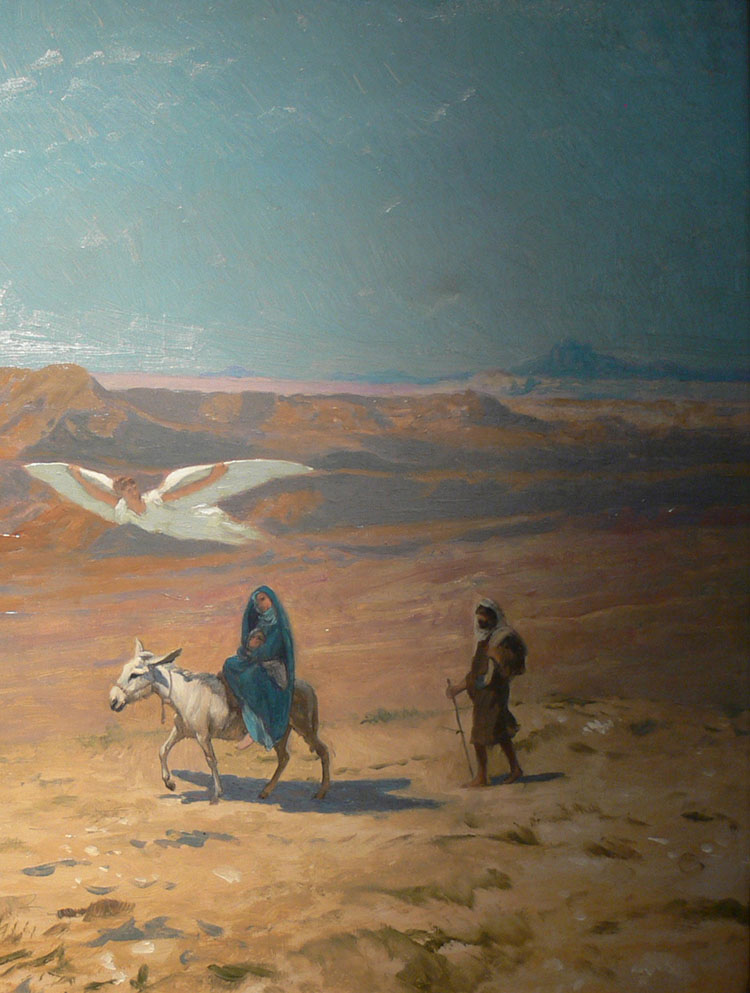
Book 4, Chapter 1
St.
Joseph Resolves to Leave His Spouse
Describing
the Anxieties of Saint Joseph on Account of the Pregnancy of Most
Holy Mary, the Birth of Christ our Lord, His Circumcision, the
Adoration of the Kings, the Presentation of the Infant Jesus In the
Temple, the Flight into Egypt, the Death of the Holy Innocents, and
the Return to Nazareth.
The divine pregnancy of the Princess
of heaven had advanced to its fifth month when the most chaste
Joseph, her husband, commenced to notice the condition of the Virgin;
for on account of the natural elegance and perfection of her virginal
body, as I have already remarked, any change could not long remain
concealed and would so much the sooner be discovered. One day, when
saint Joseph was full of anxious doubts and saw Her coming out of her
oratory, he noticed more particularly this evident change, without
being able to explain away what he saw so clearly with his eyes. The
man of God was wounded to his inmost heart by an arrow of grief,
unable to ward off the force of evidence, which at the same time
wounded his soul. The principal cause of his grief was the most
chaste, and therefore the most intense love with which he cherished
his most faithful Spouse, and in which he had from the beginning
given over to Her his whole heart. Moreover, her charming graces and
incomparable holiness had captured and bound to Her his inmost soul.
As She was so perfect and accomplished in her modesty and humble
reticence, saint Joseph, besides his anxious solicitude to serve Her,
naturally entertained the loving desire of meeting a response of his
love from his Spouse. This was so ordained by the Lord, in order that
by the desire for this interchange of affection he might be incited
to love and serve Her more faithfully.
Besides all this was the certainty of his not
having any part in this pregnancy, the effects of which were before
his eyes; and there was the inevitable dishonor which would follow as
soon as it would become public. This thought caused so much the
greater anxiety in him, as he was of a most noble and honorable
disposition, and in his great foresight he knew how to weigh the
disgrace and shame of himself and his Spouse in each circumstances.
The third and most intimate cause of his sorrow, and which gave him
the deepest pain, was the dread of being obliged to deliver over his
Spouse to the authorities to be stoned (Lev. 20, 10), for this was
the punishment of an adulteress convicted of the crime. The heart of
saint Joseph, filled with these painful considerations, found itself
as it were exposed to the thrusts of many sharp–edged swords,
without any other refuge than the full confidence which he had in his
Spouse. But as all outward signs confirmed the correctness of his
observations, there was no escape from these tormenting thoughts, and
as he did not dare to communicate about his grievous affliction with
anybody, be found himself surrounded by the sorrows of death (Ps. 17,
5), and he experienced in himself the saying of the Scriptures, that:
“Jealousy is hard as hell” (Cant. 8, 6).
In the midst of
these tormenting anxieties the holy Spouse Joseph appealed to the
tribunal of the Lord in prayer and placing himself in her presence,
he said: “Most high Lord and God, my desires and sighs are not
unknown to Thee. I find myself cast about by the violent waves of
sorrow (Ps. 31. 10) which through my senses have come to afflict my
heart. I have given myself over with entire confidence to the Spouse
whom thou hast given me. I have confided entirely in her holiness;
and the signs of this unexpected change in Her are giving rise to
tormenting and fearful doubts lest my confidence be misplaced.
Nothing have I until now seen in Her which could give occasion for
any doubt in her modesty and her extraordinary virtue; yet at the
same time I cannot deny that She is pregnant. To think that She has
been unfaithful to me, and has offended Thee, would be temerity in
view of such rare purity and holiness: to deny what my own eyes
perceive is impossible. But it is not impossible that I die of grief,
unless there is some mystery hidden beneath it which I cannot yet
fathom. Reason proclaims Her as blameless, while the senses accuse
Her. She conceals from me the cause of her pregnancy, while I have it
before my eyes. What shall I do? We both
have come to an agreement concerning our vows of chastity, and we
have both promised to keep them for thy glory; if it could be
possible that She has violated her fidelity toward Thee and toward
me, I would defend thy honor and would forget mine for love
of Thee. Yet how could She preserve such purity and holiness in all
other things if She had committed so grave a crime in this? And on
the other hand, why does She, who is so holy and prudent, conceal
this matter from me? I withhold and defer my judgment. Not being able
to penetrate to the cause of what I see, I pour out in thy presence
my afflicted soul (Ps. 141, 3), God of Abraham, Isaac and Jacob.
Receive my tears as an acceptable sacrifice; and if my sins merit thy
indignation, let thy own clemency and kindness move Thee not to
despise my excruciating sorrow. I do not believe that Mary has
offended Thee; yet much less can I presume that there is a mystery of
which I, as her Spouse, am not to be informed. Govern Thou my mind
and heart by thy divine light, in order that I may know and fulfill
that which is most pleasing to Thee.”
Saint Joseph persevered in this kind
of prayer, adding many more affectionate petitions; for even though
he conjectured that there must be some mystery in the pregnancy of
the most holy Mary hidden from him, he could not find assurance
therein. This thought had no greater force to exculpate most holy
Mary than the other reasons founded upon her holiness; and therefore
the idea that the most holy Queen might be the Mother of the Messias
did not come to his mind. If at times he drove away his conjectures,
they would return in greater number and with more urgent force of
evidence. Thus he was cast about on the turbulent waves of doubt.
From sheer exhaustion he would at times fall into a condition of mind
wherein he could find neither an anchor of certainty for his doubts,
nor tranquillity for his heart, nor any standard by which he could
direct his course. Yet his forebearance under this torment was so
great that it is an evident proof of his great discretion and
holiness, and that it made him worthy of the singular blessing which
awaited him.
All that passed in the heart of saint
Joseph was known to the Princess of heaven, who penetrated into its
interior by the light of her divine science. Although her soul was
full of tenderness and compassion for the sufferings of her spouse,
She said not a word in the matter; but She continued to serve him
with all devotion and solicitude. The man of God watched Her without
outward demonstration, yet with a greater anxiety than that of any
man that ever lived. The pregnancy of most holy Mary was not
burdensome or painful to Her; but as the great Lady in serving him at
table or any other domestic occupations, necessarily disclosed her
state more and more openly, saint Joseph noticed all these actions
and movements and with deep affliction of soul verified all his
observations. Notwithstanding his being a holy and just man, he
permitted himself to be respected and served by the most holy Virgin
after their espousal, claiming in all things the position of head and
husband of the family, though with rare humility and prudence. As
long as he was ignorant of the mystery of his Spouse he judged it
right, within befitting limits, to show his authority in imitation of
the ancient Fathers and Patriarchs. For he knew that they demanded
subjection and prompt obedience of their wives, and he did not wish
to recede from their example. He would have been right in this course
if most holy Mary, our Lady, had been no more than other women. Yet
although there was such a great difference, no woman ever existed or
will exist who was or will be so obedient, humble and devoted to her
husband as the most exalted Queen was toward her spouse. She served
him with incomparable respect and promptitude; although She knew his
troubled thoughts and observations concerning her pregnancy. She
omitted no service due to him, nor did She try to conceal or palliate
her state. For such evasion or duplicity would not have consorted
with the angelic truthfulness and openness, nor with the nobility and
magnanimity of her generous heart.
The great Lady could easily have
asserted her entire innocence and referred to the testimony of saint
Elisabeth and Zacharias; for, if saint Joseph had any suspicion of
guilt in Her, he could naturally have supposed it to have been
incurred during her stay with them. Hence, through them and by other
references, She could have justified Herself and quieted the
anxieties of saint Joseph without disclosing the mystery. The
Mistress of prudence and humility did nothing of the kind; for these
virtues did not allow Her to think of Herself, nor to trust the
justification of her mysterious condition to her own explanation.
With great wisdom She resigned the whole matter into the hands of
divine Providence. Although her compassion for her spouse and her
love for him made Her anxious to console and comfort him, She would
not do it by clearing Herself or by concealing her pregnancy, but
rather by serving him with more devoted demonstrations of love, and
by trying to cheer him up, asking him what She could do for him and
lovingly showing her devoted and submissive affection. Many times She
served him on her knees, and although this somewhat consoled saint
Joseph, yet on the other hand, it was also a cause for new grief. For
thus he only saw the motives of love and esteem multiplied and still
remained uncertain whether She had been untrue or not. The heavenly
Lady offered up continual prayers for him and besought the Most High
to look upon him and console him; as for the rest She submitted all
to the will of his Majesty.
Saint Joseph could not entirely
conceal his cruel sorrow, and therefore he often appeared to be in
doubt and sad suspense. Sometimes, carried away by his grief, he
spoke to his heavenly Spouse with some degree of severity, such as he
had not shown before. This was the natural effect of the affliction
of his heart not of anger or vengeful feelings; for these never
entered his thoughts, as we shall see later. The most prudent Lady,
however, never lost the sweetness of her countenance, nor showed any
feeling; but merely redoubled her efforts to relieve her husband. She
served at table, offered him a seat, administered food and drink, and
if, after all these services, which She performed with incomparable
grace, saint Joseph urged Her to sit down, he could convince himself
more and more of her pregnancy.
Yet although her sorrow exceeded all
bounds, the capacity of her generous and magnanimous soul was much
greater and therefore She could conceal her grief more completely,
and occupy her faculties in the loving care of saint Joseph, her
spouse. Her sorrow therefore only incited Her to attend so much the
more devotedly to his health and comfort. Nevertheless, as the
inviolable rule of the actions of the most prudent Queen was to
perform all in the fullness of wisdom and perfection, She continued
to conceal the mystery about the disclosure of which She had received
no command. Though She alone could relieve her spouse by an
explanation, She withheld it in reverence and faithfulness due to the
sacrament of the heavenly King (Tob. 13, 7). As far as She herself
was concerned, She exerted her utmost powers; She spoke to him about
his health, She asked what She could do to serve him and afford him
help in the weakness which so mastered him. She urged him to take
some rest and recreation, since it was a duty to yield to necessity
and repair the weakened strength, in order to be able to work for the
Lord afterward.
The Princess of heaven, becoming aware of the
resolve of her spouse saint Joseph to leave Her and absent himself,
turned in great sorrow to her holy angels and said to them: “Blessed
spirits and ministers of the highest King, who raised you to felicity
which you enjoy, and by his kind Providence accompany me as his
faithful servants and as my guardians, I beseech you, my friends, to
present before God’s clemency the afflictions of my spouse
Joseph. Beseech the Lord to look upon him and console him as a true
Father. And you also, who so devotedly obey his words, hear likewise
my prayers; in the name of Him who is infinite, and to whom I am to
give human shape in my womb, I pray, beseech and supplicate you, that
without delay you assist and relieve my most faithful spouse in the
affliction of his heart and drive from his mind and heart his resolve
of leaving me.” The angels which the Queen selected for this
purpose obeyed immediately and instilled into the heart of saint
Joseph many holy thoughts, persuading him anew that his Spouse Mary
was holy and most perfect, and that he could not believe anything
wrong of Her; that God was incomprehensible in his works, and most
hidden in his judgments (Ps. 33, 19); that He was always most
faithful to those who confide in him, and that He would never despise
or forsake them in tribulation.
By these and other
holy inspirations the troubled spirit of saint Joseph was somewhat
quieted, although he did not know whence they came; but as the cause
of his sorrow was not removed, he soon relapsed, not finding anything
to assure and soothe his soul, and he returned to his resolve of
withdrawing and leaving his Spouse. The heavenly Queen was aware of
this and She concluded that it was necessary to avert this danger and
to insist in earnest prayer on a remedy. She addressed Herself
entirely to her most holy Son in her womb, and with most ardent
affection of her soul She prayed: “Lord and God of my soul,
with thy permission, although I am but dust and ashes (Gen. 8,
27), I will speak in thy kingly presence and
manifest to Thee my sighs, that cannot be hidden from Thee (Ps. 37,
19). It is my duty not to be remiss in assisting the spouse whom I
have received from thy hand. I see him overwhelmed by the
tribulation, which Thou hast sent him, and it would not be kind in me
to forsake him therein. If I have found grace in thy eyes, I beseech
Thee, Lord and eternal God, by the love which obliged Thee to enter
into the womb of thy servant for the salvation of mankind, to be
pleased to console thy servant Joseph and dispose him to assist me in
the fulfillment of thy great works. It would not be well that I, thy
servant, be left without a husband for a protection and guardian. Do
not permit, my Lord and God, that he execute his resolve and withdraw
from me.”
The Most High answered Her: “My dearest
Dove, I shall presently visit my servant Joseph with consolation; and
after I shall have manifested to him by my angel the sacrament, which
is unknown to him, thou mayest speak openly about all that I have
done with thee, without the necessity of keeping silent thenceforward
in these matters. I will fill him with my spirit and make him apt to
perform his share in these mysteries. He will assist Thee in them and
aid Thee in all that will happen.” With this promise of the
Lord, most holy Mary was comforted and consoled, and She gave most
fervent thanks to the same Lord, who disposes all things in admirable
order, measure and weight. For besides the consolation, which the
relief from this anxiety afforded Her. She also knew well how proper
it was that the spirit of saint Joseph be tried and dilated by this
tribulation before the great mysteries should be entrusted to his
care,
In the meanwhile saint Joseph was anxiouslv
debating within himself concerning the proper course or action, for
he had borne his tribulation already for two months; and now,
overcome by the greatness of it, he argued with himself: “I do
not find a better way out of these difficulties than to absent
myself. I confess that my Spouse is most perfect and exhibits nothing
but what shows Her a saint; but after all She is pregnant and of it I
cannot fathom the mystery. I do not wish to injure Her reputation of
holiness by involving Her in the punishment of the law; yet at the
same time I cannot stand by and witness the consequences of her
pregnancy. I will leave her now, and commit myself to the providence
of the Lord, who governs me.” He then resolved to depart during
that night, and in order to prepare for his journey he packed some
clothes and other trifles into a small bundle. Having also claimed
some wages due to him for his work, he retired to rest with the
intention of leaving at midnight. But on account of the strangeness
of his undertaking, and because he was in the habit of commending his
intentions to God in prayer, after he had come to this resolve he
spoke to the Lord: “Highest and eternal God of our fathers
Abraham, Isaac and Jacob, Thou true and only refuge of the poor and
afflicted, the grief and tribulation of my heart are well known to
thy clemency. Thou knowest also, O Lord (although I am unworthy),
that I am innocent of that which causes my sorrow, and Thou likewise
art aware of the infamy and danger consequent upon the condition of
my Spouse. I do not believe Her an adulteress, because I see in Her
great virtue and perfection; yet I certainly see Her pregnant. I do
not know by whom or how it was caused; and therefore I find no way to
restore my peace. In order to choose the least evil I will withdraw
from Her and seek a place where no one knows me and, resigning myself
to thy Providence, I will pass my life in a desert. Do not forsake
me, my Lord and eternal God, since I desire solely thy honor and
service.
Saint Joseph prostrated himself on
the ground and made a vow to go to the temple of Jerusalem and offer
up a part of the small sum of money which he had provided for his
journey, in order that God might help and protect Mary his Spouse
from the calamities of men and free Her from all misfortune; for
great was the uprightness of that man of God, and the esteem in which
he held the heavenly Lady. After this prayer he composed himself for
a short sleep with the intention of departing in secret and at
midnight from his Spouse. During this sleep, however, happened what I
will relate in the next chapter. The great Princess of heaven,
(assured by the divine promise), observed from her retirement all
that saint Joseph was preparing to do; for the Almighty showed it to
Her. And hearing the vow, which he made for her welfare, and seeing
the small bundle and the poor provision he prepared for his journey,
She was filled with tender compassion and prayed anew for him, giving
praise and thanks to the Lord for his Providence in guiding the
actions of men beyond all human power of comprehension. His Majesty
so ordained events, that both most holy Mary and saint Joseph should
be brought to the utmost reach of interior sorrow.
In these operations of course, the
last reason is always the divine will itself, just, holy and perfect.
However, as far as I have understood, I will partly mention some
other reasons in explanation. The first reason is, that saint Joseph
was so prudent, filled with such heavenly light, and had such high
conception of our most holy Lady, the blessed Mary, that it was not
necessary to convince him by strong evidence, in order to assure him
of her dignity and of the mysteries of the Incarnation; for in hearts
well–disposed the divine inspirations find easy entrance. The
second reason is, because his trouble had its beginning in the
senses, namely in seeing with his eyes the pregnancy of his Spouse;
hence it was a just retribution, that they, having given occasion for
deception or suspicion, should as it were be deadened or repressed by
the privation of the angelic vision. The third reason is as it were a
sequence of this last one: saint Joseph, although he was guilty of no
fault, was under the influence of his affliction and his senses were
so to say deadened and incapacitated for the sensible perception and
interaction of the angel. Therefore it was befitting, that the angel
deliver this message to him at a time, when the senses, which had
been scandalized, were inactive and suspended in their operations.
Thus the holy man might afterwards, regaining their full use, purify
and dispose himself by many acts of virtue for entertaining the
operation of the holy Spirit which had been entirely interrupted by
his troubles.
Saint Joseph awoke with the full consciousness,
that his Spouse was the true Mother of God. Full of joy on account of
his good fortune and of his inconceivable happiness, and at the same
time deeply moved by sudden sorrow for what he had done, he
prostrated himself to the earth and with many other humble,
reverential and joyful tokens of his feelings he performed heroic
acts of humiliation and of thanksgiving. He gave thanks to the Lord
for having revealed to him this mystery and for having made him the
husband of her, whom God had chosen for his Mother, notwithstanding
that he was not worthy to be even her slave. Amid these recognitions
and these acts of virtue, the spirit of saint Joseph remained
tranquil and apt for the reception of new influences of the holy
Spirit. His doubts and anxieties of the past few months had laid in
him those deep foundations of humility, which were necessary for one
who should be entrusted with the highest mysteries of the Lord; and
the remembrance of his experiences was to him a lesson which lasted
all his life. The holy man began to blame himself alone for all that
had happened and broke forth in the following prayer: “O my
heavenly Spouse and meekest Dove, chosen by the Most High for his
dwelling–place and for his Mother: how could thy unworthy slave
have dared to doubt thy fidelity? How could dust and ashes ever
permit itself to be served by Her, who is the Queen of heaven and
earth and the Mistress of the universe? How is it, that I have not
kissed the ground which was touched by thy feet? Why have I not made
it my most solicitous care to serve Thee on my knees? How will I ever
raise my eyes in thy presence and dare to remain in thy company or
open my lips to speak to Thee? O my Lord and God, give me grace and
strength to ask her forgiveness and move her heart to mercy, that She
do not despise her sorrowful servant according to his guilt.
The holy spouse now left his little
room, finding himself so happily changed in sentiments since the time
he had composed himself for sleep. As the Queen of heaven always had
kept herself in retirement, he did not wish to disturb her sweet
contemplation, until She herself desired. In the meantime the man of
God unwrapped the small bundle, which he had prepared, shedding many
tears with feelings quite different from those with which he had made
it up. Weeping, he began to show his reverence for his heavenly
Spouse, by setting the rooms in order, scrubbing the floors, which
were to be touched by the sacred feet of most holy Mary. He also
performed other chores which he had been accustomed to leave to the
heavenly Lady before he knew her dignity. He resolved to change
entirely his relation toward Her, assume for himself the position of
servant and leave to Her the dignity of Mistress. From that day on
arose a wonderful contention between the two, which of them should be
allowed to show most eagerness to serve and most humility. All that
happened with saint Joseph the Queen of heaven saw, and not a thought
or movement escaped her attention. When the time arrived, the saint
approached the oratory of her Highness, and She awaited him with
sweetest kindness and mildness.
The husband of Mary, saint Joseph, now better
informed, waited until his most holy Spouse had finished her
contemplation, and at the hour known to him he opened the door of the
humble apartment which the Mother of the heavenly king occupied.
Immediately upon entering the holy man threw himself on his knees,
saying with the deepest reverence and veneration: “My Mistress
and Spouse, true Mother of the eternal Word, here am I thy servant
prostrate at the feet of thy clemency. For the sake of thy God and
Lord, whom Thou bearest in thy virginal womb, I beseech Thee to
pardon my audacity. I am certain, O Lady, that none of my thoughts is
hidden to thy wisdom and to thy heavenly insight. Great was my
presumption in resolving to leave Thee and not less great was my
rudeness in treating Thee until now as my inferior, instead of
serving Thee as the Mother of my Lord and God. But Thou also knowest
that I have done all in ignorance, because I knew not the sacrament
of the heavenly King and the greatness of thy dignity, although I
revered in Thee other gifts of the Most High. Do not reflect, my
Mistress, upon the ignorance of such a lowly creature, who, now
better instructed, consecrates his heart and his whole life to thy
service and attendance. I will not rise from my knees, before being
assured of thy favor, nor until I have obtained thy pardon, thy good
will and thy blessing.”
The most holy Mary, hearing the humble words of
saint Joseph, experienced diverse feelings. For with tender joy in
the Lord She saw how apt he was to be entrusted with the sacraments
of the Lord, since he acknowledged and venerated them with such deep
faith and humility. But She was somewhat troubled by his resolve of
treating Her henceforth with the respect and self abasement alluded
to in his words; for the humble Lady feared by this innovation to
lose the occasions of obeying and humiliating Herself as a servant of
her spouse. Like one, who suddenly finds herself in danger of being
deprived of some jewel or treasure highly valued, most holy Mary was
saddened by the thought that saint Joseph would no longer treat Her
as an inferior and as subject to him in all things, having now
recognized in Her the Mother of the Lord. She raised her holy spouse
from his knees and threw Herself at his feet (although he tried to
hinder it), and said: “I myself, my master and spouse, should
ask thee to forgive me and thou art the one who must pardon me the
sorrows and the bitterness, which I have caused thee; and therefore I
ask this forgiveness of thee on my knees, and that thou forget thy
anxieties, since the Most High has looked upon my desires and
afflictions in divine pleasure.”
It seemed good to the heavenly Lady to console her
spouse, and therefore, not in order to excuse Herself, She added: “As
much as I desired, I could not on my own account give thee any
information regarding the sacrament hidden within me by the power of
the Almighty; since, as his slave, it was my duty to await the
manifestation of his holy and perfect will. Not because I failed to
esteem thee as my lord and spouse did I remain silent: for I was and
always will be thy faithful servant, eager to correspond to thy holy
wishes and affection. From my inmost heart and in the name of the
Lord, whom I bear within me, I beseech thee not to change the manner
of thy conversation and interaction with me. The Lord has not made me
his Mother in order to be served and to command in this life, but in
order to be the servant of all and thy slave, obeying thy will in all
things. This is my duty, my master, and outside of it I would lead a
life without joy and full of sorrow. It is just that thou afford me
the opportunity of fulfilling it, since so it was ordained by the
Most High. He has furnished me with thy protection and devoted
assistance, in order that I may live securely in the shade of thy
provident solicitude and with thy aid rear the Fruit of my womb, my
God and my Lord.” With these words and others most sweet and
persuasive most holy Mary consoled and quieted saint Joseph, and he
raised Her from her knees in order to confer with Her upon all that
would be necessary for this purpose. Since on this occasion the
heavenly Lady was full of the Holy Ghost and moreover bore within
Her, as his Mother, the divine Word, who proceeds from the Father and
the Holy Ghost, saint Joseph received special enlightenment and the
plenitude of divine graces. Altogether renewed in fervor of spirit he
said:
“Blessed art
thou, Lady, among all women, fortunate and preferred before all
nations and generations. May the Creator of heaven and earth be
extolled with eternal praise, since from his exalted kingly throne He
has looked upon Thee and chosen Thee for his dwelling–place and
in Thee alone has fulfilled the ancient promises made to the
Patriarchs and Prophets. Let all generations bless Him: for in no one
has He magnified his name as He has done in thy humility; and me, the
most insignificant of the living, He has in his divine condescension
selected for thy servant.” In these words of praise and
benediction saint Joseph was enlightened by the Holy Ghost, in the
same manner as saint Elisabeth, when she responded to the salutation
of our Queen and Mistress. The light and inspiration, received by the
most holy spouse was wonderfully adapted to his dignity and office.
The heavenly Lady, upon hearing the words of the holy man, answered
in the words of the Magnificat, as She had done on her visit to saint
Elisabeth, and She added other canticles. She was all aflame in
ecstasy and was raised from the earth in a globe of light, which
surrounded Her and transfigured Her with the gifts of glory.
At this heavenly vision saint Joseph
was filled with admiration and unspeakable delight; for never had he
seen his most blessed Spouse in such eminence of glory and
perfection. Now he beheld Her with a full and clear understanding,
since all the integrity and purity of the Princess of heaven and
mystery of her dignity manifested themselves to him. He saw and
recognized in her virginal womb the humanity of the infant God and
the union of the two natures of the Word. With profound humility and
reverence he adored Him and recognized Him as his Redeemer, offering
himself to his Majesty. The Lord looked upon him in benevolence and
kindness as upon no other man, for He accepted him as his
foster–father and conferred upon him that title. In accordance
with this dignity, He gifted him with that plenitude of science and
heavenly gifts which Christian piety can and must acknowledge. I do
not dilate upon this vast excellence of saint Joseph made known to
me, because I would extend this history beyond the prescribed bounds.
However, if it was a proof of the
magnanimity of the glorious saint Joseph and a clear evidence of his
great sanctity, that he did not wear away and die of the grief
sustained at the thought of the loss of his beloved Spouse, it is yet
more astonishing, that he was not overwhelmed by the unexpected joy
of this revelation of the true mystery connected with his Spouse. In
the former he proved his high sanctity; but in the latter he showed
himself worthy of gifts, such which, if the Lord had not expanded his
heart, he could neither have been capable of receiving nor could he
have outlived to bear in the joy of his spirit. In all things he was
renewed and elevated, so as to be able to treat worthily Her, who was
the Mother of God himself and his Spouse, and to cooperate with Her
in the mystery of the Incarnation and in taking care of the Word made
man, as I shall relate farther on. In order that he might be still
more apt and so much the more recognize his obligation to serve his
heavenly Spouse, it was also made known to him, that all the gifts
and blessings came to him because of Her: those before his espousal,
because he had been selected for her husband, and those afterward,
because he had won and merited this distinction. He also perceived
with what prudence the great Lady had acted toward him, not only in
serving him with such inviolate obedience and profound humility, but
also in consoling him in his affliction, soliciting for him the grace
and assistance of the Holy Ghost, hiding her feelings with such
discretion, tranquilizing and soothing his, sorrow, thus fittingly
disposing him for the influence of the divine Spirit. Just as the
Princess of heaven had been the instrument for the sanctification of
saint John the Baptist and his mother, so She also was instrumental
in procuring for saint Joseph the plenitude of graces in still
greater abundance. All this the most faithful and fortunate man
understood and for it, as a most faithful servant, was
proportionately thankful.
Words of the Queen
The Virgin Mary
speaks to Sister Mary of Agreda, Spain
My daughter, my object in revealing
to thee in this history so many sacraments and secrets, both those
which thou hast written and many others, which thou art unable to
manifest, is, that thou use them as a mirror of my life and as an
inviolable rule of action for thy own. All of them should be engraven
in the tablets of thy heart and I recall to thy mind the teachings of
eternal life, thereby complying with my duty as thy Teacher. Be ready
to obey and fulfill all commands as a willing and careful pupil; let
the humble care and watchfulness or my spouse saint Joseph, his
submission to divine direction and his esteem for heavenly
enlightenment, serve thee as an example. For only because his heart
had been well disposed and prepared for the execution of the divine
will, was he entirely changed and remodeled by the plenitude of grace
for the ministry assigned to him by the Most High. Let therefore the
consciousness of thy faults serve thee as a motive to submit in all
humility to the work of God, not as a pretext to withdraw from the
performance of that which the Lord desires of thee.
However, I wish on
this occasion to reveal to thee the just reproach and indignation of
the Most High against mortals; so that, comparing the conduct of
other men with the humility and meekness, which I exercised toward my
spouse saint Joseph, thou mayest understand it better in divine
enlightenment. The cause of this reproach, which the Lord and I have
to make against men, is the inhuman perversity of men in persisting
to treat each other with so much want of humility and love. In this
they commit three faults, which displease the Most High very much and
which cause the Almighty and me to withhold many mercies. The first
is, that men, knowing that they are all children of the same Father
in heaven (Is. 64, 8), works of his hands, formed of the same nature,
graciously nourished and kept alive by his Providence, reared at the
same table of divine mysteries and Sacraments, especially of his own
body and blood, nevertheless forget and despise all these advantages,
concentrating all their interest upon earthly and trivial affairs,
exciting themselves without reason, swelling with indignation,
creating discords, quarrels, indulging in detractions and harsh
words, sometimes rising up to most wicked and inhuman vengeance or
mortal hate of one another. The second is, that, when through human
frailty and want of mortification, incited by the temptation of the
devil, they happen to fall into one of these faults, they do not at
once seek to rid themselves of it nor strive to be again reconciled,
as should be done by brothers in the presence of a just judge. Thus
they deny Him as their merciful Father and force Him to become the
severe and rigid Judge of their sins; for no faults excite Him sooner
to exercise his severity than the sins of revenge and hate. The third
offense, which causes his great indignation, is, that sometimes, when
a brother comes in order to be reconciled, he that deems himself
offended will not receive him and asks a greater satisfaction than
that which he knows would be accepted by the Lord, and which he
himself offers as satisfaction to God’s Majesty. For all of
them wish that God, who is most grievously offended, should receive
and pardon them, whenever they approach Him with humility and
contrition; while those that are but dust and ashes, ask to be
revenged upon their brothers and will not content themselves with the
satisfaction, which the Most High himself readily accepts for their
own sins.
Of all the sins,
which the sons of the Church commit, none
is more horrible than these in the eyes of the Most High. This thou
wilt readily understand by the divine light and in the vigor of God’s
law, which commands men to pardon their brethren, although they may
have offended seventy times seven. And if a brother offend many times
every day, as soon as he says that he is sorry for it, the Lord
commands us to forgive the offending brother as many times without
counting the number. And those that are not willing to forgive, He
threatens with severest punishment on account of the scandal, which
they cause. This can be gathered from the threatening words of God
himself: Woe to him from whom scandal comes and through whom scandal
is caused! It were better for him, if he fell into the depths of the
sea with a heavy millstone around his neck. This was said in order to
indicate the danger of this sin and the difficulty of obtaining
deliverance therefrom, which must be compared to that of a man
dropping into the sea with a grinding–stone around his neck. It
also points out that the punishment is the abyss of eternal pains
(Matth. 8, 9). Therefore the command of my most holy Son is good
advice to the faithful, that they rather permit their eyes to be torn
out and their hands chopped off, than allow themselves to fall into
this crime of scandalizing the little ones.
Book 4, Chapter 2
The
Amiable Humility of Mary Toward Her Spouse
The most faithful Joseph, after being
informed of the mystery and sacrament of the Incarnation, was filled
with such high and befitting sentiments concerning his Spouse, that,
although he had always been holy and perfect, he was changed into a
new man. He resolved to act toward the heavenly Lady according to a
new rule and with much greater reverence, as I will relate farther
on. This was conformable to the wisdom of the saint and due to the
excellence of his Spouse; for saint Joseph by heavenly enlightenment
saw well that he was the servant and She the Mistress of heaven and
earth. In order to satisfy his desire for honoring and reverencing
Her as the Mother of God, whenever he passed Her or spoke to Her
alone, he did it with great external veneration and on bended knees.
He would not allow Her to serve him, or wait upon him, or perform any
other humble services, such as cleaning the house or washing the
dishes and the like. All these things the most happy spouse wished to
do himself, in order not to derogate from the dignity of the Queen.
But the heavenly Lady, who among the humble was
the most humble and whom no one could surpass in humility, so managed
all these things, that the palm of victory in all these virtues
always remained with Her. She besought saint Joseph not to bend the
knees to her, for though this worship was due to the Lord whom She
carried in her womb, yet as long as He was within unseen by any one
no distinction was externally manifest between his and her own
person. The saint therefore allowed himself to be persuaded and
conformed to the wishes of the Queen of heaven; only at times, when
She was not looking, he continued to give this worship to the Lord
whom She bore in her womb, and also to Her as his Mother, intending
thereby to honor Both according to the excellence of Each. In regard
to the other works and services, an humble contention arose between
them. For saint Joseph could not overcome his conviction as to the
impropriety of allowing the great Queen and Lady to perform them, and
therefore he sought to be beforehand with such household duties. His
heavenly Spouse was filled with the same eagerness to seize upon
occasions in advance of saint Joseph. As however he busied himself in
these duties during the time which She spent in contemplation, he
frustrated her continual desire of serving him and of performing all
the duties of the household, which She considered as belonging to Her
as a servant. In her affliction on this account, the heavenly Lady
turned to the Lord with humble complaints, and besought Him to oblige
saint Joseph not to hinder Her in the exercise of humility, as She
desired. As this virtue is so powerful before the divine tribunal and
has free access, no prayers accompanied by it is small. Humility
makes all prayers effective and inclines the immutable Being of God
to clemency. He heard Her petition and He ordered the angel guardian
of the blessed husband to instruct him as follows: “Do not
frustrate the humble desires of Her who is supreme over all the
creatures of heaven and earth. Exteriorly allow Her to serve thee and
interiorly treat Her with highest reverence, and at all times and in
all places worship the incarnate Word. It is his will, equally with
that of the heavenly Mother, to serve and not to be served, in order
to teach the world the knowledge of life and the excellence of
humility. In some of the work thou canst assist Her, but always
reverence in Her the Lord of all creation.”
Instructed by this command of the
Most High, saint Joseph permitted the heavenly Princess to exercise
her humility and so both of them were enabled to make an offering of
their will to God: most holy Mary, by exercising the deepest humility
and obedience toward her spouse in all her acts of virtue which She
performed without failing in the least point of perfection; and saint
Joseph by obeying the Almighty with a holy and prudent embarrassment,
which was occasioned by seeing himself waited upon and served by Her,
whom he had recognized as his Mistress and that of the world, and as
the Mother of his God and Creator.
No human tongue can reproduce the
celestial words and conversations of the most holy Mary and the
blessed Joseph. I will adduce some of them in the following chapters,
as far as I know how. Yet, who can declare the effects wrought in the
sweet and devout heart of this saint in seeing himself not only
constituted the husband of Her who was the true Mother of his
Creator, but in finding himself also served by Her as if She was the
humblest slave, while at the same time he beheld Her raised in
sanctity and dignity above the highest seraphim and inferior only to
God? If the divine right hand enriched with blessings the house of
Obededom for having sheltered for a few months the figurative ark of
the old Testament (I Par. 13, 4), what blessings did He not shower
upon saint Joseph, to whom He entrusted the true ark and the Lawgiver
himself enshrined in Her? Incomparable was the good fortune and
happiness of this saint! Not only because he had with him in his
house the living and true ark of the new Testament, the altar, the
sacrifice, and the temple, all left in his charge: but also because
he cared for them worthily and as a faithful servant (Matth. 24, 45),
constituted by the Lord himself over his family to provide for all
their necessities in the right time as a most faithful dispenser (Os.
14, 20). Let all generations and peoples acknowledge and bless him,
let them extol his merits; since the Most High has favored none other
in the same degree. I, an unworthy and poor worm, in the light of
such venerable sacraments. exalt and magnify this Lord God,
confessing Him as holy, just, merciful, wise and admirable in the
disposition of all his great works.
The humble but blessed house of Joseph contained
three rooms, which occupied nearly all its space and formed the
exclusive dwelling place of the two Spouses; for they kept neither a
man–nor a maid–servant. In one of the rooms saint Joseph
slept, in another he worked and kept the tools of his trade of
carpentering; the third was ordinarily occupied by the Queen of
heaven and was also her sleeping room. It contained a couch made by
the hands of saint Joseph. This arrangement they had observed since
their espousal and from the day on which they had come to this, their
dwelling. Before knowing the dignity of his Spouse and Lady, saint
Joseph rarely went to see Her; for while She kept her retirement he
was engaged in his work, unless some affair made it absolutely
necessary to consult Her. But after he was informed of his good
fortune, the holy man was more solicitous for her welfare, and in
order to renew the joy of his heart he began to come often to the
retreat of the sovereign Lady, visiting Her and receiving her
commands. But he always approached Her with extreme humility and
reverential fear, and before he spoke to Her, he was careful to note
in what She was engaged. Many times he saw Her in ecstasy raised from
the earth and resplendent with most brilliant light; at other times
in the company of her angels in celestial interaction with them; and
at other times, he found Her prostrate upon the earth in the form of
a cross, speaking to the Lord. Her most fortunate spouse was a
participator in these favors. But whenever he found the great Lady in
these occupations and postures, he would presume no farther than to
look upon Her with profound reverence; and thereby he merited
sometimes to hear the sweetest harmony of the celestial music, with
which the angels regaled their Queen, and perceived a wonderful
fragrancy which comforted him and filled him entirely with jubilation
and joy of spirit.
The two holy spouses lived alone in
their house, for as I have said, they had no servants of any kind,
not only on account of their humility, but in order more fittingly to
bide from any witnesses the wonders, which passed between them and
which were not to be communicated to outsiders. Likewise the Princess
of heaven did not leave her dwelling, except for very urgent causes
in the service of God or her fellow–men. Whenever anything was
necessary She asked that fortunate neighbor, who as I have said had
served saint Joseph during the absence of Mary in the house of
Zacharias. This woman received such a good return from Mary, that not
only she herself became most holy and perfect, but her whole
household and family was blessed by the help of the Queen and
Mistress of the world. She was visited by most holy Mary in some of
her sicknesses and with her family was copiously enriched by the
blessings of heaven.
Never did saint Joseph see his
heavenly Spouse asleep, nor did he of his own experience know whether
She ever slept, although he besought Her to take some rest,
especially during the time of her sacred pregnancy. The resting–place
of the Princess was the low couch, which I said had been constructed
by saint Joseph; and on it were the coverings which served her during
her brief and holy sleep. Her undergarment was a sort of tunic made
of cotton, but softer than the ordinary or common cloth. This tunic
She never changed from the time since She left the temple, nor did it
wear out or grow old or soiled, and no person ever saw it, nor did
saint Joseph know that She wore that kind of a garment; for he never
saw any other part of her clothing except the outside garments, which
were open to the view of other persons. Those were of a gray color,
as I have said (Part I. No. 400), and these only and her
head–coverings were the garments, which the Queen changed now
and then; not because they were soiled, but because, being visible to
all, She wished to avoid notice by such strange sameness of outward
appearance. Nothing that She wore upon her most pure and virginal
body became soiled or worn; for She neither perspired, nor was She
subject to the punishments, which are laid upon the sin–impregnated
bodies of the children of Adam. She was in all respects most pure and
the works of her hands were like crystal ornaments; and with the same
purity She cared for the clothes and other necessities of saint
Joseph. The food of which She partook, was most limited in kind and
quantity; but She partook of some every day and in company of her
spouse; she never ate meat, although he did, and She prepared it for
him. Her sustenance was fruit, fishes, and ordinarily bread and
cooked vegetables; but of all these She partook in exact measure and
weight, only so much as was necessary for the nourishment of the body
and the maintaining of the natural warmth without any superfluities
that could pass over into excess of harmful corruption; the same rule
She observed in regard to drink, although Her fervent acts of love
often caused a superabundance of preternatural ardor. This rule, as
to the quantity of her nourishment, She followed during her whole
life, although as to the kind of food She adapted Herself to the
various circumstances demanding a change, as I shall relate further
on.
Words of the Queen
The Virgin Mary
speaks to Sister Mary of Agreda, Spain
My daughter, in the school of
humility, which my whole life affords thee, I wish that thou be
studious and diligent; and this should be thy first and principal
care, if thou wishest to enjoy the sweet embraces of the Lord, assure
thyself of his favor and possess the treasures of light, which are
hidden to the proud (Matth. 11, 23). For without the trusty
foundation of humility such treasures cannot be confided to any man.
Let all thy ambition be to humble thyself in thy own estimation and
thought, so that in thy exterior actions thou mayest truly exhibit
this humility of thy interior. It must be a subject of confusion and
a spur of humility for thee and for all the souls to have the Lord as
their Father and Spouse, to see, that the presumption and pride of
worldly wisdom is more powerful in its devotees, than humility and
true self–knowledge is in the children of light. Consider the
watchfulness, the untiring study and care of ambitious and aspiring
men. Look upon their struggle to be esteemed in the world, their
strivings never at rest, though so vain and worthless; how they
conduct themselves outwardly according to the false notions which
they have of themselves; how they pretend to be what they are not,
and how they exert themselves to obtain through these false pretenses
the treasures, which, though only earthly, they do not deserve. Hence
it should be a cause of confusion and shame to the good, that deceit
should urge on the sons of perdition with greater force than truth
urges the elect; that the number of those, who in the world are
anxious to strive in the service of their God and Creator, should be
so small in comparison with the number of those who serve vanity;
that there should be so few of the elect, though all are called
(Matth. 22, 16).
Book 4, Chapter 3
The
Journey to Bethlehem
It had been decreed by the immutable
will of Providence that the Onlybegotten of the Father should be born
in the town of Bethlehem (Mich. 5, 2), and accordingly it had been
foretold by the Saints and Prophets of foregone ages (Jerem. 10, 9);
for the decrees of the absolute will of God are infallible, and since
nothing can resist them (Esther 13, 9), sooner would heaven and earth
pass away than that they fail of accomplishment (Matth. 24, 35). The
fulfillment of this immutable decree the Lord secured by means of an
edict of Caesar Augustus for the whole Roman empire, ordering the
registration or enumeration of all the world, as saint Luke says
(Luke 2, 1). The Roman empire at that time embraced the greater part
of what was then known of the earth and therefore they called
themselves masters of the world, ignoring all the other nations. The
object of this census was to make all the inhabitants acknowledge
themselves as vassals of the emperor, and to pay a certain tax to
their temporal lord; for this registration every one was to go to his
native city in order to be inscribed. This edict was also proclaimed
in Nazareth and came to the hearing of saint Joseph while he was on
some errand. He returned to his house in sorrowful consternation and
informed his heavenly Spouse of the news which had spread about
concerning the edict. The most prudent Virgin answered: “Let
not this edict of our temporal ruler cause thee any concern, my
master and spouse, for all that happens to us is ordained by the Lord
and King of heaven and earth; and in all events his Providence will
assist and direct us (Eccli. 22, 28). Let us resign ourselves into
his hands and we shall not be disappointed.”
Most holy Mary was capable of being entrusted with
all the mysteries of her most holy Son and She knew of the prophecies
and their fulfillment; hence, also, that the Onlybegotten of the
Father and her own was to be born in Bethlehem, a Stranger and an
Unknown. But She said nothing of this to saint Joseph; for without
being commissioned by the Lord She would reveal none of his secrets.
All that She was not commanded to reveal She concealed with admirable
prudence, notwithstanding her desire of consoling her most faithful
and holy spouse. She wished to entrust Herself to his direction and
arrangement without acting the part of those who are wise in their
own conceit, as Wisdom warns us (Prov. 3, 7). They therefore
conferred with each other about the course to be pursued; for already
the pregnancy of the heavenly Lady was far advanced and her
parturition was approaching. Saint Joseph said: “Queen of
heaven and earth and my Mistress, if Thou hast no order to the
contrary from the Almighty, it seems to me necessary that I go alone.
Yet, although this order refers only to the heads of families, I dare
not leave Thee without assistance, nor could I live without Thee, nor
would I have a moment’s peace away from Thee; for my heart
could not come to any rest without seeing Thee.
They at the same time resolved upon
the day of their departure, and Joseph diligently searched in the
town of Nazareth for some beast of burden to bear the Mistress of the
world. He could not easily find one because so many people were going
to different towns in order to fulfill the requirements of the edict
of the emperor. But after much anxious inquiry saint Joseph found an
unpretentious little beast which, if we can call such creatures
fortunate, was the most fortunate of all the irrational animals;
since it was privileged not only to bear the Queen of all creation
and the blessed fruit of her womb, the King of kings and the Lord of
lords, but afterwards to be present at his Birth (Jsaias 1, 3); and
since it gave to its Creator the homage denied to Him by men, as I
shall relate (No. 485). They provided the articles for the journey,
which would last five days. The outfit of the heavenly travelers was
the same as that which they had provided for their previous journey
to the house of Zacharias on their visit to Elisabeth. They carried
with them bread, fruit and some fishes, which ordinarily composed
their nourishment. As the most prudent Virgin was enlightened
regarding their protracted absence, She made use of prudent
concealment in taking along the linens and clothes necessary for her
heavenly delivery, for She wished to dispose all things according to
the exalted intents of the Lord and in preparation for the events
which She expected. Their house they left in charge of some neighbor
until they should return.
The most pure Mary and the glorious
saint Joseph departed from Nazareth for Bethlehem alone, poor and
humble in the eyes of the world. None of the mortals thought more of
them than what was warranted by their poverty and humility. But O the
wonderful sacraments of the Most High, hidden to the proud, and
unpenetrated by the wisdom of the flesh! They did not walk alone,
poor or despised, but prosperous, rich and in magnificence. They were
most worthy of the immense love of the eternal Father and most
estimable in his eyes. They carried with them the Treasure of heaven,
the Deity itself. The whole court of the celestial ministers
venerated them. All the inanimate beings recognized the living and
true Ark of the Testament (Josue 3, 16) more readily than the waters
of the Jordan recognized its type and shadow, when they courteously
laid open and free the path for its passage and for those that
followed it. They were accompanied by the ten thousand angels, which
as mentioned (No. 450), were appointed by God himself as the servants
of her Majesty during that whole journey. These heavenly squadrons
marched along as their retinue in human forms visible to the heavenly
Lady, more refulgent than so many suns. She herself walked in their
midst better guarded and defended than the bed of Solomon, surrounded
by the sixty valiant ones of Israel, girded with their swords (Cant.
3, 7). Besides these ten thousand angels there were many others, who
descended from heaven as messengers of the eternal Father to his
Onlybegotten made man in his most holy Mother, and who ascended from
earth as their ambassadors with messages and treaties from them to
the heavenly Father.
With these
wonderful favors and delights, however, the Lord joined some
hardships and inconveniences which the divine Mother encountered on
the way. For the concourse of people in the taverns, occasioned by
the imperial edict, was very disagreeable and annoying to the modest
and retiring Virgin–Mother and her spouse. On account
of their poverty and timid retirement they were treated with less
hospitality and consideration than others, especially the well–to–do;
for the world judges and usually confers its favors according to
outward appearance and according to personal influence. Our holy
pilgrims were obliged repeatedly to listen to sharp reprimands in the
taverns, at which they arrived tired out by their journey, and in
some of them they were refused admittance as worthless and despicable
people. Several times they assigned to the Mistress of heaven and
earth some corner of the hallway; while at others She did not fare
even so well, being obliged to retire with her husband to places
still more humble and unbecoming in the estimation of the world. But
in whatever places She tarried, how contemptible soever it might be
considered, the courtiers of heaven established their court around
their supreme King and sovereign Queen. Immediately they surrounded
and enclosed them like an impenetrable wall, securing the bridal
chamber of Solomon against the terrors of the night. Her most
faithful spouse Joseph, seeing the Mistress of heaven so well guarded
by the angelic hosts, betook himself to rest and sleep; for to this
She urged him on account of the hardships of travel. She, however,
continued her celestial colloquies with the ten thousand angels of
her retinue.
Thus variously and wonderfully assisted, our
travelers arrived at the town of Bethlehem at four o’clock of
the fifth day, a Saturday. As it was at the time of the winter
solstice, the sun was already sinking and the night was falling. They
entered the town, and wandered through many streets in search of a
lodging–house or inn for staying over night. They knocked at
the doors of their acquaintances and nearer family relations; but
they were admitted nowhere and in many places they met with harsh
words and insults. The most modest Queen followed her spouse through
the crowds of people, while he went from house to house and from door
to door. Although She knew that the hearts and the houses of men were
to be closed to them, and although to expose her state at her age to
the public gaze was more painful to her modesty than to their failure
to procure a night–lodging, She nevertheless wished to obey
saint Joseph and suffer this indignity and unmerited shame. While
wandering through the streets they passed the office of the public
registry and they inscribed their names and paid the fiscal tribute
in order to comply with the edict and not be obliged to return. They
continued their search, betaking themselves to other houses. But
having already applied at more than fifty different places, they
found themselves rejected and sent away from them all. The heavenly
spirits were filled with astonishment at these exalted mysteries of
the Most High, which manifested the patience and meekness of his
Virgin Mother and the unfeeling hardness of men. At the same time
they blessed the Almighty in his works and hidden sacraments, since
from that day on He began to exalt and honor poverty and humility
among men.
It was nine o’clock at night when the most
faithful Joseph, full of bitter and heartrending sorrow, returned to
his most prudent Spouse and said: “My sweetest Lady, my heart
is broken with sorrow at the thought of not only not being able to
shelter Thee as Thou deservest and as I desire, but in not being able
to offer Thee even any kind of protection from the weather, or a
place of rest, a thing rarely or never denied to the most poor and
despised in the world. No doubt heaven, in thus allowing the hearts
of men to be so unmoved as to refuse us a night–lodging
conceals some mystery. I now remember, Lady, that outside the city
walls there is a cave, which serves as a shelter for shepherds and
their flocks. Let us seek it out; perhaps it is unoccupied, and we
may there expect some assistance from heaven, since we receive none
from men on earth.” The most prudent Virgin answered: “My
spouse and my master, let not thy kindest heart be afflicted because
the ardent wishes which the love of thy Lord excites in thee cannot
be fulfilled. Since I bear Him in my womb, let us, I beseech thee,
give thanks for having disposed events in this way. The place of
which thou speakest shall be most satisfactory to me. Let thy tears
of sorrow be turned into tears of joy, and let us lovingly embrace
poverty, which is the inestimable and precious treasure of my most
holy Son. He came from heaven in order to seek it, let us then afford
Him an occasion to practice it in the joy of our souls; certainly I
cannot be better delighted than to see thee procure it for me. Let us
go gladly wherever the Lord shall guide us.” The holy angels
accompanied the heavenly pair, brilliantly lighting up the way, and
when they arrived at the city gate they saw that the cave was
forsaken and unoccupied. Full of heavenly consolation, they thanked
the Lord for this favor, and then happened what I shall relate in the
following chapter.
Words of the Queen
The Virgin Mary
speaks to Sister Mary of Agreda, Spain
My dearest daughter, if thou art of a
meek and docile heart, these mysteries which thou hast written about
and hast understood, will stir within thee sweet sentiments of love
and affection toward the Author of such great wonders. I wish that,
bearing them in mind, thou from this day on embrace with new and
great esteem the contempt and neglect of the world. And tell me,
dearest, if, in exchange for this forgetfulness and scorn of the
world, God look upon thee with eyes of sweetest love, why shouldst
thou not buy so cheaply what is worth an infinite price? What can the
world give thee, even when it esteems thee and exalts thee most ? And
what dost thou lose, if thou despise it? Is its favor not all vanity
and deceit (Ps. 4, 3)? Is it not all a fleeting and momentary shadow,
which eludes the grasp of those that haste after it? Hence, if thou
hadst all worldly advantage in thy possession, what great feat would
it be to despise it as of no value? Consider how little thou dost in
rejecting all of it for the love of God, for mine and that of the
holy angels. And if the world does not neglect thee as much as thou
shouldst desire, do thou on thy own behalf despise it, in order to
remain free and unhampered to enjoy to the full extent the highest
Good with the plenitude of his most delightful love and
companionship.
My most holy Son is such a faithful
Lover of souls that He hast set me as the teacher and living example
of the love of humility and true contempt of worldly vanity and
pride. He ordained also for his own glory as well as for my sake that
I, his Servant and Mother, should be left without shelter and be
turned away by mortals, in order that afterwards his beloved souls
might be so much the more readily induced to offer Him a welcome,
thus obliging Him, by an artifice of love, to come and remain with
them. He also sought destitution and poverty, not because He had any
need of them for bringing the practice of virtues to the highest
perfection, but in order to teach mortals the shortest and surest way
for reaching the heights of divine love and union with God.
Thou knowest well, my dearest, that thou hast been
incessantly instructed and exhorted by divine enlightenment to forget
the terrestrial and visible and gird thyself with foritude (Prov. 31,
17), to raise thyself to the imitation of me, copying in thyself,
according to thy capacity, the works and virtues manifested to thee
in my life. This is the very first purpose of the knowledge which
thou receivest in writing this history thou hast in me a perfect
model, and by it thou canst arrange the converse and conduct of thy
life in the same manner as I arranged mine in imitation of my
sweetest Son. The dread with which this command to imitate me has
inspired thee as a being above thy strength, thou must moderate and
thou must encourage thyself by the words of my most holy Son in the
Gospel of saint Matthew: “Be ye perfect as my heavenly Father
is perfect” (Matth. 5, 8). This command of the Most High
imposed upon his holy Church is not impossible of fulfillment, and,
if his faithful children on their part dispose themselves properly,
He will deny to none of them the grace of attaining this resemblance
to the heavenly Father. All this my most holy Son has merited for
them. But the degrading forgetfulness and neglect of men hinder them
from maturing within themselves the fruits of his Redemption.
Of thee particularly I expect this
perfection, and I invite thee to it by the sweet law of love which
accompanies my instruction. Ponder and scrutinize, by the divine
light, the obligation under which I place thee, and labor to
correspond with it like a faithful and anxious child. Let no
difficulty or hardship disturb thee, nor deter thee from any virtuous
exercise, no matter how hard it may be. Nor be content with striving
after the love of God and salvation of thyself alone; if thou wouldst
be perfect in imitating me and fulfilling all that the Gospel
teaches, thou must work for the salvation of other souls and the
exaltation of the holy name of my Son, making thyself an instrument
in his powerful hands for the accomplishment of mighty works to
advance his pleasure and glory.
Book 4, Chapter 4
Christ
Our Savior Is Born of the Virgin Mary in Bethlehem, Juda
The palace which the supreme King of
kings and the Lord of lords had chosen for entertaining his eternal
and incarnate Son in this world was a most poor and insignificant hut
or cave, to which most holy Mary and Joseph betook themselves after
they had been denied all hospitality and the most ordinary kindness
by their fellow–men, as I have described in the foregoing
chapter. This place was held in such contempt that though the town of
Bethlehem was full of strangers in want of night–shelter, none
would demean or degrade himself so as to make use of it for a
lodging; for there was none who deemed it suitable or desirable for
such a purpose, except the Teachers of humility and poverty, Christ
our Savior and his purest Mother. On this account the wisdom of the
eternal Father had reserved it for Them consecrating it in all its
bareness, loneliness and poverty as the first temple of light
(Malachy 4, 2, Ps. 111, 4) and as the house of the true Sun of
justice, which was to arise for the upright of heart from the
resplendent Aurora Mary, turning the night of sin into the daylight
of grace.
Most holy Mary and saint Joseph
entered the lodging thus provided for them and by the effulgence of
the ten thousand angels of their guard they could easily ascertain
its poverty and loneliness, which they esteemed as favors and
welcomed with tears of consolation and joy. Without delay the two
holy travelers fell on their knees and praised the Lord, giving Him
thanks for his benefit, which they knew had been provided by his
wisdom for his own hidden designs. Of this mystery the heavenly
Princess Mary had a better insight; for as soon as She sanctified the
interior of the cave by her sacred footsteps She felt a fullness of
joy which entirely elevated and vivified Her. She besought the Lord
to bless with a liberal hand all the inhabitants of the neighboring
city, because by rejecting Her they had given occasion to the vast
favors, which She awaited in this neglected cavern. It was formed
entirely of the bare and coarse rocks, without any natural beauty or
artificial adornment; a place intended merely for the shelter of
animals; yet the eternal Father had selected it for the shelter and
dwelling–place of his own Son.
The angelic spirits, who like a
celestial militia guarded their Queen and Mistress, formed themselves
into cohorts in the manner of court guards in a royal palace. They
showed themselves in their visible forms also to saint Joseph; for on
this occasion it was befitting that he should enjoy such a favor, on
the one hand in order to assuage his sorrow by allowing him to behold
this poor lodging thus beautified and adorned by their celestial
presence, and on the other, in order to enliven and encourage him for
the events which the Lord intended to bring about during that night,
and in this forsaken place. The great Queen and Empress, who was
already informed of the mystery to be transacted here, set about
cleaning with her own hands the cave, which was so soon to serve as a
royal throne and sacred mercy–seat; for neither did She want to
miss this occasion for exercising her humility, nor would She deprive
her onlybegotten Son of the worship and reverence implied by this
preparation and cleansing of his temple.
Saint Joseph,
mindful of the majesty of his heavenly Spouse (which, it seemed to
him, She was forgetting in her ardent longing for humiliation),
besought Her not to deprive Him of this work, which he considered as
his alone; and he hastened to set about cleaning the floor and the
corners of the cave, although the humble Queen continued to assist
him therein. As the angels were then present in visible forms, they
were (according to our mode of speaking) abashed at such eagerness
for humiliation, and they speedily emulated with each other to join
in this work; or rather, in order to say it more succinctly, in the
shortest time possible they had cleansed and set in order that cave,
filling it with holy fragrance. Saint Joseph started a fire with the
material which he had brought for that purpose. As it was very cold,
they sat at the fire in order to get warm. They partook of the food
which they had brought, and they ate this,
their frugal supper, with incomparable joy of their souls. The Queen
of heaven was so absorbed and taken up with the thought of the
impending mystery of her divine delivery, that She would not have
partaken of food if She had not been urged thereto by obedience to
her spouse.
After their supper
they gave thanks to the Lord as was their custom. Having spent a
short time in this prayer and conferring about the mysteries of the
incarnate Word, the most prudent Virgin felt the approach of the most
blessed Birth. She requested her spouse saint Joseph to betake
himself to rest and sleep as the night was already far advanced. The
man of God yielded to the request of his Spouse and urged Her to do
the same; and for this purpose he arranged and prepared a sort of
couch with the articles of wear in their possession, making use of a
crib or manger, that had been left by the shepherds
for their animals. Leaving most holy Mary in the portion of the cave
thus furnished, saint Joseph retired to a corner of the entrance,
where he began to pray. He was immediately visited by the divine
Spirit and felt a most sweet and extraordinary influence, by which he
was wrapt and elevated into an ecstasy. In it was shown him all that
passed during that night in this blessed cave; for he did not return
to consciousness until his heavenly Spouse called him. Such was the
sleep which saint Joseph enjoyed in that night, more exalted and
blessed than that of Adam in paradise (Gen. 21, 2).
The Queen of all creatures was called
from her resting–place by a loud voice of the Most High, which
strongly and sweetly raised Her above all created things and caused
Her to feel new effects of divine power; for this was one of the most
singular and admirable ecstasies of her most holy life. Immediately
also She was filled with new enlightenment and divine influences,
such as I have described in other places, until She reached the clear
vision of the Divinity. The veil fell and She saw intuitively the
Godhead itself in such glory and plenitude of insight, as all the
capacity of men and angels could not describe or fully understand.
All the knowledge of the Divinity and humanity of her most holy Son,
which She had ever received in former visions was renewed and,
moreover, other secrets of the inexhaustible archives of the bosom of
God were revealed to Her. I have not ideas or words sufficient and
adequate for expressing what I have been allowed to see of these
sacraments by the divine light; and their abundance and multiplicity
convince me of the poverty and want of proper expression in created
language.
The Most High
announced to his Virgin Mother, that the time of his coming into the
world had arrived and what would be the manner in which this was now
to be fulfilled and executed. The most prudent Lady perceived in this
vision the purpose and exalted scope of these wonderful mysteries and
sacraments, as well in so far as related to the Lord himself as also
in so far as they concerned creatures, for whose benefit they had
been primarily decreed. She prostrated Herself before the throne of
his Divinity and gave Him glory, magnificence, thanks and praise for
Herself and for all creatures, such as was befitting the ineffable
mercy and condescension of his divine love. At the same time She
asked of the divine Majesty new light and grace in order to be able
worthily to undertake the service and worship and the rearing up of
the Word made flesh, whom She was to bear in Her arms and nourish
with her virginal milk. This petition the heavenly Mother brought
forward with the profoundest humility, as one who understood the
greatness of this new sacrament. She held Herself unworthy of the
office of rearing up and conversing as a Mother with a God incarnate
of which even the highest seraphim are incapable. Prudently and
humbly did the Mother of wisdom ponder and weigh this matter. And
because She humbled Herself to the dust and acknowledged her
nothingness in the presence of the Almighty, therefore his Majesty
raised Her up and confirmed anew upon Her the title of Mother
of God. He commanded Her to exercise
this office and ministry of a legitimate and true Mother of Himself;
that She should treat Him as the Son of the eternal Father and at the
same time the Son of her womb. All this could be easily entrusted to
such a Mother, in whom was contained an excellence that words cannot
express.
The most holy Mary remained in this
ecstasy and beatific vision for over an hour immediately preceding
her divine delivery. At the moment when She issued from it and
regained the use of her senses She felt and saw that the body of the
infant God began to move in her virginal womb; how, releasing and
freeing Himself from the place which in the course of nature He had
occupied for nine months, He now prepared to issue forth from that
sacred bridal chamber. This movement not only did not cause any pain
or hardship, as happens with the other daughters of Adam and Eve in
their childbirths; but filled Her with incomparable joy and delight,
causing in her soul and in her virginal body such exalted and divine
effects that they exceed all thoughts of men. Her body became so
spiritualized with the beauty of heaven that She seemed no more a
human and earthly creature. Her countenance emitted rays of light,
like a sun incarnadined, and shone in indescribable earnestness and
majesty, all inflamed with fervent love. She was kneeling in the
manger, her eyes raised to heaven, her hands joined and folded at her
breast, her soul wrapped in the Divinity and She herself was entirely
deified. In this position, and at the end of the heavenly rapture,
the most exalted Lady gave to the world the Onlybegotten of the
Father and her own, our Savior Jesus, true God and man, at the hour
of midnight, on a Sunday, in the year of the creation of the world
five thousand one hundred and ninety–nine (5199), which is the
date given in the Roman Church, and which date has been manifested to
me as the true and certain one.
At the end of the beatific rapture
and vision of the Mother ever Virgin, which I have described above,
was born the Sun of Justice, the Onlybegotten of the eternal Father
and of Mary most pure, beautiful, refulgent and immaculate, leaving
Her untouched in her virginal integrity and purity and making Her
more godlike and forever sacred; for He did not divide, but
penetrated the virginal chamber as the rays of the sun penetrate the
crystal shrine, lighting it up in prismatic beauty.
The infant God therefore was brought
forth from the virginal chamber unencumbered by any corporeal
material substance foreign to Himself. But He came forth glorious and
transfigured for the divine infinite wisdom decreed and ordained that
the glory of his most holy soul should in his Birth overflow and
communicate itself to his body, participating in the gifts of glory
in the same way as happened afterwards in his Transfiguration on
mount Tabor in the presence of the Apostles (Matth. 17, 2). This
miracle was not necessary in order to penetrate the virginal
enclosure and to leave unimpaired the virginal integrity; for without
this Transfiguration God could have brought this about by other
miracles. Thus say the holy doctors, who see no other miracle in this
Birth than that the Child was born without impairing the virginity of
the Mother. It was the will of God that the most b1essed Virgin
should look upon the body of her Son, the God–man, for this
first time in a glorified state for two reasons. The one was in order
that by this divine vision the most prudent Mother should conceive
the highest reverence for the Majesty of Him whom She was to treat as
her Son, the true God–man. Although She was already informed of
his two–fold nature, the Lord nevertheless ordained that by
ocular demonstration She be filled with new graces, corresponding to
the greatness of her most holy Son, which was thus manifested to Her
in a visible manner. The second reason was to reward by this wonder
the fidelity and holiness of the divine Mother; for her most pure and
chaste eyes, that had turned away from all earthly things for love of
her most holy Son, were to see Him at his very Birth in this glory
and thus be rejoiced and rewarded for her loyalty and beautiful love.
The sacred
evangelist Luke tells us that the Mother Virgin, having brought forth
her firstbegotten Son, wrapped Him in swathing clothes and placed Him
in a manger. He does not say that She received Him in her arms from
her virginal womb; for this did not pertain to the purpose of his
narrative. But the two sovereign princes, saint Michael and saint
Gabriel, were the assistants of the Virgin on this occasion. They
stood by at proper distance in human corporeal forms at the moment
when the incarnate Word, penetrating the virginal chamber by divine
power, issued forth to the light, and they received Him in their
hands with ineffable reverence. In the same manner as a priest
exhibits the sacred host to the people for adoration, so these two
celestial ministers presented to the divine Mother her glorious and
refulgent Son. All this happened in a short space of time. In the
same moment in which the holy angels thus presented the divine Child
to his Mother, both Son and Mother looked upon each other, and in
this look, She wounded with love the sweet Infant and was at the same
time exalted and transformed in Him. From the arms of the holy
princes the Prince of all the heavens spoke to his holy Mother:
“Mother, become like unto Me, since on this day, for the human
existence, which thou hast today given Me, I will give thee another
more exalted existence in grace, assimilating thy existence as a mere
creature to the likeness of Me, who am God and Man.” The most
prudent Mother answered : “Trahe me post Te, curremus in odorem
unguentorum tuorum” (Cant. 1, 3). Raise me, elevate me, Lord,
and I will run after Thee in the odor of thy ointments. In the same
way many of the hidden mysteries of the Canticles were fulfilled; and
other sayings which passed between the infant God and the Virgin
Mother had been recorded in that book of songs, as for instance: “My
Beloved to me, and I to Him, and his desire is toward me”
(Cant. 2, 16). “Behold thou art
beautiful, my friend, and thy eyes are dove’s eyes. Behold, my
beloved, for thou art beautiful”; and many other sacramental
words which to mention would unduly prolong this chapter.
The words, which most holy Mary heard from the
mouth of her most holy Son, served to make Her understand at the same
time the interior acts of his holiest soul united with the Divinity;
in order that by imitating them She might become like unto Him. This
was one of the greatest blessings, which the most faithful and
fortunate Mother received at the hands of her Son, the true God and
man, not only because it was continued from that day on through all
her life, but because it furnished Her the means of copying his own
divine life as faithfully as was possible to a mere creature. At the
same time the heavenly Lady perceived and felt the presence of the
most holy Trinity, and She heard the voice of the eternal Father
saying: “This is my beloved Son, in whom I am greatly pleased
and delighted” (Matth. 17, 5). The most prudent Mother made
entirely god–like in the overflow of so many sacraments,
answered: “Eternal Father and exalted God, Lord and Creator of
the universe, give me anew thy permission and benediction to receive
in my arms the Desired of nations (Agg. 2, 8); and teach me to
fulfill as thy unworthy Mother and lowly slave, thy holy will.”
Immediately She heard a voice, which said: “Receive thy
Onlybegotten Son, imitate Him and rear Him; and remember, that thou
must sacrifice Him when I shall demand it of thee.” The divine
Mother answered: “Behold the creature of thy hands, adorn me
with thy grace so that thy Son and my God receive me for his slave;
and if Thou wilt come to my aid with thy Omnipotence, I shall be
faithful in his service; and do Thou count it no presumption in thy
insignificant creature, that she bear in her arms and nourish at her
breast her own Lord and Creator.”
After this interchange of Words, so full of
mysteries, the divine Child suspended the miracle of his
transfiguration, or rather He inaugurated the other miracle, that of
suspending the effects of glory in his most holy body, confining them
solely to his soul; and He now assumed the appearance of one capable
of suffering. In this form the most pure Mother now saw Him and,
still remaining in a kneeling position and adoring Him with profound
humility and reverence, She received him in her arms from the hands
of the holy angels. And when She saw Him in her arms, She spoke to
Him and said: “My sweetest Love and light of my eyes and being
of my soul, Thou hast arrived in good hour into this world as the Sun
of justice (Malach. 4, 2), in order to disperse the darkness of sin
and death! True God of the true God, save thy servants and let all
flesh see him, who shall draw upon it salvation (Is. 9, 2). Receive
me thy servant as thy slave and supply my deficiency, in order that I
may properly serve Thee. Make me, my Son, such as Thou desirest me to
be in thy service.” Then the most prudent Mother turned toward
the eternal Father to offer up to Him his Onlybegotten, saying:
“Exalted Creator of all the Universe, here is the altar and the
sacrifice acceptable in thy eyes (Malachy 3, 4). From this hour on, O
Lord, look upon the human race with mercy and inasmuch as we have
deserved thy anger, it is now time that Thou be appeased in thy Son
and mine. Let thy justice now come to rest, and let thy mercy be
exalted; for on this account the Word has clothed itself in the
semblance of sinful flesh (Rom. 8, 3), and became a Brother of
mortals and sinners (Philip 2, 7). In this title I recognize them as
brothers and I intercede for them from my inmost soul. Thou, Lord,
hast made me the Mother of thy Onlybegotten without my merit, since
this dignity is above all merit of a creature; but I partly owe to
men the occasion of this incomparable good fortune since it is on
their account that I am the Mother of the Word made man and Redeemer
of them all. I will not deny them my love, or remit my care and
watchfulness for their salvation. Receive, eternal God, my wishes and
petitions for that which is according to thy pleasure and good will.”
The Mother of mercy turned also toward all mortals
and addressed them, saying: “Be consoled ye afflicted and
rejoice ye disconsolate, be raised up ye fallen, come to rest ye
uneasy. Let the just be gladdened and the saints be rejoiced; let the
heavenly spirits break out in new jubilee, let the Prophets and
Patriarchs of limbo draw new hope, and let all the generations praise
and magnify the Lord, who renews his wonders. Come, come ye poor;
approach ye little ones, without fear, for in my arms I bear the Lion
made a lamb, the Almighty, become weak, the Invincible subdued. Come
to draw
life, hasten to obtain salvation,
approach to gain eternal rest, since I have all this for all, and it
will be given to you freely and communicated to you without envy. Do
not be slow and heavy of heart, ye sons of men; and Thou, O sweetest
joy of my soul, give me permission to receive from Thee that kiss
desired by all creatures. Therewith the most blessed Mother applied
her most chaste and heavenly lips in order to receive the loving
caresses of the divine Child, who on his part, as her true Son, had
desired them from Her.
Holding Him in Her arms She thus served as the
altar and the sanctuary, where the ten thousand angels adored in
visible human forms their Creator incarnate. And as the most blessed
Trinity assisted in an especial manner at the birth of the Word,
heaven was as it were emptied of its inhabitants, for the whole
heavenly court had betaken itself to that blessed cave of Bethlehem
and was adoring the Creator in his garb and habit of a pilgrim (Phil.
2, 7). And in their concert of praise the holy angels intoned the new
canticle: “Gloria in excelsis Deo, et in terra pax hominibus
bonae voluntatis” (Luke 2, 14). In sweetest and sonorous
harmony they repeated it, transfixed in wonder at the new miracles
then being fulfilled and at the unspeakable prudence, grace, humility
and beauty of that tender Maiden of fifteen years, who had become the
worthy Trustee and Minister of such vast and magnificent sacraments.
It was now time to call saint Joseph, the faithful
spouse of the most discreet and attentive Lady. As I have said above
he was wrapped in ecstasy, in which he was informed by divine
revelation of all the mysteries of this sacred Birth during this
night. But it was becoming that he should see, and, before all other
mortals, should in his corporeal faculties and senses be present and
experience, adore and reverence the Word made flesh; for he of all
others had been chosen to act as the faithful warden of this great
sacrament. At the desire of his heavenly Spouse he issued from his
ecstasy and, on being restored to consciousness, the first sight of
his eyes was the divine Child in the arms of the Virgin Mother
reclining against her sacred countenance and breast. There he adored
Him in profoundest humility and in tears of joy. He kissed his feet
in great joy and admiration, which no doubt would have taken away and
destroyed life in him, if divine power had not preserved it; and he
certainly would have lost all the use of his senses, if the occasion
had permitted. When saint Joseph had begun to adore the Child, the
most prudent Mother asked leave of her Son to arise (for until then
She had remained on her knees) and, while saint Joseph handed Her the
wrappings and swaddling–clothes, which She had brought, She
clothed Him with incomparable reverence, devotion and tenderness.
Having thus swathed and clothed Him, his Mother, with heavenly
wisdom, laid Him in the crib, as related by saint Luke (Luke 2, 7).
For this purpose She had arranged some straw and hay upon a stone in
order to prepare for the God–Man his first resting–place
upon earth next to that which He had found in her arms. According to
divine ordainment an ox from the neighboring fields ran up in great
haste and, entering the cave, joined the beast of burden brought by
the Queen. The blessed Mother commanded them, with what show of
reverence was possible to them to acknowledge and adore their
Creator. The humble animals obeyed their Mistress and prostrated
themselves before the Child, warming Him with their breath and
rendering Him the service refused by men. And thus the God made man
was placed between two animals, wrapped in swaddling–clothes
and wonderfully fulfilling the prophecy, that “the ox knoweth
his owner, and the ass his master’s crib; but Israel hath not
known me, and my people hath not understood.” (Is. 13.)
Words of the Queen
The Virgin Mary
speaks to Sister Mary of Agreda, Spain
My daughter, if men would keep their
heart disengaged and if they would rightly and worthily consider this
great sacrament of the kindness of the Most high towards men, it
would be a powerful means of conducting them in the pathway of life
and subjecting them to the love of their Creator and Redeemer. For as
men are capable of reasoning, if they would only make use of their
freedom to treat this sacrament with the reverence due to its
greatness, who would be so hardened as not to be moved to tenderness
at the sight of their God become man, humiliated in poverty,
despised, unknown, entering the world in a cave, lying in a manger
surrounded by brute animals, protected only by a poverty–stricken
Mother, and cast off by the foolish arrogance of the world? Who will
dare to love the vanity and pride, which was openly abhorred and
condemned by the Creator of heaven and earth in his conduct? No one
can despise the humility, poverty and indigence, which the Lord loved
and chose for Himself as the very means of teaching the way of
eternal life. Few there are, who stop to consider this truth and
example: and on account of this vile ingratitude only the few will
reap the fruit of these great sacraments.
But if the
condescension of my most holy Son was so great as to bestow so
liberally upon thee his light and knowledge concerning these vast
blessings, ponder well how much thou art bound to co–operate
with this light. In order that thou mayest correspond to this
obligation, I remind and exhort thee to forget all that is of earth
and lose it out of thy sight; that thou seek nothing, or engage
thyself with nothing except what can help thee to withdraw and detach
thee from the world and its inhabitants so
that, with a heart freed from all terrestrial affection, thou dispose
thyself to celebrate in it the mysteries of the poverty, humility and
divine love of the incarnate God. Learn from my example the
reverence, fear and respect, with which thou must treat Him,
remembering how I acted, when I held Him in my arms; follow my
example, whenever thou receivest Him in thy heart in the venerable
sacrament of the holy Eucharist, wherein is contained the same
God–Man, who was born of my womb. In this holy Sacrament thou
receivest Him and possessest Him just as really, and He remains in
thee just as actually, as I possessed Him and conversed with Him,
although in another manner.
I desire that thou
go even to extremes in this holy reverence and fear; and I wish that
thou take notice and be convinced, that in entering into thy heart in
the holy Sacrament, thy God exhorts thee in the same words, which
thou hast recorded as spoken to me: become like unto Me. His coming
down from heaven onto the earth, his being born in humility and
poverty, his living and dying in it, giving such rare example of the
contempt of the world and its deceits; the knowledge, which thou hast
received concerning his conduct and which thou hast penetrated so
deeply by divine intelligence: all these things should be for thee
like living voices, which thou must heed and inscribe into the
interior of thy heart. These privileges have all been granted to thee
in order that thou discreetly use the common blessings to their
fullest extent, and in order that thou mayest understand, how
thankful thou must be to my most holy Son and
Lord, and how thou shouldst strive to make as great a return for his
goodness, as if He had come from heaven to redeem thee alone and as
if He had instituted all his wonders and doctrines in the holy Church
for none else than thee (Gal. 7, 12).
Book 4, Chapter 5
The
Adoration of the Shepherd; the Circumcision
After the courtiers of heaven had
thus celebrated the birth of God made man near the portals of
Bethlehem, some of them were immediately dispatched to different
places, in order to announce the happy news to those, who according
to the divine will were properly disposed to hear it. The holy prince
Michael betook himself to the holy Patriarchs in limbo and announced
to them, how the Onlybegotten of the eternal Father was already born
into the world and was resting, humble and meek, as they had
prophesied, in a manger between two beasts. He addressed also in a
special manner holy Joachim and Anne in the name of the blessed
Mother, who had enjoined this upon him; he congratulated them, that
their Daughter now held in her arms the Desired of nations and Him,
who had been foretold by all the Patriarchs and Prophets (Is. 7, 14;
9, 7, etc.). It was the most consoling and joyful day, which this
great gathering of the just and the saints had yet had during their
long banishment. All of them acknowledged this new Godman as the true
Author of eternal salvation, and they composed and sang new songs of
adoration and worship in his praise.
Another of the holy angels that
attended and guarded the heavenly Mother was sent to saint Elisabeth
and her son John. On hearing this news of the birth of the Redeemer,
the prudent matron and her son, although he was yet of so tender an
age, prostrated themselves upon the earth and adored their God made
man in spirit and in truth (John 4, 23). The child which had been
consecrated as his Precursor, was renewed interiorly with a spirit
more inflamed than that of Elias, causing new admiration and
jubilation in the angels themselves. Saint John and his mother
requested our Queen through the angels, that She in the name of them
both, adore her most holy Son and offer Him their services; all of
which the heavenly Queen immediately fulfilled.
Amongst all these,
the shepherds of that region. who were watching their flocks at the
time of the birth of Christ, were especially blessed (Luke 2, 8); not
only because they accepted the labor and inconvenience of their
calling with resignation from the hand of God; but also because,
being poor and humble, and despised by the world, they belonged in
sincerity and uprightness of heart to those Israelites, who fervently
hoped and longed for the coming of the Messias, speaking and
discoursing of Him among themselves many
times. They resembled the Author of life, as they were removed from
the riches, vanity and ostentation of the world and far from its
diabolical cunning (John 10, 14). They exhibited in the circumstances
of their calling the office, which the good Shepherd had come to
fulfill in knowing his Sheep and being known to them. Hence they
merited to be called and invited, as the first fruits of the saints
by the Savior himself, to be the very first ones, to whom the eternal
and incarnate Word manifested Himself and by whom He wished to be
praised, served and adored. Hence the archangel Gabriel was sent to
them as they watched on the field, appearing to them in human form
and with great splendor.
The shepherds
found themselves suddenly enveloped and bathed in the celestial
radiance of the angel, and at his sight, being little versed in
such visions, they were filled with great fear.
The holy prince reassured them and said: “Ye upright men, be
not afraid: for I announce to you tidings of great joy, which is,
that for you is born today the Redeemer Christ, our Lord, in the city
of David. And as a sign of this truth, I announce to you, that you
shall find the Infant wrapped in swaddling–clothes and placed
in a manger” (Luke 2, 10, 12). At
these words of the angel, suddenly appeared a great multitude of the
celestial army, who in voices of sweet harmony sang to the Most High
these words: “Glory to God in the highest and on earth peace to
men of good will.” Rehearsing this divine canticle, so new to
the world, the holy angels disappeared. All this happened in the
fourth watch of the night. By this angelic vision the humble and
fortunate shepherds were filled with divine enlightenment and were
unanimously impelled by a fervent longing to make certain of this
blessing and to witness with their own eyes the most high mystery of
which they had been informed.
The signs which the holy angels had
indicated to them did not seem appropriate or proportioned for
attesting the greatness of the Newborn to eyes of the flesh. For to
lie in a manger and to be wrapped in swaddling–clothes, would
not have been convincing proof of the majesty of a king, if these
shepherds had not been illumined by divine light and been enabled to
penetrate the mystery. As they were free from the arrogant wisdom of
the world, they were easily made proficient in the divine wisdom.
Conferring among themselves the thoughts excited by this message,
they resolved to hasten in all speed to Bethlehem and see the wonder
made known to them by the Lord. They departed without delay and
entering the cave or portal, they found, as saint Luke tells us, Mary
and Joseph, and the Infant lying in a manger. Seeing all this they
recognized the truth of what they had heard of the Child. Upon this
followed an interior enlightenment consequent upon seeing the Word
made flesh; for when the shepherds looked upon Him. He also glanced
at them, emitting from his countenance a great effulgence, which
wounded with love the sincere heart of each of these poor yet
fortunate men; with divine efficiency it changed them and renewed
them, constituting them in a new state of grace and holiness and
filling them with an exalted knowledge of the divine mysteries of the
Incarnation and the Redemption of the human race.
Prostrating
themselves on the earth they adored the Word made flesh. Not any more
as ignorant rustics, but as wise and prudent men they adored Him,
acknowledged and magnified him as true God and man, as Restorer and
Redeemer of the human race. The heavenly Lady and Mother of the Child
took notice of all that they did interiorly and exteriorly; for She
saw into their inmost hearts. In highest wisdom and prudence She
preserved the memory of all these happenings and pondered them in her
soul, (Luke 2, 19), comparing them with the other mysteries therein
contained and with the holy prophecies and sayings of the Scriptures.
As She was then the organ of the holy Spirit and the representative
of the Infant, She spoke to the shepherds,
instructing and exhorting them to persevere in divine love and in the
service of the Most High. They also conversed with Her on
their part and showed by their answers that they
understood many of the mysteries. They remained in the cave from the
beginning of dawn until mid–day, when, having given them
something to eat, our great Queen sent them off full of heavenly
grace and consolation.
When for the first time She placed the infant God
in his arms, the most holy Mary said to him: “My husband and my
helper, receive in thy arms the Creator of heaven and earth and enjoy
his amiable and sweet company, in order that my Lord and my God may
be delighted and recompensed by thy faithful services (Prov. 8, 31).
Take to thyself the Treasure of the eternal Father and participate in
this blessing of the human race.” And speaking interiorly to
the divine Infant, She said: “Sweetest Love of my soul and
Light of my eyes, rest in the arms of Joseph, my friend and spouse:
do thou hold sweet companionship with him and pardon me my
shortcomings. Much do I feel the loss of Thee even for one instant,
but I wish to communicate without envy the good I have received, to
all that are worthy” (Wis. 7, 13). Her most faithful husband,
acknowledging this new blessing, humbled himself to the earth and
answered: “Lady and Sovereign of the world, my Spouse, how can
I, being so unworthy, presume to hold in my arms God himself, in
whose presence tremble the pillars of heaven? (Job 26, 11). How can
this vile wormlet have courage to accept such an exalted favor? I am
but dust and ashes, but do Thou, Lady, assist me in my lowliness and
ask his Majesty to look upon me with clemency and make me worthy
through his grace.”
His desire of holding the infant God
and his reverential fear of Him caused in saint Joseph heroic acts of
love, of faith, of humility and profoundest reverence. Trembling with
discreet fear He fell on his knees to receive Him from the hands of
his most holy Mother, while sweetest tears of joy and delight
copiously flowed from his eyes at a happiness so extraordinary. The
divine Infant looked at him caressingly and at the same time renewed
his inmost soul with such divine efficacy as no words will suffice to
explain. He broke out in new canticles of praise at seeing himself
thus enriched with such magnificent blessings and favors. After
having for some time enjoyed in spirit the sweetest effects of
holding in his arms the Lord, who contains heaven and earth (Is. 40,
12), He replaced him into the arms of his fortunate Mother, both of
them being on their knees in receiving and giving Him. Similar
reverence the most prudent Mother observed every time She took Him up
or relinquished Him, in which also Joseph imitated Her, as often as
it was his happy lot to hold the incarnate Word. When they approached
his Majesty, they also made three genuflections, kissing the earth
and exciting heroic acts of humility, worship and reverence. Thus
both the great Queen and the blessed Joseph observed all propriety in
receiving or giving the Child from and to one another.
From the moment the most prudent
Virgin found Herself chosen as the Mother of the divine Word, She
began to ponder upon the labors and sufferings in store for her
sweetest Son. As her knowledge of Scripture was profound, She
understood all the mysteries contained therein and She began to
foresee and prepare with incomparable compassion for all that He was
to suffer for the Redemption of Man. This sorrow, foreseen and
expected with such a full knowledge of details, was a prolonged
martyrdom for the most meek Mother of the sacrificial Lamb of God
(Jer. 11, 19). But in regard to the Circumcision, which was to take
place after the birth of the Child, the heavenly Lady had received no
command or intimation of the will of the eternal Father. This
uncertainty excited the loving solicitude and sweet plaints of the
tender and affectionate Mother. Her prudent foresight enabled Her to
conjecture, that, as her most holy Son had come to honor and confirm
his law by fulfilling it and as He had moreover come in order to
suffer for men, He would be constrained by his burning love and by
other motives to undergo the pains of circumcision.
On the other hand her maternal love
and compassion longed to exempt her sweet Child if possible, from
this suffering; moreover She knew, that circumcision was a rite
instituted for cleansing the newborn children from original sin,
whereas the divine Infant was entirely free from this guilt, not
having contracted it in Adam. In this hesitation between love of her
divine Son and obedience to the eternal Father, the most prudent
Virgin practiced many heroic acts of virtue, unspeakably pleasing to
his Majesty. Although She could have easily escaped this uncertainty
by directly asking the Lord what was to be done; yet, being as humble
as She was prudent, She refrained. Neither would She ask her angels;
for with admirable wisdom, She awaited the opportune time and
occasion, assigned by divine Providence for all things, and She would
not presume curiously to search or pry into his decrees by consulting
supernatural sources of information, especially in order to rid
Herself of any suffering. When any grave and doubtful affair arose,
in which there was danger of offending God, or some urgent
undertaking for the good of creatures, in which it would be necessary
to know the divine will, She first asked permission to submit her
petition for enlightenment regarding the divine pleasure.
Most holy Mary issued from her prayer
and requested saint Joseph to take the necessary steps for the
Circumcision of the divine Infant. With rarest prudence She avoided
telling Him anything of what She had been told in answer to her
prayer. She spoke as if She wished to consult Him or ask his opinion
in regard to the Circumcision, saying that the time appointed by law
for the Circumcision of the Child had arrived and since they had not
received any orders to the contrary, it seemed necessary to comply
with it. They themselves, She said, were more bound to please the
Most High, to obey more punctually his precepts, and to be more
zealous in the love and care of his most holy Son than all the rest
of creatures, seeking to fulfill in all things the divine pleasure in
return for his incomparable favors. To these words saint Joseph
answered with the greatest modesty and discretion, saying, that, as
no command to the contrary had been given concerning the Child he
wished in all things to conform himself to the divine will manifested
in the common law; that, although as God the incarnate Word was not
subject to the law, yet He was now clothed with our humanity, and, as
a most perfect Teacher and Savior, no doubt wished to conform with
other men in its fulfillment. Then he asked his heavenly Spouse how
the Circumcision was to take place.
The most holy Mary answered, that the
Circumcision should be performed substantially in the same way as it
was performed on other children but that She need not hand him over
or consign Him to any other person, but that She would herself hold
Him in her arms. And the delicacy and tenderness of the Infant would
make this ceremony more painful to him than to other children, they
should have at hand the soothing medicine, which was ordinarily
applied at circumcision. Moreover, She requested saint Joseph to
procure a crystal or glass vessel for preserving the sacred relic of
the Circumcision of the divine Infant. In the meanwhile the cautious
Mother prepared some linen cloths to catch the sacred blood, which
was now for the first time to be shed for our rescue, so that not one
drop of it might be lost or fall upon the ground. After these
preparations the heavenly Lady asked saint Joseph to inform the
priest and request him to come to the cave where, without the
necessity of bringing the Child to any other place, he might, as a
fit and worthy minister of so hidden and great a sacrament, with his
priestly hands perform the rite of the Circumcision.
Then most holy Mary and Joseph took counsel
concerning the name to be given to the divine Infant in the
Circumcision, and the holy spouse said: “My Lady, when the holy
angel of the Most High informed me of this great sacrament, he also
told me that thy most sacred Son should be called JESUS.” The
Virgin Mother answered: “This same name was revealed to me when
He assumed flesh in my womb; and thus receiving this name from the
Most High through the mouth of his holy angels, his ministers, it is
befitting that we conform in humble reverence with the hidden and
inscrutable judgments of his infinite wisdom in conferring it on my
Son and Lord, and that we call Him JESUS. This name we will propose
to the priest, for inscription in the register of the other
circumcised children.”
While the great Mistress of heaven
and saint Joseph thus conversed with each other, innumerable angels
descended in human forms from on high, clothed in shining white
garments, on which were woven red embroideries of wonderful beauty.
They had palms in their hands and crowns upon their heads and emitted
a greater splendor than many suns. In comparison with the beauty of
these holy princes all the loveliness seen in this world appeared
repulsive. But pre–eminent in splendor were the devices or
escutcheons on their breasts, at each of which the sweet name of
Jesus was engraved or embossed. The effulgence which each of these
escutcheons exceeded that of all the angels together, and the variety
of the beauty thus exhibited in this great multitude was so rare and
exquisite as neither human tongue can express nor human imagination
ever compass. The holy angels divided into two choirs in the cave,
keeping their gaze fixed upon the King and Lord in the arms of his
virginal Mother. The chiefs of these heavenly cohorts were the two
princes, saint Michael and saint Gabriel, shining in greater splendor
than the rest and bearing in their hands, as a special distinction,
the most holy name of JESUS, written in larger letters on something
like cards of incomparable beauty and splendor.
The two princes presented themselves apart from
the rest before their Queen and said: “Lady, this is the name
of thy Son (Matth. 1, 21), which was written in the mind of God from
all eternity and which the blessed Trinity has given to thy
Onlybegotten Son and our Lord as the signal of salvation for the
whole human race; establishing Him at the same time on the throne
David. He shall reign upon it, chastise his enemies and triumph over
them, making them his footstool and passing judgment upon them; He
shall raise his friends to the glory of his right hand. But all this
is to happen at the cost of suffering and blood; and even now He is
to shed it in receiving this name, since it is that of the Savior and
Redeemer; it shall be the beginning of his sufferings in obedience to
the will of his eternal Father. We all are come as ministering
spirits of the Most High, appointed and sent by the holy Trinity in
order to serve the Onlybegotten of the Father and thy own in all the
mysteries and sacraments of the law of grace. We are to accompany Him
and minister to Him until He shall ascend triumphantly to the
celestial Jerusalem and open the portals of heaven; afterwards we
shall enjoy an especial accidental glory beyond that of the other
blessed, to whom no such commission has been given.” All this
was witnessed by the most fortunate spouse Joseph conjointly with the
Queen of heaven; but his understanding of these happenings was not so
deep as hers, for the Mother of wisdom understood and comprehended
the highest mysteries of the Redemption. Although saint Joseph
understood many more mysteries than other mortals, yet he did not
penetrate them in the same way as his heavenly Spouse. Both of them,
however, were full of heavenly joy and admiration, and extolled the
Lord in new canticles of glory. All that they experienced in these
various and wonderful events surpasses human language, and certainly
my own powers, and I cannot find adequate words for expressing my
conceptions.
The priest came to the gates or cave
of the Nativity, where the incarnate Word, resting in the arms of his
Virgin Mother, awaited him. With the priest came also two other
officials, who were to render such assistance as was customary at the
performance of the rite. The rudeness of the dwelling at first
astonished and somewhat disconcerted the priest. But the most prudent
Queen spoke to him and welcomed him with such modesty and grace that
his constraint soon changed into devotion and into admiration at the
composure and noblest majesty of the Mother; and without knowing the
cause he was moved to reverence and esteem for such an unusual
personage. When the priest looked upon the face of Mary and of the
Child in her arms he was filled with great devotion and tenderness,
wondering at the contrast exhibited amid such poverty and in a place
so lowly and despised. The priest thereupon proceeded to his duty and
circumcised the Child, the true God and man. At the same time the Son
of God, with immeasurable love, offered up to the eternal Father
three sacrifices of so great value that each one would have been
sufficient for the Redemption of a thousand worlds. The first was
that He, being innocent and the Son of the true God, assumed the
condition of a sinner (Phil. 2, 7) by subjecting Himself to a rite
instituted as a remedy for original sin, and to a law not binding on
Him (II Cor. 5, 21). The second was his willingness to suffer the
pains of circumcision, which He felt as a true and perfect man. The
third was the most ardent love with which He began shed his blood for
the human race, giving thanks to eternal Father for having given Him
a human nature capable of suffering for his exaltation and glory.
This prayerful sacrifice of JESUS our
Savior the Father accepted, and, according to our way of speaking, He
began to declare Himself satisfied and paid for the indebtedness of
humanity. The incarnate Word offered these first fruits of his blood
as pledges that He would give it all in order to consummate the
Redemption and extinguish the debt of the sons of Adam. All these
interior acts and movements of the Onlybegotten his most holy Mother
perceived, and in her heavenly wisdom She penetrated the mystery of
this sacrament, acting as his Mother and in concert with Her Son and
Lord in all He was doing and suffering. True to his human nature, the
divine Infant shed tears as other children. Although the pains caused
by the wounding were most severe, as well on account of the delicacy
of his body as on account of the coarseness of the knife, which was
made of flint, yet his tears were caused not so much by the sensible
pain as by the supernatural sorrow caused by his knowledge of the
hard–heartedness of mortals. For this was more rude and
unyielding than the flint, resisting his sweetest love and the divine
fire He had come to enkindle in the world and in the hearts of the
faithful (Luke 12, 49). Also the tender and affectionate Mother wept,
like the guileless sheep, which raises its voice in unison with the
innocent lamb. In reciprocal love and compassion the Child clung to
his Mother, while She sweetly caressed Him at her virginal breast and
caught the sacred relics and the falling blood in the towel.
In the meanwhile the priest asked the parents what
name they wished to give to the Child in Circumcision; the great
Lady, always attentive to honor her spouse, asked saint Joseph to
mention the name. Saint Joseph turned toward Her in like reverence
and gave Her to understand that He thought it proper this sweet name
should first flow from her mouth. Therefore, by divine interference,
both Mary and Joseph said at the same time; “JESUS is his
name.” The priest answered: “The parents are unanimously
agreed, and great is the name which they give to the Child”;
and thereupon he inscribed it in the tablet or register of names of
the rest of the children. While writing it the priest felt great
interior movements, so that he shed copious tears; and wondering at
what he felt yet not being able to account for, he said: “I am
convinced that this Child is to be a great Prophet of the Lord. Have
great care in raising Him, and tell me in what I can relieve your
needs.” Most holy Mary and Joseph answered the priest with
humble gratitude and dismissed him after offering him the gift of
some candles and other articles.
Being again left alone with the
Child, most holy Mary and Joseph celebrated anew the mystery of the
Circumcision, commenting on the holy name of JESUS amid sweet
canticles and tears of joy, the fuller knowledge of which (as also of
other mysteries which I have mentioned) is reserved as an additional
accidental glory to the saints in heaven. The most prudent Mother
applied to the wound caused by the knife such medicines as were wont
to be used on such occasions for other children, and during the time
while the pain and the healing lasted She would not for a moment part
with holding Him in her arms day and night. The tender love of the
heavenly Mother is beyond all comprehension or understanding of man;
for her natural love was greater than any other mother was capable
of, and her supernatural love exceeded that of all the angels and
saints together. Her reverence and worship cannot be compared with
that of any other created being. These were the delights of the
incarnate Word (Prov. 8, 31), which He desired and longed for among
the children of men; and this was the recompense, which his loving
heart drew from the exceeding sanctity of the Virgin Mother for the
sorrows occasioned Him by their behavior.
Words of the Queen
The Virgin Mary
speaks to Sister Mary of Agreda, Spain
My daughter, I
wish thee to consider attentively the blessed favor conferred upon
thee by being informed of the solicitous
care and attention which I lavished upon my most holy and sweetest
Son in the mysteries just now described. The Most High does not give
thee this special light in order only to be regaled by the knowledge
of these mysteries; but in order to imitate
me in all these things as a faithful handmaid and in order to
distinguish thyself in rendering thanks for his works in the same
measure as thou art distinguished in knowing them more fully. Ponder,
then, dearest, upon the small return given for the love of my Son and
Lord by mortals, and how forgetful of thanks even his faithful
continue to be. Assume it as thy task, as far as thy weak powers
allow, to render satisfaction for this grievous offense: loving Him,
thanking Him and serving Him with all thy powers, for all the other
men who fail to do so. Therefore thou must be an angel in
promptitude, most fervent and punctual on all occasions; thou must
die to all earthly things, eliminating and crushing all human
inclinations and rising upon the wings of love to the heights of love
designed for thee by the Lord.
Thou art not ignorant of the sweet
efficacy contained in the memory of the works performed by my most
holy Son: and although thou canst so copiously avail thyself of the
light given thee to be thankful: yet, in order that thou mayest fear
so much the more the danger of forgetfulness, I particularly inform
thee that the saints in heaven, comprehending by the divine light
these mysteries, are astonished at themselves for not having paid
more attention to them during their life. And if they were capable of
pain, they would be deeply grieved for their tardiness and
carelessness in not having set proper value upon the works for the
Redemption, and for failing in the imitation of Christ. All the
angels and saints, by an insight hidden to mortals, wonder at the
cruelty of human hearts against themselves and against Christ their
Redeemer. Men have compassion neither for the sufferings of the Lord,
nor for the sufferings they themselves stand in danger of incurring.
When the foreknown, in unending bitterness shall recognize their
dreadful forgetfulness and their indifference to the works of Christ
their Savior, their confusion and despair will be an intolerable
punishment, and it alone will be a chastisement beyond all
imagination; for they will then see the copiousness of the
Redemption, which they have despised (Ps. 44, 11). Hear me, my
daughter, and bend thy ears to these counsels and doctrines of
eternal life. Cast out from thy faculties every image and affection
toward human creatures and turn all the powers of thy heart and soul
toward the mysteries and blessings of the Redemption. Occupy thyself
wholly with them, ponder and weigh them, give thanks for them as if
thou alone wert in existence, as if they had been wrought solely for
thee, and singly for each human being in particular (Gal. 2, 20).
Thus thou wilt find life and the way of life, proceeding thus thou
canst not err; but thou shalt find therein the light of thy eyes and
true peace.
Book 4, Chapter 6
The
Adoration of the Magi
The three Magi Kings, who came to
find the divine Infant after his birth, were natives of Persia,
Arabia and Sabba (Ps. 71, 10), countries to the east of Palestine.
Their coming was prophesied especially by David, and before him, by
Balaam, who, having been hired by Balaac, king of the Moabites, to
curse the Israelites, blessed them instead (Numb. 24, 17). In this
blessing Balaam said, that he would see the King Christ, although not
at once, and that he would behold Him, although not present; for he
did not see Him with his own eyes, but through the Magi, his
descendants many centuries after. He said, also, that a star would
arise unto Jacob, which was Christ, who arose to reign forever in the
house of Jacob (Luke 1, 32).
At the same time
the holy angel, who had brought the news from Bethlehem to the kings,
formed of the material air a most resplendent star, although not so
large as those of the firmament; for it was not to ascend higher than
was necessary for the purpose of its formation. It took its course
through the atmospheric regions in order to guide and direct the holy
Kings to the cave, where the Child awaited them. Its splendor was of
a different kind from that of the sun and the other stars; with its
most beautiful light it illumined the night like a brilliant torch,
and it mingled its own most active brilliancy with that of the sun by
day. On coming out of their palaces each one of the kings saw this
new star (Matth. 2, 2) although each from a different standpoint,
because it was only one star and it was placed in such distance and
height that it could be seen by each one at the same time. As the
three of them followed the guidance of this miraculous star, they
soon met. Thereupon it immediately approached them much more closely,
descending through many shifts of the aerial space and rejoicing them
by shedding its refulgence over them at closer range. They began to
confer among themselves about the revelation
they had received and about their plans, finding that they were
identical. They were more and more inflamed with devotion and with
the pious desire of adoring the newborn
God, and broke out in praise and admiration at the inscrutable works
and mysteries of the Almighty.
The heavenly
Mother awaited the pious and devout kings, standing with the Child in
her arms. Amid the humble and poor
surroundings of the cave, in incomparable modesty and beauty, She
exhibited at same time a majesty more than human, the light of heaven
shining in her countenance. Still more visible was this light in the
Child, shedding through the cavern effulgent splendor, which made it
like a heaven. The three kings of the East
entered and at the first sight of the Son and Mother they were for a
considerable space of time overwhelmed with wonder. They prostrated
themselves upon the earth, and in this position they worshiped and
adored the Infant, acknowledging Him as the true God and man, and as
the Savior of the human race. By the divine power, which the sight of
Him and his presence exerted in their souls, they were filled with
new enlightenment. They perceived the multitude of angelic spirits,
who as servants and ministers of the King
of kings and Lord of lords attended upon
him in reverential fear (Heb. 1, 4). Arising, they congratulated
their and our Queen as Mother of the Son of the eternal Father; and
they approached to reverence Her on their knees. They sought her hand
in order to kiss it, as they were accustomed to do to their queens in
their countries. But the most prudent Lady withdrew her hand, and
offered instead that of the Redeemer of the world, saying: “My
spirit rejoices in the Lord and my soul blesses and extols Him;
because among all the nations He has called and selected you to look
upon and behold that which many kings and prophets have in vain
desired to see, namely, Him who is the eternal Word incarnate (Luke
10, 24). Let us extol and praise his name on account of the
sacraments and mysteries wrought among his people; let us kiss the
earth which He sanctifies by his real presence.”
At these words of most holy Mary the
three kings humiliated themselves anew, adoring the infant Jesus;
they acknowledged the great blessings of living in the time when the
Sun of justice was arising in order to illumine the darkness (Malachy
4, 2). Thereupon they spoke to saint Joseph, congratulating him and
extolling his good fortune in being chosen as the spouse of the
Mother of God; and they expressed wonder and compassion at the great
poverty, beneath which were hidden the greatest mysteries of heaven
and earth. Thereupon the three kings consumed three hours, and then
the kings asked permission of most holy Mary to go to the city in
order to seek a lodging, as they could find no room for themselves in
the cave. Some people had accompanied them; but the Magi alone
participated in the light and the grace of this visit. The others
took notice merely of what passed exteriorly, and witnessed only the
destitute and neglected condition of the Mother and her husband.
Though wondering at the strange event, they perceived nothing of its
mystery. The Magi took leave and departed, while most holy Mary and
Joseph, being again alone with their Child, glorified his Majesty
with new songs of praise, because his name was beginning to be known
and adored among the Gentiles (Ps. 85, 9). What else the three wise
men did will be related in the following chapter.
From the grotto of the Nativity, into which the
three Kings had entered directly on their way to Jerusalem, they
betook themselves to a lodging inside of the town of Bethlehem. They
retired to a room where, in an abundance of affectionate tears and
aspirations, they spent the greater part of the night, speaking of
what they had seen, of the feelings and affections aroused in each,
and of what each had noticed for himself in the divine Child and his
Mother. During this conference they were more and more inflamed with
divine love, amazed at the majesty and divine effulgence of the
Infant Jesus at the prudence, modesty and reserve of his Mother; at
the holiness of her spouse Joseph, and the poverty of all three; at
the humbleness of the place, where the Lord of heaven and earth had
wished to be born. The devout kings felt a divine fire, which flamed
up in their hearts, and, not being able to restrain themselves, they
broke out into exclamations of sweet affection and acts of great
reverence and love. “What is this that we feel?” they
said. “What influence of this great King is it that moves us to
such desires and affections? After this, how shall we converse with
men? What can we do, who have been instructed in such new, hidden and
supernatural mysteries? O greatness of his Omnipotence unknown to men
and concealed beneath so much poverty! O humility unimaginable for
mortals! Would that all be drawn to it, in order that they may not be
deprived of such happiness!”
During these
divine colloquies the Magi remembered the dire destitution of Jesus,
Mary and Joseph in their cave, and they resolved immediately to send
them some gifts in order to show their affection and to satisfy their
desire of serving them, since they could not do anything else for
them. They sent through their servants many of the presents, which
they had already set aside for them, and others which they could
procure. Most holy Mary and Joseph received these gifts with humble
acknowledgment and they made a return not of emptyworded thanks, as
other men are apt to make, but many efficacious blessings for the
spiritual consolation of the three Kings. These gifts enabled our
great Queen to prepare for her ordinary guests, the poor, an abundant
repast; for the needy ones were accustomed to receive alms from Her,
and, attracted still more by her sweet words, were wont to come and
visit Her. The Kings went to rest full of
incomparable joy in the Lord; and in their sleep the angels advised
them as to their journey homeward.
On the following
day at dawn they returned to the cave of the Nativity in order to
offer to the heavenly King the special gifts which they had provided.
Arriving they prostrated themselves anew in profound humility; and
opening their treasures, as Scripture relates, they offered Him gold,
incense and myrrh (Matth. 2, 11). They
consulted the heavenly Mother in regard to many mysteries and
practices of faith, and concerning matters pertaining to their
consciences and to the government of their countries; for they wished
to return well instructed and capable of directing themselves to
holiness and perfection in their daily life. The great Lady heard
them with exceeding pleasure and She conferred interiorly with the
divine Infant concerning all that they had asked, in order to answer
and properly to instruct these sons of the new Law. As a Teacher and
an instrument of divine wisdom She answered all their questions,
giving them such high precepts of sanctity that they could scarcely
part from her on account of the sweetness and attraction of her
words. However, an angel of the Lord appeared to them, reminding them
of the necessity and of the will of the Lord that they should return
to their country. No wonder that her words should so deeply affect
these Kings; for all her words were inspired by the holy Spirit and
full of infused science regarding all that they had inquired and many
other matters.
The heavenly Mother received the
gifts of the Kings and in their name offered them to the Infant
Jesus. His Majesty showed by signs of highest pleasure, that He
accepted their gifts: they themselves became aware of the exalted and
heavenly blessings with which He repaid them more than a hundredfold
(Matth. 19, 29). According to the custom of their country they also
offered to the heavenly Princess some gems of great value; but
because these gifts had no mysterious signification and referred not
to Jesus, She returned them to the Kings, reserving only the gifts of
gold, incense and myrrh. In order to send them away more rejoiced,
She gave them some of the clothes in which She had wrapped the infant
God; for She neither had nor could have had any greater visible
pledges of esteem with which to enrich them at their departure. The
three Kings received these relics with such reverence and esteem that
they encased them in gold and precious stones in order to keep them
ever after. As a proof of their value these relics spread about such
a copious fragrance that they revealed their presence a league in
circumference. However, only those who believed in the coming of God
into the world were able to perceive it; while the incredulous
perceived none of the fragrance emitted by the relics. In their own
countries the Magi performed great miracles with these relics.
The holy Kings also offered their
property and possession to the Mother of the sweetest Jesus, or, if
She did not wish to accept of them and preferred to live in this
place, where her most holy Son had been born, they would build Her a
house, wherein She could live more comfortably. The most prudent
Mother thanked them for their offers without accepting them. On
taking leave of Her, the three Kings besought Her from their inmost
hearts not to forget them, which She promised and fulfilled in the
same way they asked of saint Joseph. With the blessing of Jesus, Mary
and Joseph, they departed, so moved by tenderest affection that it
seemed to them they had left their hearts all melted into sighs and
tears in that place. They chose another way for their return journey,
in order not to meet Herod in Jerusalem; for thus they had been
instructed by the angel on the preceding night. On their departure
from Bethlehem the same or a similar star appeared in order to guide
them home, conducting them on their new route to the place where they
had first met, whence each one separated to reach his own country.
Words of the Queen
The Virgin Mary
speaks to Sister Mary of Agreda, Spain
My daughter, great
were the gifts which the Kings offered to my most holy Son; but
greater still was the affection with which they offered them and the
mystery concealed beneath them. On account of all this they were most
acceptable to his Majesty. I wish that thou also offer up similar
gifts, thanking him for having made thee poor in condition and
profession. For I assure thee, my dearest, there is no more
acceptable gift to the Most High than voluntary poverty. There are
very few in the world in our days who use well the temporal riches
and offer them to their God and Lord with the generosity and love of
these holy Kings. The poor of the Lord, so numerous in our day,
experience and give witness how cruel and avaricious human nature has
become; since in their great necessities thley are so little succored
by the rich. This gross uncharitableness of men offends the holy
angels and grieves the Holy Ghost, since they are bound to witness
the nobility of the souls so degraded and abased in the service of
vile greed of gold with all its evil powers (Eccles. 10, 20). As if
all things had been created for the individual use of the rich, they
appropriate them to themselves and deprive the poor, their
brothers springing from the same nature and flesh; and denying them
even to God, who created and preserves all things, and who can give
or take at will. It is most lamentable that while the rich might
purchase eternal life with their possessions, they abuse them to draw
upon themselves damnation as senseless and foolish creatures (Luke
14, 9).
This evil is common among the
children of Adam and therefore voluntary poverty is so excellent and
safe a remedy. By it, making man willing to part joyfully with his
possessions for the sake of the poor, a great sacrifice is offered to
the Lord. Thou also canst make such an offering of the things
necessary for sustenance, giving a part of it to the poor and
desiring, if it were possible by thy labor and sweat, to help all of
them. Thy ceaseless offer, however, must be love, which is the gold;
continual prayer, which is the incense; and the patient acceptance of
labors and true mortifications, which is the myrrh. All that thou
dost for the Lord, thou should offer up to Him with fervent affection
and promptitude, without negligence or fear; for negligent works, and
those not enlivened by love, are not an acceptable sacrifice in the
eyes of his Majesty. In order to make those incessant offerings, it
is necessary that divine faith and light continually inflame thy
heart, having before thy eyes the great object of thy praise and
exaltation, and the stimulus of love, by which thou art bound to the
right hand of the Most High. Thus shouldst thou continue incessantly
in this sweet exercise of love, so proper to the spouses of his
Majesty; for their name implies such a continual payment of the debt
of love and affection.
Book 4, Chapter 7
The
Presentation of the Infant Jesus in the Temple
The sacred humanity of Christ
belonged to the eternal Father not only because it was created like
other beings, but it was his special property by virtue of the
hypostatic union with the person of the Word, for this person of the
Word, being his Onlybegotten Son, was engendered of his substance,
true God of true God. Nevertheless the eternal Father had decreed,
that his Son should be presented to Him in the temple in mysterious
compliance with the law, of which Christ our Lord was the end (Rom.
10, 4). It was established for no other purpose than that the just
men of the old Testament should perpetually sanctify and offer to the
Lord their first–born sons, in the hope that one thus presented
might prove to be the Son of God and a Child of the Mother of the
expected Messias (Exod. 13, 2). According to our way of
thinking his Majesty acted like men, who are apt to repeat and enjoy
over and over again a thing which has caused them enjoyment. For
although the Father understood and knew all things in his infinite
wisdom, He sought pleasure in the offering of the incarnate Word,
which by so many titles already belonged to Him.
This will of the
eternal Father, which was conformable to that of his Son in so far as
He was God, was known to the Mother of life and of the human nature
of the Word; for She saw that all his
interior actions were in unison with the will of his eternal Father.
Full of this holy science the great Princess passed the night before
his presentation in the temple in divine colloquies.
Speaking to the Father She said: “My Lord and God most high,
Father of my Lord, a festive day for heaven and earth will be that,
in which I shall bring and offer to Thee in thy holy temple the
living Host, which is at the same time the Treasure of thy Divinity.
Rich, O my Lord and God, is this oblation; and Thou canst well pour
forth, in return for it, thy mercies upon the human race: pardoning
the sinners, that have turned from the straight path, consoling the
afflicted, helping the needy, enriching the poor, succoring the weak,
enlightening the blind, and meeting those who have strayed away. This
is, my Lord, what I ask of thee in offering to Thee thy Onlybegotten,
who, by thy merciful condescension is also my Son. If Thou hast given
Him to me as a God, I return Him to Thee as God and man; his value is
infinite, and what I ask of Thee is much less. In opulence do I
return to thy holy temple, from which I departed poor; and my soul
shall magnify Thee forever, because thy divine right hand has shown
itself toward me so liberal and powerful.”
On the next
morning, the Sun of heaven being now ready to issue from its purest
dawning, the Virgin Mary, on whose arms He reclined, and being about
to rise up in full view of the world, the heavenly Lady, having
provided the turtle–dove and two candles, wrapped Him in
swaddling–clothes and betook Herself with saint Joseph from
their lodging to the temple. The holy angels, who had come with them
from Bethlehem, again formed in procession in corporeal and most
beautiful forms, just as has been said concerning the journey of the
preceding day. On this occasion however the holy spirits added many
other hymns of the sweetest and most entrancing harmony in honor of
the infant God, which were heard only by the most pure Mary. Besides
the ten thousand, who had formed the procession on the previous day,
innumerable others descended from heaven, who, accompanied by those
that bore the shields of the holy name Jesus, formed the guard of
honor of the incarnate Word on the occasion of his presentation.
These however were not in corporeal shapes and only the heavenly
Princess perceived their presence. Having arrived at the temple–gate,
the most blessed Mother was filled with new exalted sentiments of
devotion. Joining the other women, She bowed and knelt to adore the
Lord in spirit and in truth in his holy temple and She presented
Herself before the exalted Majesty of God with his Son upon her arms
(John 4, 23). Immediately She was immersed in an intellectual vision
of the most holy Trinity and She heard a voice issuing from the
eternal Father, saying: “This is my beloved Son, in whom I well
pleased” (Matth. 27, 20). Saint
Joseph, the most fortunate of men, felt at the same time a new
sweetness of the Holy Ghost, which filled him with joy and divine
light.
The holy high–priest Simeon, moved by the
Holy Ghost as explained in the preceding chapter, also entered temple
at that time (Luke 2, 7). Approaching the place where the Queen stood
with the infant Jesus in her arms, he saw both Mother and Child
enveloped in splendor and glory. The prophetess Anne, who, as the
Evangelist says, had come at the same hour, also saw Mary and her
Infant surrounded by this wonderful light. In the joy of their spirit
both of them approached the Queen of heaven, and the priest received
the Infant Jesus from her arms upon his hands. Raising up his eyes to
heaven he offered Him up to the eternal Father, pronouncing at the
same time these words so full of mysteries: “Now dost thou
dismiss thy servant, O Lord, according to thy Word in peace. Because
my eyes have seen thy salvation, which thou hast prepared before the
face of all peoples: a light for the revelation of the gentiles, and
the glory of thy people Israel” (Luke 2, 29). It was as if He
had said: “Now, Lord, thou wilt release me from the bondage of
this mortal body and let me go free and in peace; for until now have
I been detained in it by the hope of seeing thy promises fulfilled
and by the desire of seeing thy Onlybegotten made man. Now that my
eyes have seen thy salvation, the Onlybegotten made man, joined to
our nature in order to give it eternal welfare according to the
intention and eternal decree of thy infinite wisdom and mercy, I
shall enjoy true and secure peace. Now, O Lord, Thou hast prepared
and placed before all mortals thy divine light that it may shine upon
the world and that all who wish may enjoy it throughout the universe
and derive therefrom guidance and salvation. For this is the light
which is revealed to the gentiles for the glory of thy chosen people
of Israel” (John I, 9, 32).
Most holy Mary and saint Joseph heard this
canticle of Simeon, wondering at the exalted revelation it contained.
The Evangelist calls them in this place the parents of the divine
Infant, for such they were in the estimation of the people who were
present at this event. Simeon, addressing himself to the most holy
Mother of the Infant Jesus, then added: “Behold this Child is
set for the fall and for the resurrection of many in Israel, and for
a sign which shall be contradicted. And thy own soul a sword shall
pierce, that out of many hearts thoughts may be revealed.” Thus
saint Simeon; and being a priest he gave his blessing to the happy
parents of the Child. Then also the prophetess Anne acknowledged the
incarnate Word, and full of the Holy Ghost, she spoke of the
mysteries of the Messias to many, who were expecting the redemption
of Israel. By these two holy old people public testimony of the
coming of the Redeemer was given to the world.
At the moment when
the priest Simeon mentioned the sword and the sign of contradiction,
which were prophetical of the passion and death of the Lord, the
Child bowed its head. Thereby, and by many interior acts of
obedience, Jesus ratified the prophecy of the priest and accepted it
as the sentence of the eternal Father pronounced by his minister. All
this the loving Mother noticed and understood; She presently began to
feel the sorrow predicted by Simeon and thus in advance was She
wounded by the sword, of which She had thus been warned. As in a
mirror her spirit was made to see all the mysteries included in this
prophecy; how her most holy Son was to be the stone of stumbling, the
perdition of the unbelievers, and the salvation of the faithful; the
fall of the synagogue and the establishment the Church among the
heathens; She foresaw the triumph to be gained over the devils and
over death, but also that a great price was to be paid for it, namely
the frightful agony and death of the Cross (Colos. 2, 15).
She foresaw the boundless opposition and contradiction, which the
Lord Jesus was to sustain both personally and in his Church (John 15,
20). At the same time She also saw the glory and excellence of the
predestined souls. Most holy Mary knew it all and in the joy and
sorrow of her most pure soul, excited by the prophecies of Simeon and
these hidden mysteries, She performed heroic acts of virtue. All
these sayings and happenings were indelibly impressed upon her
memory, and, of all that She understood and experienced, She forgot
not the least iota. At all times She looked upon her most holy Son
with such a living sorrow, as we, mere human creatures with hearts so
full of ingratitude, shall never be able to feel. The holy spouse
saint Joseph was by these prophecies also made to see many of the
mysteries of the Redemption and of the labors and sufferings of
Jesus. But the Lord did not reveal them to him so copiously and
openly as they were perceived and understood by his heavenly spouse;
for in him these revelations were to serve a different purpose, and
besides, saint Joseph was not to be an eyewitness of them during his
mortal life.
The ceremony of the presentation thus
being over, the great Lady kissed the hand of the priest and again
asked his blessing. The same She did also to Anne, her former
teacher; for her dignity as Mother of God, the highest possible to
angels or men, did not prevent Her from these acts of deepest
humility. Then, in the company of saint Joseph, her spouse, and of
the fourteen thousand angels in procession, She returned with the
divine Infant to her lodging. They remained, as I shall relate
farther on, for some days in Jerusalem, in order to satisfy their
devotion and during that time She spoke a few times with the priest
about the mysteries of the Redemption and of the prophecies above
mentioned.
When the most holy Mary and glorious saint Joseph
returned from the presentation of the Infant Jesus in the temple,
they concluded to stay in Jerusalem for nine days in order to be able
each day to visit the temple and repeat the offering of the sacred
Victim, their divine Son, thus rendering fitting thanks for the
immense blessing for which they had been singled out from among all
men. The heavenly Lady had a special veneration for this number in
memory of the nine days, during which She had been prepared and
adorned by God for the incarnation of the Word, as I have related in
the first ten chapters of this second part; also in memory of the
nine months, during which She had borne Jesus in her virginal womb.
In honor of these events She wished make this novena with her divine
Child, presenting Him that many times to the eternal Father as an
acceptable offering for her lofty purposes. They began the devotions
of the novena every day before the third hour, praying in the temple
until nightfall. They chose the most obscure and retired place,
meriting thereby the invitation of the master of the banquet in the
Gospel: “Friend, go up higher.”
As an answer to her petitions He
conceded to Her new and great privileges, among which was also this
one, that, as long as the world should last, She should obtain all
that She would ever ask for her clients; that the greatest sinners,
if they availed themselves of her intercession, should find
salvation; that in the new Church and law of the Gospel She should be
the Cooperatrix and Teacher of salvation with Christ her most holy
Son. This was to be her privilege especially after his Ascension into
heaven, when She should remain, as Queen of the universe, as the
representative and instrument of the divine power on earth. This I
will show more particularly in the third part of this history. Many
other favors and mysteries the Most High confirmed upon the heavenly
Mother in answer to her prayers. They, however, are beyond the reach
of spoken language, and cannot be described by my short and limited
terms.
In the course of these manifestations, on the
fifth day of the novena after the presentation and purification,
while the heavenly Lady was in the temple with the Infant on her
arms, the Deity revealed Itself to Her, although not intuitively, and
She was wholly raised and filled by the Spirit. It is true, that this
had been done to Her before; but as God’s power and treasures
are infinite, He never gives so much as not to be able to give still
more to the creatures. In this abstractive vision the Most High
visited anew his only Spouse, wishing to prepare Her for the labors,
that were awaiting Her. Speaking to Her, He comforted Her saying: “My
Spouse and my Dove, thy wishes and intentions are pleasing in my eyes
and I delight in them always. But Thou canst not finish the nine
days’ devotion, which Thou hast begun, for I have in store for
Thee other exercises of Thy love. In order to save the life of thy
Son and raise Him up, Thou must leave thy home and thy country, fly
with Him and thy spouse Joseph into Egypt, where Thou art to remain
until I shall ordain otherwise: for Herod is seeking the life of the
Child. The journey is long, most laborious and most fatiguing; do
thou suffer it all for my sake; for I am, and always will be, with
Thee.”
Any other faith and virtue might have been
disturbed (as the incredulous really have been) to see the powerful
God flying from a miserable earthly being, and that He should do so
in order to save his life, as if He, being both God and man, could be
affected by the fear of death. But the most prudent and obedient
Mother advanced no objection or doubt: She was not in the least
disturbed or moved by this unlooked for order. Answering, She said:
“My Lord and Master, behold thy servant with a heart prepared
to die for thy love if necessary. Dispose of me according to thy
will. This only do I ask of thy immense goodness, that, overlooking
my want of merit and gratitude, Thou permit not my Son and Lord to
suffer, and that Thou turn all pains and labor upon me, who am
obliged to suffer them.” The Lord referred Her to saint Joseph,
bidding Her to follow his directions in all things concerning the
journey. Therewith She issued from her vision, which She had enjoyed
without losing the use of her exterior senses and while holding in
her arms the Infant Jesus. She had been raised up in this vision only
as to the superior part of her soul; but from it flowed other gifts,
which spiritualized her senses and testified to Her that her soul was
living more in its love than in the earthly habitation of her body.
On account of the
incomparable love, which the Queen bore toward her most holy Son, her
maternal and compassionate heart was somewhat harrowed at the thought
of the labors which She foresaw in the vision impending upon the
infant God. Shedding many tears, She left the temple to go to her
lodging–place, without manifesting to her spouse the cause of
her sorrow. Saint Joseph therefore thought that She grieved on
account of the prophecy of Simeon. As the most faithful Joseph loved
Her so much, and as he was of a kind and solicitous disposition, he
was troubled to see his Spouse so tearful and afflicted, and that She
should not manifest to him the cause of this new affliction. This
disturbance of his soul was one of the reasons why the holy angels
spoke to him in sleep, as I have related
above, when speaking of the pregnancy of the Queen. For in the same
night, while saint Joseph was asleep, the angel of the Lord appeared
to him, and spoke to him as recorded by saint Matthew: “Arise,
take the Child and its Mother and fly into Egypt ; there shalt thou
remain until I shall return to give thee other advice; for Herod is
seeking after the Child in order to take away its life.”
Immediately the holy spouse arose full of solicitude and sorrow,
foreseeing also that of his most loving Spouse. Entering upon her
retirement, he said: “My Lady, God wills that we should be
afflicted; for his holy angel has announced to me the pleasure and
the decree of the Almighty, that we arise and fly with the Child into
Egypt, because Herod is seeking to take away its life. Encourage
thyself, my Lady, to bear the labors of this journey and tell me what
I can do for thy comfort, since I hold my life and being at the
service of thy Child and of Thee.”
“My husband
and my master,” answered the Queen, “if we have received
from the hands of the Most High such great blessings of grace, it is
meet that we joyfully accept temporal afflictions (Job 2, 13). We
bear with us the Creator of heaven and earth; if He has placed us so
near to Him, what arms shall be able to harm us, even if it be the
arm of Herod? Wherever we carry with us all our Good, the highest
treasure of heaven, our Lord, our guide and true light, there can be
no desert; but He is our rest, our portion, and our country. All
these goods we possess in having his company; let us proceed to
fulfill his will.” Then most holy Mary and Joseph approached
the crib where the Infant Jesus lay; and where He, not by chance,
slept at that time. The heavenly Mother uncovered Him without
awakening Him; then the heavenly Mother, falling upon her knees,
awakened the sweetest Infant, and took Him in her arms. Jesus, in
order to move Her to greater tenderness and in order to show Himself
as true man, wept a little (O wonders of the Most High in things
according to our judgments so small)! Yet He was soon again quieted;
and when the most holy Mother and saint Joseph asked his blessing He
gave it them in visible manner. Gathering their poor clothing into
the casket and loading it on the beast of burden which they had
brought from Nazareth, departed shortly after midnight, and hastened
without delay on their journey to Egypt.
Words of the Queen
The Virgin Mary
speaks to Sister Mary of Agreda, Spain
My daughter, what thou must especially learn from
this chapter is, that thou accustom thyself to humble thanksgiving
for the benefits which thou receivest, since thou, among many
generations, art so specially signalized by the riches of grace with
which my Son and I visit thee without any merit of thine. I was wont
to repeat many times this verse of David: “What shall I render
the Lord for all the things that he hath rendered to me?” (Ps.
15, 12). In such sentiments I humiliated myself to the dust,
esteeming myself altogether useless among creatures. Therefore, if
thou knowest what I did as Mother of God, consider what then is thy
obligation, since thou must with so much truth confess thyself
unworthy and undeserving of all thou receivest, and so poorly
furnished for giving thanks and for making payment. Thou must supply
thy insufficiency and thy misery by offering up to the eternal Father
the living host of his onlybegotten Son, especially when thou
receivest Him in the holy Sacrament and possessest Him within thee:
for in this thou shouldst also imitate David, who, after asking the
Lord what return he should make for all his benefits, answers: “I
will take the chalice of salvation; and I will call upon the name of
the Lord” (Ps. 115, 13). Thou must accept the salvation offered
thee and bring forth its fruits by the perfection of thy works,
calling upon the name of the Lord, offering up his Onlybegotten. For
He it is who gave the virtue of salvation, who merited it, who alone
can be an adequate return for the blessings conferred upon the human
race and upon thee especially. I have given Him human form in order
that He might converse with men and become the property of each one.
He conceals Himself under the appearances of bread and wine in order
to accommodate himself to the needs of each one, and that each one
might consider Him as his personal property fit to offer to the
eternal Father. In this way He furnishes to each one an oblation
which no one could otherwise offer, and the Most High rests satisfied
with it, since there is not anything more acceptable nor anything
more precious in the possession of creatures.
In addition to
this offering is the resignation with which souls embrace and bear
with equanimity and patience the labors and difficulties of mortal
life. My most holy Son and I were eminent Masters in the practice of
this doctrine. My Son began to teach it from the moment in which He
was conceived in my womb. For already then He began to suffer, and as
soon as He was born into the world He and I were banished by Herod
into a desert, and his sufferings continued until He died on the
Cross. I also labored to the end of my life, as thou wilt be informed
more and more in the writing of this history. Since, therefore, We
suffered so much for creatures and for their salvation, I desire thee
to imitate Us in this conformity to the divine will as being his
spouse and my daughter. Suffer with a magnanimous heart, and labor to
increase the possessions of thy Lord and Master, namely, souls, which
are so precious in his sight and which He has purchased with his
life–blood. Never shouldst thou fly from labors, difficulties,
bitterness and sorrows, if by any of them thou canst gain a soul for
the Lord, or if thou canst thereby induce it to leave the path of sin
and enter the path of life. Let not the thought that thou art so
useless and or that thy desires and labor avail but little,
discourage thee; since thou canst not know how the Lord will accept
of them and in how far He shall consider Himself served thereby. At
least thou shouldst wish to labor assiduously and eat no unearned
bread in his house (Prov. 31, 27).
Book 4, Chapter 8
The
Flight to Egypt
Our heavenly Pilgrims left Jerusalem
and entered upon their banishment while yet the silence and obscurity
of night held sway. They were full of solicitude for the Pledge of
heaven, which they carried with them into a strange and unknown land.
Although faith and hope strengthened them (for in no other beings
could these virtues be more firmly and securely established than in
our Queen and her most faithful spouse), nevertheless the Lord
afforded them occasion for anxiety. Their love for the Infant Jesus
would naturally excite in them anxiety and suffering on an occasion
like this. They knew not what would happen during such a long
journey, nor when it should end, nor how they would fare in Egypt,
where they would be entire strangers, nor what comfort or convenience
they would find there for raising the Child, nor even how they would
be able to ward off great sufferings from Him on the way to Egypt.
Therefore the hearts of these holy Parents were filled with many
misgivings and anxious thoughts when they parted with so much haste
from their lodging–place; but their sorrow was much relieved
when the ten thousand heavenly courtiers above mentioned again
appeared to them in human forms and in their former splendor and
beauty, and when they again changed the night into the brightest day
for the holy Pilgrims. As they set forth from the portals of the city
the holy angels humiliated themselves and adored the incarnate Word
in the arms of the Virgin Mother. They also encouraged Her by again
offering their homage and service, stating that it was the will of
the Lord that they guide and accompany Her on the journey.
In this town of
Gaza they remained two days, for saint Joseph and the beast of burden
which carried the Queen were worn out by the fatigue of the journey.
From that place they sent back the servant of saint Elisabeth, taking
care to caution him not to tell any one of their whereabouts. But God
provided still more effectually against this danger; for He took away
from this man all remembrance of what saint Joseph had charged him to
conceal, so that he retained only his message to saint Elisabeth.
Most holy Mary expended the presents sent by Elisabeth in
entertaining the poor; for She, who was Mother of the poor, could not
bear to pass them by unassisted. Of the clothes sent to Her She made
a cloak for the divine Infant, and one for saint Joseph, to shelter
Them from the discomforts of the season and of the journey. She also
used other things in their possession for the
comfort of her Child and of saint Joseph. The most prudent Virgin
would not rely on miraculous assistance whenever She could provide
for the daily needs by her own diligence and labor; for in these
matters She desired to subject Herself to the natural order and
depend upon her own efforts. During the two days which they spent in
that city the most pure Mary, in order to enrich it with great
blessings, performed some wonderful deeds. She freed two sick persons
from the danger of death and cured their ailments. She restored to
another person, a crippled woman, the use of her limbs. In the souls
of many, who met Her and conversed with Her, She caused divine
effects of the knowledge of God and of a change of life.
All of them felt themselves moved to praise their Creator. But
neither Mary nor Joseph spoke a word about their native country, nor
of the destination or object of their journey; for if this
information had been added to the public notice caused by their
wonderful actions, the attention of Herod’s agents might have
been drawn toward them, and they might have found sufficient
inducement to follow them after their departure.
On the third day after our Pilgrims
had touched Gaza, they departed from that city for Egypt. Soon
leaving the inhabited parts of Palestine, they entered the sandy
deserts of Bersabe, which they were obliged to traverse for sixty
leagues in order to arrive and take their abode in Heliopolis, the
present Cairo in Egypt. This journey through the desert consumed a
number of days, for the distance they could travel each day was but
short, not only on account of the laborious progress over the deep
sand, but also on account of the hardships occasioned by the want of
shelter. There were many incidents on their way through this
solitude; I will mention some of them, from which others can be
conjectured; for it is not necessary to relate all of them. In order
to understand how much Mary and Joseph and also the Infant Jesus
suffered on their pilgrimage, it must be remembered that the Almighty
permitted his Onlybegotten, with his most holy Mother and saint
Joseph, to suffer the inconveniences and hardships naturally
connected with travel through this desert. And although the heavenly
Lady made no complaints, yet She was much afflicted, which was also
true of her most faithful husband. For both of them suffered many
personal inconveniences and discomforts, while the Mother, in
addition thereto, was afflicted still more on account of the
sufferings of her Son and of saint Joseph; and the latter was deeply
grieved not to be able by his diligence and care to ease the
hardships of the Child and his Spouse.
During all this journey of sixty
leagues through desert they had no other night–shelter than the
sky and open air; moreover, it was in the time of winter, for journey
took place in the month of February, only six days after the
Purification, as was indicated in the last chapter. In the first
night on these sandy plains they rested at the foot of a small hill,
this being the only protection they could find. The Queen of heaven
with the Child in her arms seated Herself on the earth, and with her
husband She ate of the victuals brought with them from Gaza. The
Empress of heaven also nursed the Infant Jesus at her breast and He
on his part rejoiced his Mother and her husband by his contentment.
In order to furnish them with some kind of shelter against the open
air; however narrow and humble it might be, saint Joseph formed a
sort of tent for the divine Word and most holy Mary by means of his
cloak and some sticks. During that night the ten thousand angels who,
full of marvel, assisted these earthly Pilgrims in visible human
shapes, formed a guard around their King and Queen. The great Lady
perceived that her divine Son offered up to the eternal Father the
hardships and labors both of Himself and of Mary and Joseph. In these
prayers and in the other acts of his deified Soul, the Queen joined
him for the greater part of the night. The divine Infant slept for a
short time in her arms, while She continued wakeful and engaged in
heavenly colloquies with the Most High and his angels. Saint Joseph
slept upon the ground, resting his head upon the chest, which
contained the clothing and other articles of their baggage.
On the next day they pursued their journey and
their little store of fruit and bread was soon exhausted, that they
began to suffer great want and to feel the hunger. Although Joseph
was more deeply concerned, yet both of them felt this privation very
much. On one of the first days of their journey they partook of no
sustenance until nine o’clock at night, not having any more
even of the coarse and poor food which until then had sustained them
in their hardships and labor. As nature demanded some refreshment
after the exertion and weariness of travel, and as there was no way
of supplying their want by natural means, the heavenly Lady addressed
Herself to the Most High in these words: “Eternal, great and
powerful God, I give Thee thanks and bless Thee for thy magnificent
bounty; and also that, without my merits, only on account of thy
merciful condescension, Thou gavest me life and being and preservest
me in it, though I am but dust and a useless creature. I have not
made a proper return for all these benefits; therefore how can I ask
for myself what I cannot repay? But, my Lord and Father; look upon
thy Onlybegotten and grant me what is necessary to sustain my natural
life and also that of my spouse, so that I may serve thy Majesty and
thy Word made flesh for the salvation of men.”
In order that the clamors of the
sweetest Mother might proceed from yet greater tribulation, the Most
High permitted the elements to afflict them more than at other times
and in addition to the sufferings caused by their fatigue,
destitution and hunger. For there arose a storm of wind and rain,
which harassed and blinded them by its fury. This hardship grieved
still more the tender–hearted and loving Mother on account of
the delicate Child, which was not yet fifty days old. Although She
tried to cover and protect Him as much as possible, yet She could not
prevent Him from feeling the inclemency of the weather, so that He
shed tears and shivered from the cold in the same manner as other
children are wont to do. Then the anxious Mother, making use of her
power as Queen and Mistress of creatures, commanded the elements not
to afflict their Creator, but to afford Him shelter and refreshment,
and wreak their vengeance upon Her alone. And, as related once
before, at the occasion of the birth of Christ and of the journey to
Jerusalem, again the wind immediately moderated and the storm abated,
not daring to approach Mother and Child. In return for this loving
forethought, the Infant Jesus commanded his angels to assist his
kindest Mother and to serve Her as a shield against the inclemency of
the weather. They immediately complied and constructed a resplendent
and beautiful globe round about and over their incarnate God, his
Mother and her spouse. In this they were protected and defended more
effectually than all the wealthy and powerful of the world in their
palaces and rich garments. The same they did several times during the
journey through the desert.
Nevertheless, they were in want of
food, and they were destitute of other things unprovidable by their
own mere human effort. But the Lord allowed them to fall into this
need in order that, listening to the acceptable prayers of his
Spouse, He might make provision also for this by the hands of the
angels. They brought them delicious bread and well–seasoned
fruits, and moreover a most delicious drink; all of which they
administered and served with their own hands. Then all of them
together sang hymns of praise and thanksgiving to the Lord, who gives
food to all creatures at opportune times, in order that the poor may
eat and be filled (Ps. 135, 25) whose eyes and hopes are fixed upon
his kingly Providence and bounty. Of such a kind was the delicate
feast, with which the Lord regaled his three exiled Wanderers in the
desert of Bersabe (III Ivings 19, 3), for it was the same desert in
which Elias, fleeing from Jezabel, was comforted by the hearth cake,
brought to him by the angel in order that he might travel to Horeb
mount.
So then the Infant Jesus, with his
Mother and saint Joseph, reached the inhabited country of Egypt. On
entering the towns the divine Infant, in the arms of his Mother,
raised his eyes and his hands to the Father asking for the salvation
of these inhabitants held captive by satan. And immediately He made
use of his sovereign and divine power and drove the demons from the
idols and hurled them to the infernal abyss. Like lightning flashed
from the clouds they darted forth and descended to the lowermost
caverns of hell and darkness (Luke 10, 4). At the same instant the
idols crashed to the ground, the altars fell to pieces, and the
temples crumbled to ruins. The cause of these marvelous effects were
known to the heavenly Lady, for She united her prayers with those of
her most holy Son as Co–operatrix of his salvation. Saint
Joseph also knew this to be the work of the incarnate Word; and He
praised and extolled Him in holy admiration. But the demons, although
they felt the divine power, knew not whence this power proceeded.
The Egyptian people were astounded at
these inexplicable happenings; although among the more learned, ever
since the sojourn of Jeremias in Egypt, an ancient tradition was
current that a King of the Jews would come and that the temples of
the idols would be destroyed. Yet of this prophecy the common people
had no knowledge, nor did the learned know how it was to be
fulfilled: and therefore the terror and confusion was spread among
all of them, as was prophesied by Isaias (Is. 9, 1). In this
disturbance and fear, some, reflecting on these events, came to our
great Lady and saint Joseph; and, in their curiosity at seeing these
strangers in their midst, they also spoke to them about the ruin of
their temples and their idols. Making use of this occasion the Mother
of wisdom began to undeceive these people, speaking to them of the
true God and teaching them that He is the one and only Creator of
heaven and earth, who is alone to be adored, and acknowledged as God;
that all others are but false and deceitful gods, nothing more than
the wood, or clay, or metal of which they are made, having neither
eyes, nor ears, nor any power; that the same artisans that made them,
and any other man, could destroy them at pleasure; since any man is
more noble and powerful than they; that the oracles which they gave
forth were answers of the lying and deceitful demons within them; and
that the latter had no power, since there is but one true God.
The heavenly Lady was so sweet and
kind in her words, and at the same time so full of life and force;
her appearance was so charming, and all her interaction was
accompanied by such salutary effects, that the rumor of the arrival
of these strange Pilgrims quickly spread about in the different
towns, and many people gathered to see and hear Them. Moreover, the
powerful prayers of the incarnate Word wrought a change of hearts,
and the crumbling of the idols caused an incredible commotion among
these people, instilling into their minds knowledge of the true God
and sorrow for their sins without their knowing whence or through
whom these blessings came to them. Jesus, Mary and Joseph pursued
their way through many towns of Egypt, performing these and many
other miracles driving out the demons not only from the idols, but
out of many bodies possessed by them, curing many that were
grievously and dangerously ill, enlightening the hearts by the
doctrines of truth and eternal life. By these temporal benefits and
others, so effectual in moving the ignorant, earthly–minded
people, many were drawn to listen to the instructions of Mary and
Joseph concerning a good and salutary life.
The traditions, which in many parts of Egypt kept
alive the remembrance of wonders wrought by the incarnate Word, gave
rise to differences of opinion among the sacred and other writers in
regard to the city, in which our Exiles lived during their stay in
Egypt. Some of them assert that they dwelt in this city, some in
another. But all of them may be right and in accordance with facts,
since each one may be speaking of a different period of the sojourn
of our Pilgrims in Memphis, or Babylon of Egypt, or in Matarieh; for
they visited not only these cities, but many others. I for my part
have been informed that they passed through these and then reached
Heliopolis, where they took up their abode. Their holy guardian
angels instructed the heavenly Queen and saint Joseph, that They were
to settle in this city. For, besides the ruin of the temples and
idols, which, just as in other places, took place at their arrival
here, the Lord had resolved to perform still other miracles for his
glory and for the rescue of souls; and the inhabitants of this city,
(according to the good fortune already prognosticated in its name as
“City of the Sun”), were to see the Sun of justice and
grace arise over them and shine upon them. Following these orders,
saint Joseph sought to purchase for a suitable price some dwelling in
the neighborhood; and the Lord ordained that he should find a poor
and humble, yet serviceable house, at small distance from the city,
just such as the Queen of heaven desired.
The most prudent Lady and her spouse,
forsaken and destitute of all temporal help, accommodated themselves
joyfully to the poverty of their little dwelling. Of the three rooms,
which it contained, they assigned one to be the sanctuary or temple
of the Infant Jesus under the tender care of the most pure Mother;
there they placed the cradle and her bare couch, until, after some
days, by the labor of the holy spouse, and through the kindness of
some pious women, they could obtain wherewith to cover it. Another
room was set aside for the sleeping place and oratory of saint
Joseph. The third served as a workshop for plying his trade. In view
of their great poverty, and of the great difficulty of sufficient
employment as a carpenter, the great Lady resolved to assist him by
the work of her hands to earn a livelihood. She immediately executed
her resolve by seeking to obtain needlework through the intervention
of the pious women, who, attracted by her modesty and sweetness, were
beginning to have interactions with Her. As all that She attended to
or busied Herself with was so perfect, the reputation of her skill
soon spread about, so that She never was in want of employment
whereby to eke out the slender means of livelihood for her Son, the
true God and man.
In order to obtain the indispensable victuals and
clothing, furnish the house ever so moderately, and pay the necessary
expenses, it seemed to our Queen that She must employ all day in work
and consume the night in attending to her spiritual exercises. This
She resolved upon, not for any motives of gain, or because She did
not continue in her contemplations during the day; for this was her
incessant occupation in the presence of the infant God, as I have so
often said and shall repeat hereafter. But some of the hours, which
She was wont to spend in special exercises, She wished to transfer to
the night–time in order to be able to extend the hours of
manual labor, not being minded to ask or expect God’s
miraculous assistance for anything which She could attain by greater
diligence and additional labor on her own part. In all such cases we
ask for miraculous help more for our own convenience than on account
of necessity. The most prudent Queen asked the eternal Father to
provide sustenance for her divine Son; but at the same time She
continued to labor. Like one who does not trust in herself, or in her
own efforts, She united prayer with her labors, in order to obtain
the necessities of life like other men.
On account of the excessive heat prevailing in
Egypt, and on account of many disorders rampant among the people, the
distempers of the Egyptians were wide–spread and grievous.
During the years of the stay of the Infant Jesus and his most holy
Mother, pestilence devastated Heliopolis and other places. On this
account, and on account of the report of their wonderful deeds,
multitudes of people came to them from all parts of the country and
returned home cured in body and soul. In order that the grace of the
Lord might flow more abundantly, and in order that his kindest Mother
might have assistance in her works of mercy, God, at the instance of
the heavenly Mistress, ordained saint Joseph as her helper in the
teaching and healing of the infirm. For this purpose He was endowed
with new light and power of healing. The holy Mary began to make use
of his assistance in the third year of their stay in Egypt; so that
now he ordinarily taught and cured the men, while the blessed Lady
attended to the women. Incredible was the fruit resulting from their
labors in the souls of men for her uninterrupted beneficence and the
gracious efficacy of her words drew all toward our Queen, and her
modesty and holiness filled them with devoted love. They offered her
many presents and large possessions, anxious to see Her make use of
them: but never did She receive anything for Herself, or reserve it
for her own use; for they continued to provide for their wants by the
labor of her hands and the earnings of saint Joseph. When at time the
blessed Lady was offered some gift that seemed serviceable and proper
for helping the needy and the poor, She would accept it for that
purpose. Only with this understanding would She ever yield to the
pious and affectionate importunities of devout persons; and even then
She often made them a present in return of things made by her own
hands. From what I have related we can form some idea how great and
how numerous were the miracles wrought by the holy Family during
their seven years’ stay in Egypt and Heliopolis; for it would
be impossible to enumerate and describe all of them.
Neither the tongue
of creatures can describe nor intellect comprehend, the vast merits
and increase of sanctity accumulating in the most holy Mary through
these continued and wonderful works; for in all things She acted with
a prudence more than angelic. What moved Her to the greatest
admiration, love and praise of the Almighty
was to see how, at the intercession of Herself and her Son for the
holy Innocents, his providence showed itself so liberal toward them.
She knew as if She were present the great number of children that
were killed and that all of them, though some were only eight days,
two or six months old, and none of them over two years, had the use
of their reason; that they all received a high knowledge of the being
of God, perfect love, faith and hope, with which they performed
heroic acts of faith, worship, and love of God, reverence and
compassion for their parents. They prayed for their parents and, in
reward for their sufferings, obtained for them light and grace for
advance in spiritual things. They willingly submitted to martyrdom,
in spite of the tenderness of their age, which made their sufferings
so much the greater and consequently augmented their merits. A
multitude of angels assisted them and bore them to limbo or to the
bosom of Abraham. By their arrival they rejoiced the holy ancients
and confirmed them in the hope of speedy liberation. All these were
effects of the prayers of the divine Child and his Mother. Aware of
all these wonders, She was inflamed with ardor and exclaimed: “Praise
the Lord, ye children”; and joined with them in the praise of
the Author of these magnificent works, so worthy of his Goodness and
Omnipotence. Mary alone knew of them and appreciated them properly.
Words of the Queen
The Virgin Mary
speaks to Sister Mary of Agreda, Spain
My daughter, in what thou hast
written I wish that thou learn a lesson from the very sorrow and
apprehension with which thou hast performed this task. Well–founded
is thy sorrow to see how such a noble creature as man, made according
to the likeness and image of the Lord, endowed with such divine
qualities, and gifted with the power of knowing, loving, seeing, and
enjoying God eternally, should allow himself to be degraded and
defiled by such brutal and abominable passions as to shed the
innocent blood of those who can do no harm to any one. This should
induce thee to weep over the ruin of so many souls; especially in the
times in which thou livest, when that same ambition which incited
Herod has kindled such great hatred and enmity among the children of
the Church, occasioning the ruin of countless souls and causing the
waste and loss of the blood of my most holy Son, poured out for the
salvation of men. Do thou bitterly deplore this loss.
But likewise be
warned by what thou hast seen in others; ponder the effects of
passions admitted into the heart; for if once they have mastered the
heart, they will either smother it in lust when it finds success, or
consume it with wrath at meeting any opposition. Fear thou, my
daughter, this danger, not only on account of the results thou seest
of ambition in Herod, but also on account of what thou
seest going on every hour in other persons. Be very careful not to
allow thyself to be mastered by anything, be it ever so small; for in
order to start a great conflagration the smallest spark is
sufficient. I have often repeated to thee this same warning, and I
shall continue to do so more often in the future; for the greatest
difficulty in practicing virtue consists in dying to all
that is pleasurable to the senses. Thou canst not be a fit instrument
in the hands of the Lord, such as He desires thee to be, if thou dost
not cleanse thy faculties even of the images of all creatures, so
that they do not find entrance into thy desires. I wish it to be to
thee an inexorable law that all things,
except God, his angels and saints, be to
thee as if they did not exist. These should be thy sole possession;
on this account the Lord has opened to thee his secrets, honors thee
with his familiarity and intimacy, and for this purpose also do I
honor thee with mine, that thou neither live nor wish to live without
the Lord.
Book 4, Chapter 9
The
Sweet and Intimate Communications of Jesus and Mary; Their Return
from Egypt
During one of the conversations of
Mary with Joseph concerning the mysteries of the Lord, the Infant
Jesus, having reached the age of one year, resolved to break the
silence and speak in plain words to Joseph, who so faithfully
fulfilled the duties of a foster–father. As I have already
mentioned in chapter the tenth, He had thus conversed with his
heavenly Mother from the time of his Birth. The two holy Spouses were
speaking of the infinite being of God, of his goodness and excessive
love, which induced Him to send his Onlybegotten Son as the Teacher
and Savior of men, clothing Him in human form in order that He might
converse with them and suffer the punishments of their depraved
natures. Saint Joseph was lost in wonder at the works of the Lord and
inflamed by affectionate gratitude and exaltation of the Lord.
Seizing upon this occasion the infant God, resting upon the arms of
his Mother as upon the seat of wisdom, began to speak to saint Joseph
in an intelligible voice, saying: “My father, I came from
heaven upon this earth in order to be the light of the world, and in
order to rescue it from darkness of sin; in order to seek and know my
sheep as a good Shepherd, to give them nourishment of eternal life,
teach them the way of heaven, open its gates, which had been closed
by their sins. I desire that you both be children of the Light, which
you have so close at hand.”
These words of the
Infant Jesus, being full of divine life, filled the heart of the
patriarch saint Joseph with new love, reverence and joy. He fell on
his knees before the infant God with the profoundest humility and
thanked Him for having called Him “father” by the very
first word spoken to him. He besought the Lord with many tears to
enlighten him and enable him to fulfill entirely his most holy will,
to teach him to be thankful for the
incomparable benefits flowing from his generous hands. Parents who
love their children very much are touched with consolation and pride
to see their children show great signs of wisdom and virtue; and even
when this is not the case, they are naturally inclined to extol and
make much of their childish pranks and sayings; for all this is the
result of their tender affection for their young offspring. Although
saint Joseph was not the natural, but the foster–father of
Jesus, his love for Him exceeded by far all the love of parents for
their children, since in him grace, or even natural love, was more
powerful than others, yea than in all the parents together. Hence the
joy of his soul is to be measured by this love and appreciation of
saint Joseph as being the foster–father of the Infant Jesus.
For he at the same time heard himself called the father of the Son of
the eternal Father, and saw Him so beautiful in grace, while
listening to such exalted wisdom and knowledge in the Child.
During the whole
of this first year his sweetest Mother had wrapped the infant God in
clothes and coverings usual with other children; for He did not wish
to be distinguished in this from others, and He wished to bear
witness to his true humanity and to his love for
mortals, enduring this inconvenience otherwise not required of Him.
His boundless love for mortals inflamed Her with loving gratitude
toward the Lord and produced in her heroic
acts of many virtues. Seeing that the Child Jesus desired no footgear
and only one garment, She said to Him: “My Son and my Lord, thy
Mother has not the heart to allow Thee to go barefoot upon the ground
at thy tender age; permit me, my Love, to provide some kind of
covering to protect them. I also fear that the rough garment, which
Thou askest of me, will wound thy tender body, if thou permit no
linen to be worn beneath.” “My Mother, I will permit a
slight and ordinary covering for my feet until the time of my public
preaching shall come, for this I must do barefooted. But I do not
wish to wear linen, because it foments carnal pleasures, and is the
causes of many vices in men. I wish to teach many by my example to
renounce it for love and imitation of Me.”
Immediately the great Queen set
diligently about fulfilling the will of her most holy Son. Procuring
some wool in its natural and uncolored state, She spun it very finely
with her own hands and of it She wove a garment of one piece and
without any seam, similar to knitted stuff, or rather like twilled
cloth; for it was woven of twisted cords, not like smooth–woven
goods. She wove it upon a small loom, by meshes, crocheting it of one
seamless piece in a mysterious manner (John 19, 23). Two things were
wonderful about it: that it was entirely even and uniform, without
any folds, and that, at her request, the natural color was changed to
a more suitable one, which was a mixture of brown and a most
exquisite silver–gray, so that it could not be called either,
appearing to be neither altogether brown, nor silvery, nor gray, but
having a mixture of them all. She also wove a pair of sandals of
strong thread, like hempen shoes, with which She covered the feet of
the infant God. Besides these She made a half tunic of linen, which
was to serve as an undergarment. In the next chapter I shall tell
what happened when She clothed the Infant Jesus.
From the time the Child Jesus was on his feet He
commenced to retire and spent certain hours of the day in the oratory
of his Mother. As the most prudent Mother was anxious to know his
wishes in regard to her interactions with Him, the Lord responded to
her mute appeal, saying: “My Mother, enter and remain with Me
always in order that thou mayest imitate Me in my works for I wish
that in thee be modeled and exhibited the high perfection which I
desire to see accomplished in the souls. For if they had not resisted
my first intentions (I Tim. 2, 4), they would have been endowed with
my most abundant and copious gifts; but since the human race has
hindered this, I have chosen thee as the vessel of all perfection and
of the treasures of my right hand, which the rest of the creatures
have abused and lost. Observe me therefore in all my actions for the
purpose of imitating Me.”
Thus the heavenly Lady was installed
anew as the Disciple of her most holy Son. Thenceforward passed such
great and hidden mysteries between these Two, that not until the day
of eternity will they be known. Many times the divine Child
prostrated Himself on the ground, at others He was raised from the
ground in the form of a cross, earnestly praying to the eternal
Father for the salvation of mortals. In all this his most loving
Mother imitated Him. For to Her were manifest the interior operations
of his most holy soul, just as well as the exterior movements of his
body. Of this knowledge of most pure Mary I have spoken in other
parts of this history and it is necessary to point it out often,
because this was the source of the light which guided Her in her holy
life. It was such a singular blessing that all creatures together
will not be able to understand or describe it by their united powers.
The great Lady did not always enjoy visions of the Divinity; but
always the sight of the most holy humanity and soul of her Son with
all their activities. In a special manner She was witness of the
effects of the hypostatic and beatific union of the humanity with the
Divinity. Although She did not always see this glory and this union
substantially; yet She perceived the interior acts by which his
humanity reverenced, loved and magnified the Divinity to which it was
united; and this privilege was reserved solely to most holy Mary.
On these occasions it often happened
that the Child Jesus in the presence of his most holy Mother wept and
perspired blood, for this happened many times before his agony in the
garden. Then the blessed Lady would wipe his face interiorly
perceiving and knowing the cause of this agony, namely the loss of
the foreknown and of those who would be ungrateful for the benefits
of their Creator and Redeemer and in whom the works of the infinite
power and goodness of the Lord would be wasted. At other times the
blessed Mother would find Him refulgent with heavenly light and
surrounded by angels that sang sweet hymns of praise; and She was
made aware, that the heavenly Father was pleased in his beloved and
Onlybegotten Son (Matth. 17, 5). All these wonders commenced from the
time when at the age of one year He began to walk, witnessed only by
his most holy Mother, whose heart was to be the treasure–house
of his wonders. The works of love, praise and worshipful gratitude,
his petitions for the human race, all exceed my ability to describe.
I must refer the understanding of it to the faith and piety of the
Christians.
Many of the children of Heliopolis
gathered around the Child Jesus, as it is natural with children of
similar age and condition. Since they were free from great malice and
were not given to inquire, whether He was more than man, but freely
admitted the heavenly light, the Master of truth welcomed them as far
as was befitting. He instilled into them the knowledge of God and of
the virtues; He taught and catechised them in the way of eternal
life, even more abundantly than the adults. As his words were full of
life and strength. He won their hearts and impressed his truths so
deeply upon them, that all those, who had this good fortune,
afterwards became great and saintly men; for in the course of time
they ripened in themselves the fruit of this heavenly seed sown so
early into their souls.
The Child Jesus
reached the end of his seventh year while
in Egypt, which was also the term set by the eternal Wisdom for his
mysterious sojourn in that land. In order that the prophecies might
he fulfilled, it was necessary that He return to Nazareth. This
decree the eternal Father intimated to his
most holy Son on a certain day in the
presence of his holy Mother and while She was with Him in prayer. She
saw it mirrored in his deified soul and She saw how He submitted to
it in obedience to the Father. Therein the great Lady joined Him,
although they had already become better acquainted and habituated to
their present abode than to their own native city of Nazareth.
Neither the Mother nor the Son made known to saint Joseph this new
decree of heaven. But in that very night the angel of the Lord spoke
to him in his sleep, as Matthew relates (Matth. 2, 19), and bade him
take the Child and its Mother and return to the land of Israel for
Herod and those who with him had sought the life of the Child, were
dead. So much value does the Almighty set on the proper order in
created things, that, though Jesus was the true God and his Mother so
highly exalted above saint Joseph in sanctity, He did not permit the
arrangements of this journey to proceed from his Son nor from his
Mother, but from saint Joseph, who was the head of this Family. God
intended to teach all mortals, that He wishes all things to be
governed by the natural order set up by his Providence; and that the
inferiors and subjects of the mystical body of the Church, even
though they may excel in virtue and in certain other respects, must
obey and submit to their superiors and prelates in the visible order.
They departed for Palestine in the
company of angels as on their way thence. The great Queen sat on the
ass with the divine Child on her lap and saint Joseph walked afoot,
closely following the Son and Mother. On account of the loss of such
great Benefactors their acquaintances and friends were very sorrowful
at the news of their departure; with incredible weeping and sighing
they saw Them leave, knowing and loudly complaining, that they were
now losing all their consolation and refuge in their necessities. If
the divine power had not interfered, the holy Family would have found
great difficulty in leaving Heliopolis; for its inhabitants began to
feel the night of their miseries secretly setting upon their hearts
at the parting of the Sun, which had dispersed and brightened its
darkness (John 1, 9). In traversing the inhabited country they passed
through some towns of Egypt, where They scattered their graces and
blessings. The news of their passage spreading about, all the sick,
the afflicted and disconsolate gathered to seek Them out, and they
found themselves relieved in body and soul. Many of the sick were
cured, many demons were expelled without their knowing who it was
that thus hurled them back to hell. Yet they felt the divine power,
which compelled them and wrought such blessings among men.
They reached
Nazareth, their home, for the Child was to be called a Nazarene. They
found their former humble house in charge of the devout cousin of
saint Joseph, who, as I have mentioned in the twelfth chapter of the
third book, had offered to serve him while our Queen was absent in
the house of Elisabeth. Before They had left Judea for Egypt, saint
Joseph had written to this woman, asking
her to take care of the house and what it contained. They found it
all in good condition and his cousin received Them with great joy on
account of her love for the great Queen,
though at the same time she did not know of
her dignity. The heavenly Lady entered with her Son and saint Joseph,
and immediately She prostrated Herself in adoration of the Lord and
in thanksgiving for having led Them, safe from the cruelty of
Herod, to this retreat, and preserved Them in the
dangers of their banishment and their long and arduous journeys.
Above all did She render thanks for having returned in company with
her Son, now grown both in years and in grace and virtue (Luke 2,
40).
Taking counsel with her divine Child
She proceeded to set up a rule of life and regulate her pious
practices; not that She had failed to observe a rule of life on her
journey; for the most prudent Lady, in imitation of her Son, had
always observed the most perfect order according to circumstances.
But being now peacefully settled in her home She wished to include
many exercises, which on the journey were impossible. Her greatest
solicitude was always to cooperate with her most holy Son for the
salvation of souls which was the work most urgently enjoined upon her
by the eternal Father. Toward this most high end our Queen directed
all her practices in union with the Redeemer, and this was their
constant occupation, as we shall see in the course of this second
part. The holy Joseph also ordered his occupations and his work so as
most worthily to earn sustenance for the divine Child and his Mother
as well as for himself. That which in other sons of Adam is
considered a punishment and a hardship was to this holy Patriarch a
great happiness. For while others were condemned to sustain their
natural life by the labor of their hands in the sweat of their brows,
saint Joseph was blessed and consoled beyond measure to know, that he
had been chosen by his labor and sweat to support God himself and his
Mother, to whom belonged heaven and earth and all that they contain
(Esther 13, 10).
The Queen of the angels herself
undertook to pay the debt of gratitude due to saint Joseph for his
labors and solicitude. Accordingly She provided his meals and
attended to his comforts with incredible care and most loving
gratitude. She was obedient to him in all things and humbled Herself
before Him as if She were his handmaid and not his spouse, or, what
is more, not the Mother of the Creator and Lord of all. She accounted
Herself unworthy of existence and of being suffered to walk upon the
earth; for She thought it just, that She should be in want of all
things. In the consciousness of having been created out of nothing
and therefore unable to make any return for either this benefit or,
according to her estimation, for any of the others, She established
in Herself such a rare humility, that She thought Herself less than
the dust and unworthy to mingle with it. For the least favor She gave
admirable thanks to the Lord, as to the first cause and origin of
them all, and to creatures as to the instruments of his bounty. To
some She gave thanks because they conferred favors upon Her, to
others because they had denied them; and to others again because they
bore with Her in patience. She acknowledged Herself as indebted to
all of them, though She filled them with the blessings of sweetness
and placed herself at the feet of all, seeking ingenious means and
artifices to let no instant and no occasion pass for practicing the
most perfect and exalted virtues to the Admiration of the angels and
the pleasure and the delight of the Most High.
Words of the Queen
The Virgin Mary
speaks to Sister Mary of Agreda, Spain
My daughter, while
journeying at the command of the Lord from one country to another and
during the works enjoined upon me, my heart
was never troubled nor my spirit cast down; for I always held myself
prepared to fulfill entirely the will of God. Although the Lord made
known to Me his high ends, yet this was not always done at the
beginning, thus permitting me to endure so
much the greater sufferings; for in obeying the Lord no further
reason is necessary than that the Lord Creator so commands and
disposes. The souls must accustom themselves to look for this motive
alone and to learn solely to please the Lord, without distinguishing
between fortunate or unfortunate events and without looking to their
own inclinations. In this kind of wisdom I wish that thou advance. In
imitation of me and to satisfy thy obligations toward my most holy
Son, do thou receive prosperity or adversity in this mortal life with
unmoved countenance and with equanimity and peace or mind. Let not
the one grieve, nor the other vainly rejoice thee; but attend only to
all that which the Almighty ordains according to his pleasure.
Human life is interwoven thus
variously with both kinds of events; some of them according, others
contrary to the likings of mortals; some which they, abhor others
which they desire. As the human heart is limited and narrow it
immoderately inclines to extremes, boundlessly desiring what it loves
and likes, and, on the other hand, grieving and sorrowing at what it
abhors and dislikes. These changeful moods and fluctuations create
danger for all or many virtues. The disorderly love for one creature
which it cannot attain, moves the soul presently to desire another,
expecting a balm for its disappointment in the former. And if it is
successful, the soul becomes involved and flurried in the desire of
retaining what it possesses, thus casting itself by these velleities
into still greater disorders and passions. Attend, therefore,
dearest, to this danger and attack it at the root by preserving thy
heart independent and riveted only on the divine Providence, without
ever allowing it to incline toward what it desires or longs for, or
to abhor what is painful to it. Let the will of the Lord be thy only
delight and joy. Let neither thy desires draw thee on, nor thy fears
dishearten thee. Let not thy exterior occupations, and much less thy
regard or attention to creatures, ever impede thee or divert thee
from thy holy exercises, attending always to my example. Seek thou
lovingly and diligently to follow in my footsteps.
The Mystical City of God
Book 5
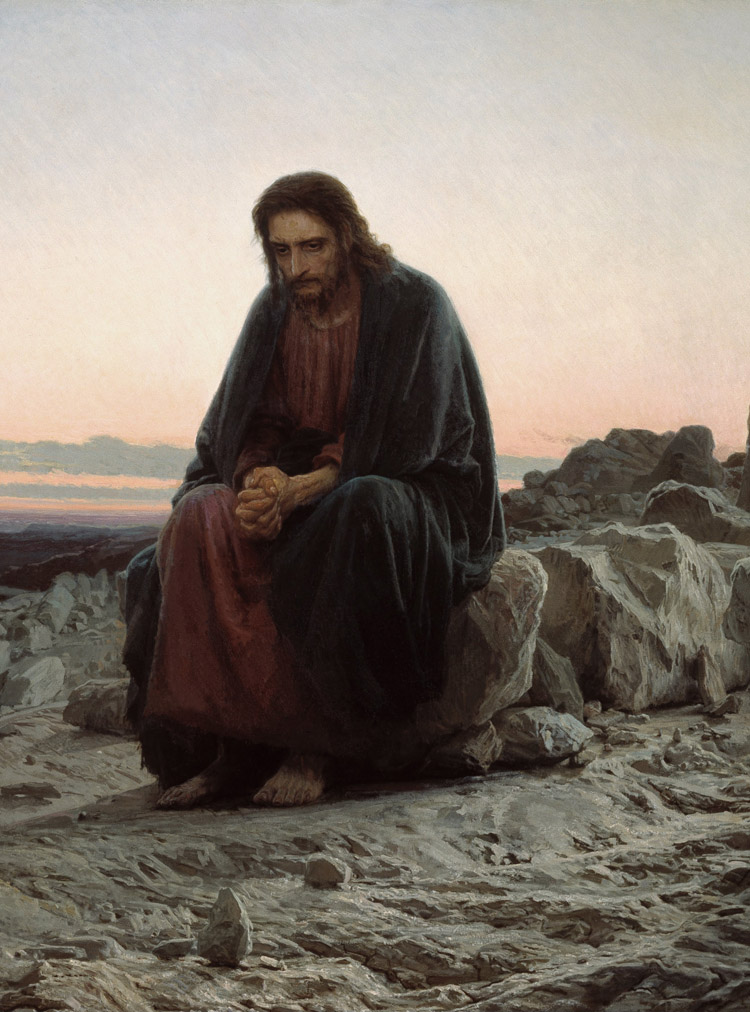
Book 5, Chapter 1
Interior
Trials of Mary; Jesus in the Temple
Concerning the Perfection with
which the most Holy Mary copied and Imitated the Activity of the Soul
of Christ; how the Incarnate Word Instructed Her in the Laws of
grace, the Articles of Faith, the Sacraments, the Ten Commandments;
and with what Alacrity and Noble Promptitude She Corresponded. Also
concerning the Death of Saint Joseph, the Preaching of Saint John,
the call of the First Disciples and the Baptism Of the Virgin Mary,
our Blessed Lady.
Already Jesus, Mary and Joseph had
settled in Nazareth and thus changed their poor and humble dwelling
into a heaven. In order to describe the mysteries and sacraments
which passed between the divine Child and his purest Mother before
his twelfth year and later on, until his public preaching, many
chapters and many books would be required; and in them all, I would
be able to relate but the smallest part in view of the vastness of
the subject and the insignificance of such an ignorant woman as I am.
Even with the light given me by this great Lady I can speak of only a
few incidents and must leave the greater part unsaid. It is not
possible or befitting to us mortals to comprehend all these mysteries
in this life, since they are reserved for future life.
Shortly after
their return from Egypt to Nazareth the Lord resolved to try his most
holy Mother in the same manner as He had tried her in her childhood
as the first–born Daughter of the new
Law of grace, the most perfect copy of his ideals and the most pliant
material, upon which, as on liquid wax, should be set the seal of his
doctrine of holiness, so that the Son and the Mother might be the two
true tablets of the new law of the world (Exod. 31, 18). For this
purpose of the infinite wisdom He manifested to Her all the mysteries
of the evangelical law and of his doctrine; and this was the subject
of his instructions from the time of their return from Egypt until
his public preaching, as we shall see in the course of this history.
In these hidden sacraments the incarnate Word and his holy Mother
occupied themselves during the twenty–three years of their stay
in Nazareth. As all this concerned the heavenly Mother alone (whose
life the holy Evangelists did not profess to narrate), the writers of
the Gospel made no mention of it, excepting that which was related of
the Child Jesus, when, in his twelfth year, he was lost in Jerusalem.
During all those years Mary alone was the disciple of Christ.
In order to rear in the heart of the
purest Virgin this edifice of holiness to a height beyond all that is
not God, the Lord laid its foundations accordingly, trying the
strength of her love and of all her other virtues. For this purpose
the Lord withdrew Himself, causing Her to lose Him from her sight,
which until then had caused Her to revel in continual joy and
delight. I do not wish to say, that the Lord left her bodily; but,
still remaining with Her and in Her by an ineffable presence and
grace, He hid himself from her interior sight and suspended the
tokens of his most sweet affection. The heavenly Lady in the
meanwhile knew not the inward cause of this behavior, as the Lord
gave Her no explanation. Moreover her divine Son, without any
forewarning showed Himself very reserved and withdrew from her
society. Many times He retired and spoke but few words to Her, and
even these with great earnestness and majesty.
This unannounced and unexpected
change was the crucible in which the purest gold of the love of our
Queen was cleansed and assayed. Surprised at what was happening, She
immediately took refuge in the humble opinion She had of Herself,
deeming Herself unworthy of the vision of the Lord, who now had
hidden Himself. She attributed it all to her want of correspondence
and to her ingratitude for the blessings She had obtained from the
most generous and exalted Father of mercies. The most prudent Queen
did not feel so much the privation of his delightful caresses, as the
dread of having displeased him and of having fallen short in his
service. This was the arrow that pierced Her heart with grief. One
filled with such true and noble love could not feel less; for all
delight of love is founded in the pleasure and satisfaction given by
the lover to the one beloved, and therefore He cannot rest, when he
suspects that the beloved is not contented or pleased. The loving
sighs of his Mother were highly pleasing to her most holy Son. He was
enamored with Her anew and the tender affection of his only and
chosen One wounded his heart (Cant. 4, 9). But whenever the sweet
Mother sought Him out in order to hold converse with Him He continued
to show exterior reserve. Just as the flame of a forge or a
conflagration is intensified by the application of insufficient
water, so the flame of love in the heart of the sweetest Mother was
fanned to an intenser blaze by this adversity.
The single–hearted Dove
exercised Herself in heroic acts of all the virtues. She humbled
Herself below the dust; She reverenced Her Son in deepest adoration;
She blessed the Father, thanking Him for his admirable works and
blessings and conforming Herself to his wishes and pleasure; She
sought to know his will in order to fulfill it in all things; She
unceasingly renewed her acts of faith, hope and burning love; and in
all her actions and in all circumstances this most fragrant spikenard
gave forth the odor of sweetness for Him, the King of kings, who
rested in her heart as in his flowery and perfumed couch (Cant. 1,
11). She persevered in her tearful prayers, with continual sighing
and longing from her inmost heart; She poured forth her prayers in
the presence of the Lord and recounted her tribulation before the
throne of the God (Ps. 141, 3).
Upon the request of the loving Mother saint Joseph
had made a couch, which She covered with a single blanket and upon
which the Child Jesus rested and took his sleep; for from the time in
which He had left the cradle, when they were yet in Egypt, He would
not accept of any other bed or of more covering. Although He did not
stretch Himself out on this couch, nor even always made use of it, He
sometimes reclined in a sitting posture upon it, resting upon a poor
pillow made of wool by the same Lady. When She spoke of preparing for
him a better resting–place, her most holy Son answered, that
the only couch upon which He was to be stretched out, was that of his
Cross, in order to teach men by his example (I Pet. 2, 21), that no
one can enter eternal rest by things beloved of Babylon and that to
suffer is our true relief in mortal life. Thenceforward the heavenly
Lady imitated him in this manner of taking rest with new earnestness
and attention. Thirty days passed in this conflict; and they equalled
many ages in the estimation of Her, who deemed it impossible to live
even one moment without the love and without the Beloved of her soul.
After such delay (according to our way of speaking), the heart of the
Child Jesus could no longer contain itself or resist further the
immense force of his love for his sweetest Mother; for also the Lord
suffered a delightful and wonderful violence in thus holding Her in
such a suspense and affliction. It happened that the humble and
sovereign Queen one day approached her Son Jesus, and, throwing
Herself at his feet, with tears and sighs coming from her inmost
heart, spoke to Him as follows: “My sweetest Love and highest
Good, of what account am I, the insignificant dust and ashes, before
thy vast power? What is the misery of a creature in comparison with
thy endless affluence? In all things Thou excellest our lowliness and
thy immense sea of mercy overwhelms our imperfections and defects. If
I have not been zealous in serving Thee, as I am constrained to
confess, do Thou chastise my negligence and pardon it. But let me, my
Son and Lord, see the gladness of thy countenance, which is my
salvation and the wished–for light of my life and being. Here
at thy feet I lay my poverty, mingling it with the dust, and I shall
not rise from it until I can again look into the mirror, which
reflects my soul.”
These and other pleadings, full of wisdom and
ardent love, the great Queen poured humbly forth before her most holy
Son. And as his longings to restore her to his delights were even
greater than those of the blessed Lady, He pronounced with great
sweetness these few words “My Mother, arise.” As these
words were pronounced by Him, who is Himself the Word of the eternal
Father, it had such an effect, that the heavenly Mother was instantly
transformed and elevated into a most exalted ecstasy, in which She
saw the Divinity by an abstractive vision. In it the Lord received
Her with sweetest welcome and embraces of a Father and Spouse,
changing Her tears into rejoicing, her sufferings into delight and
her bitterness into highest sweetness. The Lord manifested to Her
great secrets of the scope of his new evangelical law. Wishing to
write it entirely into her purest heart, the most holy Trinity
appointed and destined Her as his first–born Daughter and the
first disciple of the incarnate Word and set Her up as the model and
pattern for all the holy Apostles, Martyrs, Doctors, Confessors,
Virgins and other just of the new Church and of the law of grace,
which the incarnate Word was to establish for the Redemption of man.
Some days after our Queen and Lady
with her most holy Son and saint Joseph had settled in Nazareth, the
time of the year in which the Jews were obliged to present themselves
before the Lord in the temple of Jerusalem, was at hand. This
commandment obliged the Jews to this duty three times each year, as
can be seen in Exodus and Deuteronomy. But it obliged only the men,
not the women (Exod. 23, 17); therefore the women could go or not,
according to their devotion; for it was neither commanded nor
prohibited to them. The heavenly Lady and her spouse conferred with
each other as to what they should do in this regard. The holy husband
much desired the company of the great Queen, his wife, and of her
most holy Son; for he wished to offer Him anew to the eternal Father
in the temple. The most pure Mother also was drawn by her piety to
worship the Lord in the temple; but as in things of that kind She did
not permit Herself to decide without the counsel and direction of the
incarnate Word, her Teacher, She asked his advice upon this matter.
They finally arranged, that two times a year saint Joseph was to go
to Jerusalem by himself, while on the third occasion They would go
together. The Israelites visited the temple on the feast of the
Tabernacles (Deut. 16, 5), the feast of the Weeks, or Pentecost, and
the feast of the unleavened Breads or the Pasch of the preparation.
To this latter the sweetest Jesus, most pure Mary, and Joseph went up
together. It lasted seven days and during that time happened what I
shall relate in the next chapter. For the other solemnities saint
Joseph went alone, leaving the Child and the Mother at home.
As I have said, Mary and Joseph
repeated their visit to the temple at the feast of the unleavened
Bread every year. Also when the divine Child was twelve years old and
when it was time to allow the splendors his inaccessible and divine
light to shine forth, They went to the temple for this feast (Luke 2,
42). This festival of the unleavened Bread lasted seven days,
according to the command of the divine law; and the more solemn days
were the first and the last. On this account heavenly Pilgrims
remained in Jerusalem during the whole week, spending their time in
acts of worship and devotion as the rest of the Jews, although on
account the sacraments connected with each of Them their worship and
devotion was entirely different and greatly above that of the others.
The blessed Mother and holy Joseph received during these days favors
and blessings beyond the conception of the human mind.
Having thus spent all the seven days
of the feast. They betook themselves on their way home to Nazareth.
When his parents departed from Jerusalem and were pursuing their way
homeward, the Child Jesus withdrew from them without their knowledge.
For this purpose the Lord availed Himself of the separation of the
men and women, which had become customary among the pilgrims for
reasons of decency as well as for greater recollection during their
return homeward. The children which accompanied their parents were
taken in charge promiscuously either by the men or the women, since
their company with either was a matter of indifference. Thus it
happened that saint Joseph could easily suppose that the Child Jesus
had remained with his most holy Mother, with whom He generally
remained. The thought that She would go without Him was far from his
mind, since the heavenly Queen loved and delighted in Him more than
any other creature human or angelic. The great Lady did not have so
many reasons for supposing that her most holy Son was in the company
of saint Joseph: but the Lord himself so diverted her thoughts by
holy and divine contemplations, that She did not notice his absence
at first. When afterwards She became aware of her not being
accompanied by her sweetest and beloved Son, She supposed that the
blessed Joseph had taken Him along and that the Lord accompanied his
foster–father for his consolation.
Thus assured, holy Mary and Joseph pursued their
home journey for an entire day, as saint Luke tells us. As the
pilgrims proceeded onwards they gradually thinned out, each taking
his own direction and joining again with his wife or family. The most
holy Mary and saint Joseph found themselves at length in the place
where they had agreed to meet on the first evening after leaving
Jerusalem. When the great Lady saw that the Child was not with saint
Joseph and when the holy Patriarch found that He was not with his
Mother, the two were struck dumb with amazement and surprise for
quite a while. Both, governed in their judgment by their most
profound humility, felt overwhelmed with self–reproach at their
remissness in watching over their most holy Son and thus blamed
themselves for his absence; for neither of them had any suspicion of
the mysterious manner in which He had been able to elude their
vigilance. After a time they recovered somewhat from their
astonishment and with deepest sorrow took counsel with each other as
to what was to be done (Luke 2, 45). The loving Mother said to saint
Joseph: “My Spouse and my master, my heart cannot rest, unless
we return with all haste to Jerusalem in order to seek my most holy
Son.” This they proceeded to do, beginning their search among
their relations and friends, of whom, however, none could give them
any information or any comfort in their sorrow; on the contrary their
answers only increased their anxiety, since none of them had so much
as seen their Son since their departure from Jerusalem.
Thus this sincerest Dove persevered
in her tears and groans without cessation or rest, without sleeping
or eating anything for three whole days. Although the thousand angels
accompanied Her in corporeal forms and witnessed her affliction and
sorrow, yet they gave Her no clue to find her lost Child. On the
third day the great Queen resolved to seek Him in the desert where
saint John was; for since She saw no indications that Archelaus had
taken Him prisoner, She began to believe more firmly, that her most
holy Son was with saint John. When She was about to execute her
resolve and was on the point of departing for the desert, the holy
angels detained Her, urging Her not to undertake the journey, since
the divine Word was not there. She wanted also to go to Bethlehem, in
the hope of finding Him in the cave of the Nativity; but this the
holy angels likewise prevented, telling Her that He was not so far
off. Although the blessed Mother heard these answers and well
perceived that the holy angels knew the whereabouts of the Child
Jesus, She was so considerate and reserved in her humility and
prudence, that She gave no response, nor asked where She could find
Him; for She understood that they withheld this information by
command of the Lord. With such magnanimous reverence did the Queen of
the angels treat the sacraments of the Most High and of his ministers
and ambassadors (II Mach. 2, 9). This was one of the occasions in
which the greatness of her queenly and magnanimous heart was made
manifest.
Not all the sorrows suffered by all
the martyrs ever reached the height of the sorrows of most holy Mary
in this trial; nor will the patience, resignation and tolerance of
this Lady ever be equalled, nor can they; for the loss of Jesus was
greater to Her than the loss of anything created, while her love and
appreciation of Him exceeded all that can be conceived by any other
creature. Since She did not know the cause of the loss, her anxiety
was beyond all measure, as I have already said. Moreover, during
these three days the Lord left Her to her natural resources of nature
and of grace, deprived of special privileges and favors; for, with
the exception of the company and companionship of the angels, He
suspended all the other consolations and blessings so constantly
vouchsafed to her most holy soul. From all this we can surmise what
sorrow filled the loving heart of the heavenly Mother. But, O prodigy
of holiness, prudence, fortitude and perfection! In such unheard of
affliction and sorrow She was not disturbed, nor lost her interior or
exterior peace, nor did She entertain a thought of anger or
indignation, nor allowed Herself any improper movement or expression,
nor fell into any excess of grief or annoyance, as is so common in
great affliction with other children of Adam, who allow all their
passions and faculties to be disarranged, yea even in small
difficulties! The Mistress of all virtue held all Her powers in
heavenly order and harmony; though her sorrow was without comparison
great and had pierced her inmost heart, She failed not in reverence
and in the praise of the Lord, nor ceased in her prayers and
petitions for the human race, and for the finding of her most holy
Son.
With this heavenly wisdom and with greatest
diligence She sought Him for three successive days, roaming through
the streets of the city, asking different persons and describing to
the daughters of Jerusalem the marks of her Beloved, searching the
byways and the open squares of the city and thereby fulfilling what
was recorded in the Canticles of Solomon (Cant. 5, 10). Some of the
women asked Her what were the distinctive marks of her lost and only
Son; and She answered in the words of the Spouse: “My Beloved
is white and ruddy, chosen out of thousands.” One of the women,
hearing Her thus describing Him, said: “This Child, with those
same marks, came yesterday to my door to ask for alms, and I gave
some to Him; and his grace and beauty have ravished my heart. And
when I gave Him alms, I felt myself overcome by compassion to see a
Child so gracious in poverty and want.” These were the first
news the sorrowful Mother heard of her Onlybegotten in Jerusalem. A
little respited in her sorrow, She pursued her quest and met other
persons, who spoke of Him in like manner. Guided by this information
She directed her steps to the hospital of the city, thinking that
among the afflicted She would find the Spouse and the Originator of
patient poverty among his own legitimate brethren and friends (Matth.
5, 40). Inquiring at that place, She was informed that a Child of
that description had paid his visits to the inmates, leaving some
alms and speaking words of much consolation to the afflicted.
The report of these doings of her Beloved caused
sentiments of sweetest and most tender affection in the heart of the
heavenly Lady, which She sent forth from her inmost heart as
messengers to her lost and absent Son. Then the thought struck Her,
that, since He was not with the poor, He no doubt tarried in the
temple, as in the house of God and of prayer. The holy angels
encouraged Her and said: “Our Queen and Lady, the hour of thy
consolation is at hand: soon wilt Thou see the Light of thy eyes;
hasten thy footsteps and go to the temple.” The glorious
patriarch saint Joseph at this moment again met his Spouse, for, in
order to increase their chance of finding the divine Child, they had
separated in different directions. By another angel he had now been
likewise ordered to proceed to the temple. During all these three
days he had suffered unspeakable sorrow and affliction, hastening
from one place to another, sometimes without his heavenly Spouse,
sometimes with Her. He was in serious danger of losing his life
during this time, if the hand of the Lord had not strengthened Him
and if the most prudent Lady had not consoled him and forced him to
take some food and rest. His sincere and exquisite love for the
divine Child made him so anxious and solicitous to find Him, that he
would have allowed himself no time or care to take nourishment for
the support of nature.
It was very near to the gate of the
city, that the divine Child turned and hastened back through the
streets. Foreseeing in his divine fore–knowledge all that was
to happen, He offered it up to his eternal Father for the benefit of
souls. He asked for alms during these three days in order to ennoble
from that time on humble mendicity as the first–born of holy
poverty. He visited the hospitals of the poor, consoling them and
giving them the alms which He had received; secretly He restored
bodily health to some and spiritual health to many, enlightening them
interiorly and leading them back to the way of salvation. On some of
the benefactors, who gave Him alms, He performed these wonders with
greater abundance of grace and light; thus fulfilling from that time
on the promise, which He was afterwards to make to his Church; that
he who gives to the just and to the prophet in the name of a prophet,
shall receive the reward of the just (Matth. 10, 41).
Having thus busied Himself with these
and other works of his Father, He betook Himself to the temple. On
the day which the Evangelist mentions it happened that also the
rabbis, who were the learned and the teachers of the temple, met in a
certain part of the buildings in order to confer among themselves
concerning some doubtful points of holy Scriptures. On this occasion
the coming of the Messias was discussed; for on account of the report
of the wonderful events, which had spread about since the birth of
the Baptist and the visit of the Kings of the east, the rumor of the
coming of the Redeemer and of his being already in the world, though
yet unknown, had gained ground among the Jews. They were all seated
in their places filled with the sense of authority customary to those
who are teachers and considered as learned. The Child Jesus came to
the meeting of these distinguished men; and He that was the King of
kings, and Lord of lords (Apoc. 19, 16), the infinite Wisdom itself
(I Cor. 1, 24), and who corrects the wise (Wis. 7, 15), presented
Himself before the teachers of this world as an humble disciple,
giving them to understand that He had come to hear the discussion and
inform Himself on the question treated of, namely: whether the
Messias was already come, or, if not, concerning the time in which He
should come into the world. Therefore the divine Child presented
Himself to the disputants, manifesting the grace poured out over his
lips (Ps. 44, 3). He stepped into their midst with exceeding majesty
and grace, as one who would propose some doubt or solution. By his
pleasing appearance He awakened in the hearts of these learned men a
desire to hear Him attentively.
The scribes and learned men who heard Him were all
dumbfounded. Convinced by his arguments they looked at each other and
in great astonishment asked: “What miracle is this? And what
prodigy of a boy! Whence has He come and who is the Child?” But
though thus astonished, they did not recognize or suspect who it was,
that thus taught and enlightened them concerning such an important
truth. During this time and before Jesus had finished his argument,
his most holy Mother and saint Joseph her most chaste spouse arrived,
just in time to hear him advance his last arguments. When He had
finished, all the teachers of the law arose with stupendous
amazement. The heavenly Lady, absorbed in joy, approached her most
loving Son and in the presence of the whole assembly, spoke to Him
the words recorded by saint Luke: “Son, why hast Thou done so
to us? Behold thy father and I have sought Thee sorrowing”
(Luke 2, 48). This loving complaint the heavenly Mother uttered with
equal reverence and affection, adoring Him as God and manifesting her
maternal affliction. The Lord answered: “Why is it that you
sought Me? Did you not know that I must be about my Father’s
business?”
The Evangelist says that they did not understand
the mystery of these words (Luke 2, 50); for it was hidden at the
time to most holy Mary and saint Joseph. And for two reasons; on the
one hand, the interior joy now reaping what they had sown in so much
sorrow, and the visible presence of their precious Treasure, entirely
filled the faculties of their souls; and on the other hand, the time
for the full comprehension of what had just been treated of in this
discussion had not yet arrived for them. Moreover, for the most
solicitous Queen there was another hindrance just at that time, and
it was, that the veil, concealing the interior of her most holy Son
had again intervened and was not removed until some time later. The
learned men departed, commenting in their amazement upon the
wonderful event, by which they had been privileged to hear the
teaching of eternal Wisdom though they did not recognize it. Being
thus left almost alone, the blessed Mother, embracing Him with
maternal affection, said to Him: “Permit my longing heart, my
son, to give expression to its sorrow and pain; so that it may not
die of grief as long as it can be of use to Thee. Do not cast me off
from thy sight; but accept me as thy slave. If it was my negligence,
which deprived me of thy presence, pardon me and make me worthy of
thy company, and do not punish me with thy absence.” The divine
Child received Her with signs of pleasure and offered Himself as her
Teacher and Companion until the proper time should arrive. Thus was
the dove–like and affectionate heart of the great Lady
appeased, and They departed for Nazareth.
They arrived at
Nazareth, where they occupied themselves in what I shall record later
on. The evangelist Luke compendiously mentions all the mysteries in
few words, saying the Child Jesus was subject to his parents, namely
most holy Mary and saint Joseph, and that his heavenly Mother noted
and preserved within her heart all these events; and that Jesus
advanced in wisdom, and age, and grace with God and men (Luke 2,
52), of which, as far as my understanding goes, I
will speak later on. Just now I wish only to mention, that the
humility and obedience of our God and Master toward his parents were
the admiration of the angels. But so was also the dignity and
excellence of his most blessed Mother, who thus merited that the
incarnate God should subject himself and resign Himself to her care;
so much so, that She, with the assistance of saint Joseph, governed
Him and disposed of Him as her own.
To the obedience and subjection of her most holy
Son the great Lady on her part responded by heroic works. Among her
other excellences She conceived as it were an incomprehensible
humility and a most heartfelt gratitude for having regained the
companionship of her Son. This blessing, of which the heavenly Queen
deemed Herself unworthy, vastly increased in her most pure heart her
love and her anxiety to serve her divine Son. And She was so constant
in showing her gratitude, so punctual and solicitous to serve Him,
kneeling before Him and lowering Herself to the dust, that it excited
the admiration of the highest seraphim. Moreover, She sought with the
closest attention to imitate Him in all his actions as they became
known to Her and exerted Herself most anxiously to copy them and
reproduce them in her own life. The plenitude of her perfection
wounded the heart of our Christ and Lord, and, according to our way
of speaking, held him bound to Her with chains of invincible love
(Osee 11, 4). His being thus bound as God and as Son to this heavenly
Princess, gave rise to such an interchange and divine reciprocity of
love, as surpasses all created understanding. For into the ocean of
Mary’s soul entered all the vast floods of the graces and
blessings of the incarnate Word; and this ocean did not overflow
(Eccles. 1, 7), because it mined the depth and expanse necessary to
receive them.
Words of the Queen
The Virgin Mary
speaks to Sister Mary of Agreda, Spain
My daughter, all the works of my most
holy Son and my own actions are full of mysterious instruction and
doctrine for the mortals who contemplate them diligently and
reverently. The Lord absented Himself from me in order that, seeking
Him in sorrow and tears, I might find Him again in joy and with
abundant fruits for my soul. I desire that thou imitate me in this
mystery and seek Him with such earnestness, as to be consumed with a
continual longing without ever in thy whole life coming to any rest
until thou holdst him and canst lose Him no more (Can. 5, 4). In
order that thou mayest understand better this sacrament of the Lord,
remember, the infinite Wisdom made men capable of his eternal
felicity and placed them on the way to this happiness, but left them
in doubt of its attainment, as long as they have not yet acquired it
and thus filled them with joyful hope and sorrowful fear of its final
acquisition. This anxiety engenders in men a lifelong fear and
abhorrence of sin, by which alone they can be deprived of beatitude
and thus prevent them from being ensnared and misled by the corporeal
and visible things of this earth. This anxiety the Creator assists by
adding to the natural reasoning powers, faith and hope, which are the
spurs of their love toward seeking and finding their last end.
Besides these virtues and others infused at Baptism He sends his
inspirations and helps to keep awake the soul in the absence of its
Lord and to prevent forgetfulness of Him and of itself while deprived
of his amiable presence. Thus it pursues the right course until it
finds the great goal, where all its inclinations and longing shall be
satiated.
Hence thou canst estimate the
listless ignorance of mortals and how few stop to consider the
mysterious order of the creation and justification and all the works
of the Almighty tending toward this exalted end. From this
forgetfulness flow so many evils endured by men while they
appropriate so many earthly goods and deceitful delights, as if they
could ever find in them their ultimate end. The height of perversity
opposed to the order of the Creator, is that mortals in this
transitory and short life rejoice in visible things as if they were
their last end, while they ought, on the contrary, to make use of
creatures to gain, not to lose, the highest Good. Do thou, therefore,
my dearest, be mindful of this dangerous human folly. Consider all
delights and joys of the world as insanity, its laughing as sorrow,
sensible enjoyment as self deceit, as the source of foolishness,
which intoxicates the heart and hinders and destroys all true wisdom.
Live in constant and holy fear of losing eternal life and rejoice in
nothing except in the Lord until thou obtainest full possession of
Him.
Book 5, Chapter 2
Jesus
Instructs His Mother in the Law of Grace
I have already said in former
chapters, that our Lady was the first and specially privileged
Disciple of her most holy Son, chosen among all creatures as the
model of the new evangelical law and its Author, according to which
He was to mould all the saints of the new evangelical law and judge
of all the results of the Redemption. In regard to Her the incarnate
Word proceeded like a most skillful artist, who understands the art
of painting and that pertains to it most thoroughly; who, throwing
all powers into one chosen work, seeks to gain from it alone renown
and fame as from the full exposition of his art. It is certain that
all the holiness and glory of the saints was the result of the love
and merits of Christ: (Eph. 2, 3) but in comparison with the
excellence of Mary they seem insignificant and as it were only rough
sketches; for in all the saints are found defects (I John 1, 8). But
this living image of the Onlybegotten was free from all
imperfections; and the first strokes of his pencil in Her were of
greater beauty than the last touches in the highest angels and
saints. She is the model for all the perfection of holiness and
virtues of all his elect, and the utmost limit to which the love of
Christ can proceed in mere creatures. No one received any grace or
glory that most holy Mary could not receive, and She received all
that others were incapable of receiving; and her most blessed Son
gave to Her all that She could receive and that He could communicate.
The multitude and variety of the
saints silently enhance the Artificer of their great sanctity, and
the greatness of the highest is made more conspicuous by the beauty
of the lowest: but all of them together are a glorification of most
holy Mary. For by her incomparable holiness they are all surpassed
and they all partake of so much the greater felicity as they imitate
Her, whose holiness redounds over all. If the most pure Mary has
reached the highest pinnacle in the ranks of the just, She may also
on this very account be considered as the instrument or the motive
power through which the saints themselves have reached their station.
As we must judge of her excellence (even if only from afar), by the
labor which Christ the Lord applied for her formation, let us
consider what labor He spent upon Her and how much upon the whole
Church. To establish and to enrich his Church He deemed it sufficient
to spend only three years in preaching, selecting the Apostles,
teaching the people, and inculcating the evangelical law by his
public life; and this was amply sufficient to accomplish the work
enjoined upon Him by the eternal Father and to justify and sanctify
all the true believers. But in order to stamp upon his most holy
Mother the image of his holiness, He consumed not three years, but
ten times three years, engaging in this work with all the power of
his divine love, without ever ceasing hour after hour to add grace to
grace, gifts to gifts, blessings to blessings, and holiness to
holiness. And at the end of all this He still left Her in a state, in
which He could continue to add excellence after his Ascension to his
eternal Father as I will describe in the third part. Our reason is
unbalanced, our words fail at the greatness of this incomparable
Lady; for She is elect as the sun (Cant. 6, 9); and her effulgence
cannot be borne by terrestrial eyes, nor comprehended by any earthly
creatures.
Christ our Redeemer began to manifest
his designs in regard to his heavenly Mother after they had come back
from Egypt to Nazareth, as I have already mentioned; from that time
on He continued to follow up his purpose in his quality as Teacher
and as the divine Enlightener in all the mysteries of the Incarnation
and Redemption. After they returned from Jerusalem in his twelfth
year, the great Queen had a vision of the Divinity, not an intuitive
vision, but one consisting of intellectual images; one very exalted
and full of the new influences of the Divinity and of the secrets of
the Most High. She was especially enlightened in regard to the
decrees of the divine Will concerning the law of grace, which was now
established by the incarnate Word, and concerning the power, which
was given to Him in the consistory of the most blessed Trinity. At
the same time She saw for this purpose the eternal Father consigned
to His Son the seven–sealed book, of which saint John speaks
(Apoc. 5, 1), and how none could be found either in heaven or on
earth, who could unseal and open it, until the Lamb broke its seals
by his Passion and Death and by his doctrines and merits. For in this
figure God wished to intimate, that the secret of this book was
nothing else than the new law of the Gospel and the Church founded
upon it in this world.
Then the heavenly Queen saw in spirit
that, by decree of the most blessed Trinity, She was to be the first
one to read and understand this book; that her Onlybegotten was to
open it for Her and manifest it all to Her, while She was to put it
perfectly into practice; that She was the first one, who was to
accompany the Word, and who was to occupy the first place next to Him
on the way to heaven, which He had opened up for mortals and traced
out in this book. In Her, as his true Mother, was to be deposited
this new Testament. She saw how the Son of the eternal Father and of
Herself accepted this decree with great pleasure; and how his sacred
humanity obeyed it with ineffable joy on her account.
She issued from this ecstatic vision and betook
Herself to her most holy Son, prostrating Herself at his feet and
saying: “My Lord, my Light and my Teacher, behold thy unworthy
Mother prepared for the fulfillment of thy wishes admit me anew as
thy disciple and servant and make use of me as the instrument of thy
wisdom and power. Execute in me thy pleasure and that of thy eternal
Father.” Her most holy Son received Her with the majesty and
authority of a divine Teacher and instructed Her in most exalted
mysteries. In most persuasive and powerful words He explained to Her
the profoundest meanings of the works enjoined upon Him by the
eternal Father in regard to the Redemption of man, the founding of
the Church and the establishment of the new evangelical law. He
declared and reaffirmed, that in the execution of these high and
hidden mysteries She was to be his Companion and Coadjutrix,
receiving and enjoying the first–fruits of grace; and that
therefore She, the most pure Lady, was to follow Him in his labors
until his death on the Cross with a magnanimous and well prepared
heart in invincible and unhesitating constancy. He added heavenly
instruction such as enabled Her to prepare for the reception of the
whole evangelical Law, the understanding and practice of all its
precepts and counsels in their highest perfection. Other sacramental
secrets concerning his works in this world the Child Jesus manifested
to his most blessed Mother on this occasion. And the heavenly Lady
met all his words and intentions with profound humility, obedience,
reverence, thanksgiving and most ardent love.
Words of the Queen
The Virgin Mary
speaks to Sister Mary of Agreda, Spain
The Most High who
in sheer goodness and bounty given existence to all creatures and
denies his providential care to none, faithfully supplies all souls
with light by which they can enter into the knowledge of Him and of
eternal life provided they do not of their own prevent and obscure
this light by sin or give up the quest of the kingdom of heaven. To
the souls whom according to his secret judgments, He calls to his
Church, He shows himself still more liberal. For with the grace of
Baptism He infuses into them not only those virtues, which are called
essentially infused and which the created cannot merit by its own
labors and efforts; but also those, which are accidentally infused
and which it can merit by its own labors and efforts. These the Lord
gives freely beforehand, in order that the soul may be more prepared
zealous in the observance of his holy Law. In other souls, in
addition to the common light of faith, the Lord, in his clemency
grants supernatural gifts of knowledge and virtue for the better
understanding of the evangelical mysteries and for the more zealous
practice of good works. In this kind of gifts He has been more
liberal with thee than with many generations; obliging thee thereby
to distinguish thyself in loving correspondence due to Him
and to humble thyself before Him to the very dust.
In order
that thou mayest be well instructed and informed, I wish
to warn thee as a solicitous and loving Mother of the
cunning of satan for the destruction of these works of the Lord. From
the very moment in which mortals begin to have the use of their
reason, each one of them is followed by many watchful and relentless
demons. For as soon as the souls are in a position to raise their
thoughts to the knowledge of their God and commence the practice of
the virtues infused by Baptism, these demons, with incredible fury
and astuteness, seek to root out the divine seed; and if they cannot
succeed in this, they try to hinder its growth, and prevent it from
bringing forth fruit by engaging men in vicious, useless, or trifling
things. Thus they divert their thoughts from faith and hope and from
the pursuit of other virtues, leading them to forget that they are
Christians and diverting their attention from the knowledge of God
and from the mysteries of the Redemption and of life eternal.
Moreover the same enemy instills into the parents a base
neglectfulness and carnal love for their offspring; and he incites
the teachers to carelessness, so that the children find no support
against evil in their education, but become depraved and spoiled by
many bad habits, losing sight of virtue and of their good
inclinations and going the way of perdition.
But the most kind
Lord does not forget them in this danger and He renews in them his
holy inspirations and special helps. He supplies them with the holy
teachings of the Church by his preachers and ministers. He holds out
to them the aid of the Sacraments and many other inducements to keep
them on the path of life. That those who walk in the way of salvation
are the smaller number, is due to the vice and depraved habits
imbibed in youth and nourished in childhood. For that saying of
Deuteronomy is very true: “As the days of thy youth, so also
shall thy old age be” (Deut. 33, 25). Hence the demons gain
courage and increase their tyrannical influence over souls in the
early years of man’s life, hoping that they will be able to
induce men to commit so much the greater and the more frequent sins
in later years, the more they have succeeded in drawing them into
small insignificant faults in their childhood. By these they draw
them on to a state of blind presumption; for with
each sin the soul loses more and more the power of resistance,
subjects itself to the demon, and falls under the sway of its
tyrannical enemies. The miserable yoke of wickedness is more and more
firmly fastened upon it; it is trodden underfoot by its own iniquity
and urged onward under the sway of the devil from one precipice to
another, from abyss to abyss (Ps. 41, 8): a chastisement merited by
all those, that allow themselves to be overcome by evil–doing
in the beginning. By these means Lucifer has hurled into hell so
great a number of souls and continues so to hurl them every day,
rising up in his pride against the Almighty. In this manner has he
been able to introduce into the world his
tyrannical power, spreading among men forgetfulness of death,
judgment, heaven and hell, and casting so many nations from abyss to
abyss of darkness and bestial errors, such are contained in the
heresies and false sects of the infidels. Do thou therefore beware of
this terrible danger, my daughter, and let not the memory of the law
of thy God, his precepts and commands, and
the truths of the Catholic Church and the doctrines of the Gospels
ever fail in thy mind. Let not a day pass in which thou dost not
spend much time in meditating upon all these; and exhort thy
religious and all those who listen to thee the same. For thy enemy
and adversary is laboring with ceaseless vigilance to obscure thy
understanding in forgetfulness of the divine law, seeking to withdraw
thy will, which is a blind faculty, from the practice of
justification. This, thou knowest, consists in acts of living faith,
trustful hope, ardent love, all coming from a contrite and humble
heart (Ps. 50, 19).
Book 5, Chapter 3
The
Continued Prayers of Jesus and Mary for Mankind
The more our limited discourse seeks
to make clear and extol the mysterious works of Christ, our Redeemer,
and of his most holy Mother, the more evident it becomes, that mere
human words are far from being able to compass the greatness of these
sacraments; for, as Ecelesiasticus says, they surpass all our words
of praise (Ecclus. 4, 33). Nor can we ever fathom or compass them,
and there will always remain many greater secrets than those we have
sought to explain. For those which we do explain are very
insignificant, and we do not deserve to comprehend, nor to speak
about the few, which we attempt to fathom. Inadequate is the
intellect of the highest seraphim to weigh and pierce the secrets
that passed between Jesus and Mary during the years in which They
lived together. Especially is this true of the years, of which I am
now speaking, during which the Teacher of life instructed Her in
everything that was to happen in the law of grace; namely, how much
this new law was to accomplish in this the sixth age of the world,
which includes these sixteen hundred and fifty–seven years and
all the unknown future until the end of the World. In all this the
most blessed Lady was instructed in the school of her divine Son; for
He foretold Her all by word of mouth, pointing out the time and place
of each event, the kingdoms and provinces of their history during the
existence of the Church.
All these hidden sacraments
ordinarily transpired in that humble oratory of the Queen, where the
greatest of all mysteries, the Incarnation of the divine Word in her
virginal womb, had taken place. Though it was such a narrow and
poorly furnished room, consisting merely of the bare and rude walls,
yet it enclosed the grandeur of Him who is immense and shed forth all
the majesty and sacredness, which since then is attached to the rich
temples and innumerable sanctuaries of the world. In this holy of
holies the Highpriest of the new Law ordinarily performed his
prayers, which always concluded with fervent intercessions for men.
At these times also He spoke to his Virgin Mother about all the works
of Redemption and communicated to Her the rich gifts and treasures of
grace, which He had come to shower upon the children of light in the
new Testament and in his holy Church. Many times did He beseech his
eternal Father not to allow the sins and the ingratitude of men to
hinder their Redemption. As Christ in his foreknowledge was always
conscious of the sins of the human race and of the damnation of so
many thankless souls, the thought of dying for them caused Him to
sweat blood many times on these occasions. Although the Evangelists
because they never intended to relate all the events of his life,
mention this sweating of blood but once before his Passion, it is
certain that this happened many times and in the presence of his most
holy Mother; and has been intimated to me several times.
During prayer our blessed Master sometimes assumed
a kneeling posture, sometimes He was prostrate in the form of a cross
or at other times raised in the air in this same position which He
loved so much. In the presence of his Mother He was wont to pray: “O
most blessed Cross! When shall thy arms receive mine, when shall I
rest on thee and when shall my arms, nailed to thine, be spread to
welcome all sinners? (Matth. 9, 13). But as I came from heaven for no
other purpose than to invite them to imitate Me and associate with
Me, they are even now and forever open to embrace and enrich all men.
Come then, all ye that are blind, to the light. Come ye poor, to the
treasures of my grace. Come, ye little ones, to the caresses and
delights of your true Father. Come, ye afflicted and worn out ones,
for I will relieve and refresh you (Matth. 11, 28). Come, ye just,
since you are my possession and inheritance. Come all ye children of
Adam, for I call upon you all. I am the way, the truth and the life
(13, 6), and I will deny nothing that you desire to receive. My
eternal Father, they are the works of thy hands, do not despise them;
for I will offer Myself as a sacrifice on the Cross, in order to
restore them to justice and freedom. If they be but willing I will
lead them back to the bosom of thy elect and to their heavenly
kingdom, where thy name shall be glorified.”
At all these
prayers the beloved Mother was present, and in her purest soul, as in
the purest crystal, the light of the Onlybegotten was reflected. His
interior and exterior prayers re–echoed in Her, causing Her to
imitate his petitions and prayers in the same postures. When the
great Lady for the first time saw Him sweat blood, her maternal heart
was transfixed with sorrow and filled with astonishment at the
effects caused in Christ, our Lord, by the sins and ingratitudes
committed by men, foreseen by the Lord and known to Her. In the
anguish of her heart She turned to her fellow mortals and exclaimed:
“O children of men! Little do ye understand how highly the Lord
esteems his image and likeness in you! For, as the price of your
salvation, He offers his own blood and
deems it little to shed all of it for you. O could I but unite your
wills with mine, in order that I might bring you to love and obey
Him! Blessed by his right hand be the grateful and the just among
men, who will be faithful children of their Father! Let those be
filled with light and with the treasures of grace, who will respond
to the ardent desires of my Lord in regard to their salvation. Would
that I could be the insignificant slave of the children of Adam and
thereby induce and assist them to put an end to their sins and their
own damnation! Lord and Master! Life and light of my soul! Who can be
so hard of heart and hostile to himself, that he should not feel
himself urged on by thy blessings? Who can be so ungrateful and so
unheedful, as to ignore thy most burning love? How can my heart bear
with men, who, being so favored by thy bounty, are so coarse and
rebellious? O children of Adam! Turn your inhuman cruelty upon me.
Afflict me and insult me as much as you will, only pay my beloved
Lord the reverence and love which you owe to his endearments. Thou,
my Son and Lord, art Light of light, Son of the eternal Father (Heb.
1, 3), as everlasting, as immense, as infinite as He, equal to Him in
essence and attributes, being with Him one God and one supreme
Majesty (John 10, 30). Thou art chosen among thousands (Cant. 5, 10),
beautiful above all the sons of men, holy, innocent and without
defect of any kind. How then, eternal God, can mortals ignore the
object of their most noble love? The Principle, which gives them
existence? The End wherein consists their eternal true happiness? O
that I could give my life in order that all might escape their
error!”
Many other sentiments of burning
love, far beyond the powers of my heart and tongue, this heavenly
Lady uttered in her dove–like sincerity; and in this love, and
in profoundest reverence, She wiped the sweat from the face of her
sweetest Son. At other times She found Him in quite a different
condition, shining with glory and transfigured as afterwards on mount
Tabor (Matth. 17, 2), in the midst of a great multitude of angels,
who adored Him and in the sweet harmony of their voices gave praise
and thanksgiving to the Onlybegotten of the Father made man. These
celestial voices our blessed Lady heard and She joined hers with
them. At other times this happened while He was not transfigured; for
the divine will ordained that the sensitive part of the divine
humanity of the Word should sometimes have this solace, while at
other times it should enjoy also the transfiguring overflow of the
glory of the soul into the body; yet this only at great intervals.
But whenever the heavenly Mother found Him in this state and beheld
his glorified body, or when She heard the hymns of the angels, She
participated in these delights to such an extent, that, if her spirit
had not been so strong, and if her Lord and Son had not fortified
Her, She would have lost all her natural powers; and even as it was,
the holy angels had to support the failing strength of her body on
those occasions.
Many times, when
her divine Son was in one of these states of suffering or joy,
and was praying to the eternal Father or, as
it were, conferring with Him concerning the highest mysteries of the
Redemption, the Person of the Father approved or conceded his
petitions for the relief of men, or showed to the most holy humanity
of Christ the secret decrees of predestination, reprobation or
condemnation of some souls. All this our blessed Lady heard, humbling
Herself to the dust. With unequaled reverence and fear She adored the
Omnipotent, and accompanied her Son in his prayers, petitions and
thanksgivings, offered up to the eternal Father for mankind in praise
of all his inscrutable judgments. Such secrets and mysteries the most
prudent Virgin conferred in her heart, and stored them up in her
memory, converting them into the material and nourishment of her
fiery love. None of these blessings and secret favors were in her
unprofitable or fruitless. To all of them She corresponded according
to the inmost desires of her Lord. In all of them She fulfilled the
highest intentions of the Almighty, and all his works found due
response from Her as far as was possible from a mere creature.
Words of the Queen
The Virgin Mary
speaks to Sister Mary of Agreda, Spain
My daughter, one
of the reasons why men should call me Mother of mercy, is the
knowledge of my loving desire that all be satiated with the flood of
grace and taste the sweetness of the Lord as I myself. I call and
invite all to come with me to the fountain of the Divinity. Let the
most poor and afflicted approach, for if
they respond and follow me, I will offer them my protection and help,
and I will intercede for them with my Son and obtain for them the
hidden manna, which will give to them nourishment and life (Apoc. 2,
27). Deny thyself and put off all the works of
human weakness, and, by the true light, which thou hast received
concerning the works of my Son and my own, contemplate and study
thyself in this mirror, in order to arrive at that beauty, which the
highest King seeks in thee.
Since this is the most powerful means
for perfection in thy works, I wish that thou write this advice into
thy heart. Whenever thou must perform interior or exterior work,
consider beforehand whether what thou art going to say or do
corresponds with the doings of thy Lord, and whether thou hast the
intention thereby to honor thy Lord and benefit thy neighbor. As soon
as thou art sure that this is thy motive, execute thy undertaking in
union with Him and in imitation of Him; but if thou findest not this
motive let the undertaking rest. This was my invariable course in
pursuing the imitation of my Lord and Teacher though in me there was
no reluctance toward the good but only the desire of imitating Him
perfectly. In this imitation consists the fruit of his holy teaching,
in which He urges us to do, what is most pleasing and acceptable to
the eternal God. Moreover from this day on be mindful not to
undertake any work, not to speak or even think any of anything,
without first asking my permission and consulting with me as thy
Mother and Teacher. And as soon as I answer thee give thanks to the
Lord; if I do not answer after continued inquiry, I promise and
assure thee on the part of the Lord, that He will, nevertheless, give
thee light as to what will be according to his most perfect will. In
all things, however, subject thyself to the guidance of thy spiritual
director, and never forget this practice!
Book 5, Chapter 4
The
Happy Death of Saint Joseph
Already eight years saint Joseph had
been exercised by his infirmities and sufferings, and his noble soul
been purified more and more each day in the crucible of affliction
and of divine love. As the time passed his bodily strength gradually
diminished and he approached the unavoidable end, in which the
stipend of death is paid by all of us children of Adam (Heb. 9, 27).
In like manner also increased the care and solicitude of his heavenly
Spouse, our Queen, assisting and serving him with unbroken
punctuality. Perceiving, in her exalted wisdom, that the day and hour
for his departure from this cumbrous earth was very near, the loving
Lady betook Herself to her blessed Son and said to Him: “Lord
God Most High, Son of the eternal Father and Savior of the world, by
thy divine light I see the hour approaching which thou hast decreed
for the death of thy servant Joseph. I beseech Thee, by thy ancient
mercies and by thy infinite bounty, to assist him in that hour by thy
almighty power. Let his death be as precious in thy eyes, as the
uprightness of his life was pleasing to Thee, so that he may depart
in peace and in the hope of the eternal reward to be given to him on
the day in which Thou shalt open the gates of heaven for all the
faithful. Be mindful, my Son, of the humility and love of thy
servant; of his exceeding great merits and virtues; of the fidelity
and solicitude by which this just man has supported Thee and me, thy
humble handmaid, in the sweat of his brow.”
Our Savior answered: “My Mother, thy request
is pleasing to me, and the merits of Joseph are acceptable in my
eyes. I will now assist him and will assign him a place among the
princes of my people (Ps. 115, 15), so high that he will be the
admiration of the angels and will cause them and all men to break
forth in highest praise. With none of the human born shall I do as
with thy spouse.” The great Lady gave thanks to her sweetest
Son for this promise; and, for nine days and nights before the death
of saint Joseph he uninterruptedly enjoyed the company and attendance
of Mary or her divine Son. By command of the Lord the holy angels,
three times on each of the nine days, furnished celestial music,
mixing their hymns of praise with the benedictions of the sick man.
Moreover, their humble but most precious dwelling was filled with the
sweetest fragrance and odors so wonderful that they comforted not
only saint Joseph, but invigorated all the numerous persons who
happened to come near the house.
One day before he died, being wholly
inflamed with divine love on account of these blessings, he was
wrapped in an ecstasy which lasted twenty–four hours. The Lord
himself supplied Joseph the strength he needed for this miracle. In
this ecstasy he saw clearly the divine Essence, and, manifested
therein, all that he had believed by faith the incomprehensible
Divinity, the mystery of the Incarnation and Redemption, the militant
Church with all its Sacraments and mysteries. The blessed Trinity
commissioned and assigned him as the messenger of our Savior to the
holy Patriarchs and Prophets of limbo; and commanded him to prepare
them for their issuing forth from this bosom of Abraham to eternal
rest and happiness. All this most holy Mary saw reflected in the soul
of her divine Son together with all the other mysteries, just as they
had been made known to her beloved spouse and She offered her
sincerest thanks for all this to her Lord.
When saint Joseph issued from this ecstasy his
face shone with wonderful splendor and his soul was transformed by
his vision of the essence of God. He asked his blessed Spouse to give
him her benediction; but She requested her divine Son to bless him in
her stead, which He did. Then the great Queen of humility, falling on
her knees, besought saint Joseph to bless Her, as being her husband
and head. Not without divine impulse the man of God fulfilled this
request for the consolation of his most prudent Spouse. She kissed
the hand with which he blessed Her and asked him to salute the just
ones of limbo in her name. The most humble Joseph, sealing his life
with an act of self–abasement, asked pardon of his heavenly
Spouse for all his deficiencies in her service and love and begged
Her to grant him her assistance and intercession in this hour of
passing away. The holy man also rendered humblest thanks to her Son
for all the blessings of his life and especially for those received
during this sickness. The last words which saint Joseph spoke to his
Spouse were: “Blessed art Thou among all women and elect of all
the creatures. Let angels and men praise Thee; let all the
generations know, praise and exalt thy dignity; and may in Thee be
known, adored and exalted the name of the Most High through all the
coming ages; may He be eternally praised for having created Thee so
pleasing in his eyes and in the sight of all the blessed spirits. I
hope to enjoy thy sight in the heavenly fatherland.”
Then this man of God, turning toward Christ, our
Lord, in profoundest reverence, wished to kneel before Him. But the
sweetest Jesus, coming near, received him in his arms, where,
reclining his head upon them, Joseph said: “My highest Lord and
God, Son of the eternal Father, Creator and Redeemer of the World,
give thy blessing to thy servant and the works of thy hand; pardon, O
most merciful King, the faults which I have committed in thy service
and interactions. I extol and magnify Thee and render eternal and
heartfelt thanks to Thee for having, in thy ineffable condescension,
chosen me to be the spouse of thy true Mother; let thy greatness and
glory be my thanksgiving for all eternity.” The Redeemer of the
world gave him his benediction, saying: “My father, rest in
peace and in the grace of my eternal Father and mine; and to the
Prophets and Saints, who await thee in limbo, bring the joyful news
of the approach of their redemption.” At these words of Jesus,
and reclining in his arms, the most fortunate saint Joseph expired
and the Lord himself closed his eyes. At the same time the multitude
of the angels, who attended upon their King and Queen, intoned hymns
of praise in loud and harmonious voices. By command of the Lord they
carried his most holy soul to the gathering–place of the
Patriarchs and Prophets, where it was immediately recognized by all
as clothed in the splendors of incomparable grace, as the putative
father and the intimate friend of the Redeemer, worthy of highest
veneration. Conformably to the will and mandate of the Lord, his
arrival spread inutterable joy in this countless gathering of the
saints by the announcement of their speedy rescue.
It is necessary to mention that the
long sickness and sufferings which preceded the death of saint Joseph
was not the sole cause and occasion of his passing away; for with all
his infirmities he could have extended the term of his life, if to
them he had not joined the fire of the intense love within his bosom.
In order that his death might be more the triumph of his love than of
the effects of original sin, the Lord suspended the special and
miraculous assistance by which his natural forces were enabled to
withstand the violence of his love during his lifetime. As soon as
this divine assistance was withdrawn, nature was overcome by his love
and the bonds and chains, by which this most holy soul was detained
in its mortal body, were at once dissolved and the separation of the
soul from the body in which death consists took place. Love was then
the real cause of the death of saint Joseph, as I have said above.
This was at the same time the greatest and most glorious of all his
infirmities for in it death is but a sleep of the body and the
beginning of real life.
The most fortunate of men, saint
Joseph reached an age of sixty years and a few days. For at the age
of thirty–three he espoused the blessed Virgin lived with Her a
little longer than twenty–seven years as her husband. When
saint Joseph died, She had completed the half of her forty–second
year; for She was espoused to saint Joseph at the age of fourteen (as
stated in the first part, book second, chapter twenty–second).
The twenty–seven years of her married life completed her
forty–first year, to which must be added the time from the
eighth of September until the death of her blessed spouse. The Queen
of heaven still remained in the same disposition of natural
perfection as in her thirty–third year; for, as already stated
in the thirteenth chapter of this book, She showed no signs of
decline, or of more advanced age, or of weakness, but always in that
same most perfect state of womanhood. She felt the natural sorrow due
to the death of saint Joseph; for She loved him as her spouse, as a
man pre–eminent in perfection and holiness, as her protector
and benefactor.
I perceive a certain difference in
the graces given to this great Patriarch and those vouchsafed to
other saints; for many saints were endowed with graces and gifts that
are intended not for the increase of their own sanctity, but for the
advance of the service of the Most High in other souls; they were, so
to say, gifts and graces freely given and not dependent upon the
holiness of the receiver. But in our blessed Patriarch all the divine
favors were productive of personal virtue perfection; for the
mysterious purpose, toward which they tended and helped along, was
closely connected with the holiness of his own life. The more angelic
and holy he grew to be, so much the more worthy was he to be the
spouse of most holy Mary, the depository and treasure–house of
heavenly sacraments. He was to be a miracle of holiness, as he really
was. This marvelous holiness commenced with the formation of his body
in the womb of his Mother. In this the providence of God himself
interfered, regulating the composition of the four radical humors of
his body with extreme nicety of proportion and securing for him that
evenly tempered disposition which made his body a blessed earth fit
for the abode of an exquisite soul and well–balanced mind
(Wisdom 8, 19). He was sanctified in the womb of his mother seven
months after his conception, and the leaven of sin was destroyed in
him for the whole course of life, never having felt any impure or
disorderly movement. Although he did not receive the use of his
reason together with this first sanctification, which consisted
principally in justification from original sin, yet his mother at the
time felt a wonderful joy of the Holy Ghost. Without understanding
entirely the mystery she elicited great acts of virtue and believed
that her Son, or whomever she bore in her womb, would be wonderful in
the sight of God and men.
The holy child Joseph was born most
beautiful and perfect of body and caused in his parents and in his
relations an extraordinary delight, something like that caused by the
birth of saint John the Baptist, though the cause of it was more
hidden. The Lord hastened the use of his reason, perfecting it in his
third year, endowing it with infused science and augmenting his soul
with new graces and virtues. From that time the child began to know
God by faith, and also by natural reasoning and science, as the cause
and Author of all things. He eagerly listened and understood
profoundly all that was taught him in regard to God and his works. At
this premature age he already practiced the highest kinds of prayer
and contemplation and eagerly engaged in the exercise of the virtues
proper to his youth ; so that, at the time when others come to the
use of reason, at the age of seven years or more, saint Joseph was a
perfect man in the use of it and in holiness. He was of a kind
disposition, loving, affable, sincere, showing inclinations not only
holy but angelic, growing in virtue and perfection and advancing
toward his espousal with most holy Mary by an altogether
irreproachable life.
For the confirmation and increase of
his good qualities was then added the intercession of the blessed
Lady; for as soon as She was informed that the Lord wished Her to
enter the married state with him, She earnestly besought the Lord to
sanctify saint Joseph and inspire him with most chaste thoughts and
desires in conformity with her own. The Lord listened to her and
permitted Her to see what great effects his right hand wrought in the
mind and spirit of the patriarch saint Joseph. They were so copious,
that they cannot be described in human words. He infused into his
soul the most perfect habits of all the virtues and gifts. He
balanced anew all his faculties and filled him with grace, confirming
it in an admirable manner. In the virtue and perfection of chastity
the holy spouse was elevated higher than the seraphim; for the
purity, which they possessed without body, saint Joseph possessed in
his earthly body and in mortal flesh; never did an image of the
impurities of the animal and sensible nature engage, even for one
moment, any of his faculties. This freedom from all such imaginations
and his angelic simplicity fitted him for the companionship and
presence of the most Pure among all creatures, and without this
excellence he would not have been worthy of so great a dignity and
rare excellence.
Also in the other virtues he was
wonderfully distinguished, especially in charity; for he dwelt at the
fountainhead of that living water, which flows on to eternal life
(John 4, 14); he was in close proximity to that sphere of fire and
was consumed without resistance. The best that can be said of the
charity of our saint is what I have already said in the preceding
chapter namely, that his love of God was really the cause of his
mortal sickness and of his death. The manner of his death was a
privilege of his singular love, for his sweet sighs of love surpassed
and finally put an end to those of his sickness, being far more
powerful. As the objects of his love, Christ and his Mother, were
present with him always and as both of Them were more closely bound
to him than to any of the woman–born, his most pure and
faithful heart was unavoidably consumed by the loving effects of such
a close union. Blessed be the Author of such great wonders and
blessed be the most fortunate of mortals, saint Joseph, who so
worthily corresponded to their love. He deserves to be known and
extolled by all the generations of men and all nations since the Lord
has wrought such things with no other man and to none has He shown
such love.
The divine visions and revelations
vouchsafed to saint Joseph, I have particularly mentioned in the
course of this history (Vol. II 422, 423, 471); but there were many
more than can be described, and the greatest of them was his having
known the mysteries of the relation between Christ and his Mother and
his having lived in their company for so many years as the putative
father of the Lord and as the true spouse of the Queen of heaven. But
I have been informed concerning certain other privileges conferred
upon saint Joseph by the Most High on account of his great holiness,
which are especially important to those who ask his intercession in a
proper manner. In virtue of these special privileges the intercession
of saint Joseph is most powerful: first, for attaining the virtue of
purity and overcoming the sensual inclinations of the flesh;
secondly, for procuring powerful help to escape sin and return to the
friendship of God; thirdly, for increasing the love and devotion to
most holy Mary; fourthly, for securing the grace of a happy death and
protection against the demons in that hour; fifthly, for inspiring
the demons with terror at the mere mention of his name by his
clients; sixthly, for gaining health of body and assistance in all
kinds of difficulties; seventhly, for securing issue of children in
families. These and many other favors God confers upon those who
properly and with good disposition seek the intercession of the
spouse of our Queen, saint Joseph. I beseech all the faithful
children of the Church to be very devout to him and they will
experience these favors in reality, if they dispose themselves as
they should in order to receive and merit them.
Words of the Queen
The Virgin Mary
speaks to Sister Mary of Agreda, Spain
My daughter, although thou hast
described my spouse, saint Joseph, as the most noble among the
princes and saints of the heavenly Jerusalem; yet neither canst thou
properly manifest his eminent sanctity, nor can any of the mortals
know it fully before they arrive at the vision of the Divinity. Then
all of them will be filled with wonder and praise as the Lord will
make them capable of understanding this sacrament. On the last day,
when all men shall be judged, the damned will bitterly bewail their
sins, which prevented them from appreciating this powerful means of
their salvation, and availing themselves, as they easily could have,
of this intercessor to gain the friendship of the just Judge. The
whole human race has much undervalued the privileges and prerogatives
conceded to my blessed spouse and they know not what his intercession
with God is able to do. I assure thee, my dearest, that he is one of
the greatly favored personages in the divine presence and has immense
power to stay the arms of divine vengeance.
I desire that thou be very thankful
to the divine condescension for vouchsafing thee so much light and
knowledge regarding this mystery, and also for the favor which I am
doing thee therein. From now on, during the rest of thy mortal life,
see that thou advance in devotion and in hearty love toward my
spouse, and that thou bless the Lord for thus having favored him with
such high privileges and for having rejoiced me so much in the
knowledge of all his excellences. In all thy necessities thou must
avail thyself of his intercession. Thou shouldst induce many to
venerate him and see that thy own religious distinguish themselves in
their devotion. That which my spouse asks of the Lord in heaven is
granted upon the earth and on his intercession depend many and
extraordinary favors for men, if they do not make themselves unworthy
of receiving them. All these privileges were to be a reward for the
amiable perfection of this wonderful saint and for his great virtues;
for divine clemency is favorably drawn forth by them and looks upon
saint Joseph with generous liberality, ready to shower down its
marvelous mercies upon all those who avail themselves of his
intercession.
Book 5, Chapter 5
The
Blessed Mother Offers Her Son as Victim to the Eternal Father; Jesus
Departs from Nazareth
The love of our
great Queen and Lady for her divine Son
must always remain the standard by which we must measure as well her
actions as all her emotions either of joy or sorrow during her
earthly life. But we cannot measure the greatness of her love itself,
nor can the holy angels measure it, except by the love which they see
in God by the intuitive vision. All that can ever be expressed by our
inadequate words, similes and analogies, is but the least portion of
what this heavenly furnace of love really
contained. For She loved Jesus as the Son of the eternal Father,
equal to Him in essence and in all the divine attributes and
perfections; She loved Him as her own natural Son, Son to Her in as
far as He was man, formed of her own flesh and blood; She loved Him
because as man He was the Saint of saints and the meritorious cause
of all other holiness (Dan. 11, 24). He was
the most beautiful among the sons of men (Ps. 44, 3). He was the most
dutiful Son of his Mother, her most magnificent Benefactor; since it
was He, that by his sonship, had raised Her to the highest dignity
possible among creatures. He had exalted Her among all and above all
by the treasures of his Divinity and by conferring upon Her the
dominion over all creation together with favors, blessings and
graces, such as were never to be conferred upon any other being.
These motives and
foundations of her love were established and as it were, all
comprehended in the wisdom of the heavenly Lady, together with many
others, which only her exalted knowledge could appreciate. In her
heart there was no hindrance of love, since it was the most innocent
and pure; She was not ungrateful, because her profoundest humility
urged Her to a most faithful correspondence; She was not remiss,
because in Her the most abundant grace wrought with all its efficacy;
She was not slow or careless since She was filled with most zealous
and diligent fervor ; not forgetful, since her most faithful memory
was constantly fixed upon the blessings received and upon the reasons
and the precepts of deepest love. She moved in the sphere of the
divine love itself, since She remained in his visible presence and
attended the school of divine love of her Son, copying his works and
his doings in his very company. Nothing was wanting to this peerless
One among lovers for entertaining love without limitations of
measure or manner. This most beautiful Moon then
being at its fullness, and looking into this Sun of justice just as
it had risen like a divine aurora from height to height and reached
the noontide splendor of the most clear light of grace; this Moon,
Mary, detached from all material creatures and entirely transformed
by the light of this Sun, having experienced on her part all the
effects of his reciprocal love, favors and gifts, in the height of
her blessedness, at a time when the loss of all these blessings in
her Son made it most arduous, heard the voice of the eternal Father,
calling Her as once He called upon her prototype, Abraham, and
demanding the deposit of all her love and hope, her beloved Isaac
(Gen. 22, 1).
The most prudent
Mother was not unaware, the time of her sacrifice was approaching;
for her sweetest Son had already entered the thirtieth year of his
life and the time and place for satisfying the debt He had assumed
was at hand. But in the full possession of the
Treasure, which represented all her happiness, Mary was still
considering its loss as far off, not having as yet had its
experience. The hour therefore drawing near, She was wrapt in a most
exalted vision and felt that She was being called and placed in the
presence of the throne of the most blessed Trinity. From it issued a
voice of wonderful power saying to Her:
“Mary, my Daughter and Spouse, offer to Me thy onlybegotten Son
in sacrifice.” By the living power of these words came to Her
the light and intelligence of the Almighty’s will, and in
it the most blessed Mother understood the decree
of the Redemption of man through the
Passion and Death of her most holy Son, together with all that from
now on would happen in the preaching and
public life of the Savior. As this knowledge was renewed and
perfected in Her, She felt her soul overpowered by sentiments of
subjection, humility, love of God and man,
compassion and tenderest Sorrow for all that her Son was to suffer.
But with an
undismayed and magnanimous heart She gave answer to the Most High:
“Eternal King and omnipotent God of infinite wisdom and
goodness, all that has being outside of Thee exists solely for thy
mercy and greatness, and Thou art undiminished Lord of all. How then
dost Thou command me, an insignificant wormlet of the earth, to
sacrifice and deliver over to thy will the Son,
whom thy condescension has given me? He is thine,
eternal Father, since from all eternity before the morning
star Thou hast engendered Him (Ps. 109, 3), and Thou begettest Him
and shalt beget Him through all the eternities and if I have clothed
Him in the form of servant (Philip 2, 7) in my womb and from my own
blood, and if I have nourished his humanity at my breast and
ministered to it as a Mother: this most holy humanity is also thy
property, and so am I, since I have received from Thee all that I am
and that I could give Him. What then can I offer to Thee, that is not
more thine than mine? I confess, most high King, that thy
magnificence and beneficence are so liberal in heaping upon thy
creatures thy infinite treasures, that in order to bind Thyself to
them Thou wishest to receive from them as a free gift, even thy own
onlybegotten Son, Him whom Thou begettest from thy own substance and
from the light of thy Divinity. With Him came to me all blessings
together and from his hands I received immense gifts and graces (Wis.
7, 11); He is the Virtue of my virtue, the Substance of my spirit,
Life of my soul and Soul of my life, the Sustenance of all my joy of
living. It would be a sweet sacrifice, indeed, to yield Him up to
Thee who alone knowest his value; but to yield Him for the
satisfaction of thy justice into the hands of his cruel enemies the
cost of his life, more precious than all the works of creation; this
indeed, most high Lord, is a great sacrifice which Thou askest of his
Mother. However let not my will but thine be done. Let the freedom of
the human race be thus bought; let thy justice and equity be
satisfied; let thy infinite love become manifest; let thy name be
known and magnified before all creatures. I deliver Him over into thy
hands before all creatures. I deliver over into thy hands my beloved
Isaac, that He may be truly sacrificed; I offer my Son, the Fruit of
my womb, in order that, according to the
unchangeable decree of thy Will, He may pay the debt contracted not
by his fault, but by the children of Adam, and in order that in his
Death He may fulfill all that thy holy Prophets, inspired by Thee,
have written and foretold.”
This sacrifice
with all that pertained to it, was the greatest and the most
acceptable that ever had been made to the eternal Father since the
creation of the world, or ever will be made to the end, outside of
that made by his own Son, the Redeemer; and
hers was most intimately connected with and like to that, which He
offered. If the greatest charity consists in offering one’s
life for the beloved, without a doubt most holy Mary far surpassed
this highest degree of love toward men, as She loved Her Son much
more than her own life. For in order to preserve the life of her Son,
She would have given the lives of all men, if She had possessed them,
yea and countless more. Among men there is no measure by which to
estimate the love of that heavenly Lady, and it can
be estimated only by the love of the eternal Father for his Son. As
Christ says to Nikodemus (John 15, 7): so God loved the world, that
He gave his only Son in order that none of those who believed in him
might perish; so this might also be said in its degree of the love of
the Mother of mercy and in the same way do we owe to Her
proportionately our salvation. For She also loved us so much, that
She gave her only Son for our salvation; and if She had not given it
in this manner, when it was asked of Her by the eternal Father on
this occasion, the salvation of men could not have been executed by
this same decree, since this decree was to be fulfilled on condition,
that the Mother’s will should coincide with that of the eternal
Father. Such is the obligation which the children of Adam owe to most
holy Mary.
Having accepted
the offering of the great Lady, it was fitting that the most Blessed
Trinity should reward and immediately pay Her by some favor, which
would comfort Her in her sorrow and manifest more clearly the will of
the eternal Father and the reasons for his command. Therefore the
heavenly Lady, still in the same vision and raised to a more exalted
ecstasy, in which She was prepared and enlightened in the manner
elsewhere described (I, 623), the Divinity manifested Itself to Her
by an intuitive and direct vision. In this vision, by the clear light
of the essence of God, She comprehended the inclination of the
infinite Good to communicate his fathomless treasures to the rational
creatures by means of the works of the incarnate Word, and She saw
the glory, that would result from these wonders to the name of he
Most High. Filled with jubilation of her
soul at the prospect of all these sacramental mysteries, the heavenly
Mother renewed the offering of her divine
Son to the Father; and God comforted Her with the life–giving
bread of heavenly understanding, in order that She might with
invincible fortitude assist the incarnate Word in the work of
Redemption as Coadjutrix and Helper, according to the disposition of
infinite Wisdom and according as it really happened afterwards in the
rest of her life.
Then most holy
Mary issued forth from this exalted rapture in the description of
which I will not further detain myself; for it was accompanied by the
same circumstances as the other intuitive visions already mentioned.
But by its effects and the strength imparted through it, She was now
prepared to separate from her divine Son, who had already resolved to
enter upon his fast in the desert in view of receiving his Baptism.
He therefore called his Mother and, speaking to Her with the tokens
of sweetest love and compassion, He said: “My Mother, my
existence as man I derive entirely from thy substance and blood, of
which I have taken the form of a servant in thy virginal womb (Phil.
2, 7). Thou also hast nursed Me at thy breast and taken care of Me by
thy labors and sweat. For this reason I account Me more thine own and
as thy Son, than any other ever acknowledged, or more than any ever
will acknowledge himself as the son of his mother. Give Me thy
permission and consent toward accomplishing the will of my eternal
Father. Already the time has arrived, in which I must leave thy sweet
interaction and company and begin the work of the Redemption of man.
The time of rest has come to an end and the
hour of suffering for the rescue of the sons of Adam has arrived. But
I wish to perform this work of my Father with thy assistance, and
Thou art to be my companion and helper in preparing for my Passion
and Death of the Cross. Although I must now leave Thee alone, my
blessing shall remain with Thee, and my loving and powerful
protection. I shall afterwards return to claim thy assistance and
company in my labors; for I am to undergo them in the form of man,
which Thou hast given Me.”
With these words, while both Mother and Son were
overflowing with abundant tears, the Lord placed his arms around the
neck of the most tender Mother, yet Both maintaining a majestic
composure such as befitted these Masters in the art of suffering. The
heavenly Lady fell at the feet of her divine Son and, with ineffable
sorrow and reverence, answered: “My Lord and eternal God: Thou
art indeed my Son and in Thee is fulfilled all the force of love,
which I have received of Thee: my inmost soul is laid open to the
eyes of thy divine wisdom. My life I would account but little, if I
could thereby save thy own, or if I could die for Thee many times.
But the will of the eternal Father and thy own must be fulfilled and
I offer my own will as a sacrifice for this fulfillment. Receive it,
my Son and as Master of all my being; let it be an acceptable
offering, and let thy divine protection never be wanting to me. It
would be a much greater for me, not to be allowed to accompany Thee
in thy labors and in thy Cross. May I merit this favor, my Son, and I
ask it of Thee as thy true Mother in return for the human form, which
Thou hast received of me.” The most loving Mother also besought
Him to take along some food from the house, or that He allow it to be
sent to where He was to go. But the Savior would not consent to
anything of the sort, at the same enlightening his Mother of what was
befitting for the occasion. They went together to the door of their
house, where She again fell at his feet to ask his blessing and kiss
his feet. The divine Master gave Her his benediction and then began
his journey to the Jordan, issuing forth as the good Shepherd to seek
his lost sheep and bring them back on his shoulders to the way of
eternal life, from which they had been decayed by deceit (Luke 15,
5).
When our Redeemer
sought saint John in order to be baptized, He had already entered his
thirtieth year, although not much of it had yet passed; for He betook
Himself directly to the banks of the Jordan, where saint John was
baptizing (Matth. 3, 13), and He received Baptism at his hands about
thirty days after He had finished the twenty–ninth year of his
life on the same day as is set aside for its celebration by the
Church. I cannot worthily describe the sorrow of most holy Mary at
his departure, nor the compassion of the Savior for Her. All words
and description are far too inadequate to manifest what passed in the
heart of the Son and Mother. As this was to be part of their
meritorious sufferings, it was not befitting that the natural effects
of their mutual loves should be diminished. God permitted these
effects to work in Them to their full extent, and as far as was
compatible with the holiness of both Mother and Son. Our divine
Teacher found no relief in hastening his steps toward the goal of our
Redemption, to which He was drawn by the force of his immense
charity; nor was the thought of what He intended a lessening of the
sense of loss, which She sustained at his departure; for all this
only made more certain and more conspicuous the torments which He was
to undergo. O my dearest Love! Why does not our ingratitude and
hardness of heart allow us to meet Thee with a responsive love? Why
does not the perfect uselessness of man, and still more, his
ingratitude, influence Thee to desist? Without us, O my eternal
Goodness and Life, Thou wilt be just as happy without us as with us,
just as infinite in perfections, holiness and glory; we can add
nothing to that which Thou hast in Thyself, since Thou art entirely
independent of creatures. Why then, O my Love, dost Thou so anxiously
seek us out and care for us? Why dost Thou, at the
cost of thy Passion and the Cross, purchase our happiness? Without
doubt, because thy incomprehensible love and goodness esteems it as
thy own, and we alone insist in treating our own happiness as alien
to Thee and to ourselves.
Words of the Queen
The Virgin Mary
speaks to Sister Mary of Agreda, Spain
My daughter, I
wish that thou ponder and penetrate more and more this mystery of
which thou hast written, so fixing it in
thy soul, that thou wilt be drawn to imitate my example at least in
some part of it. Consider then, that in the vision of the Divinity
which I had on this occasion, I was made to
comprehend the high value which the Lord sets upon the labors, the
Passion and Death of my Son, and upon all those who were to imitate
and follow Jesus in the way of the Cross. Knowing this, I not only
offered to deliver my Son over to Passion and Death, but I asked Him
to make me his companion and partaker of all his sorrows, sufferings
and torments, which request the eternal Father granted. Then, in
order to begin following in the footsteps of his bitterness, I
besought my Son and Lord to deprive me of interior delights; and this
petition was inspired in me by the Lord himself, because He wished it
so, and because my own love taught me and urged me thereto. This
desire for suffering and the wishes of my divine Son led me on in the
way of suffering. He himself because He loved me so tenderly, granted
me my desires; for those whom He loves, He chastises and afflicts
(Prov. 3, 12). I as his Mother was not to
be deprived of this blessed distinction of being entirely like unto
Him, which alone makes this life most estimable. Immediately this
will the Most High, this my earnest petition, began to be fulfilled:
I began to feel the want of his delightful caresses and He began to
treat me with greater reserve. That was one of the reasons, why He
did not call me Mother, but Woman, at the marriage–feast at
Cana and at the foot of the Cross (John 2, 4,
19, 26); and also on other occasions, when He abstained from words of
tenderness. So far was this from being a sign of a diminution of his
love, that it was rather an exquisite refinement of his affection to
assimilate me to Him in the sufferings which He chose Himself as his
precious treasure and inheritance.
Hence thou wilt understand the ignorance and error
of mortals, and how far they drift from the way of light, when, as a
rule, nearly all of them strive to avoid labor and suffering and are
frightened by the royal and secure road of mortification and the
Cross. Full of this deceitful ignorance, they do not only abhor
resemblance to Christ’s suffering and my own, and deprive
themselves of the true and highest blessing of this life but they
make their recovery impossible, since all of them are weak and
afflicted by many sins, for which the only remedy is suffering. Sin
is committed by base indulgence and is repugnant to suffering sorrow,
while tribulation earns pardon of the just judge. By the bitterness
of sorrow and affliction the vapors of sin are allayed; the excesses
of the concupiscible and irascible passions are crushed; pride and
haughtiness are humiliated; the flesh is subdued the inclination to
evil, to the sensible and earthly creatures is repressed; the
judgment is cleared; the will is brought within bounds and its
desultory movements at the call of the passions, are corrected; and,
above all, divine love and pity are drawn down upon the afflicted,
who embrace suffering with patience, or who seek it to imitate my
most holy Son. In this science of suffering are renewed all the
blessed riches of the creatures; those that fly from them are insane,
those that know nothing of this science are foolish.
Book 5, Chapter 6
Baptism
of Christ. His Fast. Mary’s Doings During These Events
Leaving his beloved Mother in the
poor dwelling at Nazareth, our Redeemer, without accompaniment of any
human creature, but altogether taken up with the exercise of his most
ardent charity, pursued his journey to the Jordan, where, in the
neighborhood of a town called Bethany, otherwise called Betharaba, on
the farther side of the river, his Precursor was preaching and
baptizing. At the first steps from the house, our Redeemer, raising
his eyes to the eternal Father, offered up to Him anew with an
infinite love, whatever He was now about to begin for the salvation
of mankind: his labors, sorrows, passion and death of the Cross,
assumed for them in obedience to the eternal Will, the natural grief
at parting as a true and loving Son from his Mother and at leaving
her sweet company, which for twenty–nine years He had now
enjoyed. The Lord of all creation walked alone, without show and
ostentation of human retinue. The supreme King of kings and Lord of
lords (Apoc. 19, 16), was unknown and despised by his own vassals,
vassals so much his own, that they owed their life and preservation
entirely to Him. His royal outfit was nothing but the utmost poverty
and destitution.
While proceeding
on his way to the Jordan our Savior dispensed his ancient mercies by
relieving the necessities of body and soul in many of those whom He
encountered at different places. Yet this was always done in secret;
for before his Baptism He gave no public token of his divine power
and his exalted office. Before appearing at the Jordan, He filled the
heart of saint John with new light and joy, which changed and
elevated his soul. Perceiving these new workings of grace within
himself, he reflected upon them full of wonder, saying: “What
mystery is this? What presentiments of happiness? From the moment
when I recognized the presence of my Lord in the womb of my mother, I
have not felt such stirring of my soul as now! Is it possible that He
is now happily come, or that the Savior of the world is now near me?”
Upon this enlightenment of the Baptist followed an intellectual
vision, wherein he perceived with greater clearness the mystery of
the hypostatic union of the person of the Word with the humanity and
other mysteries of the Redemption. In the fulness of this
intellectual light he gave the testimonies, which are recorded by
saint John in his Gospel and which occurred while the Lord was in the
desert and afterwards, when He returned to the banks of the Jordan.
The Evangelist mentions one of these public testimonies as happening
at the interpellation of the Jews, and the other when the Precursor
exclaimed: “Behold the lamb of God,” as I shall
narrate later on (John 1, 36). Although the Baptist had been
instructed in great mysteries, when he was commanded to go forth to
preach and baptize; yet all of them were manifested to him anew and
with greater clearness and abundance on this occasion, and he was
then notified that the Savior of the world was coming to be baptized.
The Lord then joined the multitude and asked
Baptism of saint John as one of the rest. The Baptist knew Him and,
falling at his feet, hesitated, saying: “I have need of being
baptized, and Thou, Lord, askest Baptism of me?” as is recorded
by saint Matthew. But the Savior answered: “Suffer it to be so
now. For so it becometh us to fulfill all justice.”
When saint John had finished baptizing our Lord,
the heavens opened and the Holy Ghost descended visibly in the form
of a dove upon his head and the voice of his Father was heard: “This
is my beloved Son, in whom I am well pleased” (Matth. 3, 17).
Many of the bystanders heard this voice, namely, those who were not
worthy of such a wonderful favor; they also saw the Holy Ghost
descending upon the Savior. This was the most convincing proof which
could ever be given of the Divinity of the Savior, as well on the
part of the Father, who acknowledged Him his Son, as also in to the
nature of the testimony given; for without any reserve was Christ
manifested as the true God, equal to his eternal Father in substance
and in perfection. The Father himself wished to be the first to
testify to the Divinity of Christ in order that by virtue of his
testimony all the other witnesses might be ratified. There was also
another mystery in this voice of the eternal Father: it was as it
were a restoration of the honor or Son before the world and a
recompense for his having thus humiliated Himself by receiving the
Baptism of the remission of sins, though He was entirely free from
fault and never could have upon Him the guilt of (Heb. 7, 26).
Let us return now to the main subject of this
history, namely, to the occupations of our great Queen and Lady. As
soon as her most holy Son was baptized, although She knew by the
divine light of his movements, the holy angels who had attended upon
their Lord brought Her intelligence of all that had happened at the
Jordan; they were those that carried the ensigns or shields of the
passion of the Savior, as described in the first part. To celebrate
all these mysteries of Christ’s Baptism and the public
proclamation of his Divinity, the most prudent Mother composed new
hymns and canticle of praise and of incomparable thanksgiving to the
Most High and to the incarnate Word. All his actions of humility and
prayers She imitated, exerting Herself by many acts of her own to
accompany and follow Him in all of them. With ardent charity She
interceded for men, that they might profit by the sacrament of
Baptism and that it might be administered all over the world. In
addition to these prayers and hymns of thanksgiving, She asked the
heavenly courtiers to help Her in magnifying her most holy Son for
having thus humiliated Himself in receiving Baptism at the hands of
one of his creatures.
Without delay Christ our Lord pursued
his journey from the Jordan to the desert after his Baptism. Only his
holy angels attended and accompanied Him, serving and worshipping
Him, singing the divine praises on account of what He was now about
to undertake for the salvation of mankind. He came to the place
chosen by Him for his fast: a desert spot among bare and beetling
rocks, where there was also a cavern much concealed. Here He halted,
choosing it for his habitation during the days of his fast (Matth. 4,
1). In deepest humility He prostrated Himself upon the ground which
was always the prelude of his prayer and that of his most blessed
Mother. He praised the eternal Father and gave Him thanks for the
works of his divine right hand and for having according to his
pleasure afforded Him this retirement. In a suitable manner He
thanked even this desert for accepting his presence and keeping Him
hidden from the world during the time He was to spend there. He
continued his prayers prostrate in the form of a cross, this was his
most frequent occupation in the desert; for in this manner He often
prayed to the eternal Father for the salvation of men.
After the Savior
had begun his fast He persevered therein without eating anything for
forty days, offering his fast to the eternal Father as a satisfaction
for the disorder and sins to which men are drawn by the so vile and
debasing, yet so common and even esteemed vice of gluttony. Just as
our Lord overcame this vice so He also vanquished all the rest, and
He made recompense to the eternal Judge and supreme Legislator for
the injuries perpetrated through these vices by men. According to the
enlightenment vouchsafed to me, our Savior, in order to assume the
office of Preacher and Teacher and to become our Mediator and
Redeemer before the Father, thus vanquished all the vices of mortals
and He satisfied the offenses committed through them by the exercises
of the virtues contrary to them, just as He did in regard to
gluttony. Although He continued this exercise during all his life
with the most ardent charity, yet during his fast He directed in a
special manner all his efforts
toward this purpose.
A loving Father, whose sons have
committed great crimes for which they are to endure the most horrible
punishment, sacrifices all his possessions in order ward off their
impending fate: so our most loving Father and Brother, Jesus Christ,
wished to pay our debts. In satisfaction for our pride He offered his
profound humility; for our avarice, his voluntary poverty and total
privation of all that was his; for our base and lustful inclinations,
his penance and austerity; for our hastiness and vengeful anger, his
meekness and charity toward his enemies; for our negligence and
laziness, his ceaseless labors; for our deceitfulness and our envy,
his candid and upright sincerity and truthfulness and the sweetness
of his loving interactions. In this manner He continued to appease
the just Judge and solicited pardon for us disobedient and bastard
children; and He not only obtained this pardon for them, but He
merited for them new graces and favors, so that they might make
themselves worthy of his company and of the vision of his Father and
his own inheritance for all eternity. Though He could have obtained
all this for us by the most insignificant of his works; yet He acted
not like we. He demonstrated his love so abundantly, that our
ingratitude and hardness of heart will have no excuse.
In order to keep
informed of the doings of our Savior the most blessed Mary needed no
other assistance than her continual visions and revelations; but in
addition to all these, She made use of the service of her holy
angels, whom She sent to her divine Son. The Lord himself thus
ordered it, in order that, by means of these faithful messengers,
both He and She might rejoice in the sentiments and thoughts of their
inmost hearts faithfully rehearsed by these celestial messengers; and
thus They each heard the very same words as uttered by Each, although
both Son and Mother already knew them in another way. As soon as the
great Lady understood that our Redeemer was on the way to the desert
to fulfill his intention, She locked the doors of her dwelling,
without letting any one know of her presence; and her retirement
during the time of our Lord’s fast was so complete, that her
neighbors thought that She had left with
her divine Son. She entered into her oratory and remained there for
forty days and nights without ever leaving it and without eating
anything, just as She knew was done by her most holy Son. Both of
them observed the same course of rigorous fasting. In all his prayers
and exercises, his prostrations and genuflections She followed our
Savior, not omitting any of them; moreover She performed them just at
the same time; for, leaving aside all other occupations, She thus
profited by the information obtained from the angels and by that
other knowledge, which I have already described. Whether He was
present or not, She knew the interior operations of the soul of
Christ. All his bodily movements, which She had been wont to perceive
with her own senses, She now knew by intellectual vision or through
her holy angels.
While the Savior was in the desert He
made every day three hundred genuflections, which also was done by
our Queen Mary in her oratory; the other portion of her time She
spent in composing hymns with the angels, as I have said in the last
chapter. Thus imitating Christ the Lord, the Holy Queen co–operated
with Him in all his prayers and petitions, gaining the same victories
over the vices, and on her part proportionately satisfying for them
by her virtues and her exertions. Thus it happened, that, while
Christ as our Redeemer gained for us so many blessings and abundantly
paid all our debts, most holy Mary, as his Helper and our Mother,
lent us her merciful intercession and became our Mediatrix to the
fullest extent possible to a mere creature.
Christ the Savior
permitted Lucifer to remain under the false impression, that He was a
mere human creature though very holy and just; He wished to raise his
courage and malice for the contest, for such is the effect of any
advantages espied by the devil in his attacks upon the victims of his
temptations. Rousing his courage by his own arrogance, he began this
battle in the wilderness with greater prowess and fierceness than the
demons ever exhibited in their battles with men. Lucifer and his
satellites strained all their power and malice, lashing themselves
into fury against the superior strength which they soon found in
Christ our Lord. Yet our Savior tempered all his actions with divine
wisdom and goodness, and in justice and equity concealed the secret
source of his infinite power, exhibiting just so much as would
suffice to prove Him to be a man so far advanced in holiness as to be
able to gain these victories against the infernal foes. In order to
begin the battle as man, He directed a prayer to the eternal Father
from his inmost soul, to which the intelligence of the demon could
not penetrate, saying: “My Father and eternal God, I now enter
into battle with the enemy in order to crush his power and humble his
pride and his malice against my beloved souls. For thy glory, and for
the benefit of souls I submit to the daring presumption of Lucifer. I
wish thereby to crush his head in order that when mortals are
attacked by his temptations without their fault, they may find his
arrogance already broken. I beseech Thee, my Father, to remember my
battle and victory in favor of mortals assailed by the
common enemy. Strengthen their weakness through my triumph, let them
obtain victory; let them be encouraged by my example, and let them
learn from Me how to resist and overcome their enemies.
During this battle
the holy angels that attended upon Christ were hidden from the sight
of Lucifer, in order that he might not begin to understand and
suspect the divine power of our Savior. The holy spirits gave glory
and praise to the Father and the Holy Ghost, who rejoiced in the
works of the incarnate Word. The most blessed Virgin also from her
oratory witnessed the battle in the manner
to be described below. The temptation of Christ began on the
thirty–fifth day of his fast in the desert, and lasted to the
end of the fast, as related by the Evangelists. Lucifer assumed the
shape of a man and presented himself before the Lord as a stranger,
who had never seen or known Him before. He clothed himself in
refulgent light, like that of an angel, and conjecturing that the
Lord after his long fast must be suffering great hunger, he said to
Him: “If Thou be the Son of God, command that these stones be
made bread (Matth. 4, 3). By thus cunningly resting his advice on the
supposition of his being the Son of God, the demon sought some
information on what was giving him the greatest concern. But the
Savior of the world answered only in these few words: “Not in
bread alone doth man live, but in every word that proceedeth from
mouth of God.”
Lucifer found himself repulsed by the force or
answer and by the hidden power which accompanied it; but he wished to
show no weakness, nor desist from the contest. The Lord allowed the
demon to continue in his temptation and for this purpose permitted
Himself carried by the devil bodily to Jerusalem and to be placed on
the pinnacle of the temple. Here the Lord could see multitudes of
people, though He himself was not seen by anybody. Lucifer tried to
arouse in the Lord, the vain desire of casting Himself down from this
high place, so that the crowds of men, seeing Him unhurt, might
proclaim Him as a great and wonderful man of God. Again using the
words of the holy Scriptures, he said to Him: “If Thou be the
Son of God, cast Thyself down, for it is written (Ps. 90, 11): that
He hath given his angels charge over Thee, and in their hands they
shall bear Thee up, lest perhaps Thou dash thy foot against a stone”
(Matth. 4, 6). The heavenly spirits who accompanied their King, were
full of wonder that He should permit Lucifer to carry Him bodily in
his hands, solely for the benefit of mortal man. With the prince of
darkness were gathered innumerable demons; for on that occasion hell
was almost emptied of its inhabitants in order to furnish assistance
for this enterprise. The Author of wisdom answered: “It is also
written: Thou shalt not tempt the Lord thy God” (Deut. 6, 16).
While giving these answers the Redeemer of the world exhibited a
matchless meekness, profoundest humility, and a majesty so superior
to all the attempts of satan, as was of itself alone sufficient to
crush Lucifer’s arrogance and to cause him torments and
confusion never felt before.
Being thus foiled, he attacked our Lord in still
another way, seeking to rouse his ambition by offering Him some share
in his dominion. For this purpose he took the Lord upon a high mount,
from whence could be seen many lands, and said to Him with perfidious
daring: “All these will I give to Thee, if falling down, Thou
wilt adore me” (Matth. 4, 9). Exorbitant boldness, and more
than insane madness and perfidy! Offering to the Lord what he did not
possess, nor ever could give, since the earth, the stars, the
kingdoms, principalities, riches and treasures, all belong to the
Lord, and He alone can give or withhold them when it serves and
pleases Him! Never can Lucifer give anything, even not of the things
of the earth, and therefore all his promises are false. The King and
Lord answered with imperial majesty: “Begone, satan, for it is
written: The Lord thy God thou shalt adore, and Him only shalt thou
serve.” By this command, “Begone satan,” Christ the
Redeemer took away from Lucifer permission further to tempt Him, and
hurled him and all his legions into the deepest abysses of hell.
There they found themselves entirely crushed and buried in its
deepest caverns, unable to move for three days. When they were
permitted again to rise, seeing themselves thus vanquished and
annihilated, they began to doubt whether He, who had so overwhelmed
them, might not be the incarnate Son of God. In this doubt and
uncertainty they remained, without ever being able to come to certain
conviction until the death of the Savior. Lucifer was overcome by
hellish wrath at his defeat and was almost consumed in his fury.
Our divine Conqueror Christ then sang
hymns of praise and thanks to the eternal Father for having given Him
this triumph over the common enemy of God and man; and amid the
triumphal songs of a multitude of angels, He was borne back to the
desert. They carried Him in their hands, although He had not need of
their help, since He could make use of his own divine power; but this
service of the angels was due to Him in recompense for enduring the
audacity of Lucifer in carrying to the pinnacle of the temple and to
the mountaintop the sacred humanity of Christ, in which dwelt
substantially and truly the Divinity itself. It would never have
entered into the thoughts of man, that the Lord should give such a
permission to satan, if it had been made known to us in the Gospels.
Let us return to Nazareth, where, in
her oratory, the Princess of the angels had witnessed the battles of
her most holy Son. She had seen them all by the divine light already
described and by the uninterrupted messages of her angels, who
brought them back and forth between the Savior and the blessed Queen.
She repeated the same prayers as the Lord and at the same time! She
entered likewise into the conflict with the dragon, though invisibly
and spiritually. From her retreat She anathemized and crushed Lucifer
and his followers co–operating in all the doings of Christ in
our favor. When She perceived that the demon carried the Lord from
place to place, She wept bitterly, because the malice of sin reduced
the King of kings to such misusage. In honor of all the victories,
which He gained over the devil, She composed hymns of praise to the
Divinity and the most holy humanity of Christ, while the angels set
them to music and were sent with them to congratulate Him for the
blessings won for the human race. Christ on his part sent back the
angels with words of sweet consolation and rejoicing on account of
his triumphs over Lucifer.
The Master directed his most faithful steps toward
the Jordan, where his great Precursor saint John was still preaching
and baptizing. By his presence and appearance there He wished to
secure new testimony of his mission and Divinity through the mouth of
saint John. Moreover He was drawn by his own love to see and speak
with him, for during his Baptism the heart of the Precursor had
become inflamed and wounded by the divine love of the Savior, which
so resistlessly attracted all creatures. In the hearts which were
well disposed, as was that of saint John, the fire of love burned
with so much the greater ardor and violence. When the Baptist saw the
Savior coming to him the second time, his first words were those
recorded by the Evangelist: “Behold the Lamb of God, behold Him
who taketh away the sin of the world.” Saint John gave this
testimony while pointing out the Lord with his finger to those who
were listening to his instructions and were receiving Baptism at his
hands. He added: “This is He of whom I said: after me there
cometh a Man, who is preferred before me; because He was before me.
And I knew Him not; but that He may be made manifest in Israel,
therefore I am come baptizing with water.”
The two first
disciples of Christ who were with saint John at the time, heard this
testimony and, moved by it and by the light and grace interiorly
imparted to them began to follow the Lord. Benignantly turning to
them the Lord asked them, what they sought (John 1, 38). They
answered that they wished to know where He lived; and the Lord bade
them follow. They were with him that day as saint John tells us. One
of them, he says, was saint Andrew, the brother of saint Peter; the
other he does not mention. But I was made to understand that it was
saint John himself, who in his great modesty, did not wish to give
his name. These two, then, saint John and saint Andrew, were the
first of the Baptist’s apostolate,
being the first of the disciples of the Baptist who followed the
Savior in consequence of his express testimony and without being
outwardly called by the Lord. Saint Andrew immediately sought his
brother Simon and took him along, saying that he had found the
Messias, who called Himself Christ. Looking upon Peter He said: “Thou
art the son of Jona: thou shalt be called Cephas, which is
interpreted Peter.” All this happened within the confines of
Judea and on the next day the Lord entered Galilee. There He found
saint Philip and called him to his following. Philip immediately
sought Nathanael and brought him to Jesus, telling him what had
happened and that they had found the Messias in the Person of Jesus
of Nazareth. Nathanael, having spoken with the Lord as recorded in
the first chapter of saint John’s Gospel, joined as the fifth
of the disciples of Christ.
With these five disciples, the first
stones in the foundation of the new Church, Christ, the Savior,
entered Galilee for the purpose of beginning his public preaching and
baptizing. In the Apostles thus called He enkindled, from the moment
of their joining the Master, a new light and fire of divine love and
showered upon them the sweetness of his blessings (Ps. 20, 4). It is
not possible worthily to describe the labors undergone by the divine
Teacher in the vocation and education of these and of the other
disciples, in order to found upon them the Church. He sought them out
with great diligence and solicitude; He urged them on frequently by
the powerful and efficacious help of his grace; He enlightened their
hearts and enriched them with incomparable gifts and blessings; He
received them with admirable kindness; He nourished them with the
sweetest milk of his doctrines; He bore with them with invincible
patience; He caressed them as a most loving Father caresses his
tender and darling sons. As our nature is base and uncouth material
for the exalted and exquisite aspirations of the Spirit, and as they
were to not only perfect disciples, but consummate masters of
perfection in the world and in the Church, the work of transforming
and raising them from their rough natural state into such a heavenly
and divine position by his instructions and example, necessarily was
a vast enterprise. In the performance of this work the Lord has left
a most exalted example of patience, and charity for all the prelates,
princes and whoever is charged with the guidance of subjects. Not
less significant for us sinners are the proofs of his fatherly
kindness: for He was not satisfied with simply bearing with their
faults and defects, their natural inclinations and passions but He
allowed his tender kindness to overflow thus wonderfully toward them,
in order that we might be cheered on to trust Him and not permit
ourselves to be dismayed amidst the countless imperfections and
weaknesses natural to our earthly existence.
By the means already mentioned the
Queen of heaven was informed of all the wonderful doings of our
Savior in the vocation of the Apostles and disciples and in his
public preaching. She gave thanks to the eternal Father for these the
first disciples, acknowledging and admitting them in imitation of her
Son as her spiritual children, and offering them to the divine
Majesty with new songs of praise and joy. On this occasion of the
choice of the first disciples She was favored by a new revelation of
the Most High in which She was informed again of his holy and eternal
decree concerning the Redemption of man and of the manner in which it
was to be executed in the preaching of his most holy Son.
The five disciples of the Lord begged
Him to grant them the consolation of seeing and reverencing his
mother. In accordance with their petition, He journeyed directly to
Nazareth through Galilee, continuing to preach and teach publicly on
the way and proclaiming Himself as the Master of truth and eternal
life. Many, carried away by the force of his doctrines and by the
light and grace overflowing into their hearts, began to listen to Him
and to follow Him; though He did not, for the present, call any more
to be his disciples. It is worthy of notice that though the five
disciples had conceived such an ardent devotion to the heavenly Lady
and though they saw with their own eyes how worthy She was of her
eminent position among creatures, yet they all maintained strict
silence about their thoughts.
The Savior then pursued his way to
Nazareth instructing his new children and disciples not only the
mysteries of faith, but in all virtues by word and example, as He
continued to do during the whole period of his evangelical preaching.
With this in view He searched out the poor and afflicted, consoled
the sick and sorrowful, visited the infirmaries and prisons,
performing miracles of mercy as well for body as for soul. Yet He did
not profess Himself as the Author of miracles until he attended the
marriage feast at Cana as I shall relate in the next chapter. While
the Savior proceeded on his journey his most holy Mother prepared to
receive him and his disciples at Nazareth; for She was aware of all
that happened, and therefore hospitably set her poor dwelling in
order and solicitously procured the necessary victuals beforehand for
their entertainment. Thus, just as the Son had in absence instilled
into their minds the reverence for the dignity of his Mother, so the
most prudent and faithful Mother, in the presence of her Son, wished
to instruct them in regard to the worship due to their divine Master,
as to their God and Redeemer. The profound humility and worship with
which the great Lady received Christ the Savior filled the disciples
with new devotion and reverential fear for their divine Master;
henceforth She served them as an example and model of true devotion,
entering at once into her office as Instructress and spiritual Mother
of the disciples of Christ by showing then how to converse with their
God and Redeemer. They were immediately drawn toward their Queen and
cast themselves on their knees before Her, asking to be received as
her sons and servants. The first to do this was saint John, who from
that time on distinguished himself in exalting and reverencing Mary
before all the apostles, while She on her part received him with an
especial love; for, besides his excelling in virginal chastity, he
was of a meek and humble disposition.
The great Lady received them all as
her guests, serving them their meals and combining the solicitude of
a Mother with the modesty and majesty of a Queen, so that She caused
admiration even in the holy angels. She served her divine Son on her
knees in deepest reverence. At the same time She spoke of the Majesty
of their Teacher and Redeemer to the Apostles instructing them in the
great doctrines of the Christian faith. During that night, when the
Apostles had retired, the Savior betook himself to the oratory of his
purest Mother as He had been wont to do, and She, the most Humble
among the humble, placed Herself at his feet as in the years gone by.
In regard to the practice of humility, all that She could do seemed
little to the great Queen, and much less than She ought to in view of
his infinite love and the immense gifts received at his hands. She
confessed Herself as useless as the dust of the earth. The Lord
lifted Her from the ground and spoke to Her words of life and eternal
salvation, yet quietly and serenely. For at this period He began to
treat Her with greater reserve in order to afford Her a chance of
merit, as I have mentioned when I spoke of this departure for the
desert and for his Baptism.
Words of the Queen
The Virgin Mary
speaks to Sister Mary of Agreda, Spain
My daughter, I see
thee much moved to emulation and desire by the great happiness of the
disciples of my most holy Son, and especially that of saint John, my
favored servant. It is certain that I loved him in a special manner;
because he was most pure and candid as a dove; and in the eyes of the
Lord he was very pleasing, both on account of his purity and on
account of his love toward me. His example should serve thee as a
spur to do that which my Son and I expect of thee. Thou art aware, my
dearest, that I am the most pure Mother and that I receive with
maternal affection those who fervently and devoutly desire to be my
children and servants in the Lord. By the love which He has given me,
I shall embrace them with open arms and shall be their Intercessor
and Advocate. Thy poverty, uselessness and weakness shall be for me
only a more urgent motive for manifesting toward thee my most
liberal kindness. Therefore, I call upon thee to
become my chosen and beloved daughter in the holy Church.
I shall, however, make the
fulfillment of my promise depend upon a service on thy part: namely,
that thou have a true and holy emulation of the love with which I
loved saint John, and of all the blessings flowing from it, by
imitating him as perfectly as thy powers will allow. Hence, thou must
promise to fulfill all that I now command thee, without failing in
the least point. I desire, then, that thou labor until all love of
self die within thee, that thou suppress all the effects of the first
sin until all the earthly inclinations consequent upon it are totally
extinguished; that thou seek to restore within thee that dove–like
sincerity and simplicity which destroys all malice and duplicity. In
all thy doings thou must be an angel, since the condescension of the
Most High with thee was so great as to furnish thee with the light
and intelligence more of an angel than that of a human creature. I
have procured for thee these great blessings and, therefore, it is
but reasonable on my part to expect thee to correspond with them in
thy works and in thy thoughts. In regard to me thou must cherish a
continual affection and loving desire of pleasing and serving me,
being always attentive to my counsels and having thy eyes fixed upon
me in order to know and execute what I command. Then shalt thou be my
true daughter, and I shall be thy Protectress and loving Mother.
The Mystical City of God
Book 6
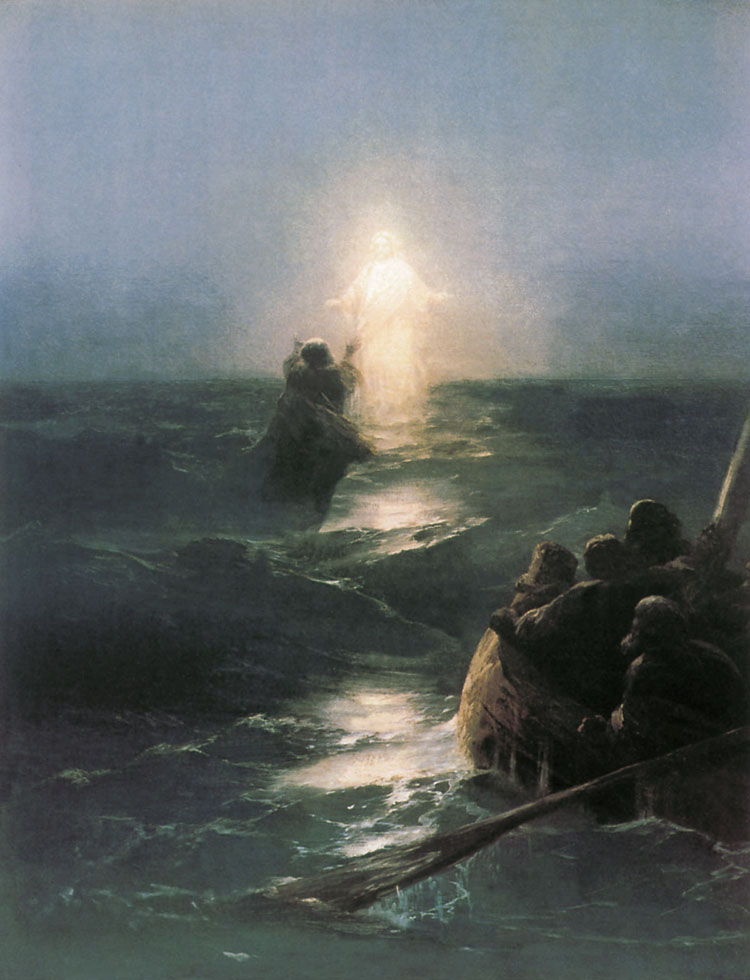
Book 6, Chapter 1
Mary
Accompanies Jesus on His Journeys
The
Marriage at Cana; How Most Holy Mary Accompanied the Redeemer of the
World in His Preaching: the Humility shown by the Heavenly Queen in
regard to the Miracles Wrought by Her Divine Son; The Transfiguration
of the Lord; His Entrance into Jerusalem; His Passion and Death; His
Triumph over Lucifer and his Demons by His Death on the Cross; the
Most Sacred Resurrection of the Savior and His Wonderful Ascension
into Heaven.
It would not be foreign to the
purpose of this history to describe the miracles and the heroic works
of Christ, our Redeemer and Master; for in almost all of them his
most blessed and holy Mother concurred and took a part. But I cannot
presume to undertake a work so arduous and so far above human
strength and capacity. For the Evangelist saint John, after having
described many miracles of Christ, says at the end of his Gospel,
that Jesus did many other things, which, if they were all described,
could not be contained in all the books of the world (John 21, 25).
If such a task seemed so impossible to the Evangelist, how much more
to an ignorant woman, more useless than the dust of the earth? All
that is necessary and proper, and abundantly sufficient for founding
and preserving the Church has been written by the four Evangelists;
it is not necessary to repeat it in this history. Yet in order to
compose this history and in order not to pass over in silence so many
great works of the exalted Queen, which have not been mentioned, it
is necessary to touch on a few particulars. Moreover, I think that to
write of them and thus fasten them in my memory will be both
consoling and useful for my advancement. The others, which the
Evangelists recorded in their Gospels and of which I have not been
commanded to write, are better preserved for the beatific vision,
where the saints shall see them manifested to them by the Lord and
where they will eternally praise Him for such magnificent works.
From Cana in Galilee Christ, the
Redeemer, walked to Capernaum, a large and populous city near the sea
of Tiberias. Here, according to saint John (John 2, 12), He remained
some days, though not many; for as the time of the Pasch was
approaching, He gradually drew nigh to Jerusalem in order to
celebrate this feast on the fourteenth of the moon of March. His most
blessed Mother, having rid Herself of her house in Nazareth,
accompanied Him thenceforth in his tours of preaching and of teaching
to the very foot of the Cross. She was absent from Him only a few
times, as when the Lord absented Himself on Mount Tabor (Matth. 17,
1), or on some particular conversions, as for instance that of the
Samaritan woman, or when the heavenly Lady herself remained behind
with certain persons in order to instruct and catechize them. But
always after a short time, She returned to her Lord and Master,
following the Sun of justice until it sank into the abyss of Death.
During these journeys the Queen of heaven proceeded on foot, just as
her divine Son. If even the Lord was fatigued on the way, as saint
John says (John 43 61), how much more fatigued was this purest Lady?
What hardships did She not endure on such arduous journeys in all
sorts of weather? Such is the rigorous treatment accorded by the
Mother of mercy to her most delicate body! What She endured in labors
alone is so great that not all the mortals together can ever satisfy
their obligations to Her in this regard. Sometimes by permission of
the Lord, She suffered such great weakness and pains that He was
constrained to relieve Her miraculously. At other times He commanded
Her to rest Herself at some stopping–place for a few days;
while again on certain occasions, He gave such lightness to her body,
that She could move about without difficulty as if on wings.
As I have already
mentioned, the heavenly Lady had the whole doctrine of the
evangelical law written in her heart. Nevertheless She was as
solicitous and attentive as a new disciple to the preaching and
doctrine of her divine Son, and She had instructed her angels to
report to Her, if necessary, the sermons of the Master whenever She
was absent. To the sermons of her Son She always listened on her
knees, thus according to the utmost of her powers showing the
reverence and worship due to his Person and doctrine. As She was
aware each moment, of the interior operations of the Soul of Christ,
and of his continual prayers to the eternal Father for the proper
disposition of the hearts of his hearers and for the growth of the
seed of his doctrine into eternal life, the most loving Mother joined
the divine Master in his petitions and prayers and in securing
for them the blessings of her most ardent and
tearful charity. By her attention and reverence She taught and moved
others to appreciate duly the teaching and instructions of the Savior
of the world. She also knew the interior of those that listened to
the preaching of the Lord, their state of grace or sin, their vices
and virtues. This various and hidden knowledge, so far above the
capacity of men, caused in the heavenly Mother many wonderful effects
of highest charity and other virtues; it inflamed Her with zeal for
the Honor of the Lord and with ardent desires, that the fruits of the
Redemption be not lost to the souls, while at the same time, the
danger of their loss to the souls through sin moved Her to exert
Herself in the most fervent prayer for their welfare. She felt in her
heart a piercing and cruel sorrow, that God should not be known,
adored and served by all his creatures: and this sorrow was in
proportion to the unequaled knowledge and understanding She had of
all these mysteries. For the souls, that would not give entrance to
divine grace and virtue, She sorrowed with ineffable grief, and was
wont to shed tears of blood at the thought of their misfortune. What
the great Queen suffered in this her solicitude and in her labors
exceeds beyond all measure the pains endured by all the martyrs of
the world.
All the followers of the Savior, and
whomever He received into his ministry, She treated with incomparable
prudence and wisdom, especially those whom She held in such high
veneration and esteem as the Apostles of Christ. As a Mother She took
care of all, and as a powerful Queen She procured necessaries for
their bodily nourishment and comforts. Sometimes when She had no
other resources, She commanded the holy angels to bring provisions
for them and for the women in their company. In order to assist them
toward advancing in the spiritual life, the great Queen labored
beyond possibility of human understanding; not only by her continual
and fervent prayers for them but by her precious example and by her
counsels, with which She nourished and strengthened them as a most
prudent Mother and Teacher. When the Apostles or disciples were
assailed by any doubts, which frequently happened in the beginning,
or when they were attacked by some secret temptation, the great Lady
immediately hastened to their assistance in order to enlighten and
encourage them by the peerless light and charity shining forth in
her; and by the sweetness of her words they were exquisitely consoled
and rejoiced. They were enlightened by her wisdom, chastened by her
humility, quieted by her modesty, enriched by all the blessings that
flowed from this storehouse of all the gifts of the holy Ghost. For
all these benefits, for the calling of the disciples, for the
conversion and perseverance of the just, and for all the works of
grace and virtue, She made a proper return to God, celebrating these
events in festive hymns.
As the Evangelists tell us, some of
the women of Galilee followed Christ the Redeemer on his journeys.
Saint Matthew, saint Mark and saint Luke tell us that some of those
whom He had cured of demoniacal possession and of other infirmities,
accompanied and served Him (Matth. 27; Mark 15; Luke 8); for the
Master of eternal life excluded no sex from his following, imitation
and doctrine. Hence some of the women attended upon Him and served
him from the very beginning of his preaching. The divine wisdom so
ordered it for certain purposes, among which was also the desire to
provide proper companions for his blessed Mother during these
travels. Our Queen interested Herself in a special manner in these
pious and holy women, gathering them around Her, teaching and
catechising them and bringing them as listeners to the sermons of her
divine Son. Although She herself was fully enlightened and instructed
in the evangelical doctrine and abundantly able to teach them the way
of eternal life, nevertheless, partly in order to conceal this secret
of her heart, She always availed Herself of the sayings of Christ in
his public preaching as a text for her instructions and exhortations,
whenever She taught these and many other women who came to Her either
before or after hearing the Savior of the world.
One of the great miracles of divine
omnipotence and a wonder of wonders was the conduct of the most holy
Mary toward the Apostles and disciples of her Son and Savior Christ,
A full account of her wisdom is impossible to human tongue, and if I
would wish to describe no more than what I have been made to
understand concerning this matter, I would be obliged to write a
large volume. I will touch upon it in this chapter and as occasion
requires in the rest of this history. All that I can say is very
little, yet from it the faithful can infer enough for their
instruction. All those whom the Savior received into his divine
school, were to see and treat familiarly his most blessed Mother.
Hence He infused into their hearts an especial reverence and devotion
toward that blessed Lady. But though this infused reverence was
common to all, it was not equal in all the disciples; for the Lord
distributed his gifts according to his free will in reference to
their dispositions and in accordance with the duties and offices for
which each one was destined. By conversation and regular interaction
with their great Queen and Lady their reverential love and devotion
was to grow and increase; for the blessed Lady spoke to all, loved
them, consoled them, instructed and assisted them in their
necessities, without ever permitting them to leave Her conversation
and presence unreplenished by interior joy and consolation greater
than they had asked for. Yet the measure of good fruit derived from
them was dependent upon the disposition of the heart of those that
received these favors.
They were all
enabled to begin their interaction with the Mother of God in high
admiration of her prudence, wisdom, purity, holiness and great
majesty, and made sensible of a sweetness in Her inexpressibly humble
and pleasing. This was so ordained by the Most High, because as I
have said in the fifth book, twenty–second, it was not yet time
to reveal this mystic Ark of the new Testament to the world. Thus,
just as the Lord, however much He wished to break forth in her
praise, could not manifest it in words and concentrated it within his
heart; so the holy Apostles, sweetly constrained into silence, found
a vent for their fervent feelings in a so much the more intense love
of most holy Mary and praise of her Maker. As the great Lady, on
account of her peerless insight knew the natural disposition of each
of the disciples, his measure of grace, his present condition and
future office, She proceeded according to this knowledge in her
petitions and prayers, in her instructions and conversings with them,
and in the favors She obtained for each in support of his vocation.
Such a loving zeal in the conduct of a mere Creature so entirely
pleasing to the wishes of his Lord, excited a new and boundless
admiration in the holy angels. Of no less
admiration was the hidden providence of the Almighty by which the
Apostles were made to correspond to the blessings and favors received
by them at the intercession of the most holy Mother. All this caused
a divine harmony of action, hidden to men and manifest only to the
heavenly spirits.
Especially signalized for the
reception of these sacramental favors were saint Peter and saint
John; the former because he was destined to be the vicar of Christ
and head of the militant Church and because he therefore deserved the
special reverence and love of the holy Mother; the latter because he
was to take the place of the Lord after his Passion in attending upon
and conversing with the heavenly Lady upon earth. As therefore the
government and custody of the mystic Church namely of Mary immaculate
and of the visible militant Church, namely the faithful on earth, was
to be divided between these two Apostles, it was no wonder, that they
should be singularly favored by the great Queen of the world. But as
saint John was chosen to serve Mary and attain the dignity of an
adopted son of the Mistress of heaven, he at once began to experience
special urgings of grace and signalize himself in the service of the
most holy Mary. Although all the Apostles excelled in devotion to the
Queen beyond our power of understanding or conception the evangelist
saint John penetrated deeper into the mysteries of this City of God
and received through Her such divine enlightenment as to excel all
the other Apostles. This is also evident from his Gospel (John 21,
20); all the divine insight therein manifested he received through
the Queen of heaven, and the distinction of being called the beloved
disciple of Jesus, he gained by his love toward the most blessed
Mother. As this love was reciprocated by the heavenly Lady, he became
the most beloved disciple both of Jesus and Mary.
The Evangelist
besides chastity and virginal purity, possessed some other virtues
which were especially pleasing to the Queen; among then, were a
dovelike simplicity, as is manifest from his writings, and a great
gentleness and humility, which made him most meek and
tractable. The heavenly Mother always looked upon
the peaceful and the humble as the most faithful imitators of her
divine Son. On this account the blessed Queen favored saint John
above all the other Apostles and he himself became more and more
anxious to serve Her with ever increasing reverential love and
affection. From the very first moment of his vocation saint John
commenced to excel all the rest in piety toward the Mother and to
fulfill the least of her wishes as her most humble slave. He attended
upon Her more assiduously than the rest; and whenever it was possible
he sought to be in her company and take upon himself some of the
bodily labors connected with her present life. Sometimes it happened
that the fortunate Apostle competed with the angels in his zeal for
thus assisting the great Queen; while She still more eagerly sought
to perform these works of humility Herself; for in this virtue She
triumphed over all other creatures and none of them could ever hope
in the least to surpass or equal Her in acts of humility. The beloved
disciple was very diligent in reporting to the heavenly Lady the
works and miracles wrought by the Savior, whenever She herself could
not be present, and in informing Her of the new disciples converted
by his teaching. He was constantly alert and studious to serve Her in
the least of her wishes, fulfilling each one of them with a loving
eagerness.
I will, however, say something of
that which has been made known to me concerning the wicked Apostle
Judas; for it belongs to this history and less is known of him. It
will at the same time be a warning to the obstinate and an admonition
for those little devoted to the most blessed Mary; for it is a sad
truth that there should be any mortals who entertain little love
toward a Creature so lovable, and One whom the infinite God himself
loves without bound or measure; whom angels love with all their
heavenly powers, the Apostles and saints from their inmost souls,
whom all creatures should eagerly strive to love, and who never can
be loved according to her merits. Yet this unhappy Apostle strayed
from the royal road of divine love and its blessings. The
understanding, which has been given me concerning this defection for
the purpose of making it known in this history, is contained in the
following paragraphs.
Judas was attracted to the school of
Christ our Teacher by his forceful doctrines, and was filled the same
good intentions which moved the others. Powerfully drawn by these
motives, he asked the Savior to admit him among his disciples, and
the Savior receive him with the bowels of a loving Father, who
rejects none that come to Him in search of truth. In the beginning
Judas merited special favors and forged ahead of some of the other
disciples, deserving to be numbered among the twelve Apostles; for
the Savior loved his soul according to its present state of grace and
his good works, just as He did the others. The Mother of grace and
mercy observed the same course with him, although by her infused
knowledge She immediately became aware of the perfidious treachery
with which he was to end his apostolate. She did not, on this
account, deny him her intercession and maternal love; but she applied
Herself even more zealously to justify as far as possible the cause
of her divine Son against this perfidious and unfortunate man, in
order that his wickedness, as soon as it should be put into action,
might not have the shadow of an excuse before men. Well knowing that
such a character as his could not be overcome by rigor, but would
only be driven by it to so much the greater obstinacy, the most
prudent Lady took care, that none of the wants or the comforts of
Judas should be ignored and She began to treat him, speak and listen
to him more gently and lovingly than to all the rest. This She
carried so far, that Judas, when the disciples once disputed among
themselves concerning their standing with the Queen (as, according to
the Evangelist [Luke 22, 24], it happened also concerning the
Redeemer), never experienced the jealousy or doubt in this matter;
for the blessed Lady in the beginning always distinguished him by
tokens of special love and he, at that time, also showed himself
thankful for these favors.
But as Judas found little support in
his natural disposition, and as the disciples, not being as yet
confirmed in virtue and not as yet even in grace, were guilty of some
human failings, the imprudent man began to compliment himself on his
perfection and to take notice more of the faults of his brethren than
of his own (Luke 4, 41). He permitted himself thus to be deceived,
making no effort to amend or repent, he allowed the beam in his own
eyes to grow while watching the splinters in the eyes of others.
Complaining of their little faults and seeking, with more presumption
than zeal, to the weaknesses of his brethren, he committed greater
sins himself. Among the other Apostles he singled out saint John,
looking upon him as an intermeddler and accusing him in his heart of
ingratiating himself with the Master and his blessed Mother. The fact
that he received so many special favors from Them was of no avail to
deter him from this false assumption. Yet so far Judas had committed
only venial sins and had not lost sanctifying grace. But they argued
a very bad disposition, in which he willfully persevered. He had
freely entertained a certain vain complacency in himself; this at
once called into existence a certain amount of envy, which brought on
a calumnious spirit and harshness in judging of the faults of his
brethren. These sins opened the way for greater sins; for immediately
the fervor of his devotion decreased, his charity toward God and men
grew cold, and his interior light was lost and extinguished; he began
to look upon the Apostles and upon the most holy Mother with a
certain disgust and find little pleasure in their interactions and
their heavenly activity.
The most prudent Lady perceived the
growth of this defection in Judas. Eagerly seeking his recovery and
salvation before he should cast himself entirely into the death of
sin, She spoke to him and exhorted him as her beloved child and with
extreme sweetness and force of reasoning. Although at times this
storm of tormenting thoughts, which had begun to rise in the breast
of Judas, was allayed; yet it was only for a short time, and soon it
arose and disturbed him anew. Giving entrance to the devil into his;
heart, he permitted a furious rage against the most meek Dove to take
possession of him. With insidious hypocrisy he sought to deny his
sins or palliate them by alleging other reasons for his conduct: as
if he could ever deceive Jesus and Mary and hide from Them the
secrets of his heart. Thereby he lost his interior reverence for the
Mother of mercy, despising exhortations and openly reproaching Her
for her gentle words and reasonings. This ungrateful presumption
threw him from the state of grace, the Lord was highly incensed and
deservedly left him to his own evil counsels. By thus designedly
rejecting the kindness and the intercession of most holy Mary, he
closed against himself the gates of mercy and of his only salvation.
His disgust with the sweetest Mother soon engendered in him an
abhorrence of his Master; he grew dissatisfied with his doctrines and
began to look upon the life of an Apostle and intercourse with the
disciples as too burdensome.
Nevertheless
divine Providence did not abandon him immediately, but continued to
send him interior assistance, although in comparison with former
helps they were of a kind more common and
ordinary. They were, however, in themselves
sufficient for his salvation, if he would have made use of them. To
these graces were added the gentle exhortations of the kindest
Mistress, urging him to restrain himself and to humble himself and
ask pardon of his divine Master. She offered him mercy in his name
and her own kind assistance in obtaining it, promising to do penance
for him, if he would consent to be sorry for his sins and amend his
life. All these advances did the Mother of grace make in order to
prevent the fall of Judas. She was well aware, that not seeking to
arise from a fall and to persevere in sin was a much greater evil
than to have fallen. The conscience of this proud disciple could not
but reproach him with his wickedness; but becoming hardened in his
heart, he began to dread the humiliation, which would have been to
his credit, and he fell into still greater sins. In his pride he
rejected the salutary counsels of the Mother of Christ and chose
rather to deny his guilt, protesting with a lying tongue, that he
loved his Master and all the rest, that there was no occasion for
amending his conscience in this regard.
In order that I
may not incur the blame of concealing what belongs to this chapter, I
will mention another cause of the ruin of Judas. When the number of
the Apostles and disciples increased, the Lord resolved to appoint
one of them to take charge of the alms received; thus to supply the
common needs and pay the imperial tribute. Jesus made known his
wishes to all indiscriminately without addressing Himself to any one
in particular. While all of them feared such an office and sought to
evade it, Judas immediately strove obtain it. In order to secure his
appointment he humbled himself so far as to ask saint John to speak
to the holy Queen and induce Her to arrange this matter for him with
her Son. Saint John yielded to the request of Judas and spoke to the
most prudent Mother; but She, knowing that this request of Judas was
not proper or just, but proceeded from ambition and avarice, did not
wish to propose it to the divine Master. The same kind of influence
Judas sought to bring into play through saint Peter and the other
Apostles, without success; for the Lord in his goodness wished to
stay his ruin, and justify his cause before men, if He should grant
the request. At this resistance the heart of Judas, already corrupted
by avarice, instead of quietly yielding, was consumed with unhappy
desires for the office, and the devil stirred up thoughts of vilest
ambition, such as would have been most improper and wicked in any
one, and hence were much more culpable in Judas, who had been a
disciple in the school of highest perfection and who had lived in the
light of the Sun of justice and its beautiful Moon Mary! Neither in
the day of abundant graces, when the Sun Jesus lighted his paths, nor
in the night of temptations, when the Moon Mary disclosed to him the
wiles of the poisonous serpent, could he have failed to become aware
of the wickedness of such suggestions. But, as he flew from the light
and cast himself willfully into darkness, he presumed to ask most
holy Mary in a direct manner for her influence in obtaining his
object. He had lost all fear and hid his
avarice in the cloak of virtue. Approaching Her, he said that he had
made his request through saint Peter and saint John, with the sole
desire of diligently serving Her and his divine Master, since not all
would attend to the duties of this office with proper solicitude; and
that, therefore, he now asked to obtain the position of purser for
him from the Master.
The great Lady answered him with extreme
gentleness: “Consider well, my dearest, what thou askest, and
examine whether thy intentions are upright. Ponder well, whether it
is good for thee to seek which all thy brethren fear and refuse to
accept, unless they shall be compelled thereto by the command of
their Lord and Master. He loves thee more than thou lovest thyself
and without doubt knows what will benefit thee; resign thyself to his
most holy will, change thy purpose, and seek to grow rich in humility
and poverty. Rise from thy fall, for I will extend thee a helpful
hand and my Son will show thee his loving mercy.” Who would not
have yielded to these sweetest words and such urgent advice, spoken
by such an amiable and heavenly Creature as was most holy Mary? But
this fierce and adamantine heart was not softened or moved. On the
contrary, the soul of Judas was offended and enraged against the
heavenly Lady for thus offering him a means of escaping from his
dreadful danger. Boundless ambition and avarice roused his fury
against Her who seemed to hinder him in his projects and he
considered her well–meant advice as an insult. But the meek and
loving Dove pretended not to notice his obstinacy and said nothing
more to him at that time.
After his
interview with most holy Mary, the avarice of Judas would not allow
him to rest; casting of all modesty and natural shame (and the least
spark of faith), Judas now resolved to apply to his divine Master and
Savior. Clothing himself like a consummate hypocrite in the garb of a
sheep, he went to his Master and said: “Master, I wish to
fulfill thy wishes and serve Thee as thy purser and as the dispenser
of alms which we receive; I will look to the interests of the poor,
fulfilling thy doctrine that we should do unto others
as we wish them to do unto us, and I will see to it that alms are
distributed according to thy wishes, more profitably and orderly than
hitherto.” Such reasoning the specious hypocrite boldly used,
committing many enormous sins in one and the same act. For, first of
all he lied, concealing his real intention. Then, being ambitious of
an honor which he did not merit, he neither wished to appear in his
true light nor did he wish to be in truth what he merely pretended to
be. He also blamed his brethren, discrediting them and praising
himself: the ordinary course of those who are ambitious. What is
especially to be noticed in this conduct of Judas is that he showed
his loss of infused faith; for he attempted to deceive Christ, his
divine Master, by wearing the cloak of hypocrisy. For, if he had
firmly believe that Christ was true God and man who penetrated into
the secrets of the heart, he could not have hoped to able to deceive
Him; nor would he have attempted such double dealing, not only
because he would have known Christ as the omniscient God, but because
he would not have hoped to impose upon the infused and beatific
science of Christ as man. Hence Judas had lost belief in all these
prerogatives, and to his other sins, added the sin of heresy.
But let us return to the answer given to Judas by
the Master, whom he asked to make him purser. We shall see how hidden
and terrible are the judgments of the Most High. The Redeemer wished
to ward off from him the danger which lay behind this request and
which threatened the avaricious Apostle with final perdition. In
order that Judas might not excuse himself under plea of ignorance,
the Lord answered him: “Dost thou know, Judas, what thou
seekest and what thou askest? Be not so cruel toward thy own self as
to solicit and seek to obtain the poison and the arms which may cause
thy death.” Judas replied: “Master I desire to serve Thee
by employing my strength in the service of thy faithful followers and
in this way I can do it better than in any other; for I offer to
fulfill all the duties of this office without fail.” This
daring presumption of Judas in seeking and coveting danger, justified
the cause of God in allowing him to enter and perish in the danger
thus sought and coveted. He resisted the light (Eccli. 15, 17), and
hardened himself against it, water and fire was shown him, life and
death: he stretched forth his hand and chose perdition.
Words of the Queen
The Virgin Mary
speaks to Sister Mary of Agreda, Spain
My daughter, all
that thou hast written in this chapter is a
most important warning for all those that live in the flesh and in
the imminent danger of losing eternal happiness. It should teach them
to seek my most kind and powerful intercession and to fear the
judgments of the Most High; for in this lies an efficacious means of
salvation and of meriting higher reward for the Lord. I wish to
remind thee once more, that among the secrets revealed to the beloved
John at the last Supper, was also this, that he had become the
beloved disciple of Christ on account of his love toward me, and that
Judas fell because he despised the mercy and kindness which I had
shown him. At that time, also, the evangelist understood other great
mysteries communicated and wrought in me; that I should take part in
the labor and suffering of the Passion and that he should have
special charge of me. My dearest, the purity which I
require of thee must be greater than that of an angel; and if thou
strive after it thou wilt become my dearest child, as saint John, and
a most beloved and favored spouse of my Son and Lord. His example and
the ruin of Judas should continually serve thee as a stimulus and as
a warning, to seek only after my love and to be sincerely thankful
for the love shown thee without thy merit.
Book 6, Chapter 2
The
Transfiguration and Triumphal Entry Into Jerusalem of Our Lord
Our Redeemer and Master Jesus had
already consumed more than two years and a half in preaching and
performing wonders, and He was approaching the time predestined by
the eternal wisdom for satisfying divine justice for redeeming the
human race through his Passion and Death and thus to return to his
eternal Father. Since all his works were ordered with the highest
wisdom for our instruction and salvation, the Lord resolved to
prepare and strengthen some of his Apostles for the scandal of his
Passion by manifesting to them beforehand in its glory that same
body, which was so soon to exhibit in the disfigurement of the Cross.
Thus would they be reassured by the thought, they had seen it
transfigured in glory before they looked upon it disfigured by his
sufferings. This he had promised a short time before in the presence
of all, although not to all, but only to some of his disciples, as is
recorded by saint Matthew (Matth. 16, 28). For his Transfiguration He
selected a high mountain in the center of Galilee, two leagues east
of Nazareth and called Mount Tabor. Ascending to its highest summit
with the three Apostles, Peter, and the two brothers James and John,
He was transfigured before them (Matth. 17, hark 9, 1; Luke 9, 28).
The three Evangelists tell us that besides these Apostles, were
present also the prophets, Moses and Elias, discoursing with Jesus
about his Passion, and that, while He was thus transfigured, a voice
resounded from heaven in the name of the eternal Father, saying “This
is my beloved Son in whom I am well pleased: hear ye Him.”
The Evangelists do not say that most
holy Mary was present at this Transfiguration, nor do they say that
She was not there; this did not fall within purpose, and they did not
think it proper to speak of the hidden miracle by which She was
enabled to be there. For the purpose of recording this event here, I
was given to understand that at the same time in which some of the
holy angels were commissioned to bring the soul of Moses and Elias
from their abode, others of her own guard carried the heavenly Lady
to Mount Tabor, in order to witness the Transfiguration of her divine
Son, for without a doubt She really witnessed it. There was no
necessity of confirming the most holy Mother in her faith, as was
necessary with the Apostles; for She was invincibly confirmed in
faith.
But no human ingenuity can suffice
fully to describe the effects of this glorious vision of her Son on
her most holy soul. With inmost gratitude and deepest penetration She
began to ponder upon what She had seen and heard; exalted praise of
the omnipotent welled forth from her lips, when She considered how
her eyes had seen refulgent in glory that same bodily substance,
which had been formed of her blood, carried in her womb and nursed at
her breast; how She had with her own ears heard the voice of the
eternal Father acknowledge her Son as his own and appoint Him as the
Teacher of all the human race. With her holy angels She composed new
canticles to celebrate an event so full of festive joy for her soul
and for the most sacred humanity of her Son. I will not expatiate
upon this mystery, nor discuss in what the Transfiguration of the
body of Jesus really consisted. It is enough to know that his
countenance began to shine like the sun and his garments became
whiter than the snow (Matth. 17, 2).
After the Transfiguration the most
blessed Mother was brought back to her house in Nazareth; her divine
Son descended the mountain and immediately came to visit her in order
to take final leave of his parental province and set out for
Jerusalem. There, on the following Pasch, which was to be for Him the
last upon earth, He was to enter upon his Passion. Having spent only
a few days at Nazareth, He departed with his Mother, his disciples
and Apostles and some of the holy women, traveling about through
Galilee and Samaria before entering Judea and Jerusalem. The
Evangelist saint Luke writes of this journey where he says, that He
set his face toward Jerusalem (Luke 9, 51); for He journeyed to
Jerusalem with a joyous countenance and full of desire to enter upon
his sufferings, in order thereby, according to his own most ardent
and generous desire, to sacrifice Himself for the human race. He was
not to return to Galilee, where had wrought so many miracles. Knowing
this at his departure from Nazareth, He glorified his eternal Father
and, in the name of his sacred humanity, gave thanks for having, in
that house and neighborhood, received the human form and existence
which He was now to deliver over to suffering and death. Of the
prayers of Christ our Lord on this occasion I will record as I can
the following one:
“My eternal
Father, in compliance with thy will I gladly haste to satisfy thy
justice by suffering even unto death. Thus shall I reconcile to Thee
all the children of Adam, paying their debts and opening to them the
gates of heaven which have been closed against them. I shall seek
those who have turned away and lost themselves, so that they may be
restored by the force of my love. I shall find and gather together
the lost of the house of Jacob (Is. 56, 8), raise up the fallen,
enrich the poor, refresh the thirsty, cast down the haughty and exalt
the humble. I wish to vanquish hell and enhance the glories of the
triumph over Lucifer (I John 3, 8), and over the vices which he has
sown into the world. I wish to raise up the standard of the Cross,
beneath which virtue, and all those that put themselves under its
protection, are to fight their battles. I wish to satiate my heart
with insults and affronts, which are so estimable in thy eyes. I wish
to humiliate Myself even to death at the hands of my enemies, in
order that our chosen friends may be consoled in their tribulations
and that they may be honored by high rewards, whenever they choose to
humiliate themselves in suffering the same persecutions. O beloved
Cross! When shalt thou receive Me in thy arms? O sweet ignominies and
affronts! When shalt thou bear Me on to overcome death through the
sufferings of my entirely guiltless flesh? Ye pains, affronts,
ignominies, scourges, thorns, torments, death, come to Me, who wish
to embrace you, yield yourselves to my welcome, since I well
understand your value. If the world abhors you, I long for you. If
the world in its ignorance, despises you, I, who am truth and wisdom,
love and embrace you. Come then to Me, for in welcoming you as man, I
exalt you as the true God and am ready to efface the touch of sin
from you and from all that will embrace you. Come to Me, ye pains,
and disappoint Me not; heed not my Omnipotence, for I shall permit
you to exert your full force upon my humanity. You shall not be
rejected and abhorred by Me as you are by mortals. The deceitful
fascination of the children of Adam in vainly judging the poor and
the afflicted of this world as unhappy, shall now disappear; for if
they see their true God, their Creator, Master and Father, suffering
horrible insults, scourgings, the ignominious torment and destitution
of the Cross, they will understand their error and esteem it as an
honor to follow their crucified God.”
I cannot worthily express all the
thoughts and affections of the Mistress of the world in this her
departure from Nazareth, her prayers and petitions to the eternal
Father, her most sweet and sorrowful conversations with her divine
Son, the greatness of her grief and the vastness of her merits. For,
on account of the conflict between the love of a true Mother, by
which She naturally desired to preserve Him from the terrible
torments, and the conformity of her will with that of Jesus and of
his eternal Father, her heart was pierced by the sword of sorrow,
prophesied by Simeon (Luke 2, 35). In her affliction She complained
to her divine Son in words of deepest prudence and wisdom, yet also
of sweetest sorrow, that She should be unable to prevent his
sufferings, or at least die with Him. These sorrows of the Mother of
God exceeded the sufferings of martyrs who have died or will die for
love of God to the end of the world. In such a state of mind and
affection the Sovereigns of the world pursued their way from Nazareth
toward Jerusalem through Galilee, which the Savior was not to revisit
in this life. As the end of his labors for the salvation of men drew
to a close, his miraculous works increased in number, and, as the
sacred writers of the Gospels relate, they became especially numerous
in the last months intervening between his departure from Galilee and
the day of entrance into Jerusalem. Until that day, after having
celebrated the feast or the Pasch of the Tabernacles, the Savior
traveled about and labored in Judea, awaiting the appointed time,
when, according to his will, He was to offer Himself in sacrifice.
Our Savior continued to perform his
miracles in Judea. Among them was also the resurrection of Lazarus in
Bethany, whither He had been called by the two sisters, Martha and
Mary. As this miracle took place so near to Jerusalem, the report of
it was soon spread throughout the city. The priests and Pharisees,
being irritated by this miracle, held a council (John 9, 17), in
which they resolved upon the death of the Redeemer and commanded all
those that had any knowledge of his whereabouts, to make it known;
for after the resurrection of Lazarus, Jesus retired to the town of
Ephrem, until the proximate feast of the Pasch should arrive. As the
time of celebrating it by his own Death drew nigh, He showed Himself
more openly with his twelve disciples, the Apostles; and He told them
privately that they should now get themselves ready to go Jerusalem,
where the Son of man, He himself, should be delivered over to the
chiefs of the Pharisees, bound as a prisoner, scourged, and
ill–treated unto the death of the Cross (Matth. 20, 18). In the
meanwhile the priests kept a sharp watch to find Him among those who
came to celebrate the Pasch. Six days previous He again visited
Bethania, where He had called Lazarus to life, and where He was
entertained by the two sisters. They arranged a banquet for the Lord
and his Mother, and for all of his company. Among those that were at
table with Them, was also Lazarus, whom He had brought back to life a
few days before.
Thursday, the eve
of the Passion and Death of the Savior, had arrived; at earliest dawn
the Lord called his most beloved Mother and She, hastening to
prostrate Herself at his feet, responded; “Speak, my Lord and
Master, for thy servant heareth.” Raising Her up from the
ground, He spoke to Her in words of soothing and tenderest love: “My
Mother, the hour decreed by the eternal wisdom of my Father for
accomplishing the salvation and restoration of the human race and
imposed upon Me by his most holy and acceptable will, has now
arrived; it is proper that now We subject to Him our own will, as We
have so often offered to do. Give Me thy permission to enter upon my
suffering and death, and, as my true Mother, consent that I deliver
Myself over to my enemies in obedience to my Father. In this manner
do Thou also willingly co–operate with Me in this work of
eternal salvation, since I have received from Thee in thy virginal
womb the form of a suffering and mortal man in which I am to redeem
the world and satisfy the divine justice. Just as thou,
of thy own free will, didst consent to my
Incarnation, so I now desire thee to give consent also to my passion
and death of the Cross. To sacrifice Me now of thy own free will to
the decree of my eternal Father, this shall be the return which I ask
of thee for having made thee my Mother; for He has sent Me in order
that by the sufferings of my flesh I might recover the lost sheep of
his house, the children of Adam” (Matth. 18,11).
These and other words of the Savior, spoken on
that occasion, pierced the most loving heart of Mary and cast Her
into the throes of a sorrow greater than She had ever endured before.
For now had arrived that dreadful hour, whence there was no issue for
her pains, neither in an appeal to the swift–fleeting time nor
to any other tribunal against the inevitable decree of the eternal
Father, that had fixed the term of her beloved Son’s life. When
now the most prudent Mother look upon Him as her God, infinite in his
attributes and perfections, and as the true Godman in hypostatical
union with the person of the Word, and beheld Him sanctified and
ineffably exalted by this union with the Godhead: She remembered the
obedience He had shown Her as his Mother during so many years and the
blessings He had conferred upon Her during his long companionship
with Her; She realized that soon She was to be deprived of this
blessed companionship and of the beauty of his countenance, of the
vivifying sweetness of his words; that She was not only to lose all
this at once, but moreover that She was to deliver Him over into the
hands of wicked enemies, to ignominies and torments and to the bloody
sacrifice of a death on the Cross. How deeply must all these
considerations and circumstances, now so clearly before Her mind,
have penetrated into her tender and loving heart and filled it with a
sorrow unmeasurable! But with the magnanimity of a Queen, vanquishing
this invincible pain, She prostrated Herself at the feet of Her
divine Son and Master, and, in deepest reverence, kissing his feet,
answered:
“Lord and
highest God, Author of all that has being, though Thou art the Son of
my womb, I am thy handmaid; the condescension of thy ineffable love
alone has raised me from the dust to the dignity of being thy Mother.
It is altogether becoming that I, vile wormlet, acknowledge and thank
thy most liberal clemency by obeying the will of the eternal Father
and thy own. I offer myself and resign myself to his divine pleasure
in order that in Me, just as in Thee, my Son and Lord his eternal and
adorable will be fulfilled. The greatest sacrifice which I can make,
is that I shall not be able to die with Thee, and that our lot should
not be inverted; for to suffer in imitation of Thee and in thy
company would be a great relief for my pains, and all torments would
be sweet, if undergone in union with thine. That Thou shouldst endure
all these torments for the salvation of mankind shall be my only
relief in my pains. Receive, O my God, this sacrifice of my desire to
die with Thee, and of my still continuing to live, while thou, the
most innocent Lamb and figure of the substance of thy eternal Father
undergoest Death (Heb. 1, 3). Receive also the agonies of my sorrow
to see the inhuman cruelty of thy enemies executed on thy exalted
Person because of the wickedness of the human kind. O ye heavens and
elements and all creatures within them, ye sovereign spirits, ye
Patriarchs and Prophets, assist me to deplore the death of my
Beloved, who gave you being, and bewail with me the misery of men,
who are the cause of this Death, and who, failing to profit of such
great blessings, shall lose that eternal life so dearly bought! O
unhappy you, that are foreknown as doomed! and O ye happy
predestined, who shall wash your stoles in the blood of the Lamb
(Apoc. 7, 14), you, who knew how to profit by this blessed sacrifice,
praise ye the Lord Almighty! O my Son and infinite delight of my
soul, give fortitude and strength to thy afflicted Mother; admit Her
as thy disciple and companion, in order that she may participate in
thy Passion and Cross, in order that the eternal Father may receive
the sacrifice of thy Mother in union with thine.”
With these and other expressions of her
sentiments, which I cannot all record in words, the Queen of heaven
answered her most holy Son, and offered Herself as a companion and a
coadjutrix in his Passion. Thereupon, thoroughly instructed and
prepared by divine light for all the mysteries to be wrought by the
Master of life towards accomplishing all his great ends, the most
pure Mother, having the Lord’s permission, added another
request in the following words: “Beloved of my soul and light
of my eyes, my Son, I am not worthy to ask Thee what I desire from my
inmost soul; but Thou, O Lord, art the life of my hope, and this my
trust I beseech Thee, if such be thy pleasure, make me a participant
in the ineffable Sacrament of thy body and blood. Thou hast resolved
to institute it as a pledge of thy glory and I desire in receiving
Thee sacramentally in my heart to share the effects of this new and
admirable Sacrament. Well do I know, O Lord, that no creature can
ever merit such an exquisite blessing, which Thou hast resolved to
set above all the works of thy magnificence; and in order to induce
Thee to confer upon me, I have nothing else to offer except thy own
and all thy infinite merits. If by perpetuating merits through the
same humanity which thou hast received from my womb, creates for me a
certain right, let this right consist not so much in giving Thyself
to me in this Sacrament, as in making me thine by this new
possession, which restores to me thy sweetest companionship. All my
desires and exertions I have devoted to the worthy reception of this
holy Communion from the moment in which Thou gavest me knowledge of
it and ever since it was thy fixed decree to remain in the holy
Church under the species of consecrated bread and wine. Thou then, my
Lord and God, return to thy first habitation which Thou didst find in
thy beloved Mother and thy slave, whom Thou hast prepared for thy
reception by exempting Her from the common touch of sin. Then shall I
receive within me the humanity, which I have communicated to Thee
from my own blood, and thus we shall be united in a renewed and close
embrace. This prospect enkindles my heart with most ardent love, and
may I never be separated from Thee, who art the infinite Good and the
Love of my soul.”
Our Savior, having thus parted with his most
beloved Mother and sorrowful Spouse, and taking along with Him all
his Apostles, a little before midday of the Thursday of the last
Supper, departed on his last journey from Bethany to Jerusalem. At
the very outset He raised his eyes to the eternal Father, and,
confessing Him in words of thankfulness and praise, again professed
his most ardent love and most lovingly and obediently offered to
suffer and die for the Redemption of the human race. This prayer and
sacrifice of our Savior and Master sprang from such ineffable love
and ardor of his spirit, that it cannot be described; all that I say
of it seems to me rather a gainsaying of the truth and of what I
desire to say. “Eternal Father and my God,” said Christ
our Lord, “in compliance with thy will I now go to suffer and
die for the liberation of men, my brethren and the creatures of thy
hands. I deliver Myself up for their salvation and to gather those
who have been scattered and divided by the sin of Adam.
Words of the Queen
The Virgin Mary
speaks to Sister Mary of Agreda, Spain
My daughter, as thy soul has been
furnished with gifts of enlightenment, I call and invite thee anew to
cast thyself into the sea of mysteries contained in the passion and
death of my divine Son. Direct all thy faculties and strain all the
powers of thy heart and soul, to make thyself at least somewhat
worthy of understanding and meditating upon the ignominies and
sorrows of the Son of the eternal Father in his death on the Cross
for the salvation of men; and also of considering my doings and
sufferings in connection with his bitterest Passion. This science, so
much neglected by men, I desire that thou, my daughter, study and
learn, so as to be able follow thy Spouse and imitate me, who am thy
Mother and Teacher. Writing down and feeling deeply all that I shall
teach thee of these mysteries, thou shouldst detach thyself entirely
of human and earthly affections and of thy own self, so as freely to
follow our footsteps in destitution and poverty.
I wish thee also to ponder, what a
horrible crime it is in the eyes of the Lord, in mine, and in those
of all the saints, that men should despise and neglect the frequent
reception of the holy Communion, and that they should approach it
without preparation and fervent devotion. Principally in order that
thou mayest understand and record this warning, I have manifested
thee, what I did on that occasion and how I prepared myself so many
years for receiving my most blessed Son in the holy Sacrament and
also the rest, which thou art yet to write for the instruction and
confusion of men. For if I, who was innocent of any hindering sin and
filled with all graces, sought to increase my fitness for this favor
by such fervent acts of love, humility and gratitude, consider what
efforts thou and the other children of the Church, who every day and
hour incur new guilt and blame, must make in order to fit yourselves
for the beauty of the Divinity and humanity of my most holy Son? What
excuse can those men give in the last judgment, who have despised
this ineffable love and blessing, which they had always present in
the holy Church, ready to fill them with the plenitude of gifts, and
who rather sought diversion in worldly pleasures and attended upon
the outward and deceitful vanities of this earthly life? Be thou
amazed at this insanity as were the holy angels, and guard thyself
against falling into the same error.
Book 6, Chapter 3
The
Last Supper
Christ had partaken of the prescribed
supper with his disciples reclining on the floor around a table,
which was elevated from it little more than the distance of six or
seven fingers; for such was the custom of the Jews. But after the
washing of the feet He ordered another, higher table to be prepared,
such as we now use for our meals. By this arrangement He wished to
put an end to the legal suppers and to the lower and figurative law
and establish the new Supper of the law of grace. From that time on
He wished the sacred mysteries to be performed on the tables or
altars, which are in use in the Catholic Church. The table was
covered with a very rich cloth and upon it was placed a plate or
salver and a large cup in the form of a chalice, capacious enough to
hold the wine. All this was done in pursuance of the will of Christ
our Savior, who by his divine power and wisdom directed all these
particulars. The master of the house was inspired to offer these rich
vessels, which were made of what seemed a precious stone like
emerald. The Apostles often used it afterwards in consecrating,
whenever the occasion permitted it. The Lord seated himself at this
table with the Apostles and some of the other disciples, and then
ordered some unleavened bread to be placed on the table and some wine
to be brought, of which He took sufficient to prepare the chalice.
Then the Master of life spoke words
of most endearing love to his Apostles, and, though his sayings were
wont to penetrate to the inmost heart at all times, yet on this
occasion they were like the flames of a great fire of charity, which
consumed the souls of his hearers. He manifested to them anew the
most exalted mysteries of his Divinity, humanity and of the works of
the Redemption. He enjoined upon them peace and charity, of which He
was now to leave a pledge in the mysteries about to be celebrated. He
reminded them, that in loving one another, they would be loved by the
eternal Father with the same love in which He was beloved. He gave
them an understanding of the fulfillment of this promise having
chosen them to found the new Church and the law of grace. He renewed
in them the light concerning the supreme dignity, excellence and
prerogatives of his most pure Virgin Mother.
Thereupon Christ our Lord took into his venerable
hands the bread, which lay upon the plate, and interiorly asked the
permission and co–operation of the eternal Father, that now and
ever afterwards in virtue of the words about to be uttered by Him,
and later to be repeated in his holy Church, He should really and
truly become present in the host, Himself to yield obedience to these
sacred words. While making this petition He raised his eyes toward
heaven with an expression of such sublime majesty, that He inspired
the Apostles, the angels and his Virgin Mother with new and deepest
reverence. Then He pronounced the words of consecration over the
bread, changing its substance into the substance of his true body and
immediately thereupon He uttered the words of consecration also over
the wine, changing it into his true blood. As an answer to these
words of consecration was heard the voice of the eternal Father,
saying: “This is my beloved Son, in whom I delight, and shall
take my delight to the end of the world; and He shall be with men
during all the time of their banishment.” In like manner was
this confirmed by the Holy Ghost. The most sacred humanity of Christ,
in the Person of the Word, gave tokens of profoundest veneration to
the Divinity contained in the Sacrament of his body and blood. The
Virgin Mother, in her retreat prostrated Herself on the ground and
adored her Son in the blessed Sacrament with incomparable reverence.
Then also the angels of her guard, all the angels of heaven, and
among them likewise the souls of Enoch and Elias, in their own name
and in the name of the Patriarchs and Prophets of the old law, fell
down in adoration of their Lord in the holy Sacrament.
All the Apostles and disciples, who, with the
exception of the traitor, believed in this holy Sacrament, adored it
with great humility and reverence according to each one’s
disposition. The great high priest Christ raised up his own
consecrated body and blood in order that all who were present at this
first Mass might adore it in a special manner, as they also did.
During this elevation his most pure Mother, saint John, Enoch and
Elias, were favored with an especial insight into the mystery of his
presence in the sacred species. They understood more profoundly, how,
in the species of the bread, was contained his body and in those of
the wine, his blood; how in both, on account of the inseparable union
of his soul with his body and blood, was present the living and true
Christ; how with the Person of the Word, was also therein united the
Person of the Father and of the Holy Ghost; and how therefore, on
account of the inseparable existence and union of the Father, Son and
Holy Ghost, the holy Eucharist contained the perfect humanity of the
Lord with the three divine Persons of the Godhead. All this was
understood most profoundly by the heavenly Lady and by the others
according to their degree. They understood also the efficacy of the
words of the consecration, now endowed with such divine virtue, that
as soon as they are pronounced with the intention of doing what
Christ did at that time, by any priest since that time over the
proper material, they would change the bread into his body and the
wine into his blood, leaving the accidents to subsist in a new way
and without their proper subject. They saw, that this change would
take place so certainly and infallibly that heaven and earth would
sooner fall to pieces, than that the effect of these words of
consecration, when pronounced in the proper manner by the sacerdotal
minister of Christ, should ever fail.
The heavenly Queen understood also by
a special vision how the most sacred body of Christ is hidden beneath
the accidents of bread and wine without change in them or alteration
of the sacred humanity; for neither can the Body be the subject of
the accidents, nor can the accidents be the form of the body. The
accidents retain the same extension and qualities as before, and each
of their parts retain the same position after the host has been
consecrated; and the sacred body is present in an invisible form,
also retaining the same size without intermingling of parts. It
remains in the whole host, and all of it in every particle of the
host, without being strained by the host, or the host by the body.
For neither is the extension of his body correlative with the
accidental species, nor do they depend upon the sacred body for their
existence. They therefore have a totally different mode of existence
and the body interpenetrates the accidents without hindrance.
Still greater was my admiration when
Jesus our God, having raised the most holy Sacrament, as I said
before, for their adoration, divided it by his own sacred hands,
first partook of it himself as being the First and chief of all the
priests. Recognizing himself, as man, inferior to the Divinity, which
He was now to receive in this his own consecrated body and blood. He
humiliated and, as it were, with a trembling of the inferior part of
his being, shrank within Himself before that Divinity, thereby not
only teaching us the reverence with which holy Communion is to be
received ; but also showing us what was his sorrow at the temerity
and presumption of many men during the reception and handling of this
exalted and sublime Sacrament. The effects of holy Communion in the
body of Christ were altogether miraculous and divine; for during a
short space of time the gifts of glory flowed over in his body just
as on mount Tabor, though the effects of this transfiguration were
manifest only to his blessed Mother, and partly also to John, Enoch
and Elias. This was the last consolation He permitted his humanity to
enjoy as to its inferior part during his earthly life, and from that
moment until his Death He rejected all such alleviation. The Virgin
Mother, by a special vision, also understood how Christ her divine
Son received Himself in the blessed Sacrament and what was the manner
of its presence in his divine Heart. All this caused inestimable
affection in our Queen and Lady.
While receiving his own body and
blood Christ our Lord composed a canticle of praise to the eternal
Father and offered Himself in the blessed Sacrament as a sacrifice
for the salvation of man. He took another particle of the consecrated
bread and handed it to the archangel Gabriel who brought and
communicated it to the most holy Mary. By having such a privilege
conferred on one of their number, the holy angels considered
themselves sufficiently recompensed for being excluded from the
sacerdotal dignity and for yielding it to man. The privilege of
merely having even one of their number hold the sacramental body of
their Lord and true God filled them with a new and immense joy. In
abundant tears of consolation the great Queen awaited holy Communion.
When saint Gabriel with innumerable other angels approached, She
received it, the first after her Son, imitating his self–abasement,
reverence and holy fear. The most blessed Sacrament was deposited in
the breast and above the heart of the most holy Virgin Mother, as in
the most legitimate shrine and tabernacle of the Most High. There the
ineffable sacrament of the holy Eucharist remained deposited from
that hour until after the Resurrection, when saint Peter said the
first Mass and consecrated anew, as I shall relate in its place.
After having thus favored the
heavenly Princess, our Savior distributed the sacramental bread to
the Apostles (Luke 22, 17), commanding them to divide it among
themselves and partake of it. By this commandment He conferred upon
them the sacerdotal dignity and they began to exercise it by giving
Communion each to Himself. This they did with the greatest reverence,
shedding copious tears and adoring the body and blood of our Lord,
whom they were receiving. They were established in the power of the
priesthood, as being founders of the holy Church and enjoying the
distinction of priority over all others (Ephes. 2, 20). Then saint
Peter, at the command of Christ the Lord, administered two of the
particles of holy Communion to the two patriarchs, Enoch and Elias.
This holy Communion so rejoiced these two holy men, that they were
encouraged anew in their hope of the beatific vision, which for them
was to be deferred for so many ages, and they were strengthened to
live on in this hope until the end of the world. Having given most
fervent and humble thanks to the Almighty for this blessing, they
were brought back to their abiding–place by the hands of the
holy angels. The Lord desired to work this miracle in order to pledge
Himself to include the ancient natural and written laws in the
benefits of the Incarnation, Redemption and general resurrection;
since all these mysteries were contained in the most holy Eucharist.
By thus communicating Himself to the two men, Enoch and Elias, who
were still in their mortal flesh, these blessings were extended over
the human race such as it existed under the natural and the written
laws, while all the succeeding generations were to be included in the
new law of grace, the Apostles at the head. This was all well
understood by Enoch and Elias, and, returning to the midst of their
contemporaries, they gave thanks their and our Redeemer for this
mysterious blessing.
Words of the Queen
The Virgin Mary
speaks to Sister Mary of Agreda, Spain
O my daughter!
Would that the believers in the Catholic faith opened their hardened
and stony hearts in order to attain to a true understanding of the
sacred and mysterious blessing of the Holy Eucharist! If they would
only detach themselves, root out and reject their earthly
inclinations, and, restraining their passions, apply themselves with
living faith to study by the divine light their great happiness in
thus possessing their eternal God in the holy Sacrament and in being
able, by its reception and constant interaction, to participate in
the effects of this heavenly manna! If they would only worthily
esteem this precious gift, begin to taste its sweetness, and share in
the hidden power of their omnipotent God! Then nothing would ever be
wanting to them in their exile. In this, the happy age of the law of
grace, mortals have no reason to complain of their weakness and their
passions; since in this bread of heaven they have at hand strength
and health. It matters not that they are tempted and persecuted by
the demon; for by receiving this Sacrament
frequently they are enabled to overcome him
gloriously. The faithful are themselves to blame for all their
poverty and labors, since they pay no attention to this divine
mystery, nor avail themselves of the divine powers, thus placed at
their disposal by my most holy Son. I tell thee truly, my dearest,
that Lucifer and his demons have such a fear of the most holy
Eucharist, that to approach it, causes them more torments than to
remain in hell itself. Although they do enter churches in order to
tempt souls, they enter them with aversion, forcing themselves to
endure cruel pains in the hope of destroying a soul and drawing it
into sin, especially in the holy places and in the presence of the
holy Eucharist. Their wrath against the Lord and against the souls
alone could induce them to expose themselves to the torment of his
real sacramental presence.
Whenever He is
carried through the streets they usually fly and disperse in all
haste; and they would not dare to approach those that accompany Him,
if by their long experience they did not know, that they will induce
some to forget the reverence due to their Lord. Therefore they make
special efforts to tempt the faithful in the churches; for they know
what great injury they can thereby do to the Lord himself,
who in his sacramental love is there waiting
to sanctify men and to receive the return of his sweetest and
untiring love. Hence thou canst also understand the strength of those
who prepare themselves to partake of this bread of the angels and how
the demons fear the souls, who receive the Lord worthily and devoutly
and who strive to preserve themselves in this purity until the next
Communion. But there are few who live with this intention, and the
enemy is ceaselessly alert in striving to throw them back into their
forgetfulness, distraction and indifference, so that he may not be
obliged to encounter such powerful weapons in the hands of men. Write
this admonition in thy heart; and since without thy merit the
Almighty has ordained, that thou receive holy Communion daily, seek
by all possible means to preserve thyself in the good dispositions
from one Communion to the other. It is the will of the Lord and my
own, that with this sword thou fight the battles of the Almighty in
the name of the holy Church against the invisible enemies. For in our
days they are heaping affliction and sorrow upon the mistress of
nations, while there is none to console her or to take it to heart
(Thren. 1, 10). Do thou thyself weep for the same reason and let thy
heart be torn in sorrow. But while the omnipotent and just Judge who
is so greatly incensed against the Catholics for having outraged his
justice by their unmeasurable and continual transgressions even under
the aegis of their grand faith, none are found
to consider and weigh the fearful damage, nor to approach the easy
remedy of receiving the holy Eucharist with a contrite and humble
heart; nor does any one ask for my intercession.
Though all the
children of the Church largely incur this fault, yet more to be
blamed are the unworthy and wicked priests; for by the irreverence
with which they treat the blessed Sacrament the other Catholics have
been drawn to undervalue it. If the people see their priests approach
the divine mysteries with holy fear and trembling, they learn to
treat and receive their God in like manner. Those that so honor Him
shall shine in heaven like the sun among the stars; for the glory of
my divine Son’s humanity will redound in a special measure in
those who have behaved well toward Him in the blessed Sacrament and
have received Him with all reverence;
whereas this will not happen to those who have not frequented this
holy table with devotion. Moreover the devout will bear on their
breast, where they have so often harbored the holy Eucharist, most
beautiful and resplendent inscriptions, showing that they were most
worthy tabernacles of the holy Sacrament. This will be a great
accidental reward for them and a source of jubilation and admiration
for the holy angels and the rest of the blessed. They will also enjoy
the special favor of being able to penetrate deeper into the mystery
of the presence of the Lord in the sacrament and to understand all
the rest of the wonders hidden therein. This will be such a
privilege, that it alone would suffice for their eternal happiness,
even if there were no other enjoyment in heaven. Moreover the
essential glory of those, who have worthily and devoutly received the
holy Eucharist, will in several respects exceed the glory of many
martyrs who have not received the body and blood of the Lord.
I wish thee also
to hear, my dearest daughter from my own mouth, what were my
sentiments when in mortal life I was about
to receive holy Communion. In order that thou mayest better
understand what I say, reflect on all I have commanded thee to write
about my gifts, merits and labors in life. I was preserved from
original sin and, at the instant of my Conception, received the
knowledge and vision of the Divinity, as thou hast often recorded. I
knew more than all saints; I surpassed the highest seraphim in love;
I never committed any fault; I constantly practiced all the virtues
in a heroic degree and in the least of them I was greater than all
the saints in their highest perfection; the intention and object of
my actions were most exalted and my habits and gifts were noble
without measure; I imitated my most holy Son most closely; I labored
faithfully; I suffered with eagerness and co–operated with the
doings of the Lord exactly as was becoming to me; I ceased not to
exercise my love and gain new supereminent merits of grace. Yet I
thought myself to have been fully repaid by being allowed to receive
Him even once in the holy Eucharist; yea, I did not consider myself
worthy of this one favor. Reflect then what should be thy sentiments,
and those of the rest of the children of Adam, on being admitted to
the reception of this admirable Sacrament. And if for the greatest of
saints one holy Communion is a superabundant reward, what must the
priests and the faithful think, when they are allowed to receive it
so frequently? Open thy eyes in the deep darkness and blindness which
overwhelm men around thee, and raise them up to the divine brightness
in order to understand these mysteries. Look upon all thy works as
insufficient, all thy sufferings as most insignificant, all thy
thanksgiving as falling far short of what thou owest for such an
exquisite blessing as that of possessing in the holy Church, Christ
my divine Son, present in the holy Sacrament in order to enrich all
the faithful. If thou hast not wherewith to show thy thanks for this
and the other blessings which thou receivest, at least humiliate
thyself to the dust and remain prostrate upon it; confess thyself
unworthy in all the sincerity of thy heart. Magnify the Most High,
bless and praise Him, preserving thyself at all times worthy to
receive Him and to suffer many martyrdoms in return for such a favor.
Book 6, Chapter 4
The
Prayer in Gethsemani and How Mary Joined Therein
By the wonderful mysteries, which our
Savior Jesus had celebrated in the Cenacle, the reign which according
to his inscrutable decree, his eternal Father had consigned to Him,
was well established; and the Thursday night of his last Supper
having already advanced some hours, He chose to go forth to that
dreadful battle of his suffering and death by which the Redemption
was to be accomplished. The Lord then rose to depart from the hall of
the miraculous feast and also most holy Mary left her retreat in
order to meet Him on the way. At this face to face meeting of the
Prince of eternity and of the Queen, a sword of sorrow pierced the
heart of Son and Mother, inflicting a pang of grief beyond all human
and angelic thought. The sorrowful Mother threw Herself at the feet
of Jesus, adoring Him as her true God and Redeemer. The Lord, looking
upon Her with a majesty divine and at the same time with the
overflowing love of a Son, spoke to Her only these words: “My
Mother, I shall be with thee in tribulation; let Us accomplish the
will of the eternal Father and the salvation of men.” The great
Queen offered herself as a sacrifice with her whole heart and asked
his blessing. Having received this She returned to her retirement,
where, by a special favor of the Lord, she was enabled to see all
that passed in connection with her divine Son. Thus She was enabled
to accompany Him and co–operate with Him in his activity as far
as devolved upon Her. The owner of the house, who was present at this
meeting, moved by a divine impulse, offered his house and all that it
contained to the Mistress of heaven, asking her to make use of all
that was his during her stay in Jerusalem; and the Queen accepted his
offer with humble thanks. The thousand angels of her guard, in forms
visible to Her, together with some of the pious women of her company,
remained with the Lady.
Our Redeemer and
Master left the house of the Cenacle with all
the men, who had been present at the ration of the mysterious Supper;
and soon many of them dispersed in the different streets in order to
attend to their own affairs. Followed by his twelve Apostles, the
Lord directed his steps toward mount Olivet outside and close to the
eastern walls of Jerusalem. Judas, alert in his treacherous
solicitude for the betrayal of his divine Master, conjectured that
Jesus intended to pass the night in prayer as was his custom. This
appeared to him a most opportune occasion for delivering his Master
into the hands of his confederates, the scribes and the pharisees.
Having taken this dire resolve, he lagged behind and permitted the
Master and his Apostles to proceed. Unnoticed by the latter he lost
them from view and departed in all haste to his own ruin and
destruction. Within him was the turmoil of sudden fear and anxiety,
interior witnesses of the wicked deed he was about to commit. Driven
on in the stormy hurricane of thoughts raised by his bad conscience,
he arrived breathless at the house of the high priests. On the way it
happened, that Lucifer, perceiving the haste of Judas in procuring
the death of Jesus Christ, and (as I have related in chapter the
tenth), fearing that after all Jesus might be the true Messias, came
toward him in the shape of a very wicked man, a friend of Judas
acquainted with the intended betrayal. In this shape Lucifer could
speak to Judas without being recognized. He tried to persuade him
that this project of selling his Master did at first seem advisable
on account of the wicked deeds attributed to Jesus; but that, having
more naturally considered the matter, he did not now deem it
advisable to deliver Him over to the priests and pharisees; for Jesus
was not so bad as Judas might imagine; nor did He deserve death; and
besides He might free Himself by some miracles and involve his
betrayer into great difficulties.
In the meanwhile our divine Lord with the eleven
Apostles was engaged in the work of our salvation and the salvation
of those who were scheming his death. Unheard of and wonderful
contest between the deepest malice of man and the unmeasurable
goodness and charity of God! If this stupendous struggle between good
and evil began with the first man, it certainly reached its highest
point in the death of the Repairer; for then good and evil stood face
to face and exerted their highest powers: human malice in taking away
the life and honor of the Creator and Redeemer, and his immense
charity freely sacrificing both for men. According to our way of
reasoning, it was as it were necessary that the most holy soul of
Christ, yea that even his Divinity, should revert to his blessed
Mother, in order that He might find some object in creation, in which
his love should be recompensed and some excuse for disregarding the
dictates of his justice. For in this Creature alone could He expect
to see his Passion and Death bring forth full fruit; in her
immeasurable holiness did his justice find some compensation for
human malice; and in the humility and constant charity of this great
Lady could be deposited the treasures of his merits, so that
afterwards, as the New Phoenix from the rekindled ashes, his Church
might arise from his sacrifice. The consolation which the humanity of
Christ drew from the certainty of his blessed Mother’s holiness
gave Him strength and, as it were, new courage to conquer the malice
of mortals; and He counted Himself well recompensed for suffering
such atrocious pains by the fact that to mankind belonged also his
most beloved Mother.
Our Savior pursued his way across the torrent of
Cedron (John 18, 1) to mount Olivet and entered the garden of
Gethsemani. Then He said to all the Apostles: “Wait for Me, and
seat yourselves here while I go a short distance from here to pray
(Matth. 26, 36); do you also pray, in order that you may not enter
into temptation” (Luke 22, 40). The divine Master gave them
advice, in order that they might be firm in the temptations, of which
He had spoken to them at the Supper: that all of them should be
scandalized on account of what they should see Him suffer that night,
that Satan would assail them to sift and stir them up by his false
suggestions; for the Pastor (as prophesied) was to be illtreated and
wounded and the sheep were to be dispersed (Zach. 13, 7). Then the
Master of life, leaving the band of eight Apostles at that place and
taking with Him saint Peter, saint John, and saint James, retired to
another place, where they could neither be seen nor heard by the rest
(Mark 14, 33). Being with the three Apostles He raised his eyes up to
the eternal Father confessing and praising Him as was his custom;
while interiorly He prayed in fulfillment of the prophecy of
Zacharias, permitting death to approach the most innocent of men and
commanding the sword of divine justice to be unsheathed over the
Shepherd and descend upon the Godman with all its deathly force. In
this prayer Christ our Lord offered Himself anew to the eternal
Father in satisfaction of his justice for the rescue of the human
race; and He gave consent, that all the torments of his Passion and
Death be let loose over that part of his human being, which was
capable of suffering. From that moment He suspended and strained
whatever consolation or relief would otherwise overflow from the
impassable to the passable part of his being, so that in this
dereliction his passion and sufferings might reach the highest degree
possible. The eternal Father granted these petitions and approved
this total sacrifice of the sacred humanity.
This prayer was as it were the floodgate through
which the rivers of his suffering were to find entrance like the
resistless onslaught of the ocean, as was foretold by David (Ps. 68,
2). And immediately He began to be sorrowful and feel the anguish of
his soul and therefore said to the Apostles: “My soul is
sorrowful unto death” (Mark 14, 34).
He threw himself with his divine face upon the
ground and prayed to the eternal Father: “Father, if it is
possible, let this chalice pass from Me” (Matth. 24, 38). This
prayer Christ our Lord uttered, though He had come down from heaven
with the express purpose of really suffering and dying for men;
though He had counted as naught the shame of his Passion, had
willingly embraced it and rejected all human consolation; though He
was hastening with most ardent love into the jaws of death, to
affronts, sorrows and afflictions; though He had set such a high
price upon men, that He determined to redeem them at the shedding of
his life–blood. Since by virtue of his divine and human wisdom
and his inextinguishable love He had shown Himself so superior to the
natural fear of death, that it seems this petition did not arise from
any motive solely coming from Himself. That this was so in fact, was
made known to me in the light which was vouchsafed me concerning the
mysteries contained in this prayer of the Savior.
This agony
of Christ our Savior grew in proportion to the greatness of his
charity and the certainty of his knowledge, that men would persist in
neglecting to profit by his Passion and Death (Luke 22, 44). His
agony increased to such an extent, that great drops of bloody sweat
were pressed from Him, which flowed to the very earth.
Although this prayer was uttered subject to a condition and failed in
regard to the reprobate who fell under this condition; yet He gained
thereby a greater abundance and secured a greater frequency of favors
for mortals. Through it the blessings were multiplied for those who
placed no obstacles, the fruits of the Redemption were applied to the
saints and to the just more abundantly, and many gifts and graces, of
which the reprobates made themselves unworthy, were diverted to the
elect. The human will of Christ, conforming itself to that of the
Divinity, then accepted suffering for each respectively: for the
reprobate, as sufficient to procure them the necessary help, if they
would make use of its merits, and for the predestined, as an
efficacious means, of which they would avail themselves to secure
their salvation by co–operating with grace. Thus was set in
order, and as it were realized, the salvation of the mystical body of
his holy Church, of which Christ the Lord was the Creator and Head.
As a ratification
of this divine decree, while yet our Master was in his agony, the
eternal Father for the third time sent the
archangel Michael to the earth in order to comfort Him by a sensible
message and confirmation of what He already knew by the infused
science of his most holy soul; for the angel could not tell our Lord
anything He did not know, nor could he produce any additional effect
on his interior consciousness for this purpose.
Let us now return to the Cenacle,
where the Queen of heaven had retired with the holy women of her
company. From her retreat, by divine enlightenment, She saw most
clearly all the mysteries and doings of her most holy Son in the
garden. At the moment when the Savior separated Himself with the
three Apostles Peter, John and James, the heavenly Queen separated
Herself from the other women and went into another room. Upon leaving
them She exhorted them pray and watch lest they enter into
temptation, but She took with Her the three Marys, treating Mary
Magdalen as the superior of the rest. Secluding Herself with these
three as her more intimate companions, She begged the eternal Father
to suspend in Her all human alleviation and comfort, both in the
sensitive and in the spiritual part of her being, so that nothing
might hinder Her from suffering to the highest degree in union with
her divine Son. She prayed that She might be permitted to feel and
participate in her virginal body all the pains of the wounds and
tortures about to be undergone by Jesus. This petition was granted by
the blessed Trinity and the Mother in consequence suffered all the
torments of her most holy Son in exact duplication, as I shall relate
later. Although they were such, that, if the right hand of the
Almighty had not preserved Her, they would have caused her death many
times over; yet, on the other hand, these sufferings, inflicted by
God himself were like a pledge and a new lease of life. For in her
most ardent love She would have considered it incomparably more
painful to see her divine Son suffer and die without being allowed to
share in his torments.
The three Marys were instructed by the Queen to
accompany and assist Her in her affliction, and for this purpose they
were endowed with greater light and grace than the other women. In
retiring with them the most pure Mother began to feel unwonted sorrow
and anguish and She said to them: “My soul is sorrowful,
because my beloved Son is about to suffer and die, and it is not
permitted me to suffer and die of his torments. Pray my friends, in
order that you may not be overcome by temptation.” Having said
this She went apart a short distance from them, and following the
Lord in his supplications. She, as far as was possible to Her and as
far as She knew it to be conformable to the human will of her Son,
continued her prayers and petitions, feeling the same agony as that
of the Savior in the garden. She also returned at the same intervals
to her companions to exhort them, because She knew of the wrath of
the demon against them. She wept at the perdition of the foreknown;
for She was highly enlightened in the mysteries of eternal
predestination and reprobation. In order to imitate and co–operate
in all things with the Redeemer of the world, the great Lady also
suffered a bloody sweat, similar to that of Jesus in the garden, and
by divine intervention She was visited by the archangel saint
Gabriel, as Christ her Son was visited by the archangel Michael. The
holy prince expounded to Her the will of the Most High in the same
manner as saint Michael had expounded it to Christ the Lord. In both
of them the prayer offered and the cause of sorrow was the same; and
therefore They were also proportionally alike to one another in their
actions and in their knowledge.
While they were
approaching, the Lord returned third time to his Apostles and finding
them asleep spoke to them: “Sleep ye now, and take your rest.
It is enough: the hour is come ; behold the Son of man shall be
betrayed into the hands of sinners. Rise up, let us go. Behold he
that will betray Me is at hand (Mark 14, 41). Such were the words of
the Master of holiness to the three most privileged Apostles; He was
unwilling to reprehend them more severely than in this most meek and
loving manner. Being oppressed, they did not know what to answer
their Lord, as Scripture says (Mark 14, 40). They arose and Jesus
went with them to join the other eight disciples. He found them
likewise overcome and oppressed by their great sorrow and fallen
asleep. The Master then gave orders, that all of them together,
mystically forming one body with Him their
Head, should advance toward the enemies, thereby teaching them the
power of mutual and perfect unity for overcoming the demons and their
followers and for avoiding defeat by them.
For a triple cord is hard to tear, as says Ecclesiastes (4, 12), and
he that is mighty against one, may be overcome by two, that being the
effect of union. The Lord again exhorted all the Apostles and
forewarned them of what was to happen. Already the confused noise of
the advancing band of soldiers and their helpmates began to be heard.
Our Savior then proceeded to meet them on the way, and, with
incomparable love, magnanimous courage and tender piety prayed
interiorly: “O sufferings longingly desired from my inmost
soul, ye pains, wounds, affronts, labors, afflictions and ignominious
death, come, come, come quickly, for the fire of love, which burns
for the salvation of men, is anxious to see you meet the Innocent one
of all creatures. Well do I know your value, I have sought, desired,
and solicited you and I meet you joyously of my own free will; I have
purchased you by my anxiety in searching for you and I esteem you for
your merits. I desire to remedy and enhance your value and raise you
to highest dignity. Let death come, in order that by my accepting it
without having deserved it I may triumph over it and gain life for
those who have been punished by death for their sins (Osee 13, 14). I
give permission to my friends to forsake Me; for I alone desire and
am able to enter into this battle and gain for them triumph and
victory” (Is. 53, 3).
During these words
and prayers of the Author of life Judas advanced in order to give the
signal upon which he had agreed with his companions (Matth. 26, 48),
namely the customary, but now feigned kiss of peace, by which they
were to distinguish Jesus as the One whom they should single out from
the rest and immediately seize. These precautions the unhappy
disciple had taken, not only out of avarice for the money and hatred
against his Master, but also, on account of the fear with which he
was filled. For he dreaded the inevitable necessity of meeting Him
and encountering Him in the future, if Christ was not put to death on
this occasion. Such a confusion he feared more than the death of his
soul, or the death of his divine Master, and, in order to forestall
it, he hastened to complete his treachery and desired to see the
Author of life die at the hands of his enemies. The traitor then ran
up to the meekest Lord, and, as a consummate hypocrite hiding his
hatred, he imprinted on his countenance the kiss of peace, saying:
“God save Thee, Master.” By this so treacherous act the
perdition of Judas was matured and God was justified in withholding
his grace and help. On the part
of the unfaithful disciple, malice and temerity reached their
highest degree; for, interiorly denying or disbelieving the uncreated
and created wisdom by which Christ must know of his treason, and
ignoring his power to destroy him, he sought to hide his malice under
the cloak of the friendship of a true disciple; and all this for
the purpose of delivering over to such a frightful
and cruel death his Creator and Master, to whom he was bound by so
many obligations. In this one act of treason he committed so many and
such formidable sins, that it is impossible to fathom their
immensity; for he was treacherous, murderous, sacrilegious,
ungrateful, inhuman, disobedient, false, lying, impious and
unequalled in hypocrisy; and all this was included in one and the
same crime perpetrated against the person of God made man.
The most pure
Mother of Christ our Lord was most attentive to all that passed in
his capture, and by means of her clear visions saw it more clearly
than if She had been present in person; for by means of supernatural
visions She penetrated into all the mysteries of his words and
actions. When She beheld the band of soldiers and servants issuing
from the house of the high priest, the prudent Lady foresaw the
irreverence and insults with which they would treat their Creator and
Redeemer; and in order to do what was within her power, She invited
the holy angels and many others in union with Her to render adoration
and praise to the Lord of creation as an offset to the injuries and
affronts He would sustain at the hands of those ministers of
darkness. The same request She made to the holy women who were
praying with Her. She told them, that her most holy Son had now given
permission to his enemies to take him prisoner and illtreat him, and
that they were about to make use of this permission in a most impious
and cruel manner. Assisted by the holy angels and the pious women the
faithful Queen engaged in interior and exterior acts of devoted faith
and love, confessing, adoring, praising and magnifying the infinite
Deity and the most holy humanity of her Creator
and Lord. The holy women imitated Her in the genuflections and
prostrations, and the angelic princes responded to the canticles with
which She magnified, celebrated and glorified the Divinity and
humanity of Christ. In the measure in which the children of malice
increased their irreverence and injuries, She sought to compensate
them by her praise and veneration. Thus She continued to placate the
divine justice, lest it be roused against his persecutors and destroy
them; for only most holy Mary was capable of staying the punishment
of such great offenses.
And the great Lady
not only placated the just Judge, but even obtained favors and
blessings from the divine clemency for the very persons who irritated
Him and thus secured a return of good for those who were heaping
wrongs upon Christ the Lord for his doctrine and benefits. This mercy
attained its highest point in the disloyal and obstinate Judas; for
the tender Mother, seeing him deliver Jesus by the kiss of feigned
friendship and considering how shortly before his mouth had contained
the sacramental body of the Lord, with whose sacred countenance so
soon after those same foul lips were permitted to come in contact,
was transfixed with sorrow and entranced by charity. She asked the
Lord to grant new graces, whereby this man, who had enjoyed the
privilege of touching the face whereon angels desire to look, might,
if he chose to use them, save himself from perdition. In response to
this prayer of most holy Mary, her Son and
Lord granted Judas powerful graces in the very consummation of his
treacherous delivery. If the unfortunate man had given heed and had
commenced to respond to them, the Mother of mercy would have obtained
for him many others and at last also pardon for
his sin. She has done so with many other great sinners, who were
willing to give that glory to Her and thus obtain eternal glory for
themselves. But Judas failed to realize this and thus lost all chance
of salvation, as I shall relate in the next chapter.
When the servants of the high priest
laid hands on and bound the Savior, the most blessed Mother felt on
her own hands the pains caused by the ropes and chains, as if She
Herself was being bound and fettered; in the same manner She felt in
her body the blows and torments further inflicted upon the Lord, for,
I have already said, this favor was granted to his Mother, as we
shall see in the course of the Passion. This her sensible
participation in his sufferings was some kind of relief of the pain,
which She would have suffered in her loving soul at the thought of
not being with Him in his torments.
Words of the Queen
The Virgin Mary
speaks to Sister Mary of Agreda, Spain
My daughter, in
all that thou art made to understand and write concerning these
mysteries, thou drawest upon thyself (and upon mortals) a severe
judgment, if thou dost not overcome thy pusillanimity, ingratitude
and baseness by meditating day and night on the Passion and Death of
Jesus crucified. This is the great science of the saints, so little
heeded by the worldly; it is the bread of life and the spiritual food
of the little ones, which gives wisdom to them and the want of which
starves the lovers of this proud world (Wis. 15, 3). In this science
I wish thee to be studious and wise, for with it thou canst buy
thyself all good things (Wis. 7, 11). My Son and Lord taught us this
science when He said: “I am the way, the truth and the life: no
one cometh to my Father except through Me” (John 14, 6).
Tell me then, my daughter: if my Lord and Master
has made Himself the life and the way for men through his Passion and
Death, is it not evident that in order to go that
way and live up to this truth, they must follow Christ crucified,
afflicted, scourged and affronted? Consider the ignorance of men who
wish to come to the Father without following Christ, since they
expect to reign with God without suffering or imitating his Passion,
yea without even a thought of accepting any part of his suffering and
Death, or of thanking him for it. They want it to procure for them
the pleasures of this life as well as of eternal life, while Christ
their Creator has suffered the most bitter pains and torments in
order to enter heaven and to show them by his example how they are to
find the way of light.
Eternal rest is
incompatible with the shame of not having duly labored for its
attainment. He is not a true son of his father, who does not imitate
him, nor he a good disciple, who does not
follow his Master, nor he a good servant,
who does not accompany his lord; nor do I count him a devoted child,
who does not suffer with me and my divine Son. But our love for the
eternal salvation of men obliges us, who see them forgetful of this
truth and so adverse to suffering, to send them labors and
punishments, so that if they do not freely welcome them, they may at
least be forced to undergo them and so be enabled to enter upon the
way of salvation. And yet even all this is insufficient, since their
inclinations and their blind love of visible things detains them and
makes them hard and heavy of heart: they rob them of remembrance and
affection toward these higher things, which might raise them above
themselves and above created things. Hence it comes, that men do not
find joy in their tribulations, nor rest in their labors, nor
consolation in their sorrows, nor any peace in adversities. For,
altogether different from the saints who glory in tribulation as the
fulfillment of their most earnest desires, they desire none of it and
abhor all that is painful. In many of the faithful ignorance goes
still farther; for some of them expect to be distinguished by God’s
most intimate love, others, to be pardoned without penance, others,
to be highly favored. Nothing of all this will they attain, because
do not ask in the name of Christ the Lord and because they do not
wish to imitate Him and follow Him in his Passion.
Therefore, my daughter, embrace the
Cross and do not admit any consolation outside of it in this mortal
life. By contemplating and feeling within thyself the sacred Passion
thou wilt attain the summit of perfection and attain the love of a
spouse. Bless and magnify my most holy Son for the love with which He
delivered Himself up for the salvation of mankind. Little do mortals
heed this mystery; but I, as an Eyewitness, assure thee, next to
ascending to the right hand of his eternal Father, nothing was so
highly estimated and earnestly desired by Him, as to offer Himself
for suffering and death and to deliver Himself up entirely to his
enemies. I wish also that thou lament with great sorrow the fact that
Judas, in his malice and treachery, has many more followers than
Christ. Many are the infidels, many the bad Catholics, many the
hypocrites, who under the name of a Christian, sell and deliver Him
and wish to crucify Him anew. Bewail all these evils, which thou
understandest and knowest, in order that thou mayest imitate and
follow me in this matter.
Book 6, Chapter 5
Jesus
Brought Before Annas and Caiphas
Having been taken prisoner and firmly
bound, the most meek Lamb Jesus was dragged from the garden to the
house of the highpriests, first to the house of Annas (John 18, 13).
The turbulent band of soldiers and servants, having been advised by
the traitorous disciple that his Master was a sorcerer and could
easily escape their hands, if they did not carefully bind and chain
Him securely before starting on their way, took all precautions
inspired by such a mistrust (Mark 14, 44). Lucifer and his compeers
of darkness secretly irritated and provoked them to increase their
impious and sacrilegious illtreatment of the Lord beyond all bounds
of humanity and decency. As they were willing accomplices of
Lucifer’s malice, they omitted no outrage against the person of
their Creator within the limits set them by the Almighty. They bound
Him with a heavy iron chain with such ingenuity, that it encircled as
well the waist as the neck. The two ends of the chain which remained
free, were attached to large rings or handcuffs, with which they
manacled the hands of the Lord, who created the heavens, the angels
and the whole universe. The hands thus secured and bound, they
fastened not in front, but behind. This chain they had brought from
the house of Annas the highpriest, where it had served to raise the
portcullis of a dungeon. They had wrenched it from its place and
provided it with padlock handcuffs. But they were not satisfied with
this unheard–of way of securing a prisoner; for in their
distrust they added two pieces of strong rope: the one they wound
around the throat of Jesus and, crossing it at the breast, bound it
in heavy knots all about the body, leaving two long ends free in
front, in order that the servants and soldiers might jerk Him in
different directions along the way. The second rope served to tie his
arms, being bound likewise around his waist. The two ends of this
rope were left hanging free to be used by two other executioners for
jerking Him from behind.
The Author of our salvation, hiding
his power of annihilating his enemies in order that our Redemption
might be the more abundant, submitted to all the consequences of the
impious fury which Lucifer and his hellish squadron fomented in the
Jews. They dragged Him bound and chained under continued
ill–treatment to the house of Annas, before whom they presented
Him as a malefactor worthy of death. It was the custom of the Jews to
present thus bound those criminals who merited capital punishment;
and they now made use of this custom in regard to Jesus, in order to
intimate his sentence even before the trial. The sacrilegious priest
Annas seated himself in proud and arrogant state on the platform or
tribunal of a great hall. Immediately Lucifer placed himself at his
side with a multitude of evil spirits.
Imperiously and
haughtily the highpriest asked Him about his disciples (John 18,
191), and what doctrine He was preaching and teaching. This question
was put merely for the purpose of misinterpreting his answer, if
Jesus should utter any word that afforded such a chance. But the
Master of holiness, who is the Guide and the Corrector of the most
wise (Wis. 7, 15), offer to the eternal Father the humiliation of
being presented as a criminal before the highpriest and of being
questioned by him as a prevaricator and author of a false doctrine.
Our Redeemer with an humble and cheerful countenance answered the
question as to his doctrines: “I have spoken openly to the
world: I have always taught in the synagogue and in the temple,
whither all the Jews resort: and in secret I have spoken nothing. Why
askest thou Me? ask these, who have heard what I have spoken unto
them: behold they know what I have said,” As
the doctrine of Christ our Lord came from his eternal Father, He
spoke for it and defended its honor. He referred them to his hearers,
both because those by whom He was now surrounded, would not believe
Him and wished to distort all He should say, and because the truth
and force of his teachings recommended and forced themselves upon the
minds of his greatest enemies by their own excellence.
Concerning the Apostles He said nothing, because
it was not necessary on this occasion and because were not reflecting
much credit upon their Master by their present conduct. Though his
answer was so full of wisdom and so well suited to the question, yet
one of the servants of the highpriest rushed up with raised hand and
audaciously struck the venerable and sacred face of Jesus, saying:
“Answerest Thou the high priest so?” The Lord accepted
this boundless injury, praying for the one who had inflicted it; and
holding Himself ready, if necessary, to turn and offer the other
cheek for a second stroke, according to the doctrine He had himself
inculcated (Matth. 5, 39). But in order that the atrocious and daring
offender might not shamelessly boast of his wickedness, the Lord
replied with great tranquillity and meekness: “If I have spoken
evil, give testimony of the evil; if well, why strikest thou Me?”
O sight most astounding to the supernal spirits! Since this is He, at
the mere sound of whose voice the foundations of the heavens tremble
and ought to tremble and the whole firmament is shaken! While this
ill–treatment of the Lord was going on, saint Peter and the
other disciple, who was none other than saint John arrived at the
house of Annas. Saint John, as being well known there, readily
obtained entrance, while saint Peter remained outside. Afterwards the
servant maid, who was an acquaintance of saint John, allowed also him
to enter and see what would happen to the Lord (John 18, 16). The two
disciples remained in the portico adjoining the court–hall of
the priest, and saint Peter approached the fire, which the soldiers,
on account of the coldness of the night, had built in the enclosure
near the portico. The servant maid, on closer inspection, noticed the
depressed bearing of saint Peter. Coming up to him she recognized him
as a disciple of Jesus, and said: “Art thou not perhaps one of
the disciples of this Man?” This question was asked by the maid
with an air of contempt and reproach. Peter in his great weakness and
hesitancy yielded to a sense of shame. Overcome also by his fear he
answered: “I am not his disciple.” Having given this
answer, he slipped away to avoid further conversation, and left the
premises. But he soon afterwards followed his Master to the house of
Caiphas, where he denied Him again at two different times, as I shall
relate farther on.
The denial of Peter caused greater
pain to the Lord than the buffet which He had received; for this sin
was directly opposed and abhorrent to his immense charity, while
pains and sufferings were sweet and welcome to Him, since He could
thereby atone for our sins. After this first denial of Peter, Christ
prayed for him to his eternal Father and ordained that through the
intercession of the blessed Mary he should obtain pardon even after
the third denial. The great Lady witnessed all that passed from her
oratory, as I have said. As She contained in her own breast the
propitiatory and sacrifice of her Son and Lord in sacramental form,
She directed her petitions and loving aspirations to Him, eliciting
most heroic acts of compassion, thanksgiving adoration and worship.
She bitterly wept over the denial of saint Peter, and ceased not,
until She perceived that the Lord would not refuse him the necessary
helps for effectually rising from his fall.
The whole rabble of infernal spirits
and merciless foes of Christ left the house of Annas and dragged our
Lord Savior through the streets to the house of Caiphas, exercising
upon Him all the cruelty of their ignominious fury. The highpriests
and his attendants broke out in loud derision and laughter, when they
saw Jesus brought amid tumultuous noise into their presence beheld
Him now subject to their power and jurisdiction without hope of
escape. O mystery of the most exalted wisdom of heaven! O foolishness
and ignorance of hell, and blind stupidity of mortals! What a
distance immeasurable do I see between the doings of the Most High
and yours!
The highpriest Caiphas, filled with a
deadly envy and hatred against the Master of life, was seated in his
chair of state or throne. With him were Lucifer and all his demons,
who had come from the house of Annas. The scribes and pharisees, like
bloodthirsty wolves, surrounded the gentle Lamb; all of them were
full of the exultation of the envious, who see the object of their
envy confounded and brought down. By common consent they sought for
witnesses, whom they could bribe to bring false testimonies against
Jesus our Savior (Matth. 26, 59). Those that had been procured,
advanced to proffer their accusations and testimony; but their
accusations neither agreed with each other, nor could any of their
slander be made to apply to Him, who of his very nature was innocence
and holiness (Mark 25,56; Heb. 7,26).
Our Savior Jesus answered not a word to all
calumnies and lies brought forward against his innocence. Caiphas,
provoked by the patient silence of the Lord, rose up in his seat and
said to Him: “Why dost Thou not answer to what so many
witnesses testify against Thee?” But even to this the Lord made
no response. For Caiphas and the rest were not only indisposed to
believe Him; but they treacherously wished make use of his answer in
order to calumniate Him and satisfy the people in their proceedings
against the Galileean, so that they might not be thought to have
condemned Him to death without cause. This humble silence, which
should have appeased the wicked priest only infuriated him so much
the more because it frustrated his evil purpose. Lucifer, who incited
the high priest and all the rest, intently watched the conduct of the
Savior. But the intention of the dragon was different from that of
the high priest. He merely wanted to irritate the Lord, or to hear
some word, by which could ascertain whether he was true God.
With this purpose satan stirred up Caiphas to the
highest pitch of rage and to ask in great wrath and haughtiness: “I
adjure Thee by the living God, that Thou tell us, if Thou be the
Christ, the Son of God.” This question of the highpriest
certainly convicted him at once of the deepest folly and of dreadful
blasphemy for if it was sincere, he had permitted Christ to be
brought before his tribunal in doubt whether He was the true God or
not, which would make him guilty of the most formidable and audacious
crime. The doubt in such a matter should have been solved in quite
another way, conformable to the demands of right reason and justice.
Christ our Savior, hearing Himself conjured by the living God,
inwardly adored and reverenced the Divinity, though appealed to by
such sacrilegious lips. Out of reverence for the name of God He
therefore answered: “Thou hast said: I am He. Nevertheless I
say to you, hereafter you shall see the Son of man (who I am) sitting
on the right hand of the power of God, and coming in the clouds of
heaven” (Matth. 26, 64).
But the highpriest, furious at the answer of the
Lord, instead of looking upon it as a solution of his doubt rose once
more in his seat, and rending his garments as an outward
manifestation of his zeal for the honor of God, loudly cried out: “He
hath blasphemed; what further need have we of witnesses? Behold, now
you have heard the blasphemy: what think you?” (Matth. 26, 65.)
The real blasphemy however consisted rather in these words of
Caiphas, since he denied the certain fact that Christ was the Son of
God by his very nature, and since he attributed to the divine
Personality sinfulness, which was directly repugnant to his very
nature. Such was the folly of the wicked priest, who by his office
should have recognized and proclaimed the universal truth. He made of
himself an execrable blasphemer in maintaining that He, who is
holiness itself, had blasphemed. Having previously, with satanical
instinct, abused his high office in prophesying that the death of one
man is better than the ruin of all the people, he now was hindered by
his sins from understanding his own prophecy. As the example and the
opinions of princes and prelates powerfully stirs up the flattery and
subserviency of inferiors, that whole gathering of wickedness was
incensed at the Savior Jesus: all exclaimed in a loud voice: “He
is guilty of death (Matth. 26, 66), let Him die, let Him die!”
Roused by satanic fury they all fell upon their most meek Master and
discharged upon Him their wrath. Some of them struck Him in the face,
others kicked Him, others tore out his hair, others spat upon his
venerable countenance others slapped or struck Him in the neck, which
was a treatment reserved among the Jews only for the most abject and
vile of criminals. All these affronts, reproaches and insults were
seen and felt by the most holy Mary causing in Her the same pains and
wounds in the same parts of her body and at the same time as
inflicted upon the Lord. The only difference was, that in our Lord
the blows and torments were inflicted by the Jews themselves, while
in his most pure Mother they were caused by the Almighty in a
miraculous manner and upon request of the Lady. According to natural
laws, the vehemence of her interior sorrow and anxiety would have put
an end to her life; but She was strengthened by divine power, so as
to be able to continue to suffer with her beloved Son and Lord.
The interior acts performed by the Savior under
these barbarous and unheard of persecutions, cannot be fathomed by
human reason or faculties. Mary alone understood them fully, so as to
be able to imitate them with the highest perfection. But as the
divine Master now experienced in his own Person, how necessary his
sympathy would be for those who were to follow him and practice his
doctrine, He exerted Himself so much the more in procuring for them
grace and blessings on this occasion, in which He was teaching them
by his own example the narrow way of perfection. In the midst of
these injuries and torments, and those which followed thereafter, the
Lord established for his perfect and chosen souls the beatitudes,
which He had promised and proposed to them some time before. He
looked upon the poor in spirit, who were to imitate Him in this
virtue and said: “Blessed are you in being stripped of the
earthly goods; for by my Passion and Death I am to entail upon you
the heavenly kingdom as a secure and certain possession of voluntary
poverty. Blessed are those who meekly suffer and bear adversities and
tribulations; for, besides the joy of having imitated Me, they shall
possess the land of the hearts and the good will of men through the
peacefulness of their interactions and the sweetness of their
virtues. Blessed are they that weep while they sow in tears; for in
them, they receive the bread of understanding and life, and they
shall afterwards harvest the fruits of everlasting joy and bliss.”
“Blessed are
also those who hunger and thirst for justice and truth; for I shall
earn for them satiation far beyond all their desires, as well in the
reign of grace as in the reign of glory. Blessed are they, who,
imitating Me in my offers of pardon and friendship, mercifully pity
those that offend and persecute them; for I promise them the fulness
of mercy from my Father. Blessed be the pure of heart, who imitate Me
in crucifying their flesh in order to preserve the purity of their
souls. I promise them the vision of peace and of my Divinity, by
becoming like unto Me and by partaking of Me. Blessed are the
peaceful, who, yielding their rights, do not resist the evil–minded
and deal with them with a sincere and tranquil heart without
vengeance; they shall be called my children, because they imitate my
eternal Father and I shall write them in my memory and in my mind as
my adopted sons. Those that suffer persecution for justice’s
sake, shall be the blessed heirs of my celestial kingdom, since they
suffer with Me; and where I am, there also they shall be in eternity.
Rejoice, ye poor; be consoled all ye that are and shall be afflicted;
glory in your lot, ye little ones and despised ones of this world,
you who suffer in humility and longanimity, suffer with an interior
rejoicing; since all of you are following Me in the path of truth.
Renounce vanity, despise the pomp and haughtiness of the false and
deceitful Babylon; pass ye through the fires and the waters of
tribulation until you reach Me, who am the light, the truth and your
guide to the eternal rest and refreshment.”
By the ill–treatment, which the
Lord received in the presence of Caiphas, the wrath of this
highpriest and of all his supporters and ministers was much gratified
though not at all satiated. But as it was already past midnight, the
whole council of these wicked men resolved to take good care, that
the Savior be securely watched and confined until the morning, lest
He should escape while they were asleep. For this purpose they
ordered Him to be locked, bound as He was, in one of the subterranean
dungeons, a prison cell set apart for the most audacious robbers and
criminals of the state. Scarcely any light penetrated into this
prison to dispel its darkness. It was filled with such uncleanness
and stench, that it would have infected the whole house, if it had
not been so remote and so well enclosed; for it had not been cleaned
for many years, both because it was so deep down and because of the
degradation of the criminals that were confined in it; for none
thought it worthwhile making it habitable than for mere wild beasts,
unworthy of all human kindness.
Words of the Queen
The Virgin Mary
speaks to Sister Mary of Agreda, Spain
My daughter, to great deeds art thou
called and on account of the divine enlightenment thou receivest
concerning the mysteries of the sufferings of my most holy Son and of
myself for the human race, and on account of the knowledge which thou
hast obtained concerning the small return made by heartless and
ungrateful men for all our pains. Thou livest yet in mortal flesh and
art thyself subject to this ignorance and weakness; but by the force
of truth thou art now roused to great wonder, sorrow and compassion
at the want of attention displayed by mortals toward these great
sacraments and at the losses sustained by them through their
lukewarmness and negligence. What then are the thoughts of the angels
and saints, and what are my thoughts in beholding this world and all
the faithful in such a dangerous and dreadful state of carelessness,
when they have the Passion and Death of my divine Son before their
eyes, and when they have me, for their Mother and Intercessor and his
most pure life and mine for an example? I tell thee truly, my
dearest, only my intercession and the merits of his Son, which I
offer to the eternal Father, can delay the punishment and placate his
wrath, can retard the destruction of the world and the severe
chastisement of the children of the Church, who know his will and
fail to fulfill it (John 15, 15). But I am much incensed to find so
few who condole with me and try to console my Son in his sorrows, as
David says (Ps. 68, 21). This hardness of heart will cause great
confusion to them on the day of judgment; since they will then see
with irreparable sorrow, not only that they were ungrateful, but
inhuman and cruel toward my divine Son, toward me and toward
themselves.
Consider then thy
duty, my dearest, and raise thyself above all earthly things and
above thyself; for I am calling thee and
choose thee to imitate and follow me into the solitude, in which I am
left by creatures, whom my Son and I have pursued with so many
blessings and favors. Weigh in thy heart, how much it cost my Lord to
reconcile mankind to the eternal Father (Colos. 1, 22) and regain for
them his friendship. Weep and afflict thyself that so many should
live in such forgetfulness and that so many should labor with all
their might at destroying and losing what was bought by the blood of
God itself and all that I from the first moment of my Conception have
sought to procure and am procuring for their salvation. Awaken in thy
heart the deepest grief, that in his holy Church there should be many
followers of the hypocritical and sacrilegious priests who, under
cover of a false piety, still condemn Christ; that pride and
sumptuousness with other grave vices should be raised to authority
and exalted, while humility, truth, justice and all virtues be so
oppressed and debased and avarice and vanity should prevail. Few know
the poverty of Christ, and fewer embrace it. Holy faith is hindered
and is not spread among the nations on account of the boundless
ambition of the mighty of this earth; in many Catholics it is
inactive and dead; and whatever should be living, is near to death
and to eternal perdition. The counsels of the Gospel are forgotten,
its precepts trodden under foot, charity almost extinct. My son and
true God offers his cheeks in patience and meekness to be buffeted
and wounded (Thren. 3, 30). Who pardons an insult for the sake of
imitating Him? Just the contrary is set up as law in this world, not
only by the infidels, but by the very children of the faith and of
light.
In
recognizing these sins I desire that thou imitate
me in what I did during the Passion and during my whole life, namely
practice the virtues opposed to these vices. As a recompense for
their blasphemies, I blessed God; for their oaths, I praised Him; for
their unbelief, I excited acts of faith, and so for all the rest of
the sins committed. This is what I desire thee to do while living in
this world. Fly also from dangerous interactions with creatures,
taught by the example of Peter, for thou art not stronger than he,
the Apostle of Christ; and if thou fall in thy weakness, weep over
thy fault and immediately seek my intercession. Make up for thy
ordinary faults and weaknesses by thy patience in adversities, accept
them with a joyous mien and without disturbance, no matter what they
may be, whether they be sickness or the molestations coming from
creatures, or whether they arise from the opposition of the flesh to
the spirit, or from the conflicts with visible or invisible enemies.
In all these things canst thou suffer and must thou bear in faith,
hope and magnanimous sentiment. I remind thee that there is no
exercise more profitable and useful for the soul than to suffer: for
suffering gives light, undeceives, detaches the heart from visible
things and raises it up to the Lord. He will come to meet those in
suffering, because He is with the afflicted and sends to them his
protection and help (Ps. 40,15).
Book 6, Chapter 6
Jesus
Brought Before Pilate. the Scourging and Crowning with Thorns
At the dawn of Friday morning, say
the Evangelists (Matth. 27, 1; Mark 15, 1; Luke 22, 66; John 11, 47),
the ancients, the chief priests and scribes, who according to the law
were looked upon with greatest respect by the people, gathered
together in order to come to a common decision concerning the death
of Christ. This they all desired; however they were anxious to
preserve the semblance of justice before the people. This council was
held in the house of Caiphas, where the Lord was imprisoned. Once
more they commanded Him to be brought from the dungeon to the hall of
the council in order to be examined. The satellites of justice rushed
below to drag Him forth bound and fettered as He was.
They again asked Him to tell them, whether He was
the Christ (Luke 22, 1), that is, the Anointed. Just as all their
previous questions, so this was put with the malicious determination
not to listen or to admit the truth, but to calumniate and fabricate
a charge against Him. But the Lord, being perfectly willing to die
for the truth, denied it not; at the same time He did not wish to
confess it in such a manner that they could despise it, or borrow out
of it some color for their calumny; for this was not becoming his
innocence and wisdom. Therefore He veiled his answer in such a way,
that if the pharisees chose to yield to even the least kindly
feeling, they would be able to trace up the mystery hidden in his
words; but if they had no such feeling, then should it become clear
through their answer, that the evil which they imputed to Him was the
result of their wicked intentions and lay not in his answer. He
therefore said to them: “If I tell you that I am He of whom you
ask, you will not believe what I say; and if I shall ask you, you
will not answer, nor release Me. But I tell you, that the Son of man,
after this, shall seat Himself at the right hand of the power of God”
(Luke 22, 67). The priests answered: “Then thou art the Son of
God?” and the Lord replied: “You say that I am.”
This was as if He had said: You have made a very correct inference,
that I am the Son of God: for my works, my doctrines, and your own
Scripture, as well as what you are now doing with Me, testify to the
fact that I am the Christ, the One promised in the law.
But this council of the wicked was not disposed to
assent to divine truth, although they themselves inferred it very
correctly from the antecedents and could easily have believed it.
They would neither give assent nor belief, but preferred to call it a
blasphemy deserving death. Since the Lord had now reaffirmed what He
had said before, they all cried out : “What need have we of
further witnesses, since He himself asserts it by his own lips?’’
And they immediately came to the unanimous conclusion that He should,
as one worthy of death, be brought before Pontius Pilate, who
governed Judea in the name of the Roman emperor and was the temporal
Lord of Palestine.
The sun had already arisen while these things
happened and the most holy Mother, who saw it all from afar, now
resolved to leave her retreat and follow her divine Son to the house
of Pilate and to his death on the Cross. When the great Queen and
Lady was about to set forth from the Cenacle, saint John arrived in
order to give an account of all that was happening; for the beloved
disciple at that time did not know the visions, by which all the
doings and sufferings of her most holy Son were manifest to the
blessed Mother. After the denial of saint Peter, saint John had
retired and had observed, more from afar what was going on.
Recognizing also the wickedness of his flight in the garden, he
confessed it to the Mother of God and asked her pardon as soon as he
came into her presence; and then he gave an account of all that
passed in his heart and of what he had done and what he had seen in
following his Master. Saint John thought it well to prepare the
afflicted Mother for her meeting with her most holy Son, in order
that She might not be overcome by the fearful spectacle of his
present condition. Therefore He sought to impress Her beforehand with
some image of his sufferings by saying: “O my Lady, in what a
state of suffering is our divine Master! The sight of Him cannot but
break one’s heart; for by the buffets and the blows and by the
spittle, his most beautiful countenance is so disfigured and defiled,
that Thou wilt scarcely recognize Him with thy own eyes.” The
most prudent Lady listened to his description, as if She knew nothing
of the events; but She broke out in bitterest tears of heart–rending
sorrow. The holy women, who had came forth with the Lady, also
listened to saint John, and all of them were filled with grief and
terror at his words. The Queen of heaven asked the Apostle to
accompany Her and the devout women, and, exhorting them all, She
said: “Let us hasten our steps, in order that my eyes may see
the Son of the eternal Father, who took human form in my womb; and
you shall see, my dearest friends, to what the love of mankind has
driven Him, my Lord and God, and what it costs Him to redeem men from
sin and death, and to open for them the gates of heaven.”
The Queen of heaven set forth through
the streets of Jerusalem accompanied by saint John and by some holy
women. Of these not all, but only the three Marys and other very
pious women, followed Her to the end. With Her were also the angels
of her guard, whom She asked to open a way for Her to her divine Son.
The holy angels obeyed and acted as her guard. On the streets She
heard the people expressing their various opinions and sentiments
concerning the sorrowful events now transpiring in reference to Jesus
of Nazareth. The more kindly hearted lamented over his fate, and they
were fewest in number. Others spake about the intention of his
enemies to crucify Him; others related where He now was and how He
was conducted through the streets, bound as a criminal; others spoke
of the illtreatment He was undergoing; others asked, what evil He had
done, that He should be so misused; others again in their
astonishment and in their doubts, exclaimed: To this then have his
miracles brought Him! Without a doubt they were all impostures, since
He cannot defend or free himself!
Through the swarming and confused
crowds the angels conducted the Empress of heaven to a sharp turn of
the street, where She met her most holy Son. With the profoundest
reverence She prostrated Herself before his sovereign Person and
adored it more fervently and with a reverence more deep and more
ardent than ever was given or ever shall be given to it by all the
creatures. She arose and then the Mother and Son looked upon each
other with ineffable tenderness, interiorly conversing with each
other in transports of an unspeakable sorrow. The most prudent Lady
stepped aside and then followed Christ our Lord, continuing at a
distance her interior communication with Him and with the eternal
Father. The words of her soul are not for the mortal and corruptible
tongue.
The image of her divine Son, thus wounded, defiled
and bound, remained so firmly fixed and imprinted in the soul of our
Queen, that during her life it never effaced, and remained in her
mind as distinctly as if She were continually beholding Him with her
own eyes. Christ our God arrived at the house of Pilate, followed by
many of the council and a countless multitude of the people. The
Jews, wishing to preserve themselves as clean before the law as
possible for the celebration of the Pasch and the unleavened bread,
excused themselves before Pilate for their refusing to enter the
pretorium or court of Pilate in presenting Jesus. As most absurd
hypocrites they paid no attention to the sacrilegious uncleanness,
with which their souls were affected in becoming the murderers of the
innocent Godman. Pilate, although a heathen, yielded to their
ceremonic scruples, and seeing that they hesitated to enter his
pretorium, he went out to meet them. According to formality customary
among the Romans, he asked them (John 18, 28): “What accusation
have you against this Man?” They answered: “If He were
not a criminal, we would not have brought Him to thee thus bound and
fettered.” This was as much as to say: We have convinced
ourselves of the misdeeds and we are so attached to justice and to
our obligations, that we would not begun any proceedings against Him,
if He were not a great malefactor. But Pilate pressed his inquiry and
said: “What then are the misdeeds, of which has made Himself
guilty?” They answered: “He is convicted of disturbing
the commonwealth, He wishes to make Himself our king and forbids
paying tribute to Caesar(Luke 23, 2); He claims to be the son of God,
and has preached a new doctrine, commencing in Galilee, through all
Judea and Jerusalem.” “Take Him then yourselves,”
said Pilate, “and judge Him according to your laws; I do not
find a just cause for proceeding against Him.” But the Jews
replied: “It is not permitted us to sentence any one to death,
nor to execute such a sentence.”
The most holy Mary, with saint John
and the women who followed Her, was present at this interview; for
the holy angels made room for them where they could hear and see all
that was passing. Shielded by her mantle She wept tears of blood,
pressed forth by the sorrow which pierced her virginal heart. In her
interior acts of virtue She faithfully reproduced those practiced by
her most holy Son, while in her pains and endurance She copied those
of his body. She asked the eternal Father to grant Her the favor of
not losing sight of her divine Son, as far as was naturally possible,
until his Death; and this was conceded to Her, excepting during the
time in which He was in prison.
One of the accusations of the Jews and the priests
before Pilate was, that Jesus our Savior had begun to stir up the
people by his preaching in the province of Galilee (Luke 23, 6). This
caused Pilate to inquire, whether He was a Galileean; and as they
told him, that Jesus was born and raised in that country, he thought
this circumstance useful for the solution of his difficulties in
regard to Jesus and for escaping the molestations of the Jews, who so
urgently demanded his death. Herod was at that time in Jerusalem,
celebrating the Pasch of the Jews. He was the son of the first Herod,
who had murdered the Innocents to procure the death of Jesus soon
after his birth (Matth 2, 16). This murderer had become a proselyte
of the Jews at the time of his marriage with a Jewish woman. On this
account his son Herod likewise observed the law of Moses, and he had
come to Jerusalem from Galilee, of which he was governor. Pilate was
at enmity with Herod, for the two governed the two principal
provinces of Palestine namely, Judea and Galilee, and a short time
before it had happened that Pilate, in his zeal for the supremacy of
the Roman empire, had murdered some Galileeans during a public
function in the temple, mixing the blood of the insurgents with that
of the holy sacrifices. Herod was highly incensed at this sacrilege,
and Pilate, in order to afford him some satisfaction without much
trouble to himself, resolved to send to him Christ the Lord to be
examined and judged as one of the subjects of Herod’s sway.
Pilate also expected that Herod would set Jesus free as being
innocent and a Victim of the malice and envy of the priests and
scribes.
When Herod was
informed that Pilate would send Jesus of
Nazareth to him, he was highly pleased. He knew that Jesus was a
great friend of John the Baptist whom he had ordered to be put to
death (Mark 6, 27), and had heard many reports of his preaching. In
vain and foolish curiosity he harbored the desire of seeing Jesus do
something new and extraordinary for his entertainment and wonder
(Luke 23, 8). The Author life therefore came into the presence of the
murderer Herod, against whom the blood of the Baptist was calling
more loudly to this same Lord for vengeance, than in its time the
blood of Abel (Gen. 4, 10). But the unhappy adulterer, ignorant of
the terrible judgment of the Almighty, received Him with loud
laughter as an enchanter and conjurer. In this dreadful misconception
he commenced to examine and question Him, persuaded that he could
thereby induce Him to work some miracle to satisfy his curiosity. But
the Master of wisdom and prudence, standing with an humble reserve
before his most unworthy judge, answered him not a word. For on
account of his evil–doing he well merited the punishment of not
hearing the words of life, which he would certainly have heard if he
had been disposed to listen to them with reverence.
The princes and
priests of the Jews stood around, continually rehearsing the same
accusations and charge they had advanced in the presence of Pilate.
But the Lord maintained silence also in regard to these calumnies,
much to the disappointment of Herod. In his presence the Lord would
not open his lips, neither in order to answer his questions, nor in
order to refute the accusations. Herod was altogether unworthy of
hearing the truth, this being his greatest punishment and the
punishment most to be dreaded by all the princes and the powerful of
this earth. Herod was much put out by the silence and meekness of our
Savior and was much disappointed in his vain curiosity. But the
unjust judge tried to hide his confusion by
mocking and ridiculing the innocent Master with his whole cohort of
soldiers and ordering him to be sent back to Pilate.
Pilate was again
confronted with Jesus in his palace and was bestormed anew by the
Jews to condemn Him to death of the cross. Convinced of the innocence
of Christ and of the mortal envy of the Jews, he was much put out at
Herod’s again referring the disagreeable decision to his own
tribunal. Feeling himself obliged in his quality of judge to give
this decision, he sought to placate the Jews in different ways. One
of these was a private interview with some of the servants and
friends of the highpriests and priests. He urged them to prevail upon
their masters and friends, not any more to ask for the release of the
malefactor Barabbas, but instead demand the release of our Redeemer;
and to be satisfied with some punishment he was willing to administer
before setting Him free. This measure Pilate had taken before they
arrived a second time to press their demand for a sentence upon
Jesus. The proposal to choose between freeing either Barabbas or
Jesus was made to the Jews, not only once, but two or three times.
The first time before sending Him to Herod and the second time after
his return; this is related by the Evangelists with some variation,
though not essentially contradicting truth (Matth. 27, 17). Pilate
spoke to the Jews and said: “You have brought this Man before
me, accusing Him of perverting the people by his doctrines; and
having examined Him in your presence, I was not convinced of the
truth of your accusations. And Herod, to whom I have sent Him and
before whom you repeated your accusations, refused to condemn Him to
death. It will be sufficient to correct and chastise Him for the
present, in order that He may amend. As I am to release some
malefactor for the feast of the Pasch, I will release
Christ, if you will have Him freed, and punish Barabbas.” But
the multitude of the Jews, thus informed how much Pilate desired to
set Jesus free, shouted with one voice: “Enough, enough, not
Christ, but Barabbas deliver unto us.”
While Pilate was
thus disputing with the Jews in the pretorium, his wife, Procula,
happened to hear of his doings and she sent him a message telling
him: “What hast thou to do with this Man? Let him go free: for
I warn thee that I have had this very day some visions in regard to
Him!” This warning of Procula originated through the activity
of Lucifer and his demons. For they, observing all that was happening
in regard to the person of Christ and the unchangeable patience with
which He bore all injuries, were more and more confused and staggered
in their rabid fury. Despairing of success the demons betook
themselves to the wife of Pilate and spoke to her in dreams,
representing to her that this Man was just and without guilt, that if
her husband should sentence Him he would be deprived of his rank and
she herself would meet with great adversity. They urged her to advise
Pilate to release Jesus and punish Barabbas, if she did not wish to
draw misfortune upon their house and their persons.
Procula was filled
with great fear and terror at these visions, and as soon as she heard
what was passing between the Jews and her husband, she sent him the
message mentioned by saint Matthew, not to meddle with this Man nor
condemn One to death, whom she told to be just. The demon also
injected similar misgivings into the mind of Pilate and these
warnings of his wife only increased them.
Yet, as all his considerations rested upon worldly
policy, and as he had not co–operated with the true helps given
him by the Savior, all these fears retarded his unjust proceedings
only so long as no other more powerful consideration arose, as will
be seen in effect. But just now he began for the third time to argue
(as saint Luke tells us), insisting upon the
innocence of Christ our Lord and that he found no crime in Him nor
any guilt worthy of death, and therefore he would punish and then
dismiss Him (Luke 23, 22). As we shall see in the next chapter, he
did really punish Christ in order to see whether the Jews would be
satisfied. But the Jews, on the contrary, demanded that Christ be
crucified. Thereupon Pilate asked for water and released Barabbas.
Then he washed his hands in the presence of all the people, saying:
“I have no share in the death of this just Man, whom you
condemn. Look to yourselves in what you are doing, for I wash my
hands in order that you may understand they
are not sullied in the blood of the Innocent.” Pilate thought
that by this ceremony he could excuse himself entirely and that he
thereby could put its blame upon the princes of the Jews and upon the
people who demanded it. The wrath of the Jews was so blind and
foolish that for the satisfaction of seeing Jesus crucified, they
entered upon this agreement with Pilate and took upon themselves and
upon their children the responsibility for this crime. Loudly
proclaiming this terrible sentence and curse, they exclaimed: “His
blood come upon us and upon our children” (Matth. 27, 25).
In the house of
Pilate, through the ministry of the holy angels, our Queen was placed
in such a position that She could hear the disputes of the iniquitous
judge with the scribes and priests concerning the innocence of Christ
our Savior, and concerning the release of Barabbas in preference to
Him. All the clamors of these human tigers She heard in silence and
admirable meekness, as the living counterpart of her most holy Son.
Although She preserved the unchanging propriety modesty of her
exterior, all the malicious words of the Jews pierced her sorrowful
heart like a two–edged sword. But the voices of her unspoken
sorrows resounded in the ears
of the eternal Father more pleasantly and sweetly than the
lamentation of the beautiful Rachel who, as Jeremias says, was
beweeping her children because they cannot be restored (Jer. 31, 15).
Our most beautiful Rachel the purest Mary, sought not revenge, but
pardon for her enemies, who were depriving Her of the Onlybegotten of
the Father and her only Son. She imitated all the actions of the most
holy Soul of Christ and accompanied Him in the works of most exalted
holiness and perfection; for neither could her torments hinder her
charity, nor her affliction diminish her fervor, nor could the tumult
distract her attention, nor the outrageous injuries of the multitudes
prevent her interior recollection: under all circumstances She
practiced the most exalted virtues in the most eminent degree.
Such was
the implacable fury of the priests and confederates, the pharisees,
against the Author of life. For Lucifer, despairing of being able to
hinder his murder by the Jews, inspired them with his own dreadful
malice and outrageous cruelty. Pilate, placed between the known truth
and his human and terrestrial considerations, chose to follow the
erroneous leading of the latter, and ordered Jesus to be severely
scourged, though he had himself declared Him free from guilt (John
19, 1). Thereupon those ministers of satan, with many others, brought
Jesus our Savior to the place of punishment, which was a courtyard or
enclosure attached to the house and set apart for the torture of
criminals in order to force them to confess their crimes. It was
surrounded by a low, open building, surrounded by columns, some of
which supported the roof, while others were lower and stood free. To
one of these columns, which was of marble, they bound Jesus very
securely; for they still thought Him a magician and feared his
escape.
They first took off the white garment
with not less ignominy than when they clothed Him therein in the
house of the adulterous homicide Herod. In loosening the ropes and
chains, which He had borne since his capture in the garden, they
cruelly widened the wounds which his bonds had made in his arms and
wrists. Having freed his hands, they commanded Him with infamous
blasphemies to despoil Himself of the seamless tunic which He wore.
This was the identical garment with which his most blessed Mother had
clothed Him in Egypt when He first began to walk.
Thus the Lord stood uncovered in the
presence of a great multitude and the six torturers bound Him
brutally to one of the columns in order to chastise Him so much the
more at their ease. Then, two and two at a time, they began to
scourge Him with such inhuman cruelty, as was possible only in men
possessed by Lucifer as were these executioners. The first two
scourged the innocent Savior with hard and thick cords, full of rough
knots, and in their sacrilegious fury strained all the powers of
their body to inflict the blows. This first scourging raised in the
deified body of the Lord great welts and livid tumors, so that the
sacred blood gathered beneath the skin and disfigured his entire
body. Already it began to ooze through the wounds. The first two
having at length desisted, the second pair continued the scourging in
still greater emulation; with hardened leather thongs they leveled
their strokes upon the places already sore and caused the discolored
tumors to break open and shed forth the sacred blood until it
bespattered and drenched the garments of the sacrilegious torturers,
running down also in streams to the pavement. Those two gave way to
the third pair of scourgers, who commenced to beat the Lord with
extremely tough rawhides, dried hard like osier twigs. They scourged
Him still more cruelly, because they were wounding, not so much his
virginal body, as cutting into the wounds already produced by the
previous scourging. Besides they had been secretly incited to greater
fury by the demons, who were filled with new rage at the patience of
Christ.
As the veins of
the sacred body had now been opened and his whole Person seemed but
one continued wound, the third pair found no more room for new
wounds. Their ceaseless blows inhumanly tore the immaculate and
virginal flesh of Christ our Redeemer and scattered many pieces of it
about the pavement; so much so that a large portion of the
shoulder–bones were exposed and showed red through the flowing
blood: in other places also the bones were laid bare larger than the
palm of the hand. In order to wipe out entirely that beauty, which
exceeded that of all other men (Ps. 44, 3), they beat Him in the face
and in the feet and hands, thus leaving unwounded not a single spot
in which they could exert their fury and wrath against the most
innocent Lamb. The divine blood flowed to the ground, gathering here
and there in great abundance. The scourging in the face, and in the
hands and feet, was unspeakably painful, because these parts are so
full of sensitive and delicate nerves. His venerable countenance
became so swollen and wounded that the blood and the swellings
blinded Him. In addition to their blows the executioners spirted upon
his Person their disgusting spittle and loaded Him with insulting
epithets (Thren. 3, 30). The exact number of blows dealt out to the
Savior from head to foot was 5,115. The great Lord and Author of all
creation who, by his divine nature was incapable of suffering, was,
in his human flesh and for our sake, reduced to a man of sorrows as
prophesied, and was made to experience our
infirmities, becoming the last of men (Is. 53, 3), a man of sorrows
and the outcast of the people.
The multitudes who
had followed the Lord, filled up the courtyard of Pilate’s
house and the surrounding streets; for all of them waited for the
issue of this event, discussing and arguing about it according to
each one’s views. Amid all this confusion the Virgin Mother
endured unheard of insults, and She was
deeply afflicted by the
injuries and blasphemies heaped upon her divine Son by the Jews and
gentiles. When they brought Jesus to the scourging place She retired
in the company of the Marys and saint John to a corner of the
courtyard. Assisted by her divine visions, She there witnessed the
scourging and the torments of our Savior. Although She did not see it
with the eyes of her body nothing was hidden
to Her, no more than if She had been standing quite near. Human
thoughts cannot comprehend how great and how diverse were the
afflictions and sorrows of the great Queen and Mistress of the
angels: together with many other mysteries of the Divinity they shall
become manifest in the next life, for the glory of the Son and
Mother. I have already mentioned in other places of this history, and
especially in that of the Passion, that the blessed Mother felt in
her own body the torments of her Son. This was true also of the
scourging, which She felt in all the parts of her virginal body, in
the same intensity as they were felt by Christ in his body. Although
She shed no blood except what flowed from her eyes with her tears,
nor was lacerated in her flesh; yet the bodily pains so changed and
disfigured Her, that saint John and the holy women failed to find in
Her any resemblance of Herself. Besides the tortures of the body She
suffered ineffable sorrows of the soul; there sorrow was augmented in
proportion to the immensity of her insight (Eccles. 1, 18). For her
sorrow flowed not only from the natural love of a mother and a
supreme love of Christ as her God, but it was proportioned to her
power of judging more accurately than all creatures of the innocence
of Christ, the dignity of his divine Person, the atrocity of the
insults coming from the perfidious Jews and the children of Adam,
whom He was freeing from eternal death.
Thereupon they
took Jesus to the pretorium, where, with the same cruelty and
contempt, they again despoiled him of his garments and in order to
deride Him before all the people as a counterfeit king, clothed in a
much torn and soiled mantle of purple color. They placed also upon
his sacred head a cap made of woven thorns, to serve Him as a crown
(John 19, 2). This cap was woven of thorn branches and in such a
manner that many of the hard and sharp thorns would penetrate into
the skull, some of them to the ears and others to the eyes. Hence one
of the greatest tortures suffered by the Lord was that of the crown
of thorns. Instead of a sceptre they placed
into his hands a contemptible reed. They
also threw over His shoulders a violet
colored mantle, something of the style of capes worn in churches; for
such a garment belonged to the vestiture of
a king. In this array of a mock–king the perfidious Jews decked
out Him, who by his nature and by every right was the King of kings
and the Lord of lords (Apoc. 19, 16). Then all the soldiers, in the
presence of the priests and pharisees, gathered around Him and heaped
upon Him their blasphemous mockery and derision. Some of them bent
their knees and mockingly said to Him: God save Thee, King of the
Jews. Others buffeted Him; others snatched the cane from his hands
and struck Him on his crowned head; others ejected their disgusting
spittle upon Him; all of them, instigated by furious demons,
insulted and affronted Him in different manners.
It seemed to Pilate that the spectacle of a man so
illtreated as Jesus of Nazareth would move and fill shame the hearts
of that ungrateful people. He therefore commanded Jesus to be brought
from the pretorium to an open window, where all could see Him crowned
with thorns, disfigured by the scourging and the ignominious
vestiture of a mock–king. Pilate himself spoke to the people,
calling out to them: “Ecce Homo,” “Behold, what a
man!” (John 19, 5). See this Man, whom you hold as your enemy!
What can I do with Him than to have punished Him in this severe
manner? You certainly have nothing more to fear from Him.
When the Blessed among women, most holy Mary, saw
her divine Son as Pilate showed Him to the people and heard him say:
“Ecce homo!” She fell upon her knees and openly adored
Him as the true Godman. The same was also done by saint John and the
women, together with all the holy angels of the Queen and Lady; for
they saw that not only Mary, as the Mother of the Savior, but that
God himself desired them thus to act.
Words of the Queen
The Virgin Mary
speaks to Sister Mary of Agreda, Spain
Think well, then,
my dearest, which of these thou wishest to choose in the sight of my
Son and me. If thou seest thy Redeemer, thy Spouse and thy Chief
tormented, afflicted, crowned with thorns and saturated with
reproaches and at the same time desirest to have a part in Him and be
a member of his mystical body, it is not becoming, or even possible,
that thou live steeped in the pleasures of the flesh. Thou must be
the persecuted and not a persecutor, the oppressed and not the
oppressor; the one that bears the cross, that encounters the scandal
and not that gives it; the one that suffers, and at the same time
makes none of the neighbors suffer. On the contrary, thou must exert
thyself for their conversion and salvation in as far as is compatible
with the perfection of thy state and vocation. This is the portion of
the friends of God and the inheritance of his children in mortal
life, in this consists the participation in grace and glory; which by
his torments and reproaches and by his death of the Cross my Son and
Lord has purchased for them. I too have co–operated in this
work and have paid the sorrrows and afflictions, which thou hast
understood and which I wish thou shalt never allow to be blotted out
from my inmost memory. The Almighty would indeed have been
powerful enough to exalt his predestined in this world, to give them
riches and favors beyond those of others,
to make them strong as lions for reducing the rest of mankind to
their invincible power. But it was inopportune to exalt them in this
manner, in order that men might not be led into the error of thinking
that greatness consists in what is visible and happiness in earthly
goods; lest, being induced to forsake and obscure the glory of the
Lord, they fail to experience the efficacy of divine grace and cease
to aspire toward spiritual and eternal things. This is the science I
wish thee to study continually and in which thou must advance day by
day, putting into practice all that thou learnest to understand and
know.
Book 6, Chapter 7
The
Way of the Cross
The sentence of Pilate against our
Savior having been published in a loud voice before all the people,
the executioners loaded the heavy Cross, on which He was to be
crucified, upon his tender and wounded shoulders. In order that He
might carry it they loosened the bonds holding his hands, but not the
others, since they wish to drag Him along by the loose ends of the
ropes bound his body. In order to torment Him the more they drew two
loops around his throat. The Cross was fifteen feet long, of thick
and heavy timbers. The herald began to proclaim the sentence and the
whole confused and turbulent multitude of the people, the
executioners and soldiers, with great noise, uproar and disorder
began to move from the house of Pilate to mount Calvary through the
streets of Jerusalem. The Master and Redeemer of the world, Jesus,
before receiving the Cross looked upon it with a countenance full of
extreme joy and exultation such as would be shown by a bridegroom
looking at the rich adornments of his bride, and on receiving it, He
addressed it as follows:
“O Cross,
beloved of my soul, now prepared and ready to still my longings, come
to Me, that I may be received in thy arms, and that, attached to them
as on an altar, I may be accepted by the eternal Father as the
sacrifice of his everlasting reconciliation with the human race. In
order to die upon thee, I have descended from heaven and assumed
mortal and passible flesh; for thou art to be the sceptre with which
I shall triumph over all my enemies, the key with which I shall open
the gates of heaven for all the predestined (Is. 22, 22), the
sanctuary in
which the guilty sons of Adam shall find mercy and the treasurehouse
for the enrichment of their poverty. Upon thee I desire to exalt and
recommend dishonor and reproach among men, in order that my friends
embrace them with joy, seek them with anxious longings, and follow Me
on the path which I through thee shall open up before them. My Father
and eternal God, I confess Thee as the Lord of heaven and earth
(Matth. 11, 25), subjecting Myself to thy power and to thy divine
wishes, I take upon my shoulders the wood for the sacrifice of my
innocent and passible humanity and I accept it willingly for the
salvation of men. Receive Thou, eternal Father, this sacrifice as
acceptable to thy justice, in order that from today on they may not
any more be servants, but sons and heirs of thy kingdom together with
Me” (Rom. 8, 17).
None of these
sacred mysteries and happenings were hidden from the great Lady of
the world, Mary; for she had a most intimate knowledge and
understanding of them, far beyond that of all the angels. The events,
which She could not see with the eyes of her body, She perceived by
her intelligence and revealed science, which manifested to Her the
interior operation of her most holy Son. By this divine light She
recognized the infinite value of the wood of the Cross after it had
come in contact with the deified humanity of Jesus our Redeemer.
Immediately She venerated and adored it in a manner befitting it. The
same was also done by the heavenly spirits attending upon the Queen.
She imitated her divine Son in the tokens of affections, with which
He received the Cross, addressing it in the words suited to her
office as Coadjutrix of the Redeemer. By her prayers to the eternal
Father She followed Him in his exalted sentiments as the living
original and exemplar, without failing in the least point. When She
heard the voice of the herald publishing and rehearsing the sentence
through the streets, the heavenly Mother in protest against the
accusations contained in the sentence and in the form of comments on
the glory and honor of the Lord, composed a canticle of praise
worship of the innocence and sinlessness of her all–holy Son
and God. The most loving Mother was so admirably faithful in her
sufferings and in imitating the example of Christ our God, that She
never permitted Herself any easement either of her bodily pains, such
as rest, nourishment, or sleep; nor any relaxation of the spirit,
such as any consoling thoughts or considerations, except when
She was visited from on high by divine influence. Then only would She
humbly and thankfully accept relief, in order that She might recover
strength to attend still more fervently to the object of her sorrows
and to the cause of his sufferings. The same wise consideration She
applied to the malicious behavior of the Jews and their servants, to
the needs of the human race, to their threatening ruin, and to the
ingratitude of men, for whom He suffered. Thus She perfectly and
intimately knew of all these things and felt it more deeply than all
the creatures.
Another hidden and
astonishing miracle was wrought by the right hand of God through the
instrumentality of the blessed Mary against Lucifer and his infernal
spirits. It took place in the following manner: The dragon and his
associates, though they could not understand the humiliation of the
Lord, were most attentive to all that happened in the Passion of the
Lord. Now, when He took upon Himself the
Cross, all these enemies felt a new and mysterious tremor and
weakness, which caused in them great consternation and confused
distress. Conscious of these unwonted and invincible feelings the
prince of darkness feared, that in the Passion and Death of Christ
our Lord some dire and irreparable destruction of his reign was
imminent. In order not to be overtaken by it in the presence of
Christ our God, the dragon resolved to retire and fly with all his
followers to the caverns of hell. But when he sought to execute this
resolve, he was prevented by the great Queen and Mistress of all
creation; for the Most High, enlightening Her and intimating to Her
what She was to do, at the same time invested Her with his power. The
heavenly Mother, turning toward Lucifer and his squadrons, by her
imperial command hindered them from flying; ordering them to await
and witness the Passion to the end on mount Calvary. The demons could
not resist the command of the mighty Queen; for they recognized and
felt the divine power operating in Her. Subject to her sway they
followed Christ as so many prisoners dragged along in chains to
Calvary, where the eternal wisdom had decreed to triumph over from
the throne of the Cross, as we shall see later on. There is nothing
which can exemplify the discouragement and dismay, which from that
moment began to oppress Lucifer and his demons. According to our way
of speaking, they walked along to Calvary like criminals
condemned to a terrible death, and seized by the dismay and
consternation of an inevitable punishment.
The executioners, bare of all human
compassion and kindness, dragged our Savior Jesus along with
incredible cruelty and insults. Some of them jerked Him forward by
the ropes in order to accelerate his passage, while others pulled
from behind in order to retard it. On account of this jerking and the
weight of the Cross they caused Him to sway to and fro and often to
fall to the ground. By the hard knocks He thus received on the rough
stones great wounds were opened, especially on the two knees and they
were widened at each repeated fall. The heavy Cross also inflicted a
wound on the shoulder on which it was carried. The unsteadiness
caused the Cross sometimes to knock against his sacred head, and
sometimes the head against the Cross; thus the thorns of his crown
penetrated deeper and wounded the parts, which they had not yet
reached. To these torments of the body the ministers of evil added
many insulting words and execrable affronts, ejecting their impure
spittle and throwing the dirt of the pavement into his face so
mercilessly, that they blinded the eyes that looked upon them with
such divine mercy. Thus they of their own account condemned
themselves to the loss of the graces, with which his very looks were
fraught. By the haste with which they dragged Him along in their
eagerness to see Him die, they did not allow Him to catch his breath;
for his most innocent body, having been in so few hours overwhelmed
with such a storm of torments, was so weakened and bruised that to
all appearances He was ready to yield up life under his pains and
sorrows.
From the house of
Pilate the sorrowful and stricken Mother followed with the multitudes
on the way of her divine Son, accompanied by saint John and the pious
women. As the surging crowds hindered Her from getting very near to
the Lord, She asked the eternal Father to be permitted to stand at
the foot of the Cross of her blessed Son and see Him die with her own
eyes. With the divine consent She ordered her
angels to manage things in such a way as to make it possible for her
to execute her wishes. The holy angels obeyed Her with great
reverence; and they speedily led the Queen through some bystreet, in
order that She might meet her Son. Thus it came that both of Them met
face to face in sweetest recognition of each Other and in mutual
renewal of each other’s interior sorrows. Yet They did not
speak to one another, nor would the fierce cruelty of the
executioners have permitted such interaction. But the most prudent
Mother adored her divine Son and true God, laden with the Cross; and
interiorly besought Him, that, since She could not relieve him of the
weight of the Cross since She was not permitted to command her holy
angels to lighten it, He would inspire these ministers of cruelty to
procure some one for his assistance. This prayer was heard by the
Lord Christ ; and so it happened, that Simon of Cyrene was afterwards
impressed to carry the Cross with the Lord (Matth. 27, 32).
The pharisees and the executioners were moved to this measure, some
of them out of natural compassion, others for fear lest Christ, the
Author of life, should lose his life by exhaustion before it could be
taken from Him on the Cross.
Beyond all human thought and estimation was the
sorrow of the most sincere Dove and Virgin Mother while She thus
witnessed with her own eyes her Son carrying the Cross to Mount
Calvary; for She alone could fittingly know and love Him according to
his true worth. It would have been impossible for Her to live through
this ordeal, if the divine power had not strengthened Her and
preserved Her life. With bitterest sorrow She addressed the Lord and
spoke to Him in her heart: “My Son and eternal God, light of my
eyes and life of my soul, receive, O Lord, the sacrifice of my not
being able to relieve Thee of the burden of the Cross and carry it
myself, who am a daughter of Adam; for it is I who should die upon it
in love of Thee, as Thou now wishest to die in most ardent love of
the human race. O most loving Mediator between guilt and justice! How
dost Thou cherish mercy in the midst of so great injuries and such
heinous offenses! O charity without measure or bounds, which permits
such torments and affronts in order to afford it a wider scope for
its ardor and efficacy! O infinite and sweetest love, would that
hearts and the wills of men were all mine, so that they could give no
such thankless return for all that Thou endurest! O who will speak to
the hearts of the mortals to teach them what they owe to Thee, since
Thou hast paid so dearly for their salvation from ruin!”
Words of the Queen
The Virgin Mary
speaks to Sister Mary of Agreda, Spain
I desire that the fruit of the
obedience with which thou writest the history of my life shall be,
that thou become a true disciple of my most holy Son and of myself.
The main purpose of the exalted and venerable mysteries, which are
made known to thee, and of the teachings, which I so often repeat to
thee, is that thou deny and strip thyself, estranging thy heart from
all affection to creatures, neither wishing to posses them nor accept
them for other uses. By this precaution thou wilt overcome the
impediments, which the devils seek to place in the way of the
dangerous softness of thy nature. I who know thee, thus advise and
lead thee by the way of instruction and correction as Mother and
Instructress. By the divine teaching thou knowest the mysteries of
the Passion and Death of Christ and the one true way of life, which
is the Cross; and thou knowest that not all who are called, are
chosen. Many there are who wish to follow Christ and very few who
truly dispose themselves to imitate Him; for as soon as they feel the
sufferings of the Cross they cast it aside. Laborious exertions are
very painful and averse to human nature according to the flesh; and
the fruits of the spirit are more hidden and few guide themselves by
the light. On this account there are so many among mortals, who,
forgetful of the eternal truths, seek the flesh; and the continual
indulgence of its pleasures. They ardently seek honors and fly from
injuries: they strive after riches, and condemn poverty; they long
after pleasure and dread mortification. All these are enemies of the
Cross of Christ (Phil. 3, 18), and with dreadful aversion they fly
from it, deeming it sheer ignominy, just like those who crucified
Christ, the Lord.
Another deceit has spread through the
world: many imagine that they are following Christ their Master,
though they neither suffer affliction nor engage in any exertion or
labor. They are content with avoiding boldness in committing sins,
and place all their perfection in a certain prudence or hollow
self–love, which prevents them from denying anything to their
will and from practicing any virtues at the cost of their flesh. They
would easily escape this deception, if they would consider that my
Son was not only the Redeemer, but their Teacher; and that He left in
this world the treasures of his Redemption not only as a remedy
against its eternal ruin, but as a necessary medicine for the
sickness of sin in human nature. No one knew so much as my Son and
Lord; no one could better understand the quality of love than the
divine Lord, who was and is wisdom and charity itself; and no one was
more able to fulfill all his wishes (I John 4, 16). Nevertheless,
although He well could do it, He chose not a life of softness and
ease for the flesh, but one full of labors and pains; for He judged
his instructions to be incomplete and insufficient to redeem man, if
He failed teach them how to overcome the demon, the flesh and their
own self. He wished to inculcate, that this magnificent victory is
gained by the Cross, by labors, penances, mortifications and the
acceptance of contempt: all of which are the trademarks and evidences
of true love and the special watchwords of the predestined.
Book 6, Chapter 8
The Crucifixion
Our Savior then, the new and true
Isaac, the Son of the eternal Father, reached the mountain of
sacrifice, which is the same one to which his prototype and figure,
Isaac, was brought by the patriarch Abraham (Gen. 22, 9). Upon the
most innocent Lamb of God was to be executed the rigor of the
sentence, which had been suspended in favor of the son of the
Patriarch. Mount Calvary was held to be a place of defilement and
ignominy, as being reserved for the chastisement of condemned
criminals, whose cadavers spread around it their stench and attached
to it a still more evil fame. Our most loving Jesus arrived at its
summit so worn out, wounded, torn and disfigured, that He seemed
altogether transformed into an object of pain and sorrows.
When the most prudent Mother
perceived that now the mysteries of the Redemption were to be
fulfilled and that the executioners were about to strip Jesus of his
clothes for crucifixion, She turned in spirit to the eternal Father
and prayed as follows: “My Lord and eternal God, Thou art the
Father of thy onlybegotten Son. By eternal generation He is
engendered, God of the true God, namely Thyself, and as man He was
born of my womb and received from me this human nature, in which He
now suffers. I have nursed and sustained Him at my own breast; and as
the best sons that ever can be born of any creature, I love Him with
maternal love. As his Mother I have a natural right in the Person of
his most holy humanity and thy Providence will never infringe upon
any rights held by thy creatures. This right of a Mother then, I now
yield to Thee and once more place in thy hands thy and my Son as a
sacrifice for the Redemption of man. Accept, my Lord, this pleasing
offering, since this is more than I can ever offer by submitting my
own self as a victim or to suffering. This sacrifice is greater, not
only because my Son is the true God and of thy own substance but
because this sacrifice costs me a much greater sorrow and pain. For
if the lots were changed and I should be permitted to die in order to
preserve his most life, I would consider it a great relief and the
fulfillment of my dearest wishes.” The eternal Father this
received prayer of the exalted Queen with ineffable pleasure and
complacency. The patriarch Abraham was permitted to go no further
than to prefigure and attempt the sacrifice of a son, because the
real execution of such a sacrifice God reserved to Himself and to his
Onlybegotten. Nor was Sara, the mother of Isaac, informed of the
mystical ceremony, this being prevented not only by the promptitude
of Abraham’s obedience, but also because he mistrusted, lest
the maternal love of Sara, though she was a just and holy woman,
should impel her to prevent the execution of the divine command. But
not so was it with most holy Mary, to whom the eternal Father could
fearlessly manifest his unchangeable will in order that She might, as
far as her powers were concerned, unite with Him in the sacrifice of
his Onlybegotten.
It was already the sixth hour, which
corresponds to our noontime, and the executioners, intending to
crucify the Savior naked, despoiled Him of the seamless tunic and of
his garments. As the tunic was large and without opening in front,
they pulled it over the head of Jesus without taking off the crown of
thorns; but on account of the rudeness with which they proceeded,
they inhumanly tore off the crown with the tunic. Thus they opened
anew all the wounds of his head, and in some of them remained the
thorns, which, in spite of their being so hard and sharp, were
wrenched off by the violence with which the executioners despoiled
Him of his tunic and, with it, of the crown. With heartless cruelty
they again forced it down upon his sacred head, opening up wounds
upon wounds. By the rude tearing off of the tunic were renewed also
the wounds of his whole body, since the tunic had dried into the open
places and its removal was, as David says, adding new pains to his
wound (Ps. 68, 27). Four times during the Passion did they despoil
Jesus of his garments and again vest Him. The first time in order to
scourge him at the pillar; the second time in order to clothe Him in
the mock purple; the third when they took this off in order to clothe
Him in his tunic; the fourth, when they finally took away his
clothes. This last was the most painful, because his wounds were more
numerous, his holy humanity was much weakened, and there was less
shelter against the sharp wind on mount Calvary; for also this
element was permitted to increase the sufferings of his
death–struggle by sending its cold blasts across the mount.
The holy Cross was lying on the
ground and the executioners were busy making the necessary
preparations for crucifying Him and the two thieves. In the meanwhile
our Redeemer and Master prayed to the Father in the following terms:
“Eternal
Father and my Lord God, to the incomprehensible Majesty of thy
infinite goodness and justice I offer my entire humanity and all that
according to thy will it has accomplished in descending from thy
bosom to assume passible and mortal flesh for the Redemption of men,
my brethren. I offer Thee, Lord, with Myself, also my most loving
Mother, her love, her most perfect works, her sorrows, her
sufferings, her anxious and prudent solicitude in serving Me,
imitating Me and accompanying Me unto death. I offer Thee the little
flock of my Apostles, the holy Church and congregation of the
faithful, such as it is now and as it shall be to the end of the
world; and with it I offer to Thee all the mortal children of Adam.
All this I place in thy hands as the true and almighty Lord and God.
As far as my wishes are concerned, I suffer and die for all, and I
desire that all shall be saved, under the condition that all follow
Me and profit of my Redemption. Thus may they pass from the slavery
of the devil to be thy children, my brethren and co–heirs of
the grace merited by Me. Especially, O my Lord, do I offer to Thee
the poor, despised and afflicted, who are my friends and who follow
Me on the way to the Cross. I desire that the just and the
predestined be written in thy eternal memory. I beseech Thee, my
Father, to withhold thy chastisement and not to raise the scourge of
thy justice over men; let them not be punished as they merit for
their sins. Be Thou from now on their Father as Thou art mine. I
beseech Thee also, that they may be helped to ponder upon my Death in
pious affection and be enlightened from above; and I pray for those
who are persecuting Me, in order that they may be converted to the
truth. Above all do I ask Thee for the exaltation of thy ineffable
and most holy name.”
This prayer and supplication of our
Savior were known to the most blessed Mother, and She imitated Him
and made the same petitions to the Father in as far as She was
concerned. The most prudent Virgin never forgot or disregarded the
first word which She had heard from the mouth of her divine Son as an
infant: “Become like unto Me, my Beloved.” His promise,
that in return for the new human existence which She had given Him in
her virginal womb, He would, by his almighty power, give Her a new
existence of divine and eminent grace above all other creatures, was
continually fulfilled.
In order to find the places for the
auger–holes on the Cross, the executioners haughtily commanded
the Creator of the universe (O dreadful temerity!), to stretch
Himself out upon it. The Teacher of humility obeyed without
hesitation. But they, following their inhuman instinct of cruelty,
marked the places for the holes, not according to the size of his
body, but larger, having in mind a new torture for their Victim. This
inhuman intent was known to the Mother of light, and the knowledge of
it was one of the greatest afflictions of her chastest heart during
the whole Passion. She saw through the intentions of these ministers
of sin and She anticipated the torments to be endured by her beloved
Son when his limbs should be wrenched from their sockets in being
nailed to the Cross. But She could not do anything to prevent it, as
it was the will of the Lord to suffer these pains for men. When He
rose from the Cross and they set about boring the holes, the great
Lady approached and took hold of one of his hands, adoring Him and
kissing it with greatest reverence. The executioners allowed this
because they thought that the sight of his Mother would cause so much
the greater affliction to the Lord; for they wished to spare Him no
sorrow they could cause Him. But they were ignorant of the hidden
mysteries; for the Lord during his Passion had no greater source of
consolation and interior joy than to see in the soul of his most
blessed Mother, the beautiful likeness of Himself and the full fruits
of his Passion and Death. This joy, to a certain extent, comforted
Christ our Lord also in that hour.
Presently one of the executioners
seized the hand of Jesus our Savior and placed it upon the auger–hole
while another hammered a large and rough nail through the palm. The
veins and sinews were torn, and the bones of the sacred hand, which
made the heavens and all that exists, were forced apart. When they
stretched out the other hand, they found that it did not reach up to
the auger–hole; for the sinews of the other arm had been
shortened and the executioners had maliciously set the holes too far
apart, as I have mentioned above. In order to overcome the
difficulty, they took the chain with which the Savior had been bound
in the garden, and looping one end through a ring around his wrist,
they, with unheard of cruelty, pulled the hand over the hole and
fastened it with another nail. Thereupon they seized his feet, and
placing them one above the other, they tied the same chain around
both and stretched them with barbarous ferocity down to the third
hole. Then they drove through both feet a large nail into the Cross.
Thus the sacred body, in which dwelled the Divinity, was nailed
motionless to the holy Cross, and the handiwork of his deified
members, formed by the Holy Ghost, was so stretched and torn asunder,
that the bones of his body, dislocated and forced from their natural
position, could all be counted. The bones of his breast, of his
shoulders and arms, and of his whole body yielded to the cruel
violence and were torn from their sinews.
Then they dragged the lower end of
the Cross with the crucified God near to the hole, wherein it was to
be planted. Some of them getting under the upper part of the Cross
with their shoulders, others pushing upward with their halberds and
lances, they raised the Savior on his Cross and fastened its foot in
the hole they had drilled into the ground. Thus our true life and
salvation now hung in the air upon the sacred wood in full view of
the innumerable multitudes of different nations and countries. I must
not omit mentioning another barbarity inflicted upon the Lord as they
raised Him: for some of them placed the sharp points of their lances
and halberds to his body and fearfully lacerating Him under the
armpits in helping to push the Cross into position. At this spectacle
new cries of protest arose with still more vehemence and confusion
from the multitude of people. The Jews blasphemed, the kind–hearted
lamented, the strangers were astounded, some of them called the
attention of the bystanders to the proceedings, others turned away
their heads in horror and pity; others took to themselves a warning
from this spectacle of suffering, and still others proclaimed Him a
just Man. All these different sentiments were like arrows piercing
the heart of the afflicted Mother. The sacred body now shed much
blood from the nail wounds, which, by its weight and the shock of the
Cross falling into the hole, had widened. They were the fountains,
now opened up, to which Isaias invites us to hasten with joy to
quench our thirst and wash off the stains of our sins (Is. 12, 3). No
one shall be excused who does not quickly approach to drink of them.
Then they crucified also the two
thieves and planted their crosses to the right and the left of the
Savior; for thereby they wished to indicate that He deserved the most
conspicuous place as being the greatest malefactor. The pharisees and
priests, forgetting the two thieves, turned all the venom of their
fury against the sinless and holy One by nature. Wagging their heads
in scorn and mockery (Matth. 27, 39) they threw stones and dirt at
the Cross of the Lord and his royal Person, saying: “Ah Thou,
who destroyest the temple and in three days rebuildest it, save now
Thyself; others He has made whole, Himself He cannot save; if this be
the Son of God let him descend from the Cross, and we will believe in
Him,” (Matth. 27, 42). The two thieves in the beginning also
mocked the Lord and said: “If Thou art the Son of God, save
Thyself and us.” These blasphemies of the two thieves caused
special sorrow to our Lord, since they were so near to death and
losing the fruit of their death–pains, by which they could have
satisfied in part for their justly punished crimes. Soon after,
however, one of them availed himself of the greatest opportunity that
a sinner ever had in this world, and was converted from his sins.
As the wood of the Cross was the
throne of majesty and the chair of the doctrine of life, and as He
was now raised upon it, confirming his doctrine by his example,
Christ now uttered those words of highest charity and perfection:
“Father, forgive them, for they know not what they do!”
(Luke 23, 34.) This principle of charity and fraternal love the
divine Teacher had appropriated to himself and proclaimed by his own
lips (John 15, 12; Matth. 15, 44). He now confirmed and executed it
upon the Cross, not only pardoning and loving his enemies, but
excusing those under the plea of
ignorance whose malice had reached
the highest point possible to men in persecuting, blaspheming and
crucifying their God and Redeemer. Such was the difference between
the behavior of ungrateful men favored with so great enlightenment,
instruction and blessing; and the behavior of Jesus in his most
burning charity while suffering the crown of thorns, the nails, and
the Cross and unheard of blasphemy at the hands of men. O
incomprehensible love! O ineffable sweetness! O patience
inconceivable to man, admirable to the angels and fearful to the
devils! One of the two thieves, called Dismas, became aware of some
of the mysteries. Being assisted at the same time by the prayers and
intercession of most holy Mary, he was interiorly enlightened
concerning his Rescuer and Master by the first word on the Cross.
Moved by true sorrow and contrition for his sins, he turned to his
companion and said: “Neither dost thou fear God, seeing that
thou art under the same condemnation? And we indeed justly, for we
receive the due reward of our deeds; but this Man hath done no evil.”
And thereupon speaking to Jesus, he said: “Lord, remember me
when Thou shalt come into thy kingdom!” (Luke 23, 40.).
In this happiest of thieves, in the
centurion and in the others who confessed Jesus Christ on the Cross,
began to appear the results of the Redemption. But the one most
favored was this Dismas, who merited to hear the second word of the
Savior on the Cross: “Amen, I say to thee, this day shalt thou
be with Me in Paradise.” Having thus justified the good thief,
Jesus turned his loving gaze upon his afflicted Mother, who with
saint John was standing at the foot of the Cross. Speaking to both,
he first addressed his Mother, saying: “Woman, behold thy
son!’’ and then to the Apostle: “Beh01d thy
Mother!” (John 19, 26.) The Lord called Her Woman and not
Mother, because this name of Mother had in it something of sweetness
and consolation, the very pronouncing of which would have been a
sensible relief. During his Passion He would admit of no exterior
consolation, having renounced for that time all exterior alleviation
and easement, as I have mentioned above. By this word “woman’’
he tacitly and by implication wished to say: Woman blessed among all
women, the most prudent among all the daughters of Adam, Woman,
strong and constant, unconquered by any fault of thy own, unfailing
in my service and most faithful in thy love toward Me, which even the
mighty waters of my Passion could not extinguish or resist (Cant. 8,
7), I am going to my Father and cannot accompany Thee further; my
beloved disciple will attend upon Thee and serve Thee as his Mother,
and he will be thy son. All this the heavenly Queen understood. The
holy Apostle on his part received Her as his own from that hour on;
for he was enlightened anew in order to understand and appreciate the
greatest treasure of the Divinity in the whole creation next to the
humanity of Christ our Savior. In this light He reverenced and served
Her for the rest of her life, as I will relate farther on. Our Lady
also accepted him as her son in humble subjection and obedience.
Already the ninth hour of the day was
approaching, although the darkness and confusion of nature made it
appear to be rather a chaotic night. Our Savior spoke the fourth word
from the Cross in a loud and strong voice, so that all the bystanders
could hear it: “My God, my God, why hast thou forsaken Me?’’
(Matth 27, 46.) Although the Lord had uttered these words in his
Hebrew language, they were not understood by all. Since they began
with : “Eli, eli,” some of them thought He was calling
upon Elias, and a number of them mocked Him saying: “Let us see
whether Elias shall come to free Him from our hands?” He
grieved that his copious and superabundant Redemption, offered for
the whole human race, should not be efficacious in the reprobate and
that He should find Himself deprived of them in the eternal
happiness, for which He had created and redeemed them. As this was to
happen in consequence of the decree of his Father’s eternal
will, He lovingly and sorrowfully complained of it in the words: “My
God, my God why hast Thou forsaken Me?” that is, in so God
deprived Him of the salvation of the reprobate.
In confirmation of this sorrow the
Lord added: “I thirst!” The sufferings of the Lord and
his anguish could easily cause a natural thirst. But for Him this was
not a time to complain of this thirst or to quench it; and therefore
Jesus would not have spoken of it so near to its expiration, unless
in order to give expression to a most exalted mystery. He was
thirsting to see the captive children of Adam make use of the
liberty, which He merited for them and offered to them, and which so
many were abusing. He was athirst with the anxious desire that all
should correspond with Him in the faith and love due to Him, that
they profit by his merits and sufferings, accept his friendship and
grace now acquired for them, and that they should not lose the
eternal happiness which He was to leave as an inheritance to those
that wished to merit and accept it. This was the thirst of our Savior
and Master; and the most blessed Mary alone understood it perfectly
and began, with ardent ion and charity, to invite and interiorly to
call upon all the poor, the afflicted, the humble, the despised and
downtrodden to approach their Savior and thus quench, at least in
part, his thirst which they could not quench entirely. But the
perfidious Jews and the executioners, evidencing their unhappy
hard–heartedness, fastened a sponge soaked in gall and vinegar
to a reed and mockingly raised it to his mouth, in order that He
might drink of it. Thus was fulfilled the prophecy of David: “In
my thirst they gave me vinegar to drink” (John 28; Ps. 68, 22).
In connection with this same mystery
the Savior then pronounced the sixth word: “Consummatum est,”
It is consummated” (John 19, 29). Now is consummated this work
of my coming from heaven and I have obeyed the command of my eternal
Father, who sent Me to suffer and die for the salvation of mankind.
Now are fulfilled the holy Scriptures, the prophecies figures of the
old Testament, and the course of my earthly and mortal life assumed
in the womb of my Mother. Now are established on earth my example, my
doctrines, my Sacraments and my remedies for the sickness of sin. Now
is appeased the justice of my eternal Father in regard to the debt of
the children of Adam. Now is my holy Church enriched with the
remedies for the sins committed by men; the whole work of my coming
into the world is perfected in so far as it concerns Me, its
Restorer; the secure foundation of the triumphant Church is now laid
in the Church militant, so that nothing can overthrow or change it.
These are the mysteries contained in the few words “Consummatum
est.”
Having finished and established the
work of Redemption in all its perfection, it was becoming that the
incarnate Word, just as He came forth from the Father to enter mortal
life (John 16, 8), should enter into immortal life of the Father
through death. Therefore Christ our Savior added the last words
uttered by Him: ‘‘Father, into thy hands I commend my
spirit.” The Lord spoke these words in a loud and strong voice,
so that the bystanders heard them. In pronouncing them He raised his
eyes to heaven, as one speaking with the eternal Father, and with the
last accent He gave up his spirit and inclined his head. By the
divine force of these words Lucifer with all his demons were hurled
into the deepest caverns of hell, there they lay motionless, as I
shall relate in the next chapter. The invincible Queen and Mistress
of all virtues understood these mysteries beyond the understanding of
all creatures, as She was the Mother of the Savior and the Coadjutrix
of his Passion. In order that She might participate in it to the end,
just as She had felt in her own body the other torments of her Son,
She now, though remaining alive, felt and suffered the pangs and
agony of his death. She did not die in reality; but this was because
God miraculously preserved her life, when according to the natural
course death should have followed. This miraculous aid was more
wonderful than all the other favors She received during the Passion.
For this last pain was more intense and penetrating; and all that the
martyrs and the men sentenced to death have suffered from the
beginning of the world cannot equal what the blessed Mary suffered
during the Passion. The great Lady remained at the foot of the Cross
until evening, when the sacred body (as I shall relate) was interred.
But in return for this last anguish of death, all that was still of
this mortal life in the virginal body of the purest Mother, was more
than ever exalted and spiritualized.
Words of the Queen
The Virgin Mary
speaks to Sister Mary of Agreda, Spain
My daughter, seek with all the powers
of thy mind during thy whole life to remember the mysteries
manifested to thee in this chapter. I, as thy Mother and thy
Instructress, shall ask the Lord by his divine power to impress in
thy heart the knowledge, which I have vouchsafed thee, in order that
it may remain fixed and ever present to thee as long as thou livest.
In virtue of this blessing keep in thy memory Christ crucified, who
is my divine Son and thy Spouse, and never forget the sufferings of
the Cross and the doctrine taught by Him upon it. This is the mirror
by which thou must arrange all thy adornments and the source from
which thou art to draw thy interior beauty, like a true daughter of
the Prince (Ps 44, 14), in order that than mayest be prepared,
proceed and reign as the spouse of the supreme King. As this
honorable title obliges thee to seek with all thy power to imitate
Him as far as is becoming thy station and possible to thee by his
grace, and as this is to be the true fruit of my doctrine, I wish
that from today on thou live crucified with Christ, entirely as
assimilated to thy exemplar and model and dead to this earthly life
(II Cor. 5,15).
Book 6, Chapter 9
Mary
the Heiress of the Merits of Christ
Of many of the sacraments and
mysteries connected with the doings of Christ our Savior on the Cross
the Evangelists make no mention; and we as Catholics can only form
prudent conjectures founded upon the infallible certainty of our
faith. But among those which have been manifested to me in this
history, and concerning this part of the Passion, is a prayer, which
Christ addressed to his eternal Father before speaking the seven
words on the Cross recorded by the Evangelists. I call it a prayer
because it was addressed to the Father; but in reality it was a last
bequest or testament, which He made as a true and most wise Father in
order to consign his possessions to his family, that is, to the whole
human race. Even natural reason teaches us, that he who is the head
of a family or the lord over many or few possessions, would not be a
prudent dispenser of his goods, and inattentive to his office or
dignity, if at the hour of his death he would not make known his will
in regard to the disposition of his goods and his estate, in order
that each one of his family may know what belongs to him and may
possess it justly and peacefully without recourse to lawsuits.
Although earthly things could not disturb our Savior, since He
neither possessed them, nor, if He had possessed any, could He be
embarrassed by them in his infinite power; yet it was fitting, that
He should in that hour dispose of the spiritual riches and treasures
which He had amassed for mankind in the course of his pilgrimage.
Of these eternal
goods the Saviour made his last disposition on the Cross,
distributing them and pointing out those who should be legitimate
heirs and those who should be disinherited, and mentioning the
reasons for the one as well as the other. All this He did in
conference with his eternal Father, as the supreme Lord and most just
Judge of all creatures; for in this testament are rehearsed the
mysteries of the predestination of the saints and of the reprobation
of the wicked. It was a testament hidden and sealed for mankind; the
blessed Mary understood it, because, in addition to her being
informed of the operations of the divine Soul of Christ, She was also
to be the universal Heiress of all creation. As She was the
Coadjutrix of salvation She was also to be the testamentary
Executrix. For the Son placed all things in her hands, just as the
Father had assigned the whole creation to Him. She was to execute his
will and she was to distribute all the treasures acquired and due to
her Son as God on account of his infinite merits. This understanding
has been given me as part of this history for the exaltation of our
Queen and in order that sinners might approach Her as Custodian of
all the treasures gained by her Son our Redeemer in the sight of his
eternal Father. All help and assistance is in the hands of most holy
Mary and She is to distribute it according
to her most sweet kindness and liberality.
When the holy wood
of the Cross had been raised on mount Calvary, bearing aloft with it
the incarnate Word crucified before speaking any of the seven words,
Christ prayed interiorly to his heavenly Father and said: “My
Father and eternal God, I confess and magnify Thee from this tree of
the Cross, and I offer Thee a sacrifice of praise in my Passion and
Death; for, by the hypostatic union with the divine nature, Thou hast
raised my humanity to the highest dignity, that of Christ, the
Godman, anointed with thy own Divinity. I confess thee on account of
the plenitude of the highest possible graces and glory, which from
the first instant of my Incarnation Thou hast communicated to my
humanity, and because from all eternity up to this present hour Thou
hast consigned to me full dominion of the universe both in the order
of grace and of nature. Thou hast made Me the Lord of the heavens and
of elements (Matth. 28, 18), of the sun, the moon and the stars; of
fire and air, of the earth and the sea, of all the
animate and inanimate creatures therein; Thou hast made Me the
Disposer of the seasons, of the days and nights, with full lordship
and possession according to my free will, and Thou hast set Me as the
Head, the King and Lord of all angels and men (Ephes. 1, 21), to
govern and command them, to punish the wicked and reward the good
(John 5, 22); Thou hast given Me the dominion and power of disposing
all things from highest heavens to deepest abysses of hell (Apoc. 20,
1). Thou hast placed in my hands the eternal justification of men,
the empires, kingdoms and principalities, the great and the little,
the rich and the poor; and of all that are capable of thy grace and
glory, Thou hast Me made the Justifier, the Redeemer and Glorifier,
the universal Lord of all the human race, of life and death, of the
holy Church, its treasures, laws and blessings of grace: all hast
Thou, my Father, consigned to my hands, subjected to my will and my
decrees, and for this I confess, exalt and magnify thy holy name.”
“Now, at
this moment, my Lord and eternal Father, when I am returning from
this world to thy right hand through this death on the Cross, by
which I completed the task of the Redemption of men assigned to Me, I
desire that this same Cross shall be the tribunal of our justice and
mercy. Nailed to it, I desire to judge those for whom I give my life.
Having justified my cause,
I wish to dispense the treasures of my coming into the world and of
my Passion and Death to the just and the reprobate according as each
one merits by his works of love or hatred. I have sought to gain all
mortals and invited them to partake of my friendship and grace; from
the first moment of my Incarnation I have ceaselessly labored for
them; I have borne inconveniences, fatigues, insults, ignominies,
reproaches, scourges, crown of thorns, and now suffer the bitter
death of the Cross; I have implored thy vast kindness upon all of
them; I have watched in prayer, fasted and wandered about teaching
them the way of eternal life. As far as in Me lay I have sought to
secure eternal happiness for all men, just as I merited it for all,
without excluding any one. I have established and built up the law
grace and have firmly and forever established the Church in which all
human beings can be saved.”
“But in our
knowledge and foresight We are aware, my God and Father, that on
account of their malice and rebellious obstinacy not all men desire
to accept our eternal salvation, nor avail themselves of our mercy
and of the way I have opened to them by my labors, life and death;
but that many will prefer to follow their sinful ways unto perdition.
Thou art just my Lord and Father, and most equitable are thy
judgments (Ps. 68, 137); and therefore it is right, since Thou hast
made Me the Judge of the living and the dead, of the good and the bad
(Act 10, 3), that I give to the good the reward of having served and
followed Me, and to sinners the chastisement of their perverse
obstinacy; that the just should share in my goods, and the wicked be
deprived of the inheritance, which they refuse to accept. Now then,
my eternal Father, in my and thy name and for thy glorification, I
make my last bequest according to my human will, which is conformable
to thy eternal and divine will. First shall be mentioned my most pure
Mother, who gave Me human existence; Her I constitute my sole and
universal Heiress of all the gifts of
nature, of grace and of glory that are
mine. She shall be Mistress and Possessor of them all. The gifts of
grace, of which as a mere creature She is capable, She shall actually
receive now, while those of glory I promise to confer upon Her in
their time. I desire that She shall
be Mistress of angels and men, claim over them full possession and
dominion and command the service and obedience of all. The demons
shall fear Her and be subject to Her. All the irrational creatures,
the heavens, the stars, the planets, the elements with all the living
beings, the birds, the fishes and the animals contained in them,
shall likewise be subject to Her and acknowledge Her as Mistress,
exalting and glorifying Her with Me. I wish also that She be the
Treasurer and Dispenser of all the goods in heaven and on earth.
Whatever She ordains and disposes in my Church for my children, the
sons of men, shall be confirmed by the three divine Persons; and
whatever She shall ask for mortals now, afterwards and forever, We
shall concede according to her will and wishes.”
“To the holy
angels, who have obeyed thy holy and just will, I assign as
habitation the highest heavens as their proper and eternal abode, and
with it the joys of eternal vision and fruition of our Divinity. I
desire that they enjoy its everlasting possession together with our
company and friendship. I decree, that they recognize my Mother as
their legitimate Queen and Lady, that they serve Her, accompany and
attend upon Her, bear Her up in their hands in all places and times,
obeying Her in all that She wishes to ordain and command. The demons,
rebellious to our perfect and holy will, I cast out and deprive of
our vision and company; again do
I condemn them to our abhorrence, to eternal loss our friendship and
glory, to privation of the vision of my Mother, of the saints and of
my friends, the just. I appoint and assign to them as their eternal
dwelling place most remote from our royal throne, namely the infernal
caverns, the centre of the earth, deprived of light and full of the
horrors of sensible darkness (Jude 6). I decree this to be their
portion and inheritance as chosen by them in their pride and
obstinacy against the divine Being and decrees. In those eternal
dungeons of darkness they shall be tormented by everlasting and
inextinguishable fire.”
“From the
multitudes of men, in the fullness of my good will, I call, select
and separate all the just and the predestined, who through my grace
save themselves by imitating Me, doing my will and obeying my holy
law. These, next to my most pure Mother, I appoint as the inheritors
of all my mysteries, my blessings, my sacramental treasures, of the
mysteries concealed in the holy Scriptures; of my humility, meekness
of heart; of the virtues of faith, hope, and charity of prudence,
justice, fortitude and temperance; of my divine gifts and favors; of
my Cross, labors, contempt, poverty and nakedness. This shall be
their portion and inheritance in this present and mortal life. Since
they must choose these in order to labor profitably, I assign to them
the trials I have chosen for Myself in this life, as a pledge of my
friendship, in order that they may undergo them with joy. I offer
them my protection and, defense, my holy inspirations, my favors and
powerful assistance, my blessings and my justification, according to
each one’s disposition and degree of love. I promise to be to
them a Father, a Brother and a Friend, and they shall be my chosen
and beloved children, and as such I appoint them as the inheritors of
all my merits and treasures without limitation. I desire that all who
dispose themselves, shall partake of the goods of my holy Church and
of the Sacraments; that, if they should lose my friendship, they
shall be able to restore themselves and recover my graces and
blessings through my cleansing blood. For all of them shall be open
the intercession of my Mother and of the saints, and She shall
recognize them as her children, shielding them and holding them as
her own. My angels shall defend them, guide them, protect them and
bear them up in their hands lest they stumble, and if they fall, they
shall help them to rise” (Ps. 90, 11, 12).
“Likewise it
is my will that my just and chosen ones shall stand high above the
reprobate and the demons, that they shall be feared and obeyed by my
enemies; that all the rational and irrational creatures shall serve
them; that all the influences of the heavens, the planets and the
stars shall favor them and give them life; that the earth, its
elements and animals, shall sustain them; all the creatures, that are
mine and serve Me shall be theirs, and shall serve also them as my
children and friends (I Cor. 3, 22; Wis. 16, 24), and their blessing
shall be in the dew of heaven and in the fruits of the earth (Genes.
27, 28). I wish to hold with them my delights (Pros. 8, 31),
communicate to them my secrets, converse with them intimately and
live with them in the militant Church in
the species of bread and wine, as an earnest and an infallible pledge
of the eternal happiness and glory promised to them; of it, I make
them partakers and heirs, in order that they enjoy it with Me in
heaven by perpetual right and in unfailing beatitude.”
“I consent
that the foreknown and reprobate (though they were created for
another and much higher end), shall be permitted to possess as their
portion and inheritance the concupiscence of the flesh and the eyes
(John 1, 2–16), pride in all its effects; that they eat and be
satisfied with the dust of the earth, namely, riches; with the fumes
and the corruption of the flesh and its delights, and with the vanity
and presumption of the world. For such possessions have they labored
and applied all the diligence of their mind and body; in such
occupations have they consumed their powers, their gifts and
blessings bestowed upon them by Us, and they have of their own free
will chosen deceit, despising the truth I have taught them in the
holy law ( Rom. 2, 8). They have rejected the law which I have
written in their hearts and the one inspired by my grace; they have
despised my teachings and my blessings, and listened to my and their
own enemies; they have accepted their deceits, have loved vanity (Ps.
4, 3), wrought injustice, followed their ambitions, sought their
delight in vengeance, persecuted the poor, humiliated the just,
mocked the simple and the innocent, strove to exalt themselves and
desired to be raised above all the cedars of Lebanon in following the
laws of injustice” (Ps. 36, 35).
“Since they
have done all this in opposition to our divine goodness and remained
obstinate in their malice and since they have renounced the rights of
sonship merited for them by Me, I disinherit them of my friendship
and glory. Just as Abraham separated the children of the slave,
setting aside some possessions for them and reserving the principal
heritage for Isaac, the son of the freedwoman Sarah (Gen. 25, 5),
thus I set aside their claims on my inheritance by giving them the
transitory goods, which they themselves have chosen. Separating them
from our company and from that of my Mother, of the angels and
saints, I condemn them to the eternal dungeons and the fire of hell
in the company of Lucifer and his demons, whom they have freely
served. I deprive them forever of all hope of relief. This is, O my
Father, the sentence which I pronounce as the Head and the Judge of
men and angels (Eph. 4, 15; Col. 2, 10), and this is the testament
made at my Death, this is the effect of my Redemption, whereby each
one is rewarded with that which he has justly merited according to
his works and according to thy incomprehensible wisdom in the equity
of thy strictest justice” (II Tim. 4, 8). Such was the prayer
of Christ our Savior on the Cross to his eternal Father. It was
sealed and deposited in the heart of the most holy Mary as the
mysterious and sacramental testament, in that through her
intercession and solicitous care it might at its time, and even from
that moment, be executed in the Church, just as it had before this
time been prepared and perfected by the wise providence of God, in
whom all the past and the future is always one with the present.
Book 6, Chapter 10
The
Victory of Christ Over Hell
The hidden and venerable mysteries of
this chapter correspond to many others scattered through the whole
extent of this history. One of them is, that Lucifer and his demons
in the course of the life and miracles our Savior, never could
ascertain fully whether the Lord was true God and Redeemer of the
world, and consequently what was the dignity of the most holy Mary.
This was so disposed by divine Providence, in order that the whole
mystery of the Incarnation and the Redemption of the human race might
be more fittingly accomplished. Lucifer, although knowing that God
was to assume human flesh, nevertheless knew nothing of the manner
and the circumstances of the Incarnation. As he was permitted to form
an opinion of this mystery in accordance with his pride, he was full
of hallucinations, sometimes believing Christ to be God on account of
his miracles, sometimes rejecting such an opinion on account of
seeing Him poor, humiliated, afflicted and fatigued. Harassed by
these contradicting evidences, he remained in doubt and continued his
inquiries until the predestined hour of Christ’s Death on the
Cross, where, in virtue of the Passion and Death of the sacred
humanity, which he had himself brought about, he was to be undeceived
and vanquished by the full solution of these mysteries.
Lucifer and his
demons, as soon as they saw the Lord taking the Cross upon his sacred
shoulders, wished to fly and cast themselves into hell; for at that
moment they began to feel with greater force the operations of his
divine power. By divine intervention this new torment made them aware
that the Death of this innocent Man, whose destruction they had
plotted and who could not be a mere man, threatened great ruin to
themselves. They therefore desired to
withdraw and they ceased to incite the Jews and the executioners, as
they had done hitherto. But the command of the most blessed Mary,
enforced by the divine power, detained them and, enchained like
fiercest dragons, compelled them to accompany Christ to Calvary. The
ends of the mysterious chain that bound them were placed into the
hands of Mary, the great Queen who, by the power of her divine Son,
held them all in subjection and bondage. Although they many times
sought to break away and raged in helpless fury, they could not
overcome the power of the heavenly Lady. She forced them to come to
Calvary and stand around the Cross, where She commanded them to
remain motionless and witness the end of
the great mysteries there enacted for the salvation of men and the
ruin of themselves.
Lucifer and his
infernal hosts were so overwhelmed with pains and torments by the
presence of the Lord and his blessed Mother, and with the fear of
their impending ruin, that they would have felt greatly relieved to
be allowed to cast themselves into the darkness of hell.
As this was not permitted them, they fell upon one another and
furiously fought with each other like hornets disturbed in their
nest, or like a brood of vermin confusedly seeking some dark shelter.
But their rabid fury was not that of animals, but that of demons more
cruel than dragons.
The time had now
come for this ancient dragon to be
vanquished by the Master of life. As this was to be the
hour of his disillusionment, and as this poisonous asp was not to
escape it by stopping his ears to the voice of the Enchanter (Ps. 57,
5), the Lord began to speak the seven words from his Cross, at the
same time providing that Lucifer and his demons should understand the
mysteries therein contained. For it was by this disclosure that the
Lord wished to triumph over them, over sin and death, and despoil
them of their tyrannous power over the human race. The Savior then
pronounced the first word: “Father, forgive them, for they know
not what they do!” (Luke 23, 34). By these words the princes of
darkness came to the full conviction, that Christ our Lord was
speaking to the eternal Father, that He was his natural Son and the
true God with Him and the Holy Ghost, that He had permitted death in
his most sacred and perfect humanity, united to the Divinity for the
salvation of the whole human race; that now He offered his infinitely
precious merits for the pardon of the sins of all those children of
Adam, who should avail themselves thereof for their rescue, not
excepting even the wretches that crucified Him. At this discovery
Lucifer and his demons were thrown into such fury and despair that
they instantly wished to hurl themselves impetuously to the depths of
hell and strained all their powers to accomplish it in spite of the
powerful Queen.
In the second word
spoken by the Lord to the fortunate thief: “Amen I say to thee,
today thou shalt be with Me in paradise,” the demons understood
that the fruits of the Redemption in the justification of sinners
ended in the glorification of the just. They were made aware that
from this hour the merits of Christ would commence to act with a new
force and strength, that through them should be opened the gates of
Paradise, which had been closed by the first sin and
that from now on men would enter upon eternal happiness and occupy
their destined heavenly seats, which until now had been impossible
for them. They perceived the power Christ to call sinners, justify
and beautify them, and they felt the triumphs gained over themselves
by the exalted virtues, the humility, patience, meekness and all the
virtues of his life. The confusion and torment of Lucifer at seeing
this cannot be explained by human tongue; but it was so great, that
he humiliated himself so far as to beg the most blessed Virgin to
permit them descend into hell and be cast out from her presence; but
the great Queen would not consent, as the time had not yet arrived.
At the third word
spoken by the Lord to his Mother: “Woman, behold
thy son!” the demons discovered that this heavenly Lady was the
true Mother of the Godman, the same Woman whose likeness and
prophetic sign had been shown to them in the heavens at their
creation, and who was to crush their head as announced by the Lord in
the terrestrial paradise. They were informed of the dignity and
excellence of this great Lady over all creatures, and of her power
which they were even now experiencing. As they had from the beginning
of the world and from the creation of the first woman, used all their
astuteness to find out who this great woman that was announced in the
heavens could be, and as they now discovered Her in Mary, whom they
had until now overlooked, these dragons were seized with
inexpressible fury; their having been thus mistaken crushed their
arrogance beyond all their other torments, and in their fury they
raged against their own selves like bloodthirsty lions, while their
helpless wrath against the heavenly Lady was increased a
thousandfold. Moreover, they discerned that saint John was appointed
by Christ our Lord as the angel guardian of his Mother, endowed with
the powers of the priesthood. This they understood to be in the
nature of a threat against their own wrath, which was well known to
saint John. Lucifer saw not only the power of the Evangelist, but
that given to all the priests in virtue of their participation in the
dignity and power of our Redeemer; and that the rest of the just,
even though no priests, were placed under the special protection of
the Lord and made powerful against hell. All this paralyzed the
strength of Lucifer and his demons.
The fourth word of
Christ was addressed to the eternal Father: “God, my God, why
hast Thou forsaken Me?” The evil spirits discovered in these
words that the charity of God toward men was boundless and
everlasting; that, in order to satisfy it, He had mysteriously
suspended the influence of the Divinity over his most sacred
humanity, thus permitting his sufferings to reach the highest degree
and to draw from them the most abundant fruits; that He was aware and
lovingly complained of his being deprived of the salvation of a part
of the human race; how ready He was to suffer more,
if such would be ordained by the eternal Father. Man’s good
fortune in being so beloved by God increased the envy of Lucifer and
his demons, and they foresaw the divine Omnipotence following out
this immense love without limitation. This knowledge crushed the
haughty malice of the enemies and they were made well aware of their
own weakness and helplessness in opposing this love, if men
themselves should not choose to neglect its influence.
The fifth word of
Christ, “I thirst,” confirmed Christ’s triumph over
the devil and his followers; they were filled with wrath and fury
because the Lord clearly let them see their total overthrow. By these
words they understood Him to say to them: If what I suffer for men my
love for them seem great to you, be assured that my love for
them is still unsatiated, that it continues to long for their eternal
salvation, and that the mighty waters of torments and sufferings have
not extinguished it (Cant. 8, 7). Much more would I suffer for them,
if it were necessary, in order to deliver
them from your tyranny and make them powerful and strong against
malice and pride.
In the sixth word
of the Lord: “It is consummated!” Lucifer and his hordes
were informed that the mystery of the Incarnation and Redemption was
now accomplished and entirely perfected according to the decree of
divine wisdom. For they were made to feel that Christ our Redeemer
had obediently fulfilled the will of the eternal Father; that He had
accomplished all the promises and prophecies made to the world by the
ancient Fathers; that his humility and obedience had compensated for
their own pride and disobedience in heaven in having not subjected
themselves and acknowledged Him as their Superior in human flesh; and
that they were now through the wisdom of God justly humbled and
vanquished by the very Lord whom they despised. The great dignity and
the infinite merits of Christ demanded that in this very hour He
should exercise his office and power of Judge over angels and men,
such as had been conceded to him by the eternal Father. He now
applied this power by hurling this sentence at Lucifer and all his
followers, that, being condemned to eternal fire, they instantly
depart into the deepest dungeons of hell. This very sentence was
included in the pronouncing of the seventh word: “Father, into
thy hands I commend my spirit!” (Luke 23,
46.) The mighty Queen and Mother concurred
with the will of her Son Jesus and united with his her command that
Lucifer and all demons depart to the infernal depths. In virtue of
these decree of the supreme King and of the Queen, the evil spirits
were routed from Calvary and precipitated to deepest hell more
violently and suddenly than a flash of light through the riven
clouds.
The rout of Lucifer and his angels
from Calvary to the abyss of hell was more violent and disastrous
than their first expulsion from heaven. Though, as holy Job says (Job
10, 21), that place is a land of darkness, covered with the shades of
death, full of gloomy disorder, misery, torments and confusion; yet
on this occasion the chaos and disorder was a thousandfold increased;
because the damned were made to feel new horror and additional
punishments at the sudden meeting of the ferocious demons in their
rabid fury. It is certain that the devils have not the power of
assigning the damned to a place of greater or lesser torment; for all
their torments are decreed by divine justice according to the measure
of the demerits of each of the condemned.
As soon as Lucifer
was permitted to proceed in these matters and arise from the
consternation in which he remained for some time, he set about
proposing to his fellow–demons new plans of his pride. For this
purpose he called them all together and placing himself in an
elevated position, he spoke to them: “To you, who have for so
many ages followed and still follow my standards for the vengeance of
my wrongs, is known the injury which I have now sustained at the
hands of this Mangod, and how for thirty–three years He has led
me about in deceit, hiding his Divinity and concealing the operations
of his soul, and how He has now triumphed over us by the very Death
which we have brought upon Him. Before He assumed flesh I hated Him
and refused to acknowledge Him as being more worthy than I to be
adored by the rest of creation. Although on account of this
resistance I was cast out from heaven with you and was degraded to
this abominable condition so unworthy of my greatness and former
beauty, I am even more tormented to see
myself thus vanquished and oppressed by this Man and by his Mother.
From the day on which the first man was created I have sleeplessly
sought to find Them and destroy Them; or if I should not be able to
destroy Them, I at least wished to bring destruction upon all his
creatures and induce them not to acknowledge Him as their God, and
that none of them should ever draw any benefit from his works. This
has been my intent, to this all my solicitude and efforts were
directed. But in vain, since He has overcome me by his humility and
poverty, crushed me by his patience, and at last has despoiled me of
the sovereignty of the world by his Passion and frightful Death. This
causes me such an excruciating pain, that, even if I succeeded in
hurling Him from the right hand of his Father, where He sits
triumphant, and if I should draw all the souls redeemed down into
this hell, my wrath would not be satiated or my fury placated.”
“Is it
possible that the human nature, so inferior to my own, shall be
exalted above all the creatures! That it should be so loved and
favored, as to be united to the Creator in the person of the eternal
Word! That He should first make war upon me before executing this
work, and afterwards overwhelm me with such confusion! From the
beginning I have held this humanity as my greatest enemy; it has
always filled me with intolerable abhorrence. O men, so favored and
gifted by your God whom I abhor, and so ardently loved by Him! How
shall I hinder your good fortune? How shall I bring upon you my
unhappiness, since I cannot destroy the existence you have received?
What shall we now begin, O my followers? How shall we restore our
reign? How shall we recover our power over men? How shall we overcome
them? For if men from now on shall not be most senseless and
ungrateful, if they are not worse disposed than we ourselves toward
this Godman, who has redeemed them with so much love, it is clear
that all of them will eagerly follow Him; none will take notice of
our deceits; they will abhor the honors which we insidiously offer
them, and will love contempt; they will seek the mortification of the
flesh and will discover the danger of carnal pleasure and ease; they
will despise riches and treasures, and love the poverty so much
honored by their Master; and all that we can offer to their appetites
they will abhor in imitation of their true Redeemer. Thus will our
reign be destroyed, since no one will be added to our number in this
place of confusion and torments; all will reach the happiness which
we have lost, all will humiliate themselves to the dust and suffer
with patience; and my wrath and haughtiness will avail me nothing.”
“Ah, woe is
me, what torment does this mistake cause me! When I tempted Him in
the desert, the only result was to afford him a chance to leave the
example of this victory, by following which men can overcome so much
the more easily. My persecutions only brought out more clearly his
doctrine of humility and patience. In persuading Judas to betray Him,
and the Jews subject Him to the deadly torture of the Cross, I merely
hastened my ruin and the salvation of men, while the doctrine I
sought to blot out was only the more firmly implanted. How could One
who is God humiliate Himself to such an extent? How could He bear so
much from men who are evil? How could I myself have been led to
assist so much in making this salvation so copious and wonderful? O
how godlike is the power of that Man which could torment and weaken
me so? And can this Woman, his Mother and my Enemy, be so mighty and
invincible in her opposition to me? New is such power in a mere
creature, and no doubt She derived it from the divine Word, whom She
clothed in human flesh. Through this Woman the Almighty has
ceaselessly waged war against me, though I have hated Her in my pride
from the moment I recognized Her in her image or heavenly sign. But
if my proud indignation is not to be assuaged, I benefit nothing by
my perpetual war against this Redeemer, against his Mother and
against men. Now then, ye demons who follow me, now is the time to
give way to our wrath against God. Come all of ye to take counsel
what we are to do; for I desire to hear your opinions.”
Some of the principal demons gave their answers to
this dreadful proposal, encouraging Lucifer by suggesting diverse
schemes for hindering the fruit of the Redemption among men. They all
agreed that it was not possible to injure the person of Christ, to
diminish the immense value of his merits, to destroy the efficacy of
the Sacraments, to falsify or abolish the doctrine which Christ had
preached; yet they resolved that, in accordance with the new order of
assistance and favor established by God for the salvation of men,
they should now seek new ways of hindering and preventing the work of
God by much the greater deceits and temptations. In reference to
these plans some of the astute and malicious demons said “It is
true, that men now have at their disposal a new and very powerful
doctrine and law, new and efficacious Sacraments, a new Model and
Instructor of virtues, a powerful Intercessor and Advocate in this
Woman; yet the natural inclinations and passions of the flesh remain
just the same, and the sensible and delectable creatures have not
changed their nature. Let us then, making use of this situation with
increased astuteness, foil as far as in us lies the effects of what
this Godman has wrought for men. Let us begin strenuous warfare
against mankind by suggesting new attractions, exciting them to
follow their passions in forgetfulness of all else. Thus men, being
taken up with these dangerous things, cannot attend to the contrary.”
Acting upon this
counsel they redistributed the spheres of work among themselves, in
order that each squadron of demons might, with a specialized
astuteness tempt men to different vices. They resolved to continue to
propagate idolatry in the world, so that men might not come
to the knowledge of the true God and the Redemption. Wherever
idolatry would fail, they concluded to establish sects and heresies,
for which they would select the most perverse and depraved of the
human race as leaders and teachers of error. Then and there was
concocted among these malignant spirits the sect of Mahomet, the
heresies of Arius, Pelagius, Nestorius, and whatever other heresies
have been started in the world from the first ages of the Church
until now, together with those which they have in readiness, but
which it is neither necessary nor proper to mention here. Lucifer
showed himself content with these infernal counsels as being opposed
to divine truth and destructive of the very foundation of man’s
rescue, namely divine faith. He lavished flattering praise and high
offices upon those demons, who showed themselves willing and who
undertook to find the impious originators of these errors.
Some of the devils
charged themselves with perverting the inclinations of children at
their conception and birth; others to induce parents to be negligent
in the education and instruction of their children, either through an
inordinate love or aversion, and to cause a hatred of parents among
the children. Some offered to create hatred between husbands and
wives, to place them in the way of adultery, or to think little of
the fidelity promised to their conjugal partners. All agreed to sow
among men the seeds of discord, hatred and vengeance, proud and
sensual thoughts, desire of riches or honors, and by suggesting
sophistical reasons against all the virtues Christ has taught; above
all they intended to weaken the remembrance of his Passion and Death,
of the means of salvation, and of the
eternal pains of hell. By these means the demons hoped to burden all
the powers and the faculties of men with solicitude for earthly
affairs and sensual pleasures, leaving them little time for spiritual
thoughts and their own salvation.
Lucifer heard these different suggestions of the
demons, and answering them, he said: “I am much beholden to you
for your opinions: I approve of them and adopt them all; it will be
easy to put them into practice with those, who do not profess the law
given by this Redeemer to men, though with those who accept and
embrace these laws, it will be a difficult enterprise. But against
this law and against those that follow it, I intend to direct all my
wrath and fury and I shall most bitterly persecute those who hear the
doctrine of this Redeemer and become his disciples; against these
must our most relentless battle be waged to the end of the world. In
this new Church I must strive to sow my cockle (Matth. 14, 25), the
ambitions, the avarice, the sensuality, and the deadly hatreds, with
all the other vices, of which I am the head. For if once these sins
multiply and increase among the faithful, they will, with their
concomitant malice and ingratitude, irritate God and justly deprive
men of the helps of grace left to them by the merits of the Redeemer.
If once they have thus despoiled themselves of these means of
salvation, we shall have assured victory over them. We must also
exert ourselves to weaken piety and all that is spiritual and divine;
so that they do not realize the power the Sacraments and receive them
in mortal sin, or at least without fervor and devotion. For since
these Sacraments are spiritual, it is necessary to receive them with
well–disposed will, in order to reap their fruits. If once they
despise the medicine, they shall languish in their sickness and be
less able to withstand our temptations; they will not see through our
deceits, they will let the memory of their Redeemer and of the
intercession of his Mother slip from their minds. Thus will their
foul ingratitude make them unworthy of grace and so irritate their
God and Savior, as to deprive them of his helps. In all this I wish,
that all of you assist me strenuously, losing neither time nor
occasion for executing my commands.’’
It is not possible
to rehearse all the schemes of this dragon and his allies concocted
at that time against the holy Church and her children, in order that
these waters of Jordan might be swallowed up in his throat (Job 40,
18). It is enough to state that they spent nearly a full year after
the Death of Christ conferring and considering among themselves the
state of the world up to that time and the changes wrought by Christ
our God and Master through his Death and after having manifested the
light of his faith by so many miracles, blessings and examples of
holy men. If all these labors have not sufficed to draw all men to
the way of salvation, it can be easily understood, that Lucifer
should have prevailed and that his wrath should be so great, as to
cause us justly to say with saint John: “Woe to the earth, for
satan is come down to you full of wrath and fury!’’ But
alas! that truths so infallible and so much to be dreaded and avoided
by men, should in our days be blotted from the minds of mortals to
the irreparable danger of the whole world! Our enemy is astute, cruel
and watchful: we sleepy, lukewarm and careless! What wonder that
Lucifer has intrenched himself so firmly in the world, when so many
listen to him, accept and follow his deceits, so few resist him, and
entirely forget the eternal death, which he so furiously and
maliciously seeks to draw upon them? I beseech those, who read this,
not to forget this dreadful danger. If they are not convinced of this
danger through the evil condition of the world and through the evils
each one experiences himself, let them at least learn this danger by
the vast and powerful remedies and helps, which the Savior thought it
necessary to leave behind in his Church.
For He would not have provided such antidotes if our ailment and
danger of eternal death were not so great and formidable.
Words of the Queen
The Virgin Mary
speaks to Sister Mary of Agreda, Spain
This close
imitation and living reproduction of Christ, confronting the demons
in the first children of the Church, they feared so much, that they
dared not approach and they precipitously fled from the Apostles and
the just ones imbued with the doctrines of my divine Son. In them
were offered up to the Almighty the first fruits of grace, and of
Redemption. What is seen in the saints and
in perfect Christians in those times, would happen in the present
times with all the Catholics if they would accept grace and work with
it instead of permitting it to go to waste, and if they would seek
the way of the Cross; for Lucifer fears it as much now as in the
times thou hast been writing of. But soon the charity, zeal and
devotion in many of faithful began to grow cold and they forgot the
blessings of the Redemption; they yielded to their carnal
inclinations and desires, they loved vanity and avarice and permitted
themselves to be fascinated and deceived by the false pretenses of
Lucifer, obscuring the glory of their Savior and inveigling them into
the meshes of their mortal enemies. This foul ingratitude has thrown
the world into the present state and has encouraged the demons to
rise up in their pride against God, audaciously presuming to possess
themselves of all the children of Adam on account of this
forgetfulness and carelessness of Catholics. They presume to plot the
destruction the whole Church by the perversion of so many who
have fallen away from it; and by inducing those
who are in it, to think little of it, or by hindering them from
producing the fruits of the blood and death of their Redeemer. The
greatest misfortune is, that many Catholics fail to recognize this
great damage and do not seriously think of a remedy, although they
can presume that the times, of which Jesus forewarned the women of
Jerusalem, have arrived; namely, those in which the sterile should be
happy, and in which many would call upon the mountains and the hills
to cover and fall upon them, in order not to see the devastation of
wickedness cutting down the sons of perdition, the dried trees,
barren of all the fruits of virtue.
Book 6, Chapter 11
The
Resurrection
The fullness of wisdom in the soul of
our great Queen and Lady amid all her sorrows permitted no defect or
remissness in noticing and attending to all the duties of each
occasion and at all times. By this heavenly foresight She met her
obligations and practiced the highest and most eminent of all the
virtues. As I have said, the Queen retired, after the burial of
Christ, to the house of the Cenacle. Remaining in the hall of the
last Supper in the company of saint John, the Marys, and the other
women who had followed Christ from Galilee, She spoke to them and the
Apostle, thanking them in profound humility and abundant tears for
persevering with Her up to this time throughout the Passion of her
beloved Son and promising them in his name the reward of having
followed Him with so much constancy and devotion. At the same time
She offered Herself as a servant and as a friend to those holy women.
All of them with Saint John acknowledged this great favor, kissed her
hands and asked for her blessing. They also begged her to take some
rest and some bodily refreshment. But the Queen answered: “My
rest and my consolation shall be to see my Son and Lord arisen from
the dead. Do you, my dearest friends, satisfy our wants according to
your necessities, while I retire alone with my Son.” In her
retirement during this evening the great Lady contemplated the doings
of the most holy soul of her Son after it left the sacred body. For
from the first the blessed Mother knew that the soul of Christ,
united to the Divinity, descended to limbo in order to release the
holy Fathers from the subterranean prison, where they had been
detained since the death of the first just man that had died in
expectance of the advent of the Redeemer of the whole human race. By
the presence of the most holy Soul this obscure cavern was converted
into a heaven and was filled with a wonderful splendor; and to the
souls therein contained was imparted the clear vision of the
Divinity. In one instant they passed from the state of long–deferred
hope to the possession of glory, and from darkness to the
inaccessible light, which they now began to enjoy. All of them
recognized their true God and Redeemer, and gave him thanks and
glory, breaking forth in canticles of praise saying: “The Lamb
that was slain is worthy to receive power and Divinity, and wisdom,
and strength, and honor, and glory and benediction. Thou hast
redeemed us, Lord, in thy blood, out of every tribe, and tongue, and
people, and nation; and hast made us to our God a kingdom and
priests, and we shall reign on the earth (Apoc. 59, 12). Thine is, O
Lord, the power, thine the reign, and thine is the glory of thy
works.” Then the Lord commanded the angels to bring all the
souls in purgatory, and this was immediately done. As if in earnest
of the human Redemption they were absolved then and there by the
Redeemer from the punishments still due to them, and they were
glorified with the other souls of the just by the beatific vision.
Thus on that day of the presence of the King were depopulated the
prisonhouses of both limbo and purgatory.
The divine soul of
Christ our Redeemer remained in limbo from half past three of Friday
afternoon, until after three of the Sunday morning following. During
this hour He returned to the Sepulchre as the victorious Prince of
the angels and of the saints, whom had delivered from those nether
prisons as Spoils of His victory and as an earnest of His glorious
triumph over the chastised and prostrate rebels of hell. In the
sepulchre were many angels as its guard, venerating the sacred body
united to the Divinity. Some of them, obeying the command of their
Queen and Mistress, had gathered the relics of the sacred blood shed
by her divine Son, the particles of flesh scattered about, the hair
torn from his divine face and head, and all else that belonged to the
perfection and integrity of his most sacred humanity. On these the
Mother of prudence lavished her solicitous care. The angels took
charge of these relics, each one filled
with joy at being privileged to hold the
particles, which he was able to secure. Before any change was made,
the body of the Redeemer was shown to the holy Fathers, in the same
wounded, lacerated and disfigured state in which it was left by the
cruelty of the Jews. Beholding Him thus disfigured in death, the
Patriarchs and Prophets and other saints adored Him and again
confessed Him as the incarnate Word, who had truly taken upon Himself
our infirmities and sorrows (Is. 53, 4) and paid abundantly our
debts, satisfying in his innocence and guiltlessness for what we
ourselves owed to the justice of the eternal Father. There did our
first parents Adam and Eve see the havoc wrought by their
disobedience, the priceless remedy it necessitated, the immense
goodness and mercy of the Redeemer. As they felt the effects of his
copious Redemption in the glory of their souls, they praised anew the
Omnipotent and Saints of saints, who had with such marvelous wisdom
wrought such a salvation.
Then, in the
presence of all those saints, through the ministry of those angels,
were united to the sacred body all the relics, which they had
gathered, restoring it to its natural perfection and integrity. In
the same moment the most holy soul reunited with the body, giving it
immortal life and glory. Instead of the winding–sheets and the
ointments, in which it had been buried, it was clothed with the four
gifts of glory, namely: with clearness, impassibility, agility and
subtility (John 19, 40). These gifts overflowed
from the immense glory of the soul of Christ into the sacred body.
Although these gifts were due to it as a natural inheritance and
participation from the instant of its conception, because from that
very moment his soul was glorified and his whole humanity was united
to the Divinity; yet they had been suspended in their effects upon
the purest body, in order to permit it to remain passable and capable
of meriting for us our own glory. In the Resurrection these gifts
were justly called into activity in the proper degree corresponding
to the glory of his soul and to his union with the Divinity. As the
glory of the most holy soul of Christ our Savior is incomprehensible
and ineffable to man, it is also impossible entirely to describe in
our words or by our examples the glorious gifts of his deified body;
for in comparison to its purity, crystal would be obscure. The light
inherent and shining forth from his body so far exceeds that of the
others, as the day does the night, or as many suns the light of one
star; and all the beauty of creatures, if
it were joined, would appear ugliness in comparison
with his, nothing else being comparable to It
in all creation.
The excellence of
these gifts in the Resurrection were far beyond the glory of his
Transfiguration or that manifested on other occasions of the kind men
mentioned in this history. For on these occasions He received it
transitorily and for special purposes, while now He received it in
plenitude and forever. Through impassibility his body became
invincible to all created power, since no power can ever move or
change Him. By subtility the gross and earthly matter was so
purified, that it could now penetrate other matter like a pure
spirit. Accordingly He penetrated through
the rocks of the sepulchre without removing or displacing them, as He
had issued forth from the womb of his most blessed Mother. Agility so
freed Him from the weight and slowness of matter, that it exceeded
the agility of the immaterial angels, while He himself could move
about more quickly than they, as shown in his apparitions to the
Apostles and on other occasions. The sacred wounds, which had
disfigured his body, now shone forth from his hands and feet and side
so refulgent and brilliant, that they added a most entrancing beauty
and charm. In all this glory and heavenly adornment the Savior
now arose from the grave; and in the presence of
the saints and Patriarchs He promised
universal resurrection in their own flesh and body to all men, and
that they moreover, as an effect of his own Resurrection, should be
similarly glorified. As an earnest and as a pledge of the universal
resurrection, the Lord commanded the souls of many saints there
present to reunite with their bodies and rise up to immortal life.
Immediately this divine command was executed, and their bodies arose,
as is mentioned by saint Matthew, in anticipation of this mystery
(Matthew 27, 52). Among them were saint Anne, saint Joseph and saint
Joachim, and others of the ancient Fathers and Patriarchs, who had
distinguished themselves in the faith and hope of the Incarnation,
and had desired and prayed for it with greater earnestness to the
Lord. As a reward for their zeal, the resurrection and glory of
their bodies was now anticipated.
Of all these
mysteries the great Queen of heaven was aware and She participated in
them from her retreat in the Cenacle. In the same instant in which
the most holy soul of Christ entered and gave life to his body the
joy of her immaculate soul, which I mentioned in the foregoing
chapter as being restrained and, as it were, withheld, overflowed
into her immaculate body. And this overflow was so exquisite in its
effects, that She was transformed from sorrow to joy, from pain to
delight from grief to ineffable jubilation and rest. It happened that
just at this time the Evangelist John, as he had done
on the previous morning, stepped in to visit and console Her in her
bitter solitude, and thus unexpectedly, in the midst of splendor and
glory, met Her whom he had before scarcely recognized on account of
her overwhelming sorrow. The Apostle now beheld Her with wonder and
deepest reverence and concluded that the Lord had risen, since his
blessed Mother was thus transfigured with joy.
In this new joy and under the divine
influences of her supernatural vision the great Lady began to prepare
herself for the visit of the Lord, which was near at hand. While
eliciting acts of praise, and in her canticles and prayers, She
immediately felt within Her a new kind of jubilation and celestial
delight, reaching far beyond the first joy, and corresponding in a
wonderful manner to the sorrows and tribulations She had undergone in
the Passion; and this new favor was different and much more exalted
than the joys overflowing naturally from her soul into her body.
Moreover She perceived within Herself another third and still more
different effect, implying new divine favors.
The blessed Mary
being thus prepared, Christ our Savior, arisen and glorious, in the
company of all Saints and Patriarchs, made his appearance. The ever
humble Queen prostrated Herself upon the ground and adored her divine
Son; and the Lord raised Her and drew Her to Himself. In this
contact, which was more intimate than the contact with the humanity
and the wounds of the Savior sought by Magdalen, the Virgin Mother
participated in an extraordinary favor, which She alone, as exempt
from sin, could merit. Although it was not the greatest of the favors
She attained on this occasion, yet She could not have received it
without failing of her faculties, if She had not been previously
strengthened by the angels and by the Lord himself. This favor was,
that the glorious body of the Son so closely united itself to that of
his purest Mother, that He penetrated into it or She into his, as
when, for instance, a crystal globe takes up within itself the light
of the sun and is saturated with the splendor and beauty of its
light. In the same way the body of the most holy Mary entered into
that of her divine Son by this heavenly embrace; it was, as it were,
the portal of her intimate knowledge concerning the glory of the holy
soul and body of her Lord. As a consequence of these favors,
constituting higher and higher degrees of ineffable gifts, the spirit
of the Virgin Mother rose to the knowledge of the most hidden
sacraments. In the midst of them She heard a voice saying to Her: “My
beloved, ascend higher!” (Luke 18, 10). By the power of these
words She was entirely transformed and saw the Divinity clearly and
intuitively, wherein She found complete, though only temporary, rest
and reward for all her sorrows and labors. Silence alone here is
proper, since reason and language are entirely inadequate to
comprehend or express what passed in the blessed
Mary during this beatific vision, the highest She had until then
enjoyed. Let us celebrate this day in wonder and praise,
with congratulations and loving and humble thanks for what She then
merited for us, and for her exaltation and joy.
For some hours the
heavenly Princess continued to enjoy the essence of God with her
divine Son, participating now in his triumph as She had in his
torments. Then by similar degrees She again descended from this
vision and found Herself in the end reclining on the right arm of the
most sacred humanity and regaled in other
ways by the right hand of his Divinity (Cant. 2, 6). She held
sweetest converse with her Son concerning the mysteries of his
Passion and of his glory. In these conferences She was again
inebriated with the wine of love and
charity, which now She drank unmeasured from the original fount. All
that a mere creature can receive was conferred upon the blessed Mary
on this occasion; for, according to our way of conceiving such
things, the divine equity wished to compensate the injury (thus I
must call it, because I cannot find a more proper word), which a
Creature so pure and immaculate had undergone in suffering the
sorrows and torments of the Passion. For, as I have mentioned many
times before, She suffered the same pains as her Son, and now in this
mystery She was inundated with a proportionate joy and delight.
Words of the Queen
The Virgin Mary
speaks to Sister Mary of Agreda, Spain
Each of these
gifts are correspondingly augmented in him who in the state of grace
performs the least meritorious work, even if it be no more than
removing a straw or giving a cup of water for the love of God (Matth.
10, 42). For each of the most insignificant works the creature gains
an increase of these gifts; an increase of clearness exceeding many
times the sunlight and added to its state of blessedness an increase
of impassibility, by which man recedes from human and earthly
corruption farther than what all created efforts and strength could
ever effect in resistance separating itself from such infirmity or
changefulness; an increase of subtility, by which he advances beyond
all that could offer it resistance and gains new power of
penetration; an increase of agility, surpassing all the activity of
birds, of winds, and all other active creatures, such as fire and the
elements tending to their centre. From this increase of the gifts of
the body merited by good works, thou wilt understand the augmentation
of the gifts of the soul; for those of the body are derived from
those of the soul and correspond with them. In the beatific vision
each merit secures greater clearness and insight into the divine
attributes and perfections than that acquired by all the doctors and
enlightened members of the Church. Likewise the gift of apprehension,
or possession of the divine Object, is augmented; for the security of
the possession of the highest and infinite Good makes the tranquility
and rest of its enjoyment more estimable than if the soul possessed
all that is precious and rich, desirable and worthy of attainment in
all creation, even if possessed all at one time. Fruition, the third
gift of the soul, on account of the love with which man performs the
smallest acts, so exalts the degrees of functional love, that the
greatest love of men here on earth can never be compared thereto; nor
can the delight resulting therefrom ever be compared
with all the delights of this mortal life.
Book 6, Chapter 12
The
Ascension of Christ
A few days before the Ascension of
the Lord while the blessed Mary was engaged in the one of the
above–mentioned exercises, the eternal Father and the Holy
Ghost appeared in the Cenacle upon a throne of ineffable splendor
surrounded by the choirs of angels and saints there present and other
heavenly spirits, which had now come with the divine Persons. Then
the incarnate Word ascended the throne and seated Himself with the
other Two. The ever humble Mother of the Most High, prostrate in a
corner of a room, in deepest reverence adored the most blessed
Trinity, and in it her own incarnate Son. The eternal Father
commanded two of the highest angels to call Mary, which they did by
approaching Her, and in sweetest voices intimating to Her the divine
will. She arose from the dust with the most profound humility,
modesty and reverence. Accompanied by the angels She approached the
foot of the Throne, humbling herself anew. The eternal Father said to
Her: “Beloved, ascend higher!” (Luke 14, 10). As these
words at the same time effected what they signified, She was raised
up and placed on the throne of royal Majesty with the three divine
Persons. New admiration was caused in the saints to see a mere
Creature exalted to such dignity. Being made to understand the
sanctity and equity of the works of the Most High, they gave new
glory and praise proclaiming Him immense, Just, Holy and Admirable in
all his counsels.
The Father then
spoke to the blessed Mary saying: “My Daughter, to Thee do I
entrust the Church founded by my Onlybegotten, the new law of grace
He established in the world, and the people, which He redeemed: to
Thee do I consign them all.” Thereupon also the Holy Ghost
spoke to Her: “My Spouse, chosen from all creatures, I
communicate to Thee my wisdom and grace together with which shall be
deposited in thy heart the mysteries, the works and teachings and all
that the incarnate Word has accomplished in the world.” And the
Son also said: “My most beloved Mother, I go to my Father and
in my stead I shall leave Thee and I charge Thee with the care of my
Church; to Thee do I commend its children and my brethren, as the
Father has consigned them to Me.” Then the three Divine
Persons, addressing the choir of holy angels and the other saints,
said: “This is the Queen of all created things in heaven and
earth; She is the Protectress of the Church, the Mistress of
creatures, the Mother of piety, the Intercessor of the faithful, the
Advocate of sinners, the Mother of beautiful love and holy hope
(Eccli. 24, 24); She is mighty in drawing our will to mercy and
clemency. In Her shall be deposited the treasures of our grace and
her most faithful heart shall the tablet whereon shall be written and
engraved our holy law. In her are contained the mysteries of our
Omnipotence for the salvation of mankind. She is the perfect work of
our hands, through whom the plenitude of our desires shall be
communicated and satisfied without hindrance in the currents of our
divine perfections. Whoever shall call upon Her from his heart shall
not perish; whoever shall obtain her intercession shall secure for
himself eternal life. What She asks of Us, shall be granted, and We
shall always hear her requests and prayers and fulfill her will; for
She has consecrated Herself perfectly to what pleases Us.”
The most blessed Mary, hearing Herself thus
exalted, humiliated Herself so much the deeper the more highly She
was raised by the right hand of the Most High above all the human and
angelic creatures. As if She were the least of all, She adored the
Lord and offered Herself, in the most prudent terms and in the most
ardent love, to work as a faithful servant in the Church and obey
promptly all the biddings of the divine will. From that day on She
took upon Herself anew the care of the evangelical Church, as a
loving Mother of all children; She renewed all the petitions She had
until then made, so that during the whole further course of her life
they were most fervent and incessant, as we shall see in the third
part, where will appear more clearly what the Church owes to this
great Queen and Lady, and what blessings She gained and merited for
it.
On that same day, by divine
dispensation, while the Lord was at table with the eleven Apostles,
other disciples and pious women gathered at the Cenacle to the number
of one hundred and twenty; for the divine Master wished them to be
present at his Ascension. Moreover, just as He had instructed the
Apostles, so He now wanted to instruct these faithful respectively in
what each was to know before his leaving them and ascending into
heaven. All of them being thus gathered and united in peace and
charity within those walls in the hall of the last Supper, the Author
of life manifested Himself to them as a kind and loving Father and
said to them:
“My sweetest
children, I am about to ascend to my Father, from whose bosom I
descended in order to rescue and save men. I leave with you in my
stead my own Mother as your Protectress, Consoler and Advocate, and
as your Mother, whom you are to hear and obey in all things. Just as
I have told you, that he who sees Me sees my Father, and he who knows
Me, knows also Him; so I now tell you, that He who knows my Mother,
knows Me; he who hears Her, hears Me; and who honors Her, honors Me.
All of you shall have Her as your Mother, as your Superior and Head,
so shall also your successors. She shall answer doubts, solve your
difficulties; in Her, those who seek Me shall always find Me; for I
shall remain in Her until the end of the world, and I am in Her now,
although you do not understand how.” This the Lord said,
because He was sacramentally present in the bosom of his Mother; for
the sacred species, which She had received at the last Supper, were
preserved in Her until consecration of the first Mass, as I shall
relate further on. The Lord thus fulfilled that which He promised in
saint Matthew: “I am with you to the consummation of the world”
(Matth. 28, 20). The Lord added and said: “You will have Peter
as the supreme head of the Church, for I leave him as my Vicar; and
you shall obey him as the chief highpriest. Saint John you shall hold
as the son of my Mother; for I have chosen and appointed him for this
office on the Cross.” The Lord then looked upon his most
beloved Mother, who was there present and intimated his desire of
expressly commanding that whole congregation to worship and reverence
Her in a manner suited to the dignity of Mother of God, and of
leaving this command under form of a precept for the whole Church.
But the most humble Lady besought her Onlybegotten to be pleased not
to secure Her more honor than was absolutely necessary for executing
all that He had charged Her with; and that the new children of the
Church should not be induced to show Her greater honor than they had
shown until then. On contrary, She desired to divert all the sacred
worship of the Church immediately upon the Lord himself and to make
the propagation of the Gospel redound entirely to the exaltation of
his holy name. Christ our Savior yielded to this most prudent
petition of his Mother, reserving to Himself the duty of spreading
the knowledge of Her at a more convenient and opportune time yet in
secret He conferred upon Her new extraordinary favors, as shall
appear in the rest of this history.
In considering the loving exhortations of their
Divine Master, the mysteries which He had revealed them, and the
prospect of his leaving them, that whole congregation was moved to
their inmost hearts; for He had enkindled in them the divine love by
the vivid faith of his Divinity and humanity. Reviving within them
the memory of his words and his teachings of eternal life, the
delights of his most loving companionship, and sorrowfully realizing,
that they were now all at once to be deprived of these blessings,
they wept most tenderly and sighed from their inmost souls. They
longed to detain Him, although they could not, because they saw it
was not befitting; words of parting rose to their lips, but they
could not bring themselves to utter them; each one felt sentiments of
sorrow arising amid feelings both of joy and yet also of pious
regret. How shall we live without such a Master? they thought. Who
can ever speak to us such words of life and consolation as He? Who
will receive us so lovingly and kindly? Who shall be our Father and
protector? We shall be helpless children and orphans in this world.
Some of them broke their silence and exclaimed: “O most loving
Lord and Father! O joy and life of our souls! Now that we know Thee
as our Redeemer, Thou departest and leavest us! Take us along with
Thee, O Lord; banish us not from thy sight. Our blessed Hope, what
shall we do without thy presence? Whither shall we turn, if thou
goest away? Whither shall we direct our steps, if cannot follow Thee,
our Father, our Chief, and our Teacher?” To these and other
pleadings the Lord answered by bidding them not to leave Jerusalem
and to persevere in prayer until He should send the Holy Spirit, the
Consoler, as promised by the Father and as already foretold to the
Apostles at the last Supper. Thereupon happened, what I shall relate
in the next chapter.
The most auspicious hour, in which
the Onlybegotten of the eternal Father, after descending from heaven
in order to assume human flesh, was to ascend by his own power and in
a most wonderful manner to the right hand of God, the Inheritor of
his eternities, one and equal with Him in nature and infinite glory.
He was to ascend, also, because He had previously descended to the
lowest regions of the earth, as the Apostle says (Ephes. 4, 9),
having fulfilled all that had been written and prophesied concerning
his coming into the world, his Life, Death and the Redemption of man,
and having penetrated, as the Lord of all, to the very centre of the
earth. By this Ascension he sealed all the mysteries and hastened the
fulfillment of his promise, according to which He was, with the
Father, to send the Paraclete upon his Church after He himself should
have ascended into heaven (John 16, 7). In order to celebrate this
festive and mysterious day, Christ our Lord selected as witnesses the
hundred and twenty persons, to whom, as related in the foregoing
chapter, He had spoken in the Cenacle. They were the most holy Mary,
the eleven Apostles, the seventy–two disciples, Mary Magdalen,
Lazarus their brother, the other Marys and the faithful men and women
making up the above–mentioned number of one hundred and twenty.
With this little
flock our divine Shepherd Jesus left the Cenacle, and, with his most
blessed Mother at his side, He conducted them all through the streets
of Jerusalem. The Apostles and all the rest in order, proceeded in
the direction of Bethany, which was less than half a league over the
brow of mount Olivet. The company of angels and saints from limbo and
purgatory followed the Victor with new songs of praise, although Mary
alone was privileged to see them. The Resurrection of Jesus of
Nazareth was already divulged throughout Jerusalem and Palestine.
Although the perfidious and malicious princes and priests had spread
about the false testimony of his being stolen by disciples, yet many
would not accept their testimony nor give it any credit. It was
divinely provided, that none of the inhabitants of the city, and none
of the unbelievers or doubters, should pay any attention to
this holy procession, or hinder it on its way from
the Cenacle. All, except the one hundred and twenty just, who were
chosen by the Lord to witness his Ascension into heaven, were justly
punished by being prevented from noticing this wonderful mystery, and
the Chieftain and Head of this procession remained invisible to them.
The Lord having thus secured them
this privacy, they all ascended mount Olivet to its highest point.
There they formed three choirs, one of the angels, another of the
saints, and a third of the Apostles and faithful, which again divided
into two bands, while Christ the Savior presided. Then the most
prudent Mother prostrated Herself at the feet of her Son worshipping
Him with admirable humility, She adored Him as the true God and as
the Redeemer of the world, asking his last blessing. All the faithful
there present imitated Her and did the same. Weeping and sighing,
they asked the Lord, whether He was now to restore the kingdom of
Israel (Acts 1, 6). The Lord answered, that this was a secret of the
eternal Father and not to be made known to them; but, for the
present, it was necessary and befitting, that they receive the Holy
Ghost and preach, in Jerusalem, in Samaria and in all the world, the
mysteries of the Redemption of the world.
Jesus, having taken leave of this
holy and fortunate gathering of the faithful, his countenance beaming
forth peace and majesty, joined his hands and, by his own power,
began to raise himself from the earth, leaving thereon the impression
of his sacred feet. In gentlest motion He was wafted toward the
aerial regions, drawing after Him the eyes and the hearts of those
first–born children, who amid sighs and tears vented their
affection. And as, at the moving of the first Cause of all motion, it
is proper that also the nether spheres should be set in motion, so
the Savior Jesus drew after Him also the celestial choirs of the
angels, the holy Patriarchs and the rest of the glorified saints,
some of them with body and soul, others only as to their soul. All of
them in heavenly order were raised up together from the earth,
accompanying and following their King, their Chief and Head. The new
and mysterious sacrament, which the right hand of the Most High
wrought on this occasion for his most holy Mother, was that He raised
Her up with Him in order to put Her in possession of the glory, which
He had assigned to Her as his true Mother and which She had by her
merits prepared and earned for Herself. Of this favor the great Queen
was capable even before it happened; for her divine Son had offered
it to Her during the forty days which He spent in her company after
his Resurrection. In order that this sacrament might be kept secret
from all other living creatures at that time, and in order that the
heavenly Mistress might be present in the gathering of the Apostles
and the faithful in their prayerful waiting upon the coming of the
Holy Ghost (Acts 1, 14), the divine power enabled the blessed Mother
miraculously to be in two places at once; remaining with the children
of the Church for their comfort during their stay in the Cenacle and
at the time ascending with the Redeemer of the world to His heavenly
throne, where She remained for three days. There She enjoyed the
perfect use of all her powers and faculties, whereas She was more
restricted in the use of them during that time in the Cenacle.
Amidst this jubilee and other
rejoicings exceeding all our conceptions that new divinely arranged
procession approached the empyrean heavens. Between the two choirs of
angels and saints, Christ and his most blessed Mother made their
entry. All in their order gave supreme honor to Each respectively and
to Both together, breaking forth in hymns of praise in honor of the
Authors of grace and of life. Then the eternal Father placed upon the
throne of his Divinity at His right hand, the incarnate Word, and in
such glory and majesty, that He filled with new admiration and
reverential fear all the inhabitants of heaven. In clear and
intuitive vision they recognized the infinite glory and perfection of
the Divinity inseparably and substantially united in one personality
to the most holy humanity, beautified and exalted by the pre–eminence
and glory due to this union, such as eyes have not seen, nor ears
heard, nor ever has entered into the thoughts of creatures (Is. 54,
4).
On this occasion the humility and wisdom of our
most prudent Queen reached their highest point; for, overwhelmed by
such divine and admirable favors, She hovered at the footstool of the
royal throne, annihilated in the consciousness of being a mere
earthly creature. Prostrate She adored the Father and broke out in
new canticles of praise for the glory communicated to his Son and for
elevating in Him the deified humanity to such greatness and splendor.
Again the angels and saints were filled with admiration and joy to
see the most prudent humility of their Queen, whose living example of
virtue, as exhibited on that occasion, they emulated among themselves
in copying. Then the voice of the eternal Father was heard saying:
“My Daughter, ascend higher!” Her divine Son also called
Her, saying: “My Mother rise up and take possession of the
place, which I owe Thee for having followed and imitated Me. The Holy
Ghost said: “My Spouse and Beloved, come to my eternal
embraces!” Immediately was proclaimed to all the blessed the
decree of the most holy Trinity, by which the most blessed Mother,
for having furnished her own life–blood toward the Incarnation
and for having nourished, served, imitated and followed Him with all
the perfection possible to a creature, was exalted and placed at the
right hand of her Son for all eternity. None other of the human
creatures should ever hold that place or position, nor rival Her in
the unfailing glory connected with it; but it was to be reserved to
the Queen and to be her possession by right after her earthly life,
as of one who pre–eminently excelled all the rest of the
saints.
In fulfillment of
this decree, the most blessed Mary was raised to the throne of the
holy Trinity at the right hand of her Son. At the same time She, with
all the saints, was informed, that She was given possession of this
throne not only for all the ages of eternity, but that it was left to
her choice to remain there even now and without returning to the
earth. For it was the conditional will of the divine Persons, that as
far as they were concerned, She should now remain in that state. In
order that She might make her own choice, She was shown anew the
state of the Church upon earth, the orphaned and necessitous
condition of the faithful, whom She was left free to assist. This
admirable proceeding of the divine Providence was to afford the
Mother of mercy an occasion of going beyond, so to say, even her own
Self in doing good and in obliging the human race with an act of love
similar to that of her Son in assuming a passible state and in
suspending the glory due to his body during and for our Redemption.
The most blessed Mother imitated Him also in this respect, so that
She might be in all things like the incarnate Word. The great Lady
therefore, having clearly before her eyes all the sacrifices included
in this proposition, left the throne and, prostrating Herself at the
feet of the Three Persons, said: “Eternal and almighty God, my
Lord, to accept at once this reward, which thy condescending kindness
offers me, would be to secure my rest; but to return to the world and
continue to labor in mortal life for the good of the children of Adam
and the faithful of thy holy Church, would be to the glory and
according to the pleasure of thy Majesty and would benefit my
sojourning and banished children on earth. I accept this labor and
renounce for the present the peace and joy of thy presence. Well do I
know, what I possess and receive, but I will sacrifice it to further
the love Thou hast for men. Accept, Lord and Master of all my being,
this sacrifice and let thy divine strength govern in the undertaking
confided to me. Let faith in Thee be spread, let thy holy name be
exalted, let thy holy Church be enlarged, for Thou hast acquired it
by the blood of thy Onlybegotten and mine; I offer myself anew
to labor for thy glory and for the conquest of the
souls, as far as I am able.”
Such was the sacrifice made by the
most loving Mother and Queen, one greater than ever was conceived by
creature, and it was so pleasing to the Lord, that He immediately
rewarded it by operating in Her those purifications and
enlightenments, which I have at other times mentioned as necessary to
the intuitive vision of the Divinity; for so far She had on this
occasion seen only by abstractive vision. Thus elevated She partook
of the beatific vision and was filled with splendor and celestial
gifts, altogether beyond the power of man describe or conceive in
mortal life.
In order to finish
this chapter, and with it this second part, I return to the
congregation of the faithful, whom we left so sorrowful on mount
Olivet. The most holy Mary did not forget them in the midst of her
glory; as they stood weeping and lost in
grief and, as it were, absorbed in looking into the aerial regions,
into which their Redeemer and Master had disappeared, She turned her
eyes upon them from the cloud on which She had ascended, in order to
send them her assistance. Moved by their sorrow, She besought Jesus
lovingly to console these little children, whom He had left as
orphans upon the earth. Moved by the prayers of his Mother, the
Redeemer of the human race sent down two angels in white and
resplendent garments, who appeared to all the disciples and the
faithful and spoke to them: “Ye men of Galilee, do not look up
to heaven in so great astonishment, for this Lord Jesus, who departed
from you and has ascended into heaven, shall again return with the
same glory and majesty in which you have just seen him” (Acts
1, 11). By such words and others which they added they consoled the
Apostles and disciples and all the rest, so that they might not grow
faint, but in their retirement hope for the coming and the
consolation of the Holy Ghost promised by their divine Master.
Words of the Queen
The Virgin Mary
speaks to Sister Mary of Agreda, Spain
My daughter, thou
wilt appropriately close this second part of my life by remembering
the lesson concerning the most efficacious sweetness of the divine
love and the immense liberality of God with those souls, that do not
hinder its flowing. It is in conformity with the inclinations of his
holy and perfect will to regale rather than afflict creatures, to
console them rather than cause them sorrow, to reward them rather
than to chastise them, to rejoice rather than grieve them. But
mortals ignore this divine science, because they desire from the
hands of the Most high such consolations, delights and
rewards, as are earthly and dangerous, and they
prefer them to the true and more secure blessings. The divine Love
then corrects this fault by the lessons conveyed in tribulations and
punishments. Human nature is slow, coarse and uneducated; and if it
is not cultivated and softened, it gives no
fruit in season, and on account of its evil inclinations, will never
of itself become fit for the most loving and sweet interactions with
the highest Good. Therefore it must be shaped and reduced by the
hammer of adversities, refined in the crucible of tribulation, in
order that it may become fit and capable of the divine gifts and
favors and may learn to despise terrestrial and fallacious goods,
wherein death is concealed.
I counted for little all that I
endured, when I saw the reward which the divine Goodness had prepared
for me; and therefore He ordained, in his admirable Providence that I
should return to the militant Church of my own free will and choice.
This I knew would redound to my greater glory and to the exaltation
of his holy name, while it would provide assistance to his Church and
to his children in an admirable and holy manner (I Tim. 1, 17). It
seemed to me a sacred duty, that I deprive myself of the eternal
felicity of which I was in possession and, returning from heaven to
earth, gain new fruits of labor and love for the Almighty; this I
owed to the divine Goodness, which had raised me up from the dust.
Learn therefore, my beloved, from my example, and excite thyself to
imitate me most eagerly during these times, in which the holy Church
so disconsolate and overwhelmed by tribulations and in which there
are none of her children to console her. In this cause I desire that
thou labor strenuously, ready to suffer in prayer and supplication,
and crying from the bottom of thy heart to the Omnipotent. And if it
were necessary thou shouldst be willing to give thy life. I assure
thee, my daughter, thy solicitude shall be very pleasing in the eyes
of my divine Son and in mine.
Let it all be for the glory and honor
of the Most high, the King of the ages, the Immortal and Invisible (I
Tim. 1, 17), and for that of his Mother, the most blessed Mary,
through all the eternities!
The Mystical City of God
Book 7
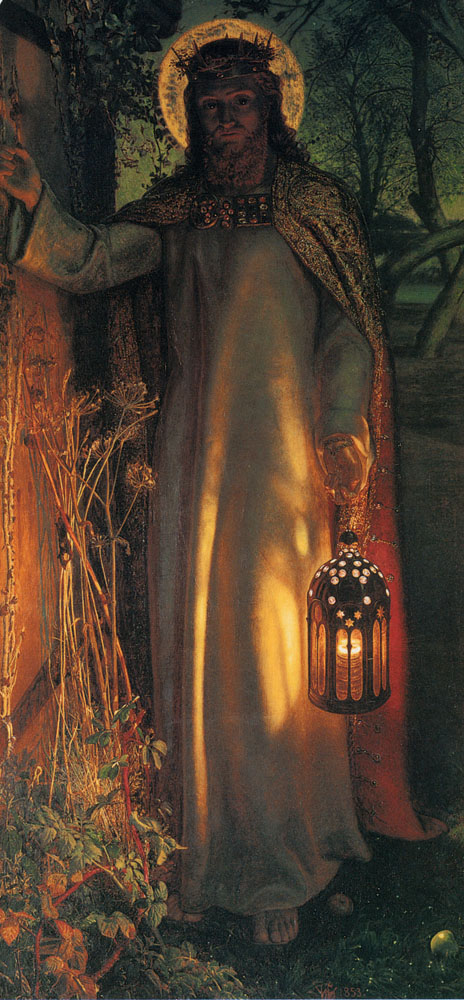
Book 7, Chapter 1
Descent
of the Holy Ghost; Mary’s Intuitive Vision of Him
How
the divine Right Hand showered upon the Queen of Heaven highest
Gifts, In order that She might labor in the holy Church; the Coming
Of the Holy Ghost; the copious Fruit of the Redemption and the
Preaching of the Apostles; the first Persecution of the Church, The
Conversion of saint Paul and the arrival of saint James In Spain; the
Apparition of the Mother of God in Saragossa, and the Founding of the
Pilgrimage of Our Lady of the Pillar.
In the company of the great Queen of
heaven, and encouraged by Her, the twelve Apostles and the rest of
the disciples and faithful joyfully waited for the fulfillment of the
promise of the Savior, that He would send them the Holy Ghost, the
Consoler, who should instruct them and administer unto them all that
they heard in the teaching of their Lord (John 14, 26). They were so
unanimous and united in charity, that during all these days none of
them had any thought, affection or inclination contrary to those of
the rest. They were of one heart and soul in thought and action.
Although the election of saint Mathias had occurred, the least
movement or sign of discord arose among those first–born
children of the Church; yet this was a transaction, which is
otherwise apt to arouse differences of opinion in the most
excellently disposed; since each is apt to follow his own insight and
does not easily yield to the opinion of others. But into this holy
congregation no discord found entrance, because they were united in
prayer, in fasting and in the expectation of the Holy Ghost, who does
not seek repose in discordant and unyielding hearts. In order that it
may be inferred, how powerful was this union in charity, not only for
disposing them toward the reception of the Holy Ghost, but for
overcoming and dispersing the evil spirits, I will say; that the
demons, who since the death of the Savior had lain prostrate in hell,
felt in themselves a new kind of oppression and terror, resulting
from the virtues of those assembled in the Cenacle. Although they
could not explain it to themselves, they perceived a new terrifying
force, emanating from that place, and when they perceived the effects
of the doctrine and example of Christ in the behavior of the
disciples, they feared the ruin of their dominion.
The Queen of the
angels, most holy Mary, in the plenitude of her wisdom and grace,
knew the time and predestined hour for the
sending of the Holy Ghost upon the apostolic college. When the days
of Pentecost were about to be fulfilled (Act 2, 1), (which happened
fifty days after the Resurrection of the Lord our Redeemer), the most
blessed Mother saw, how in heaven the humanity (John 14, 26) of the
Word conferred with the eternal Father concerning the promised
sending of the divine Paraclete to the Apostles, and that the time
predetermined by his infinite wisdom for planting the faith and all
his gifts in his holy Church, was at hand. The Lord also referred to
the merits acquired by Him in the flesh through his most holy Life,
Passion and Death, to the mysteries wrought by Him for the salvation
of the human race and to the fact, that He was the Mediator, Advocate
and Intercessor between the eternal Father and men, and that among
them lived his sweetest Mother, in whom the divine Persons were so
well pleased. He besought his Father also, that, besides bringing
grace and the invisible gifts the Holy Ghost appear in the world in
visible form, that so the evangelical law
might be honored before all the world; that the Apostles and
faithful, who were to spread the divine truth, might be encouraged,
and that the enemies of the Lord, who had in this life persecuted
despised and Him unto the death of the Cross, might be filled with
terror.
This petition of
our Redeemer in heaven was supported on earth by most holy Mary in a
manner befitting the merciful Mother of the faithful. Prostrated upon
the earth in the form of a cross and in profoundest humility, She
saw, how in that consistory of the blessed Trinity, the request of
the Savior was favorably accepted, and how, to fulfill and execute
it, the persons of the Father and the Son, as the Principle from
which the Holy Ghost proceeded, decreed the active mission of the
Holy Spirit; for to these Two is attributed the sending of
the third Person, because He proceeds from Both; and the third Person
passively took upon Himself this mission and consented to come into
the world.
On Pentecost
morning the blessed Virgin Mary exhorted the Apostles, the disciples
and the pious women, numbering about one hundred and twenty, to pray
more fervently and renew their hopes, since the hour was at hand in
which they were to be visited by the divine Spirit from on high. At
the third hour (nine o’clock), when all of them were gathered
around their heavenly Mistress and engaged in fervent prayer, the air
resounded with a tremendous thunder and the blowing of a violent wind
mixed with the brightness of fire or lightning, all centering upon
the house of the Cenacle. The house was enveloped in light and the
divine fire was poured out over all of that holy gathering (Acts 2,
2). Over the head of each of the hundred and twenty persons appeared
a tongue of that same fire, in which the Holy Ghost
had come, filling each one with divine influences and heavenly gifts
and causing at one and the same time the most diverse and contrary
effects in the Cenacle and in the whole of Jerusalem, according to
the diversity of the persons affected.
In the most holy
Mary these effects were altogether divine, and most wonderful in the
sight of all the heavenly courtiers; for as regard us men, we are
incapable of understanding and explaining them. The purest Lady was
transformed and exalted in God; for She saw
intuitively and clearly the Holy Ghost, and for a
short time enjoyed the beatific vision of he Divinity. Of his gifts
and divine influences She by Herself received more than all the rest
of the saints. Her glory for that space of
time, exceeded that of the angels and of the blessed.
She alone gave to the Lord more glory, praise and thanksgiving than
all the universe for the benefit of the descent of his Holy Spirit
upon his Church and for his having pledged
Himself so many times to send Him and through Him to govern it to the
end of the world. The blessed Trinity was so pleased with the conduct
of Mary on this occasion, that It considered Itself fully repaid and
compensated for having created the world; and not only compensated,
but God acted as if He were under a certain obligation for possessing
such a peerless Creature, whom the Father could look upon as his
Daughter, the Son as his Mother, and the Holy Ghost as his Spouse;
and whom (according to our way of thinking) He was now obliged to
visit and enrich after having conferred upon Her such high dignity.
In this exalted and blessed Spouse were renewed all the gifts and
graces of the Holy Spirit, creating new effects and operations
altogether beyond our capacity to understand.
The Apostles, as
saint Luke says (Acts 2, 11), were also replenished and filled with
the holy Ghost; for they received a wonderful increase of justifying
grace of a most exalted degree. The twelve Apostles were confirmed in
this sanctifying grace and were never to lose it. In all of them,
according to each one’s condition were infused the habits of
the seven gifts: Wisdom, Understanding, Science, Piety, Counsel,
Fortitude and Fear. In this magnificent
blessing, as new as it was admirable in the world, the twelve
Apostles were created fit ministers of the new Testament and founders
of the evangelical Church for the whole world: for this new grace
and blessing communicated to them a divine
strength most efficacious and sweet, which inclined them to practice
the most heroic virtue and the highest sanctity. Thus strengthened
they prayed, they labored willingly and accomplished the most
difficult and arduous tasks, engaging in their labors not with sorrow
or from necessity, but with the greatest joy and alacrity.
In all the rest of
the disciples and the faithful, who received the Holy Ghost in the
Cenacle, the Most High wrought proportionally and respectively the
same effects, except that they were not confirmed in grace like the
Apostles. According to the disposition of each the gifts of grace
were communicated in greater or less abundance in view of the
ministry they were to hold in the holy Church. The same proportion
was maintained in regard to the Apostles; yet saint Peter and saint
John were more singularly favored on account of the high offices
assigned to them: the one to govern the Church as its head, and the
other to attend upon and serve the Queen and Mistress of heaven and
of earth, most holy Mary. The sacred text of saint Luke says, that
the Holy Ghost filled the whole house in which this happy
congregation was gathered (Acts 2, 7), not only because all of them
were filled with the Holy Ghost and his admirable gifts, but because
the house itself was filled with wonderful light and splendor. This
plenitude of wonders and prodigies overflowed and communicated itself
also to others outside of the Cenacle; for it caused diverse and
various effects of the Holy Spirit among the inhabitants of Jerusalem
and its vicinity. All those, who with some piety had compassioned our
Savior Jesus in his Passion and Death, deprecating his most bitter
torments and reverencing his sacred Person, were interiorly visited
with new light and grace, which disposed them afterwards to accept
the doctrine of the Apostles. Those that were converted by the first
sermon of saint Peter, were to a great extent of the number of those
who, by their compassion and sorrow at the death of the
Lord, had merited for themselves such a great blessing. Others of the
just who were in Jerusalem outside of the Cenacle, also felt great
interior consolations, by which they were
moved and predisposed by new effects of grace wrought in each one
proportionately by the Holy Ghost.
Not less
wonderful, although more hidden, were some contrary effects produced
on that day by the Holy Ghost in Jerusalem. By the dreadful thunders
and violent commotion of the atmosphere and the lightnings
accompanying his advent, He disturbed and terrified the enemies of
the Lord in that city, each one according to his own malice and
perfidy. This chastisement was particularly evident in those who had
actively concurred in procuring the death of Christ, and who had
signalized themselves in their rabid fury against Him. All these fell
to the ground on their faces and remained thus for
three hours. Those that had scourged the Lord were suddenly choked in
their own blood, which shot forth from their veins in punishment for
shedding that of the Master. The audacious servant, who had buffeted
the Lord, not only suddenly died, but was hurled into hell body and
soul. Others of the Jews, although they did not die, were chastised
with intense pains and abominable sicknesses. These disorders,
consequent upon shedding the blood of Christ, descended to their
posterity and even to this day continue to afflict their children
with most horrible impurities. This chastisement became notorious in
Jerusalem, although the priests and pharisees diligently sought to
cover it up, just as they had tried to conceal the Resurrection of
the Savior. As these events, however, were not so important, neither
the Apostles nor the Evangelists wrote about them, and in the
confusion of the city the multitude soon forgot them.
Words of the Queen
The Virgin Mary
speaks to Sister Mary of Agreda, Spain
My daughter, in
small esteem and thankfulness do the children of the Church hold this
blessing of the Most High, by which, in
addition to sending of his Son their Master and Redeemer, He sent
also the Holy Ghost into his Church. So great was the love, by which
He sought to draw them to Himself, that, in order to make them
sharers of his divine perfections, He sent them first the Son, who is
wisdom (John 3, 16) and afterwards the holy Ghost, who is love, so
that all might be enriched in the manner in which they were capable.
The divine Spirit, in coming for the first time upon the Apostles and
the others gathered with them, intended it as a pledge and testimony,
that He would confer the same favor on the rest of the children of
the Church, of light and of the Gospel, and that He was ready to
communicate his gifts to all, if all will dispose themselves toward
receiving them. In witness to this truth the Holy Ghost came upon
many of the faithful in visible form and with visible effects (Act 8,
17; 10, 44; 11, 15), because they were truly faithful servants,
humble and sincere, pure and ready of heart to receive Him. Also in
our times He comes to many just souls, although not with such open
manifestation because it is neither necessary nor proper. The
interior effects and gifts are all of the same nature, acting
according to the disposition and state of the one who receives them.
Blessed is the soul which sighs and
aspires after this blessing and seeks to participate in this divine
fire which enkindles, enlightens and consumes all that is terrestrial
and carnal, which purifies and raises it up to new existence, union
and participation with God himself.
Book 7, Chapter 2
Sermon
of the Apostles. Mary’s Care for the Converts
On account of the visible and open
signs, by which the Holy Ghost descended upon the Apostles, the whole
city of Jerusalem with its inhabitants was stirred to wonder. When
the news of the astounding events at the house of the Cenacle spread
about, the multitude of the people gathered in crowds to know more of
the happenings (Acts 2, 6). On that day was being celebrated one of
the paschs or feasts of the Jews; and as well on this account, as on
account of the special dispensation of heaven, the city was crowded
with foreigners and strangers from all parts of the world. For to
them the Most High wished to manifest the wonders of the first
preaching and spreading of the new law of grace, which the incarnate
Word, our Redeemer and Master, had ordained for the salvation of men.
The sacred Apostles, who were filled
with charity by the plenitude of the gifts of the Holy Ghost and who
knew that all Jerusalem was gathering at the doors of the Cenacle,
asked permission of their Mistress and Queen to go forth and preach
to them; in order that such great graces might not even for a moment
fail to redound to the benefit of souls and to new glory of their
Author. They all left the house of the Cenacle and, placing
themselves before the multitudes, began to preach the mysteries of
the faith and of eternal life. Though until then they had been so shy
and seclusive, they now stepped forth with unhesitating boldness and
poured forth burning words, that like a flashing fire penetrated to
the souls of their hearers.
This miracle, that all the men of so
many different tongues then assembled in Jerusalem should hear the
Apostles in their own language, joined to the doctrine which they
preached, caused great astonishment. Yet I wish to remark, that
though all the Apostles, on account of the plenitude of science and
of gifts gratuitously received, were able to speak in the languages
of all nations, because that was necessary for the preaching of the
Gospel, yet on that occasion they all spoke the language of
Palestine. Using only this idiom they were understood by all the
different nationalities there present, as if they had spoken in the
several idioms. This miracle the Lord wrought at the time in order
that they might be understood and believed by those different
nations, and in order that saint Peter might not be obliged to repeat
in the different languages of those present, what he preached to them
concerning the mysteries of faith. He preached only once and all
heard and understood him, each in his own language, and so it
happened also with the other Apostles. For if each one had spoken in
the language of those who heard them, and which they knew as their
mother tongue, it would have been necessary for them to repeat what
they said at least seven or eight times according to the different
nationalities mentioned by saint Luke (Acts 2, 9). This would have
consumed a longer time than is intimated by the sacred text, and it
would have caused great confusion and trouble to repeat the same
doctrines over and over again or to speak so many languages on one
occasion; nor would the miracle be so intelligible to us as the one
mentioned.
The people who heard the Apostles did
not understand the miracle, although they wondered at hearing each
their own idiom. What saint Luke says about their speaking different
languages, must be understood as meaning, that the Apostles were then
and there able to understand them, as I shall mention later on (Acts
2, 4), because on that day, those that came to the Cenacle understood
them all speaking in their own language. But this miracle and
wonderment caused in their hearers different effects and opinions,
according to the dispositions of each one. Those that listened
piously received deep understanding of the Divinity and of the
Redemption of man, now so eloquently and fervently propounded to
them. They were moved eagerly to desire the knowledge of the truth;
by the divine light they were filled with compunction and sorrow for
their sins and with desire of divine mercy and forgiveness. With
tears in their eyes they cried out to the Apostles and asked what
they must do to gain eternal life. Others, who hardened their hearts,
altogether untouched by the divine truths preached by them, became
indignant at the Apostles, and instead of yielding to them, called
them innovators and adventurers. Many of the Jews, more impious in
their perfidy and envy, inveighed against the Apostles, saying they
were drunk and insane (Acts 2, 13). Among these were some of those
who had again come to their senses after having fallen to the ground
at the thunder caused by the coming of the Holy Ghost;
The three thousand, who were
converted by the first sermon of saint Peter, were from all the
nations then gathered in Jerusalem, so that forthwith all nations,
without excluding any, might partake of the fruits of the Redemption,
all might be gathered to the Church, and all might experience the
grace of the Holy Spirit; for the holy Church was to be composed of
all nations and tribes. Many were Jews, who had followed Christ our
Savior with kindly feelings and witnessed his sufferings and Death
with compassion, as I said above. Some also of those, who had
concurred in his Passion were converted, though these were few,
because many would not alter their disposition; for, if they had done
so, all of them would have been admitted to mercy and received pardon
for their error. After their preaching the Apostles retired that
evening within the Cenacle, in order to give an account to the Mother
of mercy, the purest Mary. With them also entered a great number of
the new children of the Church, in order that they might come to know
and venerate the Mother of mercy.
But the great Queen of the angels was
ignorant of nothing that had happened; for from her retreat She had
heard the preaching of the Apostles and She knew the secret hearts
and thoughts of all the hearers. The tenderest Mother remained
prostrate with her face upon the ground during the whole time,
tearfully praying for the conversion of all that subjected themselves
to the faith of the Savior, and for all the rest, if they should
consent to cooperate with the helps and the graces of the Lord. In
order to help the Apostles in their great work of beginning to
preach, and the bystanders in properly listening to them, the most
holy Mary sent many of her accompanying angels with holy
inspirations, encouraging the sacred Apostles and giving them
strength to inquire and to manifest more explicitly the hidden
mysteries of the humanity and Divinity of Christ our Redeemer. The
angels fulfilled all the commands of their Queen, while She Herself
exercised her own power and gifts according to the circumstances of
the occasion. When the Apostles came to Her with those copious
first–fruits of their preaching and of the Holy Ghost, She
received them with incredible joy and sweetness and with the most
loving kindness of a true Mother.
The Apostle saint Peter spoke to the
recently converted and said to them: “My brethren, and servants
of the Most High, this is the Mother of our Redeemer and Master,
Jesus Christ, whose faith you have received in acknowledging Him as
true God and man. She has given Him the human form, conceiving Him in
her womb, and She bore Him, remaining a Virgin before, during and
after his birth. Receive Her as your Mother, our Refuge and
Intercessor, for through Her you and we shall receive light,
direction, and release from our sins and miseries.” At these
words of the Apostle and at the sight of most holy Mary these new
adherents of the faith were filled with admirable light and
consolation; for this privilege of conferring great interior
blessings and of giving light to those who looked upon Her with pious
veneration, was renewed and extended in Her time when She was at the
right hand of her divine Son in heaven. As all of those faithful
partook of these blessings in the presence of their Queen, they
prostrated themselves at her feet and with tears besought her
assistance and blessing. But the humble and prudent Queen evaded this
latter, because of the presence of the Apostles, who were priests,
and of saint Peter, the Vicar of Christ. Then this Apostle said to
Her “Lady, do not refuse to these faithful what they piously
ask for the consolation their souls.” The blessed Mary obeyed
the head of the Church and in humble serenity of a Queen She gave her
blessing to the newly converted.
The love which filled their hearts
made them desire to hear from their heavenly Mother some words of
consolation; yet their humility and reverence prevented them from
asking for this favor. As they perceived how obediently She had
yielded to saint Peter, they turned to him and begged him to ask Her
not to send them away without some word of encouragement. Saint Peter
though he considered this favor very proper for the souls who had
been born again to Christ by his preaching and that of the other
Apostles, nevertheless, aware that the Mother of Wisdom knew well
what was to be done, presumed to say no more than these words; “Lady,
listen to the petitions of thy servants and children.” Then the
great Lady obeyed and said to the converts: “My dearest
brethren in the Lord, give thanks and praise with your whole hearts
to the Almighty God, because from among all men He has called and
drawn you to the sure path of eternal life in the knowledge of the
holy faith you have received. Be firm in your confession of it from
all your hearts and in hearing and believing all that the law of
grace contains as preached and ordained by its true Teacher Jesus, my
Son and your Redeemer. Be eager to hear and obey his Apostles, who
teach and instruct you, so that you may be signed and marked by
Baptism in the character of children of the Most High. I offer myself
as your handmaid to assist you in all that serves toward your
consolation, and I shall ask Him to look upon you as a kind Father
and to manifest to you the true joy of his countenance, communicating
to you also his grace.”
By this sweetest of exhortations
those new Children of the Church were filled with consolation, light,
veneration and admiration of what they saw of the Mistress of the
world; asking again for her blessing, they for that day left her
presence, renewed and replete with the wonderful gifts of the Most
High. The Apostles and disciples from that day on continued without
intermission their preaching and their miracles, and through the
entire octave they instructed not only the three thousand, who had
been converted on Pentecost day, but multitudes of others, who day by
day accepted the faith. Since they came from all parts of the world,
they conversed and spoke with each one in his own language; for as I
have said above, they spoke in various languages from that time on.
This grace was given not only to the Apostles, although it was more
complete and noticeable in them; also the disciples and all the one
hundred and twenty, who were in the Cenacle at the time, and also the
holy women, who received the Holy Ghost, were thus favored. This was
really necessary at the time on account of the great multitudes, who
came to the faith. Although all the men and many of the women came to
the Apostles, yet many, after having heard them, went to Magdalen and
her companions, who catechized, instructed and converted them and
others that came at the report of the miracles they performed. For
this gift was also conferred on the women, who, by the imposition of
hands, cured all the sicknesses, gave sight to the blind, tongue to
the mute, motion to the lame, and life to many of the dead. These and
other wonders were principally wrought by the Apostles, nevertheless
both their miracles and those of the women excited the wonder and
astonishment of all Jerusalem; so that nothing else was talked about
except the prodigies and the preaching of the Apostles of Jesus, of
his disciples, and followers of his doctrine.
This was the happy beginning and the
golden age of the evangelical Church, where the rushing of the stream
rejoiced the city of God (Ps. 45, 5) and the current of grace and the
gifts of the Holy Ghost fertilized this new paradise recently planted
by the hands of the Savior Jesus, while in its midst stood the tree
of life, most holy Mary. Then was faith alive, hope firm, charity
ardent, sincerity pure, humility true, justice most equitable, when
the faithful neither knew avarice nor followed vanity, when they trod
under foot vain pomp, were free from covetousness, pride, ambition,
which later prevailed among the professors of the faith, who while
confessing themselves followers of Christ, denied Him in their works.
It will be possible in this third
part to describe only a minute portion of the wonderful and great
works accomplished by the mighty Queen in the primitive Church; but
from those which I will describe, and from her life in this world
after the Ascension, much can be inferred. For She did not rest or
lose one moment or occasion of conferring some singular favor either
upon the whole Church or some of its members. For She consumed
Herself either in praying and beseeching her divine Son, without ever
experiencing a refusal; or in exhorting, instructing, counseling,
and, as Treasurer and Dispenser of the divine favors, distributing
graces in diverse manners among the children of the Gospel. Among the
hidden mysteries, which were made known to me concerning this power
of the blessed Mary, was also this, that in those first ages, during
which She lived in the holy Church, the number of the damned was
proportionately very small; and that, comparatively, in those few
years a greater number were saved than in many succeeding ages.
I acknowledge, that, if the lapse of
time had decreased the power, the charity and clemency of that
highest Sovereign, the good fortune of those living in that happy
time might cause a holy envy in those living by the light of faith in
our more protracted and less favored times. It is true we have not
the happiness of seeing Her, conversing with Her and listening to Her
with bodily senses; and in this respect those first children of the
Church were more fortunate. But let us all remember, that in the
heavenly knowledge and charity of this most loving Mother we were all
present to Her, also during those times (Vol. III, 78); for She saw
and knew us all in the order and succession in which we were be born
in the Church; and She prayed and interceded for us no less than for
those who lived in her times. Nor is She at present less powerful in
heaven, than She was then upon earth; nor less our Mother, than of
those first children; and She held us as her own, just as well them.
But alas! that our faith and our fervor and devotion should be so
very different! Not She has changed, nor is her love less ardent, nor
would we experience less of her intercession and protection, if in
troubled times we would hasten to her with the same sentiments of
humility and fervor, asking for her prayers and trustfully relying
upon Her for help, as was the case with those devoted Christians in
the first beginning. Without a doubt the whole Catholic Church would
then immediately experience the same assistance of the Queen
throughout the whole world.
Many of those new faithful, highly
impressed with her greatness by their conversation with the heavenly
Mistress, returned to present to Her jewels and the richest gifts;
especially the women despoiled themselves of fineries to lay them at
her feet. But She would receive or permit none of these gifts. When
it seemed to her appropriate not to refuse entirely, She secretly
inspired the minds of the givers to bring them to the Apostles, in
order that they might be equitably and justly distributed in charity
among the most poor and needy of the faithful. But the humble Mother
gratefully acknowledged them as if they had been given to Her. The
poor and the sick She received with ineffable kindness, and many of
them she cured of inveterate and long–standing infirmities.
Through the hands of saint John She supplied many secret wants, never
omitting the least point of virtue. As the Apostles and disciples
were engaged all day in preaching the faith and in converting those
that came, the great Queen busied Herself in preparing their food and
attending to their comfort; and at stated times She served the
priests on her knees and with incredible humility and reverence asked
to kiss their hands. This She observed especially with the Apostles,
knowing and beholding their souls confirmed in grace, endowed with
all that the Holy Ghost had wrought in them and exalted by their
dignity of being the highpriests and the founders of the Church (Eph.
2, 20). Sometimes She saw them clothed in great splendor, which
elicited from Her increased reverence and veneration.
Words of the Queen
The Virgin Mary
speaks to Sister Mary of Agreda, Spain
My daughter, in what thou hast come
to know of the events related in this chapter, thou wilt find a great
deal that points to the mystery of the predestination of souls. Be
convinced that, since the Redemption was so overflowing and copious,
it was sufficient for the salvation of all men (Rom. 5, 20). The
divine truth was made known to all, whoever heard its preaching or
who saw the effects of the coming of the Godman into the world.
Besides the outward preaching and knowledge of the remedy, all
received interior inspirations and helps in order to seek and accept
the means. You are surprised that, in spite of all this, only three
thousand were converted by the first sermon of the Apostle among all
that great multitude then in Jerusalem. It should cause a greater
surprise that in our times so few are converted to the way of eternal
life, as the Gospel is more widespread, its preaching is frequent,
its ministers numerous, the light of the Church clearer and the
knowledge of the divine mysteries more definite. With all this men
are blinder, the hearts more hardened, pride more inflated, avarice
more bold, and all the vices are practiced without fear of God and
without consideration.
In this most perverse and unhappy
state mortals cannot complain of the most high and equitable
providence of the Lord, who offers to all and every one his fatherly
mercy, and points out to them both the way of life and the way of
death; so that if any man hardens his heart, God can permit it in
strictest justice. The reprobate will have none but themselves to
blame, if afterwards, when there is no more time, they shall be
uselessly dismayed with what in opportune time they could and should
have known. If in the short and transient life, which is given to
them in order to merit the eternal, they close their eyes and ears to
the truth and to the light, and if they listen to the demon, giving
themselves up to all the promptings of his malice; if they thus abuse
the goodness and clemency of the Lord, what can they then allege as
their excuse? If they do not know how to pardon an injury and for the
slightest offense meditate the direst vengeance; if, for the sake of
increasing their property, they pervert the entire order of reason
and of natural brotherhood; if for a passing delight they forget the
eternal pains, and if, in addition to all this, they despise the
warnings, helps and admonitions sent to them by God to inspire them
with the fear of perdition and induce them to avoid it, how shall
they afterwards find fault with the divine clemency? Let then
mortals, who have sinned against God, undeceive themselves: without
penance there shall be no grace, without reform no pardon, without
pardon no glory. But just as these are not conceded to those that are
unworthy, so they are also never denied to those that are worthy; nor
is ever the mercy of God withheld from any one who seeks to obtain
it.
Book 7, Chapter 3
Baptism
of the Converts. the First Mass. Perpetual Presence of the Holy
Species in Mary
As the Apostles continued their
preaching and wonders in Jerusalem the number of the faithful
increased and, as saint Luke says in the fourth chapter of the Acts,
after seven days reached five thousand. All of them were busy
catechising the newcomers in preparation for Baptism, though that
work was done principally by the disciples; for the Apostles were
preaching and were conducting some controversies with the pharisees
and sadducees. The Queen, with the assistance of her angels and of
the other Marys, proceeded to prepare and adorn the hall, in which
her divine Son had celebrated the last Supper; and with her own hands
She cleansed it and scrubbed it for his return in the consecration to
be performed on the next day. She asked the owner to furnish it in
the same way as I have described for the Thursday of the Last Supper
and the devout host deferred to her wishes with deepest reverence.
She also prepared the unleavened bread and the wine necessary for the
consecration, together with the same paten and chalice in which the
Savior had consecrated. For the Baptism She provided pure water and
the basins for administering it with ease and reverence. Then the
loving Mother retired and passed the night in most fervent
aspirations, prostrations, thanksgiving and other exercises of
exalted prayer; offering to the eternal Father all that She, in her
heavenly wisdom, knew would help worthily to prepare Herself and all
the rest for the worthy administration of Baptism.
Early the next
day, which was the octave of the coming of the Holy Ghost, all the
faithful and catechumens gathered with the Apostles and disciples in
the house of the Cenacle. Saint Peter
preached to this gathering instructing them in the nature and
excellence of Baptism, the need in which they stood of it and its
divine effects, how they would, through it, be made members of the
mystical body of the Church, receive an interior character; be
regenerated to a new existence as children of God and inheritors of
his glory through the remission of sins and sanctifying grace. He
exhorted them to the observance of the divine law, to which they
subjected themselves by their own free will, and to humble
thanksgiving for this benefit and for all the others,
which they received from the hands of the Most High. He explained to
them also the mysterious and sacred truth of the holy Eucharist,
which was to be celebrated in the consecration of the true body and
blood of Jesus Christ, and he admonished
all those especially, who were to receive holy Communion after their
Baptism.
Through this sermon all the converts
were inspired with additional fervor; for their dispositions were
altogether sincere, the words of the Apostles full of life and
penetration, and the interior grace very abundant. Then the Apostles
themselves began to baptize amid the most devout and orderly
attention of the others. The catechumens entered one door of the
Cenacle and after being baptized, they passed out through another,
while the disciples and other of the faithful acted as ushers. The
most holy Mary was present at the entire ceremony, although keeping
to one side of the hall. She prayed for all of them and broke forth
in canticles of praise. She recognized the effects of Baptism in each
one, according to the greater or less degree of virtues infused in
their souls. She beheld them renewed and washed in the blood of the
Lamb, and their souls restored to a divine purity and spotlessness.
In witness of these effects, a most clear light visible to all that
were present, descended upon each one that was baptized. By this
miracle God wished to authenticate the first beginnings of this
Sacrament in his holy Church, and to console both those first
children and us, who are made partakers of this blessing without much
adverting to it or giving thanks for it.
This
administration of Baptism was continued on that day until all were
baptized, although there were about five thousand to receive it.
While the baptized were making their thanksgiving for this admirable
blessing, the Apostles with all the disciples and the faithful spent
some time in prayer. All of them prostrated
themselves on the ground adoring the infinite and immutable God, and
confessing their own unworthiness of receiving Him in the most august
sacrament of the Altar. In this profound humility and adoration they
prepared themselves more immediately for Communion. And then they
recited the same psalms and prayers which Christ had recited before
consecrating, imitating faithfully that sacred function just as they
had seen it performed by their divine Master. Saint Peter took in his
hands the unleavened bread, and, after raising up his eyes to heaven
with admirable devotion, he pronounced over the bread the words of
consecration of the most holy body of Christ, as had been done before
the Lord Jesus (II Cor. 9, 24). Immediately the Cenacle was filled
with the visible splendor of innumerable angels; and this light
converged in a most singular manner on the Queen of heaven and earth
and was seen by all those present. Then saint Peter consecrated the
chalice and performed all the ceremonies, which Christ had observed
with the consecrated body and blood, raising them up for the
adoration of all the faithful. The Apostle partook himself of the
Sacrament and communicated it to the eleven Apostles as most holy
Mary had instructed him. Thereupon, at the hands of saint Peter, the
heavenly Mother partook of it, while the celestial spirits then
present attended with ineffable reverence. In approaching the altar
the great Lady made three profound prostrations, touching the ground
with her face.
She returned to
her place, and it is impossible to describe in words the effects of
this participation of the holy Eucharist in this most exalted of
creatures. She was entirely transformed and elevated, completely
absorbed in this divine conflagration of the love of her most holy
Son, whom She had now received bodily. She remained in a trance,
elevated from the floor; but the holy angels shielded Her somewhat
from view according to her own wish, in order that the attention of
those present might not be unduly attracted by the divine effects
apparent in Her. The disciples continued to distribute holy
Communion, first to the disciples and then to the others
who had been believers before the Ascension. But of the five thousand
newly baptized only one thousand received Communion on that day;
because not all were entirely prepared or furnished with the insight
and attention required for receiving the
Lord in this great sacrament and mystery of the Altar.
To explain the
rare and prodigious favor, that the sacramental body of Christ in the
sacred species should be preserved continually in the bosom of Mary,
it is not necessary to seek for another cause than that underlying
all the other favors with which God distinguished this great Lady,
namely: that it was his holy will and according to his infinite
wisdom, by which He performs according to measure and weight all that
is befitting (Wis. 11, 21). Christian prudence and piety will be
content to know as a reason, that God had singled this mere Creature
out to be his natural Mother, and that therefore She alone, of all
creatures, deserved this distinction. As this miracle of her
Mothership was unique and without parallel, it would be shameful
ignorance to seek proofs of what the Lord did in Her by comparing it
with what He did or ever will do in other souls; since Mary alone
rises supereminently above the common order of all. Yet, though all
this is true, the Lord nevertheless wishes that by the light of faith
and by enlightenment, we seek the reasons of the propriety and
equity, according to which the powerful arm of the Almighty
wrought these wonders in his most worthy Mother,
so that in them we may know and bless Him in Her and through Her; and
so that we may understand, how secure our salvation, all our hope,
and our lot are in the hands of that powerful Queen, toward whom her
Son has directed all the excess of his love. In accordance with these
truths I will explain what has been made known to me of this mystery.
The heavenly
Mother lived thirty–three years in the company of her Son and
true God; and from the time when He was born of her virginal womb She
never left Him to the time of his death on the Cross. She nursed Him,
served Him, followed Him and imitated Him conducting Herself always
as a Mother, Daughter and Spouse, as a most faithful Servant and
Friend; She enjoyed the sight of Him, his conversation, his doctrine
and the favors, which, by all these meritorious services, She
attained in this mortal life. Christ ascended into heaven, and
the force of love and right reason demanded, that He should take to
heaven with Him his most loving Mother, in order that He should not
be deprived of Her there, nor She in this world of his presence and
company. But the most ardent love which both of Them had for men,
dissolved in a manner these bonds of union, inducing our kindest
Mother to return to the world in order to establish the Church; and
moving the Son to give his consent to her
absence from Him during that time. But as the Son of God was powerful
enough to recompense Her for this privation to a certain extent, it
became for Him an obligation of his love to make such a recompense.
And the fulfillment of this obligation would not have been so
publicly acknowledged or made so manifest, if He denied his blessed
Mother the favor of accompanying Her upon earth, while He remained
seated at the glory of the right hand of his Father. Besides, the
most ardent love of the blessed Mother, having been accustomed and
nourished in the presence of the Lord her Son, would have inflicted
upon Her insufferable violence, if for so many years She was to be
deprived of that kind of presence of Him,
which was possible during her stay in the Church.
From the
understanding which has been given me of the mystery of the love of
Christ the Lord for his most holy Mother and of the force with which
He was drawn toward Her, I would go so far as to say, that if
He had not found this way of remaining with Her in
the sacramental species, He would have come
down from the right hand of the Father to
the world in order to render companionship to his Mother while She
sojourned with his Church. And if it had been necessary that the
heavenly mansions and the celestial courtiers should be deprived of
the presence of the most sacred humanity from that time, He would
have considered that of less importance
than to be deprived of the company of his Mother. It is no
exaggeration to say this, when we all must confess, that in the
purest Mary the Lord found a correspondence and a degree of love more
conformable to his will than in all the blessed combined; and
consequently, his own love for Her exceeded his love for all others.
If the Shepherd of the Gospel leaves the ninety–nine sheep in
order to go in search of only one that is lost, and if we
nevertheless dare not say of Him that He leaves the greater for the
less; it should not cause wonder in us that this divine Shepherd
should leave all the rest of the saints in
order to be in the company of his most sincere Sheep, who clothed Him
with her own nature and raised and nourished Him as a Mother. Without
a doubt the eyes of his beloved Spouse and Mother would attract Him
in swiftest flight from those heights (Cant. 6,
4) to that earth, where He had lived, whither He before this come for
the salvation of the children of Adam, toward whom He was less
attracted, yea rather repelled by their sins and by the necessity of
suffering for them. If now He descended to live with his beloved
Mother, it would not be to suffer and die; but to enjoy the delights
of her company. Fortunately it is not necessary to rob heaven of his
presence; since by descending in sacramental form He could satisfy
both his own love and that of his most blessed Mother, in whose
heart, as in his couch, this true Solomon could take up his rest
without leaving the right hand of his eternal Father (Cant. 3, 7).
Words of the Queen
The Virgin Mary
speaks to Sister Mary of Agreda, Spain
Consider
attentively the common deception of mortals and the woeful damage
they suffer. For in the decisions of their will they ordinarily are
moved solely by what they perceive through the senses, and they
immediately proceed to act upon their choice without further
consideration or counsel. Since the sensible impressions immediately
move the animal passions and inclinations, it is evident that men do
not act according to right reason, but according to the impulse of
passion, excited by the senses and their objects. Hence, he that
considers only the injury and pain caused, is straightway moved to
vengeance; he that follows only his hankering after strange property,
as soon as he lays his eyes upon it, is impelled to injustice. In the
same manner act so many unfortunates, who follow the concupiscence of
the eyes, the movements of the flesh, and the pride of life
because these are the only things offered by the
world and the devil. In their blind deception they follow darkness as
their light, taste the bitter as sweet, take deadly poison for remedy
of their souls, and hold that for wisdom which is nothing but
diabolical and earthly ignorance. Do thou guard thyself against these
pernicious errors, and never resolve on anything, or govern thyself
by anything that is merely sensible or arising from sensible
impressions, nor pursue the advantages held out through them. In thy
actions take counsel first of all from the interior knowledge and
light communicated to thee by God, in order that thou mayest not go
blindly forward; and He shall always grant thee sufficient guidance.
Immediately seek the advice of thy superiors and teachers, if thou
canst do so before making thy choice. And if thy superior or teacher
is not at hand, seek counsel of others, even inferiors; for this is
more secure than to follow thy own will, which may be disturbed and
blinded by passion. This is the rule to be followed especially in the
exterior works, pursuing them with recollection, with secrecy, and
according to the demands of circumstances and fraternal charity as
they occur. In all of them it is necessary not to lose out of sight
the north–star of interior light, while moving in the profound
gulf of the companionship with creatures, where there is continual
danger of perishing.
Book 7, Chapter 4
Solicitude
of Mary for the Apostles and the Faithful
As the new law of grace continued to
spread in Jerusalem so the number of the faithful increased and the
new evangelical Church was augmented day by day (Acts 5, 14). In like
manner did the solicitude and attention of its great Queen and
Teacher, Mary, expand toward the new children engendered by the
Apostles through their preaching. As they were the foundation–stones
of the Church, on which the security of that building was to depend,
the most prudent Lady lavished especial care upon the apostolic
college. Her heavenly solicitude augmented in proportion to the wrath
of Lucifer against the followers of Christ and especially against the
Apostles, as the ministers of eternal salvation to the other
faithful. It will never be possible to describe or to estimate in
this life the blessings and favors conferred by Her upon the Church
and upon each of its mystical members. This happened especially in
regard to the Apostles and disciples; for as has been revealed to me
not a day or hour passed, in which she did not work for them many
wonders. I will relate in this chapter some of the events, which are
very instructive on account of the secrets of divine Providence
therein contained. From them we can form an estimate of the most
vigilant charity and zeal of the blessed Mary for souls.
All the Apostles She loved and served
with incredible affection and reverence, both on account of their
great holiness and on account of their dignity as priests, as
ministers, preachers and founders of the Gospel. During all their
stay in Jerusalem She attended upon them, counseled them and directed
them in the manner noted above. With the increase of the Church they
were obliged to go outside of Jerusalem in order to baptize and admit
to faith many of the inhabitants of the neighboring places; but they
always returned to the city, because they had purposely delayed
separating from each other, or leaving Jerusalem, until they should
receive orders to do so. From the Acts we learn that saint Peter went
Lydda and Jaffa, where he raised Tabitha from the dead and performed
other miracles, returning again to Jerusalem. Although saint Luke
relates these excursions after speaking of the death of saint Stephen
(of which I shall treat in the following chapter), yet during these
events, many were converted throughout Palestine, and it was
necessary, that the Apostles go forth to preach to them and to
confirm them in the faith, always returning in order to give an
account of their doings to their heavenly Mistress.
During all their journeys and
preachings the common enemy of all sought to hinder the spread of the
divine Word, or its fruit, by rousing the unbelievers to many
contradictions and altercations with the Apostles and their listeners
or converts; for it seemed to the infernal dragon more easy to
assault them, when he saw them removed and far from the protection of
their Mistress. So formidable the great Queen of the angels appeared
to the hellish hosts, that in spite of the eminent holiness of the
Apostles, Lucifer imagined them disarmed and at his mercy, easily
approachable to his temptations, as soon as they left the presence of
Mary. The furious pride of this dragon, as is written in Job (Job 41,
18), esteems the toughest steel as weak straw, and the hardest bronze
as a stick of rotten wood. He fears not the dart nor the sling; but
he dreaded the protection of the most blessed Mary, and in tempting
the Apostles, he waited until they should have left her presence.
But her protection failed them not on
that account; for the great Lady, from the watch–tower of her
exalted knowledge, reached out in every direction. Like a most
vigilant sentinel She discovered the assaults of Lucifer and hastened
to the relief of her sons and ministers of her Lord. When in her
absence She could not speak to the Apostles in any of their
afflictions, She immediately sent her holy angels to their assistance
in order to encourage, forewarn and console them; and sometimes also
to drive away the assaulting demons. All these the celestial spirits
executed promptly in compliance with the orders of their Queen. At
times they would do it secretly by inspirations and interior
consolations; at others, and more frequently, they manifested
themselves visibly, assuming most beautiful and refulgent bodies and
informing the Apostles of what was proper for the occasion, or what
had been ordered by their Mistress. This happened very often on
account of their purity and holiness and on account of the necessity
of favoring them with such an abundance of consolation and
encouragement. In all their difficulties and labors the most loving
Mother thus assisted them, besides offering up for them her continual
prayers and thanksgiving. She was the strong Woman, whose domestics
were sheltered by double garments; the Mother of the family, who
supplied all with nourishment and who by the labors of her hands
planted the vineyard of the Lord.
With all the other faithful She
proportionately exhibited the same care; and although there were many
converts in Jerusalem and in Palestine, She remembered them all in
their necessities and tribulations. And She thought not only of the
needs of their souls, but of those of the body, and many She cured of
most grave sicknesses. Others, whom She knew were not to be cured
miraculously, She visited and assisted in person. Of the poor She
took a still greater care, with her own hand administering to them
food on their beds of sickness, and seeing to their being kept clean,
as if She were the servant of all, infirm with the infirm. So great
was the humility, the charity and solicitude of the great Queen of
the world, that She refused no service or lowliest ministry to the
faithful, no matter how humble and insignificant the condition of
those applying for her assistance. She filled each one with joy and
consolation and lightened all their labors. Those upon whom on
account of their absence She could not personally attend, She
assisted secretly through her holy angels or by her prayers and
petitions.
In an especial manner her maternal
kindness exhibited itself to those who were in the agony of death;
for she attended many of the dying and would not leave them until
they had secured their eternal salvation. For those who went to
purgatory She offered up most fervent prayers and performed some
works of penance, such as prostrations in the form of a cross,
genuflections and other exercises, by which She satisfied for their
faults. Then She sent one of her angels in order to draw them from
purgatory and present them to her Son in heaven as his own and as the
fruits of his blood and Redemption. This happiness the Queen of
heaven procured to many souls during her stay upon earth. And, as far
as was made known to me, this favor is not denied in our days to
those, who during their earthly life dispose themselves properly for
meriting her presence, as I have written in another place. But, since
it would be necessary to extend the scope of this history very much,
if I were to describe how the most blessed Mary assisted many in the
hour of death, I cannot dilate upon this matter. I will recount only
one incident, in which She freed a girl from the jaws of the infernal
dragon. It is one which is so extraordinary and worthy of the
attention of us all, that it would not be right to omit it in this
history, or deprive ourselves of the lesson it contains.
Among the five thousand who were first converted
and who received Baptism in Jerusalem, there was also a young girl of
poor and humble parentage. This young woman, busying herself with her
household duties, took ill and for many days She dragged on in her
sickness without improvement. As happens to many other souls, she on
that account fell from her first fervor and in her neglect committed
some sins endangering her baptismal grace. Lucifer, who never relaxed
in his thirst for the ruin of souls, approached this woman and
attacked her with fiercest cruelty, being thus permitted by God to do
so for his greater glory and that of his most blessed Mother. The
demon appeared to her in the form of another woman and with much
cajolery told her to withdraw from those people, who were preaching
the Crucified, and not to believe anything they said, because it was
all falsehood; that, if she would not follow this advice, she would
be punished by the priests and judges who had crucified the Teacher
of that new and counterfeit religion; whereas, if she obeyed, she
would live peacefully and free from danger. The girl answered: “I
will do what thou sayest; but what shall I do in regard to that Lady,
whom I have seen with these men and women and who appears to be so
kind and peaceful? I desire her good will very much.” The demon
replied: “This One, whom thou mentionest, is worse than all the
rest, and Her thou must shun before all. It is most important, that
thou withdraw from her snares.”
Infested with this deadly poison of
the ancient serpent, the soul of this simple dove was brought near to
eternal death and her body, instead of being relieved, dropped into
more serious illness and was in danger of a premature end. One of the
seventy–two disciples, who visited the faithful, was informed
of the dangerous illness of the girl; for from her neighbors he heard
that one of his sect living in that house, was on the point of
expiring. The disciple entered in order to visit her and encourage
her according to her necessities. But the sick girl was so ensnared
by the demons, that she did not receive him or answer him one word,
although he zealously sought to exhort and instruct her; she on the
contrary sought to hide and stop her ears in order not to hear him.
From these signs the Apostle saw the imminent peril of this soul,
although he did not know the cause. Eagerly he hastened to report to
the Apostle saint John who without delay visited the patient,
admonishing her and speaking to her words of eternal life, if she
would only listen. But she treated him in the same way as the
disciple, obstinately resisting the efforts of both. The Apostle saw
many legions of devils surrounding the girl and, though they retired
at his approach, they failed not immediately afterward to renew the
illusion with which they had filled the unhappy girl.
Seeing her obstinacy, the Apostle
betook himself in great affliction to the most blessed Mary in order
to ask for help. Immediately the great Queen turned her interior
vision upon the sick one and She recognized the unhappy and dangerous
condition, in which the enemy had drawn that soul. The kind Mother
bewailed this simple sheep, thus deceived by the bloodthirsty
infernal wolf; and prostrate upon the floor She prayed for her
rescue.
The most blessed Mary continued for some time in
this petition; but she received no answer from the Lord, in order
that her invincible heart and her charity toward her neighbor might
be put to the proof. The most prudent Virgin bethought Herself of
what had happened to the prophet Eliseus (IV Kings 4, 34), who had
vainly sent his staff with his servant Giezi to resuscitate the boy
and had found that he himself must touch and stretch himself over his
body in order to restore him to life. Neither the angel nor the
Apostle were powerful enough to awaken from sin and from the stupor
of satan that unfortunate girl; therefore the great Lady resolved to
go and heal her in person. This resolve She recommended to the Lord
in her prayer, and, although She received no answer, She considered
that the work itself was a sufficient warranty to proceed. She arose
therefore to leave her room and to walk with saint John to the
dwelling of the sick woman, which was at some distance from the
Cenacle. But no sooner had She taken the first steps than the holy
angels, at the command of the Lord, approached to bear Her up on the
way. As God had not manifested his intention, She asked them, why
they thus detained Her; to which they answered: “There is no
reason why we should consent to thy walking through the city, when we
can bear Thee along with greater propriety.” Immediately they
placed her upon a throne of resplendent clouds, on which they bore
Her along and placed Her in the sick–room. The dying girl,
being poor and now speechless, had been forsaken by all and was
surrounded only by the demons, who waited to snatch off her soul.
But as soon as the Queen of angels made her
appearance all the evil spirits vanished like flashes of lightning
and as if falling over each other in their dismay. The powerful Queen
commanded them to descend into hell and remain there until She should
permit them to come forth, and this they were forced to do without
the least power of resistance. The kindest Mother then approached the
sick woman and taking her by the hand and calling her by her name,
spoke sweetest words of life. Instantly a complete change came over
the girl, and she began to breathe more freely and recover herself.
Then she said to the heavenly Mary: “My Lady, a woman came to
me, who persuaded me to believe, that the disciples of Jesus were
deceiving me and that I had better immediately separate myself from
them and from Thee; otherwise, if I should accept their way of life,
I should fall into great misfortune.” The Queen answered: “My
daughter, she, who seemed to thee a woman, was thy enemy, the devil.
I come in the name of the Most High to give thee eternal life; return
then to his true faith which thou hast received, and confess Him with
all thy heart as thy God and Redeemer, who, for thy salvation and
that of all the world, has died upon the Cross. Adore and call upon
Him, and ask Him for the pardon of thy sins.”
“All this,”
the patient answered, “I have believed before; but they told
me, it was very bad, and that they would punish me, if I should ever
confess it.” The heavenly Teacher replied: “My friend, do
not fear this deceit but remember that the chastisement and pains
which are really to be feared are those of hell, to which the demons
wish to bring thee, Thou art now very near death and thou canst avail
thyself of the remedy I now offer thee, if thou wilt only believe me;
and thou shalt thus free thyself of the eternal fire, which threatens
thee on account of thy mistake.” Through this exhortation and
the graces procured for this poor woman by Mary, she was moved to
abundant tears of compunction and implored the blessed Lady further
to assist her in this danger, declaring herself ready to obey all her
commands. Then the loving Mother made her openly profess her faith in
Jesus Christ and elicit an act of contrition in preparation for
confession. At the same time She sent for the Apostles to administer
the Sacraments to her. The sick girl, repeating the acts of
contrition and love, and invoking Jesus and Mary, who was directing
her, happily expired in the arms of her Protectress.
Words of the Queen
The Virgin Mary
speaks to Sister Mary of Agreda, Spain
My daughter, since
in this chapter thou hast particularly learnt of the matchless and
bitter sorrow, with which I bewailed the perdition of souls, thou
thyself must learn also what thou must do for the salvation of thy
own and that of others in order to imitate me in the perfection which
I require of thee. No torment, nor death itself, would I have
refused, if such had been necessary to save any of the damned, and to
save them, I would have esteemed all sufferings a sweet alleviation
in my most ardent charity. Hence, if thou dost not die of this kind
of sorrow, thou art at least not excused from willingness to suffer
all that the Lord sends thee for advancing this cause, or from
praying and laboring all in thy power to prevent any sin in thy
neighbor; and when thou canst not all at once obtain thy object, or
dost not know whether the Lord has heard thee, do not lose
confidence, but enliven it and persevere in thy efforts; for such a
solicitude can never displease Him, who desires the salvation of all
his redeemed more than thou. If nevertheless thou art not heard in
thy prayers, make use of the means which prudence and charity
require, and return anew to thy prayers. The Most High is always
attracted by this sort of charity for the neighbor and by the love
which seeks to hinder sin. He desires not the death of the sinner
(Ezech. 33, 11); and, as thou hast written, He Des not entertain an
absolute and antecedent decree of damning his creatures, but seeks to
save them all, if they not pursue perdition of their own free will.
Although He permits this in his justice as being inseparable from the
free will of man, it is against his inclination. Do not restrict
thyself in these petitions, and in those concerning temporal things,
pray that his holy will be done in all that is
proper.
If I desire that
thou labor with such fervor of charity for the salvation of thy
brethren, consider what thou must do to save thyself, and in what
estimation thou must hold thy own soul, for
which an infinite price was offered. I wish to admonish thee as a
Mother, that, when temptations and passions incline thee toward the
commission of any sin, no matter how small, remember the sorrows and
the tears which the knowledge of the sins of men and the desire to
prevent them has caused me. Do not thou cause the like in me, my
dearest; for although I am now incapable of that pain, yet thou
deprivest me of the accidental joy of seeing thee, to whom I
condescended to become a Mother and Teacher, really endowed with the
perfection taught in my school. If thou art unfaithful in this, thou
wilt frustrate my great desire of seeing thee please my divine Son
and accomplish his holy will in all its plenitude. By the infused
light which thou receivest, do thou ponder how great are any faults
thou mayest commit after being so favored and bound in duty to the
Lord and to myself. Dangers and temptations will not be wanting to
thee during the rest of thy earthly life; but in all of them remember
my teaching, my sorrows and my tears, and above all what thou owest
to my divine Son, who is so liberal toward thee in applying to thee
the fruit of his blood for the purpose of eliciting thy grateful
correspondence.
Book 7, Chapter 5
The
Death of Stephen. the Creed. Departure of the Apostle
Among the saints who were especially
fortunate in meriting the greater love of the Queen of heaven, there
was one by the name of Stephen, who belonged to the seventy–two
disciples; for from the very beginning of his following Christ our
Savior, She looked upon him with an especial love, placing him first,
or among the first, in her estimation. She immediately saw, that this
saint was chosen by the Master of life for the defense of his honor
and his holy name, and that he was to give up his life for him.
Moreover this courageous saint was of a sweet and peaceful
disposition; and he was rendered much more amiable and docile to all
holiness by the workings of grace. Such dispositions made him very
pleasing to the sweetest Mother; and whenever She found any persons
naturally of a peaceful and meek character, She was wont to say, that
they resembled her divine Son. On this account and on account of many
heroic virtues of saint Stephen She loved him tenderly, procured him
many blessings, and thanked the Lord for having created, called and
chosen such a one for the first–fruits of his martyrs. In
consideration of his coming martyrdom, revealed to Her by her divine
Son, her heart was filled with additional affection for this great
saint.
The blessed saint corresponded in most faithful
and deepest reverence with the benefits conferred upon him by Christ
our Savior and his heavenly Mother; for he was not only of a
peaceful, but of an humble heart, and those that are so disposed in
truth, are thankful for all benefits, even though they may not be so
great as those conferred on saint Stephen. He always entertained the
highest conceptions concerning the Mother of mercy, and in his high
esteem and fervent devotion he continued to seek her favor. He asked
information on many mysterious matters; for he was very wise, full of
the Holy Spirit and of faith, as is told us by saint Luke. The great
Lady answered all his inquiries, encouraged and exhorted him
zealously to work for the honor of Christ. In order to confirm him
more in his strong faith. Mary forewarned him of his coming martyrdom
and said: “Thou, Stephen, shalt be the first–born of the
martyrs, engendered by my divine Son and Lord by the example of his
death; thou shalt follow his footsteps, like a privileged disciple
his master, and like a courageous soldier his captain; and at the
head of the army of martyrs, thou shalt carry his banner of the
Cross. Hence it is meet thou arm thyself with fortitude under the
shield of faith, and be assured, that the strength of the Most High
shall be with thee in the conflict.”
This warning of the Queen of the
angels inflamed the heart of saint Stephen with the desire of
martyrdom. As is recorded in the Acts of the Apostles, he was filled
with grace and fortitude and wrought great wonders in Jerusalem.
Besides the Apostles saint Peter and saint John, no one except he
dared to dispute with the Jews. His wisdom and spirit they could not
resist, because he preached to them with an intrepid heart, refuted
and accused them oftener and more courageously than the other
disciples (Acts 68, 9). All this saint Stephen did with burning
desire of attaining the martyrdom of which he had been assured by the
great Lady. As if he were afraid of any one gaining this crown in
advance of him, he offered himself before all others to engage in the
disputes with the rabbis and teachers of the law of Moses, so eager
was he to defend the honor of Christ, for whom he knew he would lay
down his life. The infernal dragon, gradually becoming observant of
the ambitions of saint Stephen, directed his malignant attention
toward him and strove to hinder his attaining public martyrdom in
testimony of the faith of Christ. In order to destroy him, he incited
the most incredulous of the Jews to kill saint Stephen in secret.
But saint Stephen did not on that
account neglect preaching or arguing with the unbelieving Jews. As
these Jews could not murder him in secret, nor overcome his wisdom in
public, they vented their mortal hatred in seeking false testimony
against him (Acts 6, 1). They accused him of blasphemy against God
and against Moses, of inveighing continually against the holy temple
and the Law, and of asserting that Jesus would destroy as well the
one, as the other. As the witnesses loudly proclaimed their slander
and the people were being roused by their falsehoods, they brought
him into the hall where the priests were gathered as the judges of
these accusations. The presiding judge first took the deposition of
saint Stephen before the court. The saint took occasion to prove with
highest wisdom, that Christ was the true Messiah promised to them in
the holy Scriptures; and in conclusion he reprehended them for their
unbelief and hardness of heart so strongly, that they could find no
answer and, gnashing their teeth they stopped their ears, in order
not to be obliged to hear his words.
The Queen of heaven knew of the
seizure of saint Stephen; and, in order to animate him in her name
for the approaching conflict, She immediately sent him one of her
angels, even before he entered into dispute with the priests. Through
the holy angel saint Stephen sent Her answer, that he went with joy
to confess his Master and with unflinching heart to give his life for
Him, as he had always desired. Through the same messenger, he begged
Her, as his kindest Teacher and Mother, to assist him and, from her
retirement, to send him her blessing, since his not having been able
to obtain her parting benediction was the only regret he felt now,
when he was about to lay down his life according to Her wishes. These
last words of saint Stephen moved the maternal bosom of Mary to even
greater love and esteem than hitherto; and She desired to attend upon
him in person, at this hour, when her beloved disciple was to give up
his life for the honor and defense of his God and Redeemer. But the
blessed Mother hesitated at the difficulties, which would arise in
her passing through the streets of Jerusalem at a time of popular
excitement and also in finding an opportunity of speaking publicly to
saint Stephen.
She prostrated Herself in prayer,
begging the divine favor for her beloved disciple; and She presented
to the Lord her desire of helping him in the last hour. The clemency
of the Most High, which is always at the beck of his Spouse and
Mother and which was anxious to enhance the death of his faithful
disciple and servant Stephen, sent from heaven a multitude of angels,
who, with those of her guard, should carry their Queen to the place
where the saint then was. And immediately the mandate of the Lord was
executed: the angels placed Her upon a refulgent cloud and bore Her
to the tribunal, where the highpriest was examining into the charges
against saint Stephen. The vision of the Queen of heaven was hidden
from all except the saint. He however saw Her before him, supported
in the air by the holy angels in a cloud of heavenly splendor and
glory. This extraordinary favor inflamed anew the divine love and the
ardent zeal of this champion of the honor of God. In addition to the
joy of seeing Mary, the splendors of the Queen shone from the
countenance of saint Stephen, that it gleamed with wonderful beauty
and light.
At the end of this discourse, through the
intercession of the Queen and as a reward of the unconquered zeal of
saint Stephen, the heavens opened and the Savior appeared to him
standing at the right hand of the Father in the act of assisting him
in the conflict. Saint Stephen raised his eyes and said “Behold
I see the heavens opened and its glory, and in it I see Jesus at the
right hand of God himself” (Acts 7, 55). But the obdurate
perfidy of the Jews esteemed these words as blasphemy and they
stopped their ears in order not to hear them. As the punishment of
blasphemers according to the law, was death by stoning, they passed
upon him that sentence. Then they all surrounded him like wolves and
dragged him from the city with great haste and noise. At this
juncture the blessed Mother gave him her benediction and speaking to
him words of encouragement and endearment, She left him in charge of
her angels, whom She ordered to accompany him and to remain with him
until they should present his soul to the Most High. Only one of the
guardian angels, in company with those that had descended from heaven
as her escort to saint Stephen, now returned with Her to the Cenacle.
From her retirement the great Lady by an especial vision saw all that
happened in the martyrdom of saint Stephen: how they led him forth
from the city with great haste and violence, shouting that he was a
blasphemer worthy of death; how Saul was among them, more zealous
than the rest, guarding the vestments of those who had taken them off
to stone saint Stephen; how the shower of stones fell upon the saint
and wounded him, some of them remaining fixed in his head and stained
by his blood. Great and tender was the compassion of our Queen at
such cruel martyrdom; but still greater her joy in seeing saint
Stephen meeting it so gloriously. The kindest Mother failed him not
in her tearful prayers from her oratory. When the invincible martyr
saw himself near to death, he prayed: “Lord receive my spirit!”
Then, on his knees, he exclaimed with a loud voice: “Lord lay
not this sin to their charge!” (Acts 6, 55). In these prayers
he was supported by those of the blessed Mary, who was filled with
incredible joy to see the faithful disciple imitating so closely his
divine Master by praying for his enemies and persecutors and
commending his spirit into the hands of his Creator and Redeemer.
Covered with wounds from the shower
of stones thrown by the Jews, saint Stephen expired, while they
became still more hardened in their perfidy. Immediately the angels
of the Queen bore his pure soul to the presence of God in order to be
crowned with eternal honor and glory.
Saint Luke says,
that on the same day on which saint Stephen was stoned to death, a
great persecution arose against the Church in Jerusalem. He mentions
especially that Saul devastated it, searching through the whole city
for the followers of Christ in order to seize and denounce them
before the magistrates. This he did to many of the believers, who
were arrested, illtreated, and killed in this persecution. Although
it was very severe on account of the hatred, which the princes and
priests had conceived against the Christians, and on account of the
zealous efforts of Saul in his jealous defense of the
law of Moses (of which he himself speaks in the letter to the
Galatians 1, 13); yet there was another cause for this severity, the
effects of which they felt, though they knew not its origin.
The most prudent Mother bore in mind,
that the disciples, having dispersed to preach the name and faith of
Christ the Savior, had as yet no formula or express creed to guide
themselves uniformly and without differences, so that all the
faithful might believe one and the same express truths. Moreover She
knew that the Apostles would soon have to go forth over the whole
world in order to spread and establish the Church through their
preaching, and that it was proper that all should be united in their
doctrine, upon which was to be founded all the perfection of a
Christian life. Therefore the most prudent Mother of wisdom wished to
see all the divine mysteries, which the Apostles were to preach and
the faithful to believe, reduced to a short formula. For if those
truths were moulded into a few articles, they could more conveniently
be brought to the mind of all, the whole Church would be united in
one belief without any essential difference, and the whole spiritual
edifice of the Gospel would thus rest and be built up on the same
firm columns of one foundation. In order to prepare for this work,
the importance of which She recognized, She presented her wishes to
the Lord, who had inspired them, and for more than forty days She
persevered in this prayer with fasting, prostrations and other
exercises.
In answer to her prayer for the
Apostles, besides promising to assist them in preparing the symbol of
the faith, the Lord informed his Mother of the very wording of the
propositions or articles, of which the Creed was to be composed. Of
all this the most prudent Lady was well capable, as was explained
more fully in the second part of this history; but now, when the time
had arrived for executing what had been intended so long before, He
wished to renew it all in the purest heart of his virgin Mother, in
order that the fundamental truths of the Church might flow from the
lips of Christ himself. He inspired saint Peter his vicar and the
rest with the desire of setting up a symbol of the universal faith of
the Church. Accordingly they sought conference with the heavenly
Mistress concerning its opportuneness and the measures to be taken
for this purpose. They resolved to fast and persevere in prayer for
ten continuous days, in order to receive the inspiration of the Holy
Ghost in this arduous affair. Having completed these ten days, which
were also the last ten of the forty, in which the Queen had treated
with the Lord about this matter, the twelve Apostles met in the
presence of Mary, and saint Peter spoke to them as follows:
“My dear
brethren, the divine mercy, in its infinite goodness and through the
merits of our Savior and Master Jesus, has favored his holy Church by
gloriously multiplying its children, as we have seen and experienced
in this short time. For this purpose the Almighty has multiplied
miracles and prodigies and daily renews them through our ministry,
having chosen us (though unworthy) as the instruments of his divine
will in this work and for the glory and honor of his holy name.
Together with these favors He has sent us tribulations and
persecutions of the devil and of the world, in order that we may
imitate our Savior and Captain, and in order that the Church, evenly
ballasted, might reach more securely the port of rest and eternal
felicity. The disciples have evaded the wrath of the chief priest and
spread through the neighboring cities, preaching the faith of Christ
our Redeemer and Lord. We must also soon depart and preach throughout
the globe, according to the command of the Lord before ascending into
heaven (Matth. 28, 19). Just as there is but one Baptism in which men
are to receive this faith, so there must be but one doctrine, which
the faithful are to believe. Hence it is meet that we, who are as yet
gathered harmoniously in the Lord, define the truths and mysteries
which we are to propound expressly to all the nations of the world,
and thus, without difference of opinions, believe the same doctrines.
It is the infallible promise of the Lord, that where two or three
shall be gathered in his name, He shall be in their midst (Matth. 18,
20). Confiding in his word we firmly hope, that He will now assist us
with His divine Spirit to understand and define, in his name by an
unchangeable decree, the articles to be established in his holy
Church as long as it shall last, to the end of the world.”
All the Apostles consented to this
proposal of Peter. Then he celebrated a Mass, in which he gave
Communion to the most holy Mary and the Apostles whereupon they all,
including the blessed Mother, prostrated themselves in prayer calling
upon the Holy Ghost. After continuing their prayers for some time
they heard the rumbling of thunder, as on the first coming down of
the Holy Ghost upon the gathering of the faithful; at the same time
the Cenacle was filled with light and splendor and all were
enlightened by the Holy Spirit. Then the most blessed Mary asked each
of the Apostles to define a mystery, according as the divine Spirit
should inspire them. Thereupon saint Peter began, and was followed by
the rest in the following order:
1. Saint Peter: I believe in God, the
Father almighty, Creator of heaven and earth.
2. Saint
Andrew : And in Jesus Christ, his only Son, our Lord.
3 and 4. Saint James the Greater: Who
was conceived through operation of the Holy Ghost, born of the Virgin
Mary.
5. Saint John: Suffered under Pontius
Pilate, was crucified, died and was buried.
6 and 7. Saint Thomas: Descended into
hell, arose from the dead on the third day.
8. Saint James the Less: Ascended
into heaven, is seated at the right hand of God the Father almighty.
9. Saint Philip: From thence He shall
come to judge the living and the dead.
10. Saint Bartholomew: I believe in
the Holy Ghost.
11. Saint Matthew: In the holy
Catholic Church, the Communion of saints.
12. Saint Simon: Forgiveness of sins.
13. Saint Thaddeus: The resurrection
of the flesh.
14. Saint Mathias: Life everlasting.
Amen.
This symbol, which we ordinarily call the Creed,
the Apostles established after the martyrdom of saint Stephen and
before the end of the first year after the death of the Savior.
Afterwards, in order to refute the Arian and other heresies, the
Church, in the councils held on their account, explained more fully
the mysteries contained in the Apostles’ Creed and composed the
one now chanted in the Mass. But in substance both are one and the
same and contain the fourteen articles, which are the basis for the
catechetical teaching of the Christian faith and which we are all
bound to believe in order to be saved. As soon as the Apostles had
finished pronouncing this Creed, the Holy Ghost approved of it by
permitting a voice to be heard in their midst saying: “You have
decided well.” Then the great Queen and Lady of heaven with all
the Apostles gave thanks to the Most High; and She thanked also them
for having merited the assistance of the divine Spirit, so as to be
his apt instruments in promoting the glory of the Lord and the good
of the Church. In confirmation of her faith and as an example to the
faithful, the most prudent Mistress fell at the feet of saint Peter,
loudly proclaimed her belief in the Catholic doctrine as contained in
the symbol they had just now composed and formulated. This She did
for Herself and in the name of all the faithful, saying to saint
Peter: “My lord, whom I recognize as the vicar of my most holy
Son, in thy hands, I, a vile wormlet, in my name and in the name of
all the faithful of the Church, confess and proclaim all that thou
hast set down as the divine and infallible truth of the Catholic
church; and in it I bless and exalt the Most High, from whom it
proceeds.” She kissed the hands of the vicar of Christ and of
the rest of the Apostles. Thus She was the first one thus openly to
profess the Catholic faith after it had been formulated into
articles.
Already a full year had passed since
the death of Savior, and now the Apostles, by divine impulse, began
to consider about going forth to preach the faith throughout the
world; for it was time that the name of God be preached also to the
heathens and that they be taught the way of eternal salvation. In
order to consult the will of God in the assignment of the kingdoms
and provinces in which each one was to preach, they, upon the advice
of their Queen, resolved to fast and pray for ten successive days.
This practice of fasting and praying for ten days, which they had
observed immediately after Ascension in disposing themselves for the
coming of the Holy Ghost, they afterwards also retained in preparing
themselves for the more important undertakings. Having completed
these exercises, the vicar of Christ celebrated Mass and communicated
the most blessed Mary and the eleven Apostles, as they had done in
preparing the Creed and as is mentioned in the last chapter. After
Mass they all persevered with their Queen for some time in most
exalted prayer, ardently invoking the assistance of the holy Ghost
for the manifestation of his will in this matter.
At the ending of this prayer a wonderful light
descended upon the Cenacle surrounding them all and a voice was heard
saying: “My vicar Peter shall point out the province, which
falls to each one. I shall govern and direct him by my light and
spirit.” The appointments themselves the Holy Ghost left to
saint Peter in order to confirm anew his power as head and universal
pastor of the Church, and in order that the Apostles might
understand, that it was to be founded throughout the world under the
direction of saint Peter and his successors, to whom they were to be
subject as the vicars of Christ. They were filled with a new light
and knowledge concerning the peoples and provinces assigned to them
by saint Peter, and each one recognized the conditions, nature and
customs of the kingdoms singled out for him, being furnished
interiorly with the most distinct and abundant information concerning
each. The Most High gave them new fortitude to encounter labors;
agility for overcoming distances, although in this regard they were
afterwards to be frequently assisted by the holy angels; and the fire
of divine love, so that they be came inflamed like seraphim lifted
far beyond the condition and sphere of mere human creatures.
The most blessed Queen was present at
all these events, and the workings of the divine power in the
Apostles and in Herself, were very clear to Her; for on this
occasion, She experienced more of the divine influences than all of
them together. As She was exalted supereminently above all creatures,
so the increase of her gifts was in like proportion, transcending
immeasurably those of others. The Most High renewed in the purest
spirit of his Mother the infused knowledge concerning creatures, and
especially concerning the kingdoms and nations assigned to the
Apostles. She knew all that each one knew, and more than they all
together, because She received a personal and individual knowledge of
each person to whom the faith of Christ was to be preached; and She
was made relatively just as familiar with all the earth and its
inhabitants, as She was with Her oratory and all those that entered
therein.
As I have said
above and shall often repeat farther on, the knowledge of Mary was
the knowledge of a supreme Mistress, Mother, Governess and Sovereign
of the Church, which the Almighty had placed in her hands. She was to
take care of all, from the highest to the lowest of
the saints, and also of the sinners as the children of Eve. As no one
was to receive any blessing or favor from the hands of her Son except
through that of his Mother, it was necessary that this most faithful
Dispensatrix of grace should know all of her family, whom She was to
guard as a Mother, and such a Mother! The great Lady
therefore had not only infused images and knowledge of all this, but
She actually experienced it according as the disciples and Apostles
proceeded in their work of preaching. Before Her lay open all their
labors and dangers, and the attacks of the demons against them; the
petitions and prayers of these and of all the faithful, so that She
might be able to support them with her own,
or aid them through her angels or by Herself in person; for in all
these different ways did She render her assistance, as we shall see
in many events yet to be described.
I wish merely to state here, that
besides the knowledge derived by our Queen from infused images She
had also in God himself another knowledge of things through her
abstractive vision, by which She continually saw the Divinity. But
there was a difference between these two different kinds of
knowledge: since, when she saw in God the labors of the Apostles and
of all the faithful of the Church enjoying at the same time through
this vision a certain participation of the eternal beatitude, the
most loving Mother was not affected with the sensible sorrow and
compassion, which filled Her when perceiving these tribulations
themselves through images. In this latter kind of vision She felt and
bewailed them with maternal compassion. In order that this merit
might not be wanting in Her, the Lord conferred this second kind of
knowledge upon Her for all the time of her pilgrimage here below.
Joined with this plenitude of infused species and knowledge, She held
also absolute command of her faculties, as I said above, so that She
admitted no images or ideas except those that were absolutely
necessary for sustaining life, or for some work of charity or
perfection. With this adornment and beauty, which was patent to the
angels and saints, the heavenly Lady was an object of admiration,
inducing them to praise and glorify the Most High for the worthy
exercise of all his attributes in Mary, his most holy instrument.
A few days after
the partition of the earth among the Apostles, they began to leave
Jerusalem, especially those that were allotted the provinces of
Palestine, and first among them was saint James the greater. Others
stayed longer in Jerusalem, because the Lord wished the faith to be
preached there more abundantly and the Jews to be called before all
others, if they chose to come and accept the invitation to the
marriage–feast of the Gospel; for in the blessing of the
Redemption this people, although more ungrateful than the heathens,
was especially favored. Afterwards all the Apostles gradually
departed for the regions assigned to them, according as time and
season demanded and as obedience to the divine Spirit, the counsel of
the most holy Mary, and the order of saint Peter dictated. But before
leaving Jerusalem each one visited the holy places, such as the
garden, Calvary the holy Sepulchre, the place of the Ascension,
Bethany and the other memorable spots as far as possible. All of them
showed their veneration, moved even to tears and regarding with
loving wonder the very earth which the Savior had touched. Then they
visited the Cenacle, reverencing the spot where so many mysteries had
taken place. There, again commending themselves to her
protection, they took leave of the great Queen of
heaven. The blessed Mother dismissed them with words of sweetness and
divine virtue.
But admirable was
the solicitude and care of the most prudent Lady in showing Herself
as the true Mother of the Apostles at their
departure. For each of the twelve She made a woven
tunic similar to that of Christ our Savior, of a color between brown
and ash–gray; and in order to weave these garments She called
to aid her holy angels. She furnished each of the Apostles garments
the same kind and like to that formerly worn by their Master
Jesus: for She wished that they should imitate Him
even in their garments and thereby be known
exteriorly as his disciples. The great Lady procured also twelve
crosses of the height and size of each of the
Apostles and gave one to each, so that, as a witness of their
doctrine and for their consolation, they might carry it along in
their wanderings and their preaching. Each of the Apostles preserved
and carried this cross with him to his death; and as they were so
loud in praise of the Cross, some of the tyrants made use of this
very instrument to torment them happily to death.
Moreover the devout Mother furnished
each one of them with a small metal case, in which She placed three
of the thorns from the crown of her divine Son, some pieces of the
cloths in which She had wrapped the infant Savior, and of the linen
with which She had wiped and caught the most precious blood of the
Circumcision and Passion of the Lord. All these sacred pledges She
had preserved with the greatest care and veneration, as the Mother
and the Treasure–keeper of heaven. In order to consign them to
the Apostles She called them together and, with the majesty of a
Queen and the tenderness of a Mother, She told them that these
remembrances, with which She would enrich them on their departure,
were the greatest treasures in her possession; for in them they would
carry with them vivid remembrances of her divine Son and the certain
assurance, that the Lord loved them as his children and as ministers
of the Most High. Then She handed them those relics, which they
received with tears of consolation and joy. They thanked the great
Queen for these favors and prostrated themselves in adoration of the
sacred relics. Embracing they bade farewell to each other, saint
James being the first to depart and commence his mission.
Words of the Queen
The Virgin Mary
speaks to Sister Mary of Agreda, Spain
My daughter, by
the lessons contained in this chapter I wish to draw thee to deplore,
with inmost groaning and sighing and, if possible, with tears of
blood, the difference between the state of the holy Church in our
times and that of those primitive times; how its purest gold of
holiness has been obscured (Thren. 4.1,), and the ancient beauty in
which the Apostles have founded it, is lost; how it has sought
foreign and deceitful powders and paints to cover the horrid and
distorted ugliness of vice. In order that thou mayest penetrate into
this truth, thou must renew in thyself the consideration of the force
and eagerness, with which the Divinity seeks to communicate his
goodness and perfection to creatures. So great is the impetus of the
river of God’s goodness overflowing on mankind, that only the
free will of man, which He has given to Him in order to receive
benefits, can raise a dam against it; and whenever, through this free
will, man resists the influence and force of the divine Goodness, he
(according to thy mode of understanding), violates and grieves this
immense love in its very essence. But if creatures would place no
obstacle and permit its operations, the whole soul would be inundated
and satiated with participation in its divine essence and attributes.
It would raise the fallen from the dust, enrich the indigent children
of Adam, place them above all their miseries and seat them with the
princes of his glory (I Kings 2, 8).
From this, my
daughter, thou wilt understand two things unknown to human wisdom.
First, how pleasing to the highest Goodness is the service of those
who, with an ardent zeal for God’s glory, devote their labor
and solicitude toward removing the obstacles, which men place to
their own justification and the communication of
his favors. The satisfaction of the Most High, arising from this work
in others, cannot be estimated in mortal life. On this account the
ministry of the Apostles, the prelates, the priests and preachers of
the divine word are so highly exalted; for they succeed in office
those, who founded the Church and who labored in its preservation and
extension; all of them are to be co–operators and executors of
the immense love of God for the souls created to be sharers in his
Divinity. Secondly, thou must ponder the greatness and abundance of
the gifts and favors, which the infinite power communicates to those
souls, who do not hinder his most liberal bounty. The Lord manifested
this truth immediately in the beginnings of the evangelical Church,
when, to all those who were to enter into it, He showed his bounty by
such great prodigies and wonders, frequently sending the Holy Ghost
in a visible manner, working miracles in those
who accepted the Creed, and showering forth other hidden favors on
the faithful.
Book 7, Chapter 6
Conversion of Saint Paul
Saint Paul was distinguished in
Judaism for two reasons. The one was his own character, and the other
was the diligence of the demon in availing himself of his naturally
good qualities. Saint Paul was of a disposition generous,
magnanimous, most noble, kind, active, courageous and constant. He
had acquired many of the moral virtues. He glorified in being a
staunch professor of the law of Moses, and in being studious and
learned in it; although in truth he was ignorant of its essence, as
he himself confesses to Timothy, because all his learning was human
and terrestrial; like many Jews, he knew the law merely from the
outside, without its spirit and without the divine insight, which was
necessary to understand it rightly and to penetrate its mysteries.
The disposition of Saul was most
noble and generous, and therefore it appeared to him beneath his
dignity and honor to stoop to such crimes and act the part of an
assassin, when he could, as it seemed to him, destroy the law of
Christ by the power of reasoning and open justice. He felt a still
greater horror at the thought of killing the most blessed Mother, on
account of the regard due to Her as a woman; and because he had seen
Her so composed and constant in the labors and in the Passion of
Christ. On this account She seemed to him a magnanimous Woman and
worthy of veneration. She had indeed won his respect, together with
some compassion for her sorrows and afflictions, the magnitude of
which had become publicly known. Hence he gave no admittance to the
inhuman suggestions of the demon against the life of the most blessed
Mary. This compassion for Her hastened not a little the conversion of
Saul. Neither did he further entertain the treacherous designs
against the apostles, although Lucifer sought to make their
assassination appear as a deed worthy of his courageous spirit.
Rejecting all these wicked thoughts, he resolved to incite all the
Jews to persecute the Church, until it should be destroyed together
with the name of Christ.
As the dragon and his cohorts could
not attain more, they contented themselves with having brought Saul
at least to this resolve. The dreadful wrath of these demons against
God and his creatures can be estimated from the fact, that on that
very day they held another meeting in order to consult how they could
preserve the life of this man, whom they had found so well adapted to
execute their malice. These deadly enemies well know, that they have
no jurisdiction over the lives of men, and that they can neither give
nor take life, unless permitted by God on some particular occasion;
nevertheless they wished to make themselves the guardians and the
physicians of the life and health of Saul as far as their power
extended, namely, by keeping active his forethought against whatever
was harmful and suggesting the use of what was naturally beneficial
to the welfare of life and limb. Yet with all their efforts they were
unable to hinder the work of grace, when God so wished it. Far were
they from suspecting, that Saul would ever accept the faith of
Christ, and that the life, which they were trying to preserve and
lengthen, was to redound to their own ruin and torment. Such events
are provided by the wisdom of the Most High, in order that the devil,
being deceived by his evil counsels, may fall into his own pits and
snares, and in order that all his machinations may serve for the
fulfillment of the divine and irresistible will.
Such were the decrees of the highest
Wisdom in order that the conversion of Saul might be more wonderful
and glorious. With this intention God permitted satan, after the
death of saint Stephen, to instigate Saul to go to the chief priests
with fierce threats against the disciples of Christ, who had left
Jerusalem, and to solicit permission for bringing them as prisoners
to Jerusalem from wherever he should find them (Acts 9, 1). For this
enterprise Saul offered his person and possessions, and even his
life; at his own cost and without salary he made this journey in
order that the new Law, preached by the disciples of the Crucified,
might not prevail against the Law of his ancestors. This offer was
readily favored by the high–priest and his counselors; they
immediately gave to Saul the commission he asked, especially to go to
Damascus, whither, according to report, some of the disciples had
retired after leaving Jerusalem. He prepared for the journey, hiring
officers of justice and some soldiers to accompany him. But his by
far most numerous escort were the many legions of demons, who in
order to assist him in this enterprise, came forth from hoping that
with all this show of force and through Saul, they might be able to
make an end of the Church and entirely devastate it with fire and
blood. This was really the intention of Saul, and the one with which
Lucifer and his demons sought to inspire him and his companions. But
let us leave him for the present on his journey to Damascus, anxious
to seize all the disciples of Christ, whom he should find in the
synagogues of that city.
Nothing of all this was unknown to
the Queen of heaven; for in addition to her science and vision
penetrating to the inmost thoughts of men and demons, the Apostles
were solicitous in keeping Her informed of all that befell the
followers of her Son. Long before this time She had known that Saul
was to be an Apostle of Christ, a preacher to the gentiles, and a man
distinguished and wonderful in the Church; for all of these things
her Son informed Her, as I said in the second part of this history.
But as She saw the persecution becoming more violent and the glorious
fruits and results of the conversion of Saul delayed, and as She
moreover saw how the disciples of Christ, who knew nothing of the
secret intentions of the Most High, were afflicted and somewhat
discouraged at the fury and persistence of his persecution, the
kindest Mother was filled with great sorrow. Considering, in her
heavenly prudence, how important was this affair, She roused Herself
to new courage and confidence in her prayers for the welfare of the
Church and the conversion of Saul.
He permitted his blessed Mother to
suffer some sensible pain and, as it were, to fall into a kind of
swoon, yet her Son, who according to our way of understanding, could
not longer resist the love which wounded his heart, consoled and
restored Her by yielding to her prayers He said: “My Mother,
chosen among all creatures, let thy will be done without delay. I
will do with Saul as Thou askest, and will so change him, that from
this moment he will be a defender of the Church which he persecutes,
and a preacher of my name and glory. I shall now proceed to receive
him immediately into my friendship and grace.”
Thereupon Jesus Christ our Lord
disappeared from the presence of his most blessed Mother leaving Her
still engaged in prayer and furnished with a clear insight into what
was to happen. Shortly afterward the Lord appeared to Saul on the
road near Damascus, whither, in his ever increasing fury against
Jesus, his accelerated journey had already brought him. The Lord
showed himself to Saul in a resplendent cloud amid immense glory, and
at the same time Saul was flooded with light without and within, and
his heart and senses were overwhelmed beyond power of resistance
(Acts 9, 4). He fell suddenly from his horse to the ground and at the
same time he heard a voice from on high saying: “Saul, Saul,
why dost thou persecute Me?” Full of fear and consternation he
answered: “Who art Thou, Lord?” The voice replied: “I
am Jesus whom thou persecutes; it is hard for thee to kick against
the goad of my omnipotence.” Again Saul answered with greater
fear and trembling: “Lord, what dost Thou command and desire to
do with me?” The companions of Saul heard these questions and
answers, though they did not see the Savior. They saw the splendor
surrounding him and all were filled with dread and astonishment at
this sudden and unthought of event, and they were for some time
dumbfounded.
This new wonder, surpassing all that
had been seen in the world before, was greater and more far–reaching
than what could be taken in by the senses. For Saul was not only
prostrated in body, blinded and bereft of his strength so that, if
the divine power had not sustained him, he would have immediately
expired; but also as to his interior he suffered more of a change
than when he passed from nothingness into existence at his
conception, farther removed from what he was before than from
darkness, or the highest heaven from the lowest earth; for he was
changed from an image of the demon to that of one of the highest and
most ardent seraphim. This triumph over Lucifer and his demons had
been especially reserved by God for his divine Wisdom and
Omnipotence; so that, in virtue of the Passion and Death of Christ
this dragon and his malice might be vanquished by the human nature of
one man, in whom the effects of grace and Redemption were set in
opposition to the sin of Lucifer and all its effects. Thus it
happened that in the same short time, in which Lucifer through pride
was changed from an angel to a devil, the power of Christ changed
Saul from a demon into an angel in grace. In the angelic nature the
highest beauty turned into the deepest ugliness; and in the human
nature the greatest perversity into the highest moral perfection.
Lucifer descended as the enemy of God from heaven to the deepest
abyss of the earth, and a man ascended as a friend of God from the
earth to the highest heaven.
And since this triumph would not have
been sufficiently glorious, if the Lord had not given more than
Lucifer had lost, the Omnipotent wished to add in saint Paul an
additional triumph to his victory over the demon. For Lucifer,
although he fell from that exceedingly high grace which he had
received, had never possessed beatific vision, nor had he made
himself worthy of it, and hence could not lose what he did not
possess. But Paul, immediately on disposing himself for justification
and on gaining grace, began to partake of glory and clearly saw the
Divinity, though this vision was gradual. O invincible virtue of the
divine power! O infinite efficacy of the merits of the life and death
of Christ! It was certainly reasonable and just, that if the malice
of sin in one instant changed the angel into a demon, that the grace
of the Redeemer should be more powerful and abound more than sin
(Rom. 5, 20), raising up from it a man, not only to place him into
original grace, but into glory. Greater is this wonder than the
creation of heaven and earth with all the creatures; greater than to
give sight to the blind, health to the sick, life to the dead. Let us
congratulate the sinners on the hope inspired by this wonderful
justification, since we have for our Restorer, for our Father, and
for our Brother the same Lord, who justified Paul; and He is not less
powerful nor less holy for us, than for saint Paul.
During the time in which Paul lay
prostrate upon the earth, he was entirely renewed by sanctifying
grace and other infused gifts, restored and illumined proportionately
in all his interior faculties, and thus he was prepared to be
elevated to the empyrean heaven, which is called the third heaven. He
himself confesses, that he did not know whether he was thus elevated
in body or only in spirit (I Cor. 12, 4). But there, by more than
ordinary vision, though in a transient manner, he saw the Divinity
clearly and intuitively. Besides the being of God and his attributes
of infinite perfection, he recognized the mystery of the Incarnation
and Redemption, and all the secrets of the law of grace and of the
state of the Church. He saw the peerless blessing of his
justification and of the prayer of saint Stephen for him; and still
more clearly was he made aware of the prayers of the most holy Mary
and how his conversion had been hastened through Her; and that, after
Christ, her merits made him acceptable in the sight of God. From that
hour on he was filled with gratitude and with deepest veneration and
devotion to the great Queen of heaven, whose dignity was now manifest
to him and whom he thenceforth acknowledged as his Restorer. At the
same time he recognized the office of Apostle to which he was called,
and that in it he was to labor and suffer unto death. In conjunction
with these mysteries were revealed to him many others, of which he
himself says that they are not to be disclosed (II Cor. 7, 4). He
offered himself in sacrifice to the will of God in all things, as he
showed afterwards in the course of his life. The most blessed Trinity
accepted this sacrifice and offering of his lips and in the presence
of the whole court of heaven named and designated him as the preacher
and teacher of the gentiles, and as a vase of election for carrying
through the world the name of the Most high.
On the third day after the
disablement and conversion of Saul the Lord spoke in a vision to one
of the disciples, Ananias, living in Damascus (Acts 9, 10). Calling
him by name as his servant and friend, the Lord told him to go to the
house of a man named Judas in a certain district of the city and
there to find Saul of Tarsus, whom he would find engaged in prayer.
At the same time Saul had also a vision, in which he saw and
recognized the disciple Ananias coming to him and restoring sight to
him by the imposition of hands. But of this vision of Saul, Ananias
at that time had no knowledge. Therefore he answered: “Lord, I
have information of this man having persecuted thy saints in
Jerusalem and caused a great slaughter of them in Jerusalem; and not
satisfied with this, he has now come with warrants from the
high–priests in order to seize whomever he can find invoking
thy holy name. Dost thou then send a simple sheep like myself to go
in search of the wolf, that desires to devour it?” The Lord
replied: “Go, for the one thou judgest to be my enemy, is for
Me a vase of election, in order that he may carry my name through all
the nations and kingdoms, and to the children of Israel. And I can,
as I shall, assign to him what he is to suffer for my name.”
And the disciple was at once informed of all that had happened.
Relying on this word of the Lord,
Ananias obeyed and betook himself at once to the house, in which
saint Paul then was. He found him in prayer and said to him: “Brother
Saul, our Lord Jesus, who appeared to thee on thy journey, sends me
in order that thou mayest receive thy sight and be filled with the
Holy Ghost.” He received holy Communion at the hands of Ananias
and was strengthened and made whole, giving thanks to the Author of
all these blessings. Then he partook of some corporal nourishment, of
which he had not tasted for three days. He remained for some time in
Damascus conferring and conversing with the disciples in that city.
He prostrated himself at their feet asking their pardon and begging
them to receive him as their servant and brother, even as the least
and most unworthy of them all. At their approval and counsel he went
forth publicly to preach Christ as the Messias and Redeemer of the
world and with such fervor, wisdom and zeal, that he brought
confusion to the unbelieving Jews in the numerous synagogues of
Damascus. All wondered at this unexpected change and, in great
astonishment, said: Is not this the man, who in Jerusalem has
persecuted with fire and sword all who invoke that name? And has he
not come to bring them prisoners to the chief priests of that city?
What change then is this, which we see in him?
Saint Paul grew stronger each day and
with increasing force continued his preaching to the gathering of the
Jews and gentiles. Accordingly they schemed to take away his life and
then happened, what we shall touch upon later. The miraculous
conversion of saint Paul took place one year and one month after the
martyrdom of saint Stephen, on the twenty–fifth of January, the
same day on which the Church celebrates that feast; and it was in the
year thirty–six of the birth of our Lord; because saint
Stephen, as is said in chapter the twelfth, died completing his
thirty–fourth year and one day of his thirty–fifth;
whereas the conversion of saint Paul took place after he had
completed one month of the thirty–sixth; and then saint James
departed on his missionary journey, as I will say in its place.
Let us return to our great Queen and
Lady of the angels, who by means of her vision knew all that was
happening to Saul; his first and most unhappy state of mind, his fury
against the name of Christ, his sudden casting down and its cause,
his conversion, and above all his extraordinary and miraculous
elevation to the empyrean heaven and vision of God, besides all the
rest, that happened to him in Damascus. This knowledge was not only
proper and due to Her, because She was the Mother of the Lord and of
his holy Church and the instrument of this great wonder; but also
because She alone could properly estimate this miracle, even more so
than saint Paul and more than the whole mystical body of the Church;
for it was not just, that such an unheard of blessing and such a
prodigious work of the Omnipotent should remain without recognition
and gratitude among mortals. This the most blessed Mary rendered in
all plenitude and She was the first One, who celebrated this solemn
event with the acknowledgment due to it from the whole human race.
Words of the Queen
The Virgin Mary
speaks to Sister Mary of Agreda, Spain
My daughter, none of the faithful
should be ignorant of the fact, that the Most High could have drawn
and converted saint Paul without resorting to such miracles of his
infinite power. But He made use of them in order to show men, how
much his bounty is inclined to pardon them and raise them to his
friendship and grace, and in order to teach them, by the example of
this great Apostle, how they, on their part, should cooperate and
respond to his calls. Many souls the Lord wakes up and urges on by
his inspiration and help. Many do respond and justify themselves
through the Sacraments of the Church; but not all persevere in their
justification and still a fewer number follow it up or strive
perfection: beginning in spirit, they relax, and finish in the flesh.
The cause of their want of perseverance in grace and relapse into
their sins is their not imitating the spirit of saint Paul at his
conversion, when he exclaimed: “Lord, what is it Thou wishest
with me, and what shall I do for Thee?” If some of them
proclaim this sentiment with their lips, it is not from their whole
heart, and they always retain some love of themselves, of honor, of
possessions, of sensual pleasure or of some occasion of sin, and thus
they soon again stumble and fall.
But the Apostle was a true and living
example of one converted by the light of grace, not only because he
passed from an extreme of sin into that of wonderful grace and
friendship of God; but also because he cooperated to his utmost with
the call of God, departing at once and entirely from all his evil
dispositions and self–seeking and placing himself entirely at
the disposal of the divine will and pleasure. This total denegation
of self and surrender to the will of God is contained in those words:
“Lord, what dost Thou wish to do with me?” and in it
consisted, as far as depended upon him, all his salvation. As he
pronounced them with all the sincerity of a contrite and humbled
heart, he renounced his own will and delivered himself over to that
of the Lord, resolved from that moment forward to permit none of his
faculties of mind or sense to serve the animal or sensual life into
which he had strayed. He delivered himself over to the service of the
Almighty in whatever manner or direction should become known to him
as being the divine will, ready to execute it without delay or
questioning. And this he immediately set about by entering the city
and obeying the command of the Lord given through the disciple
Ananias. As the Most High searches the secrets of the human heart, He
saw the sincerity, with which saint Paul corresponded to his vocation
and yielded to his divine will and disposition. He not only received
him with great pleasure, but multiplied exceedingly his graces, gifts
and wonderful favors, which even Paul would not have received or ever
have merited without this entire submission to the wishes of the
Lord.
Conformably to these truths, my
daughter, I desire thee to execute fully my oft–repeated
commands and exhortations, that thou forget the visible, the apparent
and deceitful. Repeat very often, and more with the heart than with
the lips those words of saint Paul: “Lord, what dost Thou wish
to do with me?” For as soon as thou beginnest to do anything of
thy own choice, it will not be true, that thou seekest solely the
will of the Lord. The instrument has no motion or action except that
imparted to it by the artisan; and if it had its own will, it would
be able to resist and act contrary to the will of the one using it.
The same holds true between God and the soul: for, if it entertains
any desire of its own independently of God, it will militate against
the pleasure of the Lord. As He keeps inviolate the liberty of action
conceded to man, He will permit it to lead man astray, as soon as he
decides for himself without reference to the direction of his Maker.
The Mystical City of God
Book 8
Book 8, Chapter 1
The
Persecution of Herod and the Will of God Made Known to Mary Occasion
Her Sojourn in Ephesus
Describes
the Journey of the Most Blessed Mary with Saint John to Ephesus; the
Death and Chastisement of Herod; the Destruction of the Temple of
Diana; the Return of the Most Blessed Mary from Ephesus to Jerusalem;
the Instructions She gave to the Evangelists; the exalted State of
Her purest Soul before Her death; Her most blessed Transition,
Assumption and Coronation in heaven.
Saint John made preparations for the
journey and embarkation for Ephesus, and on the fourth day, which was
the fifth of January of the year forty, saint John notified Her that
it was time to leave; for there would be a ship and all things had
been arranged for the journey. The great Mistress of obedience,
without answer or delay, knelt down and asked permission of the Lord
to leave the Cenacle and Jerusalem; and then She proceeded to take
leave of the owner of the house and its inhabitants. It can easily be
imagined, how sorrowful they were at this leave–taking; for on
account of her most sweet conversation, and because of the favors and
blessings received at her liberal hands, all were held captives and
prisoners in love and veneration of Her, whereas now all at once they
were to be deprived of her consoling presence and of this rich
Treasure, the well spring of so many blessings. All of them offered
to follow and accompany Her; but as this was not opportune, they
asked Her to hasten her return and not to forsake forever this house,
which was entirely at her disposal. The heavenly Mother thanked them
for these pious and loving wishes by expressing her own humble love,
and She somewhat allayed their grief by giving them hope of her
return.
Then She asked permission of saint
John to visit the holy places of our Redemption and there to worship
and adore the Lord, who had consecrated them by his presence and his
precious blood. With the Apostle She made these sacred stations,
exhibiting incredible devotion and tears of reverent love, and saint
John, deeply consoled at being permitted to accompany Her, exercised
himself in heroic acts of virtue. The most blessed Mother saw at each
of the holy places the angels, who had been deputed to guard and
defend them; and anew She charged them to resist Lucifer and his
demons, lest they destroy or profane by irreverence those sacred
spots, as they desired and intended to do through the unbelieving
Jews. She told the angels to drive away by holy inspirations the bad
thoughts and diabolical suggestions, by which the infernal dragon
sought to excite the Jews and other mortals to blot out the memory of
Christ our Savior in those holy places, and She charged them with
this duty for all the future times, since the wrath of the evil
spirits against the places and the works of the Redemption endures
through all the ages. The holy angels obeyed their Queen and Mistress
in all that She ordained.
Having satisfied her piety, She asked
saint John on her knees to bless her for the journey, just as She had
been wont to do with her divine Son; for She continued to exercise
the same great virtues of obedience and humility toward the beloved
disciple, His substitute. Many of the faithful of Jerusalem offered
Her money, jewels, vehicles and all things necessary for her journey
to the sea and to Ephesus. The most prudent Lady humbly showed her
appreciation to all, but accepted nothing. For her journey to the sea
She made use of an unpretentious beast of burden, on which She was
carried along as the Queen of the virtues and of the poor. She
recollected the journeys and pilgrimages She had made with her divine
Son and with her spouse Joseph, and these recollections together with
the heavenly love, which had induced Her once more to travel,
awakened in her dove–like heart tender and devout affections.
They came to the harbor and
immediately embarked in the ship with other passengers. The great
Queen of the world was now for the first time upon the sea. She saw
and comprehended with clearness the vast Mediterranean and its
communication with the great ocean. She beheld its height and depth,
its length and breadth, its caverns and secret recesses, its sands
and minerals, its ebb and tide, its animals, its whales and fishes of
all sizes, and whatever other portentous animals it enclosed.
When this great panorama of
creatures, in which were reflected, as from a most clear mirror, the
greatness and omnipotence of the Creator, was presented to her
faculties filled with heavenly wisdom, her spirit winged its ardent
flight to the very being of God, so wonderfully reflected in those
creatures, and for all of them, and in all of them, She gave praise
and glory and magnificence to the Most High. With the compassion of a
most loving Mother for those who trusted their lives to the
indomitable fury of the sea in navigating over its waves, She most
fervently besought the Almighty to protect from its dangers all who
should call upon her name and ask for her intercession. The Lord
immediately granted this petition and promised to favor whoever upon
the sea should carry some image of Her and should sincerely look upon
this Star of the sea, most blessed Mary, for help in its perils.
Accordingly it will be understood, that, if the Catholics and the
faithful encounter ill success and perish in navigation, it is
because they ignore the favors to be obtained from the Queen of the
angels, or because on account of their sins they fail to remember Her
in the raging storms, or fail to seek her favors with sincere faith
and devotion; for neither can the word of the Lord ever fail, nor
will the great Mother ever deny assistance to those endangered by the
perils of the sea.
When they landed the great Queen
continued to work miracles equal to those wrought upon the sea. She
cured the sick and the possessed, who, as soon as they came into her
presence, were set free. I will not tarry to relate all these
wonders; for many books would be necessary and much time to describe
all the doings of the most blessed Mary and the favors of heaven,
which She dispensed as the instrument and medium of the omnipotence
of the Most High. I will record only those, which are necessary for
this history and which shall suffice to manifest in some measure the
unknown and wonderful works of our great Queen and Lady. In Ephesus
lived some Christians, who had come from Jerusalem. There were not
many, but on learning of the arrival of the Mother of Christ the
Redeemer, they hastened to pay Her a visit and offer their dwellings
and their possessions for her use. But the great Queen of virtues,
who sought neither ostentation nor temporal commodities, chose for
her dwelling the house of a few retired and poor women, who were
living by themselves free from the companionship of men. By the
intervention of the angels, they lovingly and generously placed their
home at the disposition of the Lady. In it they selected a very
retired room for the Queen and another for saint John, which these
Two occupied during their stay in Ephesus.
‘I’he
most blessed Mary thanked the owners who were to live with Her. Then
She retired to her room and, prostrate upon the ground as was usual
in her prayers, She adored the immutable essence of God, offering to
sacrifice Herself in his service in this
city and saying: “Lord God omnipotent, by the immensity of thy
Divinity Thou fillest all the heavens and the earth (Jer. 23, 34). I,
thy humble handmaid, desire to fulfill entirely thy holy will, on all
occasions, in all places, and at all times, in which thy Providence
shall deign to place me; for Thou art my only Good, my being and my
life, and toward thy pleasure and satisfaction tend all my thoughts,
words and actions.” The most prudent Mother perceived that the
Lord accepted her prayer and her offering, and that He responded to
her desires with divine power, ready to assist and govern Her always.
She continued her
prayer for the holy Church and laid out her plans for the assistance
of all the faithful. She called her angels and sent some of them to
aid the Apostles and disciples, whom She knew to be too much pressed
in the persecutions, raised by the demons through infidel men. In
those days saint Paul fled from Damascus before the attacks of the
Jews, as he himself mentions in the second epistle to the
Corinthians, where he says, that he was let down from the walls of
the city in a basket (IICor. 11, 23). To
defend him from these perils and those with which Lucifer threatened
him on his way to Jerusalem, the great Queen of angels sent her
angels to be his guard and protection; for the wrath and fury of hell
was roused against saint Paul more than against any of the other
Apostles. This is the journey the Apostle himself refers to in his
letter to the Galatians (Gal. 1, 18), where he says, that after three
years he went to Jerusalem to visit saint Peter. These three years
are not to be counted from the time of his conversion, but from the
time he had returned from Arabia to Damascus. This is to be inferred
from the text itself, for after stating that he returned from Arabia
to Damascus, he immediately adds, that after three years, he went up
to Jerusalem. If those three years are counted from the time before
his sojourn in Arabia, the text would occasion much confusion.
With greater clearness this may be
proved by computing the time of the death of saint Stephen and the
journey of the most blessed Virgin to Ephesus. For counting from the
day of his Nativity, saint Stephen died at the end of the
thirty–fourth year of Christ, but counting them from the day of
the Circumcision, as the Church does now, saint Stephen died seven
days before the completion of the thirty–four years, being the
seven days before the first of January. The conversion of saint Paul
happened in the year thirty–six, on the twenty–fifth of
January. If he had come to Jerusalem three years afterwards, he would
have found there the most holy Mary and saint John, while he himself
says, that he had not seen any one of the Apostles there, except
saint Peter and saint James the less, who was called Alpheus. If the
holy Queen and saint John had at that time been in Jerusalem saint
Paul would certainly not have missed seeing them, and he would have
mentioned at least saint John; yet he says, that he had not seen him.
The explanation is, that saint Paul came to Jerusalem in the year
forty, four years after his conversion, and a little less than a
month after the most blessed Mary had departed for Ephesus. Saint
Paul had entered the fifth year of his conversion and the other
Apostles, except the two he saw, had already left Jerusalem and were
preaching the Gospel of Christ, each one in his appointed province.
Conformably with this reckoning we must assume,
that saint Paul spent the first year after his conversion, or the
greater part of it, in journeying to Arabia and preaching the Gospel
there; then, the three following years, in Damascus. Hence the
evangelist Luke, in the ninth chapter of his Acts of the Apostles,
although he says nothing of Paul’s journey to Arabia,
nevertheless says that for many days after his conversion the Jews of
Damascus plotted to take his life, these many days referring to the
four years thus passed. Then he adds, that his disciples, aware of
the plots of the Jews, on a certain night lowered him in a basket
from the city walls and thus despatched him on his journey to
Jerusalem. There, although knowing of his miraculous conversion, the
Apostles and the new disciples, nevertheless retained a certain fear
and suspicion of his not persevering, because he had been such a
professed enemy of Christ, our Savior. Hence they at first held
themselves aloof from saint Paul, until saint Barnaby spoke to them
and introduced him to saint Peter, saint James and other disciples
(Acts 26, 27). Saint Paul prostrated himself at the feet of the vicar
of Christ, kissed them in acknowledgment of his errors and sins, and
begging to be admitted as one of his subjects and as a follower of
his Master, whose holy name and faith he desired to preach at the
cost of his blood.
From the fear and suspicion of saint
Peter and James concerning the perseverance of saint Paul we can
likewise deduct that he arrived in Jerusalem in the absence of the
most blessed Mary and saint John; for he would have presented himself
first of all to Her to allay suspicion against him; and the two
Apostles would likewise have first asked Her, whether they could
trust saint Paul. All of them would have been set at ease by the most
prudent Lady, as She was so solicitous and attentive in consoling and
instructing the Apostles, especially saint Peter. But since the great
Lady had already left for Ephesus, they had no one to assure them of
the constancy of saint Paul, until saint Peter reassured himself of
it at seeing him thus prostrate at his feet. Thereupon he was
received with great joy of soul by saint Peter and the other
disciples. All of them gave humble and fervent thanks to the Most
High, and commissioned saint Paul to preach in Jerusalem. This he
gladly did, to the astonishment of all the Jews who knew him. As his
words were like burning arrows, that penetrated into the hearts of
all that heard him, they were struck with terror; and in two days all
Jerusalem was roused by the news of his arrival, flocking to see him
with their own eyes.
Lucifer and his demons were not
asleep on this occasion, for they were visited by the Almighty with
an increase of torment at the arrival of saint Paul. The divine
power, so evident in him, oppressed and paralyzed the infernal
dragons. But as their pride and malice shall never be extinguished
through all the eternity of their existence (Ps. 73, 23), they were
roused to fury, as soon as they recognized this divine virtue as
flowing from Paul. Lucifer, with incredible rage, called together
many legions of the demons and exhorted them anew to rouse themselves
and exert all the forces of their malice for the entire destruction
of saint Paul, and not to leave any stone unturned in Jerusalem and
in all the world for the attainment of this object. The demons
without delay set about this work, exciting Herod and the Jews
against the Apostle, and directing their attention to the burning
zeal with which he began to preach in Jerusalem.
The great Mistress
of heaven perceived all this from her retirement in Ephesus; for in
addition to the knowledge of all things through her heavenly science,
She received information of all that happened to saint Paul from the
angels She had sent for his defense. As the most blessed Mother
expected the disturbance about to be raised by the malice of Herod
and the Jews, especially against saint Paul, and as, on the other
hand, She knew the importance of preserving his life for the
exaltation of God’s name and the spread of the Gospel, the
great Queen was filled with new solicitude and regret at being absent
from Palestine, where She could have rendered more immediate
assistance to the Apostles. Therefore She sought to furnish it so
much the more abundantly from Ephesus by multiplying her prayers and
petitions, her ceaseless tears and sighs, and by other measures
through the hands of her holy angels. In order to allay her
anxieties, the Lord one day in her prayer, assured Her, that He would
fulfill her petitions and protect the life
of saint Paul in this danger and in these assaults of the devil. And
so He did: for one day saint Paul, while praying in the temple, was
raised to an ecstatic rapture and filled with most exalted
enlightenment and understanding, wherein the Lord commanded him
immediately to leave Jerusalem and save his life from the hatred of
the unbelieving Jews.
Hence saint Paul sojourned in
Jerusalem at that time not more than fifteen days, as he himself says
in his epistle to Galatians (Gal. 1, 18). After some years he turned
thither from Miletus and Ephesus and was taken prisoner, and he
refers to this ecstasy in the temple and to the command of the Lord
to leave Jerusalem in the twenty–second chapter of the Acts. Of
this vision and command he informed saint Peter, as the head of the
apostolic college; and after consultation concerning his mortal
danger, he was secretly sent to Caesarea and Tarsus with orders to
preach indiscriminately to the gentiles, which he did. The most
blessed Mary was the instrument and Mediatrix of all these miraculous
favors. It was through Her that her Divine Son operated them, and
from Her, God received the proper thanks for the graces distributed
to the whole Church.
Having thus been reassured in regard
to the life of saint Paul, the most blessed Mother entertained the
hope that through the assistance of divine Providence She might save
the life of her cousin James, who was very dear to Her and who was
still in Saragossa, protected by the hundred angels She had appointed
for his guardians and companions at Granada. These holy angels
frequently went back and forth, bringing the petitions of the
Apostles to the most blessed Mary and her counsels back to him. In
this way saint James learned of the sojourn of the great Queen in
Ephesus. When he had brought the chapel or small temple of the Pillar
in Saragossa to a sufficient state of completion, he consigned it to
the care of the bishop and the disciples anointed by him here as in
other cities in Spain. Some months after the apparition of the Queen,
he departed from Saragossa, continuing to preach through different
provinces. Having come to Catalonia, he embarked for Italy, where
without much delay, he pursued his journey overland always preaching
until he again embarked for Asia, and ardently desiring to see there
the most blessed Mary, his Mistress and Protectress.
Saint James happily attained his object and
reached Ephesus. There he prostrated himself at the feet of the
Mother of his Creator, shedding copious tears of joy and veneration.
From his inmost heart he thanked Her for the peerless favors obtained
at her hands from the Most High during his travels and his preaching
in Spain and especially for her having visited him and conferred such
blessings upon him during her visits. The heavenly Mother, as
Mistress of humility, immediately raised him from the ground and said
to him: “My Master, remember thou art the anointed of the Lord
and his minister, and that I am an humble wormlet.” With these
words the great Lady fell on her knees and asked the blessing of
saint James as a priest of the Most High. He remained for some days
in Ephesus in the company of the most blessed Mary and of his brother
John, to whom he gave an account of all that had happened to him in
Spain. With the most prudent Mother during those days he held most
exalted colloquies and conferences, of which it will suffice to
record the following.
When the Jews,
through the conviction and conversion of Philetus and Hermogenes, saw
their hope frustrated, they were filled with new anger against the
apostle saint James and they were determined to put an end to his
life. For this purpose they bribed Democritus and Lysias, centurions
of the Roman militia, to furnish them with soldiers
for the arrest of the Apostle.
In order to hide their treachery they
were to raise a feigned quarrel or disturbance on a certain day
during his preaching and thus get him within their power. The
execution of this wicked design was left to Abiator, the high–priest
of that year and to Josias, a scribe of the same mind as the
high–priest. As they had planned, so they executed their
scheme; for, while the saint was preaching to the people about the
mystery of the Redemption, proving it to them with admirable wisdom
from the testimonies of the ancient writings and moving his audience
to tears of compunction, the priest and the scribe were roused to
diabolical fury. Giving the signal to the Roman soldiers, the priest
sent Josias to throw a rope around the neck of saint James and fell
upon him, proclaiming him a disturber of the people and the author of
a new religion in opposition to the Roman empire.
Democritus and Lysias thereupon
rushed up with their soldiers and brought the Apostle bound to Herod,
the son of Archelaus, whose malice had been roused interiorly through
the astuteness of Lucifer and exteriorly by the evil–minded and
hateful Jews. Thus doubly incited, Herod began against the disciples
of the Lord, whom he abhorred, the persecution mentioned by saint
Luke in the twelfth chapter of the Acts and sent his soldiers to
afflict and imprison them. He instantly commanded saint James to be
beheaded, as the Jews had asked. Incredible was the joy of the holy
Apostle at being seized and bound like his Master and at seeing
himself conducted to the place, where he was to pass from this mortal
life to the eternal through martyrdom, as he had been informed by the
Queen of heaven. He offered most humble thanks for this benefit and
publicly reiterated the open profession of his faith in Christ our
Lord. Remembering the petition he had made in Ephesus, that She be
present at his death, he called upon Her from his inmost Soul.
The most holy Mary from her oratory heard these
prayers of her beloved Apostle and cousin; for She was attentive to
all that happened to him and She helped and favored him with her own
efficacious petitions. During this her prayer, She saw a great
multitude of angels and heavenly spirits of all hierarchies
descending from heaven, part of them surrounding the Apostle in
Jerusalem as he was led to the place of execution, while numerous
others approached their Queen at Ephesus. Presently one of them
addressed Her saying “Empress of heaven and our Lady, the most
high Lord and God bids you immediately to hasten to Jerusalem to
console his great servant James, to assist him in his death to grant
all his loving and holy desires.” This favor the most blessed
Mary joyfully and gratefully acknowledged. She praised the Most High
for the protection granted to those who trust in his mercy and put
their lives in his hands. In the meanwhile the Apostle was led to
execution and on the way thereto he wrought great miracles upon the
sick and ailing and on some possessed by the demons. There were a
great number of them, because the rumor of his execution by Herod had
spread about and many of the unfortunates hastened to receive his
last ministrations and counsels. All that applied were healed by the
great Apostle.
In the meanwhile the holy angels placed their
Queen and Mistress upon a most refulgent throne, as they had done on
other occasions, and on it bore Her to Jerusalem and to the place of
the execution of saint James. The holy Apostle fell upon his knees in
order to offer his life to the Most High in sacrifice, and when he
raised his eyes toward heaven, he saw in the air near him the Queen
of heaven, whom he had been invoking in his heart. He beheld Her
clothed in divine splendors and great beauty, surrounded by
multitudes of the angels. At this heavenly spectacle the soul of
James was moved to new jubilee and his heart was seized with the
ardors of a divine love. He wished to proclaim the most blessed Mary
as the Mother of God and the Mistress of all creation. But one of the
sovereign spirits restrained him in this fervent desire and said:
“James, servant of our Creator, restrain within thy own bosom
these precious sentiments and do not manifest to the Jews the
presence and assistance of our Queen; for they are not worthy or
capable of knowing Her, but instead of reverencing Her will only
harden themselves in their hatred.” Thus advised the Apostle
forebore and moving his lips in silence, he spoke to the heavenly
Queen as follows:
“Mother of
my Lord Jesus Christ, my Mistress and Protectress, Thou consolation
of the afflicted and refuge of the needy, in this hour bestow upon
me, my Lady, thy so much desired blessing. Offer for me to thy Son
and Redeemer of the world, the sacrifice of my life, since I am
burning with desire to be a holocaust for the glory of his name. Let
today thy most pure and spotless hands be the altar of my sacrifice,
in order that it may become acceptable in the eyes of Him, who died
for me upon the cross. Into thy hands, and through them into the
hands of my Creator, I commend my spirit.” Having said these
words, and keeping his eyes fixed upon the most holy Mary, who spoke
to his heart, the holy Apostle was beheaded by the executioner. The
great Lady and Queen of the world (O wonderful condescension!)
received the soul of her beloved Apostle and placing it at her side
on the throne, ascended with it to the empyrean heavens and presented
it to her divine Son. As the most blessed Mary entered the heavenly
court with this offering, She caused new joy and accidental glory to
all the heavenly inhabitants and was received with songs of praise.
The Most High received the soul of James and placed it in eminent
glory among the princes of his people. The most blessed Mary,
prostrate before the throne of the Almighty, composed a song of
praise and thanksgiving for the triumphal martyrdom first gained by
one of his Apostles. On this occasion the great Lady did not see the
Divinity by intuitive vision, but by an abstractive one, such as I
have described before this. But the blessed Trinity filled Her with
new blessings and favors for herself and for the holy Church, for
which She had made great preparations. All the saints likewise
blessed her and then the holy angels brought Her back to her oratory
in Ephesus, where in the meanwhile an angel had impersonated Her. On
arriving the heavenly Mother of virtues prostrated Herself as usual
in order to give thanks to the Most High for all that
had happened.
The disciples of saint James during
the following night secured his sacred body and secretly brought it
to Jaffa, where by divine disposition they embarked with it for
Galicia in Spain. The heavenly Lady sent an angel to guide and
accompany them to the port, where according to the divine will they
were to disembark. Although they did not see the angel, they felt his
protection during the whole voyage and often in a miraculous manner.
Thus Spain, just as it owed its first instruction in the faith so
rooted in the hearts of its people, to the protection lavished by
most holy Mary upon the Apostle, now also owes to Her the possession
of his sacred body for its consolation and defense. Saint James died
in the year forty–one of our Lord, on the twenty–fifth of
March, five years and seven months after his setting out to preach in
Spain. According to this count and that which I gave above, the
martyrdom of saint James happened seven full years after the death of
our Savior Jesus Christ.
The death of saint James and the
haste of Herod in inflicting it, greatly increased the most impious
cruelty of the Jews; for in the savage brutality of the wicked king
saw a valuable means of pursuing their vengeance against the
followers of Christ the Lord. Lucifer and his demons were of like
opinion; they, by their suggestions, and the Jews, by their insistent
flatteries, persuaded him to seize upon saint Peter, which he readily
did in order to gain the good will of the Jews for his own temporal
ends. The demons stood in great awe of the vicar of Christ on account
of the power emanating from him against them; therefore they secretly
sought to hasten his imprisonment. Saint Peter, bound with many
chains, lay in the dungeon awaiting his execution after the holidays
of the Pasch (Acts 12, 4).
The dangerous crisis impending over the Church was
not unknown to the heavenly Mother, for, from her retreat in Ephesus,
by her clearest interior vision of all things, She saw all things
that passed in Jerusalem. She likewise increased her ardent requests,
her sighs, prostrations and bloody tears, supplicating the Lord for
the liberation of saint Peter and the protection of the holy Church.
These prayers of the blessed Mother penetrated the heavens and
wounded the heart of her Son Jesus our Savior. In response the Lord
descended in person to her oratory, where She was lying prostrate
with her virginal face upon the ground mingling with the dust. The
sovereign King entered and raised Her lovingly from the ground,
saying: “My Mother, moderate thy sorrow and ask whatever thou
wishest; for I shall grant it all and thou shalt find grace in my
eyes to obtain it. I desire that thou act according to thy wishes,
using the powers I have given Thee: do or undo whatever is necessary
for the welfare of my Church, and Thou mayest be sure, that all the
fury of the demons will be turned toward Thee.” She thanked him
for this new favor and offered to undertake the battles of the Lord
for his faithful, saying: “Most High Lord, hope and life of my
soul, prepared is the heart and spirit of thy servant to labor for
the souls bought with thy blood and life. Although I am but useless
dust, I know Thee to be infinite in power and wisdom; with the favor
of thy assistance I fear not the infernal dragon. Thou wishest me to
dispose and act in thy name for the welfare of the Church, I now
command Lucifer and his ministers of wickedness, who are disturbing
the Church, to descend to the abyss and there be silenced until it
shall please thy Providence to permit their return to the earth.”
This command of the Queen of the world in Ephesus was so powerful,
that at the very moment of her issuing it, all the demons in
Jerusalem were precipitated into hell, the whole multitude descending
into the eternal caverns without power of resisting the divine force
exerted through the most blessed Mary.
Lucifer and his companions knew that this
chastisement proceeded from our Queen, whom they called their enemy
because they dared not pronounce her name. They remained in hell,
confounded and dismayed as on other occasions, until they were
permitted to rise in order to battle against Mary, as will be related
further on. During that time they consulted anew about the means of
attaining this end. Having obtained this triumph over the demons the
most blessed Mary bethought Herself of overcoming likewise the
opposition of Herod and the Jews, and therefore She said to her
divine Son: “Now, my Son and Lord, if it is thy will, let one
of thy holy angels be sent to deliver thy servant Peter from prison.”
Christ Our Lord approved of her wish and, at the orders of both these
Sovereigns, one of the heavenly spirits there present hastened to
liberate saint Peter from his prison in Jerusalem.
The angel executed these orders very swiftly.
Coming to the dungeon, he found saint Peter fastened with two chains,
guarded by two soldiers at his side and by a number of other soldiers
at the entrance of the prison. Pasch had already been celebrated and
it was the night before he was to be executed according to the
sentence passed upon him. But the Apostle was so little disturbed
that he was sleeping with as much unconcern as his guards (Acts 12,
6). When the angel arrived, he was obliged to wake him by force and
while saint Peter was still drowsy, said to him: “Arise
quickly; put on thy girdle and thy shoes, take thy mantle and follow
me. Peter found himself free of the chains and, without understanding
what was happening to him and ignorant of what this vision could
mean, followed the angel. Having conducted him through some streets,
the angel told him, that the Almighty had freed him from prison
through the intercession of his most blessed Mother, and thereupon
disappeared. Saint Peter, coming to himself understood the mystery
and gave thanks to the Lord for this favor.
Saint Peter thought it best first to
give an account of his liberation and consult with James the Less and
others of the faithful, before seeking safety in flight. Hastening
his steps he came to the house of Mary, the mother of John, who was
also called Mark. This was the house of the Cenacle, where many of
the disciples had gathered in their affliction. Saint Peter called to
them front the street, and a servant–maid, by the name of
Rhode, descended to see who was calling. As She recognized the voice
of Peter, She left him standing at the door outside and fled
excitedly to the disciples, telling them that it was Peter. They
thought it some foolish misunderstanding of the servant; but she
maintained, that it was Peter; so they, far from guessing the
liberation of Peter, concluded that it might be his angel. During
these questions and answers saint Peter was in the street clamoring
at the door, until they opened it and with incredible joy and
gladness saw the holy Apostle and head of the Church freed from the
sorrows of prison and death. He gave them an account of all that had
happened to him through aid of the angel, in order that they might in
strict secrecy notify saint James and all his brethren. Foreseeing
that Herod would search for hint with great diligence, they
unanimously decided that he leave Jerusalem that very night and not
return, lest he should be taken in some future search. Saint Peter
therefore fled, and Herod, having instituted a search in vain,
chastised the guards, and was roused to new fury against the
disciples. But on account of his pride and impious designs, God cut
short his activity by a severe punishment, of which I shall speak in
the following chapter.
In her anxieties and in her reliance upon the
divine help our Queen labored incessantly in prayers and tears,
travailing in her clamors as I have shown on other occasions. Ever
governed by her most exalted prudence, She spoke to one of the
highest angels of her guard, saying: “Minister of the Most High
and creature of his hands, my solicitude for the holy Church strongly
urges me to seek its welfare and progress. I beseech thee to ascend
to the throne of the Most High, represent to Him my affliction; ask
Him in my name, that I may be permitted to suffer instead of his
faithful servants and that Herod be prevented from executing his
designs for the destruction of the Church.” Immediately the
angel betook himself to the Lord with this message, while the Queen
of heaven, like another Esther, remained in prayer for the liberty
and salvation of her people and of Herself. (Esther 4, 16). The
heavenly ambassador was sent back by the blessed Trinity with the
answer: “Princess of heaven, the Lord of hosts says, that Thou
art the Mother, the Mistress and the Governess of the Church, and
that Thou holdest his power while Thou art upon earth; and He desires
Thee, as the Queen and Mistress of the heaven and earth, to execute
sentence upon Herod.”
In her humility the most blessed Virgin was
somewhat disturbed by this answer, and urged by her charity, She
replied to the angel: “Am I then to pronounce sentence against
a creature who is the image of the Lord? Since I came forth from his
hands I have known many reprobates among men and I have never called
for vengeance against them; but as far as I was concerned, always
desired their salvation if possible, and never hastened their
punishment. Return to the Lord, angel, and tell Him that my tribunal
and power is inferior to and dependent upon his, and that I cannot
sentence any one to death without consulting my Superior; and if it
is possible to bring Herod to the way of Salvation, I am willing to
suffer all the travails of the world according to the disposition of
his divine Providence in order that this soul may not be lost.”
The angel hastened back with this second message of his Queen and
having presented it before the throne of the most blessed Trinity,
was sent back to Her with the following answer: “Our Mistress
and Queen, the Most High says, that Herod is of the number of the
foreknown, since he is so obstinate in his malice, that he will take
no admonition or instruction; he will not cooperate with the helps
given to him; nor will he avail himself of the fruits of the
Redemption, nor of the intercession of the saints, nor of thy own
efforts, O Queen and Lady, in his behalf.”
For the third time
the most holy Mary despatched the heavenly prince with still another
message to the Most High, saying: “If it must be that Herod die
in order to hinder him from persecuting the Church, do thou, O angel,
represent to the Almighty, how in the infinite condescension of his
charity, He has granted me in mortal life to be the Refuge of the
children of Adam, the Advocate and Intercessor of sinners; that my
tribunal should be that of kindness and clemency for the refuge and
assistance of all that seek my intercession; and that all should
leave it with the assurance of pardon in the name of my divine Son.
If then I am to be a loving Mother to men, who are the creatures of
his hands and the price of his life–blood, how can I now be a
severe judge against one of them? Never was I charged with dealing
out justice, always mercy, to which all my heart inclines; and now it
is troubled by this conflict of love with
obedience to rigorous justice. Present anew, O angel, this my anxiety
to the Lord, and learn whether it is not his pleasure that Herod die
without my condemning him.”
The holy messenger
ascended for the third time and the most blessed Trinity listened to
his message with the plenitude of pleasure and complacency at the
pitying love of his Spouse. Returning, the
angel thus informed the loving Mistress: “Our Queen, Mother of
our Creator and my Lady, the almighty
Majesty says that thy mercy is for those mortals who wish to avail
themselves of thy powerful intercession, not for those who despise
and abhor it like Herod; that Thou art the Mistress of the Church
invested with all the divine power, and that therefore it is meet
Thou use it as is opportune: that Herod must die; but it shall be
through thy sentence and according to thy order.” The most
blessed Mary answered: “Just is the Lord and equitable are his
judgments (Ps. 118, 137). Many times would I suffer death to rescue
this soul of Herod, if he himself would not by his own free will make
himself unworthy of mercy and choose perdition. He is a work of the
Most High (Job 10, 8), formed according to his image and likeness
(Gen. 1, 27); he was redeemed by the blood of the Lamb, which taketh
away the sins of the world (Apoc. 1, 5). But I set aside all this
and, considering only his having become an obstinate enemy of God,
unworthy of his eternal friendship, by the most equitable justice of
God, I condemn him to the death he has merited, in order that he may
not incur greater torments by executing the evil he has planned.”
This wonder the Lord wrought for the glory of his
most blessed Mother and in witness of his having constituted Her as
the Mistress of all creatures with supreme power to act as their
Sovereign like her divine Son. I cannot explain this mystery better
than in the words of the Lord in the fifth chapter of saint John,
where He says of Himself: “The son cannot do anything that the
Father does not; but He does the same, because the Father loves Him;
and if the Father raises the dead, the son also raises whom he
pleases, and the Father has given to the Son to judge all, in order
that just as all honor the Father, they may also honor the Son; for
no one can honor the Father without honoring the Son.” And
immediately He adds: that He has given Him the power of judging,
because He is the Son of man, which He is through his most blessed
mother. On account of the likeness of the heavenly Mother to her Son
(of which I have often spoken) the relation or proportion of the
Mother with the Son in this power of judgment must be transferred to
the Mother in the same manner as that of the Son from the Father.
Mary is the Mother of mercy and clemency to all the children of Adam
that call upon Her; but in addition to this the Almighty wishes it to
be understood that She possesses full power of judging all men and
that all should honor Her, just as they honor her Son and true God.
As his true Mother He has given Her the same power with him in the
degree and proportion due to Her as his Mother and a mere creature.
Making use of this
power the great Lady sent the angel to Caesarea, where Herod then
was, to take away his life as the minister of divine justice. The
angel executed the sentence without delay. The evangelist saint Luke
says, that the angel of the Lord struck Herod and, eaten up by worms,
the unhappy man died the temporal and eternal death. The wound of
this stroke was interior and from it sprang the corruption and the
worms that so miserably finished him. From the same, text it appears
that, after having beheaded saint James and after saint Peter had
escaped, Herod descended to Caesarea in order to compose some
differences that had arisen between him and the inhabitants of Sidon
and Tyre (Acts 12, 23). Within a few days, vested in royal purple and
seated upon a throne, he harangued the people with great show of
words. The people, full of vain flattery, proclaimed him as a victor
and as a god; and Herod, in foolish vanity, was pleased with this
adulation of the people. Because he had not given honor to God, but
usurped to himself divine honor in vain pride, as saint Luke
says, the angel of the Lord struck him. Although this was his last
crime, which filled the measure of his iniquity, he merited the
chastisement not only for this, but for so many other crimes
committed by him in persecuting the Apostles, mocking the Lord our
Savior (Luke 23, 11), beheading the Baptist (Mark 6, 27), committing
adultery with his sister–in–law Herodias, and for many
other abominations.
Immediately the
angel returned to Ephesus and gave an account of the execution of the
sentence against Herod. The merciful Mother wept over the loss of
this soul; but praised the judgments of the Lord and gave him thanks
for the benefit, which the Church would derive from his chastisement;
for, as saint Luke says (Acts 12, 24), the Church grew and increased
by the word of God. This was true not only
in Galilee and Judea, where the persecutor
Herod was removed, but, through saint John and the help of the most
holy Mother, the Church was taking root in Ephesus. The science of
the blessed Apostle was full as that of the cherubim, and the love of
his heart was inflamed like that of the seraphim; and he had with him
as his Mother and Teacher, the Mistress of wisdom and grace. On
account of these precious advantages the Evangelist could undertake
great and wonderful works for the
foundation of the law of grace, not only in Ephesus, but in all
neighboring regions of Asia and in the borderlands of Europe.
Arriving at
Ephesus the Evangelist began to preach in
the city, baptizing those whom he converted to the
faith of Christ our Savior and confirming the faith by great miracles
and prodigies, such as had never been witnessed by those gentiles.
Since the Greek schools in those countries turned out many
philosophers and men learned in what, notwithstanding the admixture
of many errors, could be called human sciences, the blessed Apostle
convincingly taught them the true science, making use not only of
miracles and signs, but of argumentation for the credibility of the
Christian faith. All his catechumens he immediately sent to the most
holy Mary and She instructed many; as She knew the interior
inclinations of all, She spoke to the heart of each one and filled it
with heavenly light. She wrought prodigies and miracles for the
benefit of the unfortunate, curing the possessed and the infirm,
succored the poor and the needy and, by the labor of her own hands,
gave assistance to the sick in the infirmaries, attending upon them
in person. In her house the kindest Queen had a supply of clothes for
the most poor and forsaken of her fellowmen. She helped many in the
hour of their death, gaining these souls in their last agony and
bringing them safely through all the assaults of the demon to their
Creator. So many souls did She draw to the path of truth and life
eternal, and so numerous were the wonders She wrought for this end,
that they could not be recorded in many books; for no day passed in
which She did not increase the possessions of the Lord by the copious
and abundant fruit of souls.
Words of the Queen
The Virgin Mary
speaks to Sister Mary of Agreda, Spain
All are the
children of the eternal Father who is in heaven (Matth 23, 9) and all
are obliged to have a care of their brethren according to each one’s
condition. This obligation rests more especially upon the children of
the Church, who can live up to it by their prayers and supplications.
But this duty lies still more directly upon those who have influence,
upon those who are nourished by the Christian faith, and who enjoy
more of the benefits of the liberal hand of the Almighty. Those who
through the law of Christ are favored with temporal advantages and
who make use of them for the service and the delights of the flesh,
are they who, as the powerful, are to be more powerfully tormented
(Matth 23,9). If the pastors and the chiefs of the house of the Lord
seek only a life of ease, without caring to engage in true earnest
labor, they will make themselves accountable for the ruin of the
flock of Christ and for the carnage brought on by the infernal
wolves. O my daughter, into what a lamentable state has the Christian
people been cast by the powerful, by the pastors, and by the wicked
ministers, whom God has given them in his secret judgments! O what
confusion and chastisements await them! Before the tribunal of the
just Judge they will have no excuse; since the Catholic truth
undeceives them, their conscience loudly protests, while they
wilfully remain deaf to all warnings.
The cause of God remains neglected
and without a champion; his possessions, which are the souls, are
left without increase; all as it were look but to their own interest
and preservation, each one according to his own diabolical cunning
and according to his state of life. Truth is obscured, flattery
raises its voice, avarice is unbridled, the blood of Christ is
trodden under foot, the fruits of the Redemption are held in
contempt; no one wishes to risk his own comfort or interest in order
to save what has cost the Savior his blood and life. Even the friends
of God are influenced by the evils; for they do not make use of their
charity and its holy liberty as they ought; and most of them allow
themselves to be overcome by their cowardice and content themselves
with working for themselves alone, forsaking the common cause of the
souls of others. Hence thou mayest understand, my daughter, that now,
after the evangelical Church has been established by my divine Son
and fertilized by his own blood, those unhappy times have come, of
which the Lord himself complains through his holy Prophets, saying:
what the palmerworm hath left the locust has eaten, and what the
locust left the bruchus consumed, and the residue is destroyed by the
mildew; (Joel 1, 4) and in order to gather some fruits from his
vineyard, the Lord goes about like the gleaner after the vintage, who
seeks some remaining grape, or some olive, which is not dried up, or
carried away by the demons (Is. 24, 13).
Tell me now, my
daughter, how is it possible, if thou still hast a true love for my
divine Son and for me, that thou find consolation or rest in thy
heart at the sight of the loss of souls, which He redeemed by his
blood and I have sought with blood–mingled tears? Even today,
if I could shed them, I would begin to do so with new weeping and
compassion; and since it is not possible for me now to weep over the
dangers threatening the Church, I wish that thou do it and that thou
spurn consolation in a misfortune so calamitous and so worthy of
lament. Weep bitterly then, and lose not the merit of such a sorrow;
and let it be so deep, that thou findst no relief except in
affliction for the sake of the Lord whom thou lovest. Think of what I
did, in order to stave off the damnation of Herod and to prevent it
for those who wish to avail themselves of my intercession. In the
beatific vision I pray without ceasing for the salvation of my
clients. Let not the labors and tribulations sent to thee by my
divine Son intimidate thee from helping thy brethren and acquiring
them for the possession of Christ. Amidst the injuries done to Him by
the children of Adam, do thou labor to
recompense them in some measure by the purity of thy soul, which I
desire shall be rather that of an angel than of an earthborn woman
the battles of the Lord against his enemies and in his name and mine,
crush their head, reign over their pride cast them into hell. Do thou
also counsel the ministers of Christ with whom thou conversest, to
use their power in doing the same, to defend the souls in faith and,
in them, the honor and glory of the Lord; for thus shall they repress
and vanquish them with divine power.
Book 8, Chapter 2
Council
of the Apostles
After the death of the unhappy Herod
the primitive Church of Jerusalem enjoyed some measure of quiet and
tranquility for a considerable time. The great Lady of the world
merited this favor through her maternal solicitude and care. During
this time saint Barnaby and saint Paul preached with wonderful
success in the cities of Asia Minor, Antioch, Lystra, Perge and
others, is related by saint Luke in the thirteenth and fourteenth
chapter of the Acts of the Apostles and in connection with the
miracles and prodigies performed by saint Paul in those cities and
provinces. The apostle saint Peter, after his liberation from prison,
fled from Jerusalem and retired to another part of Asia not under the
jurisdiction of Herod. From that place he governed the faithful
accruing to the Church in Asia and those that were in Palestine. All
of them acknowledged and obeyed him as the Vicar of Jesus Christ and
head of the Church, believing that all he ordained and enacted upon
earth was confirmed in heaven. With this firm faith they came to him
with all their doubts and difficulties as to their supreme pontiff.
Among other matters they asked him to decide the questions raised by
some of the Jews concerning the doings and teachings of saint Paul
and Barnaby as well in Jerusalem as in Antioch, in opposition to the
circumcision and the law of Moses, as I will relate later on and as
is recorded by saint Luke in the fifteenth chapter of the Acts of the
Apostles.
On this occasion the Apostles and
disciples of Jerusalem begged saint Peter to return to the holy city
to settle these controversies and establish order, so that the
preaching of the faith might not be hindered; for since the death of
Herod the Jews had no one to assist them in their persecutions, and
therefore the Church enjoyed greater peace and tranquillity in
Jerusalem. On the same grounds they also asked him to request the
holy Mother of Jesus to come to that city; for all the faithful
longed for Her with loving hearts, expected to be consoled in the
Lord and hoped for the prosperity of all the affairs of the Church
through her presence. On account of these appeals saint Peter
resolved to return at once to Jerusalem, and before setting out, he
wrote the following letter to the most holy Queen.
Letter of Saint Peter to most holy
Mary.
“To Mary,
the Virgin, Mother of God:
Peter the Apostle of Jesus Christ, thy servant and
the servant of the servants of God.’’
“Lady, among
the faithful some doubts and differences have arisen concerning the
doctrine of thy Son and our Redeemer, whether the ancient law of
Moses is to be observed in conjunction with his teachings. They wish
to know from us what is proper, and that we state to them what we
heard from the mouth of the divine Teacher. In order to consult with
my brethren, the Apostles, I am now setting out for Jerusalem and,
for the consolation and by thy love for the Church, we beseech Thee
likewise to come to that city, where, since the death of Herod, the
Jews are more peaceful and the faithful more at ease. The multitude
of the followers of Christ desire to see Thee and console themselves
in thy presence. When we shall have arrived at Jerusalem, we shall
notify the other cities, and with thy assistance will be established
what shall be conducive to the interests of the holy faith and to the
excellence of the law of grace.”
I cannot restrain my wonder and confusion at the
humility and obedience of the most holy Mary in a matter of so small
moment; for only her heavenly prudence could inspire Her, the Mother
of God, with the thought, that it would be more humble and submissive
not to read this letter of the Vicar of Christ except in the presence
and under the obedience of the one to whose guidance She had
submitted Herself as her superior. Her example reproves and
stigmatizes the presumption of inferiors, who try to find excuses and
pretenses for evading the humility and obedience due to their
superiors. But the most holy Mary was a model and a teacher of
holiness in all things, great or small. Having read the letter to
Her, he asked Her, what She thought best to write to the Vicar of
Christ. But also in this She did not wish to give any appearance of
her being his equal or superior, preferring to obey; and therefore
She answered: “My son and master, do thou arrange what ever
shall be proper; for I, as thy servant, will obey.” The
Evangelist replied, that it seemed to him best to obey saint Peter
and return immediately to Jerusalem. “It is right and proper to
obey the head of the Church,” answered the purest lady; “let
us prepare even now for our departure.”
Thus resolved, saint John went out to
seek passage for Palestine and to prepare whatever was necessary for
a speedy departure. In the meanwhile, at the request of the
Evangelist, most blessed Mary called together the women who were her
acquaintances and disciples in Ephesus, in order to take leave of
them and instruct them in what they must do to persevere in their
holy faith.
When the day of departure arrived,
the Humblest of the humble asked saint John for his blessing and they
betook themselves to the ship, having remained in Ephesus two years
and a half. On leaving their dwelling all her thousand angels
manifested themselves in visible human forms, but all of them were
armed for battle and formed into squadrons. This unwonted sight gave
Her to understand, that She was to be prepared to continue her
conflict with the great dragon and his allies. Before reaching the
sea She saw a great multitude of the infernal legions meeting Her in
various dreadful and terrific shapes; in the midst of them came a
dragon with seven heads, so horrible and huge as to exceed the size
of a large ship, and so fierce and abominable as to cause torment by
its mere presence. Against these formidable hosts the invincible
Queen fortified Herself by the most firm faith and fervent love,
repeating the words of Psalms and the sayings from the mouth of her
most holy Son. She ordered her holy angels to assist Her, for those
shapes naturally inspired Her with some human dread and horror. The
Evangelist knew nothing of this conflict until the heavenly Lady
afterwards informed him and gave him an insight into it.
Our blessed Lady embarked with the saint, and the
ship’s sails were set. But it had proceeded only a distance
from the port, when those dragons of hell, making use of the
permission given them, stirred up the sea by a tempest such as had
not been seen before that time nor until now; for the Almighty wished
to exalt the power of his arm and the holiness of Mary and therefore
He permitted such liberty to the malice and powers of the demons in
this battle. The waves rose with terrific roarings, piling themselves
upon the winds and apparently even upon the very clouds, forming with
them mountains of water and foam, as if they were preparing for an
onset to break the bounds of the abysses that imprisoned the ocean
(Ps. 13, 9). The ship was lashed and battered to and fro, and it
seemed a miracle that it was not shattered to splinters at each
shock. Sometimes it was hurled up into the clouds, at others sent to
plow up the sand of the ocean’s abysses; often its sails and
masts were buried in the foaming waves. During some of the onsets of
this unspeakably furious hurricane the ship was held in the air by
the angels in order to save it from some of the vaster billows, which
would inevitably have overwhelmed and sent it to the bottom.
The mariners and
passengers perceived the effects of this assistance, but remained
ignorant of the cause; in their distress they were beside themselves,
bewailing their ruin, which they deemed inevitable. The demons added
to their terror; for, assuming human
shapes, they loudly called upon the mariners as if from neighboring
ships sent to their aid and urged them to forsake their ship and save
themselves in the others. For though all the vessels suffered in this
storm, yet the wrath of the demons and their power of doing harm was
confined principally to the ship on which our Lady sailed and the
distress and peril of the other vessels was not so great. The
malicious designs of the demons were known only to the most blessed
Virgin and not to the sailors, and therefore they believed these
voices as of true passengers and sailors. Thus deceived they at times
gave up caring for their own ship and left it to the fury of the sea,
expecting to save themselves on one of the other ships. But the
angels supplied their place directing and steering it when the
sailors gave it up in despair to the destruction of the waves.
In the midst of this confusion and
distress the most holy Mary preserved her tranquility, serenely borne
up by the ocean of her magnanimity and virtue, but at the same time
practicing all the virtues by acts heroic in proportion to the
exigencies of the occasion and the dictates of her wisdom. As during
this tempestuous voyage She personally experienced the dangers of
navigation, which She had understood on her former voyage by divine
inspiration, She was moved to new compassion for all voyagers at sea
and renewed her former prayers and petitions. The most prudent Virgin
also admired the indomitable forces of the sea and was led to
consider the wrath of divine justice, so well represented by this
insensible creature. And passing from these considerations to that of
the sins of mortals, who drew it upon themselves from the Almighty,
She entered into the most ardent prayers for the conversion of the
world and the increase of the Church. For this She offered up the
hardships of this voyage; since notwithstanding the tranquility of
her soul, She suffered much bodily inconvenience and still greater
affliction at the thought that all her fellow–voyagers were
made to suffer this persecution and tribulation of the demons on her
account.
A large share of this suffering fell to the
evangelist saint John on account of his deep solicitude for his true
Mother and Mistress of the world. To this was added his own actual
suffering. All was so much the more dreadful to him, because at that
time he did know what was passing in the interior of the most blessed
Virgin. He sought a few times to console Her and console himself by
assisting and comforting Her. Although the voyage from Ephesus to
Palestine usually lasted only about six days, this one lasted
fifteen, of which fourteen were tempestuous. One day saint John was
very much disheartened at the continuance of this measureless
hardship and, no longer able to restrain himself, said “My
lady, what is this? Are we to perish at sea? Beseech thy divine Son
to look upon us with the eyes of a Father and to defend us in this
tribulation.” The blessed Mother answered him: “Do not be
disturbed, my son; for we must now fight the battles of the Lord and
overcome his enemies by fortitude and patience.” I shall beg of
Him that no one who is with us shall perish, and that He sleep not,
who watches over Israel (Ps. 70, 4); the strong ones of his court
assist us and defend us; let us suffer for Him who placed Himself
upon the Cross for the salvation of all.” At these words saint
John recovered the necessary courage.
Lucifer and his demons with
increasing fury threatened the powerful Queen by telling Her that She
would perish in this sea and not escape alive. But these and other
threats were but spent arrows and the most prudent Mother despised
them, not even listening to them, or looking upon the demons, or
speaking to them a single word. They themselves on the other hand
could not bear even to glance at her face on account of the virtue of
the Most High shining from it. And the more they strove to overcome
this virtue, the weaker they became and the more were they tormented
by those offensive weapons, with which the Lord had clothed his most
holy Mother.
Saint Paul and
saint Barnaby were aware of the return of the Queen of heaven when
they came to Jerusalem. In his ardent desire of seeing Her saint Paul
with saint Barnaby, at once sought her presence, and they cast
themselves at her feet, shedding abundant tears of joy. Not less was
the joy of the heavenly Mother at meeting these Apostles, toward whom
She bore an especial love in the Lord on account of their zealous
labors for the exaltation of God’s name and the spread of the
faith. The Mistress of the humble desired them to present themselves
first to saint Peter and the rest, and last to Her, judging Herself
to be the least of all creatures. But they,
preserving the proper order in their reverence and love, thought that
none should be preferred to Her who was the Mother of God, the
Mistress of all creation and the beginning of all our happiness. The
great Lady prostrated Herself before saint Paul and Barnaby, kissed
their hands and asked for their blessing. On this occasion saint Paul
was favored with a wonderful ecstatic abstraction, in which were
revealed to him great mysteries and prerogatives of this mystical
City of God, the Blessed Mary, and he saw Her as it were completely
invested with the Divinity.
Saint Peter, as the head of the Church, had called
upon the Apostles and disciples then in and around Jerusalem, and
convoked them to a meeting in the presence of the Mistress of the
world. In order that the most prudent Virgin, in her profound
humility, might not absent Herself from this council, saint Peter had
interposed his authority as Vicar of Christ. All of them being
gathered, saint Peter said: “My brethren and children in Christ
our Savior, it was necessary that we meet in order to solve the
difficulties and decide upon the affairs, which our most beloved
brethren Paul and Barnaby have brought to our notice, and to
determine other matters touching the increase of the holy faith. For
it is proper that we engage in prayer to obtain the assistance of the
Holy Ghost and we shall persevere therein for ten days as is our
custom. On the first and the last day we shall celebrate the
sacrifice of the Mass, by which we shall dispose our hearts to
receive the divine light.” All of them approved of this
arrangement. In order to celebrate the first Mass on the next day the
Queen prepared the hall of the Cenacle, cleaning and decorating it
with her own hands and holding all in readiness for the Communion of
Herself together with the Apostles and disciples during those Masses.
Saint Peter alone celebrated, observing all those rites and
ceremonies which I have described, when speaking of the Masses on
other occasions.
The other Apostles and disciples
communicated at the hands of saint Peter; then the most blessed Mary,
taking the last place. Many angels descended to the Cenacle. All
those present saw them and at the time of the consecration the
Cenacle was filled with a wonderful light and fragrance, through
which the Lord wrought wonderful effects in their souls. Having
celebrated the first Mass, they agreed upon certain hours, in which
they were to persevere together in prayer, as far as they could
without neglecting the necessary ministry of souls. The great Lady
retired to a place, where She remained alone and motionless for those
ten days without eating or speaking to any one. During that time She
experienced such hidden mysteries as to move the angels to
astonishment; and I find myself unable to describe what has been
manifested to me concerning them. I will briefly indicate a small
part of these mysteries, for to state all is impossible. The heavenly
Mother having received holy Communion on the first of the ten days
and retired to pray alone, at the command of the Lord, was
immediately raised up by her angels and others there present to the
empyrean heavens. Since She was taken up body and soul, one of the
angels took her shape in order that the Apostles in the Cenacle might
not become aware of her absence. They bore Her up with the splendor
and magnificence described by me on other occasions, and on this
occasion it was even greater on account of the designs of the Lord.
When Mary arrived in a region of the air far removed from the earth,
the almighty Lord commanded Lucifer and all his hellish hosts to come
into the presence of the Queen into those higher regions. Immediately
all of them came before Her and She saw them and knew them all just
as they were and the condition they were in. The sight was somewhat
painful to her, because the demons are so abominable and disgusting;
but She was armed with divine virtue, so that She could not be harmed
by this horrible and execrable sight. Not so the demons; for the Lord
gave them to understand by an especial insight the greatness and
superiority of that Woman, whom they were persecuting as their Enemy.
They were made to perceive how foolishly presumptuous they had been
in their attempts against Her. To their still greater terror they saw
that She carried in her bosom the sacramental Christ and that the
whole Divinity held Her as it were enveloped in its Omnipotence for
their humiliation, overthrow and destruction.
The demons
moreover heard a voice proceeding from the Deity itself, saying:
“With this shield of my powerful arm, invincible and strong, I
shall always defend my Church. This Woman shall crush the head of the
ancient serpent (Gen. 3, 15), and shall forever triumph over its
haughty pride for the glory of my holy name.” All these and
other mysteries of the most holy Mary the demons perceived and
understood while they were gathered around Her in dismay. So great
was the despair and crushing pain which they felt, that they, with
loudest clamors, said: “May the power of the Almighty cast us
immediately into hell, and let it not keep us in the presence of this
Woman, who torments us more than the fire. O invincible and strong
Woman! Recede from us, since we ourselves cannot fly from thy
presence, where we are bound by the chains of the Almighty. Why dost
Thou also torment us before our time? (Matth. 8, 29).
Thou alone of all human nature art the
instrument of the Omnipotent against us; and through Thee men can
acquire the eternal blessings we have lost. Those that have sunk into
despair of ever seeing God eternally, are now rewarded for the
accredited good works of their Redeemer by the vision of Thee, which
in our hate is to us a torment and chastisement. Release us, almighty
Lord and God; let this new punishment, in which Thou renewest that of
our fall from heaven, cease; for in it Thou executest the punishment
Thou hast threatened us with in this wonder of thy powerful arms.”
During these and other lamentations
of despair the demons were held spellbound in the presence of the
Queen for a long time, and although they made the most violent
efforts to fly, they were not permitted to do it as fast as their
fury urged them on. In order that the terror of the most holy Mary
might strike them so much the deeper and become the more notorious,
the Lord ordained, that She herself should use her authority as
Mistress and Queen in permitting them to leave. At the instant in
which She did this, all of them cast themselves, with all the
swiftness in their power, from the upper regions into the abyss. They
gave forth dreadful howls, terrorizing all the damned souls with new
punishments, and, full of dismay and torments in not being able to
deny their defeat, they proclaimed in their presence the power of the
Almighty and of his holy Mother. Having won this triumph the most
serene Empress proceeded on her way to the empyrean heaven, where She
was received with new and admirable jubilee, remaining there for
twenty–four hours.
She prostrated Herself before the
throne of the blessed Trinity and adored It in the unity of its
undivided nature and majesty. She prayed for the Church, in order
that the Apostles might understand and resolve what was proper for
the establishment of the evangelical law and the termination of the
law of Moses. In answer to these petitions She heard a voice from the
throne, by which the three divine Persons, One after the Other and
each One for Himself, promised to assist the Apostles and disciples
in declaring and establishing the truth, assuring Her, that the
Father would direct its establishment by His Omnipotence, the Son, as
head of the Church, assist it by His Wisdom, and the Holy Ghost, as
its Spouse, by His Love and His enlightening gifts. Then the heavenly
Mother saw, that the most holy humanity of her Son presented to the
Father the prayers and petitions, which She Herself had offered for
the Church, and how, approving of them, He proposed the reasons why
they should be fulfilled, in order that the faith of the Gospel and
his entire holy law might be established in the world in accordance
with the decrees of the divine will and mind.
Immediately, in execution of this will and
proposal of Christ our Savior, the Lady saw issuing forth from the
Divinity and immutable essence of God the form of a temple or Church,
beautiful, clear and resplendent as if built of diamond or the
sparkling crystal, adorned with many enamels and reliefs to enhance
its beauty. The angels and saints saw it and in astonishment
exclaimed: “Holy, holy, holy and powerful art Thou, Lord in thy
works” (Apoc. 4, 8). This Church or temple the most blessed
Trinity placed in the hands of the most holy humanity of Christ, and,
in a manner which cannot be described in words, He united it with
Himself. Thereupon He turned it over to the holy Mother and as soon
as Mary received it, She was filled with new splendor. She
annihilated Herself within Herself and then saw the Divinity, clearly
and intuitively, by eminent and beatific vision.
The great Queen
remained in this joy for hours, truly introduced into the cellar of
fermented wine spoken of in the Canticles (Canticle 8, 2).
Since what She experienced and received there
surpasses created thought or capacity, it suffices here to say, that
anew was ordered in Her love (Cant. 2, 4) and directed with new
fervor toward the Church consigned to Her under the above symbol.
Enriched by these favors, She was borne back by the angels to the
Cenacle, having in her hands the mystical temple She had received
from her divine Son. She remained in prayer during the other nine
days without motion and without interrupting the acts, in which She
had been left by the beatific vision. They fall not within human
thought, and can much less be indicated by human words. Among other
things which She did, was to distribute the treasures of the
Redemption among the children of the Church. Commencing with the
Apostles and going through the different ages, She applied them
separately to the just and the saints, according to the secret
disposition of eternal predestination. The execution of these decrees
her divine Son had consigned to the most holy Mary, giving Her
dominion over the whole Church and the dispensation of all the
graces, that each one earn through the merits of the Redemption.
Regarding a mystery so exalted and hidden, I cannot say more than
this.
On the last of the
ten days saint Peter celebrated the other Mass and all received holy
Communion as in the first. Then, all being gathered in the name of
the Lord, they invoked the Holy Ghost and began to consult about the
solution of the difficulties that had arisen in the Church. Saint
Peter, as the head and the highpriest, spoke first,
then saint Paul and Barnaby, and saint James the Less, as
is related by saint Luke in the fifteenth chapter of the Acts. The
first decision of this council was, that the exact law of the
circumcision and the law of Moses should not be imposed upon the
baptized; since eternal salvation was given through Baptism and faith
in Christ. Although saint Luke principally mentions this decision,
yet there were others, which defined certain matters concerning the
government and the ceremonies of the Church, in order to stop some
abuses introduced by the indiscreet piety of some of the faithful.
This is held to be the first council of the Apostles, although they
had also gathered to establish the Credo and other things as
mentioned before. However, at that only the Apostles had convened,
whereas now also those disciples took part, who could come. Also the
manner of conferring and of resolving was different being a formal
decision, as is clear from the words of saint Luke: “It has
seemed good to the Holy Ghost and to us,” etc. (Luke 15, 28).
Couched in these terms the decision
of the council was sent by letter to the faithful and to the churches
of Antioch, Syria and Cilicia; and they remitted these letters
through the hands of saint Paul and Barnaby and of other disciples.
In order that the approbation of the Lord might not be wanting, it
happened, that, both in the Cenacle at coming to their decision, and
in Antioch when the letters were read before the faithful, the Holy
Ghost descended in visible fire, so that all the faithful were
consoled and confirmed in the Catholic truth. The most holy Mary gave
thanks to the Lord for the blessings thus bestowed upon the Church.
She immediately despatched saint Paul and Barnaby with the rest and
for their consolation She gave them as relics part of the clothes of
Christ our Lord and some objects She had still left of the Passion.
Offering them her protection and prayers, She sent them filled with
new consolation and spiritual force upon the labors still awaiting
them. During all these days of the council, on account of the terror
with which most holy Mary had inspired him, Lucifer and his ministers
could not come near the Cenacle; yet they prowled about in the
distance, without being able to execute any of their malice against
its members. Happy age, and fortunate congregation!
Words of the Queen
The Virgin Mary
speaks to Sister Mary of Agreda, Spain
My daughter, in the constancy and
invincible fortitude with which I vanquished the demons, thou hast
one of the most urgent motives for persevering in grace and acquiring
great crowns. The human nature and that of the angels (even though
they be devils) are subject to contrary and opposite conditions; for
the spiritual nature is indefatigable, and that of mortals weak and
so prone to fatigue, that it soon tires and succumbs in labor. As
soon as it finds any difficulty in the practice of virtue it is
discouraged and turns back; what it pursues with pleasure on one day,
it condemns the next; what seemed agreeable today, it finds hard
tomorrow; now it wishes, then again it does not wish; sometimes it is
fervent, sometimes lukewarm. But the demon is never fatigued or
weakened in his efforts at tempting souls. The Almighty, however, is
not wanting in his providence; for He limits and restrains the power
of the demons, so that they cannot pass the measure set for them, nor
exert all their indefatigable powers for the persecution of souls. On
the other hand He supports the weakness of men, giving them grace and
strength to resist and overcome their enemies on the prescribed
battleground.
Hence the inconstancy of souls in
virtuously maintaining their position during temptation and in not
bearing with fortitude and patience the inconveniences of doing good
and fighting against the demons, is not excusable. The bent of
passion, drawing man toward the sensible and pleasurable, suddenly
presents itself across the path of duty and the demons, with
diabolical astuteness, seek to exaggerate the hardship and
disagreeableness of mortification, representing it as dangerous to
health and life. Thus he deludes innumerable souls to precipitate
themselves from one abyss to another. In this Thou hast before thy
eyes, my daughter, a very common aberration of the worldly–minded,
but which is very abominable in the sight of the Lord and myself.
Hence that many men are weak, wavering and indisposed toward the
practice of virtue or penitential mortification for their sins. And
the very ones who are so weak in good, are strong in doing evil. In
the service of the devil they are constant and are ready to undergo
much more difficult and arduous tasks in sinning, than the law of God
commands for the practice of virtue. They show themselves tardy and
imbecile in the work of saving their souls, eager and strong to load
upon themselves eternal damnation.
This damage also those who profess a
life of perfection are wont in part to incur, if they unduly consider
the hardships attached to such a life. Drawn into this deception,
they either hinder their advance in perfection or afford the devil
many victories in temptation. In order that thou, my daughter, mayest
not incur this danger, thou shouldst consider the fortitude and
constancy with which I resisted Lucifer and all hell, and the
magnanimity with which I despised his illusions and temptations, not
permitting myself to be disturbed, or to pay any attention to them;
for this is the best way to overcome his haughty pride. Nor was I
ever led by temptation to remissness in my labors or in my exercises;
but I augmented them, together with my prayers, petitions and tears,
as is necessary in the time of battle with those enemies. Hence I
exhort thee to do the same in eager watchfulness; because thy
temptations are not of the ordinary kind, but are directed against
thee in highest malice and astuteness. Of this I have warned thee
many times and this experience teaches thee.
Since thou hast noticed the great
terror caused to the demons at perceiving the sacramental Lord
resting in my bosom, I wish to call thy attention to two things.
First, that for the overthrow of hell and for causing fear in the
demons, all the holy Sacraments of the Church are most powerful
means; but above all the holy sacrament of the Eucharist. This was
one of the hidden purposes of the Lord my Son, in the institution of
this sovereign mystery and of the other Sacraments. If in our time
men do not ordinarily feel these powerful effects, it is because in
the frequency of the reception of the Sacraments much of the
veneration and estimation in receiving them has been lost. But do not
doubt, that souls who frequent them with devotion and piety, are
formidable to the demons and that they exercise great power and
dominion over them in the same way as thou hast seen and described it
of me. The explanation of this fact is: that this divine fire, in the
pure souls, finds itself as it were in its own element. In me it was
active to the limit of possibility in a mere creature, and therefore
I inspired such terror to the demons.
Book 8, Chapter 3
The
Gospels
I have described, as far as I was
permitted, the exalted state of the great Queen and Lady after the
first council of the Apostles, and also her victories over the
infernal dragon and his demons. Although the wonderful works which
She accomplished during these times and at all times, cannot be
recorded in a history, nor even summed up, I was nevertheless given
special light for the purpose of describing the beginnings of the
Gospels and the call of the Evangelists to undertake their writing,
the part which Mary bore in their being written, her care for the
absent Apostles, and the miracles She wrought for them. In the second
part, and on many occasions I have stated, that the heavenly Mother
had a positive knowledge of all the mysteries of grace, of the
Gospels and other holy writings, which were to serve for the
confirmation of the new Law. In this knowledge She was confirmed many
times, especially on the day of her ascension with her divine Son
into heaven. From that day on, without forgetting anything, She often
prostrated Herself in prayer before the Lord, asking Him to send his
divine light upon the Apostles and holy writers and to order them to
write, when the opportune should have come.
Afterwards, when the Queen returned
from heaven was put in charge of the Church (as related in the sixth
chapter of this book), the Lord made known to Her that the time for
beginning to write the holy Gospels had arrived and that She should
make her arrangements for this purpose as the Mistress and
Instructress of the Church. But in her profound humility and
discretion She obtained the consent of the Lord, that this should be
attended to by saint Peter, his vicar and the head of the Church; and
that he should be especially assisted by divine enlightenment for a
matter of such importance. All this was granted by the Most High when
the Apostles met in the council mentioned by saint Luke in the
fifteenth chapter of the Acts, after they had settled the doubts
about circumcision, as I described in the sixth chapter, saint Peter
proposed to them all the necessity of recording in writing the
mysteries of the life of Christ our Savior and Teacher, so that they
might be preached to all the faithful in the Church without variation
or difference, thus doing away with the old Law and establish the
new.
Saint Peter had already consulted with the Mother
of wisdom; and all the council having approved of his proposal, they
called upon the Holy Ghost to point out the Apostles and disciples
who should write the life of the Savior. Immediately a light was seen
descending upon saint Peter and a voice was heard saying: “The
highpriest and head of the Church shall assign four for recording the
works and the teachings of the Savior of the world.” Saint
Peter and all present prostrated themselves, giving thanks to the
Lord for this favor. When all of them had again risen, saint Peter
spoke: “Matthew our beloved brother, shall immediately begin to
write his Gospel in the name of the Father, the Son and the Holy
Ghost. Mark shall be the second, who shall likewise write the Gospel
in the name of the Father, the Son and the Holy Ghost. Luke shall
write the third, in the name of the Father, the Son and the Holy
Ghost. Our most beloved brother John shall be the fourth and last to
write the mysteries of our Savior and Teacher in the name of the
Father, the Son and the Holy Ghost.” This decision the Lord
confirmed by permitting the heavenly light to remain until these
words were repeated and formally accepted by all those appointed.
Within a few days saint Matthew set about writing
the first Gospel. While praying in a retired room of the Cenacle and
asking to be enlightened for the inception of his history, the most
blessed Mary appeared seated on a throne of great majesty and
splendor, the doors of the room still remaining closed. The great
Lady told him to arise, which he did, asking for her benediction.
Then She spoke to him and said: “Matthew, my servant, the
Almighty sends me with his blessing, in that with it thou begin the
writing of the Gospel thou hast the good fortune to be entrusted
with, thou shalt have the assistance of the Holy Ghost and I shall
beg it for thee with all my heart. But concerning myself it is not
proper, that thou write anything except what is absolutely necessary
for manifesting the Incarnation and other mysteries of the Word made
man, for establishing his faith in the world as the foundation of his
Church. This faith being established, the Almighty will find other
persons, who, when the times arrive in which it shall become
necessary, shall reveal to the faithful the mysteries and blessings
wrought by his powerful arm in me.” Saint Matthew signified his
willingness to obey the mandate of the Queen; and while he conferred
with Her about composing his Gospel, the Holy Ghost came down upon
him in visible form; and in the presence of the Lady he began to
write the words as they are still extant in his Gospel. The blessed
Mary then left him and saint Matthew proceeded in his history,
finishing it in Judea. He wrote it in the Hebrew language in the year
forty–two of our Lord.
The Evangelist Mark wrote his gospel four years
later, in the forty–sixth year after the birth of Christ. He
likewise wrote it in Hebrew and while in Palestine. Before commencing
he asked his guardian angel to notify the Queen of heaven of his
intention and to implore her assistance for obtaining the divine
enlightenment for what he was about to write. The kind Mother heard
his prayer and immediately the Lord commanded the angels to carry Her
with the usual splendor and ceremony to the Evangelist, who was still
in prayer. The great Queen appeared to him seated on a most beautiful
and resplendent throne. Prostrating himself before Her, he said:
“Mother of the Savior of the world and Mistress of all
creation, I am unworthy of this favor, though I am a servant of thy
divine Son and of Thyself.” The heavenly Mother answered: “The
Most High, whom thou servest and lovest, sends me to assure thee,
that thy prayers are heard and that his holy Spirit shall direct thee
in the writing of the Gospel, with which He has charged thee.”
Then She told him not to write of the mysteries pertaining to Her,
just as She had asked saint Matthew. Immediately the Holy Ghost, in
visible and most refulgent shape, descended upon saint Mark
enveloping him in light and filling him with interior enlightenment;
and in the presence of the Queen he began to write his Gospel. At
that time the Princess of heaven was sixty–one years of age.
Saint Jerome says that saint Mark wrote his short Gospel in Rome, at
the instance of the faithful residing there; but I wish to call
attention to the fact, that this was a translation or copy of the one
he had written in Palestine; for the Christians in Rome possessed
neither his nor any other Gospel, and therefore he set about writing
one in the Roman or Latin language.
Two years afterwards, in the year
forty–eight and of the Virgin the sixty–third, saint Luke
wrote his Gospel in the Greek language. To him also, as to the
others, Mary appeared when he was about to begin it. Having
represented to the heavenly Mother, that, in order manifest the
Incarnation and life of her divine Son, it was necessary to touch
upon the manner of the conception of the Word made man and upon other
things concerning her dignity as the natural Mother of Christ, and
having received orders from Her to pass over in silence the other
mysteries and wonders connected with her dignity as Mother of God,
saint Luke obtained her permission to write somewhat more freely of
the heavenly Mary in his Gospel. The holy Ghost descended upon him
and in the presence of the great Queen he began to write his Gospel,
drawing his information principally from direct inspiration of her
Majesty. Saint Luke continued a most devoted servant of the Lady and
permitted the image of the sweetest Mother seated on the throne of
majesty, as he had seen Her on this occasion, to be effaced from his
mind. Thenceforward he lived continually in her presence. Saint Luke
was in Achaia, when this apparition happened to him, and there also
he wrote his Gospel.
The last of the four Evangelists who
wrote the Gospels, was the apostle saint John in the year fifty–eight
of the Lord. He wrote his in the Greek language, during his stay in
Asia Minor after the glorious transition and assumption of the most
blessed Mary. His Gospel was directed against the heresies and
errors, which, (as indicated above), the devil immediately after the
transition of the Virgin Mother began to sow for undermining the
faith in the Incarnation of the divine Word. For as Lucifer had been
humiliated and vanquished by this mystery, he at once directed the
onslaught of heresy against it. For this reason the evangelist saint
John writes so sublimely and adduces so many arguments for the true
and undoubted Divinity of Christ our Savior, far surpassing the other
Evangelists in this regard.
Although when the Evangelist was about to begin
his Gospel the most blessed Mary was already in heaven, She descended
in person, resplendent with ineffable glory and majesty and
surrounded by thousands of angels of all choirs and hierarchies.
Appearing to saint John She said: “John, my son and servant of
the Most High, now is the proper time for writing the life and
mysteries of my divine Son, so that all mortals may know Him as the
Son of the eternal Father, as true God and at the same time as true
man. But it is not yet the opportune time for recording the mysteries
and secrets which thou knowest of me; nor shall they as yet be
manifested to a world so accustomed to idolatry, lest Lucifer abuse
them for disturbing those who are to receive the faith in their
Redeemer and in the blessed Trinity. The Holy Ghost will assist thee
and I desire thee to begin writing in my presence.” The
Evangelist worshipped the great Queen of heaven and was filled with
the divine Spirit as the others had been. Assisted by the kind
Mother, he immediately set about writing his Gospel. Before She
departed to the right hand of her divine Son, She gave him her
benediction and promised him her protection for all the rest of his
life. Such were the beginnings of the sacred Gospels, all of them
having been commenced with the assistance and by the intervention of
the most blessed Mary, giving the Church to understand, that all
these benefits have been vouchsafed at her hands. After having thus
anticipated the history of the Evangelists, in order to account for
the beginning of the Gospels, we shall now return to our narrative.
In
proportion as the most blessed Lady after the
council of the Apostles was exalted by her divine knowledge and the
abstractive vision of God, so her care and solicitude for the welfare
of the Church increased; for the faith was now spreading out over the
earth day by. As a true Mother and Teacher, She lavished her special
attention upon the Apostles, whose names and whose welfare She bore
written in her heart. All of them, except saint John and saint James
the less, immediately after the termination of the council, left
Jerusalem for the field of their labors, and the kindest Mother was
deeply concerned at the thought of the hardships and difficulties
connected with their preaching. She looked upon them with tender pity
in their peregrinations, and held them in highest veneration on
account of their holiness and dignity as priests, as Apostles of her
divine Son, founders of the Church, preachers of his doctrine, and as
the elect of the divine Wisdom chosen for such high ministries to the
glory of the Most High. It was truly necessary that the most blessed
Lady and Mistress, in order to attend to and take care of so many
matters throughout the holy Church, should be raised to the state
which She now held: for in any lower condition She could not have so
easily and properly attended to so many duties and at the same time
maintain that interior tranquility and peace, which her soul enjoyed.
Besides her own knowledge and
solicitude for the whole Church, the most holy Mother again charged
her angels to take care of all the Apostles and disciples, to console
them in all their tribulations and to haste to their aid in all their
difficulties. For by the subtlety of their spiritual nature they
could attend to all this without losing sight of the face of God and
enjoying beatific vision. She thus charged them because it was so
important to establish the Church and because they were the ministers
of the Most high and the works of his hand. She told them also to
inform Her of all that the Apostles and disciples were doing, and
especially when they were in need of any clothing; for to this matter
the watchful Mother wished to attend in particular, in order that
they might go about clothed in a uniform manner, such as they wore
when they departed from Jerusalem. By this prudent foresight, the
Apostles showed no difference in their garments as long as the great
Lady was alive; but all of them wore clothes of the same form and
color, similar to that worn by her divine Son. Assisted by the holy
angels, She wove with her own hand the tunics for this purpose and
sent them through the angels to the Apostles on their journeys. In
thus making it possible for them to wear vestments similar to those
which had been worn by Christ our Savior, the great Mother provided
that even in their exterior appearance the Apostles preached his
doctrines and his most holy life. In regard to the other necessities
of life, such as food, She left them to begging and to the labor of
their hands, or to the alms which were offered to them.
At the orders of the Queen the angels
frequently assisted the Apostles in their travels and tribulations
and in the persecutions as well of the gentiles and the Jews, as of
the demons, who continually excited evil–minded men against the
preachers of the Gospel. The angels often visited them in visible
shapes, conversing with them and consoling them in the name of the
most blessed Mary. At other times they performed the same office
interiorly without manifesting themselves; sometimes they freed them
from prison; sometimes they warned them of dangers and snares;
sometimes they accompanied them on their way or carried them from one
place to another where they were to preach, or informed them of what
they were to do according to the circumstances peculiar to certain
place; or peoples. Of all these things they also kept their blessed
Lady informed; for She took care of all of them and labored with them
more than all of them together. It is not possible to enumerate the
cares, solicitudes and diligent doings of this kindest Mother; for
not a day or a night passed, in which She did not perform many
miracles for the Apostles and for the Church. Besides all this She
wrote to them many times, animating them with heavenly exhortations
and doctrines, and filling them with consolation and strength.
Words of the Queen
The Virgin Mary
speaks to Sister Mary of Agreda, Spain
My dearest daughter, at other times I
have spoken to thee of a complaint, which I have against the children
of the Church, and especially against the women, in whom the fault is
greater. In my sight it is abominable because it is so much opposed
to my own conduct in life. I repeat it here, in order that thou
mayest imitate me and keep away from what the foolish women and
daughters of Belial are guilty of: namely, treating the priests of
the Most High without reverence, esteem, or respect. This fault
increases day by day in the Church, and therefore I renew this
warning already several times recorded. Tell me, my daughter, what
must be thought of the fact, that priests, the anointed of the Lord,
appointed to represent Christ and to consecrate his body and blood,
are serving vile, impure, and earthly women? That they should stand
uncovered and reverence to a proud and miserable woman, only because
she is rich and they are poor? I ask, has the poor priest less
dignity than the rich? Or do riches confer a greater or equal
dignity, power and excellence, than the one given to priests and
ministers by my divine Son? The angels have no regard for the rich on
account of their possessions, but they respect priests for their
exalted dignity. Hence, how could such an abuse and perversity creep
into the Church, that the anointed of the Lord should be outraged and
despised by the faithful, who know and confess them to be sanctified
by Christ himself?
It is true that the priests
themselves are very guilty and reprehensible when they, disregarding
their dignity, enslave themselves to the service of other men and
much more, of women. But if priests have some excuse in their
poverty, the rich have none in their pride, that they should, on
account of the poverty of the priests, oblige them to be servants,
when in reality they are masters. This monstrosity is very abominable
to saints and very disagreeable in my eyes on account of the
veneration I had for the priests. Great was my dignity as Mother of
God; yet I often prostrated myself at their feet and considered it a
great happiness to kiss the ground on which they trod. But the
blindness of the world has obscured the sacerdotal dignity and
confounded the precious with the vile (Jer. 15, 19); it has lowered
the priests to the position of the common people by its laws and
disorderly customs (Is. 25, 2) making use of the one as well as the
other for their degradation; and the same minister who now at the
altar offers the tremendous sacrifice of the sacred body and blood,
afterwards leaves it to serve and subject himself to the service even
of women, who by nature and by the condition are so inferior, and
sometimes are made even more unworthy by their sins.
I wish then, my daughter, that thou
seek to make up for this fault and abuse among the children of the
Church as far as possible. I give thee to understand, that even from
my throne in heaven I look with veneration and respect upon the
priests who are on earth. Thou must always regard them with the same
veneration, as if they were at the altar, or holding the most blessed
Sacrament in their hands or at their breast; and even the ornaments
and all their vestments thou shouldst hold in great veneration, just
as I with reverence provided garments for the Apostles.
Book 8, Chapter 4
Her
Devotion to the Passion of Christ and to the Holy Eucharist—how
She Celebrated the Immaculate Conception and Other Feasts
Without ever failing in her attention
to the exterior government of the Church (as I have until now made
plain), the most blessed Mary in secret practiced other exercises and
good works, by which She merited innumerable gifts and blessings from
the Most High, as well for the common benefit of all the faithful, as
for myriads of particular souls in furtherance of their salvation. As
far as I can in these last chapters, I shall for our instruction and
admiration and for the glory of the most blessed Mother, write of
these hidden and unknown works. First of all I will state, that
notwithstanding the many privileges which the great Queen of heaven
enjoyed, She constantly kept present in her memory the doings and the
mysteries of the life of her divine Son; for besides the abstractive
vision, by which She these last years continually saw the Divinity
and knew all things, the Lord had from her Conception conceded to Her
the privilege of never forgetting what She once had known or
understood; for in this regard She enjoyed the privilege of an angel,
as I have stated in the first part.
I also stated in
the second part, in writing of the Passion, that the blessed Mother
felt in her body and purest soul all the pains and torments of our
Savior Jesus, so that none of them were hidden to Her or without the
corresponding suffering in her own self. All the images or
impressions of the Passion remained imprinted in her interior
just as She had received them; for She had made this request of her
Lord.
Hence She ordered all her occupations
in such a manner, that She might at all times preserve in her heart
the image of her divine Son, afflicted, outraged, wounded and
disfigured by the torments of his Passion, and within Herself She
beheld this image as in a most clear mirror. She heard the injuries,
outrages, affronts and blasphemies against Him, with all the
circumstances of time and place, and She beheld the whole Passion as
one living and penetrating vista. Throughout the day this sorrowful
vision excited Her to most heroic acts of virtue and stirred her
sorrow and compassion: but her most prudent love did not content
itself with these exercises. During stated hours and times She
engaged in other exercises with her holy angels, especially with
those I have mentioned in the first part as bearing the tokens or the
escutcheons of the instruments of the Passion. These in the first
place, and then the other angels, She engaged as assistants in the
following exercises.
For each kind of the wounds and
sufferings of Christ our Savior She recited special prayers and
salutations, in order to give them special adoration and worship. For
each of the contemptuous and insulting words of the Jews and his
other enemies, which had been spoken either in envy or in fury or
vengeance, for each of the blasphemies uttered, She composed special
hymns of veneration and honor to make up for their attempts at
diminishing it. For the insulting gestures, mockeries and personal
injuries, She practiced most profound humiliations, genuflections and
prostrations, and in this manner She sought continually to make up
for the affronts and injuries heaped upon her divine Son in his life
and his passion; and thus She confessed his Divinity, his humanity,
his holiness, his miracles, his works and his doctrines. For all She
gave him glory and magnificence; and in all the holy angels joined
Her, and corresponded with Her full of admiration of such wisdom,
fidelity and love united in a mere creature.
Even if the most blessed Mother
during her whole life had engaged in no other occupation than these
exercises, She would have accomplished and merited more than all the
saints in all that they have done or suffered for God. By the force
of love her sorrow in these exercises was equal to martyrdom many
times over; and many times would She have died in them, if the divine
power had not sustained her life for still greater merit and glory.
And if, as is true, She in her immense charity offered all these
works for the Church let us consider how much we are in her debt as
faithful children for thus increasing the treasures of help, which
She left at the disposal of us unfortunate children of Eve. And in
order that our meditation may not be half–hearted and lukewarm,
I will say, that the effects of her contemplations were often
astounding; many times She wept tears of blood, which covered her
whole face; at other times in her agony She was not only bathed in
perspiration, but in a bloody sweat, running from Her even to the
ground. What is more, sometimes her heart was wrenched from its
natural position by the violence of her grief; and when She was in
such extremes, her divine Son came from heaven, furnishing Her with
new strength and life to soothe her sorrow and heal the wounds caused
by love of Him, and in order that by such assistance and comfort, She
might continue the exercises of her compassion.
The Lord however
wished Her to lay aside these sorrowful sentiments and affections on
the days in which She commemorated the mystery of his Resurrection,
as I will speak of later on, in order that there might be maintained
the proper relation between cause and effect. For some of these
sorrows were incompatible with the favors overflowing in their
effects upon the body, yet excluding pain. But She never lost sight
of his sufferings and therefore felt other effects of her compassion
by uniting with her joys, the gratitude for what the Lord endured.
Thus in the sweetness of all the favors of the Lord his Passion
entered as a mixture of bitterness. She obtained also the consent of
the evangelist saint John to remain retired in her oratory for
celebrating the death and burial of her divine Son on Friday of each
week. On those days saint John remained in the Cenacle to receive
those who called upon Her and allowed none to disturb Her; and
whenever he could not attend to this duty, it was performed by some
other disciple. The most blessed Mary retired for this exercise at
five o’clock on Thursday and did not reappear until toward noon
of Sunday. In order that during these three days no important matter
pertaining to the government of the Church might be neglected, the
great Lady appointed one of her angels to
take her shape and briefly despatch what would suffer no delay, so
provident and attentive was She in all affairs of charity touching
her children and domestics.
To describe or
comprehend what happened with our heavenly Mother during the
exercises of these three days can never be within our
capacity; the Lord alone, who was the Author of them, shall one day
manifest it to us in the light of the saints. Also what I myself have
come to know of it, I am unable to describe; I will only say that
beginning with the washing of the feet, the most blessed Mary
commemorated all the mysteries up to that of the Resurrection; and in
each hour and moment She renewed in Herself all the movements,
actions, works and sufferings as they had happened in her divine Son.
She repeated the same prayers and petitions as He himself had made
and as we have seen described in their place. Anew the most pure
Mother felt in her virginal body all the pains endured by Christ our
Savior. She carried the Cross and placed Herself upon it. In short, I
will say, that as long as She lived, the whole passion of her divine
Son was renewed in Her week for week. Through this exercise the great
Queen gained great favors and blessings for those who devoutly bear
in mind the Lord’s passion; and hence the powerful Queen has
promised to all such souls, especial assistance and participation in
the treasures of the Passion; for She desired from her inmost heart,
that the Church should continue and preserve its commemoration. In
virtue of her wishes and prayers the Lord ordained, that afterwards
many persons in the holy Church should follow these exercises of the
Passion, imitating his most blessed Mother, who was the first one to
teach and practice such an exalted profession.
In these exercises the great Queen sought
especially to celebrate the institution of the most blessed Sacrament
by new hymns of praise, of thanksgiving and fervent love. She was
solicitous to invite for this purpose her own angels and many others
from the empyrean heaven, in order to assist and accompany in these
praises of the Lord. It was a wonder worthy of his Omnipotence, that
the Most High should send from heaven multitudes of angels to view
this prodigy of Christ’s remaining sacramentally present in her
heart from one Communion to the other and to incite them to give
glory and praise for the wonderful effects of his sacramental
presence in this Creature, whom they beheld more pure and more holy
than the angels and seraphim and the like of which they had not seen
or would ever see in all the rest of creation.
It was not less wonderful to them
(just as it ought to be to us) to see, that though the great Queen
worthy of preserving within Herself the sacred species as in a
tabernacle, She was so solicitous in preparing Herself anew by the
most fervid exercises and devotions every time She was again to
receive holy Communion; and this She did nearly every day except on
those in which She remained in her oratory. She first offered up for
this purpose her weekly exercises of the Passion and besides this,
whenever She retired at nightfall before the day of Communion, She
began other exercises such as prostrations in the form of a cross,
genuflections, prayers, and adorations of the immutable essence of
God. She asked permission of the Lord to speak to Him and to permit
Her, in spite of her earthly lowliness to partake of his Son in the
holy Sacrament; She appealed to his infinite bounty and to his love
toward the Church in thus remaining sacramentally present, as a
reason that She should be favored with this blessing. She offered to
Him his own Passion and Death, the worthiness with which He had
communicated Himself, the union of his human nature with the divine,
all his works from the moment of his conception in the virginal womb,
all the virtue of the angelic nature and its works, of all the just
in past, present and future times. Then she made most intense acts of
humility, professing Herself but dust and ashes in comparison with
the infinite being of God, to which the highest creatures are so
inferior and unequal. In the contemplation of what She was to receive
sacramentally, She was so affected and so deeply moved, that it is
impossible describe it in words; for She raised Herself and
transcended above the choirs of seraphim and cherubim; and as, in her
own estimation, She considered Herself the lowest of all creatures,
She called upon her guardian angels and upon all the other angels,
asking them, with incomparable humility, to supplicate the Lord to
dispose and prepare Her for receiving Him worthily, since She was but
an inferior and earthly creature. The holy angels, obeying Her in
joyful admiration, assisted and accompanied Her in these petitions,
in which She persevered for the greater part of the night preceding
her Communion.
As the wisdom of the great Queen,
although in itself finite, is for us incomprehensible, we can never
worthily understand to what height rose her virtues and works of love
on these occasions. But they were often of such a kind as to oblige
the Lord to respond by personal visit, in which He gave Her to
understand with what pleasure He came to dwell sacramentally in her
heart and to renew in Her the pledges of his infinite love. When the
hour of her Communion arrived, She first heard the Mass usually
celebrated by the Evangelist. In these Masses, although the Epistles
and Gospels, being not yet written, were not read, the consecration
was always the same as now, and to it were added other rites and
ceremonies with many psalms and orations. At the end of Mass the
heavenly Mother approached, making three most profound genuflections;
all inflamed with love She received her Son in the Sacrament,
welcoming in her purest bosom and heart that same God, to whom She
had given the most sacred humanity in her virginal womb. Having
communicated, She retired, and, unless some very urgent need of her
fellowmen demanded otherwise, remained alone for three hours. During
these hours the Evangelist was often privileged to see rays of light
darting forth from Her as from the sun.
The prudent Mother also provided that
for the celebration of the unbloody sacrifice of the Mass the
Apostles and priests be clothed in ornate and mysterious vestments,
different from those they wore in ordinary life. Accordingly, with
her own hands, She provided ornaments and sacerdotal vestments for
its celebration, thus originating the ceremonious observances in the
Church. Although these vestments were not quite of the same form as
nowadays; yet they were not materially different in appearance from
those which in the course of time came into use in the Roman Church.
The material was more alike; for She made them of linen and rich
silks, purchased with the alms and presents made to Her. Whenever She
worked at these vestments, sewing or fitting them, She remained on
her knees or on her feet, and She would not entrust them to other
sacristans than the angels, who assisted and helped Her in all these
things; likewise She kept these ornaments and all that pertained to
the service of the altar in incredible order and cleanliness; and
from such hands as hers, all came forth with a celestial fragrance,
which enkindled the spirit of the ministers.
From many kingdoms and provinces,
where the Apostles were preaching, numbers of converts came to
Jerusalem in order to visit and converse with the Mother of the
Redeemer of the world, at the same time offering rich gifts. Among
others, four sovereign princes, who were royal governors of
provinces, visited Her and brought many valuable presents, which they
placed at her disposal for her own use and for the Apostles and
disciples. The great Lady answered that She was like her Son, and
that the Apostles likewise were in imitation of their Master; that
hence these riches were not appropriate to the life they professed.
They begged Her to console them by accepting their gifts for the poor
or for the divine worship. On account of the persistent requests She
received part of what they offered, and from the rich silks She made
some ornaments for the altar; the rest She distributed among the
indigent and the infirmaries. For She was accustomed to visit such
places and often served and washed the poor with her own hands,
performing such services, as well as distributing the alms, on her
knees. Wherever it was possible She consoled the needy and assisted
the sick in their last agony. Nor did She ever rest from works of
charity, either actually engaging in them, or pleading and praying
for others in her retirement.
During these last years the Queen ate
or slept very little; and this little only, because saint John asked
Her to rest for at least a small portion of the night. But this sleep
was only a slight suspension of the senses, lasting no longer than a
half hour, during which, in the manner above described, She lost not
the vision of the Divinity. Her food was a few mouthfuls of ordinary
bread and sometimes a little fish, taken at the of the instance of
the Evangelist and in order to keep him company; in this, as in other
privileges, saint John was thus fortunate, not only eating with Her
from the same table but having the food prepared for him by the great
Queen and administered to him as from a mother to her son, and
moreover being obeyed by Her as a priest and a substitute of Christ.
Very well could the great Queen get along without even this sleep or
nourishment, which seemed more a ceremony than the sustenance of
life; but She partook of them not from necessity, but in order to
practice obedience and humility and thus pay some tribute to human
nature; for in all things She was most prudent.
All the offices and titles of honor,
which the most blessed Mary held in the Church, that of Queen,
Mistress, Mother, Governess and Teacher, and all the rest, were given
to her by the Omnipotent not as empty and fruitless names, but were
accompanied by the superabundant plenitude of grace which is proper
and which the Almighty can communicate to each. This plenitude
consisted in this, that as Queen She knew all that concerned her
reign and its extent; as Mistress She knew the measure of her power;
as Mother She knew all the children and dependents of her household,
without excepting anyone through all the ages of the Church until the
end; as Governess She knew all that were subject to Her; and as
Teacher, She possessed the wisdom and science through which the holy
Church, by her intercession, was to be instructed and guided, while
enjoying the presence and the influence of the Holy Ghost until the
end of the world.
Hence our great Queen had a clear
knowledge not only of all the saints that preceded or followed Her in
the Church, of their lives, their works, their deaths, and rewards in
heaven; but also of all the rites, ceremonies, decisions, and
festivities of the Church in course of the ages, and of all the
reasons, motives, necessities and opportunities, in and for which
they were established with the assistance of the Holy Ghost. For He
gives us our spiritual nourishment in proper time for the glory of
the Lord and the increase of the holy Church. As I have spoken of
this matter in the course of this history, especially in the second
part, I need not repeat it here. From her full knowledge and her
corresponding holiness, there arose within the heavenly Instructress
a certain thankful eagerness, to introduce into the Church militant
the worship, veneration and festivities observed by the holy angels
in the triumphant Jerusalem, and thus imitate, as far as was
possible, what She had so often seen done in heaven for the praise
and glory of the Most High.
In this more than seraphic spirit She
commenced to practice by Herself many of the ceremonies, rites and
exercises, which were afterwards introduced in the Church; and these
She also inculcated and impressed upon the Apostles, in order that
they might introduce them as far as the circumstances then allowed.
She not only invented the exercises of the Passion, of which I have
spoken above, but many other customs and ceremonies which were later
on received in the churches, in the congregations and religions. For
whatever She knew as pertaining to the worship of the Lord or the
practice of virtue, She performed, and in her wisdom She was ignorant
of nothing that ought to be known. Among these exercises and rites
was the celebration of the feasts of the Lord and of Herself, in
order to renew the memory of the benefits for which She stood
indebted, as well the benefits relating in general to the human race,
as those especially referring to Herself, striving thus to give
thanks and adoration for all. Although She had spent her whole life
in this pursuit without relaxation or forgetfulness, yet, when She
entered upon this new mysterious phase of her life, She prepared to
signalize these feast days by celebrating them with exercises founded
on a deeper insight. As I will speak of the other festivals in the
following chapters, I will describe here only how She celebrated her
Immaculate Conception and Nativity, the first mysteries of her life.
These commemorations or feasts She had begun to celebrate since the
Incarnation of the Word; but She celebrated them more particularly
after the Ascension, and especially in these last years of her life.
On the eighth day of December of each
year She celebrated her Immaculate Conception with a jubilee and
gratitude beyond all human words; for this privilege was for the
great Queen of the highest importance and value. She imagined Herself
altogether incapable of ever acknowledging it with sufficient
gratitude. She commenced her exercises on the evening before and
spent the whole night in admirable devotions, shedding tears of joy,
humiliating Herself, prostrating Herself and singing the praises of
the Lord. She deeply reflected, that She was formed of the same earth
and descended from Adam according to the common order of nature; that
She was preserved and exempted from the weight of the same guilt and
conceived with such a plenitude of graces and gifts only because She
was set apart and snatched from the rest by the Almighty. She invited
her own angels to help Her to return proper thanks, and in union with
them She alternated new songs of praise. Then She asked the same
favor of the rest of the angels and saints in heaven; but during all
this time the divine love so inflamed Her, that the Lord was obliged
to strengthen Her, lest all her natural forces be consumed and death
ensue.
After She had
spent the whole night in these exercises, Christ descended from
heaven and the angels raised Her to his royal throne in heaven, where
the celebration of the feast was continued with new glory and
accidental joy of the courtiers of the heavenly Jerusalem. There the
blessed Mother prostrated Herself and adored the most holy Trinity,
again giving thanks for the benefit of her immunity from sin and her
Immaculate Conception. Then She again took her place at the right
hand of Christ her Son and the Lord himself as it were acknowledged
the goodness of the eternal Father in
having given Him a Mother so worthy and so full of grace, exempt from
the common guilt of Adam. Anew the three divine Persons confirmed
upon Her this privilege, as it were ratifying and approving it and
pleasing Themselves in thus having distinguished Her among all the
creatures. In order to give repeated testimony to this truth, a voice
proceeded from the throne in the name of the Father, saying:
“Beautiful are thy footsteps, O prince’s Daughter,
conceived without sin.” Another in the name of the Son, said:
“Altogether pure and without contact of guilt is my Mother, who
gave Me human form to redeem men.” And in the name of the Holy
Spirit: “All fair art thou, my Spouse, all fair art thou and
without stain of the universal guilt.”
In between these voices were heard the choirs of
all the angels and saints, singing in sweetest harmony: “Most
holy Mary, conceived without original sin. To all these honors the
most prudent Mother answered by thanksgiving, worship and praise of
the Most High, rendered with such profound humility that it passed
all angelic understanding. In order to conclude the solemnity She was
raised to the intuitive and beatific vision of the most holy Trinity;
and after enjoying this glory for some hours, She was brought back by
the angels to the Cenacle. This was the manner in which her
Immaculate Conception was solemnized after the Ascension of her
divine Son.
Words of the Queen
The Virgin Mary
speaks to Sister Mary of Agreda, Spain
My daughter; through the whole course
of my life is evident how gratefully I kept in mind the works of the
Redemption, the passion and death of my divine Son, especially after
I had actually seen Him sacrificed Cross for the salvation of men.
But in this chapter particularly have I wished to draw thy attention
to the care and the continual exercises, by which I renewed in me not
only the remembrance, but the sufferings of the Passion. I desire
that the knowledge of this cause men to feel reproach and confusion
at their monstrous forgetfulness of the incomprehensible benefit of
the Redemption. O what a shameful, what a horrible and dangerous
ingratitude of men is this! Forgetfulness is a clear proof of
contempt, for one does not forget what one holds dear. What reason or
excuse then can there be, that men forget the eternal blessings they
have received? That they should despise the love, which the eternal
Father has delivered over to death his only begotten Son? The charity
and patience with which his and my Son accepted it for them (John 3,
16). The insensible earth responds to the efforts of those that
cultivate it; wild beasts become tame and domesticated in return for
benefits. Men among themselves are beholden to their benefactors; and
when such thankful feelings are not forthcoming, they resent it,
condemn it, and call it a great offense.
What is the reason then, that only toward their
God and Redeemer they should be ungrateful and forget what He
suffered in order to rescue them from eternal damnation? And in view
of this very evil return, they complain of not receiving his
assistance as they desire. In order that they may understand what
fearful guilt they load upon themselves by their ingratitude, I will
remind thee, my daughter, that Lucifer and his demons, seeing so many
souls oblivious of the sufferings of Christ, draw the following
conclusions and say of such souls: “This soul does not remember
or hold in esteem the benefit of God’s Redemption and we are
certain of gaining it over to our side; for the soul that is so
foolish as not to remember such a blessing, will certainly not detect
our wiles. Let us proceed to tempt and destroy it, since it is
deprived of its strongest defense.” Having in their large
experience found their reasoning on point to be almost infallible,
they zealously seek to blot out the memory of the passion and death
of Christ to excite a contempt for the preaching or discoursing about
it among men; and they have succeeded to a great extent, causing
dreadful damage to souls. On the other hand they are wary and fearful
of tempting those who have accustomed themselves to the meditation
and the remembrance of the sufferings of Christ; for from this source
they feel issuing against them a force and influence, which often
prevents them from approaching those who thus piously cherish the
memory of the Passion.
In order to dispose thyself day by
day for holy Communion thou shouldst apply whatever thou performest
in these exercises; imitate also the other works practices, which
thou hast come to know of me. If the Mother of Him whom I was to
receive, deemed myself unworthy of Communion and by so many means
sought the purity necessary for such a Sacrament, consider what thou
must do, so poor and subject to so many miseries and imperfections!
Purify the temple of thy interior, scrutinizing it by the divine
light and adorning it with great virtues, since it is the eternal
God, whom thou art to receive; One, of whom nobody but Himself is
worthy. Invoke the intercession of the angels and saints to obtain
grace from the Lord. Above all I exhort thee to call upon me and ask
me to help thee; for thou must know, that I am the special Advocate
and Protectress of those, who desire to arrive at great purity for
receiving holy Communion. Whenever they invoke me for this purpose, I
present myself before the throne of the Most High, and, as one well
knowing the disposition required for harboring God himself, I ask
this favor and grace for those who are about to receive Him in the
holy Sacrament. I have not lost in heaven the solicitude and zeal
which I exhibited upon earth. Having asked me, proceed to ask also
the intercession of the angels, for they also are very anxious to see
souls approach the holy Eucharist with great devotion and purity.
Book 8, Chapter 5
Saint
Gabriel Brings Notice of Death
In writing of what still remains of
the history of our Lady, of our only and heavenly Phoenix, the
blessed Mary, it is no more than right that our hearts be filled with
tenderness and our eyes with tears at the sweet and touching marvels
of the last years of her life. I should wish to exhort the devout
faithful not to read of them nor consider them as past and absent,
since the powerful virtue of faith can make these truths present to
the mind; and if we look upon them with the proper piety and
Christian devotion, without a doubt we shall gather the sweetest
fruit, and our hearts shall feel the effects and rejoice in the good,
which our eyes cannot see.
The most holy Mary had arrived at the
age sixty–seven years without having tarried in her career,
ceased in her flight, mitigated the flame of her love, or lessened
the increase of her merits from the first instant of her Conception.
As all this had continued to grow in each moment of her life, the
ineffable gifts, benefits and favors of the Lord had made Her
entirely godlike and spiritual; the affectionate ardors and desires
of her most chaste heart did not allow Her any rest outside the
centre of her love; the bounds of the flesh were most violently
irksome; the overwhelming attraction of the Divinity to unite Itself
with Her with eternal and most close bonds, (according to our mode of
speaking) had attained the summit of power in Her; and the earth
itself, made unworthy by the sins of mortals to contain the Treasure
of heaven, could no longer bear the strain of withholding Her from
her true Lord. The eternal Father desired his only and true Daughter;
the Son his beloved and most loving Mother; and the Holy Ghost the
embraces of his most beautiful Spouse. The angels longed for their
Queen, the saints for their great Lady; and all the heavens mutely
awaited the presence of their Empress who should fill them with
glory, with her beauty and delight. All that could be alleged in
favor of Her still remaining in the world and in the Church, was the
need of such a Mother and Mistress, and the love, which God himself
had for the miserable children of Adam.
But as some term and end was to be
placed to the career of our Queen, the divine consistory (according
to our mode of understanding), conferred upon the manner of
glorifying the most blessed Mother and established the kind of loving
reward due to Her for having so copiously fulfilled all the designs
of the divine mercy among the children of Adam during the many years
in which She had been the Foundress and Teacher of his holy Church.
The Almighty therefore resolved to delight and console Her by giving
Her definite notice of the term still remaining of her life and
revealing to Her the day and hour of the longed for end of her
earthly banishment. For this purpose the most blessed Trinity
despatched the archangel Gabriel with many others of the celestial
hierarchies, who should announce to the Queen when and how her mortal
life should come to an end and pass over into the eternal.
The holy prince descended with the rest to the
Cenacle in Jerusalem and entered the oratory of the great Lady where
they found Her prostrate on the ground in the form of a cross, asking
mercy for sinners. But hearing the sound of their music and
perceiving them present, She rose to her knees in order to hear the
message and show respect to the ambassador of heaven and his
companions, who in white and refulgent garments surrounded Her with
wonderful delight and reverence. All of them had come with crowns and
palms in their hands, each one with a different one; but all of them
represented the diverse premiums and rewards of inestimable beauty
and value to be conferred upon their great Queen and Lady. Gabriel
saluted Her with the Ave Maria, and added thereto: “Our Empress
and Lady, the Omnipotent and the Holy of the holy sends us from his
heavenly court to announce to Thee in his name the most happy end of
thy pilgrimage and banishment upon earth in mortal life. Soon, O
Lady, is that day and hour approaching which, according to thy
longing desires, Thou shalt pass through natural death to the
possession of the eternal and immortal life, which awaits Thee in the
glory and at the right hand of thy divine Son, our God. Exactly three
years from today Thou shalt be taken up and received into the
everlasting joy of the Lord, where all its inhabitants await Thee,
longing for thy presence.”
The most holy Mary heard this message with
ineffable jubilee of her purest and most loving spirit, prostrating
herself again upon the earth, She answered in the same words as at
the incarnation of the Word: “Ecce ancilla Domini, fiat mihi
secundum verbum tuum.” “Behold the handmaid of the Lord,
be it done according to thy word” (Luke 1, 38). Then She asked
the holy angels and ministers of the Most High to help Her give
thanks for this welcome and joyful news. The blessed Mother
alternately with the seraphim and other angels sang the responses of
a canticle that lasted for two hours. Although by their nature and
supernatural gifts the angelic spirits are so subtle, wise and
excellent, they were nevertheless excelled in all this by their Queen
and Lady, as vassals are by their sovereign; for in Her, grace and
wisdom abounded as in a Teacher, in them, only as in disciples.
Having finished this canticle and humiliating herself anew, She
charged the supernal spirits to beseech the Lord to prepare Her for
her passage from mortal to eternal life, and to ask all the other
angels and saints in heaven to pray for the same favor. They offered
to obey Her in all things, and therewith saint Gabriel took leave and
returned with all his company to the empyrean heaven.
The great Queen
and Lady of all the universe remained alone in her oratory, and amid
tears of humble joy prostrated Herself upon the earth, embraced it as
the common mother of us all, saying: “Earth, I give thee thanks
as I ought, because without my merit thou hast sustained me
sixty–seven years. Thou art a creature of the Most High and by
his will thou hast sustained me until now. I
ask thee now to help me during the rest of my dwelling
upon thee, so that, just as I have been created of thee and upon
thee, I may through thee and from thee be raised to the blessed
vision of my Maker.’’ She addressed also other creatures,
saying: “Ye heavens, planets, stars and elements, created by
the powerful hands of my Beloved, faithful witnesses and proclaimers
of his greatness and beauty, you also I thank for the preservation of
my life; help me then from today on, that, with the divine favor, I
may begin anew to perfect my life during the time left of my career,
in order that I may show myself thankful to my and your Creator.”
The devout Queen resolved to take
leave of the holy places before her departure into heaven, and having
obtained the consent of saint John She left the house with him and
with the thousand angels of her guard. Although these sovereign
princes had always served and accompanied Her in all her errands,
occupations and journeys, without having absented themselves for one
moment since the instant of her birth; yet on this occasion they
manifested themselves to Her with greater beauty and refulgence, as
if they felt special joy in seeing themselves already at the
beginning of her last journey into heaven. The heavenly Princess,
setting aside human occupations in order to enter upon her journey to
the real and true fatherland, visited all the memorable places of our
Redemption, marking each with the sweet abundance of her tears,
recalling the sorrowful memories of what her Son there suffered, and
fervently renewing its effects by most fervent acts of love, clamors
and petitions for all the faithful, who should devoutly and
reverently visit these holy places during the future ages of the
Church. On Calvary She remained a longer time, asking of her divine
Son the full effects of his redeeming Death for all the multitudes of
souls there snatched from destruction. The ardor of her ineffable
charity during this prayer rose to such a pitch, that it would have
destroyed her life, if it had not been sustained by divine power.
The Queen asked also the angels of the sanctuaries
and the Evangelist to give Her their blessing in this last
leave–taking; and therewith She returned to her oratory
shedding tears of tenderest affection for what She loved so much upon
earth. There She prostrated Herself with her face upon the earth and
poured forth another long and most fervent prayer for the Church; and
She persevered in it, until in an abstractive vision of the Divinity,
the Lord had given Her assurance that He had heard and conceded her
petitions at the throne of His mercy. In order to give the last touch
of holiness to her works, She asked permission of the Lord to take
leave of the holy Church, saying: “Exalted and most high God,
Redeemer of the world, head of the saints and the predestined,
Justifier and Glorifier of souls, I am a child of the holy Church,
planted and acquired by thy blood. Give me, O Lord, permission to
take leave of such a loving Mother, and of all my brethren, thy
children, belonging to it.” She was made aware of the consent
of the Lord and therefore turned to the mystical body of the Church,
addressing it in sweet tears as follows:
“Holy
Catholic Church, which in the coming ages shall be called the Roman,
my mother and Mistress, true treasure of my soul, thou hast been the
only consolation of my banishment; the refuge and ease of my labors;
my recreation, my joy and my hope ; thou hast sustained me in my
course; in thee have I lived as a pilgrim to the Fatherland and thou
hast nourished me after I had received in thee my existence in grace
through thy head, Christ Jesus, my Son and my Lord. In thee are the
treasures and the riches of his infinite merits; thou shalt be for
his faithful children the secure way to the promised land, and thou
shalt safeguard them on their dangerous and difficult pilgrimage.
Thou shalt be the mistress of the nations to whom all owe reverence;
in thee are the rich and inestimable jewels of the anxieties, labors,
affronts, hardships, torments, of the cross and of death, which are
all consecrated by those of my Lord, thy Progenitor, thy Master, thy
Chief, and are reserved for his more distinguished servants and his
dearest friends. Thou hast adorned and enriched me with thy jewels in
order that I might enter in the nuptials of the Spouse; thou hast
made me wealthy, prosperous and happy, and thou containest within
thee thy Author in the most holy Sacrament. My happy Mother, Church
militant, rich art thou and abundant in treasures! For thee have I
always reserved my heart and my solicitude; but now is the time come
to part from thee and leave thy sweet companionship, in order to
reach the end of my course. Make me partaker of thy great goods;
bathe me copiously in the sacred liquor of the blood of the Lamb,
preserved in thee as a powerful means of sanctifying many worlds. At
the cost of my life a thousand times would I bring to thee all the
nations and tribes of mortals, that they might enjoy thy treasures.
My beloved Church, my honor and my glory, I am about to leave thee in
mortal life; but in the eternal life I will find thee joyful in an
existence which includes all good. From that place I shall look upon
thee with love, and pray always for thy increase, thy prosperity and
thy progress.
This was the parting of the most blessed Mary from
the mystical body of the holy Roman Catholic Church, the mother of
the faithful, in order that all who should hear of Her, might know by
her sweet tears and endearments, in what veneration, love and esteem
She held that holy Church. After thus taking leave, the great
Mistress, as the Mother of Wisdom, prepared to make her testament and
last Will. When She manifested this most prudent wish to the Lord, He
deigned to approve of it by his own royal presence. For this purpose,
with myriads of attending angels, the three Persons of the most
blessed Trinity descended to the oratory of their Daughter and
Spouse, and when the Queen had adored the infinite Being of God, She
heard a voice speaking to Her: “Our chosen Spouse, make thy
last will as thou desirest, for We shall confirm it and execute it
entirely by our infinite power.’’ The most prudent Mother
remained for some time lost in the profoundness of her humility,
seeking to know first the will of the Most High before She should
manifest her own. The Lord responded to her modest desires and the
person of the Father said to Her: “My Daughter, thy will shall
be pleasing and acceptable to Me; for thou art not wanting in the
merits of good works in parting from this mortal life, that I should
not satisfy thy desires.” The same encouragement was given to
her by the Son and the Holy Ghost. Therewith the most blessed Mary
made her will in this form:
‘‘Highest
Lord and eternal God, I, a vile wormlet of the earth, confess and
adore Thee with all the reverence of my inmost soul as the Father,
the Son and the Holy Ghost, three Persons distinct in one undivided
and eternal essence, one substance, one in infinite majesty of
attributes and perfection. I confess Thee as the one true Creator and
Preserver of all that has being. In thy kingly presence I declare and
say, that my last will is this: Of the goods of mortal life and of
the world in which I live, I possess none that I can leave; for never
have I possessed or loved anything beside Thee, who art my good and
all my possession. To the heavens, the stars and planets, to the
elements and all creatures in them I give thanks, because according
to thy will they have sustained me without my merit, and lovingly I
desire and ask them to serve and praise Thee in the offices and
ministries assigned to them, and that they continue to sustain and
benefit my brethren and fellowmen. In order that they may do it so
much the better, I renounce and assign to mankind the possession, and
as far as possible, the dominion of them, which thy Majesty has given
me over these irrational creatures, so that they may now serve and
sustain my fellowmen. Two tunics and a cloak, which served to cover
me, I leave to John for his disposal, since I hold him as a son. My
body I ask the earth to receive again for thy service, since it is
the common mother and serves Thee as thy creature; my soul, despoiled
of its body and of all visible things, O my God, I resign into thy
hands, in order that it may love and magnify Thee through all thy
eternities. My merits and all the treasures, which with thy grace
through my works and exertions I have acquired, I leave to the holy
Church, my mother and my mistress, as my residuary heiress, and with
thy permission I there deposit them, wishing them to be much greater.
And I desire before all else they redound to the exaltation of thy
holy name and procure the fulfillment of thy will earth as it is done
in heaven, and that all the nations come to the knowledge, love and
veneration of Thee, the true God.”
“In the
second place I offer these merits for my masters the Apostles and
priests, of the present and of the future ages, so that in view of
them thy ineffable clemency may make them apt ministers, worthy of
their office and state, filled with wisdom, virtue and holiness by
which they may edify and sanctify the souls by thy blood. In the
third place I offer them for the spiritual good of my devoted
servants, who invoke and call upon me, in order that they may receive
thy protection and grace, and afterwards eternal life. In the fourth
place I desire that my services and labors may move Thee to mercy
toward all the sinning children of Adam, in order that they may
withdraw from their sinful state. From this hour on I propose and
desire to continue my prayers for them in thy divine presence, as
long as the world shall last. This, Lord and my God, is my last will,
always subject to thy own.” At the conclusion of this testament
of the Queen, the most blessed Trinity approved and confirmed it; and
Christ the Redeemer, as if authorizing it all, witnessed it by
writing in the heart of his Mother these words: “Let it be done
as thou wishest and ordainest.”
If all we children of Adam, and
especially we who are born in the law of grace, had no other
obligation toward the most blessed Mary than this of having been
constituted heirs of her immense merits and of all that is mentioned
in this short and mysterious testament, we could never repay our
debt, even if in return we should offer our lives and endure all the
sufferings of the most courageous martyrs and saints.
Words of the Queen
The Virgin Mary
speaks to Sister Mary of Agreda, Spain
Among the absurd fallacies introduced
by the demon into the world none is greater or more pernicious than
the forgetfulness of the hour of death and of what is to happen at
the court of the rigorous Judge. Consider, my daughter, that through
this portal sin entered into the world; for the serpent sought to
convince the first woman principally, that she would not die and need
not think of that matter (Gen. 11, 4). Thus continually deceived,
there are uncountable fools who live without thought of death and who
die forgetful of the unhappy lot that awaits them. In order that thou
mayest not be seized by this human perversity, begin to convince
thyself now that thou must die irrevocably; that thou hast received
much and paid little; that the account shall be so much the more
rigorous, as the Judge has been more liberal in the gifts and talents
lavished upon thee in thy sphere. I do not ask of thee more, and also
not less, than what thou owest to thy Spouse and to thy Lord, which
is always to operate the best in all places, times and occasions,
without permitting any forgetfulness, intermission or carelessness.
Book 8, Chapter 6
The
Glorious Transition of the Virgin Mary
And now, according to the decree of
the divine will, the day was approaching in which the true and living
Ark of the covenant was to be placed in the temple of the celestial
Jerusalem, with a greater glory and higher jubilee than its prophetic
figure was installed by Solomon in the sanctuary beneath the wings of
the cherubim (III King 8, 8). Three days before the most happy
Transition of the great Lady the Apostles and disciples were gathered
in Jerusalem and in the Cenacle. The first one to arrive was saint
Peter, who was transported from Rome by the hands of an angel. At
that place the angel appeared to him and told him that the passing
away of the most blessed Mary was imminent and the Lord commanded him
to go to Jerusalem in order to be present at that event. Thereupon
the angel took him and brought him from Italy to the Cenacle. Thither
the Queen of the world had retired, somewhat weakened in body by the
force of her divine love; for since She was so near to her end, She
was subjected more completely to love’s effects.
The great Lady
came to the entrance of her oratory in order to receive the vicar of
Christ our Savior. Kneeling at his feet She asked his blessing and
said: “I give thanks and praise to the Almighty, that He
brought to me the holy Father for assisting me in the hour of my
death.’’ Then came saint Paul, to whom the Queen showed
the same reverence with similar tokens of her pleasure at seeing him.
The Apostles saluted Her as the Mother of God, as their Queen and as
Mistress of all creation; but with a sorrow equal to their reverence,
because they knew that they had come to witness her passing away.
After these Apostles came the others and
the disciples still living. Three days after, they were all assembled
in the Cenacle. The heavenly Mother received them all with profound
humility, reverence and love, asking each one to bless Her. All of
them complied, and saluted Her with admirable reverence. By orders of
the Lady given to saint John, and with the assistance of saint James
the less, they were all hospitably entertained and accommodated.
Some of the Apostles who had been transported by
the angels and informed by them of the purpose of their coming, were
seized with tenderest grief and shed abundant tears at the thought of
losing their only protection and consolation. Others were as yet
ignorant of their approaching loss, especially the disciples, who had
not been positively informed by the angels, but were moved by
interior inspirations and a sweet and forcible intimation of God’s
will to come to Jerusalem. They immediately conferred with saint
Peter, desirous of knowing the occasion of their meeting; for all of
them were convinced, that if there had been no special occasion, the
Lord would not have urged them so strongly to come. The apostle saint
Peter, as the head of the Church, called them all together in order
to tell them of the cause of their coming, and spoke to the assembly:
“My dearest children and brethren, the Lord has called and
brought us to Jerusalem from remote regions not without a cause most
urgent and sorrowful to us. The Most High wishes now to raise up to
the throne of eternal glory his most blessed Mother, our Mistress,
our consolation and protection. His divine decree is that we all be
present at her most happy and glorious Transition. When our Master
and Redeemer ascended to the right hand of his Father, although He
left us orphaned of his most delightful presence, we still retained
his most blessed Mother and our light now leaves us what shall we do?
What help or hope have we to encourage us on our pilgrimage? I find
none except the hope that we all shall follow Her in due time.”
Saint Peter could speak no farther, because
uncontrollable tears and sighs interrupted him. Neither could the
rest of the Apostles answer for a long time during which, amid
copious and tenderest tears, they gave vent to the groans of their
inmost heart. After some time the vicar of Christ recovered himself
and added: “My children, let us seek the presence of our Mother
and Lady. Let us spend the time left of her life in her company and
ask Her to bless us.” They all betook themselves to the oratory
of the great Queen and found Her kneeling upon a couch, on which She
was wont to recline for a short rest. They saw Her full of beauty and
celestial light, surrounded by the thousand angels of her guard.
The natural condition and appearance of her sacred
and virginal body were the same as at her thirty–third year;
for, as I have already stated, from that age onward it experienced no
change. It was not affected by the passing years, showing no signs of
age, no wrinkles in her face or body, nor giving signs of weakening
or fading, as in other children of Adam, who gradually fall away and
drop from the natural perfection of early man or womanhood. This
unchangeableness was the privilege of the most blessed Mary alone, as
well because it consorted with the stability of her purest soul, as
because it was the natural consequence of her immunity from the sin
of Adam, the effects of which in this regard touched neither her
sacred body nor her purest soul. The Apostles and disciples, and some
of the other faithful occupied her chamber, all of them preserving
the utmost order in her presence. Saint Peter and saint John placed
themselves at the head of the couch. The great Lady looked upon them
all with her accustomed modesty and reverence and spoke to them as
follows: “My dearest children, give permission to your servant
to speak in your presence and to disclose my humble desires.”
Saint Peter answered that all listened with attention and would obey
Her in all things; and He begged Her to seat Herself upon the couch,
while speaking to them. It seemed to saint Peter that She was
exhausted from kneeling so long and that She had taken that position
in order to pray to the Lord, and that in speaking to them, it was
proper She should be seated as their Queen.
But She, who was the Teacher of humility and
obedience unto death, practiced both these virtues in that hour. She
answered that She would obey in asking of their blessing, and
besought them to afford Her this consolation. With the permission of
saint Peter She left the couch and, kneeling before the Apostle, said
to him: “My lord, I beseech thee, as the universal pastor and
head of the holy Church, to give me thy blessing in thy own and in
its name. Pardon me thy handmaid for the smallness of the service I
have rendered in my life. Grant that John dispose of my vestments,
giving them to the two poor maidens, who have always obliged me by
their charity.” She then prostrated Herself and kissed the feet
of saint Peter as the vicar of Christ, by her abundant tears
eliciting not less the admiration than the tears of the Apostle and
of all the bystanders. From saint Peter She went to saint John,
kneeling likewise at his feet, said: “Pardon, my son and my
master, my not having fulfilled toward thee the duties of a Mother as
I ought and as the Lord had commanded me, when from the Cross He
appointed thee as my son and me as thy mother (John 19, 27). I humbly
and from my heart thank thee for the kindness which thou hast shown
me as a son. Give me thy benediction for entering into the vision and
company of Him who created me.”
The sweetest
Mother proceeded in her leave–taking, speaking to each of the
Apostles in particular and to some of the disciples; and then to all
the assembly together; for there were a great number. She rose to her
feet and addressed them all, saying: “Dearest children and my
masters, always have I kept you in my soul and written in my heart. I
have loved you with that tender love and charity, which was given to
me by my divine Son, whom I have seen in you, his chosen friends. In
obedience to his holy and eternal will, I now go to the eternal
mansions, where I promise you as a Mother I will look upon you by the
clearest light of the Divinity, the vision of which my soul hopes and
desires in security. I commend unto you my mother, the Church, the
exaltation of the name of the Most High, the spread of the
evangelical law, the honor and veneration for the words of
my divine Son, the memory of his Passion and Death, the practice of
his doctrine. My children, love the Church, and love one another with
that bond of charity which your Master has always inculcated upon you
(John 13, 34). To thee, Peter, holy Pontiff, I commend my son John
and all the rest.”
The words of the
most blessed Mary, like arrows of a divine fire, penetrated the
hearts of all the Apostles and hearers, and as She ceased speaking,
all of them were dissolved in streams of tears and, seized with
irreparable sorrow, cast themselves upon the ground with sighs and
groans sufficient to move to compassion the very earth. All of them
wept, and with them wept also the sweetest Mary, who could not resist
this bitter and well–founded sorrow of her children. After some
time She spoke to them again, and asked them to pray with Her and for
Her in silence, which they did. During this quietness the incarnate
Word descended from heaven on a throne of ineffable glory,
accompanied by all the saints and innumerable angels, and the house
of the Cenacle was filled with glory. The most blessed Mary adored
the Lord and kissed his feet. Prostrate before Him She made the last
and most profound act faith and humility in her mortal life. On this
occasion the most pure Creature, the Queen of the heavens, shrank
within Herself and lowered Herself to the earth more profoundly than
all men together ever have or ever will humiliate themselves for all
their sins. Her divine Son gave Her His blessing and in the presence
of the courtiers of heaven spoke to Her these words: “My
dearest Mother, whom I have chosen for my dwelling–place, the
hour is come in which thou art to pass from the life of this death
and of the world into the glory of my Father
and Mine, where thou shalt possess the throne prepared for thee at my
right hand and enjoy it through all eternity. And since, by my power
and as my Mother have caused thee to enter the world free and exempt
from sin, therefore also death shall have no right or permission to
touch thee at thy exit from this world. If thou wishest not to pass
through it come with Me now to partake of my glory, which thou hast
merited.”
The most prudent Mother prostrated Herself at the
feet of her Son and with a joyous countenance answered: “My Son
and my Lord, I beseech Thee let thy mother and thy servant enter into
eternal life by the common portal of natural death, like the other
children of Adam. Thou, who art my true God, hast suffered death
without being obliged to do so; it is proper that as I have followed
Thee in life, so I follow Thee also in death.’’ Christ
the Savior approved of the decision and the sacrifice of his most
blessed Mother, and consented to its fulfillment. Then all the angels
began to sing in celestial harmony some of the verses of the
Canticles of Solomon and other new ones. Although only saint John and
some of the Apostles were enlightened as to the presence of Christ
the Savior, yet the others felt in their interior its divine and
powerful effects; but the music was heard as well by the Apostles and
disciples, as by many others of the faithful there present. A divine
fragrance also spread about, which penetrated to the street. The
house of the Cenacle was filled with a wonderful effulgence, visible
to all, and the Lord ordained that multitudes of the people of
Jerusalem gathered in the streets as witnesses to this new miracle.
When the angels began their music, the most
blessed Mary reclined back upon her couch or bed. Her tunic was
folded about her sacred body, her hands joined and her eyes fixed
upon her divine Son, and She was entirely inflamed with the fire of
divine love. And as the angels intoned those verses of the second of
the Canticles: “Surge, propera, amica mea,” that is to
say: “Arise, haste, my beloved, my dove, my beautiful one, and
come, the winter has passed,” etc., She pronounced those words
of her Son on the Cross: “Into thy hands, O Lord, I commend my
spirit.” Then She closed her virginal eyes and expired. The
sickness which took away her life was love, without any other
weakness or accidental intervention of whatever kind. She died at the
moment when the divine power suspended the assistance, which until
then had counteracted the sensible ardors of her burning love of God.
As soon as this miraculous assistance was withdrawn, the fire of her
love consumed the life–humors of her heart and thus caused the
cessation of her earthly existence.
Then this most pure Soul passed from her virginal
body to be placed in boundless glory, on the throne at the right hand
of her divine Son. Immediately the music of the angels seemed to
withdraw to the upper air; for that whole procession of angels and
saints accompanied the King and Queen to the empyrean heavens. The
sacred body of the most blessed Mary, which been the temple and
sanctuary of God in life, continued to shine with an effulgent light
and breathed forth such a wonderful and unheard of fragrance, that
all the bystanders were filled with interior and exterior sweetness.
The thousand angels of her guard remained to watch over the
inestimable treasure of her virginal body. The Apostles and
disciples, amid the tears and the joy of the wonders they had seen,
were absorbed in admiration for some time, and then sang many hymns
and psalms in honor of the most blessed Mary now departed. This
glorious Transition of the great Queen took place in the hour in
which her divine Son had died, at three o’clock on a Friday,
the thirteenth day of August, she being seventy years of age, less
the twenty–six days intervening between the thirteenth day of
August, on which She died, and the eighth of September, the day of
her birth. The heavenly Mother had survived the death of Christ the
Savior twenty–one years, four months and nineteen days; and his
virginal birth, fifty–five years. This reckoning can be easily
made in the following manner: when Christ our Savior was born, his
virginal Mother was fifteen years, three months and seventeen days of
age. The Lord lived thirty–three years and three months; so
that at the time of his sacred Passion the most blessed Lady was
forty–eight years, six months and seventeen days old; adding to
these another twenty–one years, four months and nineteen days,
we ascertain her age as seventy years, less twenty–five or
twenty–six days. *(Age at death, 69 years, 11 months, 5 or 6
days.)
Great wonders and prodigies happened
at the precious death of the Queen; for the sun was eclipsed (as I
have mentioned above) and its light was hidden in sorrow for some
hours. Many birds of different kinds gathered around the Cenacle, and
by their sorrowful clamors and groans for a while caused the
bystanders themselves to weep. All Jerusalem was in commotion, and
many of the inhabitants collected in astonished crowds, confessing
loudly the power of God and the greatness of his works. Others were
astounded and as if beside themselves. The Apostles and disciples
with others of the faithful broke forth in tears and sighs. Many sick
persons came who all were cured. The souls in purgatory were
released. But the greatest miracle was that three persons, a man in
Jerusalem and two women living in the immediate neighborhood of the
Cenacle, died in sin and impenitent in that same hour, subject to
eternal damnation; but when their cause came before the tribunal of
Christ, His sweetest Mother interceded for them and they were
restored to life. They so mended their conduct, that afterwards they
died in grace and were saved. This privilege was not extended to
others that died on that day in the world, but was restricted to
those three who happened to die in that hour in Jerusalem. What
festivities were celebrated on that occasion in heaven I will
describe in another chapter, lest heavenly things be mixed up with
the sacred things of earth.
Words of the Queen
The Virgin Mary
speaks to Sister Mary of Agreda, Spain
My daughter, besides what thou hast
understood and written of my glorious Transition, I wish to inform
thee of another privilege, which was conceded to me by my divine Son
in that hour. Thou hast already recorded, that the Lord offered me
the choice of entering into beatific vision either with or without
passing through the portals of death. If I had preferred not to die,
the Most High would have conceded this favor, because sin had no part
in me, and hence also not its punishment, which is death. Thus it
would also have been with my divine Son, and with a greater right, if
He had not taken upon Himself the satisfaction of the divine justice
for men through his Passion and Death. Hence I chose death freely in
order to imitate and follow Him, as also I did during his grievous
passion. Since I had seen my Son and true God die, I would not have
satisfied the love I owe Him, if I had refused death, and I would
have left a great gap in my conformity to and my imitation of my Lord
the Godman, whereas He wished me to bear a great likeness to Him in
his most sacred humanity. As I would thereafter never be able to make
up for such a defect, my soul would not enjoy the plenitude of the
delight of having died as did my Lord and God.
Hence my choosing to die was so
pleasing to Him, and my prudent love therein obliged Him to such an
extent, that in return He immediately conceded to me a singular favor
for the benefit of the children of the Church and conformable to my
wishes. It was this, all those devoted to me, who should call upon me
at the hour of death, constituting me as their Advocate in memory of
my happy Transition and of my desiring to imitate Him in death, shall
be under my special protection in that hour, shall have me as a
defense against demons, as a help and protection, and shall be
presented by me before the tribunal of his mercy and there experience
my intercession. In consequence the Lord gave me a new power and
commission and He promised to confer great helps of His grace for a
good death and for a purer life on all those who in veneration of
this mystery of my precious death, should invoke my aid. Hence I
desire thee, my beloved daughter, from this day on to keep in thy
inmost heart a devout and loving memory of this mystery, and to
bless, praise, and magnify the Omnipotent, because he wrought such
sacred miracles for me and for the mortals. By this solicitude thou
wilt oblige the Lord and me to come to thy aid in that last hour.
And since death follows upon life and
ordinarily corresponds with it, therefore the surest pledge of a good
death is a good life; a life in which the heart is freed and detached
from earthly love. For this it is, which in that last hour afflicts
and oppresses the soul and which is like a heavy chain restraining
its liberty and preventing it from rising above the things loved in
this world. O my daughter! How greatly do mortals misunderstand this
truth, and how far they err from it in their actions! The Lord gives
them life in order that they may free themselves from the effects of
original sin, so as to be unhampered by them at the hour of their
death; and the ignorant and miserable children of Adam spend all
their life in loading upon themselves new burdens and fetters, so
that they die captives of their passions and in the tyranny of their
hellish foes. I had no share in original sin and none of its effects
had any power over my faculties; nevertheless I lived in the greatest
constraint, in poverty and detached from earthly things, most perfect
and holy; and this holy freedom I did indeed experience at the hour
of my death. Consider then, my daughter, and be mindful of this
living example; free thy heart more and more each day, so that with
advancing years thou mayest find thyself more free, more detached and
averted from visible things, and so that when the Spouse shall call
thee to his nuptials, thou wilt not need to seek in vain the required
freedom and prudence.
Book 8, Chapter 7
Burial
and Assumption of the Virgin
In order that the Apostles, the
disciples, and many others of the faithful might not be too deeply
oppressed by sorrow, and in order that some of them may not die of
grief caused by the passing away of the blessed Mary, it was
necessary that the divine power, by an especial providence, furnish
them with consolation and dilate their heart for new influences in
their incomparable affliction. For the feeling, that their loss was
irretrievable in the present life, could not be repressed; the
privation of such a Treasure could never find recompense; and as the
most sweet, loving and amiable interactions and conversation of their
great Queen had ravished the heart of each one, the ceasing of her
protection and company left them as it were without the breath of
life. But the Lord, who well knew how to estimate the just cause of
their sorrow, secretly upheld them by his encouragements and so they
set about the fitting burial of the sacred body and whatever the
occasion demanded.
Accordingly the holy Apostles, on
whom this duty specially devolved, held a conference concerning the
burial of the most sacred body of their Queen and Lady. They selected
for that purpose a new sepulchre, which had been prepared
mysteriously by the providence of her divine Son. As they remembered,
that, according to the custom of the Jews at burial, the deified body
of the Master had been anointed with precious ointments and spices
and wrapped in the sacred burial cloths; they thought not of doing
otherwise with the virginal body of His most holy Mother. Accordingly
they called the two maidens, who had assisted the Queen during her
life and who had been designated as the heiresses of her tunics, and
instructed them to anoint the body of the Mother of God with highest
reverence and modesty and wrap it in the winding–sheets before
it should be placed in the casket. With great reverence and fear the
two maidens entered the room, where the body of the blessed Lady lay
upon its couch; but the refulgence issuing from it barred and blinded
them in such a manner that they could neither see nor touch the body,
nor even ascertain in what particular place it rested.
In fear and reverence still greater than on their
entrance, the maidens left the room; and in great excitement and
wonder they told the Apostles what had happened. They, not without
divine inspiration, came to the conclusion, that this sacred Ark of
the covenant was not to be touched or handled in the common way. Then
saint Peter and saint John entered the oratory and perceived the
effulgence, and at the same time they heard the celestial music of
the angels who were singing: “Hail Mary, full of grace, the
Lord is with thee.” Others responded: “A Virgin before
childbirth, in childbirth and after childbirth.” From that time
on many of the faithful expressed their devotion toward the most
blessed Mary in these words of praise; and from them they were handed
down to be repeated by us with the approbation of the holy Church.
The two holy Apostles, saint Peter and saint John, were for a time
lost in admiration at what they saw and heard of their Queen; and in
order to decide what to do, they sank on their knees, beseeching the
Lord to make it known. Then they heard a voice saying: “Let not
the sacred body be either uncovered or touched.”
Having thus been informed of the will
of God they brought a bier, and, the effulgence having diminished
somewhat, they approached the couch and with their own hands
reverently took hold of the tunic at the two ends. Thus, without
changing its posture, they raised the sacred and virginal Treasure
and place it on the bier in the same position as it had occupied on
the couch. They could easily do this, because they felt no more
weight than that of the tunic. On this bier the former effulgence of
the body moderated still more, and all of them, by disposition of the
Lord and for the consolation of all those present, could now perceive
and study the beauty of that virginal countenance and of her hands.
As for the rest, the omnipotence of God protected this His heavenly
dwelling, so that neither in life nor in death anyone should behold
any other part except what is common in ordinary conversation, her
most inspiring countenance, by which She had been known, and her
hands, by which She had labored.
So great was the care and solicitude
for His most blessed Mother, that in this particular He used not so
much precaution in regard to his own body, as that of the most pure
Virgin. In her Immaculate Conception He made Her like to Himself;
likewise at her birth, in as far as it did not take place in the
common and natural manner of other men. He preserved Her also from
impure temptations and thoughts. But, as He was man and the Redeemer
of the world through his Passion and Death, He permitted with his own
body, what He would not allow with Hers, as that of a woman, and
therefore He kept her virginal body entirely concealed; in fact the
most pure Lady during her life had herself asked that no one should
be permitted to look upon it in death; which petition He fulfilled.
Then the Apostles consulted further about her burial. Their decision
becoming known among the multitudes of the faithful in Jerusalem,
they brought many candles to be lighted at the bier, and it happened
that all the lights burned through that day and the two following
days without any of the candles being consumed or wasted in any shape
or manner.
In order that this and many other
miracles wrought by the power of God on this occasion might become
better known to the world, the Lord himself inspired all the
inhabitants of Jerusalem to be present at the burial of his most
blessed Mother, so that there was scarcely any person in Jerusalem,
even of the Jews or the gentiles, who were not attracted by the
novelty of this spectacle. The Apostles took upon their shoulders the
sacred body and the tabernacle of God and, as priests of the
evangelical law, bore the Propitiatory of the divine oracles and
blessings in orderly procession from the Cenacle in the city to the
valley of Josaphat. This was the visible accompaniment of the
dwellers of Jerusalem.
In the midst of this celestial and
earthly accompaniment, visible and invisible, the Apostles bore along
the sacred body, and on the way happened great miracles, which would
take much time to relate. In particular all the sick, of which there
were many of the different kinds, were entirely cured. Many of the
possessed were freed from the demons; for the evil spirits did not
dare to wait until the sacred body came near the persons thus
afflicted. Greater still were the miracles of conversions wrought
among many Jews and gentiles, for on this occasion were opened up the
treasures of divine mercy, so that many souls came to the knowledge
of Christ our Savior and loudly confessed Him as the true God and
Redeemer, demanding Baptism. Many days thereafter the Apostles and
disciples labored hard in catechizing and baptising those, who on
that day had been converted to the holy faith. The Apostles in
carrying the sacred body felt wonderful effects of divine light and
consolation, which the disciples shared according to their measure.
All the multitudes of the people were seized with astonishment at the
fragrance diffused about, the sweet music and the other prodigies.
They proclaimed God great and powerful in this Creature and in
testimony of their acknowledgment, they struck their breasts in
sorrow and compunction.
When the procession came to the holy
sepulchre in the valley of Josaphat, the same two Apostles, saint
Peter and saint John, who had laid the celestial Treasure from the
couch onto the bier, with joyful reverence placed it in the sepulchre
and covered it with a linen cloth, the hands of the angels performing
more of these last rites than the hands of the Apostles. They closed
up the sepulchre with a large stone, according to custom at other
burials. The celestial courtiers returned to heaven, while the
thousand angels of the Queen continued their watch, guarding the
sacred body and keeping up the music as at her burial. The concourse
of the people lessened and the holy Apostles and disciples, dissolved
in tender tears, returned to the Cenacle. During a whole year the
exquisite fragrance exhaled by the body of Queen was noticeable
throughout the Cenacle, and in her oratory, for many years. This
sanctuary remain a place of refuge for all those that were burdened
with labor and difficulties; all found miraculous assistance, as well
in sickness as in hardships and necessities of other kind. After
these miracles had continued for some years in Jerusalem, the sins of
Jerusalem and of its inhabitants drew upon this city, among other
punishments, that of being deprived of this inestimable blessing.
Having again gathered in the Cenacle,
the Apostles came to the conclusion that some of them and of the
disciples should watch at the sepulchre of their Queen as long as
they should hear the celestial music, for all of them were wondering
when the end of that miracle should be. Accordingly some of them
attended to the affairs of the Church in catechizing and baptizing
the new converts; and others immediately returned to the sepulchre,
while all of them paid frequent visits to it during the next three
days. Saint Peter and saint John, however, were more zealous in their
attendance, coming only a few times to the Cenacle and immediately
returning to where was laid the treasure of their heart.
If on this account the glory even of
the least of the saints is ineffable, what shall we say of the glory
of the most blessed Mary, since among the saints She is the most holy
and She by Herself is more like to her Son than all the saints
together, and since her grace and glory exceed those of all the rest,
as those of an empress or sovereign over her vassals? This truth can
and should be believed; but in mortal life it cannot be understood,
or the least part of it be explained; for the inadequacy and
deficiency of our words and expressions rather tend to obscure than
to set forth its greatness. Let us in this life apply our labor, not
in seeking to comprehend it, but in seeking to merit its
manifestation in glory, where we shall experience more or less of
this happiness according to our works.
Our Redeemer Jesus entered heaven conducting the
purest soul of his Mother at his right hand. She alone of all the
mortals deserved exemption from particular judgment; hence for Her
there was none; no account was asked or demanded of Her for what She
had received; for such was the promise that had been given to Her,
when She was exempted from the common guilt and chosen as the Queen
privileged above the laws of the children of Adam. For the same
reason, instead of being judged with the rest, She shall be seated at
the right hand of the Judge to judge with Him all the creatures. If
in the first instant of her Conception She was the brightest Aurora,
effulgent with the rays of the sun of the Divinity beyond all the
brightness of the most exalted seraphim, and if afterwards She was
still further illumined by the contact of the hypostatic Word, who
derived his humanity from her purest substance, it necessarily
follows that She should be His Companion for all eternity, possessing
such a likeness to Him, that none greater can be possible between a
Godman and a creature. In this light the Redeemer himself presented
Her before the throne of the Divinity; and speaking to the eternal
Father in the presence of all the blessed, who were ravished at this
wonder, the most sacred humanity uttered these words: “Eternal
Father, my most beloved Mother, thy beloved Daughter and the
cherished Spouse of the Holy Ghost, now comes to take possession of
the crown and glory, which We have prepared as a reward for her
merit. She is the one who was born as the rose among thorns,
untouched, pure and beautiful, worthy of being embraced by Us and
being placed upon a throne to which none of our creatures can ever
attain, and to which those conceived in sin cannot aspire. This is
our chosen and our only One, distinguished above all else, to whom We
communicated our grace and our perfections beyond the measure
accorded to other creatures; in whom We have deposited the treasure
of our incomprehensible Divinity and its gifts; who most faithfully
preserved and made fruitful the talents, which We gave Her; who never
swerved from our will, and who found grace and pleasure in our eyes.
My Father, most equitous is the tribunal of our justice and mercy,
and in it the services of our friends are repaid in the most
superabundant manner. It is right that to my Mother be given the
reward of a Mother; and if during her whole life and in all her works
She was as like to Me as is possible for a creature to be, let Her
also be as like to Me in glory and on the throne of our Majesty; so
that where holiness is in essence, there it may also be found in its
highest participation.’’
This decree of the incarnate Word was
approved by the Father and the Holy Ghost. The most holy soul of Mary
was immediately raised to the right hand of her Son and true God, and
placed on the royal throne of the most holy Trinity, which neither
men, nor angels nor the seraphim themselves attain, and will not
attain for all eternity. This is the most exalted and supereminent
privilege of our Queen and Lady, that She is seated on the throne
with the three divine Persons and holds her place as Empress, while
all the rest are set as servants and ministers to the highest King.
To the eminence and majesty of that position, inaccessible to all
other creatures, correspond her gifts of glory, comprehension, vision
and fruition; because She enjoys, above all and more than all, that
infinite Object, which the other blessed enjoy in an endless variety
of degrees. She knows, penetrates and understands much deeper the
eternal Being and its infinite attributes; She lovingly delights in
its mysteries and most hidden secrets, more than all the rest of the
blessed.
Just as little can be explained the
extra joy, which the blessed experienced on that day in singing the
new songs of praise to the Omnipotent and in celebrating the glory of
his Daughter, Mother and Spouse; for in Her He had exalted all the
works of his right hand. Although to the Lord himself could come no
new or essential glory because He possessed and possesses it
immutably infinite through all eternity; yet the exterior
manifestations of His pleasure and satisfaction at the fulfillment of
his eternal decrees were greater on that day.
On the third day after the most pure
soul of Mary had taken possession of this glory never to leave it,
the Lord manifested to the saints His divine will, that She should
return to the world, resuscitate her sacred body and unite Herself
with it, so that She might in body and soul be again raised to the
right hand of her divine Son without waiting for the general
resurrection of the dead. The appropriateness of this favor, its
accordance with the others received by the most blessed Queen and
with her supereminent dignity, the saints could not but see; since
even to mortals it is so credible, that even if the Church had not
certified it, we would judge those impious and foolish, who would
dare deny it. But the blessed saw it with greater clearness, together
with the determined time and hour as manifested to them in God
himself. When the time for this wonder had arrived, Christ our Savior
himself descended from heaven bringing with Him at His right hand the
soul of his most blessed Mother and accompanied by many legions of
the Angels, the Patriarchs and ancient Prophets. They came to the
sepulchre in the valley of Josaphat, and all being gathered in sight
of the virginal temple, the Lord spoke the following words to the
saints.
“My Mother
was conceived without stain of sin, in order that from Her virginal
substance I might stainlessly clothe Myself in the humanity in which
I came to the world and redeemed it from sin. My flesh is her flesh;
She co–operated with Me in the works of the Redemption; hence I
must raise Her, just as I rose from the dead, and this shall be at
the same time and hour. For I wish to make Her like Me in all
things.” All the ancient saints of the human race then gave
thanks for this new favor in songs of praise and glory to the Lord.
Those that especially distinguished themselves in their thanksgiving
were our first parents Adam and Eve, saint Anne, saint Joachim and
saint Joseph, as being the more close partakers in this miracle of
his Omnipotence. Then the purest soul of the Queen, at the command of
the Lord, entered the virginal body, reanimated it and raised it up,
giving it a new life of immortality and glory and communicating to it
the four gifts of clearness, impassibility, agility and subtlety,
corresponding to those of the soul and overflowing from it into the
body.
Endowed with these gifts the most
blessed Mary issued from the tomb in body and soul, without raising
the stone cover and without disturbing the position of the tunic and
the mantle that had enveloped her sacred body. Since it is impossible
to describe her beauty and refulgent glory, I will not make the
attempt. It is sufficient to say, that just as the heavenly Mother
had given to her divine Son in her womb the form of man, pure,
unstained and sinless, for the Redemption of the world, so in return
the Lord, in this resurrection and new regeneration, gave to Her a
glory and beauty similar to his own. In this mysterious and divine
interchange each One did what was possible: most holy Mary engendered
Christ, assimilating Him as much as possible to Herself, and Christ
resuscitated Her, communicating to Her of his glory as far as She was
capable as a creature.
Then from the sepulchre was started a
most solemn procession, moving with celestial music through the
regions of the air and toward the empyrean heaven. This happened in
the hour immediately after midnight, which also the Lord had risen
from the grave; and therefore not all of the Apostles were witness of
this prodigy, but only some of them, who were present and watching at
the sepulchre. The saints and angels entered in the order in which
they had started; and in the last place came Christ our Savior and at
his right hand the Queen, clothed in the gold of variety (as David
says Ps. 44, 10), and so beautiful that She was the admiration of the
heavenly court. All of them turned toward Her to look upon Her and
bless Her with new jubilee and songs of praise. Thus were heard those
mysterious eulogies recorded by Solomon: Come, daughters of Sion, to
your Queen, who is praised by the morning stars and celebrated by the
sons of the Most High. Who is She that comes from the desert, like a
column of all aromatic perfumes? Who is She, that rises like the
aurora, more beautiful than the moon, elect as the sun, terrible as
many serried armies? Who is She that comes up from the desert resting
upon her Beloved and spreading forth abundant delights? (Cant. 3,6–9;
8,5). Who is She in whom the Deity itself finds so much pleasure and
delight above all other creatures and whom He exalts above them all
in the heavens! O novelty worthy of the infinite Wisdom! O prodigy of
his Omnipotence, which so magnifies and exalts Her!
Amid this glory the most blessed Mary arrived body
and soul at the throne of the most blessed Trinity. And the three
divine Persons received Her on it with an embrace eternally
undissoluble. The eternal Father said Her: “Ascend higher, my
Daughter and my Dove.” The incarnate Word spoke: “My
Mother, of whom I received human being and full return of my work in
thy perfect imitation, receive now from my hand the reward thou hast
merited.” The Holy Ghost said: “My most beloved Spouse,
enter into the eternal joy, which corresponds to the most faithful
love; do Thou now enjoy thy love without solicitude; for past is the
winter of suffering for Thou hast arrived at our eternal embraces.”
There the most blessed Mary was absorbed in the contemplation of the
three divine Persons and as it were overwhelmed in the boundless
ocean and abyss of the Divinity, while the saints were filled with
wonder and new accidental delight. Since, at the occasion of this
work of the Omnipotent happened other wonders, I shall speak of them
as far as possible in the following chapter.
Words of the Queen
The Virgin Mary
speaks to Sister Mary of Agreda, Spain
My daughter, lamentable and
inexcusable is the ignorance of men in so knowingly forgetting the
eternal glory, which God has prepared for those who dispose
themselves to merit it. I wish that thou bitterly bewail and deplore
this pernicious forgetfulness; for there is no doubt, that whoever
wilfully forgets the eternal glory and happiness is in evident danger
of losing it. No one is free from this guilt, not only because men do
not apply much labor or effort in seeking and retaining the
remembrance of this happiness; but they labor with all their powers
in things that make them forget the end for which they were created.
Undoubtedly this forgetfulness arises from their entangling
themselves in the pride of life, the covetousness of the eyes, and
the desires of the flesh (John 2, 16); for employing therein all the
forces and faculties of their soul during the whole time of their
life, they have no leisure, care or attention for the thoughts of
eternal felicity. Let men acknowledge and confess, whether this
recollection costs them more labor than to follow their blind
passions, seeking after honors, possessions or the transitory
pleasures, all of which have an end with this life, and which, after
much striving and labor, many men do not, and can never attain.
This is a sorrow beyond all sorrows, and a
misfortune without equal and without remedy. Afflict thyself, lament
and grieve without consolation over this ruin of so many souls bought
by the blood of my divine Son. I assure thee, my dearest, that, if
men would not make themselves so unworthy of it, my charity would
urge me, in the celestial glory where thou knowest me to be, to send
forth a voice through the whole world exclaiming: “Mortal and
deceived men, what are you doing? For what purpose are you living? Do
you realize what it is to see God face to face, and to participate in
his eternal glory and share his company? Of what are you thinking?
Who has thus disturbed and fascinated your judgment? What will you
seek, if once you have lost this true blessing and happiness, since
there is no other? The labor is short, the reward is infinite glory,
and the punishment is eternal.”
Book 8, Chapter 8
The Coronation of the Mother of God
We call that the throne of the
Divinity, from which God manifests Himself to the saints as the
principal cause of their glory and as the infinite, eternal God,
independent of all things and on whose will all creatures depend,
from which He manifests Himself as the Lord, as the King, as the
Judge and Master of all that is in existence. This dignity Christ the
Redeemer possesses, in as far as He is God, essentially, and as far
as He is man, through the hypostatic union, by which He communicates
his Godhead to the humanity. Hence in heaven He is the King, the Lord
and supreme Judge; and the saints, though their glory exceeds all
human calculation, are as servants and inferiors of this inaccessible
Majesty. In this the most holy Mary participates in a degree next
inferior and in a manner otherwise ineffable and proportionate to a
mere creature so closely related to the Godman; and therefore She
assists forever at the right hand of her Son as Queen (Ps. 44, 10),
Lady and Mistress of all creation, her dominion extending as far as
that of her divine Son, although in a different manner.
After placing the most blessed Mary on this
exalted and supereminent throne, the Lord declared to the courtiers
of heaven all the privileges She should enjoy in virtue of this
participation in his majesty. The Person of the eternal Father, as
the first principle of all things, speaking to the angels and saints,
said to them: “Our Daughter Mary was chosen according to our
pleasure from amongst all creatures, the first one to delight Us, and
who never fell from the title and position of a Daughter, such as We
had given Her in our divine mind; She has a claim on our dominion,
which We shall recognize by crowning Her as the legitimate and
peerless Lady and Sovereign.” The incarnate Word said: “To
my true and natural Mother belong all the creatures which were
created and redeemed by Me; and of all things over which I am King,
She too shall be the legitimate and supreme Queen.” The Holy
Ghost said: “Since She is called my beloved and chosen Spouse,
She deserves to be crowned as Queen for all eternity.”
Having thus spoken the three divine Persons placed
upon the head of the most blessed Mary a crown of such new splendor
and value, that the like has been seen neither before nor after by
any mere creature. At the same time a voice sounded from the throne
saying: “My Beloved, chosen among the creatures, our kingdom is
Thine; Thou shalt be the Lady and the Sovereign of the seraphim, of
all the ministering spirits, the angels and of the entire universe of
creatures. Attend, proceed and govern prosperously over them, for in
our supreme consistory We give Thee power, majesty and sovereignty.
Being filled with grace beyond all the rest, Thou hast humiliated
Thyself in thy own estimation to the lowest place; receive now the
supreme dignity deserved by Thee and, as a participation in our
Divinity, the dominion over all the creatures of our Omnipotence.
From thy royal throne to the centre of the earth Thou shalt reign;
and by the power We now give Thee Thou shalt subject hell with all
its demons and inhabitants. Let all of them fear Thee as the supreme
Empress and Mistress of those caverns and dwelling–places of
our enemies. In thy hands and at thy pleasure We place the influences
and forces of the heavens, the moisture of the clouds, the growths of
the earth; and of all of them do Thou distribute according to thy
will, and our own will shall be at thy disposal for the execution of
thy wishes. Thou shalt be the Empress and Mistress of the militant
Church, its Protectress, its Advocate, its Mother and Teacher. Thou
shalt be the special Patroness of the Catholic countries; and
whenever they, or the faithful, or any of the children of Adam call
upon Thee from their heart, serve or oblige Thee, Thou shalt relieve
and help them in their labors and necessities. Thou shalt be the
Friend, the Defender and the Chieftainess of all the just and of our
friends; all of them Thou shalt comfort, console and fill with
blessings according to their devotion to Thee. In view of all this We
make Thee the Depositary of our riches, the Treasurer of our goods;
we place into thy hands the helps and blessings of our grace for
distribution; nothing do We wish to be given to the world, which does
not pass through thy hands; and nothing do We deny, which Thou
wishest to concede to men. Grace shall be diffused in thy lips for
obtaining all that Thou wishest and ordainest in heaven and on earth,
and everywhere shall angels and men obey Thee; because whatever is
ours shall be thine, just as Thou hast always been ours; and Thou
shalt reign with Us forever.”
In the execution of this decree and
privilege conceded to the Mistress of the world, the Almighty
commanded all the courtiers of heaven, angels and men, to show Her
obedience and recognize Her as their Queen and Lady. There was
another mystery concealed in this wonder, namely, it was a recompense
for the worship and veneration, which, as is clear from this history,
the most blessed Mary, notwithstanding that She was the Mother of
God, full of grace and holiness above the angels and saints, had
bestowed upon the saints during her mortal pilgrimage. Although
during the time when they were comprehensors and She yet a pilgrim,
it was for her greater merit, that She should humble Herself beneath
them all according to the ordainment of the Lord; yet now, when She
was in possession of the kingdom, it was just, that She should be
venerated, worshipped and extolled by them as her inferiors and
vassals. This they also did in that most blessed state, in which all
things are reduced to their proper proportion and order. Both the
angelic spirits and the blessed souls, while rendering their
adoration to the Lord with fear and worshipful reverence, rendered a
like homage in its proportion to His most blessed Mother; and the
saints who were there in their bodies prostrated themselves and gave
bodily signs of their worship. All these demonstrations at the
coronation of the Empress of heaven redounded wonderfully to her
glory, to the new joy and jubilee of the saints and to the pleasure
of the most blessed Trinity. Altogether festive was this day, and it
produced new accidental glory in all the heavens. Those that partook
more especially therein were her most fortunate spouse saint Joseph,
saint Joachim and Anne and all the other relatives of the Queen,
together with the thousand angels of her guard.
Within the glorious body of the
Queen, over her heart, was visible to the saints a small globe or
monstrance of singular beauty and splendor, which particularly roused
and rouses their admiration and joy. It was there in testimony and
reward of her having afforded to the sacramental Word an acceptable
resting–place and sanctuary, and of her having received holy
Communion so worthily, purely and holily, without any defect or
imperfection, and with a devotion, love and reverence attained by
none other of the saints. In regard to the other rewards and crowns
corresponding to her peerless works and virtues, nothing that can be
said could give any idea; and therefore I refer it to the beatific
vision, where each one shall perceive them in proportion as his
doings and his devotion shall have merited.
Words of the Queen
The Virgin Mary
speaks to Sister Mary of Agreda, Spain
My daughter, if anything could lessen
the enjoyment of the highest felicity and glory which I possess, and
if, in it, I could be capable of any sorrow, without a doubt I would
be grieved to see the holy Church and the rest of the world in its
present state of labor, notwithstanding that men know me to be their
Mother, Advocate and Protectress in heaven, ready to guide and assist
them to eternal life. In this state of affairs, when the Almighty has
granted me so many privileges as his Mother and when there are so
many sources of help placed in my hands solely for the benefit of
mortals and belonging to me as the Mother of clemency, it is a great
cause of sorrow to me to see mortals force me to remain idle, and
that, for want of calling upon me, so many souls should be lost. But
if I cannot experience grief now, I may justly complain of men, that
they load themselves with eternal damnation and refuse me the glory
of saving their souls.
How much my intercession and the power I have in heaven are worth has
never been hidden in the Church, for I have demonstrated my ability
to save all by so many thousands of miracles, prodigies and favors
operated in behalf of those devoted to me. With those who have called
upon me in their needs I have always shown myself liberal, and the
Lord has shown himself liberal to them on my account. The Most High
still wishes to give liberally of his infinite treasures and resolves
to favor those who know how to gain my intercession before God. This
is the secure way and the powerful means of advancing the Church, of
improving the Catholic reigns, of spreading the faith, of furthering
the welfare of families and of states, of bringing the souls to grace
and to the friendship of God.
Table of Contents
The
Mystical City of God, the Divine History and Life of the Virgin
Mother of God Title
Publisher
Index
Introduction
The
Mystical City of God
Book 1
Book
1, Chapter 1
WHY GOD REVEALED THE LIFE OF MARY IN THESE OUR TIMES
Book
1, Chapter 2
GOD’S INSCRUTABLE ESSENCE; THE DECREE OF
CREATION
Book
1, Chapter 3
CREATION OF THE ANGELS AND THE FALL OF LUCIFER
Book
1, Chapter 4
CREATION AND FALL OF MAN
Book
1, Chapter 5
PROPAGATION OF MANKIND. EXPECTATION OF A REDEEMER.
SAINT JOACHIM AND ANNE
Book
1, Chapter 6
THE IMMACULATE CONCEPTION
Words
of the Queen
Book
1, Chapter 7
THE BLESSED BIRTH OF MARY IMMACULATE
Words
of the Queen
Book
1, Chapter 8
HER CHILDHOOD YEARS
Words
of the Queen
The
Mystical City of God
Book 2
Book
2, Chapter 1
HER PRESENTATION IN THE TEMPLE
Words
of the Queen
Book
2, Chapter 2
INSTRUCTION GIVEN BY THE QUEEN CONCERNING RELIGIOUS
VOWS
HER FIRST YEARS IN THE TEMPLE
Words
of the Queen
Book
2, Chapter 3
OF THE VIRTUE OF FAITH AND HOW MOST HOLY MARY
PRACTICED IT
Words
of the Queen
Book
2, Chapter 4
OF THE VIRTUE OF HOPE, AND HOW THE VIRGIN OUR LADY
EXERCISED IT
Words
of the Queen
Book
2, Chapter 5
OF THE VIRTUE OF CHARITY IN THE MOST HOLY MARY, OUR
LADY
Words
of the Queen
Book
2, Chapter 6
THE TRIALS OF THE QUEEN IN THE TEMPLE AND THE DEATH
OF HER PARENTS
Book
2, Chapter 7
HER WONDERFUL ESPOUSAL WITH SAINT JOSEPH
Words
of the Queen
The
Mystical City of God
Book 3
Book
3, Chapter 1
THE NOVENA BEFORE THE INCARNATION
Words
of the Queen
Book
3, Chapter 2
THE INCARNATION OF THE SON OF GOD
Words
of the Queen
Book
3, Chapter 3
MOST HOLY MARY VISITS ELISABETH
Words
of the Queen
The
Mystical City of God
Book 4
Book
4, Chapter 1
ST. JOSEPH RESOLVES TO LEAVE HIS SPOUSE
Words
of the Queen
Book
4, Chapter 2
THE AMIABLE HUMILITY OF MARY TOWARD HER SPOUSE
Words
of the Queen
Book
4, Chapter 3
THE JOURNEY TO BETHLEHEM
Words
of the Queen
Book
4, Chapter 4
CHRIST OUR SAVIOR IS BORN OF THE VIRGIN MARY IN
BETHLEHEM, JUDA
Words
of the Queen
Book
4, Chapter 5
THE ADORATION OF THE SHEPHERD; THE CIRCUMCISION
Words
of the Queen
Book
4, Chapter 6
THE ADORATION OF THE MAGI
Words
of the Queen
Book
4, Chapter 7
THE PRESENTATION OF THE INFANT JESUS IN THE TEMPLE
Words
of the Queen
Book
4, Chapter 8
THE FLIGHT TO EGYPT
Words
of the Queen
Book
4, Chapter 9
THE SWEET AND INTIMATE COMMUNICATIONS OF JESUS AND
MARY; THEIR RETURN FROM EGYPT
Words
of the Queen
The
Mystical City of God
Book 5
Book
5, Chapter 1
INTERIOR TRIALS OF MARY; JESUS IN THE TEMPLE
Words
of the Queen
Book
5, Chapter 2
JESUS INSTRUCTS HIS MOTHER IN THE LAW OF GRACE
Words
of the Queen
Book
5, Chapter 3
THE CONTINUED PRAYERS OF JESUS AND MARY FOR MANKIND
Words
of the Queen
Book
5, Chapter 4
THE HAPPY DEATH OF SAINT JOSEPH
Words
of the Queen
Book
5, Chapter 5
THE BLESSED MOTHER OFFERS HER SON AS VICTIM TO THE
ETERNAL FATHER; JESUS DEPARTS FROM NAZARETH
Words
of the Queen
Book
5, Chapter 6
BAPTISM OF CHRIST. HIS FAST. MARY’S DOINGS
DURING THESE EVENTS
Words
of the Queen
The
Mystical City of God
Book 6
Book
6, Chapter 1
MARY ACCOMPANIES JESUS ON HIS JOURNEYS
Words
of the Queen
Book
6, Chapter 2
THE TRANSFIGURATION AND TRIUMPHAL ENTRY INTO
JERUSALEM OF OUR LORD
Words
of the Queen
Book
6, Chapter 3
THE LAST SUPPER
Words
of the Queen
Book
6, Chapter 4
THE PRAYER IN GETHSEMANI AND HOW MARY JOINED THEREIN
Words
of the Queen
Book
6, Chapter 5
JESUS BROUGHT BEFORE ANNAS AND CAIPHAS
Words
of the Queen
Book
6, Chapter 6
JESUS BROUGHT BEFORE PILATE. THE SCOURGING AND
CROWNING WITH THORNS
Words
of the Queen
Book
6, Chapter 7
THE WAY OF THE CROSS
Words
of the Queen
Book
6, Chapter 8
THE CRUCIFIXION
Words
of the Queen
Book
6, Chapter 9
MARY THE HEIRESS OF THE MERITS OF CHRIST
Book
6, Chapter 10
THE VICTORY OF CHRIST OVER HELL
Words
of the Queen
Book
6, Chapter 11
THE RESURRECTION
Words
of the Queen
Book
6, Chapter 12
THE ASCENSION OF CHRIST
Words
of the Queen
The
Mystical City of God
Book 7
Book
7, Chapter 1
DESCENT OF THE HOLY GHOST; MARY’S INTUITIVE
VISION OF HIM
Words
of the Queen
Book
7, Chapter 2
SERMON OF THE APOSTLES. MARY’S CARE FOR THE
CONVERTS
Words
of the Queen
Book
7, Chapter 3
BAPTISM OF THE CONVERTS. THE FIRST MASS. PERPETUAL
PRESENCE OF THE HOLY SPECIES IN MARY
Words
of the Queen
Book
7, Chapter 4
SOLICITUDE OF MARY FOR THE APOSTLES AND THE FAITHFUL
Words
of the Queen
Book
7, Chapter 5
THE DEATH OF STEPHEN. THE CREED. DEPARTURE OF THE
APOSTLE
Words
of the Queen
Book
7, Chapter 6
CONVERSION OF SAINT PAUL
Words
of the Queen
The
Mystical City of God
Book 8
Book
8, Chapter 1
THE PERSECUTION OF HEROD AND THE WILL OF GOD MADE
KNOWN TO MARY OCCASION HER SOJOURN IN EPHESUS
Words
of the Queen
Book
8, Chapter 2
COUNCIL OF THE APOSTLES
Words
of the Queen
Book
8, Chapter 3
THE GOSPELS
Words
of the Queen
Book
8, Chapter 4
HER DEVOTION TO THE PASSION OF CHRIST AND TO THE
HOLY EUCHARIST—HOW SHE CELEBRATED THE IMMACULATE CONCEPTION
AND OTHER FEASTS
Words
of the Queen
Book
8, Chapter 5
SAINT GABRIEL BRINGS NOTICE OF DEATH
Words
of the Queen
Book
8, Chapter 6
THE GLORIOUS TRANSITION OF THE VIRGIN MARY
Words
of the Queen
Book
8, Chapter 7
BURIAL AND ASSUMPTION OF THE VIRGIN
Words
of the Queen
Book
8, Chapter 8
THE CORONATION OF THE MOTHER OF GOD
Words
of the Queen
Publisher
II
Publisher II
www.eCatholic2000.com
Copyright ©1999-2026 Wildfire Fellowship, Inc all rights reserved
|

 Keep Site Running