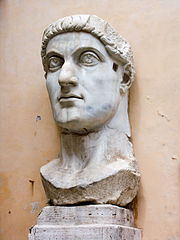
 The Life of the Blessed
Emperor Constantine Eusebius Pamphilus In Four Books, from 306 to 337 A D. BY Eusebius Pamphilus. ΠΟΛΛΑΙ μεν θνητοις ΓΛΩΤΤΑΙ, μια δʼαθανατοισιν. London: Samuel Bagster and Sons; Warehouse for Bibles, New Testaments, Prayer-Books, Lexicons,
Grammars, Concordances, and Psalters, in Ancient and Modern Languages; Paternoster Row. M.dccc.xlv. >
Contents
Title Page: THE LIFE OF THE BLESSED EMPEROR CONSTANTINE Address The Life of the Blessed Emperor Constantine, by Eusebius Pamphilus Book I Chapter I
Preface—of the Death of Constantine Chapter II
The Preface Continued Chapter III
How God Honours Pious Princes, but Destroys Tyrants Chapter IV
How God Honoured Constantine Chapter V
He Reigned Above Thirty Years, and Lived Above Sixty Chapter VI
He Was the Servant of God, and the Conqueror of Nations Chapter VII
He Is Compared with Cyrus King of the Persians, and with Alexander of Macedon Chapter VIII
He Conquered Nearly the Whole World Chapter IX
He Was the Son of a Pious Emperor, and Bequeathed the Imperial Power to His Own Sons Chapter X
Of the Necessity for This History, and Its Value in a Moral Point of View Chapter XI
His Present Object Is to Record Only the Pious Actions of Constantine Chapter XII
Like Moses, He Was Reared in the Palaces of Royalty Chapter XIII
Of Constantius His Father, Who Refused to Imitate Diocletian, Maximian, and Maxentius, in Their Persecution of the Christians Chapter XIV
How Constantius His Father, Being Reproached with Poverty by Diocletian, Filled His Treasury, and Afterwards Restored the Money to Those by Whom It Had Been Contributed Chapter XV
Of the Persecution Raised by His Colleagues Chapter XVI
How Constantius, Feigning Idolatry, Expelled Those Who Consented to Offer Sacrifice, but Retained in His Palace All Who Were Willing to Confess Christ Chapter XVII
Of His Devotion and Love to Christ Chapter XVIII
After the Abdication of Diocletian and Maximian, Constantius Became Chief Augustus, and Was Blessed with a Numerous Offspring Chapter XIX
Of His Son Constantine, Who in His Youth Accompanied Diocletian Into Palestine Chapter XX
Constantine Returns to His Father, in Consequence of the Treacherous Intentions of Diocletian Chapter XXI
Death of Constantius, Who Leaves His Son Constantine Emperor Chapter XXII
After the Burial of Constantius, Constantine Is Proclaimed Augustus by the Army Chapter XXIII
A Brief Notice of the Destruction of the Tyrants Chapter XXIV
It Was by the Will of God That Constantine Became Possessed of the Empire Chapter XXV
Victories of Constantine Over the Barbarians and the Britons Chapter XXVI
He Resolves to Deliver Rome from the Tyranny of Maxentius Chapter XXVII
After Reflecting on the Downfall of Those Who Had Worshipped Idols, He Made Choice of Christianity Chapter XXVIII
How, While He Was Praying, God Sent Him a Vision of a Cross of Light in the Heavens at Mid-Day, with an Inscription Admonishing Him to Conquer by That Chapter XXIX
How the Christ of God Appeared to Him in His Sleep, and Commanded Him to Use in His Wars a Standard Made in the Form of a Cross Chapter XXX
The Making of the Standard of the Cross Chapter XXXI
A Description of the Standard of the Cross, Which the Romans Now Call the Labarum Chapter XXXII
Constantine Receives Instruction, and Reads the Sacred Scriptures Chapter XXXIII
Of the Adulterous Conduct of Maxentius at Rome Chapter XXXIV
How the Wife of a Prefect Slew Herself to Preserve Her Chastity Chapter XXXV
Massacre of the Roman People by Maxentius Chapter XXXVI
Magic Arts of Maxentius Against Constantine: and Famine at Rome Chapter XXXVII
Defeat of Maxentius’s Armies in Italy Chapter XXXVIII
Death of Maxentius on the Bridge of the Tiber Chapter XXXIX
Constantine’s Entry Into Rome Chapter XL
Of the Statue of Constantine Holding a Cross, and Its Inscription Chapter XLI
Rejoicings Throughout the Provinces; and Constantine’s Acts of Grace Chapter XLII
Of the Honours Conferred Upon Bishops, and the Building of Churches Chapter XLIII
Constantine’s Liberality to the Poor Chapter XLIV
How He Was Present at the Synods of Bishops Chapter XLV
How He Bore with Irrational Opponents Chapter XLVI
Victories Over the Barbarians Chapter XLVII
Death of Maximin, Who Had Attempted a Conspiracy, and of Others Whom Constantine Detected by Divine Revelation Chapter XLVIII
Celebration of Constantine’s Decennalia Chapter XLIX
In What Manner Licinius Oppressed the East Chapter L
Licinius Attempts a Conspiracy Against Constantine Chapter Li
Treacherous Arts of Licinius Against the Bishops, and His Prohibition of Synods Chapter LII
Banishment of the Christians, with Confiscation and Sale of Their Property Chapter LIII
Licinius’s Edict That Women and Men Should Not Be Permitted to Frequent the Churches in Company Chapter LIV
He Dismisses Those Who Refuse to Sacrifice from Military Service, and Forbids the Supply of Necessary Food to Those in Prison Chapter LV
The Lawless Conduct and Covetousness of Licinius Chapter LVI
At Length He Undertakes to Raise a Persecution Against the Christians Chapter LVII
Maximian, Brought Low by a Fistulous Ulcer with Worms, Issues an Edict in Favour of the Christians Chapter LVIII
How Maximin, Who Had Persecuted the Christians, Was Compelled to Fly, and Conceal Himself in the Disguise of a Slave Chapter LIX
Maximin, Blinded by Means of His Disease, Issues an Ordinance in Favour of the Christians Book II Chapter I
Secret Persecution by Licinius, Who Causes Some Bishops to Be Put to Death at Amasia of Pontus Chapter II
Demolition of Churches, and Cruel Butchery of the Bishops Chapter III
How Constantine Was Moved with Pity on Behalf of the Christians Thus in Danger of Persecution Chapter IV
Constantine Prepares Himself for the War by Prayer: Licinius by the Practice of Divination Chapter V
Licinius, While Sacrificing in a Grove, Utters His Sentiments Concerning Idols, and Concerning Christ Chapter VI
An Apparition Seen in the Cities Subject to Licinius, as of Constantine’s Victorious Troops Passing Through Them Chapter VII
Victory Every Where Follows the Presence of the Standard of the Cross in Battle Chapter VIII
Fifty Men Are Selected to Carry the Cross Chapter IX
One of the Cross-Bearers, Who Fled from His Post, Is Slain; While Another, Who Faithfully Stood His Ground, Is Preserved Chapter X
Various Battles, and Constantine’s Victories Chapter XI
Flight, and Magic Arts of Licinius Chapter XII
Constantine, After Praying in His Tabernacle, Obtains the Victory Chapter XIII
His Humane Treatment of Prisoners Chapter XIV
A Further Mention of His Prayers in the Tabernacle Chapter XV
Pretended Friendship, and Idolatrous Practices of Licinius Chapter XVI
Licinius Charges His Soldiers Not to Attack the Standard of the Cross Chapter XVII
Constantine’s Victory Chapter XVIII
Death of Licinius, and Consequent Triumph Chapter XIX
General Rejoicings Chapter XX
Constantine’s Enactments in Favour of the Confessors Chapter XXI
His Laws in Favour of Martyrs, and Respecting the Property of the Churches Chapter XXII
How He Cherished the Interests of the Several Nations of His Empire Chapter XXIII
How He Declared God to Be the Author of His Prosperity: and Concerning His Written Laws Chapter XXIV
Law of Constantine Respecting Piety Towards God, and the Christian Religion Chapter XXV
An Illustration of These Truths from Ancient Times Chapter XXVI
Of Those Who Suffered, and Those Who Raised Persecution Chapter XXVII
How the Persecution Became the Occasion of Calamity to the Aggressors Chapter XXVIII
That God Chose Constantine to Be the Minister of Blessing Chapter XXIX
Constantine’s Expressions of Piety Towards God; and Praise of the Confessors Chapter XXX
A Law Granting Release from Exile, Relief from Service in the Courts, and from the Confiscation of Property Chapter XXXI
Release Likewise Granted to Exiles in the Islands Chapter XXXII
And to Those Who Had Been Ignominiously Employed in the Mines and Public Works Chapter XXXIII
Concerning Those Confessors Who Had Been Engaged in Military Service Chapter XXXIV
Concerning the Liberation of Those Free Persons Who Had Been Condemned to Labour in the Women’s Apartments, or to Any Other Servitude Chapter XXXV
Of the Inheritance of the Property of Martyrs and Confessors, Also of Those Who Had Suffered Banishment or Confiscation Chapter XXXVI
The Church Is Declared Heir of Those Who Leave No Kindred; and Their Bequests Are Inalienable Chapter XXXVII
The Occupiers of Lands Which Had Belonged to Christians, Also of Gardens or Houses, Are to Make Restitution, Except of the Actual Produce Chapter XXXVIII
In What Manner Appeals Should Be Made on Behalf of Such Persons Chapter XXXIX
The Treasury Must Restore Lands, Gardens, and Houses to the Churches Chapter XL
The Tombs of Martyrs, and the Cemeteries, Are to Be Restored to the Churches Chapter XLI
Those Who Have Purchased Property Belonging to the Church, or Received It as a Gift, Are to Restore It Chapter XLII
An Earnest Exhortation to Worship God Chapter XLIII
Constantine’s Enactments Were Carried Into Effect Chapter XLIV
He Promotes Christians to Offices of Government, and Forbids Gentiles in Such Stations to Offer Sacrifice Chapter XLV
Statutes Which Forbade Sacrifice, and Enjoined the Building of Churches Chapter XLVI
Constantine’s Letter to Eusebius and the Other Bishops, Respecting the Building of Churches, with Instructions to Repair the Old, and Erect New Ones on a Larger Scale, with the Aid of the Provincial Governors Chapter XLVII
The Emperor Wrote a Letter Also in Condemnation of Idolatry Chapter XLVIII
Constantine’s Edict to the People of the Provinces Concerning the Error of Polytheism, Commencing with Some General Remarks on Virtue and Vice Chapter XLIX
Concerning Constantine’s Pious Father, and the Persecutors Diocletian and Maximian Chapter L
How the Persecution Originated from the Silence of the Oracle of Apollo, Which Was Attributed to the Influence of “The Righteous Men” Chapter Li
Constantine, When a Youth, Understood from Him Who Directed the Persecution, That “The Righteous Men” Were the Christians Chapter LII
The Manifold Forms of Torture and Punishment Openly Practised Against the Christians Chapter LIII
How the Barbarians Kindly Received the Christians Chapter LIV
How Vengeance Overtook Those Whom the Words of the Oracle Had Induced to Raise the Persecution Chapter LV
Constantine Gives Glory to God, Confesses the Efficacy of the Standard of the Cross, and Prays for the Churches and People Chapter LVI
He Prays That All May Be Christians, but Compels None Chapter LVII
He Renders Praise to God, Who Has Given Light by His Son to Those Who Were in Error Chapter LVIII
He Still Further Praises Him for His Government of the Material World Chapter LIX
Praise to God, as the Constant Teacher of Good Things Chapter LX
An Admonition at the Close of the Edict, That No One Should Disturb the Peace of His Neighbour Chapter LXI
How Controversies Originated at Alexandria in Connexion with Arius Chapter LXII
Concerning the Same Arius, and the Melitians Chapter LXIII
That Constantine Sent a Letter, with a View to the Re-Establishment of Concord Chapter LXIV
Constantine’s Letter to Alexander the Bishop, and Arius the Presbyter Chapter LXV
His Continual Anxiety for Peace Chapter LXVI
How He Adjusted the Controversies Which Had Arisen in Africa Chapter LXVII
That Christianity Began in the East Chapter LXVIII
Being Grieved by the Dissensions, He Recommends a Spirit of Concord Chapter LXIX
Origin of the Difference Between Alexander and Arius—these Questions Are Not Fit Subjects for Controversy Chapter LXX
An Exhortation to Unanimity Chapter LXXI
There Should Be No Contention Because of Expressions in Themselves of Little Moment Chapter LXXII
The Excess of His Pious Concern Caused Him to Shed Tears; and His Intended Journey to the East Was Postponed Because of These Dissensions Chapter LXXIII
The Controversy Continues Without Abatement, Even After the Receipt of This Letter Book III Chapter I
A Comparison of Constantine’s Piety with the Wickedness of the Persecutors Chapter II
Further Remarks on Constantine’s Piety, and His Open Profession of the Cross Chapter III
Of His Picture Surmounted by a Cross, and Having Beneath It a Wounded Dragon Chapter IV
A Further Notice of the Controversies Raised in Egypt Through the Instrumentality of Arius Chapter V
Of the Dissensions Respecting the Celebration of Easter Chapter VI
He Orders a Council to Assemble at Nicæa Chapter VII
Of the General Council, at Which Bishops from All Nations Were Present Chapter VIII
The Assembly Was Composed, as in the Acts of the Apostles, of Individuals from Various Nations Chapter IX
Of the Virtue and Age of the Two Hundred and Fifty Bishops Chapter X
Meeting in the Palace, at Which Constantine Appeared, and Took His Seat in the Assembly Chapter XI
Silence of the Council, After Some Words Spoken by the Bishop Eusebius Chapter XII
Constantine’s Address to the Council, in Praise of Peace Chapter XIII
In What Manner He Led the Dissentient Bishors to Unite in Harmony of Sentiment Chapter XIV
Unanimous Declaration of the Council Concerning Faith, and the Celebration of Easter Chapter XV
Constantine Entertains the Bishops on the Occasion of His Vicennalia Chapter XVI
Presents to the Bishops, and Letters Addressed to the People Generally Chapter XVII
Constantine’s Letter to the Churches Respecting the Council at Nicæa Chapter XVIII
He Speaks of Their Unanimity Respecting the Feast of Easter, and Against the Practice of the Jews Chapter XIX
He Holds Out for Their Imitation the Example of the Greater Part of the World Chapter XX
He Recommends Obedience to the Decrees of the Council Chapter XXI
He Exhorts the Bishops, on Their Departure, to Preserve a Spirit of Concord Chapter XXII
Having Honourably Dismissed Some, He Wrote Letters to Others, Bestowing Likewise Presents in Money Chapter XXIII
He Writes to the Egyptians, Exhorting Them to Peace Chapter XXIV
He Writes Frequent Letters of a Religious Character to the Bishops and People Chapter XXV
He Orders the Erection of a Church at Jerusalem, in the Holy Place of Our Saviour’s Resurrection Chapter XXVI
How the Holy Sepulchre Had Been Covered with Rubbish and Profaned with Idols by the Ungodly Chapter XXVII
Constantine Commands the Materials of the Idol-Temple, and the Soil Itself, to Be Removed and Thrown to a Distance Chapter XXVIII
Discovery of the Most Holy Sepulchre Chapter XXIX
He Writes Concerning the Erection of a Church, Both to the Governors of the Provinces, and to the Bishop Macarius Chapter XXX
Constantine’s Letter to Macarius Respecting the Building of a Memorial of Our Saviour’s Death Chapter XXXI
He Desired That the Building Should Surpass All the Churches in the World in the Beauty of Its Walls, Its Columns, and Marbles Chapter XXXII
Directions to the Presidents Concerning the Beautifying of the Roof; Also Concerning the Workmen, and Materials Chapter XXXIII
How the Church of Our Saviour Was Built, Which Answered to the New Jerusalem Prophesied of in Scripture Chapter XXXIV
Description of the Fabric of the Holy Sepulchre Chapter XXXV
Description of the Atrium and Porticos Chapter XXXVI
Description of the Walls, Roof, Decoration, and Gilding, of the Body of the Church Chapter XXXVII
Description of the Double Porticos on Either Side, and of the Three Eastern Gates Chapter XXXVIII
Description of the Hemisphere, the Twelve Columns, and Their Bowls Chapter XXXIX
Description of the Atrium, the Courts, and Porches Chapter XL
Of the Number of His Offerings Chapter XLI
Of the Erection of Churches in Bethlehem, and on the Mount of Olives Chapter XLII
That Helena Augusta, Constantine’s Mother, Having Visited This Locality for Devotional Purposes, Built These Churches Chapter XLIII
A Further Notice of the Churches at Bethlehem Chapter XLIV
Of Helena’s Generosity, and Beneficent Acts Chapter XLV
Her Pious Conduct in the Churches Chapter XLVI
She Makes Her Will, and Dies at the Age of Eighty Years Chapter XLVII
How Constantine Buried His Mother, and How He Honoured Her During Her Life Chapter XLVIII
He Builds Churches in Honour of Martyrs, and Abolishes Idolatry at Constantinople Chapter XLIX
Representation of the Cross in the Palace, and of Daniel at the Public Fountains Chapter L
He Erects Churches in Nicomedia, and in Other Cities Chapter Li
He Orders a Church to Be Built at Mambre Chapter LII
Constantine’s Letter to Eusebius Concerning Mambre Chapter LIII
That Our Saviour Appeared in This Place to Abraham Chapter LIV
The Idol Temples and Images Every Where Destroyed Chapter LV
Overthrow of an Idol Temple, and Abolition of Licentious Practices, at Aphaca in Phœnicia Chapter LVI
Destruction of the Temple of Æsculapius at Ægæ Chapter LVII
How the Gentiles Abandoned Idol Worship, and Turned to the Knowledge of God Chapter LVIII
Constantine Destroys the Temple of Venus at Heliopolts, and Builds the First Church in That City Chapter LIX
Of the Disturbances Raised at Antioch on Account of Eustathius Chapter LX
Constantine’s Letter to the Antiochians, Directing Them Not to Withdraw Eusebius from Cæsarea, but to Seek for Another Bishop Chapter LXI
The Emperor’s Letter to Eusebius, on the Occasion of His Refusing the Bishopric of Antioch Chapter LXII
Constantine’s Letter to the Council, Deprecating the Removal of Eusebius from Cæsarea Chapter LXIII
How He Displayed His Zeal for the Extirpation of Heresies Chapter LXIV
Constantine’s Edict Against the Heretics Chapter LXV
The Heretics Are Deprived of Their Places of Assembly, and Their Meetings Suppressed Chapter LXVI
On the Discovery of Prohibited Books Among the Heretics, Many of Them Return to the Catholic Church Book IV Chapter I
Constantine Confers Numerous Honours in the Way of Presents and Promotions Chapter II
Remission of a Fourth Part of the Tributes Chapter III
Equalisation of the More Oppressive Taxes Chapter IV
His Liberality, from His Private Resources, to the Losers in Suits of a Pecuniary Nature Chapter V
Defeat and Conquest of the Scythians Through the Standard of the Saviour’s Cross Chapter VI
Conquest of the Sarmatians, Consequent on the Rebellion of Their Slaves Chapter VII
Ambassadors from Different Barbarous Nations Receive Presents from the Emperor Chapter VIII
He Writes to the King of Persia, Who Had Sent Him an Embassy, on Behalf of the Christians in His Realm Chapter IX
Letter of Constantine Augustus to Sapor King of the Persians, Containing a Truly Pious Confession of God and Christ Chapter X
The Writer Denounces Idols, and Praises God Chapter XI
Remarks Condemnatory of the Tyrants and Persecutors; and on the Captivity of Valerian Chapter XII
He Declares That, Having Witnessed the Fall of the Persecutors, He Now Rejoices at the Peace Enjoyed by the Christians Chapter XIII
He Bespeaks His Affectionate Interest for the Christians in His Country Chapter XIV
How the Zealous Prayers of Constantine Procured Peace to the Christians Chapter XV
He Causes Himself to Be Represented on His Coins, and in His Portraits, in the Attitude of Prayer Chapter XVI
He Forbids by Law the Placing His Likeness in Idol Temples Chapter XVII
Of His Prayers in the Palace, and His Reading the Holy Scriptures Chapter XVIII
He Enjoins the General Observance of the Lord’s Day, and the Day Before the Sabbath Chapter XIX
He Directed Even His Pagan Soldiers to Pray on the Lord’s Day Chapter XX
The Form of Prayer Given by Constantine to His Soldiers Chapter XXI
He Orders the Sign of the Cross to Be Engraven on His Soldiers’ Shields Chapter XXII
Of His Zeal in Prayer, and the Honour He Paid to the Feast of Easter Chapter XXIII
He Forbids Idolatrous Worship, but Honours Martyrs and Their Festivals Chapter XXIV
He Describes Himself as a Bishop, in Charge of Affairs External to the Church Chapter XXV
Prohibition of Sacrifices, of Profane Mysteries, and Combats of Gladiators: Also Suppression of the Impious Priesthood of the Nile Chapter XXVI
Amendment of the Law in Force Respecting Childless Persons, and of the Law of Wills Chapter XXVII
Among Other Enactments, He Forbids the Jews to Possess Christian Slaves, and Affirms the Validity of the Decisions of Councils Chapter XXVIII
His Offerings to the Churches, and Distributions of Money to the Virgins, and to the Poor Chapter XXIX
Of Constantine’s Discourses and Declamations Chapter XXX
He Attempts to Shame a Covetous Person, by Marking Out Before Him the Measure of a Grave Chapter XXXI
He Is Derided Because of His Excessive Clemency Chapter XXXII
Of Constantine’s Oration Which He Wrote to the Assembly of the Saints Chapter XXXIII
He Listened in a Standing Posture to Eusebius’s Declamation in Honour of Our Saviour’s Sepulchre Chapter XXXIV
He Writes to Eusebius Respecting Easter, and the Sacred Books of Scripture Chapter XXXV
Constantine’s Letter to Eusebius, in Praise of His Discourse Concerning Easter Chapter XXXVI
Constantine’s Letter to Eusebius on the Preparation of Copies of the Scriptures Chapter XXXVII
How the Copies Were Provided Chapter XXXVIII
The Port of Gaza Is Made a City for Its Profession of Christianity, and Receives the Name of Constantia Chapter XXXIX
A Place in Phœnicia Also Is Made a City, and in Other Cities Idolatry Is Abolished, and Churches Built Chapter XL
Having Conferred the Dignity of Cæsars on His Three Sons at the Three Decennial Periods of His Reign, He Dedicated the Church at Jerusalem Chapter XLI
In the Meantime He Orders a Council to Be Convened at Tyre, Because of Controversies Raised in Egypt Chapter XLII
Constantine’s Letter to the Council at Tyre Chapter XLIII
Bishops from Every Province Attended the Dedication of the Church at Jerusalem Chapter XLIV
Of Their Reception by the Notary Macarius; the Distribution of Money to the Poor; and Offerings to the Chruch Chapter XLV
Various Discourses by the Assembled Bishops; Also by Eusebius the Writer of This History Chapter XLVI
Eusebius Afterwards Repeated His Description of the Church, and His Oration on the Tricennalia, Before Constantine Himself Chapter XLVII
The Council at Nicæa Was Held in the Twentieth, the Dedication of the Church at Jerusalem in the Thirtieth Year of Constantine’s Reign Chapter XLVIII
Constantine Testifies His Aversion to Excessive Praise Chapter XLIX
Marriage of His Son Constantius Cæsar Chapter L
An Embassy Arrives, with Presents, from the Indians Chapter Li
Constantine Divides the Empire Between His Three Sons, Whom He Had Instructed in the Arts of Government and the Duties of Religion Chapter LII
His Pious Instructions After They Had Reached Maturity Chapter LIII
Having Reigned About Thirty Two Years, and Lived Above Sixty, He Still Enjoyed Sound Bodily Health Chapter LIV
His Extreme Benevolence Was Abused by Some as an Encouragement to Avarice and Hypocrisy Chapter LV
Constantine Employed Himself in Composition of Various Kinds to the Close of His Life Chapter LVI
He Is Attended by Bishops on an Expedition Against the Persians, and Takes with Him a Tent in the Form of a Church Chapter LVII
His Favourable Reception of an Embassy from the Persians. He Keeps the Night Vigil with Others at the Feast of Easter Chapter LVIII
Building of a Church in Honour of the Apostles at Constantinople Chapter LIX
Further Description of the Same Church Chapter LX
He Also Erected His Own Sepulchral Monument in This Church Chapter LXI
His Sickness at Helenopolis, and Prayers Respecting His Baptism Chapter LXII
Constantine’s Appeal to the Bishops, Requesting Them to Confer Upon Him the Rite of Baptism Chapter LXIII
After His Baptism He Renders Thanks to God Chapter LXIV
Constantine’s Death at Noon on the Feast of Pentecost Chapter LXV
Lamentations of the Soldiery and Their Officers Chapter LXVI
Removal of the Body from Nicomedia to the Palace at Constantinople Chapter LXVII
He Received the Same Honours from the Counts and Other Officers as Before His Death Chapter LXVIII
Resolution of the Army to Confer Thence-Forward the Title of Augustus on His Sons Chapter LXIX
Mourning Ror Constantine at Rome; and Paintings in Memory of His Death Chapter LXX
His Burial by His Son Constantius at Constantinople Chapter LXXI
Sacred Service in the Church of the Apostles on the Occasion of Constantine’s Funeral Chapter LXXII
An Allusion to the Phœnix Chapter LXXIII
Constantine Is Represented on Coins in the Act of Ascending to Heaven Chapter LXXIV
The God Whom He Had Honoured Deservedly Honoured Him in Return Chapter LXXV
He Surpassed All Preceding Emperors in Devotion to God The Oration of the Emperor Constantine, Which He Addressed “To the Assembly of the Saints” Chapter I
Preliminary Remarks on the Feast of Easter: and How the Word of God, Having Conferred Manifold Benefits on Mankind, Received a Base and Treacherous Return Chapter II
An Appeal to the Church and His Audience Generally, to Pardon and Correct the Errors of His Speech Chapter III
That God Is the Father of the Word, and the Creator of All Things: and That Material Objects Could Not Continue to Exist, Were Their Causes Different Chapter IV
On the Error of Idolatrous Worship Chapter V
That Christ, the Son of God, Created All Things, and Has Appointed to Every Thing the Term of Its Existence Chapter VI
The Falsity of the General Opinion Respecting Fate Is Proved by the Consideration of Human Laws, and by the Works of Creation, the Course of Which Is Not Fortuitous, but According to a Definite Arrangement Which Evinces the Design of the Creator Chapter VII
In Regard to Things Above Our Comprehension, We Should Glorify the Creator’s Wisdom, and Attribute Their Causes to Him Alone, and Not to Chance Chapter VIII
That God Bestows an Abundant Supply of Whatever Is Suited to the Wants of Man, and Ministers but Sparingly to His Pleasures; in Both Cases with a View to His Advantage Chapter IX
Of the Philosophers, Who Were Led Into Errors of Judgment, and Some of Them Into Danger, by Their Desire of Universal Knowledge—also of the Doctrines of Plato Chapter X
Of Those Who Reject the Doctrines of Philosophers, as Well as Those of Scripture: and That We Ought to Yield Our Assent to the Poets in All Things, or Not at All Chapter XI
On the Coming of Our Lord in the Flesh; Its Nature, and Cause Chapter XII
Of Those Who Are Ignorant of This Mystery; and That Their Lgnorance Is Voluntary. the Blessings Which Await Those Who Know It, Especially Such as Die in the Confession of the Faith Chapter XIII
That There Is a Necessary Difference Between Created Things. That the Propensity to Good and Evil Depends on the Will of Man: and That, Consequently, Judgment Is a Necessary and Reasonable Thing Chapter XIV
That Created Nature Differs Infinitely from Uncreated Being; to Which Man Makes the Nearest Approach by a Life of Virtue Chapter XV
Of the Saviour’s Doctrines and Miracles; and the Benefits He Confers on Those Who Own Subjection to Him Chapter XVI
The Coming of Christ Was Predicted by the Prophets; and Was Ordained to Be the Overthrow of Idols and Idolatrous Cities Chapter XVII
Of the Wisdom of Moses, Which Was an Object of Imitation to the Wise Among Heathen Nations. Also Concerning Daniel, and the Three Children Chapter XVIII
Of the Erythræan Sibyl, Who Pointed in a Prophetic Acrostic at Our Lord and His Passion. the Acrostic Is “Jesus Christ, Son of God, Saviour, Cross” Chapter XIX
That This Prophecy Respecting Our Saviour Was Not the Fiction of Any Member of the Christian Church, but the Testimony of the Erythræan Sibyl, Whose Books Were Translated Into Latin by Cicero Before the Coming of Christ. Also That Virgil Makes Mention of the Same, and of the Birth of the Virgin’s Child: Though He Spoke Obscurely, from Fear of the Ruling Powers Chapter XX
A Further Quotation from Virgil Respecting Christ, with Its Interpretation, Shewing That the Mystery Was Indicated Therein Darkly, as Might Be Expected from a Poet Chapter XXI
That These Things Cannot Have Been Spoken of a Mere Man: and That Unbelievers, Owing to Their Ignorance of Religion, Know Not Even the Origin of Their Own Existence Chapter XXII
The Emperor Thankfully Ascribes His Victories and All Other Blessings to Christ; and Condemns the Conduct of the Tyrant Maximin, the Violence of Whose Persecution Had Enhanced the Glory of the Christian Religion Chapter XXIII
Of Christian Conduct. That God Is Pleased with Those Who Lead a Life of Virtue: and That We Must Extect a Judgment and Future Retribution Chapter XXIV
Of Decius, Valerian, and Aurelian, Who Experienced a Miserable End in Consequence of Their Persecution of the Church Chapter XXV
Of Diocletian, Who Ignobly Abdicated the Imperial Throne, and Was Terrified by the Dread of Lightning for His Persecution of the Church Chapter XXVI
The Emperor Ascribes His Personal Piety to God; and Shews That We Are Bound to Seek Success from God, and Attribute It to Him; but to Consider Failure as the Result of Our Own Negligence The Oration of Eusebius Pamphilus, in Praise of the Emperor Constantine, Pronounced on the Thirtieth Anniversary of His Reign Prologue to the Oration Chapter I
The Oration Chapter II Chapter III Chapter IV Chapter V Chapter VI Chapter VII Chapter VIII Chapter IX Chapter X Chapter XI Chapter XII Chapter XIII Chapter XIV Chapter XV Chapter XVI Chapter XVII Chapter XVIII Image or Constantine is licensed under the Creative Commons Attribution 2.5 Generic license. Attribution: I, Jean-Christophe Benoist
Copyright ©1999-2026 Wildfire Fellowship, Inc all rights reserved
|

 Keep Site Running